Poly Mailer Bags Print Method Comparison for Buyers
Quoted prices for printed mailers have a habit of looking civilized right up until plates, proofs, white ink, freight, and reprints show up. That is why a Poly Mailer Bags print method comparison should start with the total job, not the shiny per-bag number.
The biggest mistake is assuming every print method behaves the same on poly film. It does not. Film is slick, stretch is real, and dark substrates make weak ink choices look worse. A clean logo on paper can turn muddy on a mailer if the process is wrong or the ink build is too light.
For buyers, the real decision usually comes down to order size, artwork complexity, color accuracy, and how much risk the brand can tolerate. A simple one-color logo for 20,000 bags is a different problem from a full-color launch run of 1,500 bags. Same category. Different math.
What Actually Matters in a Print Method Comparison
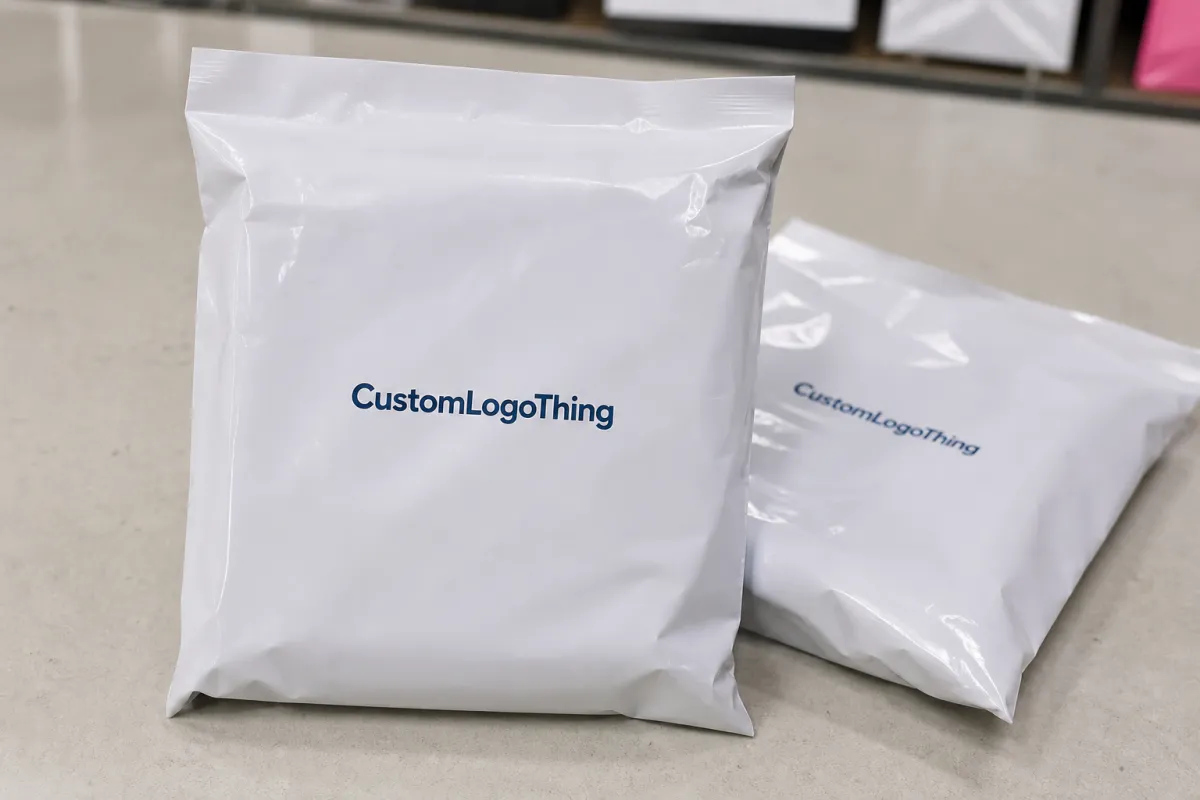
A buyer usually asks one question: which method is cheapest? Fair question. Just incomplete.
The better question is which method gives the best total landed cost for the quantity, artwork, and finish you need. Setup fees matter. Proofing time matters. White ink matters. So does whether the supplier can hold color from the first bag to the last.
Here is the uncomfortable part: the cheapest quote often excludes the parts that cause pain later. That includes plate charges, cylinder fees, added passes for opacity, and minimums that force you to buy more bags than you need. The quote is not lying. It is just not telling the whole story.
The line item is cheap. The program is not.
Poly mailers also amplify small production differences. Gloss film makes color pop, but it also exposes registration issues. Matte film softens the look and can hide a few sins, although saturated colors can feel less aggressive. Thin film can distort near the seals. If the print sits too close to an edge, the finished bag will show it.
That is why any serious Poly Mailer Bags print method comparison should include the substrate, not just the ink method. Same artwork, different film, different result. Buyers who ignore that usually spend more time on reapproval than on the actual order.
How Each Print Method Works on Poly Film
Flexographic printing uses plates and is the workhorse for repeat production. It handles spot colors well, runs efficiently on medium and large orders, and gives consistent results once the setup is dialed in. If the brand has a stable logo, a fixed color standard, and reorder plans, flexo usually deserves a close look.
Digital printing skips plates. That makes it attractive for short runs, testing new artwork, seasonal campaigns, or jobs that need a quick proof cycle. It is also better suited to designs with gradients or mixed imagery because it handles CMYK builds more naturally. The tradeoff is simple: faster start, higher unit cost at scale.
Gravure sits at the heavy-volume end. Cylinders cost more up front, but once they are made, the press can run long jobs with strong ink laydown and very tight repeatability. It is not the first choice for a small launch order. It can be the right choice for a large, steady replenishment program.
One thing buyers often underestimate is white ink. White on dark poly film is not automatic. It may need an underprint, a stronger ink build, or a different print plan entirely. If the brand color depends on crisp white, ask for a sample on the actual film before approval. A PDF cannot show opacity.
Another trap is assuming CMYK and spot color are competing options. They solve different problems. CMYK is useful for photo-style art, gradients, and complex graphics. Spot color is better for brand-critical logos and tighter color matching. A lot of quote drama comes from people asking for “full color” without deciding whether they want visual richness or exact color control.
If you need a wider packaging reference point, Packaging.org is useful for terminology, and ISTA is worth checking if the mailers need to survive distribution testing. Mailers live in the real world, not the mockup file.
Cost, MOQ, and Unit Price Tradeoffs
This is where the Poly Mailer Bags print method comparison gets practical. Setup, minimums, and reorder plans usually decide the winner more than the print method name itself.
| Method | Typical setup cost | Best order range | Typical unit price | Main tradeoff |
|---|---|---|---|---|
| Digital printing | Low to moderate, often minimal tooling | 100 to 3,000 bags | $0.20-$0.60 each | Fast start, higher unit price at scale |
| Flexographic printing | Plate cost, often $150-$600 per color | 3,000 to 25,000 bags | $0.08-$0.24 each | Good balance for repeat runs, setup matters |
| Gravure | Cylinder cost, often $800-$2,500 per color | 25,000+ bags | $0.05-$0.16 each | Best at scale, expensive to launch |
These ranges are directional. Size, film gauge, print coverage, white ink, packaging style, and freight terms move them around.
Digital often wins on total cost for short runs even if the per-bag price looks high. If you only need 1,000 mailers, avoiding plate charges can beat a lower unit price that requires a larger minimum. That is the math people forget while staring at a spreadsheet.
Flexo becomes stronger as volume rises. Once setup cost gets spread across a bigger run, unit price drops in a way digital usually cannot match. Gravure only starts making sense when the order is large enough to justify the cylinder spend and the artwork will stay stable long enough to reuse it.
MOQ pressure changes the equation fast. A buyer asks for 500 bags. The press minimum is 3,000. Now the quote is no longer about the cheapest print method; it is about whether the supplier can even run the job economically. Add white ink or dense coverage, and the job can shift again because more passes mean more time and more risk.
For brands with repeat orders, ask for both a first-run quote and a reorder quote. A method that looks expensive up front may be cheaper on the second run once the tooling is already paid. Ignoring that detail is how procurement teams end up comparing half a quote against a full one.
Production Steps, Lead Times, and Proofing
The production flow is usually the same: artwork check, dieline review, proof creation, approval, production, inspection, shipping. What changes is the amount of prep before ink hits film.
Digital is usually the quickest path because there are no plates or cylinders to make. If the artwork is clean and the dieline is correct, it can move from proof to production fast. Flexo adds plate time. Gravure adds cylinder time, which is why it tends to be the slowest to launch.
- Artwork check: same day to 1 business day if files are clean.
- Digital proof: often 1 to 2 business days.
- Flexo plate and proof stage: often 3 to 5 business days.
- Gravure tooling and proof stage: often 7 to 12 business days.
- Production: commonly 3 to 7 business days for digital, 5 to 10 for flexo, 7 to 14 for gravure.
Those are normal ranges, not promises. Late artwork approvals can add more delay than the press itself. Missing dielines, low-resolution logos, and last-minute color changes are the usual culprits. Production rarely causes the drama people blame on production.
A good supplier should check bag size, seal location, print-safe areas, bleed, and ink coverage before approval. If white ink is involved, ask how opacity is being built and whether the proof is on the actual film. A screen mockup is useful for layout. It is not a color proof.
There is also a gap between proof approval and production reality. A logo can look perfect on a monitor and still shift on film because of substrate and ink behavior. That is why buyers who care about retail presentation should ask for a sample on the actual material. It is cheap insurance compared with a reprint.
How to Choose the Right Method
If the artwork is a simple logo with a few spot colors, flexo usually makes sense once the volume is high enough to absorb setup. If the design includes gradients, photos, or several visual layers, digital printing often gives a cleaner result on smaller runs because it handles detail more naturally. Gravure is the high-volume option for brands that want consistency and are willing to pay for tooling.
Color count matters more than many buyers expect. One or two colors keeps flexo efficient. Add more colors and setup becomes more involved. Ask for Pantone matching if brand color matters. Otherwise, a CMYK build may look fine but drift just enough to annoy someone in marketing. Usually that someone notices after approval.
Finish matters too. Gloss film gives stronger visual impact, but it also makes registration flaws easier to spot. Matte film can feel more premium and usually softens the image slightly. Metallic effects and specialty inks need early discussion because not every method handles them the same way.
Here is a practical rule set:
- 1,000 to 3,000 bags: digital is often the safest buy.
- 3,000 to 15,000 bags: flexo often wins if the art is stable.
- 25,000+ bags: gravure may be worth pricing for repeat programs.
- Dark film with white logo: ask for a white underprint sample before you commit.
- Retail or subscription branding: prioritize consistency over the lowest quote.
The last line matters. If the mailer is part of the customer experience, a slightly better finish can matter more than saving a few cents. People remember what arrives on their doorstep. They do not remember the procurement spreadsheet that made it happen.
Mistakes That Hurt Quality or Blow Up a Quote
The first mistake is sending bad artwork and expecting the printer to clean it up like magic. Blurry logos, missing fonts, and tiny raster files create soft edges and extra proof rounds. Vector art is the safest option. If raster files are all you have, keep them high-resolution and clean.
The second mistake is ignoring setup costs. Buyers compare only the unit price and forget plates, cylinders, proofs, or freight. That is how a quote looks attractive and then becomes awkward in the final math. A true comparison includes setup, production, shipping, and likely reorders.
Third, white ink gets treated like an afterthought. White on dark poly film may need a separate layer or stronger ink build. If the white is brand-critical, ask for a proof on the actual substrate. If it is not critical, fine. If it is critical and you skip the proof, that is not a bold decision. It is a gamble.
Fourth, proofs get approved too quickly. Check artwork placement, bleed, print-safe zones, and seal lines before signing off. A design can look balanced in a PDF and still sit too close to a seam once the bag is formed. That problem shows up after production, which is always the least convenient time.
One more common miss: not confirming whether the same print method and film spec will be used on the reorder. Small process changes can shift color, opacity, and finish. For a packaging buyer, consistency is the point. If the second run looks different, the first run becomes the problem child.
FAQ
What is the cheapest print method for poly mailer bags?
Flexographic printing is usually the cheapest at higher volumes because setup gets spread across more bags. Digital can be cheaper for short runs because it avoids plates and high minimums. The actual answer depends on quantity, color count, white ink, and whether the art needs special finishes.
Which poly mailer print method is best for small orders?
Digital printing is usually the safest choice for small orders. It lowers setup friction and speeds proofing, which helps when the timeline is tight. If the artwork is simple and the quantity is tiny, digital often beats flexo on total cost even when the unit price looks higher.
How long does production usually take for printed poly mailers?
Digital runs are usually the fastest once artwork is approved. Flexographic and gravure jobs take longer because of plate or cylinder prep, plus color setup. The buyer’s approval speed matters just as much as the press schedule.
Can I print white ink on colored poly mailer bags?
Yes, but white ink usually needs a dedicated plan. Opacity depends on the film color, print method, and ink system. If white is part of the brand, ask for a sample or proof on the actual film instead of trusting a screen preview.
What file should I send for a poly mailer print quote?
Send vector artwork if possible, plus the bag size, quantity, color count, and finish you want. Include a dieline if you have one so the printer can check placement and bleed. Cleaner files mean fewer revisions, faster proofs, and fewer unpleasant surprises.
The best Poly Mailer Bags print method comparison is the one that matches volume, artwork, and finish without paying for capability you will not use. Digital is usually the short-run answer. Flexo is often the middle ground. Gravure belongs to scale. The right choice is rarely the fanciest one. It is the one that prints cleanly, lands on time, and does not force a second round because the white ink looked clever in theory and weak in reality.


