If you are comparing Poly Mailer Bags unit cost for ecommerce, the number on the quote sheet is only the starting point. A bag that saves half a cent can still raise your real shipping cost if it tears in transit, slows down packing, or forces you to replace damaged orders. Once a brand is shipping thousands of parcels a month, those small gaps start to compound in ways that are easy to miss on a spreadsheet.
The more useful question is not just what each mailer costs, but what it costs to ship one intact order with that mailer. That difference matters because ecommerce packaging is judged in the warehouse, on the conveyor, and at the customer’s door. The lowest sticker price often ignores the hidden cost of rework, wasted postage, and preventable returns.
Why the lowest mailer price is often the most expensive mistake
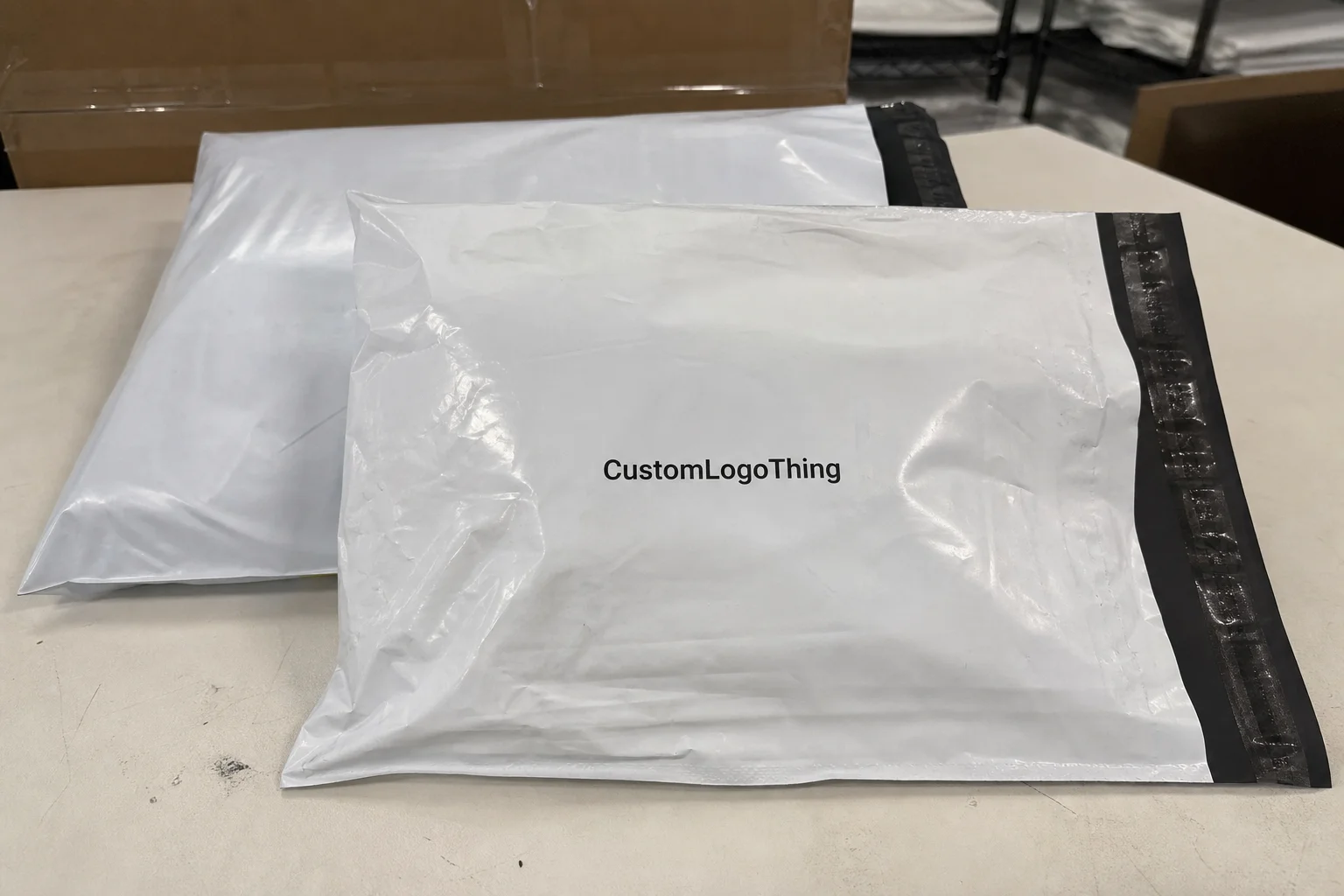
Cheap mailers can look very appealing in a quote comparison, especially when the price gap is only one or two cents per unit. That difference seems small enough to justify immediately, but ecommerce shipping has a way of exposing weak packaging quickly. A seam split, a poor seal, or a film that scuffs too easily becomes a customer issue, a replacement shipment, or a margin hit the moment it enters the fulfillment flow.
The trouble is not just failure rate. A low-spec mailer can also slow the packing line. If the adhesive is inconsistent, packers spend more time pressing seams, checking closures, or reworking parcels. If the film is too flimsy, staff often double-bag or reinforce orders, which erases the savings on the original purchase. In other words, the unit price on the invoice is not the same thing as the unit cost in operation.
Consider a brand shipping 10,000 orders a month. If a bargain mailer tears at 0.8% and a better-matched mailer fails at 0.2%, that is 60 fewer problem shipments every month. Add replacement postage, repacking labor, and the cost of service recovery, and the more expensive-looking bag can easily become the lower-cost option overall.
“The right question is not ‘What is the cheapest mailer?’ It is ‘What is the lowest total cost to ship one good order?’”
That framing helps buyers cut through noise. You are not purchasing plastic by weight alone; you are buying a packaging outcome that has to work in a real fulfillment environment, under real handling pressure, on a schedule that rarely leaves much room for mistakes.
For most ecommerce teams, the goal is to understand Poly Mailer Bags unit cost for ecommerce in a way that includes performance, labor, and landed cost rather than chasing the lowest line item.
What ecommerce buyers should know before comparing poly mailer specs
Poly mailers are simple on the surface, but a few specification choices make a large difference in both price and performance. Plain stock mailers are usually the least expensive. Printed mailers add branding, but they also add setup, proofing, and quality-control steps. Self-seal closures are standard for ecommerce because they speed up packing and reduce the need for tape. Tamper-evident closures add security. Recycled-content options may cost more or less depending on resin market conditions, availability, and the supplier’s production mix.
Material choice matters as well. Many ecommerce mailers use LDPE or a co-extruded film structure. LDPE is flexible and usually cost-effective. Co-extruded films can improve puncture resistance and provide a better print surface, which helps brand graphics hold up after sorting and transit. Thickness is typically measured in microns or mil, and a thicker film often improves durability. The tradeoff is straightforward: more film usually means more material cost, more freight weight, and sometimes more storage volume.
Size can affect the quote more than many buyers expect. Apparel often fits in slimmer bags, while items like cosmetics, accessories, and bundled kits may need extra width to avoid overstuffing. Oversizing is expensive in two directions: you pay for extra film, and you may also push the parcel into a higher postage band if the final packed dimensions cross a threshold.
There are other details that quietly influence the total cost of ownership:
- Adhesive strength affects whether the seal survives heat, dust, and transit vibration.
- Opacity affects privacy and how the parcel presents on arrival.
- Moisture resistance matters for soft goods and weather exposure.
- Surface slip can make packing faster or slower depending on the workflow.
- Print scuff resistance affects how the package looks after the last mile.
From a practical buyer’s standpoint, a mailer that seals cleanly and consistently can save more money than it costs. A packer who does not have to fight with weak adhesive or inconsistent seams can process more orders per hour, and that labor savings is often larger than the difference between two close-in quotes.
For sustainability-focused procurement, ask for documentation instead of accepting broad claims at face value. If recycled content matters to your brand, request the percentage, the basis of measurement, and any supporting paperwork the supplier can provide. General resources from organizations such as the EPA and the FSC can also help shape the discussion around sourcing language and claim discipline.
Specifications that change poly mailer bags unit cost for ecommerce
Once buyers ask for pricing, the quote usually turns on a handful of variables. Knowing those levers makes it easier to compare suppliers without paying for features that do not support the product or the shipping lane.
The main cost drivers are usually these:
- Size — larger dimensions use more film and can reduce carton density.
- Thickness — thicker material generally improves strength, but raises material usage.
- Print coverage — more ink, more passes, and more press time usually add cost.
- Number of colors — one-color branding is typically cheaper than multi-color art.
- Special features — double seals, tear strips, handles, or extra security details all increase complexity.
Size affects freight in a way buyers sometimes underestimate. A larger bag does not just cost more to make; it can also reduce the number of pieces that fit in a carton or on a pallet. That means fewer units per shipment, more storage consumed, and a higher effective landed cost per mailer even when the base unit price only increases slightly.
Print complexity changes the economics too. A clean one-color logo on a white, gray, or black mailer is usually the most economical branded option. Full-coverage graphics, tight registration, and multi-color artwork require more setup time and more attention during production. Depending on the print method, that can mean higher tooling fees, higher setup charges, or a slower approval process before the run can begin.
For a quote request, a concise specification sheet usually gives the clearest answer. Include the following:
- Finished dimensions
- Film thickness in microns or mil
- Plain or printed
- Number of print colors
- Quantity required
- Destination ZIP or country
- Packaging preference: loose packed or boxed
- Any extras: double seal, tear strip, recycled content, tamper-evident feature
Standardizing bag sizes is one of the easiest ways to control cost across multiple SKUs. If an ecommerce catalog includes several apparel or accessory lines, it is often possible to cover most of the volume with just two or three well-chosen mailer sizes. That reduces inventory confusion, lowers reorder risk, and makes it easier to keep the warehouse from carrying dead stock in too many partial cases.
| Mailer option | Typical use | Relative unit cost | Main advantage |
|---|---|---|---|
| Plain stock mailer | Testing, low-volume shipping | Lowest | Simplest buying path and fastest turnaround |
| One-color custom printed mailer | Established ecommerce brands | Moderate | Brand presence without heavy print cost |
| Multi-color custom mailer | Premium presentation or retail-ready unboxing | Higher | Stronger visual impact, more production steps |
| Recycled-content mailer | Brands with sustainability positioning | Varies | Can support procurement and claim requirements |
The table above is a useful reminder that “best” depends on the job. A lower-cost mailer is not always the lowest-cost choice, and a premium spec is not always justified. The right selection is the one that fits the product, the packing workflow, and the shipping environment without forcing unnecessary tradeoffs elsewhere.
Pricing, MOQ, and what actually drives your quote
Bulk pricing usually improves as order quantity rises. That happens because setup costs get spread over more pieces and production runs become more efficient. The pricing curve is often steeper for Custom Printed Mailers than for stock plain mailers, especially when artwork, color matching, or tooling is involved.
MOQ, or minimum order quantity, is part of that same equation. For plain stock mailers, the MOQ may be relatively low because the product already exists and can be pulled from inventory. For custom work, the MOQ is usually higher because the supplier needs to cover art preparation, printing setup, color checks, and the cost of changeover on the production line. If a quote claims a low minimum for a custom product, it is worth checking exactly what print method is being used and whether any setup charges are embedded elsewhere.
There is also a difference between unit cost and total landed cost. A low per-piece price can look attractive until freight, duties if applicable, carton configuration, warehousing, and overrun allowances are added. The cheapest quote on paper is not always the cheapest product in the dock.
In ecommerce, a practical purchasing pattern often looks like this:
- Low MOQ for a new size, new product line, or first printed run
- Mid-volume order once the packaging has proven itself in fulfillment
- Higher-repeat run when demand stabilizes and the cost per piece improves
That progression protects cash flow and reduces the chance of overcommitting before the packaging has been tested under real conditions. A mailer that looks right in a mockup may still feel too tight, too glossy, or too fragile once the warehouse starts using it every day. Small pilot runs are often the safest way to catch those issues.
For accurate pricing, the quote request has to be complete. Missing dimensions, vague material descriptions, and artwork files that need major cleanup can all slow the process down. Suppliers can estimate uncertainty, but they cannot price it cleanly without making assumptions that usually push the number higher.
As a working benchmark, many custom printed projects need a clear specification package before the quote becomes meaningful. If a supplier gives a range instead of a fixed number, the lower end usually reflects standard film and simple print, while the higher end reflects thicker material, extra features, or more complex branding.
Process and lead time from artwork approval to shipment
The production sequence is usually predictable, and that predictability is helpful. Most delays come from rushed approvals, incomplete artwork, or a spec change after the order has already been priced.
- Inquiry and specification review
- Quote confirmation
- Artwork proofing
- Sample or proof approval
- Production
- Packing and inspection
- Shipment
Plain stock mailers can move quickly because the product is already in inventory. Custom Printed Mailers take more time because the artwork has to be checked, the print layout confirmed, and the approval path completed before production starts. That extra step is not a delay for its own sake; it is usually where expensive mistakes are caught early.
Lead time depends on quantity, customization level, and the current production schedule. A small stock order may move fast. A larger printed run usually needs more time, especially if the buyer wants a sample or the artwork needs revision before final approval.
Sampling often feels like an extra step, but in packaging work it usually saves time overall. A sample can catch a logo that sits too close to a seal edge, a return address panel that is misaligned, or an opacity issue that would only become obvious after the first cartons arrived at the warehouse. Those mistakes happen often enough that experienced buyers build a review step into the schedule instead of treating it as optional.
If shipping volume peaks around promotions or holidays, a buffer is essential. Reordering late can create shortages at the worst possible time, especially if the mailer is custom printed and cannot be replaced overnight. Storage should also be planned before the cartons arrive. Larger runs can improve cost per unit, but only if the inventory can be kept dry, clean, and off the floor until it is needed.
Next steps to lock in the right mailer and reorder plan
Before requesting pricing, gather the basics: product dimensions, monthly shipment volume, preferred thickness, branding details, and any special features you need. A complete brief usually produces a faster quote and a more useful comparison, because the supplier is pricing the actual job rather than filling in assumptions.
Ask for two options if the goal is a serious purchasing decision. One should aim at the lowest unit price. The other should aim at lower total shipping risk. Those are not always the same thing, and seeing both side by side usually makes the tradeoff easier to evaluate.
If the packaging is customer-facing, request a sample or proof. Printed color, seal feel, opacity, and finish are much easier to judge in hand than on a screen. That check is especially useful when the mailer is part of the brand experience, not just a transport sleeve.
Confirm storage and reorder timing before placing the order. A smaller MOQ can fit a new launch, while a larger run may suit a mature SKU with predictable demand. The correct choice depends on cash flow, warehouse capacity, and how stable the item’s volume really is.
The final check should always be total landed cost, not just the quoted price per bag. Include freight, setup charges, probable overrun allowances, and the business impact of any failure risk. That is the real answer behind Poly Mailer Bags unit cost for ecommerce. Compare on that basis and the decision becomes much clearer: better packing efficiency, fewer defects, and a more reliable cost structure across the full shipping cycle.
What affects poly mailer bags unit cost for ecommerce the most?
Size, thickness, print coverage, and order quantity are usually the biggest factors. Freight, carton configuration, and special features like extra adhesive strips or tamper-evident closures can also change the final landed cost.
How do I lower my poly mailer unit price without hurting quality?
Standardize sizes, simplify print colors, and order in higher quantities once demand is stable. It also helps to confirm that you are not overbuying thickness or using a larger bag than the product really needs.
What MOQ should ecommerce buyers expect for custom poly mailers?
Custom Printed Mailers usually require a higher MOQ than stock plain mailers because setup, proofing, and production changeovers have to be covered. The exact minimum depends on material, artwork complexity, and the print method.
How long does production usually take after artwork approval?
Lead time depends on order size, customization, and current production load. Plain stock orders usually move faster, while custom printed runs need time for proofing, production, inspection, and shipment.
What specs should I send to get an accurate price quote?
Provide size, thickness, quantity, print colors, destination, and any special features. If possible, include the product type or a sample pack target so the mailer can be matched to the shipping application.


