Need a Printed Poly Mailer Bags Quote for hotel orders? Start with the use case. Hotels buy mailers to support real operations: amenity kits, spa retail, laundry returns, guest gifts, and small shipping jobs. The bag has to hold up in handling, protect the contents, and keep the property’s presentation consistent. If it tears, shows through, or costs too much to move through courier networks, it stops being useful.
A well-specified poly mailer is a working part of hotel operations. It helps staff pack faster, reduces repacking, and keeps different departments from improvising with labels, stickers, and mixed packaging. For procurement teams, consistency matters as much as the printed logo.
The quote should reflect that. A useful printed Poly Mailer Bags quote for hotel buyers should show whether the bag matches the product, the department, the closure method, and the expected shipping conditions. Once those details are clear, comparison becomes much easier.
Why hotels order printed poly mailers instead of generic bags
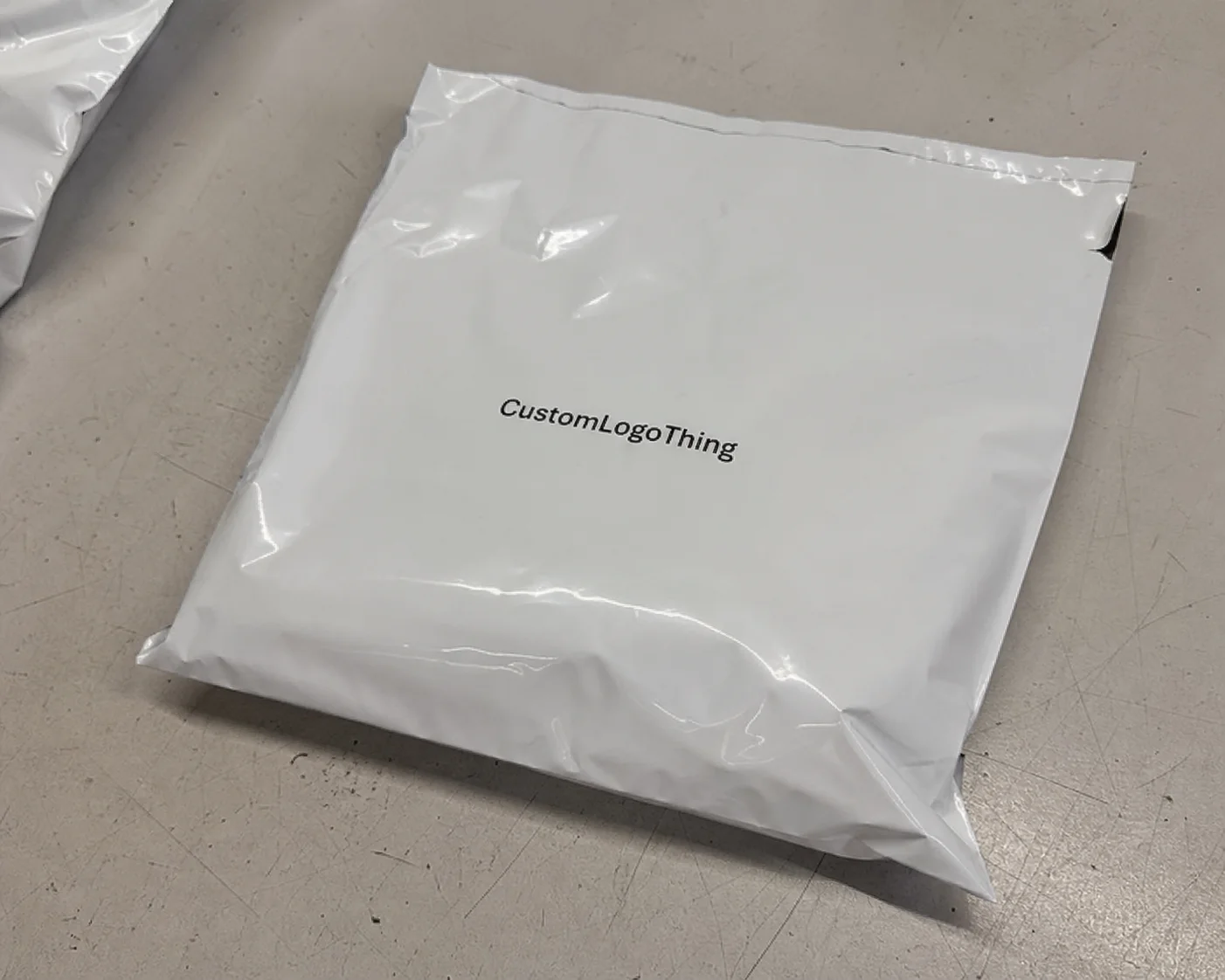
Hotels choose poly mailers for practical reasons first. They are light, which helps keep postage under control. They resist moisture better than paper-based bags, which matters in spa areas, housekeeping workflows, and environments where clothing or toiletries may be handled near water. They also print cleanly, so the brand mark looks intentional rather than improvised.
Generic bags can work for a short time, but they often create extra handling steps. Staff may need to add labels, apply stickers, or repack items because the original bag does not fit the product properly. Branded mailers reduce that friction. The team packs once, seals once, and moves on.
Hotels commonly use printed mailers for:
- Amenity kits for premium rooms and VIP arrivals
- Spa retail items such as robes, skincare, and accessories
- Laundry returns and guest garment handling
- Gift shop shipping for branded merchandise
- Event takeaway packs and small hospitality giveaways
There is also a presentation issue. When a guest receives a branded mailer, even a simple one, it feels like it belongs to the property. A clean, well-printed bag makes the operation look organized without adding much weight or labor.
“The best hotel packaging is the kind that does its job quietly: it seals properly, prints clearly, protects the contents, and does not complicate the packing table.”
For buyers comparing formats, a broader view of available constructions can help. Our Custom Poly Mailers page shows common options, and Custom Packaging Products is useful if you are standardizing packaging across several hotel departments.
Printed poly mailer bag options that fit hotel operations
Hotel teams rarely need the same mailer spec across every department. Housekeeping may need a straightforward, opaque bag for laundry returns. A spa may want a softer, more polished appearance for retail products. A gift shop or concierge desk may need a size that can hold folded apparel or compact boxed items without overfilling.
Material selection changes both performance and price. LDPE is widely used because it is flexible, economical, and easy to print on. Co-extruded film is a better choice when puncture resistance matters more, or when the property wants a denser, more premium feel. Opaque film is especially useful for privacy-sensitive items, including guest laundry and personal goods. If the contents should not show through, do not rely on a thin translucent film.
Closures should be chosen with the same level of care. A standard self-seal adhesive works well for single-use shipping. Tamper-evident closures are more suitable for guest returns, controlled items, or packages that need an obvious sign if opened. Double-seal formats can make sense when the mailer may be reused or when the team wants a cleaner opening experience for the guest.
Printing is where the brand appears, but more colors are not automatically better. In many hotel programs, a one-color logo on white or black film looks sharper than a crowded full-color design and keeps the quote under control. Full-color printing is best reserved for properties that actually need it, usually because the brand standards demand it or the package is being used in a higher-value retail setting. Matte finishes feel more refined; glossy finishes read brighter and more retail-oriented. Inside print can look excellent, but it belongs to programs where the extra cost is justified.
Basic film colors also affect both budget and perception:
- White: clean, flexible, and usually the safest fit for most hotel brands
- Black: more premium in appearance and better for hiding contents
- Custom brand colors: strong identity, though they often require tighter print control and more setup work
The best choice is the one that fits the department. A luxury spa and a housekeeping laundry bag do not need the same spec. Overspecifying a bag wastes money; underspecifying it creates complaints and replacements.
Key specifications hotel buyers should check before ordering
If you want a quote that can actually be compared, start with the details that change performance and cost. Size, film thickness, opacity, seal type, and print area are the key items. Without those, two quotes may look similar while being completely different products.
Size is where many orders go wrong. A small mailer for accessories may sit around 6 x 9 inches or 9 x 12 inches. Medium sizes such as 10 x 13 inches or 12 x 15 inches often work for apparel, slippers, or compact amenity kits. Larger formats may be needed for robes, folded textiles, or bulk spa sets. If the item has corners, volume, or a box inside, leave room for the fold and the adhesive flap. Bags packed too tightly split at the seam or distort the print area.
Thickness is usually measured in microns or mil. Too thin, and the bag feels flimsy or tears during handling. Too thick, and the hotel pays for material that does not bring a meaningful gain in use. Many hotel applications fall into a middle range where the film feels substantial without becoming unnecessarily heavy.
Opacity matters whenever privacy is part of the guest experience. Laundry returns, personal items, and certain gift shop products should not be visible through the film. If the contents need a clean presentation, an opaque or heavily pigmented bag is the safer choice. Transparent or semi-transparent film may be fine for some internal uses, but it is rarely the best option for guest-facing packaging.
Print requirements should be defined before the quote is issued. If the brand uses PMS matching, say so. If there is a safe zone for the logo, say that too. If the artwork includes fine lines, gradients, or tiny type, the supplier needs to know because not every print method handles those details equally well. Screen print, gravure, and flexographic printing each have their own strengths, and the wrong process can turn a good logo into a muddy one.
Performance checks should be tied to actual hotel use:
- Water resistance for spa and housekeeping conditions
- Tear resistance for courier movement and handling
- Seal integrity so the bag stays closed in transit
- Dimensional accuracy so the packed item does not force the seams
If the mailer will be shipped, ask whether the format has been tested against common handling standards such as ISTA protocols. Not every hotel order needs a formal laboratory program, but the reference is useful when the contents are fragile, premium, or likely to move through courier networks. For broader waste and materials context, the EPA can be a helpful source when the team is thinking through packaging materials and disposal considerations.
Printed poly mailer bags quote: pricing, MOQ, and unit cost
Pricing is where many hotel orders get approved or delayed. The main drivers are size, film thickness, number of print colors, order quantity, and finishing. Quotes are often compared as if every supplier offered the same construction, artwork setup, and freight terms. They do not.
For custom printed hotel mailers, MOQ usually starts in the low thousands. A common range is 3,000 to 10,000 pieces, depending on the size, print complexity, and material. Some suppliers can go lower on simpler builds, but once artwork setup and plate costs are involved, very small runs become expensive fast. Larger runs bring down the unit cost because the setup is spread across more bags.
Typical unit pricing can vary widely, but a practical working range for standard hotel mailers may look like this:
| Order size | Simple one-color print | More complex full-color print | What drives the cost |
|---|---|---|---|
| 3,000-5,000 pcs | $0.18-$0.35/unit | $0.28-$0.55/unit | Setup costs are spread over fewer pieces |
| 5,000-10,000 pcs | $0.14-$0.28/unit | $0.22-$0.42/unit | Better volume breaks and more efficient production |
| 10,000+ pcs | $0.10-$0.22/unit | $0.18-$0.35/unit | Best value when the spec stays standard |
Those figures are estimates, not a fixed market rate. A thick black co-ex film with inside print will cost more than a plain white mailer with a one-color logo. Custom sizes, premium finishes, and tight PMS matching also raise the price. Freight and duties can change the final landed cost just as much as the unit cost can, which is why the quote needs to show the whole picture.
There are sensible ways to reduce spend without making the bag look cheap:
- Use fewer print colors if the logo allows it
- Stay with standard sizes instead of custom die-cut formats
- Choose a proven film thickness rather than overspecifying
- Skip premium finishes unless the bag is part of a guest-facing retail sale
Watch for hidden costs. Artwork setup, plate charges, samples, freight, and rush fees can move the final number more than the base price does. A quote that looks attractive on the first line may become less attractive once shipping and revisions are added. Ask whether the quoted price includes setup, proofing, freight, and taxes, then compare on the same terms.
If you need pricing guidance for hotel packaging, use Contact Us and ask for a staged quote. Three levels usually make the tradeoffs clearer: budget, balanced, and premium. Procurement can then judge the options on practical differences rather than on a single price point that may not tell the whole story.
Production steps, proofing, and lead time for hotel orders
A good mailer order should move through a simple sequence: inquiry, artwork review, digital proof, sample approval if needed, production, and delivery. If the process becomes unclear or overly slow, the problem is usually missing information rather than the bag itself.
To get a faster and more accurate quote, send these details first:
- Bag size or the product dimensions
- Estimated quantity
- Logo artwork file
- Print colors and placement
- Material or finish preference
- Delivery city and target date
If the exact size is unknown, send the item being packed. A competent supplier can estimate the right bag based on the product’s dimensions, fold, thickness, and closure allowance. That is normal.
Lead time depends on order size and print complexity. A simple custom run often takes 12 to 15 business days from proof approval, sometimes less when the specification is standard and the production queue is open. Larger jobs or more detailed artwork can take longer, especially if PMS color matching is involved or if revisions are still happening during proofing. Rush production may be available, but rush fees are real and should be budgeted for rather than treated as an exception.
Samples are useful when the order needs internal approval. Depending on the situation, the supplier may provide:
- Blank sample to check size, feel, and seal
- Stock sample to review construction quality
- Custom proof sample to validate print placement and appearance
The most common delay is artwork, not production capacity. Blurry logos, missing fonts, color disputes, and late spec changes create avoidable problems. After proof approval, a design change should be treated like a new order in practical terms.
How hotel procurement teams can get clearer quotes faster
Hotel procurement does not need sales language; it needs usable information. The fastest quote is usually the one that comes with a clean brief. If the supplier has to keep asking for bag size, print count, or target delivery date, the process slows down and the price often becomes less accurate.
Factory-direct sourcing can be useful when the spec is stable and repeat orders matter. It gives the buyer more control over consistency, which is especially important for hotel groups that want the same packaging across multiple properties. Stable materials, repeatable print quality, and dependable color matching matter more than flashy options that are difficult to reorder.
Quality control checks should focus on what hotel teams actually use:
- Seal strength so the closure stays closed
- Print alignment so the logo sits correctly on the bag
- Film consistency so the material feels the same from batch to batch
- Dimensional accuracy so the packed item fits without forcing the seam
For larger purchasing programs, repeatability matters more than novelty. Reorder records, clear specs, and simple invoicing save time later. They also reduce the back-and-forth that often happens when a new buyer inherits a packaging program with no written standards.
If the hotel is trying to build a stronger sustainability story around the package, it helps to review materials and end-of-life considerations early. The FSC is more relevant to paper components than to poly film, but it is still useful if the broader packaging system includes cartons, inserts, or mixed-material outer packaging.
For a hotel buyer comparing suppliers, the strongest quote is not always the cheapest. It is the one that balances size, print quality, MOQ, and landed cost without creating operational issues later. If you are requesting a Printed Poly Mailer Bags Quote for hotel use, the clearest path is to send exact specs, practical deadlines, and the artwork that is actually approved for production.
FAQ
What details do I need for a printed poly mailer bags quote for hotel use?
Provide the bag size, order quantity, logo artwork, number of print colors, material preference, and delivery location. If you do not know the exact bag size, send the product that will go inside the mailer and ask for a recommended fit.
What is the typical MOQ for custom printed hotel mailer bags?
MOQ usually depends on size, material, and print complexity, but custom runs often begin at a few thousand pieces. Larger quantities usually lower the unit cost, so it is worth checking price breaks before locking the order size.
How much does a custom printed poly mailer cost for hotels?
Price changes based on size, film thickness, print colors, quantity, finishing, and freight. Ask for a quote that separates product cost, setup charges, and shipping so you can compare suppliers on the same basis.
How long does production take after I approve the proof?
Standard production often takes about 12 to 15 business days after proof approval, though the timeline can be longer for large runs or complex artwork. Rush schedules may be possible if the specification is simple and the artwork is final.
Can I get a sample before placing a hotel order?
Yes. Many suppliers can provide a blank sample, a stock sample, or a custom proof sample. Samples are useful for checking size, seal strength, print placement, and the overall look before full production begins.


