If you are requesting a printed Poly Mailer Bags quote for jewelry, you are usually balancing three priorities at once: protecting a small but valuable item, keeping shipping costs under control, and presenting the package in a way that feels consistent with the brand. Jewelry may be light, yet the packaging still has to look deliberate, seal cleanly, and hold up through a parcel network that is not gentle on soft materials. That is why the quote process deserves more attention than a quick price check.
For a buyer, the best mailer is rarely the one with the most features. It is the one that fits the pack-out properly, prints clearly, and avoids unnecessary cost in both material and freight. A Printed Poly Mailer Bags Quote for jewelry should be built around actual product dimensions, actual closure needs, and actual shipping conditions, not a generic guess based on a logo and a hoped-for quantity.
Why jewelry brands request printed mailer quotes before ordering
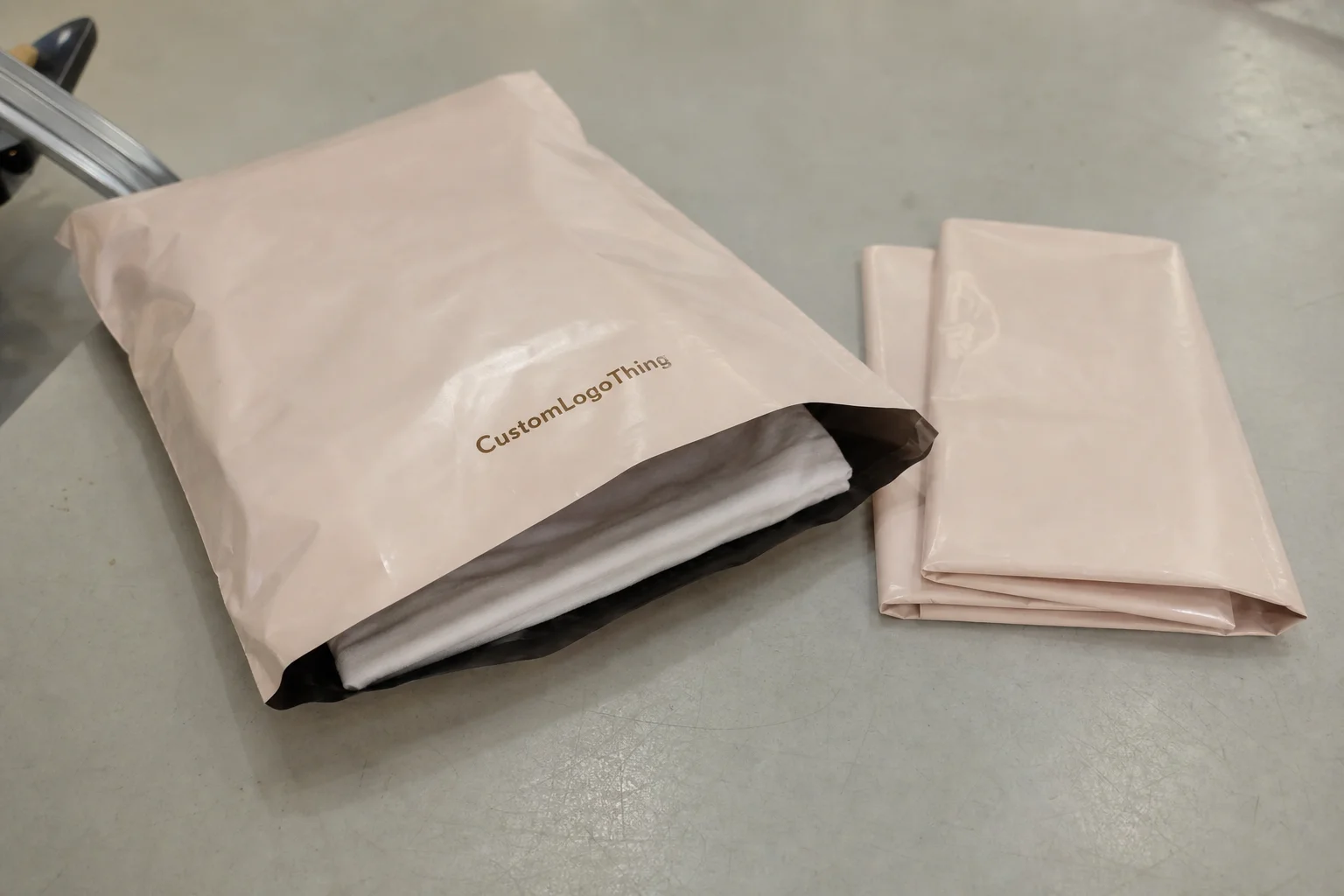
Jewelry orders tend to be compact, but customer expectations are high. A pair of earrings, a bracelet, or a necklace set still needs packaging that feels intentional, especially if the item is being sent directly to the end customer. A printed poly mailer gives the shipment a branded outer layer without the weight and cost of a rigid box for every order, which is one reason it is common in e-commerce fulfillment.
In practice, jewelry brands use printed mailers for direct-to-consumer shipping, gift promotions, subscription-style packs, seasonal launches, and lightweight accessory orders. If the product already sits inside a pouch, inner box, insert card, or protective wrap, the mailer becomes the outer shell that keeps the order clean and presentable. That is where a printed Poly Mailer Bags quote for jewelry starts to matter economically: one component can handle branding and transit protection together.
Brands usually request quotes early because they need to know whether the packaging they want still fits the budget they actually have. That is especially true for smaller businesses or teams testing new designs, where overcommitting to inventory can be more expensive than paying a slightly higher unit cost. A good quote should help answer a simple question: does this mailer improve the pack-out enough to justify its price?
The decision usually comes down to three practical concerns:
- Appearance — accurate print, clean logo placement, and a finish that suits the brand.
- Shipping efficiency — low weight, compact thickness, and a size that works in fulfillment.
- Cost control — a unit price that makes sense at the quantity being ordered.
Many buyers also compare the mailer against other packaging they already use, especially if they are trying to simplify packing stations or reduce waste. Reviewing Custom Poly Mailers alongside other Custom Packaging Products can make it easier to decide whether the jewelry order really needs a more complex format or just a well-spec’d outer mailer.
“A jewelry mailer does not need to be extravagant to be effective. It needs to fit properly, print cleanly, and seal with enough confidence that the fulfillment team trusts it on every order.”
Jewelry mailer construction, print options, and finish details
Most Printed Poly Mailers are made from polyethylene film, often in a layered structure that gives the bag flexibility, tear resistance, and a smooth print surface. The outer layer holds the artwork, while the inner layer helps the bag fold and seal without cracking at the seams. For jewelry shipping, that matters because the mailer needs to resist scuffing and light puncture risk while still feeling light in hand.
The standard closure is a self-seal adhesive strip. It speeds up packing, improves consistency at the bench, and gives the customer a visible seal that suggests the package has not been opened in transit. Some brands ask for an additional security strip or a double-seal area, but that only makes sense if the workflow or product risk really warrants it.
Print method affects both the appearance and the quote. Larger orders often favor flexographic printing because setup costs are spread across more units, while shorter runs may rely on other print approaches depending on the artwork and supplier capability. A simple one-color logo is easier to quote than a full-coverage background, a pattern with tight registration, or artwork that requires exact color matching. That is one of the reasons a printed Poly Mailer Bags quote for jewelry can vary so much from one design to another.
Finish details matter more than many first-time buyers expect. Matte tends to feel restrained and premium, while gloss gives the package a brighter retail look under store or studio lighting. Opacity is also useful because it prevents contents from showing through thin film, which is particularly helpful for privacy and presentation. For jewelry, a disciplined layout usually performs better than a crowded design; a clean logo and good spacing often create a stronger impression than heavy ink coverage.
If you need Pantone matching, ask for it early. Exact color control can increase setup time and may affect the final quote, especially if the artwork includes multiple brand colors or a large printed area. The same goes for white ink, reverse printing, special effects, and full-bleed layouts. Before a supplier can produce a reliable printed poly mailer bags Quote for Jewelry, they need to know whether the art is straightforward or print-heavy.
For teams trying to judge durability and transit expectations, references from ISTA can be useful, and sustainability guidance from EPA recycling resources helps frame end-of-life choices. Those sources do not price packaging, but they do reflect the way professional buyers think about protection, handling, and disposal.
Size, gauge, and print specifications that change the quote
Bag size is usually the first thing that changes the price. A mailer for a slim carded earring set is not the same as a mailer for a rigid jewelry box that also contains a pouch, tissue, and insert card. Width, length, and flap allowance all affect how much film is needed, and the quote shifts whenever the pack-out footprint grows.
Thickness is typically described in mils or microns. Thicker film usually brings better puncture resistance and a more substantial feel, but it also increases material cost. For jewelry, the goal is enough strength to protect the order, not extra gauge for appearance alone. A useful buyer question is whether the proposed thickness solves a packing problem or simply raises the unit cost without adding real value.
Print configuration changes the price just as quickly. A single-color logo on one side is simple. A two-sided design with multiple colors, fine type, or full-panel art takes more setup discipline and more production attention. If the design needs white ink, flood coverage, or exact placement from side to side, the quote usually climbs. Asking for a printed poly mailer bags quote for jewelry without specifying print sides, ink coverage, and color count often leads to a broad estimate instead of a dependable number.
It helps to compare the main variables side by side:
| Specification | Lower-cost tendency | Higher-cost tendency |
|---|---|---|
| Size | Standard small formats with limited material usage | Larger bags or custom dimensions requiring more film |
| Film thickness | Moderate gauge suitable for lightweight jewelry packs | Thicker film for added puncture resistance or a premium hand feel |
| Print colors | One-color logo or simple two-color layout | Multiple colors, full bleed, or exact Pantone matching |
| Print sides | Single-sided branding | Double-sided artwork or different artwork on each side |
| Artwork complexity | Clean logo and short text | Patterns, fine lines, gradients, or heavy ink coverage |
Special features can help, but only if they support the pack-out. Metallic accents, hang holes, extra security strips, and premium-feel structures may be useful in some programs, yet they can also add cost without improving the actual shipping process. The more practical question is whether the feature improves fit, speed, or brand perception enough to justify the added expense.
Cost, pricing, MOQ, and unit cost drivers
Printed poly mailer pricing usually comes from a handful of variables: film usage, print setup, number of colors, bag size, freight weight, and order quantity. Quantity matters a great deal because setup costs are spread across more pieces as the run gets larger. That is why a lower MOQ often comes with a higher unit price, while a larger order can bring the cost down substantially.
For jewelry brands, realistic pricing depends on how much branding is needed and how tightly the spec is controlled. A simple branded mailer at several thousand pieces may land in a practical range for DTC shipping, while a more complex custom-size, multi-color program will move higher. A supplier that gives a single number before learning the dimensions, print sides, artwork complexity, and quantity is not giving a useful quote. A printed poly mailer bags quote for jewelry should be detailed enough that you can compare it against another option without guessing what was included.
Buyers often see the same pattern across different order sizes:
- Smaller runs carry higher unit pricing because setup and preparation are divided across fewer bags.
- Mid-size orders often offer the best balance between price and inventory risk.
- Large runs improve unit cost, but only make sense if the size and artwork are stable.
Very simple mailers can be priced competitively at a few thousand pieces, while the same mailer in a much smaller quantity may cost noticeably more per unit. That is why the lowest quote on paper is not always the smartest buy. If your jewelry line is still testing packaging response, the better decision is usually to find the point where presentation, order risk, and unit cost all line up.
It is also common to compare three pricing tiers: a standard entry-level option, a branded mid-tier version, and a more premium custom format. The cheapest route is not automatically the best route, especially for gift-oriented jewelry where packaging is part of the product experience. If the mailer arrives with weak seals, inconsistent color, or thin film that feels flimsy in hand, customers notice before the package is even opened.
Rush orders, difficult artwork, and special finishes add cost. Standard sizes, fewer colors, and clean artwork files usually keep the quote tighter. If you want a more accurate printed poly mailer bags quote for jewelry, ask the supplier to separate the pricing factors clearly. That makes it easier to decide whether to simplify artwork, adjust size, or keep the current spec and accept the higher number.
As a practical buying range, many teams use rough budget bands rather than chasing a fixed benchmark. A plain branded poly mailer at scale may sit near the lower end of custom packaging spend, while thicker film, multi-color printing, and exact color matching push the cost upward. Freight, carton packing, and domestic or overseas lead time can matter nearly as much as unit cost once the order gets large.
Production steps, proofing, and lead time
The usual workflow starts with a request, then moves into artwork review, digital proofing, production approval, printing, finishing, and shipment. If any of those steps slows down, the schedule moves with it. The most common delays are incomplete artwork, missing size details, and uncertainty about color expectations.
Buyers can make the quote more accurate by sending finished files, the target quantity, bag dimensions, print sides, color count, and the delivery date they actually need. If the jewelry ships inside a box, pouch, or other inner wrap, that should be included too, because fit is part of the spec. A supplier can quote much more reliably when they know whether the mailer is protecting a slim carded item or a boxed necklace set with extra components.
Lead time depends on complexity and current production load. Straightforward orders with approved artwork usually move faster, while revisions, exact color requirements, or extra custom features extend the timeline. A standard order often stays on schedule when the bag size and print layout are common, and the proof is approved quickly. The same order can stretch if the brand changes artwork several times or requests a proof method that requires additional production steps.
Quality control matters here as well. Before shipment, a supplier should check print clarity, seal performance, and carton packing. For jewelry programs, those checks are not abstract. They determine whether the pack station runs smoothly and whether the first customer order looks polished. If you are comparing options and want to move quickly, ask about samples, proof timing, and whether approval is required before production begins.
Packaging testing references from ISTA can help teams set realistic expectations for handling and transit, even if a formal test is not part of the order. The point is not to overcomplicate a simple mailer purchase; it is to make sure the chosen spec can survive the trip without creating avoidable complaints.
What custom packaging buyers should compare before approving a supplier
When you are choosing a source for printed jewelry mailers, the lowest quote is only one part of the decision. You also need to know whether the supplier can hold material consistency, print clarity, and adhesive performance over time. Repeat orders are where packaging programs prove themselves, because a bag that looks fine once but drifts in color or seal quality later creates real problems for a growing brand.
Communication quality matters too. A strong supplier answers technical questions directly, explains tradeoffs without hiding behind sales language, and returns a quote quickly enough to support your internal timeline. If the response only says “best price” without explaining bag size, print method, or MOQ, that usually is not a serious pricing conversation.
For jewelry fulfillment, practical fit matters more than flashy promises. The bag should close cleanly, stack well in cartons, and present the logo neatly at first touch. Buyers should also ask whether repeat orders can match the original size and color closely enough to avoid downstream issues. For a recurring jewelry line, stable specs are often more valuable than a one-time discount.
One more caution: do not pay for features that do not improve the packaging. It is easy to end up with advanced appearance details that customers barely notice while the pack-out team struggles with bag size or seal behavior. A better supplier helps refine the spec, not just sell the most expensive version of it.
If your team wants to compare a broader packaging mix or tighten the spec sheet before ordering, the most direct step is to Contact Us and share the basic details. Clear information at the quote stage prevents a lot of waste later, and it usually leads to a cleaner production run.
Next steps to request an accurate jewelry mailer quote
If you want a quote you can actually use, send the details that drive production. That means bag dimensions, artwork file, estimated quantity, print sides, color count, and the delivery date. If the jewelry ships in a box or pouch, say so. If the pack-out must stay within a certain carrier limit, include that too. The more exact the information, the tighter the estimate.
Ask for an itemized quote. That makes it easier to see how much of the price comes from material, print setup, color count, and freight. It also helps when you are comparing two specs side by side. Sometimes the price jump comes from a larger size or a heavier film, and once you can see that clearly, the decision is easier.
It is also smart to ask whether samples, size checks, or pre-production proofs are included. A plain sample can confirm fit and seal quality. A printed proof can help verify artwork placement and color direction. If color matching matters for your brand, ask which proof method best reflects the final production process.
When a quote looks high, review one alternate size or one alternate film thickness before deciding the order is too expensive. A small adjustment often preserves the presentation you want while improving the cost position. That is the practical way to buy packaging: test the spec, compare the tradeoffs, and keep the design focused on the customer experience.
In the end, the fastest route to a dependable printed poly mailer bags quote for jewelry is a complete spec sheet, print-ready artwork, and a realistic quantity target. Give the supplier real inputs, and you will get a number that can actually be used in your packaging plan.
How do I get an accurate printed poly mailer bags quote for jewelry?
Send the exact bag size, quantity, artwork file, print colors, and delivery timeline so the quote reflects real production costs. Include whether the jewelry ships in boxes, pouches, or loose protective packaging, since fit affects the final spec. Ask for an itemized estimate so material, printing, and freight are easier to compare.
What MOQ should I expect for custom jewelry poly mailers?
MOQ depends on print method, size, and number of colors, but larger runs usually deliver a better unit price. Simple branded designs often have more flexible minimums than full-coverage, multi-color artwork. If you need a small test run, ask whether a standard size or simpler print layout can lower the minimum.
Are printed poly mailers suitable for shipping delicate jewelry orders?
Yes, when the jewelry is already protected inside a pouch, box, or inner wrap and the mailer size is chosen correctly. The mailer protects against dirt, moisture, and handling while keeping shipping weight low. For fragile pieces or high-value orders, combine the mailer with inner packaging and secure sealing.
What affects the turnaround time for custom printed mailer bags?
Artwork approval, print complexity, order size, and current production load are the main timeline factors. Final files and fast proof approval can shorten the schedule significantly. Rush timelines are more realistic when the bag size and print layout are straightforward.
Can I request samples before placing a full order?
Yes, ask whether plain samples, size samples, or printed pre-production proofs are available. Samples help verify fit, seal quality, and print appearance before committing to production. If color matching matters, request a proof method that reflects the final print process as closely as possible.


