Jewelry is small, but the packaging bill often refuses to behave that way. That is why Poly Mailer Bags unit cost for jewelry deserves more attention than many sellers give it at the quoting stage, especially once print setup, MOQ, film thickness, bag size, and freight are all part of the final number.
If you only compare sticker price, you miss the expenses that actually squeeze margin: weak seals, scuffed branding, oversized mailers, and the occasional shipment that arrives damaged enough to require a reship. The cheapest bag on paper can turn into the most expensive choice in practice. That happens more often than people expect.
For earrings, bracelets, slim chains, and accessory sets, a well-sized poly mailer can protect profit better than a rigid box because it keeps weight low and reduces dimensional weight. That matters when orders are frequent and each shipment is light enough that a few cents, or a few grams, shift the economics. A lot of packaging decisions live in that narrow space between “looks fine” and “costs too much to keep using.”
The real target is total landed cost. That means the bag itself, freight, breakage risk, labor, and the time spent fixing avoidable problems. Buyers who price that way usually make stronger packaging choices than buyers focused only on the lowest quote line.
“For small jewelry SKUs, the packaging should protect profit first and look good second. If it does both, you have a workable spec. If it only looks cheap on paper, it usually costs more later.”
Mailer styles and print choices that fit jewelry shipments
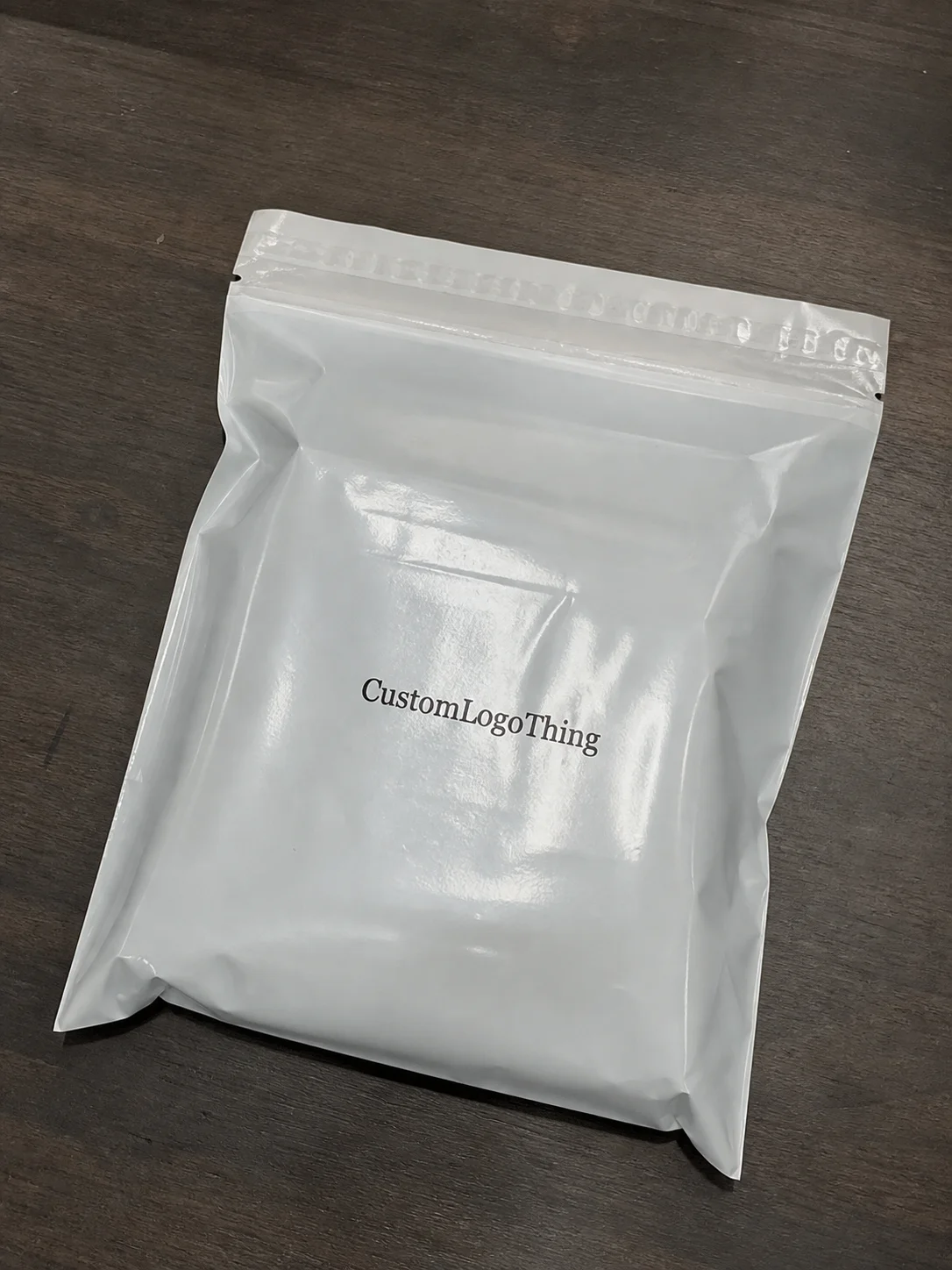
Not every jewelry order needs the same mailer. A minimalist accessory line sending lightweight pieces has different needs than a premium brand shipping gift-ready sets with inserts, pouches, or small boxes. The right style depends on product value, how much presentation matters, and how rough the package is likely to be handled in transit.
Common choices include plain white poly mailers, glossy branded mailers, matte-finish bags, and padded mailers for more delicate or higher-value items. Plain stock bags are usually the lowest-cost option and are fast to source. Branded mailers cost more, but they turn the shipping moment into part of the customer experience, which matters for repeat buyers and direct-to-consumer jewelry brands that depend on presentation as much as protection.
Print complexity changes the quote quickly. A one-color logo on the front is usually the simplest version to produce. Multi-color printing, inside printing, metallic inks, and full-coverage artwork all add setup burden and raise the per-piece cost. If you also change the bag size, you may trigger extra tooling or plate charges depending on the supplier and print method.
For jewelry shipments, a few features tend to matter first:
- Tamper-evident seal for retail and DTC orders
- Strong adhesive strip that stays closed through normal transit
- Opaque film for privacy and concealment
- Water resistance for basic weather protection
- Clean print surface that holds branding without looking patchy
There is still a time for boxes. If the item is fragile, unusually valuable, or packaged with a lot of inserts, a rigid box may be the better answer even if it costs more. But for compact accessories and lighter jewelry orders, mailers often give the cleanest balance of cost, speed, and presentation.
For buyers comparing options, a practical starting point is Custom Poly Mailers with the right size and closure style, then adding print only where it improves brand recognition or supports the selling price.
Specifications that affect strength, look, and shipping safety
If a quote seems hard to compare, break it down by specification. That is usually where the real differences live. For jewelry packaging, the most important variables are material thickness, bag size, seal type, tear resistance, and print coverage. Those details determine whether the mailer feels premium or flimsy, and whether it survives sorting belts, delivery bins, and the general abuse that happens between packing and arrival.
Thickness is often described in microns or mils, depending on the supplier. A thinner film can reduce cost, but it also increases the chance of punctures, split seams, or a bag that feels too soft in hand. A thicker film usually improves durability and gives the package a more substantial feel. For lightweight jewelry, many buyers choose a middle range rather than chasing the absolute lowest gauge.
Size matters more than people think. Oversized mailers waste material and can raise shipping cost if the carrier charges by dimensional weight. Too small, and the product, pouch, card, or insert starts forcing the bag to bulge, which can weaken the seal or make the package look careless. The best fit is the one that closes cleanly without cramming everything into place.
How to size for jewelry without wasting money
Start with the product, not the bag catalog. Measure the jewelry pouch, any small box, a thank-you card, and a protective insert if you use one. Then leave just enough clearance for the seal to close without strain. That is the difference between a package that looks deliberate and one that looks packed at the last second.
Matte finishes are popular because they hide scuffs more effectively. Glossy mailers can look sharper when brand new, but they also show handling marks and fingerprints sooner. If your customers judge presentation from the outer packaging alone, matte usually holds up better over the journey.
Seal strength is not something to treat as optional. The adhesive strip should hold through ordinary distribution handling, and the corners should resist tearing when the bag is stacked, squeezed, or bent. If you ship small metal items like clasps, charm sets, or layered accessories, a slightly thicker film is usually worth the extra cost because puncture resistance matters more than a tiny savings per unit.
Packaging performance should also fit common transit expectations. Industry references such as ISTA testing and material guidance from EPA are useful when you are checking how a package should hold up under stress and how much material is actually necessary. The paperwork is not exciting, but it keeps specs grounded in reality.
| Mailer option | Typical use | Relative cost | Best fit |
|---|---|---|---|
| Plain white poly mailer | Basic jewelry orders, samples | Lowest | Low-margin SKUs, high volume |
| Branded glossy mailer | DTC jewelry, retail presentation | Moderate | Brand visibility, repeat buyers |
| Matte custom mailer | Premium accessory shipments | Moderate to higher | Scuff resistance, softer look |
| Padded mailer | Delicate or higher-value items | Higher | Extra cushioning without a box |
Poly mailer bags unit cost for jewelry: pricing, MOQ, and what changes your quote
Here is the part most buyers want first. Fair enough. Poly Mailer Bags unit cost for jewelry mainly depends on size, thickness, print complexity, and quantity. The same-looking mailer can land at very different prices once one of those variables changes.
For plain stock mailers, pricing can sit around $0.05-$0.12 per piece at larger volumes, depending on size and material. For custom printed jewelry mailers, a realistic range is often $0.18-$0.40 per piece at mid-to-higher quantities, with smaller runs sometimes ending up higher because setup costs are spread across fewer units. Add specialty finishes, inside printing, or heavier film, and the number moves up again.
MOQ is the next lever. Higher quantities usually reduce the unit cost because setup charges are spread across more pieces. That is why 500 bags can feel expensive and 10,000 bags can suddenly look reasonable. Small runs still make sense for new product launches, seasonal jewelry, branding tests, or short-term packaging updates, but the buyer should go in expecting less favorable pricing per unit.
Here is a practical way to read the numbers:
| Order volume | Typical unit cost range | What usually happens | Best for |
|---|---|---|---|
| 500-1,000 pcs | $0.30-$0.70 | Higher setup burden per unit | Testing, launches, short seasons |
| 2,000-5,000 pcs | $0.18-$0.40 | Balanced cost and flexibility | Growing jewelry brands |
| 10,000+ pcs | $0.10-$0.25 | Better bulk pricing | Stable, repeat shipping programs |
Those ranges are not fixed. They move with film weight, bag dimensions, print area, finish, and freight. If artwork needs revisions, that adds time and sometimes extra cost. If the supplier charges sample fees, those need to be included too. Rush production usually increases the price as well. None of that is unusual; it is simply how custom packaging is priced.
Freight can also distort the final number. A bag that looks inexpensive at the factory can become much less attractive once shipping lands. Ask for the cost per piece plus freight estimate, not just an ex-works quote, or you are only comparing part of the real number. For buyers building a wider packaging program, Custom Packaging Products can help compare cartons, inserts, and related pieces without forcing everything into a single format.
One more practical point: if you are comparing suppliers, ask what exactly is included in the unit price. Some quotes include printing and bag conversion only. Others include cartons, inner packing, inspection, or export documentation. The line that looks lower may simply be missing a few cost buckets.
Production steps, lead time, and approval checkpoints
Custom mailer production follows a fairly predictable path. First comes the quote request. Then size and spec confirmation. Then artwork setup. Then proof approval. Then production. Then inspection and shipping. There is nothing mysterious about the sequence, but delays usually appear when the buyer sends incomplete information or changes the design after approval.
The most common hold-ups come from vague dimensions, low-resolution artwork, or slow proof review. If the logo file is soft, the colors are not specified, or the packout is estimated instead of measured, the order slows down. That is not a production issue; it is a spec issue.
Plain stock poly mailers are faster because there is no print setup. Custom printed jewelry mailers take longer because the supplier needs to prep artwork, confirm the layout, and run the order through printing and drying. For standard custom orders, lead time often lands around 12-15 business days after proof approval, then freight time is added on top. Larger runs, specialty finishes, and unusual construction details can extend that timeline.
If you want fewer surprises, ask for these items before placing the order:
- Material specification sheet
- Confirmed bag dimensions
- Print method and color count
- Proof approval process
- Production schedule
- Shipping estimate
For brands that care about repeatability, supplier testing and material consistency matter too. Packaging associations and standards groups such as PMMI resources and FSC guidance at fsc.org can be useful when you are checking material claims or evaluating sustainability language. They are not a substitute for a spec sheet, but they help keep claims honest.
What makes a supplier worth choosing for jewelry packaging
A good supplier does more than send a number and wait for payment. For jewelry packaging, you want consistency, clear specifications, and quick answers when something needs to change. Cheap quotes are easy. Reliable execution is the part people notice only after a bad batch arrives.
The supplier should be able to explain material options clearly, show print limits, and confirm whether the adhesive and film are suitable for your item size. If they cannot do that, they are probably treating jewelry packaging like a generic bag order. That usually leads to problems, because jewelry tends to need tighter tolerances than many other small products.
Look for these practical signs:
- Responsive proofing with readable mockups
- Clear MOQ and honest bulk pricing tiers
- Stable material sourcing so reorders match the first run
- Editable specifications when you need to adjust size or print area
- Real guidance when a cheaper spec would fail in shipping
Reliable packaging support matters because jewelry shipments are often small but highly visible. One bad mailer can trigger a customer complaint immediately, and in a category built on presentation, that complaint can feel bigger than the cost of the package itself. A supplier worth keeping should care about fit, print quality, and seal performance, not just volume.
There is also a more practical test: do they warn you when a premium finish is unnecessary, when a thinner film is still adequate, or when the bag needs to be larger so the packout closes properly? That kind of feedback usually saves money in the long run, even if it makes the quote a little less exciting at first glance.
Best next steps to lower unit cost without cutting quality
If you want a better quote, do the prep work first. Measure the product, define the packout, and decide whether branding is needed on every shipment or only on retail orders. That alone can change the unit cost more than a minor negotiation over the base price.
Then ask for three quote options: a budget spec, a balanced spec, and a premium spec. That gives you a clean comparison of what changes the price and which upgrades are actually worth paying for. Skipping that step usually leaves buyers comparing apples to half-baked oranges.
Request samples or digital proofs before you commit, especially if the jewelry is fragile, premium, or gift-ready. A sample can reveal film feel, seal strength, print clarity, and finish quality faster than a long email thread. It also prevents the awkward discovery that the bag is too small only after part of the order has already been made.
To lower unit cost without sacrificing quality:
- Keep artwork simple, ideally one color if the brand can support it
- Match bag size closely to the actual packout
- Choose a finish that hides handling marks well
- Forecast volume so bulk pricing becomes available
- Approve proofs quickly so production does not sit idle
That is the practical path to a better Poly Mailer Bags Unit Cost for jewelry: clear specs, a sensible MOQ, and no guesswork on freight or setup. If you send a supplier the product dimensions, monthly volume, artwork needs, and target shipping method up front, the quote will usually be much more useful than a simple price-per-bag line with half the story missing.
What affects poly mailer bags unit cost for jewelry the most?
Size, film thickness, print complexity, and order quantity usually have the biggest impact. Shipping, artwork revisions, and rush production can also raise the final cost.
Are custom jewelry poly mailers cheaper than boxes?
For small, lightweight items, poly mailers are often cheaper per shipment than rigid boxes. They can also reduce dimensional weight, which may lower freight cost if the carrier charges by package size.
What MOQ should I expect for printed jewelry mailer bags?
MOQ varies by supplier and print method, but custom printed runs usually require a minimum order to cover setup. Higher quantities generally reduce the per-bag cost, so it helps to forecast demand before ordering.
How long does production usually take for custom jewelry mailers?
Plain stock mailers are faster than custom printed bags. Custom orders usually need proof approval, production time, inspection, and shipping time before delivery. Standard runs often take about 12-15 business days after proof approval, with longer timelines for larger or more complex orders.
What should I ask for before placing an order for jewelry mailers?
Ask for a clear quote, material specifications, proof approval process, sample options, and estimated shipping cost. Also confirm size, seal strength, and whether the bag is opaque enough for your product.


