Buyer Fit Snapshot
| Best fit | Poly Mailers Manufacturer projects where brand print, material claims, artwork control, MOQ, and repeat-order consistency need to be specified before quoting. |
|---|---|
| Quote inputs | Share finished size, material target, print colors, finish, packing count, annual reorder estimate, ship-to region, and any compliance wording. |
| Proofing check | Approve dieline scale, logo placement, barcode or warning zones, color tolerance, closure strength, and carton packing before bulk production. |
| Main risk | Vague material claims, crowded artwork, missing packing details, or unclear freight terms can make a low unit price expensive after revisions. |
Fast answer: Poly Mailers Manufacturer: Material Claims, Seal Quality, and Freight Cost should be specified like a repeatable production item. The safest quote records material, print method, finish, artwork proof, packing count, and reorder notes in one written spec.
Production checks before approval
Compare the actual filled-product size with the drawing, then confirm tolerance on folds, seals, hang holes, label areas, and retail display edges. Reserve space for logos, QR codes, warning copy, and material claims before decorative graphics fill the panel.
Quote comparison points
Review material grade, print process, finish, sampling route, tooling charges, carton quantity, and freight assumptions side by side. A quote is only useful when the supplier can repeat the same color, closure quality, and packing count on the next order.
Poly Mailers Manufacturer: How to Choose the Right One
A Poly Mailers Manufacturer does a lot more than print logos on plastic. The real work starts before the artwork file ever shows up. Film structure matters. Seal strength matters. Size control matters. So does the finish that keeps apparel, flat goods, and lightweight accessories moving through fulfillment without turning into a mess.
A bad shipment is easy to blame on the carrier. Usually, the packaging had a hand in it first. A weak side seal. A mailer that was too tight for the actual product stack. Film that varied enough to split under pressure. Those problems do not show up on a pretty quote sheet, which is exactly why a Poly Mailers Manufacturer needs to be judged like an operational partner, not a disposable vendor.
That is where the money is. A good poly mailers manufacturer can cut rework, reduce damage tied to returns, and speed up packing because the mailer fits the product instead of fighting it. If you are comparing broader packaging options, the team at Custom Packaging Products and the page for Custom Poly Mailers are useful references for what a custom order can actually look like.
The cheapest quote is often the one that bites later. A strong poly mailers manufacturer helps you avoid overpacking, extra void fill, and the ugly math of paying twice for the same shipment. The mailer is not a tiny detail. It is a protective sleeve and a cost lever. Get it right, and the rest of the workflow gets calmer. Get it wrong, and every return quietly eats margin.
I have seen brands obsess over a half-cent difference and then lose far more on damaged stock, repacks, and complaint handling. That is a very normal mistake. The packaging line item looks small, so people treat it like a tiny decision. It is not tiny once the orders start moving.
What a Poly Mailers Manufacturer Actually Does
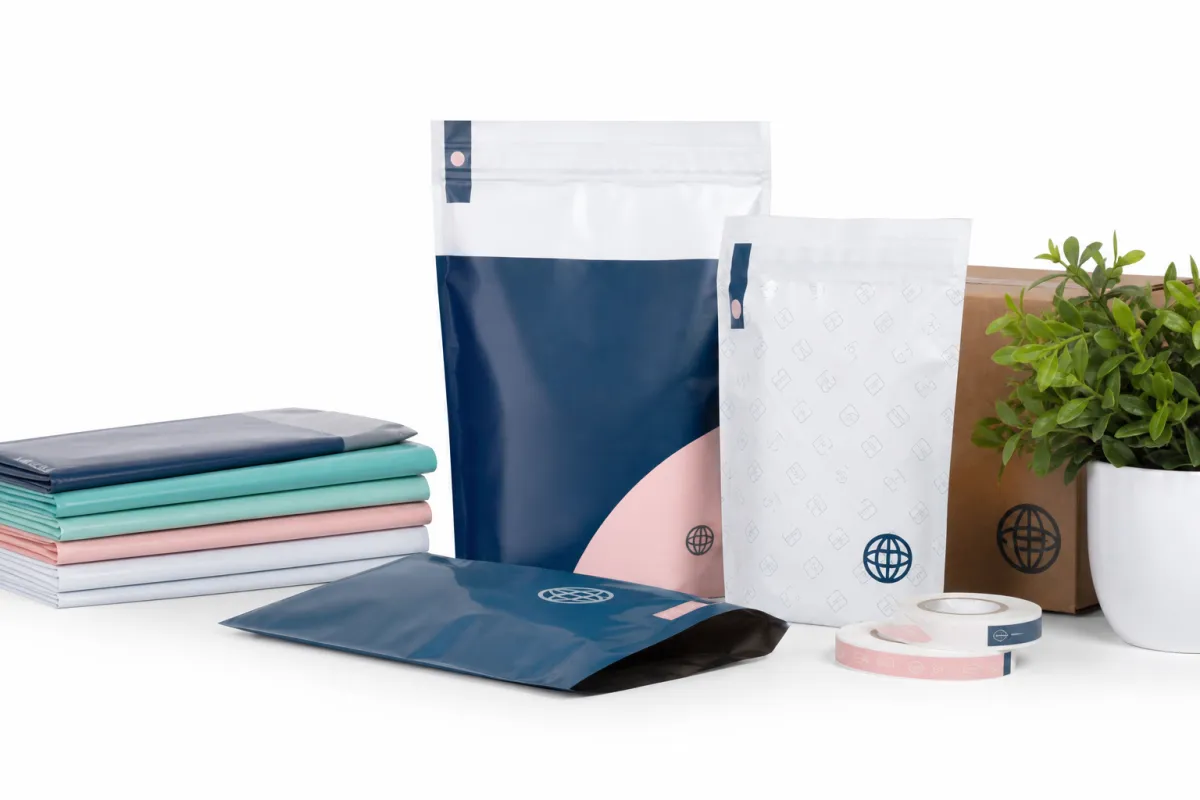
A poly mailers manufacturer turns resin or pre-formed film into a finished shipping product that protects contents, carries branding, and survives the handoff between warehouse, carrier, and customer. Simple on paper. Not simple in real life. The supplier has to manage film selection, gauge consistency, sealing geometry, print fidelity, and final packing format while staying inside a unit cost that still makes sense.
The gap between a real poly mailers manufacturer and a reseller matters more than most buyers think. A reseller can quote something that looks attractive, but a manufacturer has direct control over material blends, sourcing decisions, color match, and quality checks. That usually means better repeatability. It also means fewer surprises when you reorder the same SKU six months later and expect the new run to behave like the last one.
Shipping risk sits in the background the whole time. A reliable poly mailers manufacturer reduces tears, punctures, and transit abrasion by matching thickness and seal design to the actual load. A lightweight tee in a 2.5 mil mailer is one situation. A bundle with inserts, folded denim, or a return label inside the pack is another. Small changes in product shape can push a package from stable to failure-prone faster than people expect.
"A cheap mailer that splits in transit is not cheap. It is just delayed cost."
Most packaging buyers are not trying to win a material science contest. They want a mailer that works at packing speed, prints cleanly, and does not create customer complaints. A good poly mailers manufacturer understands that the mailer is part of the fulfillment system, not an afterthought. It affects labor time, packing accuracy, freight protection, and the first impression a customer gets when the parcel hits the doorstep.
For brands that care about traceability or sustainability claims, the manufacturer becomes part of the evidence trail. Recycled content. FSC-aligned paper inserts. A recyclability story that stands up when someone asks for proof. That takes documentation, not marketing fluff. Independent standards help separate real claims from vague ones. For transit performance, organizations like the ISTA test methods are useful reference points; for material stewardship, the FSC certification framework helps keep claims honest.
I usually tell buyers to ask one blunt question early: can the supplier show how the bag was tested, or are they just talking around it? The answer says a lot. A serious poly mailers manufacturer should have more than a sales pitch. They should have specs, sample records, and a way to explain why a certain film, seal, or adhesive was chosen.
How a Poly Mailers Manufacturer Works: From Material to Mailer
The production flow usually begins with material selection. A poly mailers manufacturer may source film, compound resin into a usable blend, or work from recycled-content input depending on the spec. From there, the film is formed or slit to width, and the supplier checks thickness across the roll. That gauge control matters because a mailer that reads as 2.5 mil on paper but drifts lower in actual output can behave very differently under load.
Cutting and sealing come next. The seals are not decoration. They determine whether the bag holds together during compression, tossing, and stack pressure in a trailer or sortation hub. A well-built poly mailers manufacturer will pay close attention to side seal width, bottom seal geometry, and adhesive strip placement if the mailer is a self-seal style. A narrow or inconsistent seal can look fine until the first rough handoff.
Printing is another place where experience shows. Custom logos, brand patterns, reorder labels, and warning messages all depend on registration accuracy. Color matching matters, especially for brands with strict identity systems. A good poly mailers manufacturer can keep logo placement consistent across runs, but setup work affects lead time. More colors, more coverage, and special finishes usually mean more prepress review and a longer approval cycle. No mystery there.
The flow usually looks like this:
- Raw material selection or film sourcing
- Thickness verification and width control
- Cutting, folding, and seal formation
- Printing, if the order is branded
- Final trimming, stacking, and carton packing
- Sample approval and quality release before shipment
Quality control is where a poly mailers manufacturer proves whether it deserves the order. Look for checks on dimensional accuracy, seal integrity, ink adhesion, and visual consistency. Good suppliers also ask for sample sign-off before full production starts. That step can feel slow, but it prevents expensive reprints. Catching a tiny artwork shift before a 100,000-unit run is a lot cheaper than explaining it after the fact.
The final packing stage matters more than people think. Box count, carton size, and stack height affect warehouse handling efficiency. A manufacturer that packs well saves labor on your end because the mailers are easier to count, store, and replenish. At that point, the poly mailers manufacturer is not just a source of bags. They are part of the fulfillment workflow, and that difference matters on busy weeks.
Key Factors When Choosing a Poly Mailers Manufacturer
Material choice should come first. A serious poly mailers manufacturer will walk you through virgin film, recycled content, opaque versus clear construction, and thickness options that usually land somewhere around 1.5 mil to 4 mil depending on the application. Lightweight apparel often works at the lower end. Heavier products, sharp-edged items, or higher-return categories usually need more thickness and better seal performance.
Print capability is the next filter. Ask how many colors the supplier can hold cleanly, how they handle registration, and whether they can keep the same branding consistent across repeat orders. A poly mailers manufacturer with solid print control saves you from the annoying problem of reruns that look close but not quite right. Brand consistency is not vanity. It shapes perceived quality the second the customer opens the parcel.
Minimum order quantity matters more than many first-time buyers expect. Some brands want a test run of 1,000 to 3,000 pieces before they commit. Others are ready for 10,000 or more if the fit is proven. A flexible poly mailers manufacturer can support both, but the pricing structure may change as setup costs spread across more units. Ask about sample policy, rerun policy, and how revisions are handled if the first proof needs changes.
Operational credibility deserves a hard look. Does the supplier respond quickly? Do they document specifications clearly? Can they explain production capacity without hand-waving? A strong poly mailers manufacturer should be able to describe thickness tolerance, artwork approval steps, and expected delivery windows clearly enough that your team can plan inventory instead of guessing at it. For larger programs, that level of documentation is the difference between a controlled rollout and a chaotic reorder cycle.
Sustainability claims need proof. If a poly mailers manufacturer says the bag contains recycled content, ask what percentage, how it is measured, and what documentation comes with it. If the supplier claims recyclability, that should be backed by local recycling realities, not generic wording. A mailer can be technically recyclable in some streams and practically unrecyclable in many curbside systems. That gap matters.
Here is a simple scorecard buyers can use:
- Sample quality: Does the sample match the intended weight, fit, and print clarity?
- Communication: Does the poly mailers manufacturer answer technical questions directly?
- Spec discipline: Are dimensions, thickness, seal type, and print method documented?
- Lead time: Are the quoted dates realistic, especially if artwork revisions are needed?
- Proof of quality: Is there a clear QC process, not just a promise?
One practical trick: ask for a finished sample and a production sample. They should match. If they do not, you already have your answer about consistency. That mismatch is a small warning sign that can turn into a bigger one later.
Poly Mailers Manufacturer Pricing: What Drives Cost
Pricing is where a lot of buyers get misled. A poly mailers manufacturer may quote a low unit price, but the total landed cost can jump once you add freight, setup, plates, artwork changes, or repacking charges. If you are comparing suppliers, insist on the same specification sheet from each one. Otherwise, you are not comparing prices. You are comparing assumptions.
The main cost drivers are usually size, thickness, film type, print complexity, and order volume. A plain white mailer with one-color branding is cheaper than a fully printed, higher-gauge bag with a tear strip and dual adhesive closure. A poly mailers manufacturer will often spread tooling or setup costs across the order, so larger runs bring the unit price down. Useful, sure. Only useful if your forecast is accurate enough to use the inventory before the design gets stale.
It helps to think about cost per shipped order, not cost per bag. If a better bag reduces damage, lowers repack labor, or speeds up pick-and-pack, the more expensive quote may still be the smarter financial choice. A skilled poly mailers manufacturer helps you see that broader picture instead of staring at the sticker price and pretending that is the whole story.
| Option | Typical MOQ | Indicative Unit Cost at 5,000 Pieces | Typical Lead Time | Best For |
|---|---|---|---|---|
| Stock white mailer, no print | 1,000-3,000 | $0.12-$0.20 | 5-10 business days | Fast restocks and low branding needs |
| Custom printed mailer, 1-2 colors | 3,000-5,000 | $0.18-$0.28 | 12-15 business days | Branded apparel and recurring ecommerce orders |
| Higher-gauge or recycled-content custom mailer | 5,000-10,000 | $0.24-$0.40 | 15-25 business days | Heavier items, sustainability programs, premium packaging |
Those numbers are not universal, and a poly mailers manufacturer may quote higher or lower depending on print coverage, freight route, and current resin conditions. Still, they give a practical frame of reference. If a quote lands way below those ranges, ask what was removed from the spec. Lower price can mean thinner film, smaller print area, weaker adhesive, or less quality control. Cheap has a habit of hiding somewhere.
It also pays to ask what is included. Does the poly mailers manufacturer absorb plate fees? Are proofs included? Is freight baked in or separate? What happens if the first production sample misses the color target? These details rarely look dramatic on their own, but together they decide whether a quote is genuinely competitive or just incomplete in a polished way.
One more thing: resin markets move. If your supplier quotes a tight number with no expiration window, that deserves a follow-up. Material pricing can shift faster than people expect, and a quote without a validity period is kinda a guess dressed up as certainty.
Poly Mailers Manufacturer Process and Timeline
The timeline usually begins with inquiry and quote, then moves into spec confirmation, artwork proofing, sample approval, production, inspection, and shipping. A poly mailers manufacturer that runs a clean process keeps those stages visible so you know where the order sits at each step. The better suppliers do not just say "in production." They tell you what is complete, what is pending, and what still needs your approval.
Fastest steps tend to be initial quoting and stock sample dispatch. Slowest steps are usually artwork revisions, color matching, and any sample changes after the first proof. A custom design can take longer than the buyer expects because every adjustment triggers another round of checking. A good poly mailers manufacturer will warn you early if a custom print layout needs extra time for registration or approval.
Custom orders also have a setup stage that stock products do not. That is not a flaw. It is the cost of getting the packaging right. Many experienced buyers plan around 12-15 business days from proof approval for standard custom runs, then add time for freight and peak season congestion. If the order needs a special film blend, recycled content, or a more complex print, the schedule should widen accordingly.
Planning ahead matters more than rush service. A poly mailers manufacturer can sometimes accelerate a job, but rushes usually cost more without solving the real problem, which is bad inventory planning. Reorder before stock gets tight. Obvious advice, sure. Still ignored all the time. Teams wait until the last carton is open and then start paying for panic. Build a safety buffer that reflects actual burn rate, not best-case forecasting fantasy.
For buyers handling multiple SKUs, define reorder triggers. A simple rule like "reorder at six weeks of cover" works better than reacting to a warehouse alert after inventory drops under two weeks. The right poly mailers manufacturer can support that rhythm if they know your reorder window and can keep spec records stable across repeat production.
Rush service makes sense in narrow cases: a seasonal spike, an unexpected launch, or a packaging failure that needs immediate replacement. Even then, the supplier should preserve the approval chain. Speed without spec control is how inconsistent branding and avoidable defects slip through.
In practice, the smoothest programs I have seen are the boring ones. The specs are locked. The artwork is versioned. The reorder point is written down. Nobody is improvising at the last minute. That sounds dull because it is dull. It also saves money.
Common Mistakes When Selecting a Supplier
The biggest mistake is choosing only on price. A poly mailers manufacturer that underbids the market may be trimming material quality, weakening seals, or leaving out part of the service. That turns into more returns, more customer service tickets, and more replacements. The purchase price looks lower until the downstream costs show up.
Skipping samples is another classic error. A photo or PDF proof does not show how a mailer behaves with real weight, heat, or rough handling. A poly mailers manufacturer might look perfect online, but the mailer can still fail if the seal peels under pressure or the film wrinkles badly during packing. Test the actual product. Fold it. Load it. Ship it. That is the only test that matters.
Sizing mistakes show up all the time. Brands measure the product and forget the insert, tissue, label, return card, or protective sleeve inside. Then the mailer feels cramped, and the packer either forces the closure or grabs a bigger bag at the last minute. A disciplined poly mailers manufacturer will ask for the full packaged dimension, not just the bare product size.
Lead time is another place where teams get burned. If a poly mailers manufacturer says production takes two weeks, that is not the same thing as finished stock in your warehouse in two weeks. Proofing, freight, customs, and receiving all add time. Ignore that reality, and you end up with emergency buys, split branding, and expensive expedited freight that should have been avoidable.
Vague sustainability claims are a red flag too. If the supplier cannot explain recycled content percentages, documentation, or the basis for a recyclability claim, treat the claim carefully. A serious poly mailers manufacturer should be able to tell you what is verified and what is aspiration. Packaging buyers do not need marketing poetry. They need evidence.
One more mistake: failing to compare like for like. A quote for a 2.5 mil plain mailer and a quote for a 3 mil custom-printed bag are not the same thing, even if the line items look similar at first glance. Ask every poly mailers manufacturer for identical specs before comparing numbers. Otherwise, the cheapest supplier may simply be quoting a lighter or less capable product.
For compliance-heavy programs, this is also where testing standards matter. Transit testing under ISTA methods, material claims backed by documentation, and clear spec sheets all help reduce risk. None of that guarantees perfection. It does make problems easier to isolate when they happen, which is usually the real win.
Expert Tips for Choosing a Poly Mailers Manufacturer
The cleanest way to compare suppliers is with a simple scorecard. Rate each poly mailers manufacturer on sample quality, communication speed, pricing transparency, lead time accuracy, and repeat-run consistency. A 1-to-5 score for each category is enough to expose patterns. The lowest unit price is not always the best performer once production gets real.
Run a transit test before you commit to a larger order. Ship a real product in the candidate mailer through the same lane your customers use. That could be a short domestic parcel path or a longer route with more handling. A poly mailers manufacturer cannot guess how your package will behave in your fulfillment environment, but you can test it in a controlled way and measure the result.
Ask for a spec sheet that records thickness, dimensions, seal type, print method, carton configuration, and approved artwork version. That one document saves confusion later. If you reorder six months from now, the poly mailers manufacturer should be able to reproduce the same configuration without argument or guesswork. Good documentation is boring. Boring is valuable in packaging.
Set reorder rules before inventory gets tight. Define a safety stock level, a reorder trigger, and who can approve artwork changes. Those small rules keep a packaging program steady. They also prevent the familiar mess where the marketing team wants a new design, operations needs the old one, and the warehouse is stuck in the middle. A dependable poly mailers manufacturer can work with either scenario, but they need the decision framework in advance.
Here is the practical shortlist I would use:
- Request 2 to 3 samples from each poly mailers manufacturer.
- Compare landed cost, not just unit price.
- Ask for one spec sheet that all quotes must match.
- Test one shipment lane with real product.
- Choose the supplier that performs best in practice, not just on paper.
Custom packaging should feel predictable. If a supplier cannot make a simple order feel organized, they will not make a complex one better later. That is why a poly mailers manufacturer should be judged like any other operational partner: by clarity, consistency, and the amount of trouble it removes from your week. For broader planning, the team at About Custom Logo Things can also give context on how packaging choices fit into a brand's overall presentation.
My blunt view? The best poly mailers manufacturer is the one that helps you ship with fewer exceptions. Not the flashiest quote. Not the loudest sales pitch. The one that gives you a stable spec, a sensible price, and a mailer that survives real handling without making your team explain preventable damage to customers. That is the supplier worth building around if you want packaging that stays steady as volume grows.
What should I ask a poly mailers manufacturer before placing an order?
Ask about material thickness, seal strength, print method, MOQ, sample policy, and whether pricing includes setup or freight. Request a spec sheet and a production timeline so you can compare suppliers on the same terms. Confirm how they handle revisions, reprints, and quality issues before you commit.
How much does a poly mailers manufacturer usually charge for custom mailers?
Pricing usually depends on size, thickness, number of print colors, order volume, and any custom features like tear strips or dual adhesive strips. Always ask for landed cost, not just unit cost, because freight and setup fees can change the real total. Compare at least two or three quotes using identical specs so the numbers are meaningful.
How long does production take with a poly mailers manufacturer?
Stock items can move quickly, while custom orders usually need extra time for artwork, sample approval, and setup. Plan for a longer timeline if you want special colors, recycled content, or a new print design. Build in safety time before peak shipping periods so you are not forced into rush fees.
What thickness should I choose for custom poly mailers?
Use thinner mailers for lightweight apparel and thicker options for heavier items, sharp edges, or higher return risk. Test your actual product, including inserts and labels, instead of choosing thickness from a catalog alone. If you are unsure, ask the manufacturer for a sample set across multiple gauges.
How do I compare two poly mailers manufacturers fairly?
Compare sample quality, print clarity, lead time, communication, and total landed cost using the same specification sheet. Look for proof of QC, not just a low quote, because consistency matters across repeat orders. Use a small pilot order to see how each supplier performs in real fulfillment conditions.
If you are narrowing down suppliers right now, the cleanest move is simple: use one spec sheet, ask for a real sample, and compare landed cost with freight included. That gives you a fair read on which poly mailers manufacturer can actually hold up in production, not just on a sales call.


