Buyer Fit Snapshot
| Best fit | Poly Mailers vs Plastic Envelopes projects where brand print, material claims, artwork control, MOQ, and repeat-order consistency need to be specified before quoting. |
|---|---|
| Quote inputs | Share finished size, material target, print colors, finish, packing count, annual reorder estimate, ship-to region, and any compliance wording. |
| Proofing check | Approve dieline scale, logo placement, barcode or warning zones, color tolerance, closure strength, and carton packing before bulk production. |
| Main risk | Vague material claims, crowded artwork, missing packing details, or unclear freight terms can make a low unit price expensive after revisions. |
Fast answer: Poly Mailers vs Plastic Envelopes: Material Claims, Seal Quality, and Freight Cost should be specified like a repeatable production item. The safest quote records material, print method, finish, artwork proof, packing count, and reorder notes in one written spec.
Production checks before approval
Compare the actual filled-product size with the drawing, then confirm tolerance on folds, seals, hang holes, label areas, and retail display edges. Reserve space for logos, QR codes, warning copy, and material claims before decorative graphics fill the panel.
Quote comparison points
Review material grade, print process, finish, sampling route, tooling charges, carton quantity, and freight assumptions side by side. A quote is only useful when the supplier can repeat the same color, closure quality, and packing count on the next order.
Poly Mailers vs plastic envelopes is not just a packaging preference. It changes freight cost, packout speed, damage risk, and the way a customer feels the second the parcel lands on the doorstep. For most brands, poly mailers should be the starting point unless the product truly needs a flatter presentation or a bit of rigid edge support. The cheaper-looking option can become the expensive one pretty fast once reships, carrier damage, and repacking labor start showing up on the books.
From a packaging buyer's point of view, Poly Mailers vs plastic envelopes only looks like a small difference until real product goes inside. One format flexes around the item, the other keeps a flatter profile and can make a document-style packout feel cleaner. That sounds minor on a spec sheet. In a warehouse, it changes unit cost, handling time, and the way the package behaves under pressure.
This review sticks to the practical side of the decision. It looks at how these formats hold up in actual fulfillment: sealing speed, puncture resistance, moisture protection, print quality, size flexibility, and the failures that only show up after a few hundred or a few thousand shipments. If you are weighing poly mailers vs plastic envelopes for a launch, a reorder, or a packaging refresh, the sections below give you the direct answer, the pricing reality, and the buying steps that keep surprises to a minimum.
Poly mailers vs plastic envelopes: quick answer
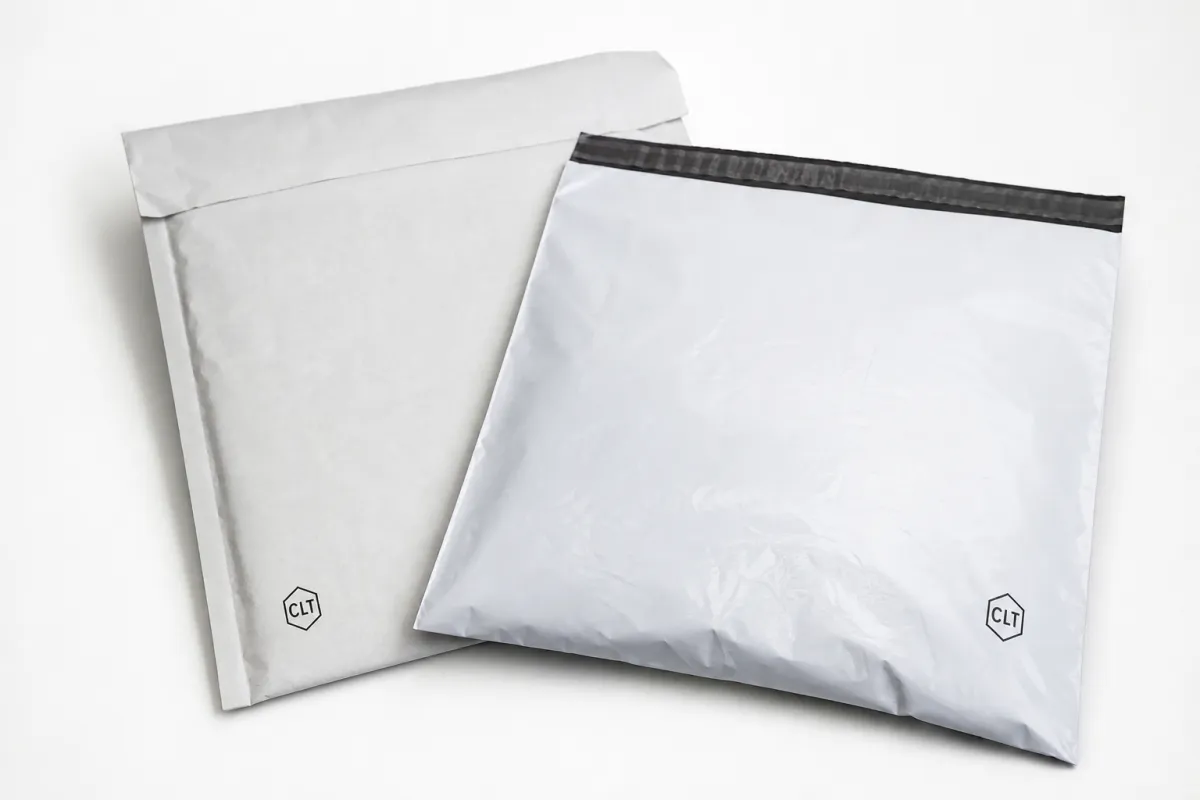
The short answer is simple. Poly mailers vs plastic envelopes is usually a choice between flexibility and presentation. Poly mailers are the safer default for apparel, soft goods, low-breakage accessories, and anything that can bend without getting ruined. Plastic envelopes can work well for flat documents, sample sheets, cards, and very light product sets that benefit from a cleaner, more rigid-looking packout.
If your product can tolerate some compression, poly mailers usually come out ahead. They cost less to ship, they are faster to pack, and they forgive odd shapes without much fuss. If the product needs to land flat and crisp, plastic envelopes can look sharper. That is the real tradeoff. No theater, just packaging physics.
The lowest unit price can mislead buyers fast. A flimsy mailer that splits at the seam or fails at the adhesive can trigger reships, refunds, and customer service headaches. Poly mailers vs plastic envelopes should be judged on landed cost, not the sticker price on the quote. That difference becomes obvious the moment a carrier chews up a few orders.
A mailer that saves two cents but creates one percent more damage is not saving anything. It is just moving the bill somewhere less visible.
My blunt recommendation is to start with poly mailers unless you have a strong reason not to. That is especially true for ecommerce brands shipping clothing, knitwear, activewear, cosmetics accessories, or other soft goods that do not need rigid support. If the product line is mostly flat inserts, printed paperwork, or presentation-first samples, plastic envelopes can earn their place. The rest of the piece breaks down poly mailers vs plastic envelopes by performance, appearance, cost, turnaround, and order size.
- Best default: poly mailers for most ecommerce parcels
- Best presentation: plastic envelopes for flat, clean packs
- Best protection: thicker films, padded options, or a box if the item needs edge support
- Best value: the format that lowers damage, packing time, and freight together
Top options compared: poly mailers vs plastic envelopes
There are several ways this comparison plays out in real buying. Standard poly mailers, self-seal plastic envelopes, padded versions, and custom printed versions all sit in slightly different lanes. That is why poly mailers vs plastic envelopes is not a one-line answer. The material, thickness, closure style, and print coverage all change the outcome.
Standard poly mailers are the workhorse. They are usually made from LDPE or a similar flexible film, often in thicknesses around 2.5 mil to 4 mil for common ecommerce use. They are light, easy to store, and quick to seal. For folded apparel, socks, soft accessories, and small textile goods, these usually make the most sense. They also handle carrier abuse better than many buyers expect, provided the seams and adhesive are solid.
Self-seal plastic envelopes are typically flatter and more document-like. They can suit forms, printed inserts, thin kits, and ultra-light product sets where the first impression matters as much as the contents. They are not automatically stronger just because they look neater. Plenty of buyers have learned that lesson after one rough delivery route. That lesson tends to arrive in a torn corner.
Padded mailers sit in the middle for items that are still compact but need shock absorption. If your product has corners, screens, jars, or easily dented packaging, padding changes the result in a big way. Poly mailers vs plastic envelopes is sometimes the wrong binary entirely; the real comparison is often between a basic envelope and a mailer that actually protects the contents.
Custom printed versions are where branding enters the picture. A plain white mailer can do the job, yet a custom printed bag can turn the shipment into a small billboard. If packaging is part of the unboxing experience, branding can justify the added cost. If the package disappears after delivery and margins are tight, plain stock is often the smarter choice.
For buyers building an assortment, I usually suggest starting with Custom Packaging Products and then narrowing to a specific format like Custom Poly Mailers if the product mix is mostly soft goods. That keeps the decision grounded in actual use cases instead of abstract category names.
| Option | Typical best use | Common thickness / build | Relative shipping cost | Brand feel |
|---|---|---|---|---|
| Standard poly mailers | Apparel, soft goods, low-breakage items | 2.5-4 mil LDPE film | Lowest | Practical, depends on print |
| Self-seal plastic envelopes | Documents, thin kits, flat inserts | Thin flexible film, lighter gauge | Low | Cleaner, flatter, more formal |
| Padded mailers | Accessories, fragile flats, dent-prone items | Outer film plus paper or bubble layer | Medium | More protective, less minimal |
| Custom printed mailers | Brand-heavy launches, retail-style fulfillment | Depends on base film and print coverage | Lowest to medium | Strongest presentation |
On durability, poly mailers vs plastic envelopes usually comes down to puncture resistance, seam strength, and how much abuse the material can take while being dragged, compressed, and tossed around. A better film with decent adhesive beats a flimsy one every time. If you want a test standard, ISTA 3A is designed to simulate the kind of handling parcels actually experience. ISTA publishes those protocols at ista.org.
Moisture is the other piece of the puzzle. Both formats can handle light rain and handling spills, but neither should be treated like a waterproof vault. If the shipment has to survive weather exposure or long warehouse dwell time, ask for thicker film, stronger seals, or a secondary barrier. Shipping is hard on packaging, plain and simple.
Detailed reviews: where poly mailers and plastic envelopes actually shine
Poly mailers vs plastic envelopes is easiest to judge by product type. Apparel is the cleanest example. T-shirts, hoodies, leggings, underwear packs, and soft accessories usually ship better in poly mailers because the bag bends around the folded item instead of fighting the shape. That flexibility also saves time at packing stations, which matters more than people like to admit.
Printed materials, direct-mail inserts, catalogs, and sample cards can look sharper in plastic envelopes. They sit flatter, stack more neatly, and can make the packout feel deliberate. Even so, they remain thin packaging. If you are sending sharp corners, a heavy insert stack, or items that crease under pressure, the flatter shape turns into a weakness rather than a strength.
The buyer experience matters as much as the material. A good mailer is easy to open, easy to label, and seals on the first try. A bad one sticks to itself, wrinkles along the edge, or makes the packer wrestle with the adhesive strip like it owes them money. Poly mailers vs plastic envelopes should be judged by packing speed too, because labor is part of the total cost. Ten extra seconds per order adds up fast across a month of shipments.
Brand perception is the other half of the story. Customers notice packaging, even when they say they do not. A clean, well-printed mailer can make a small brand feel more established. A cheap-looking one can make premium goods seem bargain-bin. That is why custom printing matters when the package is visible in the customer's first interaction. A plain mailer with a rough finish can drag down the whole unboxing. Annoying, sure, but true.
Failure points tend to show up in the same places over and over: seams that split under stress, adhesive that loses grip in cold or dusty environments, corners that catch and tear, and surfaces that wrinkle so badly the label will not lay flat. Poly mailers vs plastic envelopes also differs in how well each one recovers after handling abuse. A thicker poly film can take a beating and still look acceptable. A thin envelope often looks fine right up until it does not.
Material specs that actually matter
If consistency matters, ask for the actual film spec. Gauge, thickness, adhesive type, and whether the material is virgin, recycled-content, or blended all affect performance. For flexible films, tensile and elongation values can be tested under standards such as ASTM D882, which gives you something more useful than a vague promise that the bag "feels strong." Packaging already has enough fuzzy language.
That is also where poly mailers vs plastic envelopes gets simpler. Poly mailers with a thicker film and dependable seal usually handle more daily abuse. Plastic envelopes make more sense when the load is light, flat, and presentation matters more than compression recovery. Both can work. Neither deserves blind trust.
Sustainability claims need a reality check
Recyclability claims are where packaging marketing starts to wobble. Some mailers can be recycled, but local collection rules vary, and material blends change the answer. If sustainability matters, ask for the exact resin type and any disposal guidance. The EPA has a practical overview of recycling basics at epa.gov/recycle, and that is a better starting point than guessing from a green icon printed on a bag.
From a packaging buyer's point of view, overpackaging is usually the larger waste problem. A slightly heavier mailer that prevents damage can be the greener choice because it avoids reships. Poly mailers vs plastic envelopes should not be framed as "plastic bad, other plastic good." That line of thinking is too shallow for real operations. The better question is whether the package protects the product with the least material that still performs.
A lightweight envelope that fails in transit is not sustainable just because it uses less resin. It creates more freight, more labor, and more waste once the replacements start. So yes, think about recyclability. Just do not let that one factor drown out performance.
Process and turnaround: from quote to shipping
Getting from idea to shipped order is predictable if the process stays tight. First, request a quote with size, thickness, quantity, print colors, and closure style. Then confirm whether you need stock or custom. Then approve artwork. Then review a sample or proof. Then production starts. That is the orderly version. The disorderly version includes artwork revisions, color drift worries, and one person suddenly deciding the logo should be 12 percent larger. Of course.
For stock items, turnaround is usually faster because the material already exists and the work is limited to picking, packing, and freight. For custom Printed Poly Mailers vs plastic envelopes, the schedule stretches because the art has to be separated, print setup has to be prepared, and the supplier needs time to run and inspect the order. A practical lead time for stock can be around 5-10 business days, while custom work often lands closer to 12-20 business days after proof approval. Rush options exist, but they usually cost more and leave less room for corrections.
Timeline risk usually comes from the same places: artwork changes after proof, slow approvals, delayed shipping instructions, and freight booking that gets squeezed too late. A seasonal collection or product drop can unravel fast if packaging slips. Poly mailers vs plastic envelopes becomes a scheduling decision too, because a format that takes longer to source may not be worth it even if the unit price looks fine.
Ask for a production calendar before you sign off. I mean a real one, not a vague promise that says "about two weeks." You want milestones: art approval date, production start, QC, packing, and shipping departure. That makes it much easier to slot packaging into a launch plan and keep the rest of the operation from drifting.
One more practical note: if you are comparing poly mailers vs plastic envelopes across multiple SKUs, keep the sizes simple. Too many dimensions mean more inventory, more storage space, and more chance someone grabs the wrong bag at packout. Packaging should reduce friction, not create a miniature warehouse puzzle.
Cost, pricing, MOQ, and unit cost breakdown
This is where buyers usually get pulled in by the headline number. Poly mailers vs plastic envelopes can look inexpensive until setup, print coverage, freight, and the extra units required to reach a minimum order quantity are added in. Sticker price is not the same as landed cost. If you only look at the unit number, you are buying blind.
For stock items, a rough range of $0.10-$0.22 per unit is common depending on size, thickness, and order volume. Custom printed versions often sit closer to $0.18-$0.45 per unit at common quantities, though large runs can come down. Padded versions usually run higher, especially if the structure uses bubble lining or heavier film. Those ranges shift with market pricing, print coverage, and shipping distance, so treat them as working references rather than fixed rules.
MOQ changes the economics quickly. Small brands often do better with stock poly mailers while they validate volume, artwork, and fulfillment flow. Larger buyers can usually justify custom printed plastic envelopes or mailers because the setup cost spreads across more pieces. If you are ordering only a few hundred units, the custom route can feel expensive for a good reason. The machine does not care that your margin is emotional.
Hidden costs are where projects get messy. Setup fees. Extra ink coverage. Thicker material. Custom size tooling. Freight. Storage. Damage from ordering the wrong dimensions. Labor time for a bad seal. Every one of those can erase a quote that looked cheap on the first pass. Poly mailers vs plastic envelopes is often decided by total landed cost after those items are added, not by the base bag price.
| Option | Typical MOQ | Common unit cost range | Lead time | Best economic use |
|---|---|---|---|---|
| Stock poly mailers | As low as 500-1,000 pieces | $0.10-$0.22 | 5-10 business days | Testing, short runs, first orders |
| Custom printed poly mailers | Often 3,000-5,000 pieces | $0.18-$0.45 | 12-20 business days | Repeatable apparel and ecommerce volume |
| Plastic envelopes | Often similar to stock or custom minimums | $0.09-$0.30 | 5-18 business days | Flat items, documents, presentation packs |
| Padded mailers | Usually higher than plain mailers | $0.20-$0.60+ | 8-20 business days | Added protection for dent-prone products |
Freight can shift the math too. A larger or heavier mailer takes more space on a pallet and more space in storage. That is one reason smaller formats sometimes look cheaper than they are. If you are paying to warehouse packaging for months, the difference between a compact pack and a bulky one becomes real money.
The better question is not "Which costs less?" It is "Which keeps total cost lower across freight, labor, damage, and reorders?" For many brands, that answer still favors poly mailers vs plastic envelopes only because one better matches the product and the packout. If the item wants a simple, light, flexible shipment, the economics follow naturally.
If you want a cleaner way to compare suppliers, ask for pricing broken into these lines: base unit cost, print setup, material upgrade, freight, and any packaging prep fee. You will spot the expensive quote quickly, and you will also spot the quote that looks low only because half the math is hidden somewhere else.
How to choose the right mailer for your product
Start with the product, not the packaging trend. Weight, fragility, bend tolerance, surface finish, and size matter far more than a polished mockup on a supplier page. Poly mailers vs plastic envelopes should be chosen from the item outward, not the other way around. That is the step people skip, then act surprised when the package fails.
Use case by product type
Apparel: Poly mailers usually win. They bend, they pack quickly, and they keep shipping weight low. If the garment is premium and the customer sees the package first, custom print can improve presentation without forcing a box into the mix.
Documents and flat kits: Plastic envelopes can work well because they keep the pack tighter and cleaner. If the contents are truly flat and not crush-sensitive, the format feels orderly and avoids unnecessary material.
Accessories and light hard goods: Testing matters here. If the item has edges, corners, or any chance of scuffing, a padded option or stronger film may be the better call. Poly mailers vs plastic envelopes is not the only decision on the table.
Sample packs and branded inserts: A flat envelope can look more polished, especially for brands with a corporate or editorial feel. If the sample set has any thickness, the more flexible route usually holds up better in transit.
Simple decision framework
- If the item is soft and foldable, start with poly mailers.
- If the item is flat and presentation matters more than compression recovery, test plastic envelopes.
- If damage would be expensive, move up to padded or boxed packaging.
- If labor speed matters, choose the format that seals faster and stacks better at the workstation.
- If branding is part of the product value, include print and finish in the decision, not just material.
That framework sounds basic because it is. Basic works. Basic is what keeps the packing line moving. Poly mailers vs plastic envelopes gets easier once you accept that the package has to solve a real operational problem, not just look tidy on a mockup.
Testing before volume order
Order samples. Real samples, not just spec sheets. Pack your actual products, use the real labels, and run them through the same storage and handling conditions your team sees every day. Check the seal after a few hours. Check the corners. Check whether the printed surface scuffs. Check whether the mailer still looks good after a little compression. That test will teach you more than a polished product page ever will.
It also helps to compare two sizes and one thickness upgrade at minimum. A lot of buyers order the exact size they think they want, then find out the product behaves differently once folded or sleeved. A slightly larger mailer can cut packout time and reduce seam stress. A slightly thicker film can save a lot of grief. Small change, big payoff.
Our recommendation: what to do next
My recommendation is straightforward. Most apparel brands should test poly mailers first. If the product is flat, low-risk, and presentation-driven, plastic envelopes deserve a close look. If the item needs stronger edge protection or a more premium feel, step up to padding or a box. Poly mailers vs plastic envelopes only becomes the right question when the product truly fits both formats.
For your next sample order, I would test four things: one stock option, one custom printed version, one thickness upgrade, and one alternate size. That gives you a clear read on cost, branding, and packout behavior without overbuying. If the supplier cannot quote those clearly, keep shopping. Packaging should be easy to compare, not a scavenger hunt.
Use a short checklist during evaluation: seal strength, transit damage, packing speed, label adhesion, and customer presentation. If the package fails any of those in a meaningful way, the cheaper choice is already costing you money. Plenty of buyers fixate on per-unit cost and then pay for it later through reships and complaints. That is not smart procurement. That is expensive optimism.
If you are ready to move, ask for quotes from two suppliers, compare the landed cost line by line, and confirm lead time before you commit to volume. Then review the mockup on actual product, not just a blank art file. That is the cleanest way to avoid a bad order and the simplest way to choose between poly mailers vs plastic envelopes with confidence.
Are poly mailers better than plastic envelopes for apparel?
For most apparel, yes. Poly mailers flex around folded garments, usually ship lighter, and are easier to pack at speed. Plastic envelopes make sense only when the garment is very flat, the risk of crushing is low, and you want a cleaner document-style presentation. In practice, poly mailers vs plastic envelopes for clothing is usually not much of a contest.
Which is cheaper: poly mailers vs plastic envelopes?
Stock versions are often close enough that the difference is not dramatic. Custom printing, thickness, size, and MOQ can change the result quickly. The cheaper option on paper is not always cheaper overall once freight, labor, and damage rates are included. That is why poly mailers vs plastic envelopes should be judged by total cost, not just the quote line.
What MOQ should I expect for custom poly mailers vs plastic envelopes?
Small runs usually start lower for stock items, while custom printed orders often need a higher MOQ to keep unit cost reasonable. If your volume is still uncertain, sample stock first and move to custom once size and artwork are locked. That route keeps poly mailers vs plastic envelopes from turning into an expensive guess.
How long do custom poly mailers take to produce?
Lead time depends on artwork approval, material availability, and print complexity, so ask for a full production timeline Before You Order. Rush jobs are possible, but they usually cost more and leave less room for proof changes. If your launch date is fixed, build the packaging schedule first and the rest gets easier.
Can poly mailers and plastic envelopes be recycled?
Some can be recycled, but it depends on the exact material blend and local collection rules, so do not rely on generic marketing claims. Ask the supplier for the resin type, any recycled content details, and end-of-life guidance before you commit. That is why poly mailers vs plastic envelopes should be decided from the actual film spec, not the label on the front.
The cleanest takeaway is this: start with the product, then choose the bag. If the item is soft or foldable, poly mailers are usually the smarter default; if it is flat and presentation matters, plastic envelopes deserve a test; if either option risks damage, step up to padding or a box rather than hoping a thinner film will somehow behave. That one decision usually saves more money than chasing the lowest quote ever will.


