Buyer Fit Snapshot
| Best fit | Poly Mailers with Logo projects where brand print, material claims, artwork control, MOQ, and repeat-order consistency need to be specified before quoting. |
|---|---|
| Quote inputs | Share finished size, material target, print colors, finish, packing count, annual reorder estimate, ship-to region, and any compliance wording. |
| Proofing check | Approve dieline scale, logo placement, barcode or warning zones, color tolerance, closure strength, and carton packing before bulk production. |
| Main risk | Vague material claims, crowded artwork, missing packing details, or unclear freight terms can make a low unit price expensive after revisions. |
Fast answer: Poly Mailers with Logo: Artwork Proof, Packing Count, and Landed Cost should be specified like a repeatable production item. The safest quote records material, print method, finish, artwork proof, packing count, and reorder notes in one written spec.
Production checks before approval
Compare the actual filled-product size with the drawing, then confirm tolerance on folds, seals, hang holes, label areas, and retail display edges. Reserve space for logos, QR codes, warning copy, and material claims before decorative graphics fill the panel.
Quote comparison points
Review material grade, print process, finish, sampling route, tooling charges, carton quantity, and freight assumptions side by side. A quote is only useful when the supplier can repeat the same color, closure quality, and packing count on the next order.
Poly Mailers with Logo do more work than a lot of buyers expect. The outer bag is often the first branded surface a customer sees, and if it looks generic, the whole shipment starts off feeling cheaper than it should. A well-made mailer changes that first impression quickly, turning a plain fulfillment task into packaging that feels deliberate and connected to the brand.
For apparel, accessories, beauty samples, and subscription orders, Poly Mailers With Logo usually beat boxes on cost and weight. They are lighter to ship, easier to stack, and faster to pack. If you are comparing formats across Custom Packaging Products or narrowing down Custom Poly Mailers, the real question is not whether the bag has a logo. The real question is whether the bag fits the product, the brand, and the shipping lane without wasting money.
A lot of buyers get tripped up right there. The artwork gets attention first, while the structure gets treated like a footnote. That usually leads to trouble. Poly Mailers with Logo can look sharp, but only when film thickness, print method, and bag size all match the job. If those details are off, the bag wrinkles, tears, or makes a strong product look unexpectedly cheap.
I have seen more than one brand spend extra on a clever layout only to discover the mailer was too thin for the product weight. That kind of miss is annoying, and it is avoidable. Packaging is supposed to help the shipment, not fight it.
What Poly Mailers With Logo Actually Change
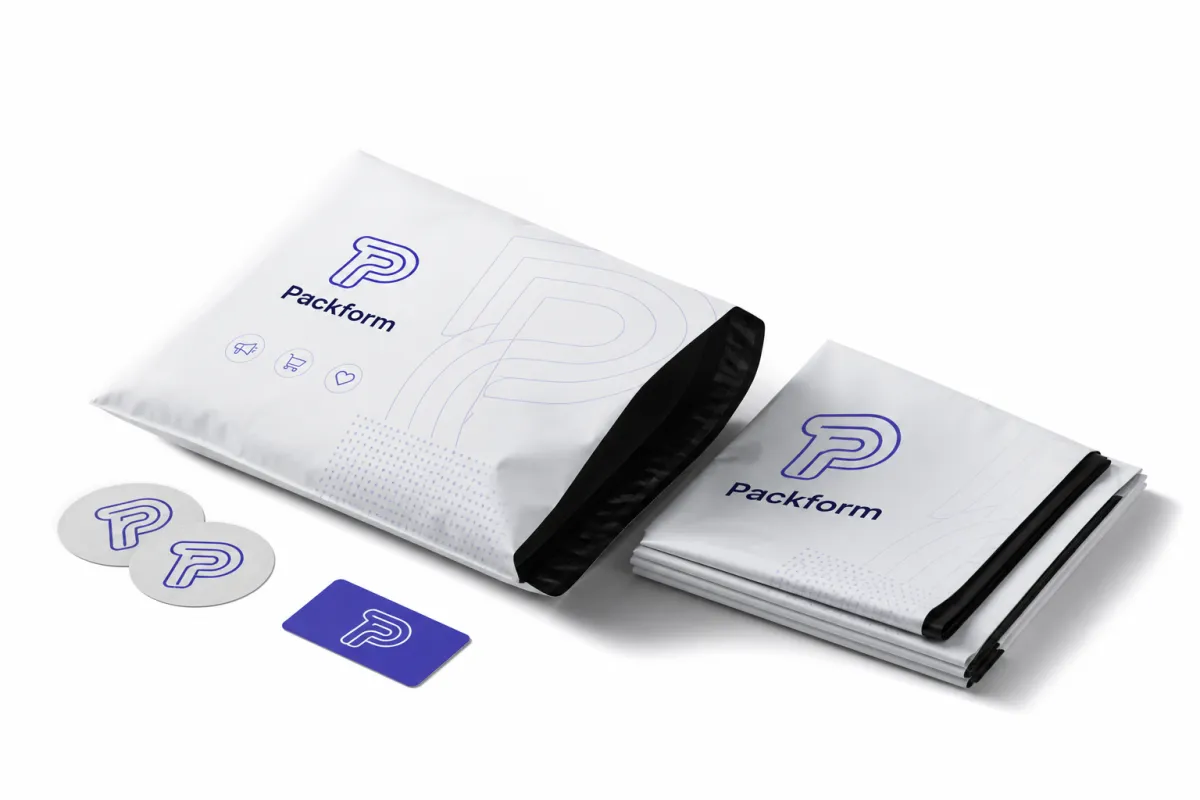
Poly mailers with logo change the first impression at delivery. The bag is visible before the product, before the insert, and before the customer opens the seal. For ecommerce brands that ship repeat orders, that outer surface becomes recurring brand exposure every time it lands on a doorstep, at a front desk, or in a shared mailbox.
A plain mailer still gets the item from point A to point B. It protects the product and keeps shipping moving. A plain bag also makes a good shirt, a small skincare set, or a subscription kit feel like a random shipment from nowhere. Poly mailers with logo make the package feel intentional. That matters for recognition, especially when customers post unboxing photos or reorder months later and remember the bag before they remember the name.
The most common use cases stay pretty consistent:
- Apparel and soft goods that do not need rigid protection
- Accessories, socks, small gift items, and folded textiles
- Beauty samples and lightweight subscription kits
- High-volume ecommerce orders where box weight would add real shipping cost
There is also a trust angle. Poly mailers with logo make a shipment look less anonymous, which helps when customers are buying from a brand they have not used before. That does not mean the print needs to shout. A simple logo, one clean color, and careful placement often outperform a crowded bag packed with marketing claims. More ink is not more premium. Sometimes it is just more ink.
The mailer is not the afterthought. It is the handshake.
Not every branded bag looks premium. Poly mailers with logo only look good when the bag has enough body, the print is clean, and the artwork is not trying to do five jobs at once. A flimsy film, sloppy seal, or crowded layout will make even a strong logo look awkward. The difference usually comes down to material quality, print setup, and how much restraint the buyer showed during design.
From a packaging buyer’s point of view, the choice is simple enough: pay a little more for a mailer that supports the brand, or save pennies and let the shipment look forgettable. On a thin-margin product line, those pennies matter. On a product that depends on repeat orders, the branding payoff from poly mailers with logo can be worth far more than the unit premium.
There is a practical side too. A branded mailer is easier for warehouse staff to spot, easier for customers to recognize, and easier to keep consistent across reorder cycles. That sounds small, but small details tend to add up in packaging.
How Poly Mailers With Logo Printing Works
A poly mailer is simpler than most people think, but every layer affects the final print. The film is usually polyethylene, often low-density or co-extruded depending on the supplier. The seal has to hold under pressure. The adhesive strip has to close cleanly. The printable surface must accept ink without making the logo look cloudy or washed out. Poly mailers with logo only work well when those parts are treated as one system instead of separate line items on a quote sheet.
Two print methods show up most often. Flexographic printing is common for larger runs because it moves efficiently and keeps unit cost down once setup is complete. Digital printing gives more flexibility for shorter runs or designs with variation, but it usually costs more per bag. In plain English: if you want 5,000 or 10,000 bags with a simple one- or two-color logo, flexo often makes sense. If you want a smaller batch or more design freedom, digital can be the better fit. Poly mailers with logo can be produced either way, but the economics change fast.
Artwork prep matters more than many buyers expect. Vector files are the safest choice because they keep edges crisp. Spot colors help printers match brand colors more consistently. Thin lines, tiny text, and delicate gradients are where trouble starts. Film flexes, so details that look neat on a screen can blur, break, or disappear once printed on a moving surface. If your design depends on hairline rules or subtle fades, plan for compromise.
The easiest way to think about it is simple: bold prints survive, fussy prints suffer. That is not a criticism of good design. It is just how flexible packaging behaves.
- Use bold type instead of thin scripts for small logos
- Keep line weights strong enough to survive press variation
- Avoid dense patterns if the bag will be handled roughly in transit
- Leave breathing room around the logo so the design does not crowd the seal or edges
A typical workflow starts with artwork submission, then a digital proof, then placement and color review, and finally production after approval. Flexo jobs may include plates, ink matching, and a final layout check. Digital jobs usually move faster through setup, but they still depend on clean files and confirmed dimensions. Poly mailers with logo can move quickly when the file is ready and the buyer is not revising the design after the quote has already been approved.
For shipping-focused brands, it also helps to think beyond the print itself. The ISTA standards are useful because they remind you that packaging has to survive motion, vibration, stacking, and rough handling. Pretty is welcome. Staying closed is better. That is the order that matters.
From field experience, the best-looking mailers usually come from the simplest briefs. One logo. One clear placement. One paper trail. That keeps the print team from guessing and keeps the buyer from getting stuck approving tiny changes that should have been settled earlier.
Poly Mailers With Logo Cost, MOQ, and Quote Basics
Pricing for poly mailers with logo comes down to a handful of variables, and none of them are mysterious once you know where to look. Size matters. Thickness matters. Print coverage matters. Color count matters. So does whether you are printing one side or both. Shipping distance can move the final number more than people expect, especially if the order is coming from overseas or crossing several freight zones.
For practical budgeting, it helps to think in ranges instead of fantasy quotes. A simple one-color mailer in a common size can land in one price band, while a heavier bag with more print coverage lands in another. Ask three suppliers for “the same thing,” and you may get three very different numbers because the bags are not actually the same thing. One quote might use a 2.0 mil film, another a 2.5 mil film, and a third might quietly include freight. Poly mailers with logo are notorious for that kind of apples-to-oranges mess.
| Option | Typical Use | Common MOQ | Approx. Unit Range at 5,000 pcs | Notes |
|---|---|---|---|---|
| One-color standard print | Apparel, simple ecommerce orders | 1,000-3,000 | $0.14-$0.24 | Lowest setup cost; best for clean logos |
| Two-color branded mailer | Retail and DTC brands | 2,000-5,000 | $0.18-$0.32 | Better visual impact; slightly higher setup |
| Heavy film, full-bleed print | Premium subscriptions, higher volume brands | 5,000+ | $0.24-$0.45 | Stronger feel; more ink coverage and material cost |
MOQ means minimum order quantity, and it is one of the first things you should ask about. Some suppliers quote low MOQs to open the door, but the unit price usually improves once you move into larger runs. That sounds appealing until you realize the extra stock has to be stored, counted, and eventually used. Bigger orders lower the cost per bag, but they also lock up cash and shelf space.
A smart quote comparison should always include exact dimensions, thickness, print method, and freight terms. If one supplier quotes a 10 x 13 inch mailer at 2.5 mil with one-color flexo and another quotes a “similar” bag with no film spec at all, the cheaper one may not actually be cheaper. It may just be incomplete. Poly mailers with logo are easy to price badly if the buyer does not force every assumption into writing.
Cheap is not the same as smart. A weak adhesive strip, thin film, or inconsistent color registration can cost more than the savings if the bags fail in transit or look off-brand on arrival. The EPA source reduction guidance is a decent reminder that smarter packaging usually means less waste, not more noise. A bag that ships light, holds strong, and prints cleanly is usually the better buy.
If a quote looks unusually low, ask what was left out. Setup fee? Plate cost? Freight? Color matching? Extra charge for printing both sides? Once those gaps are cleared out, poly mailers with logo tend to settle into a fairly predictable range for a given size and order volume.
One more thing: a high MOQ is not automatically a bad thing if your usage is steady. What hurts is ordering like the business is static when your sales pattern is actually lumpy. Packaging demand rarely stays flat for long.
Poly Mailers With Logo Process and Turnaround
The ordering process is usually straightforward, but small delays stack up quickly. You start with size selection, move into artwork review, approve a proof, and then the supplier schedules production. After that comes inspection, packing, and shipping. Poly mailers with logo can look like a fast project from the outside, yet once the order is in motion, every revision adds friction.
A realistic timing breakdown looks something like this: proofing may take 1-3 business days if the artwork is ready, production may run 8-15 business days after approval for a standard custom job, and shipping can add another 3-7 business days domestically or longer if the order is imported. That range depends on quantity, print method, and whether the supplier is building plates or running digital. If the job includes a custom shade, special finish, or multiple revisions, add more time. Simple jobs move faster. Surprise requests do not.
Common delay triggers are usually the boring ones:
- Missing vector artwork or low-resolution files
- Revisions after the proof has already been generated
- Color matching requests that were not discussed early
- Holiday congestion, port delays, or freight bottlenecks
- Last-minute changes to size, seal style, or print placement
The best way to protect the schedule is to lock the spec before the supplier starts building the proof. Know the exact size. Know the bag thickness. Know whether you want a matte or glossy finish. Know whether the logo should sit centered, top-left, or repeated across the back. Poly mailers with logo get delayed most often when the buyer is still deciding what the final bag should look like after production has already been queued.
A simple rule helps here: if the packaging matters to a launch date, build in buffer time. Not a little buffer. Real buffer. Packaging often takes longer than people hope because multiple parties touch the order, and each handoff creates room for mistakes. That is not pessimism. It is just how production works.
If your supplier offers pre-production samples or a short-run proof batch, take the option seriously. It costs more upfront, but it can save you from discovering a color issue or seal issue after a full order lands. Poly mailers with logo are only cheap if you do not have to remake them.
In a hurry, people sometimes skip the proof call and just reply “looks good.” That is usually the moment the order goes sideways. Ten extra minutes on the proof can save weeks of cleanup.
Step-by-Step: Ordering Poly Mailers With Logo
Ordering poly mailers with logo gets much easier once you treat it like a checklist instead of a creative guess. A good order follows a clean sequence, and each step narrows the chance of a costly miss.
- Define the product first. Measure the item after folding, bundling, or adding a sleeve so the mailer fits the real packed size, not the product on a catalog page.
- Choose the film and thickness. Lightweight apparel may be fine in a standard film, while heavier accessories or rough handling usually call for a stronger gauge.
- Pick the artwork strategy. One bold logo, a repeat pattern, or a clean brand block with contact details all work; the right choice depends on how much visual noise you want on the bag.
- Request a proof. Check spelling, placement, bleed, seal location, and color expectations before you approve anything.
- Confirm the quote terms. Ask about MOQ, setup fees, freight, lead time, and reprint policy so the order does not get stuck in back-and-forth later.
The first step is where many people make the wrong assumption. They size the mailer to the product’s raw dimensions, not the packed dimensions. That leads to overstuffed bags, awkward folds, or a seal that sits too close to the edge. If the item needs a tissue wrap, insert card, or light cushioning, account for that Before You Order. Poly mailers with logo look better when they are filled properly, not stretched to their limit like a cheap rain cover.
The artwork step deserves some discipline. Keep the logo readable at arm’s length. Use contrast that works against the bag color. Avoid tiny legal text unless you truly need it. If you want social handles or a URL, place them where they will not fight with the logo. A printed bag is not a billboard from six feet away; it is packaging that gets handled, bent, and photographed under whatever light the customer has at the door.
Proof review is where money gets saved. The proof is not just a pretty picture. It is your chance to catch the details that become expensive once production starts. A misspelled line, a shifted seal area, or a logo that sits too low can turn into a full reprint if nobody catches it early. Poly mailers with logo should be signed off only after someone checks the file like it matters, because it does.
Before approval, have the supplier confirm whether the quoted freight is door-to-door, port-to-door, or something fuzzier. Ask whether the bag count includes overrun or under-run tolerance. Ask whether the listed price assumes one-sided printing or both sides. The more specific you are now, the less drama you get later.
If you have multiple SKUs, order the sizes in a way that keeps your warehouse from second-guessing the contents. A clear mailer plan is half production and half operations. That part is not glamorous, but it saves real time.
Common Mistakes When Buying Poly Mailers With Logo
The easiest mistake is also the most expensive one: choosing the wrong size. A bag that is too small looks cramped and can split at the seams. A bag that is too large wastes material and makes the product feel poorly matched to the package. Poly mailers with logo are not forgiving if the dimensions are off by even a little, because the print placement starts to look wrong as soon as the fold line shifts.
Another common problem is overcomplicated artwork. Thin lines, tiny type, gradients, and busy illustrations may look great on a laptop. On flexible film, they can turn muddy or uneven. That happens because the surface is not a rigid board and the print has to survive movement. If the design needs fine detail to make sense, it may fit a box or insert better than a mailer.
Material thickness gets ignored more often than it should. A thin film can save a few cents, but if it tears during fulfillment or opens in transit, those savings disappear. Adhesive quality matters for the same reason. A strong-looking bag with a weak strip is still a weak bag. Poly mailers with logo should hold up through packing, sorting, transport, and delivery without drama. Anything less is false economy.
- Skipping sample checks and trusting the proof alone
- Ordering too few bags and running out mid-campaign
- Assuming the printed color will match the screen exactly
- Leaving no room for freight delays or rework
Sampling is boring. It also saves money. A proof on screen cannot tell you how the film feels, whether the adhesive grabs properly, or how the print reads under real light. A physical sample can. If the supplier offers a sample set, use it. If they do not, ask for one from a similar job. Poly mailers with logo can look perfectly fine online and still feel thin in your hand. That gap matters more than designers usually admit.
Under-ordering is another classic. Brands often plan for current demand and forget that packaging usage rises faster than expected during promotions, launches, and seasonal peaks. Running out of branded mailers in the middle of a sales push means switching to plain stock or rushing a second order at a worse rate. That kind of savings vanishes in a week.
There is also a branding mistake that does not get enough attention: trying to say too much. Your mailer is not a landing page. A logo, maybe a short tagline, and maybe one useful line are usually enough. Poly mailers with logo work best when they are easy to recognize and hard to clutter.
One last miss is forgetting the unboxing moment is not always a perfect studio shot. Mailers get crumpled, stacked, and dragged across counters. If the design only works when it is pristine, it is too fragile for real use.
Expert Tips for Better Poly Mailers With Logo
Keep the design simple. That is the first rule, and it is the one many brands ignore after three rounds of internal feedback. One dominant logo element usually performs better than a bag filled with icons, slogans, claims, and social handles. Poly mailers with logo should read fast. If someone has to study the bag to understand it, the design has already lost half its value.
Use strong contrast and generous spacing. A white logo on a dark bag can look crisp if the ink coverage is solid. A dark logo on a light bag can work just as well. The point is readability. A mailer may be photographed on a porch, seen through a plastic bin, or handled in poor warehouse light. Good contrast survives those conditions. Weak contrast does not.
Pay attention to finish as well. Glossy film can look cleaner in photos, while matte film can feel more restrained and premium if the print is sharp. Neither finish is automatically better. It depends on the brand and the product. A beauty label may want a softer look. An athletic apparel brand may prefer a bolder sheen. Poly mailers with logo are flexible enough to support both, but not if the design is trying to do too many aesthetic jobs at once.
Order samples before you lock a larger run. That sounds like extra work, and it is. It also tells you more than a spec sheet ever will. You can feel the seal strength, check the opacity, and see whether the printed area reads cleanly at real viewing distance. If the sample feels wrong, the full order will not improve later.
A practical reorder strategy matters too. Track consumption by week or month, set a reorder point before stock gets low, and keep the next quote ready. That way you are not scrambling during a sales spike. Poly mailers with logo only help if they are on hand when orders ship. Brand consistency disappears fast when the fulfillment table turns into a pile of whatever bag happened to be left in stock.
For buyers comparing formats, the best approach is usually simple: measure the packed item, choose a film thickness that matches the risk level, ask for a sample, and compare the printed result against your other packaging options. Poly mailers with logo are not magic. They are a smart, low-cost packaging tool when the size, artwork, and order plan are all handled with discipline. If you want the next order to pull its weight, start with a sample and a quote for poly mailers with logo, then compare the real print quality before you place the full run.
That approach also keeps the decision honest. You are not guessing based on a mockup alone, and you are not paying for features that do not move the needle. A clean sample, a clear spec sheet, and a supplier quote with every assumption spelled out will get you farther than a flashy design deck ever will.
Are poly mailers with logo worth it for a small brand?
Yes, if you want each shipment to act like a branded touchpoint instead of a plain shipping bag. Poly mailers with logo are usually cheaper and lighter than custom boxes, which helps small brands keep fulfillment costs under control. The best value usually comes from simple artwork and a size that fits the product cleanly.
What file format do I need for custom poly mailers with logo artwork?
Vector files are the safest choice, usually AI, EPS, or an editable PDF. Outlined fonts and clean spot colors help the printer keep the print sharp. Avoid low-resolution JPG files unless the design is very simple and the printer approves them first.
How much do poly mailers with logo usually cost?
Unit cost depends on size, thickness, color count, print method, and order quantity. Larger runs usually lower the per-bag price, but freight and storage can offset part of that savings. Ask for a quote with exact specs so you can compare suppliers without guessing.
How long does it take to produce logo poly mailers?
Proofing can be quick if your artwork is ready, but setup and production still take time. Simple jobs move faster than color-matched runs or heavily revised artwork. Always add shipping time on top of production time, especially if the bags are tied to a launch date.
What size should I choose for poly mailers with logo?
Measure the product after folding, padding, or bundling, not just at its raw dimensions. Leave enough room for a clean seal without creating a bulky, stretched bag. If you are stuck between two sizes, order samples and test both with real product.
Can poly mailers with logo work for premium products?
They can, as long as the print quality, bag thickness, and finish support the positioning. Premium does not have to mean rigid boxes every time. A well-designed mailer with good film and a clean print can feel polished without adding unnecessary weight or cost.


