Pom Pom Beanies for ecommerce launches work because they read fast. The pom gives the hat a stronger silhouette, so it stands out in thumbnails, ad creative, and collection grids before a shopper reads a word of copy. That matters when the product has to carry a first impression quickly and still feel like a real retail item.
They also solve a practical launch problem: the product needs to look appealing, stay within budget, and ship on schedule. A beanie with a pom can do all three, but only if the buyer locks the spec early and understands which choices move cost, lead time, and presentation.
The job is not just to make a hat. It is to make one that can support the campaign. That means paying attention to yarn, knit density, pom style, decoration, packaging, MOQ, and inspection standards before quoting starts.
A launch beanie should photograph cleanly, leave enough margin for the campaign, and arrive without avoidable production delays.
Pom pom beanies for ecommerce launches: the merchandising edge
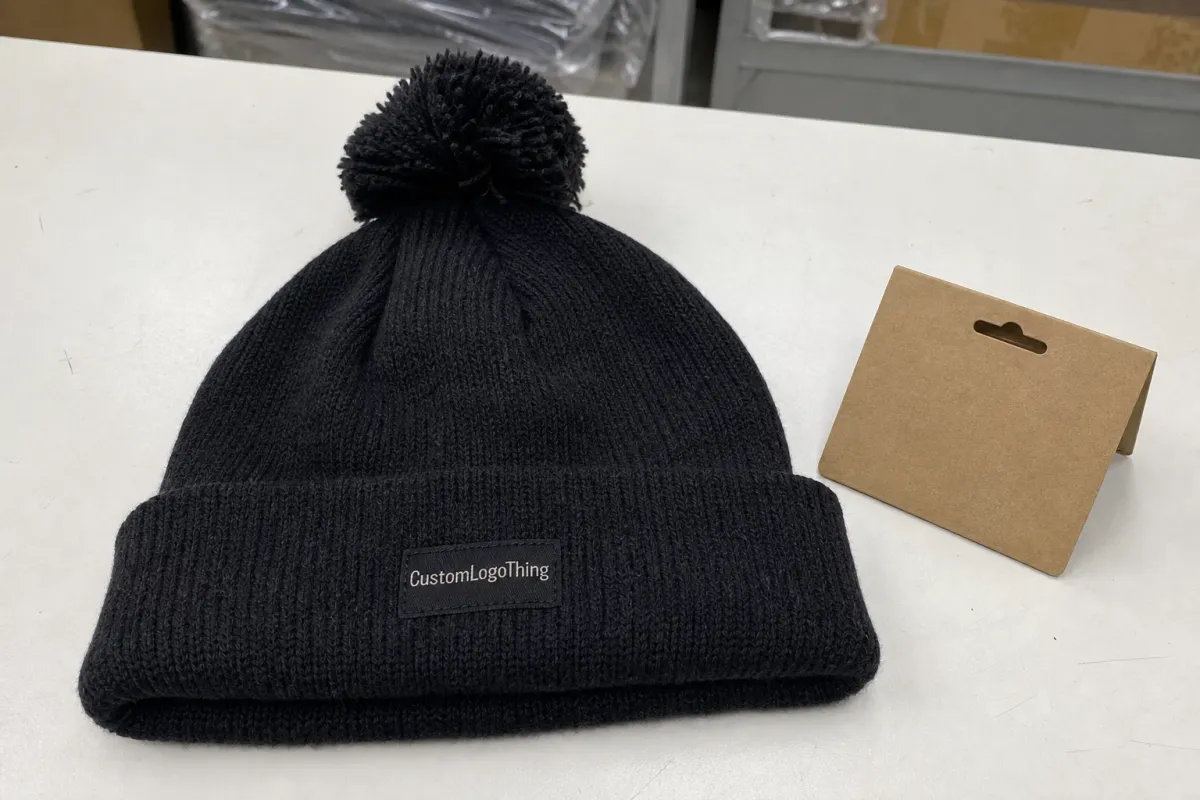
A plain beanie can sell, but the pom usually gives the product more visual energy. In mobile-first ecommerce, that extra shape at the top helps the item register faster in small crops and grid views. It is a simple way to make a basic accessory feel more finished.
That is why these hats often work well in seasonal drops, preorder campaigns, and giftable bundles. They can act as a hero SKU, a limited-edition item, or a cart add-on. The same product can support different launch strategies as long as the spec matches the role.
The strongest versions usually have one clear signal:
- Color contrast between the pom and the crown for stronger thumbnail visibility.
- Texture contrast from rib knit, cable knit, or a denser stitch that makes the hat look substantial.
- Trim contrast from a woven label, embroidered mark, or cuff detail that frames the logo well.
Packaging should be treated as part of the product, not an afterthought. A flat polybag protects the item, but an insert card, tissue wrap, or hang tag can make the launch feel more considered. If the campaign depends on unboxing content, that presentation work has real value.
What makes them work in ecommerce merchandising
The online shelf rewards products that can be understood at a glance. The pom creates a fuller top shape, so the hat reads faster than a flat knit cap in a narrow crop. That small visibility boost can matter more than a long product description.
These beanies also travel well across channels. They work in category grids, paid ads, email banners, and social previews because the shape is easy to recognize. The product does not need a lot of explanation; it needs a clean silhouette and a clear brand cue.
For launch planning, the most useful roles are:
- Launch teaser to create early interest before the full drop.
- Preorder reward for buyers who commit before stock lands.
- Gift-with-purchase item that raises order value without a separate campaign.
- Holiday capsule piece that feels more seasonal than a standard cap.
Color choice matters as much as shape. One strong color can work, but a small coordinated palette usually feels more deliberate and easier to merchandise. Black, oatmeal, and forest read like a planned capsule. A random bright color can look like leftover stock, even when the quality is solid.
The product should also be easy to inspect and pack. A barcode that scans quickly, a bag that protects the pom, and a fold that keeps the shape intact all improve the first shipment experience. Buyers often underestimate how much presentation affects the perceived quality of the drop.
Cost, MOQ, and unit pricing for launch bundles
The biggest cost drivers are yarn quality, knit density, pom construction, decoration method, labeling, packaging, and quantity. The hat itself is only part of the quote. On a first run, setup and revision costs can move the landed number more than buyers expect.
MOQ usually follows the complexity of the build. Stock yarn and standard labeling can support lower quantities. Custom-dyed yarn, specialty poms, or more elaborate packaging often push the minimum higher. Lower MOQs are useful for testing demand, but they usually come with a higher unit cost.
For planning purposes, many buyers see ranges like these, excluding freight:
| Configuration | Typical MOQ | Approx. unit cost at 500 units | Approx. unit cost at 3,000 units | Best use |
|---|---|---|---|---|
| Stock yarn, woven label, polybag | 300-500 | $3.20-$4.10 | $2.15-$2.85 | Low-risk launch test |
| Custom color, cuff label, hang tag | 500-1,000 | $4.10-$5.50 | $2.70-$3.60 | Core ecommerce drop |
| Higher-spec bundle with patch or gift box | 500-1,500 | $5.60-$8.40 | $3.80-$5.10 | Premium launch or gift set |
A useful quote should separate the base hat, decoration, labeling, packaging, sample fee, and freight assumption. If those items are bundled together, it becomes hard to compare suppliers or understand where the margin is going. A low quote can look attractive until freight or revisions are added.
Retail math should start from the target sell price. If the item needs to retail around $28 to $36, the landed cost has to leave room for ads, fulfillment, and occasional discounting. That is the easiest way to avoid turning a marketing item into a margin problem.
For packaging buyers, parcel performance matters too. Standards such as ISTA help when the product will move through ecommerce shipping, and FSC matters when cartons or inserts are part of the brand story. These standards do not pick the factory, but they do sharpen the brief.
Production process and timeline: sample to shipment
The workflow is usually simple: concept approval, quotation, sample, revisions, bulk production, quality check, packing, and shipment. The schedule only stays simple if the spec is frozen early. Changes to pom style, label placement, yarn color, or packaging can add days or even weeks.
A typical timeline looks like this:
- 3-7 business days for brief review, pricing, and spec alignment.
- 7-14 business days for a first sample, depending on materials and decoration method.
- 12-25 business days for bulk production after sample approval.
- 5-7 business days for packing, final inspection, and dispatch prep.
Shipping time is separate. Air freight can land in about a week after cartons leave the factory area, while ocean freight usually takes several weeks. For seasonal products, that difference can decide whether the item reaches launch on time or misses the selling window.
Most delays come from the same places: yarn sourcing, shade matching, artwork approval, and final packaging sign-off. Custom yarn or a specific pom texture stretches the lead time. A late hang-tag revision can also slow the project even if the knit is already approved.
For this kind of launch, locked specs are the cheapest speed upgrade. When the buyer approves a physical sample, a finished logo placement, and a packaging mockup in one review cycle, the factory has less reason to pause the order.
Spec choices that change fit, feel, and margin
The spec sheet is where the real decision happens. Yarn blend, gauge, cuff height, pom size, lining, and branding method all change the customer experience and the production cost. On a low-MOQ run, those choices matter even more because there is less room to absorb mistakes.
Yarn blend is usually the first choice. Acrylic is common because it is stable and economical. Wool-acrylic blends feel warmer and look more premium, but they raise cost and can change care expectations. Softer yarns often photograph better; tighter knits usually hold shape better in transit.
Gauge affects density and finish. A finer gauge looks cleaner, while a looser knit feels more relaxed. Cuff height changes both fit and logo placement, so it should be chosen with the intended photo crop in mind. A two-inch cuff and a three-and-a-half-inch cuff do not read the same on the head or on camera.
Pom construction deserves separate review. Faux-fur poms usually read as more premium and create a stronger silhouette. Yarn poms feel more casual. Attachment also matters: a securely stitched pom travels better than one that can loosen during packing or fulfillment.
Branding should be chosen for what shoppers will actually see. A woven label is clean and cost-efficient. Embroidery feels more permanent. Hang tags and insert cards work well when the launch needs storytelling, a QR code, or a clear limited-edition signal. The best upgrade is the one that shows up in the first three seconds of the product page or unboxing.
The right spec is rarely the fanciest one. It is the one that fits the retail price, ships cleanly, and looks intentional in the first product images.
Step-by-step launch plan for your first order
Start with the price band and the role of the item. Is it a hero product, a bundle piece, or a preorder incentive? That answer shapes the brief and prevents the supplier from pricing a product that is too expensive for the channel.
Build the spec sheet like an instruction set, not a mood board. Include color references, logo placement, label type, pom style, packaging format, and the delivery date. If there is a target retail price, include that too.
A practical launch flow looks like this:
- Define the role: hero product, bundle item, or add-on.
- Pick the color: one main shade and a backup if needed.
- Request quotes from one brief: same size, label, packaging, and delivery target.
- Approve the sample in writing: record every adjustment, even small ones.
- Reserve content stock: keep units for photography and replacement inventory.
- Set a reorder trigger: plan the next run before stock sells through.
That reorder trigger matters. If production takes three or four weeks, a trigger around 35% to 40% sell-through gives enough time to replenish before momentum drops. Waiting until inventory is nearly gone usually costs more than planning the second order early.
For the first run, tighter approval is safer than faster approval. Save the sample notes, keep packaging aligned with the quote, and make sure the content team receives a physical unit before launch day. That avoids public mistakes that are more expensive than the time they save.
Common mistakes that delay beanie drops
The most common mistake is a vague brief. “Winter beanie” is not enough to price a product correctly. Color, knit, pom style, label type, and packaging can all change the quote, so a loose brief often produces a loose timeline.
Over-ordering is another problem. One-size accessories still move unevenly by color, and seasonal demand can soften faster than expected. A smaller first run often teaches more than a large order that sits in storage after the season ends.
Packaging causes avoidable damage when it is treated as optional. Poms can flatten in cartons, inserts can fit poorly, and barcodes can cause trouble if SKU structure is not confirmed before packing begins. These are basic issues, but they show up in customer complaints and returns.
Approval delays are also costly. A screen image is not a fabric swatch, and a flat mockup is not a finished hat. If the buyer skips physical checks, the launch may still happen, but the risk of mismatch rises quickly.
Inspection should be explicit. Many buyers use AQL 2.5 for major defects and 4.0 for minor ones on accessories, then ask for photo documentation of issues. That gives both sides a clear standard and keeps arguments about tolerance to a minimum.
For Pom Pom Beanies for ecommerce launches, the hidden cost of mistakes is usually time. A late sample or a damaged delivery can disrupt photography, email scheduling, and preorder confidence at the same time.
Next steps: build the order, artwork, and reorder plan
The fastest way to get accurate pricing is to send the right inputs up front: reference photos, target retail price, quantity range, delivery date, and packaging needs. That gives the supplier enough information to quote without guessing.
Before approval, check four things: the spec sheet matches the quote, sample notes are signed off, packaging details are confirmed, and there is a backup color if needed. If the launch performs well, the reorder path should already be set.
That is the difference between a one-off product and a repeatable program. A product gets ordered. A program gets planned, tested, photographed, and replenished on a clear threshold.
If the first run sells through, keep the next decision simple: repeat the winning color, preserve the trim buyers noticed, and upgrade only the pieces that add visible value. That is how these launch beanies move from test item to reliable part of the line.
Done well, the item looks easy because the hard decisions were already made on spec, margin, timing, and inspection. That is the real job of Pom Pom Beanies for ecommerce launches.
How do pom pom beanies for ecommerce launches differ from regular retail stock?
Launch orders are tied to a campaign date, a narrower sell-through window, and tighter branding standards. They usually need better presentation, smaller initial quantities, and a clearer production plan than evergreen retail stock.
What is a realistic MOQ for a first ecommerce drop?
MOQ depends on the factory, decoration method, and whether the yarn is stock or custom-dyed. First drops often begin at 300-500 units for simpler builds, while more customized versions may start around 500-1,000.
What drives unit cost the most on pom pom beanies?
Yarn quality, knit complexity, pom construction, and labeling usually have the biggest impact. Packaging, freight, and sampling revisions can also change the landed cost enough to affect the retail price.
How long does production usually take for an ecommerce launch order?
Timelines depend on sample approval, material availability, and how many revisions are needed. A clean brief shortens the process, but shipping time still needs to be added on top of production.
What should I send before asking for a quote?
Send quantity, target delivery date, color choices, decoration method, and packaging needs. If possible, include reference images and the intended retail price so the quote reflects the real launch math.

