Buy Pom Pom Beanies for Retail Drops That Stand Out
If you are planning Pom Pom Beanies for retail drops, the pom is doing more work than most buyers expect. It changes the silhouette, the first impression, and the perceived price point before a customer ever touches the knit. A plain beanie can disappear on a crowded fixture; add the right pom and it starts reading as seasonal, giftable, and worth a second look from a few feet away.
That visual lift matters because winter accessories live or die on quick decisions. They have to photograph cleanly, sit well in a display, and still leave enough margin for the retailer to make the item worth carrying. The best programs do three things at once: they look current, they are easy to produce consistently, and they do not create avoidable freight or packing costs.
There is also a trap buyers run into every year. A style can feel exciting in a mockup and still miss the shelf test if the pom is too heavy, the knit body is too flat, or the retail pack looks unfinished. That is why pom pom Beanies for Retail drops need to be judged as a production item first and a design object second.
Pom pom beanies for retail drops: why they sell on sight
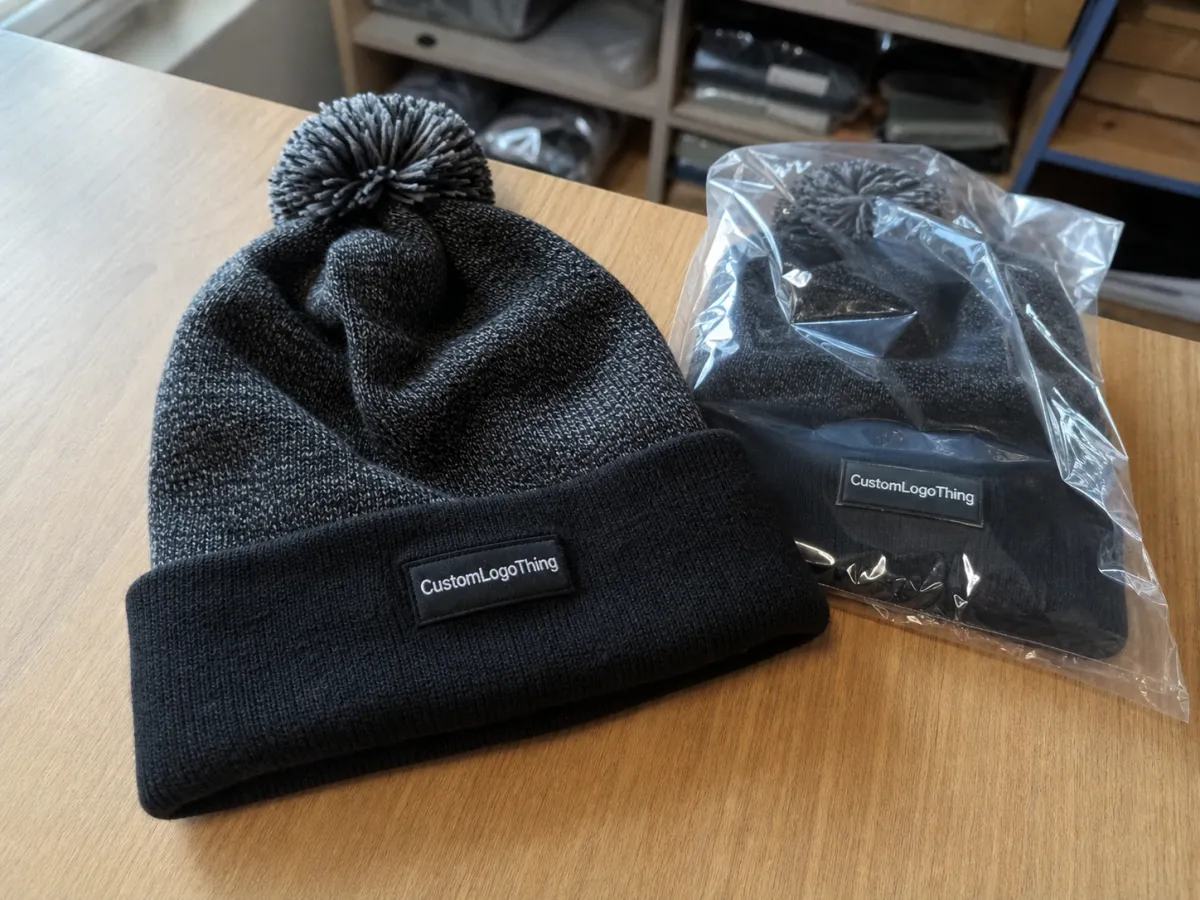
The pom changes the product hierarchy. A simple rib-knit cap says utility; a pom pom beanie says utility with a little personality. That distinction sounds minor until you look at retail performance. In a basic winter assortment, the item with the stronger crown shape often gets the better visibility, even when the yarn body is nearly identical to the plain version beside it.
For seasonal retail, that extra shape can translate into better impulse behavior. The accessory feels more complete, more giftable, and often more appropriate for the price than a plain knit of the same cost. A target retail range around $14.99 to $24.99 is common for this kind of item because it keeps the product in the impulse zone while still supporting margin once packaging and freight are added.
Buyers usually care about three signals: can it be merchandised fast, does it hold shape in transit, and does it make sense at scale. A drop only works if the style can be reordered without rewriting the whole spec every time. That is where Pom Pom Beanies for Retail drops become attractive. They are recognizable, but they can still be customized enough to fit a retailer’s color story, label standards, and delivery calendar.
The shelf test is stricter than the render test. A pom that looks lively on screen can flatten in carton, a beanie that feels plush in sample can look too slouchy on peg, and a nice yarn can still read cheap if the cuff edge is uneven. Those are not abstract problems; they show up in sell-through.
- Strong styles read clearly from 3 to 6 feet away.
- Consistent builds reduce sample-to-bulk surprises.
- A clean cost structure protects margin after packaging and freight.
How construction and fit change the final look
Two beanies can use the same pom and the same color, then land in completely different places once they are worn. The body construction is usually why. A ribbed knit tends to hold its edge more neatly and gives the hat a tighter visual frame. Jersey knit feels lighter and more casual. Double-layer construction adds warmth and body, but it also changes the drape and makes the crown sit higher.
Fit details carry more weight than many buying teams expect. Cuff height changes the balance of the whole style, especially if a woven label or patch sits on the fold. A taller cuff creates a more structured look; a shorter one can feel relaxed but less premium. Crown shaping matters too. If the top is too flat, the pom can look bolted on. If the crown is too rounded, the beanie may sit awkwardly when folded for retail packing.
The pom itself needs to be treated as a component, not decoration. A larger pom gives more shelf impact and photographs better from a distance. A smaller one can make the item look cleaner and less novelty-driven. Density matters, because a heavy pom can pull the hat backward when worn, while an overly light pom can lose volume after compression. For Pom Pom Beanies for retail drops, that balance is usually more important than the brand color or trim choice.
Comfort and recoverability should be checked on a physical sample, not assumed from the spec. Look at seam placement, inside scratch points, and how the knit rebounds after stretching. One-size styles still need a realistic fit range, and most retail programs work better when the hat comfortably covers roughly a 21.5 to 23.5 inch head circumference with enough stretch recovery to keep the cuff from bagging out after repeated handling.
Cost, pricing, and unit cost drivers buyers should compare
Beanie pricing is usually shaped by five levers: yarn, knit complexity, pom construction, branding method, and packaging. Yarn type is the first decision because acrylic, acrylic blends, and wool blends behave differently in both knitting and final hand feel. Acrylic is often the most cost-efficient and offers stable color. Wool blends feel more premium but usually raise the unit cost and can require tighter QC on shrinkage and finish.
Knit structure comes next. A plain rib or jersey body is simpler to run than a pattern-heavy build with colorwork or texture changes. That matters because machine time is not free. Add a custom pom, a woven label, a patch, retail folding, and ticketing, and labor starts to rival material cost on smaller runs.
MOQ changes the math sharply. A 500-piece order has to absorb setup, sampling, and finishing over fewer units than a 5,000-piece order. That is why low-MOQ quotes can look expensive even when the style is not complicated. The cost difference is often spread across the run size, not hidden in the product.
For buyers comparing pom pom beanies for retail drops, spec alignment matters more than the raw quote. A lower number that excludes hang tags, bagging, or carton marking is not a clean comparison against a quote that includes all three. The cheapest line item can turn into the most expensive total program once retail prep is added back in.
| Spec lane | Typical unit cost at 5,000 pcs | What you are paying for | Best fit |
|---|---|---|---|
| Standard acrylic, medium pom, woven label, clear polybag | $3.10-$4.25 | Simple knit, lower material cost, efficient finishing | Broad retail programs with tight margin targets |
| Acrylic blend, custom color knit, larger pom, hang tag and belly band | $4.25-$5.75 | Better hand feel, stronger shelf impact, more branding | Seasonal drops that need visibility |
| Wool blend, brushed lining, premium patch, retail folding and ticketing | $5.90-$8.25 | Higher fiber cost, more finishing, more premium presentation | Boutique or higher-ticket programs |
These are not fixed prices. Freight, duty, destination handling, and the final carton plan sit outside them. Still, the spread tells you where the money goes. Custom dye work, specialty yarn blends, and retail-ready finishing can move the price more than the knit body itself. If paper components are part of the package, FSC-certified tags are a practical choice. For distribution risk, transit testing against ISTA methods is worth asking about before bulk dispatch, especially if the pom is oversized or compressed in tight cartons.
Production steps and lead time from sample to shipment
A clean production flow saves more time than panic later. Most programs start with a brief, then move through yarn selection, knit sampling, approval, bulk production, finishing, packing, and shipment. Each handoff can add a few days. Small delays tend to stack, which is why the sample stage deserves more respect than it usually gets.
The pom is often the slowest part of the build. A knit body can move through a line efficiently, but a pom can require separate assembly, tighter color matching, and more inspection to keep the shape consistent. A fluffy yarn can also compress in transit and change the look at unboxing, so packing density has to be thought through early.
Lead time depends on material availability, artwork clarity, and approval speed. A straightforward order can move from sample approval to bulk shipment in roughly 12 to 18 business days. Custom-dyed yarn, brushed linings, or more involved trim packages can push that to 20 to 30 business days or more. For pom pom beanies for retail drops, the launch date should set the schedule, not the other way around.
That means buffer time is part of the plan, not a luxury. Leave room for one revision round, one packaging adjustment, and transit delay. If barcode labels, master carton marks, or retail folding instructions are needed, those should be approved before bulk knitting starts. Changing them after the first cartons are packed only creates waste.
Assortment planning for colors, sizes, and retail packaging
The strongest assortments are usually disciplined. One or two core neutrals do most of the work because they are easy to merchandise and easy to re-order. Black, heather gray, oatmeal, and navy tend to photograph well and fit into almost any winter color wall. A single accent color can add lift without making the assortment feel scattered.
There is a size conversation even when the style is one-size. Knit gauge, cuff tension, and crown height all change how the hat sits on a display head and how it feels in hand. A tighter gauge often looks more polished, but it can also reduce stretch if the yarn and construction are not balanced properly. That is why approving a physical sample matters more than approving a photo.
Packaging should match the channel. A clear polybag is efficient for warehouse handling and barcode scanning. A belly band gives a clean face and room for pricing or messaging. A hang tag can support brand story, but it adds handling, and the string length has to be controlled so the tag does not twist around the pom. For some retailers, a simple fold is enough. For others, the product needs a more finished presentation to justify its shelf price.
Carton pack also shapes how the item lands in store. A common master carton count may be 48 or 72 pieces, but heavy wool blends or high-loft poms may need a smaller count to protect shape. If store teams can open the carton and find the beanies still neat, the product feels easier to receive and easier to sell. That is one reason pom pom beanies for retail drops should be planned with the warehouse flow in mind, not just the factory’s most convenient pack.
Common mistakes that reduce sell-through and create returns
The first mistake is trusting a digital mockup too much. A pom can look lively on screen and still flatten in carton. It can feel too heavy once worn, or too light and flimsy for the shelf. The product may still be functional, but if it misses the expectation set by the render, sell-through can slip fast.
The second mistake is skipping a physical sample. Screen approvals hide too much. They do not reveal whether the acrylic scratches the skin, whether the knit recovers after stretching, or whether the label sits straight when the cuff is folded. A monitor can confirm color well enough to start, but it cannot tell you how the item behaves under store lighting or after a customer tries it on.
Over-decorating is another common problem. A winter staple does not need every trim in the catalog. Too many extras raise cost without always raising demand. Customers understand a clean beanie immediately. If the style is meant to be a quick add-on, every detail has to earn its place.
Planning mistakes can be more expensive than design mistakes. A single color with no fallback can create dead inventory if the shade lands wrong. A carton count that does not fit the warehouse process slows intake. A launch calendar with no buffer can force late freight, and late freight is usually a margin problem disguised as a timing problem.
Expert tips for a smoother retail-ready drop
Start with two samples if the budget allows: one hero version and one backup colorway. The hero sample tells you whether the style has shelf appeal. The backup gives you a lane if the first option feels too close to another seasonal item or if a yarn shade is hard to source reliably. That small cushion can prevent a lot of uncomfortable decisions later.
Write the spec sheet like a buyer would review it. Include yarn content, knit gauge, cuff height, pom diameter, pom attachment method, label style, carton pack, and the target delivery window. A good spec sheet reduces assumptions, and assumptions are where pricing tends to become fuzzy. On a small order, that fuzziness can cost more than the sample itself.
The items that feel most expensive on the shelf are usually the ones that look finished: clean edges, balanced pom size, and packing that survives the trip without crushing the crown.
A pre-production checkpoint is worth asking for on larger orders. It does not need to be a ceremony. A trimmed review of the exact yarn, trim, and finished look can catch problems before the bulk run starts. If the color match matters, this is also the right place to confirm whether the final carton, barcode label, and retail fold still match the original plan.
Think like a merchandiser as much as a product developer. How does the hat hang from a peg? Does the pom obscure the logo in a lifestyle photo? Does the beanie still look polished when the crown is slightly compressed? Those are the details that turn pom pom beanies for retail drops into a real retail program instead of a sample that never translated.
Next steps to turn a beanie concept into a retail order
Start with the target retail price. That single number shapes the yarn choice, the finishing level, the packaging format, and the acceptable MOQ. Once the price is set, lock the color story, choose the decoration method, and compare quotes using the same spec sheet. A quote that includes labels, bagging, and carton marking should never be read against one that leaves them out.
Then compare the sample, the unit cost, the MOQ, and the lead time together. Those four points tell a more useful story than a price line alone. A slightly higher-cost option can be the better choice if it lowers defect risk, holds shape in transit, or arrives on time for a fixed seasonal window. That matters more with winter accessories, because the selling period is short and the first few weeks do most of the damage or the good.
Before bulk begins, approve the final spec sheet and calendar. Track sample approval, yarn confirmation, bulk start, packing review, and shipment booking. That rhythm keeps the drop aligned with the selling window and makes problems visible before they become expensive. For pom pom beanies for retail drops, timing, design, and unit economics need to move together. If one of those drifts, the whole program feels heavier than it should.
How many pom-pom beanies should a retail drop start with?
A focused assortment usually performs better than a wide one. A few core colors and one accent color can cover demand without splitting inventory across too many SKUs. The right quantity depends on the channel, the price point, and how much stock the buyer can carry after launch. If the style is untested, a smaller first run with a reorder plan is usually safer than overcommitting.
What drives the price of custom pom-pom beanies the most?
Yarn type, knit complexity, pom construction, label method, and order quantity are the biggest cost drivers. Packaging and retail-ready finishing can add more labor than many buyers expect. MOQ matters because setup and sampling costs are spread across fewer units on smaller runs, which changes the math fast.
How long does production usually take for a retail beanie order?
Lead time depends on sample approval speed, material availability, and the complexity of the pom and finishing details. A straightforward style moves faster than a custom color-matched or heavily branded version. It is smart to leave buffer time for revisions, packing adjustments, and transit, especially when the drop date is fixed.
Which materials work best for retail-ready pom-pom beanies?
Acrylic and acrylic blends are common because they balance cost, warmth, color clarity, and everyday wear. Wool blends can feel more premium, but they usually cost more and may need tighter quality checks. The best choice depends on target price, hand feel, and how the piece should present in store.
How should pom-pom beanies be packed for store delivery?
Pack them so the crown keeps its shape, the pom is protected, and the retail presentation stays neat after shipping. A clear polybag, belly band, or hang-tag setup can support barcode scanning and shelf placement. Carton pack should fit the warehouse and store workflow, not just the factory’s easiest packing method.

