Premium pom pom Beanies for Retail have a narrow job description and a surprisingly long list of failure points. They need to look polished from a distance, survive repeated try-ons, hold their shape in a carton, and still feel soft enough to justify a premium price at the register. That combination is harder to achieve than it sounds. A hat can be technically warm and still miss the mark if the cuff rolls unevenly or the pom sits off-center.
Retail buyers usually see the issue in reverse. The first sample looks strong, then the first bulk lot reveals small inconsistencies: one colorway stretches more than the others, the knit face looks looser under fluorescent lights, or the pom arrives slightly crushed and never fully recovers. Those details matter because the category is visual first. Shoppers decide quickly, and they compare one beanie against the rest of the rack before they ever think about fiber content.
The smartest buying approach treats the product as a system, not a single item. Knit density, yarn choice, decoration, packaging, and shipping method all influence perceived value. If one of those parts is weak, the whole style reads cheaper than it should. That is the real challenge with premium pom pom Beanies for Retail: they have to earn the price tag twice, once in the sample room and again on the sales floor.
Premium Pom Pom Beanies for Retail: What Buyers Should Know
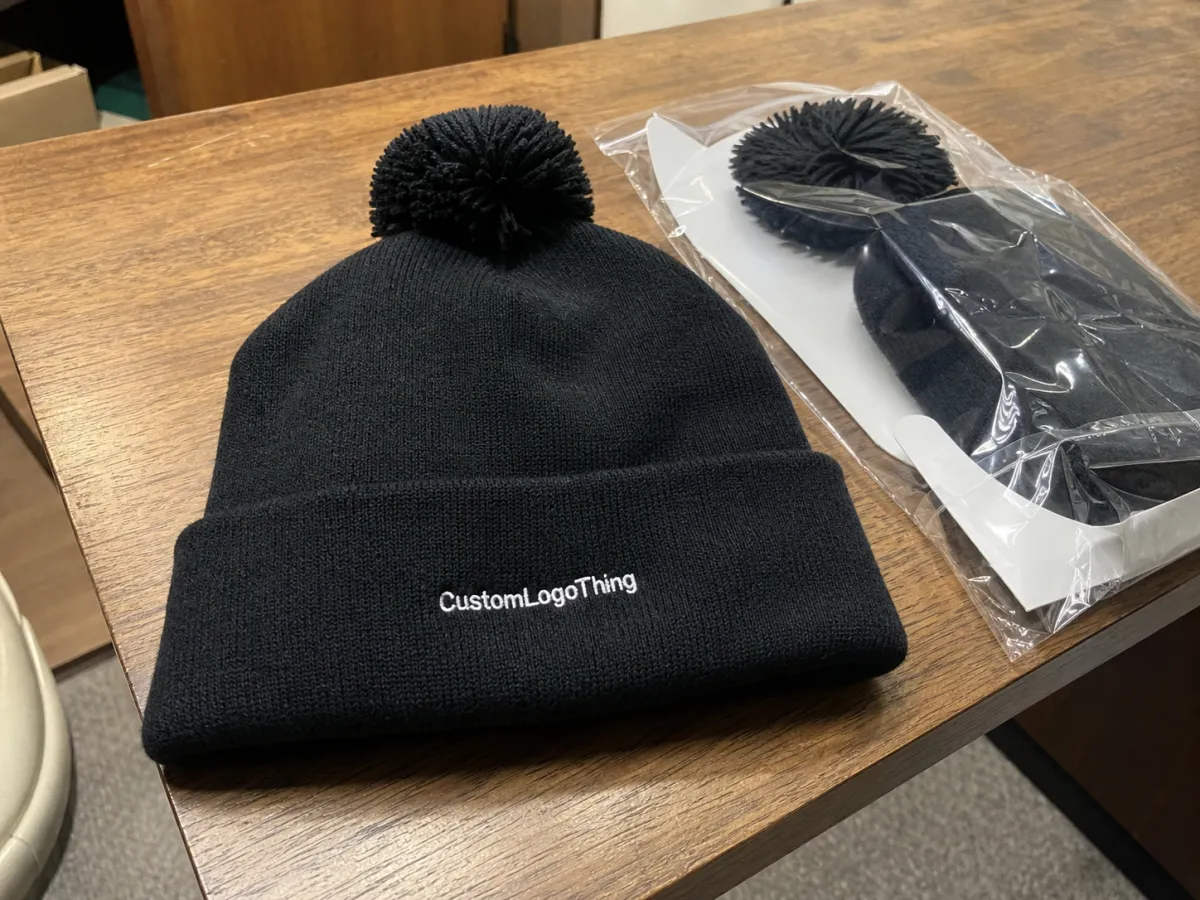
Retail beanies are judged in seconds. A customer picks one up, stretches the cuff, checks the top detail, and decides whether it feels finished or merely seasonal. That is why structure matters as much as color. A ribbed cuff with good recovery, a crown that sits cleanly, and a pom that keeps its volume all do more to protect conversion than an extra shade in the assortment.
Good knit definition is one of the clearest signs of a higher-end hat. Tighter stitches usually create a smoother face, cleaner logo placement, and less distortion around seams. Looser knits can feel softer, but they also tend to show uneven tension more easily, especially after handling. In store lighting, that difference becomes visible faster than buyers expect. A beanie that looks refined on a workbench can suddenly look ordinary under a bright retail fixture.
The pom has more influence on shopper perception than many teams budget for. A yarn pom gives a familiar, straightforward look and keeps cost in check. Faux fur can lift the style immediately, especially for giftable or fashion-oriented assortments, but it also introduces more variables: flattening in transit, shedding, and color matching across dye lots. The cleaner the body knit, the more the pom becomes the focal point. If the top detail looks inconsistent, the entire hat feels less considered.
There is also a proportion problem that shows up often in retail programs. A crown that is too tall can feel trendy but awkward on hang hooks. A crown that is too short may look safe but unremarkable. The best proportion usually depends on how the beanie will be displayed. Folded on shelves, it can afford a little more height. Packed on pegs, it needs a shape that reads cleanly without sagging backward.
A useful test is simple: if the beanie looks premium after ten try-ons and one bad repack, the spec is close. If it only looks premium in a staged sample photo, it is not ready yet.
Buyers should also separate “looks good” from “holds value.” A style can appear attractive in a presentation deck and still fail retail math if it needs extra labor to fold, extra packaging to protect the pom, or extra inspection to catch loose trims. For premium Pom Pom Beanies for retail, the buying decision is rarely just about style. It is about whether the style survives the chain from factory floor to store floor.
How the Knit, Cuff, and Pom Construction Works
A beanie may look simple, but it is really a compact assembly of interdependent parts. The body yarn controls warmth and hand-feel. The cuff controls fit and logo placement. The pom drives the visual identity. Inside and outside finish determine whether the item feels premium or mass-made. If one element is over-specified and another is underbuilt, the imbalance shows up immediately.
Knit gauge is one of the most important technical choices. A finer gauge can sharpen the appearance of the stitches and create a flatter surface for embroidery or a woven patch. A looser gauge can offer a softer, more relaxed look, but it may distort more under pressure. The difference is not abstract. On a 1,000-piece winter order, a slight shift in stitch density can change how well the hats present on rack and how often the front panel ripples around the decoration.
The cuff deserves more attention than it usually gets. A cuff that rebounds properly helps the hat keep its shape after shoppers pull it down and refold it. It also creates the most reliable area for branding. Wide cuffs are friendlier to patches and embroidery, but they can overpower the silhouette if the crown is short. Narrow cuffs look cleaner on some silhouettes, yet they leave less surface for decoration and can make the hat feel less substantial.
Pom construction is where price and appearance often split. Yarn poms are lightweight, cost-efficient, and easy to manage in bulk. Faux fur poms look fuller and more premium, but they demand better handling and tighter color control. Mixed-material poms can create a distinctive look, though they also add complexity to procurement and inspection. Buyers should ask how the pom is attached, whether the knot or stitch is concealed cleanly, and how the top holds up after compression in polybags or cartons.
Attachment quality matters because loose poms create return risk. A top anchor that is stitched securely with trimmed threads is the difference between a product that feels finished and one that feels provisional. Small defects in the attachment point are frustrating because they often escape a quick visual check. The hat can look fine at packing, then arrive with a twisted pom, a visible knot, or a top seam that no longer sits flat.
Care behavior is another practical factor buyers sometimes overlook. Faux fur poms can flatten during transit, especially if cartons are overpacked. Yarn poms recover more easily but may look less plush under bright lights. If the retail environment is high-traffic and the product will be handled often, durability usually beats drama. If the item is meant for gifting or fashion presentation, visual volume may matter more than absolute resilience. The right answer depends on the channel, not on a generic best practice.
Sizing, Yarn, and Decoration Choices That Shape Quality
Fit is easy to ignore until a buyer compares three samples side by side and realizes that one stretches too easily, another feels tight, and the third sits properly but loses shape after ten minutes on display. Most retail programs still favor a one-size profile, but one size only works if the stretch range is honest. A beanie should fit a broad adult head range without becoming baggy or overcompressed.
For adult retail, the most common practical range is built around comfort, not precision. Youth and junior sizes can work well in family or sports settings, but they add complexity to inventory and increase the risk of misallocation. If the program is new, a single adult fit with a well-tested cuff is usually the safer starting point. A style that fits imperfectly across several head sizes is rarely fixed by marketing copy.
Yarn choice shapes nearly every other decision. Acrylic remains popular because it is cost-effective, stable in color, and easy to knit consistently across repeat orders. Wool blends bring warmth and a more natural hand-feel, though they can raise the price and require more careful care labeling. Recycled blends can strengthen a sustainability claim, but buyers should ask for traceability, pilling data, and clear documentation before treating the fiber story as a selling point. If a program depends on sustainability language, the proof should be there from the start, not added later as decoration.
Decoration needs to match the knit. Embroidery is durable and works especially well on tighter gauges, but it can pucker if the knit is too open. Woven labels offer a refined, low-bulk look and usually hold up well in retail handling. Faux leather patches can make the hat feel more premium, though they need enough cuff width to sit flat. Heat-applied graphics are efficient for production, but they are less forgiving if the knit surface is textured or if the product will be washed often.
Color is not just aesthetic; it is commercial. A tonal logo on a charcoal, oatmeal, or navy body can feel understated and expensive. High-contrast branding makes the item easier to read from a distance, but it can also push the product toward promotional rather than premium. In seasonal assortments, that distinction matters. A style that looks too loud may move quickly at first and then become difficult to place in a higher-margin assortment later.
Retail buyers should also think about how decoration changes the hat’s perceived weight. A large front patch can make the product look more substantial, but if the knit body is thin, the contrast can work against the style. On the other hand, a small woven label on a dense knit may feel too quiet to justify a premium shelf position. The best choices usually create balance rather than emphasis for its own sake.
Cost, Pricing, and MOQ Factors Buyers Need to Compare
Unit price for premium Pom Pom Beanies for retail depends on a handful of predictable levers: yarn content, knit complexity, pom type, decoration method, packaging, and quantity. A basic acrylic beanie with a yarn pom and woven label may sit near the low end of the retail-viable range, while a wool blend with faux fur pom, custom patch, and branded packaging rises quickly. That gap is not just material cost. It reflects more setup time, more finishing steps, and more packaging care.
MOQ changes the equation faster than many first-time buyers expect. At smaller volumes, fixed costs are spread across fewer units, so custom colors and special trims raise price sharply. A single body color is easier to quote than three colorways. A standard pom is easier than a custom-matched faux fur option. Add a branded hang tag, tissue wrap, and retail folding instructions, and the order becomes more labor-intensive in ways that do not always show up on a quick quote comparison.
For planning purposes, these ranges are often realistic at 1,000 to 3,000 pieces, though actual pricing varies by region, freight method, and inspection scope:
| Spec Level | Typical Features | Indicative Unit Cost | Best Fit |
|---|---|---|---|
| Entry retail | Acrylic body, yarn pom, woven label, standard polybag | $2.10-$3.20 | Price-sensitive programs and broad store rollouts |
| Mid-tier premium | Better gauge knit, faux fur pom, embroidered logo, branded hang tag | $3.40-$5.80 | Gift shops, lifestyle retail, and colder-weather assortments |
| Higher-end retail | Wool blend or recycled blend, custom pom, patch decoration, upgraded packaging | $5.90-$8.50 | Premium boutiques and collection-led merchandising |
These numbers are directional, not fixed market rates. Freight, carton pack style, hang-tag assembly, sampling, and third-party inspection can move landed cost in meaningful ways. A quote that leaves out artwork setup or sample revision charges is not truly lower; it is merely incomplete. Buyers comparing vendors should ask for the same spec sheet, the same packaging terms, and the same delivery assumptions. Otherwise, the lowest quote is often just the least detailed one.
Inspection and pack-out are part of cost, even if they are not always treated that way. A beanie that arrives with a crushed pom or poor folding sequence can create labor at the warehouse or store level. If retail-ready presentation matters, ask how the supplier controls compression in cartons, how poms are protected, and whether finished carton photos are available before shipment. Those are small checks, but seasonal goods reward small checks.
Process and Timeline: From Sample to Ship Date
The production path usually starts with a brief, then moves to sample, revision, bulk production, inspection, and shipping. The less ambiguous the brief, the fewer corrections later. Suppliers can move fast on a sample, but they cannot compensate for unclear artwork, shifting color targets, or last-minute changes to the pom specification.
Timelines are often stretched by approvals, not knitting. Internal teams want to review color, branding, packaging, and price all at once, which sounds efficient until each group waits on the next one. A simple rule helps: finalize the body yarn first, then lock the decoration, then confirm packaging. When those choices are made in order, the schedule stays much cleaner.
For many custom runs, the combined sample and production window lands somewhere between four and eight weeks, sometimes longer if yarn must be dyed to match a specific shade or if the pom requires a special finish. Shipping adds another variable. Buyers planning for winter assortment should account for transit and receiving time, not only manufacturing time. A hat that is on schedule in the factory but late to the floor is still late.
Quality control should be staged instead of rushed at the end. A practical QC review checks stitch consistency, pom attachment, label placement, color match, folding behavior, and carton count. If the style includes a patch, the check should also verify edge lift, adhesive quality, and any puckering around the application area. For custom packaging, confirm that the hang tag, insert, and bag size match the finished hat exactly. A product can pass a visual glance and still fail once packed.
It also helps to ask for pre-shipment photos of finished cartons. That simple request often catches packing issues before the boxes leave the factory. If a retailer uses distribution centers, the shipping carton count and inner pack configuration should be confirmed in writing. Small count errors become expensive once the season starts, especially on products with narrow selling windows.
Step-by-Step Retail Buying Guide for First Orders
A first order works better when the spec is tight and the testing is practical. Start with the customer profile: age range, climate, expected price point, and the store environment. A beanie sold in a gift shop with soft lighting needs a different finish than one sold in a high-traffic sporting goods chain. The product should match the merchandising context, not just the trend board.
Then build the spec sheet around the decisions that actually affect production. Include yarn content, gauge, cuff width, crown height, pom type, decoration method, packaging, target retail price, and target margin. If the product needs to sit upright in a display bin or hang well on a peg, say so. Presentation requirements affect folding, labeling, and even how much stiffness the knit should have.
Samples should be tested in conditions that resemble real retail handling. Check the hat under daylight and under store lighting. Stretch and release the cuff several times. Fold and unfold it. Press the pom lightly and see how long it takes to recover. Compare the sample with approved color references, not just a screen image. Screen color can hide a problem that becomes obvious in person.
Buyers comparing suppliers should use a consistent scorecard rather than relying on memory. A useful one keeps the assessment simple:
- Quality - stitch clarity, hand-feel, seam finish, pom balance.
- Price - unit cost, setup fees, sample charges, freight assumptions.
- Timing - sample lead time, bulk lead time, transit, and buffer.
- Communication - response speed, proof accuracy, revision handling.
For a first run, smaller is often smarter. A controlled order reveals how the beanie behaves in production and how it performs once customers handle it. If one colorway sells faster, or one pom style looks better in store, the reorder can be adjusted with fewer surprises. That is often how stronger winter programs are built: one cautious order, then a cleaner repeat once the market has spoken.
Common Mistakes That Hurt Margin or Shelf Appeal
The most expensive mistake is approving a sample that only works in ideal conditions. A pom can look full in a still photo and collapse after packing. A cuff can feel perfect in hand and then loosen after repeated stretches. A patch can look sharp on one sample and then edge-lift on bulk pieces if the knit tension shifts. These are not dramatic defects, but they are the ones that quietly erode retail confidence.
Weak color matching is another common issue. If the logo disappears into the body color, the hat loses brand presence. If the contrast is too sharp, the style can feel more promotional than premium. The same problem appears with oversized branding. Many buyers want visibility; few want the product to look busy. A cleaner, more restrained treatment usually protects the premium read better than a louder one.
Packaging mistakes can hurt just as much as product mistakes. A beautifully made beanie can still look underwhelming if the fold is sloppy, the tag is crooked, or the pom has been compressed flat in transit. The difference between average and premium is often a few seconds of pack discipline. Seasonal products are unforgiving that way.
Price-only buying is another trap. The cheapest quote may skip inspection, use lower-grade yarn, or hide packaging charges elsewhere in the order. That can work on paper and fail in practice. A slightly higher quote with cleaner finishing and fewer defects often wins on landed value. Retail math rewards consistency; markdowns eat inconsistency quickly.
A seasonal item that arrives on time but looks tired on the rack is a margin problem, not a merchandising win.
Expert Tips and Next Steps for a Smarter Reorder
Repeat orders improve when the team keeps a record of what actually happened, not just what was approved. A simple scorecard for each style is enough: stitch quality, pom balance, label placement, color match, packaging finish, and any transit damage. Over time, that record is more useful than a memory of the sample room, because it captures how the product behaved after handling and shipping.
Finished carton photos are worth requesting every time. They show whether the hats were folded correctly, whether the poms were protected, and whether the labels were placed where the retailer expects them. If the product is distributed through multiple channels, those photos also make it easier to spot which pack method works best. Small operational differences often explain why one lot performs better than another.
For premium Pom Pom Beanies for retail, consistency matters more than novelty. A style with one elegant yarn, one sensible pom, and one clean logo placement usually outperforms a cluttered design that tries to say everything at once. The best programs often feel almost quiet. That quiet is not lack of effort; it is the result of good choices made early and repeated carefully.
Before scaling up, lock the spec sheet, compare quotes on the same basis, and verify a pilot lot if the style is new. That sequence reduces surprises and keeps the seasonal assortment predictable. In a category with short selling windows and limited room for error, predictable is a stronger word than exciting.
Premium pom pom beanies for retail work best when the product, the packaging, and the timeline all point in the same direction. The hats should hold shape, show branding clearly, and arrive ready for the floor without extra rescue work. That is the standard worth aiming for, because in winter accessories, polish is not decoration; it is part of the product.
What makes premium pom pom beanies for retail different from basic beanies?
They usually have tighter knit construction, better cuff recovery, cleaner finishing, and a pom that keeps its volume after packing and handling. Retail-ready versions also pay closer attention to label placement, fold presentation, and carton protection because shelf appeal matters as much as warmth.
How much do premium pom pom beanies for retail usually cost?
Price depends on yarn content, decoration, pom type, packaging, and quantity. Simple acrylic styles can sit near the low end of the retail range, while wool blends or custom faux fur pom designs move higher. The most reliable comparison is a quote built from the same spec sheet and the same freight assumptions.
What is the typical turnaround for custom retail beanies?
Lead time depends on sample revisions, material availability, decoration, and packing requirements. A straightforward order may move faster, while custom yarn colors or premium packaging can add time. Buyers should separate sampling, production, inspection, and shipping into distinct dates so the schedule is easier to control.
What MOQ should I expect for retail pom pom beanies?
MOQ varies by factory and by how many custom elements are included. A stock body with simple branding is easier to support than a fully custom style with special yarn and packaging. If demand is unproven, ask whether a pilot run or limited color split is possible before committing to scale.
How do I choose the right pom style for retail customers?
Start with the channel and the shopper. A fuller faux fur pom often suits giftable or fashion-led assortments, while a yarn pom can feel cleaner and more cost-efficient. Always check how the pom behaves after packing, shipping, and a few days on display; that matters more than how it looks in a staged sample.


