Pom Pom Beanies Unit Cost Guide for Bulk Buyers
Pom Pom Beanies unit cost is not set by the hat body alone. The pom style, knit density, decoration method, finishing time, and packing format can move pricing faster than many buyers expect. If you are comparing quotes for retail, promo, school, or club merchandise, the safest approach is simple: lock the spec first, then compare like for like.
Why Pom Pom Beanies Can Cost More Than Expected
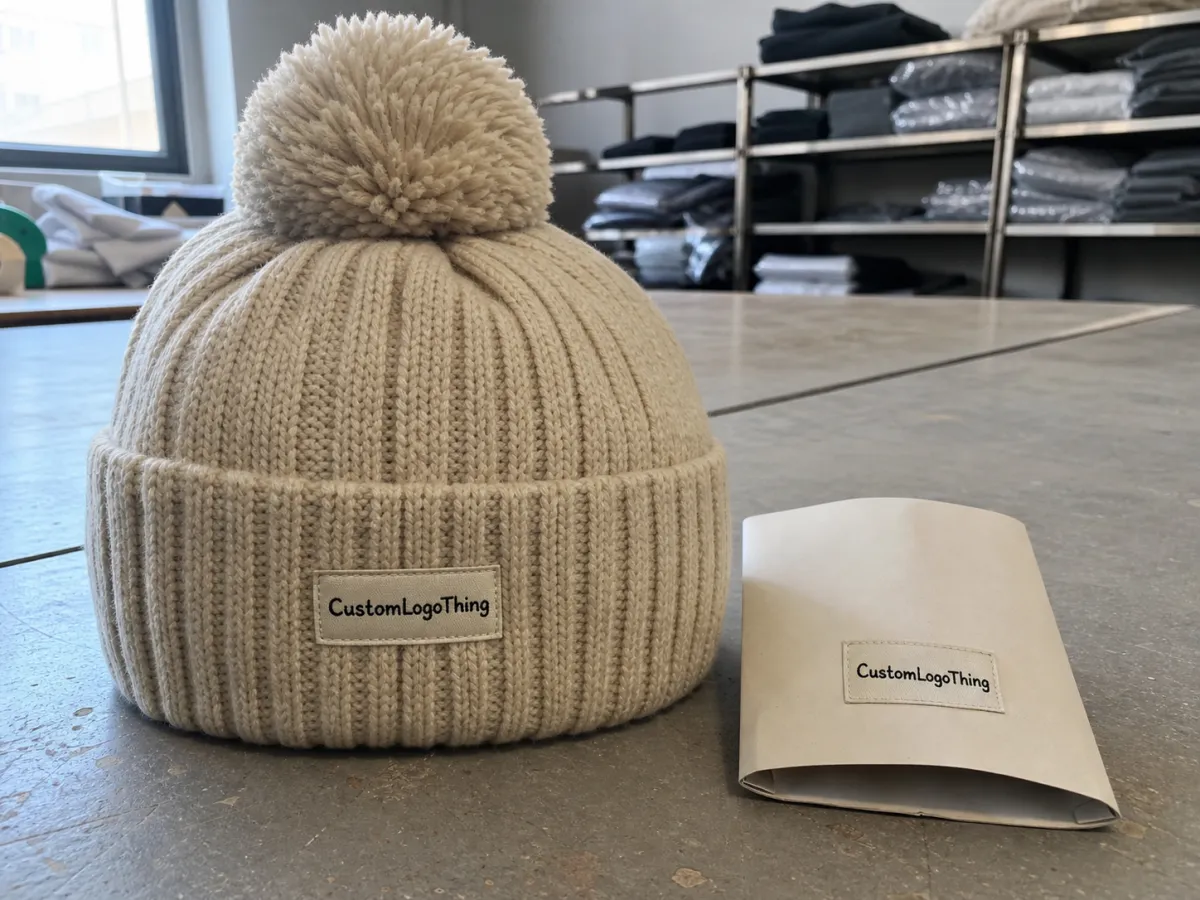
A plain acrylic beanie is easy to price. Add a pom, a heavier knit, a cuff, embroidery, a woven label, and retail packing, and the price moves quickly. That is not a trick; it is the result of material, labor, and finishing time stacking together.
Two hats can start from the same yarn and still land in very different price bands. One may be a standard rib-knit cap with a sewn-in yarn pom. Another may use a thicker gauge knit, a faux-fur pom, a woven badge, and a branded insert card. The silhouette is similar, but the production effort is not.
The buyer’s channel matters. Promo giveaways can often use a simpler build. Retail and team-store programs usually need cleaner finishing and more consistent color control. That extra polish costs money, but it also makes the product easier to sell.
The biggest quoting mistake is asking for numbers before the brief is complete. If the pom type, cuff height, decoration method, and packout are still open, the quote is only a placeholder. It is not a reliable basis for comparison.
Core Specs Buyers Should Lock Before Requesting Pricing
Start with the body. Decide whether the beanie is a standard rib knit, a denser fisherman-style knit, or a lighter retail fit. Confirm whether it is cuffed or uncuffed. Acrylic is usually the most budget-friendly yarn. Acrylic-blend yarn can improve hand feel and recovery. Wool-blend options usually cost more, but they may be worth it when warmth and texture matter.
Gauge affects price as much as fiber content. A tighter gauge often looks cleaner and holds shape better, but it can take more machine time and more careful finishing. A looser gauge may save money, yet the saving is not useful if the hat looks thin or unstable. Cuff height also matters because it changes material usage and creates more or less space for branding.
Then define the pom. A yarn pom is generally the simplest and easiest to price. A faux fur pom reads more premium and usually adds material and assembly cost. A detachable pom needs hardware and extra assembly, which can help in retail programs but should be priced with that complexity in mind. Size matters too: larger poms use more material and can affect carton efficiency.
Fit should be specified early. Adult, youth, and one-size retail profiles do not always share the same crown depth or stretch target. For resale, ask for a sizing spec instead of a vague “fits most” promise.
Branding also needs a decision. Common options include embroidery, woven labels, and patches. Embroidery is usually the best balance of cost and durability. Woven labels work well when the logo is simple and the cuff gives a clean placement point. Patches add dimension and can make the hat feel more premium, but they often bring higher setup charges or tooling fees.
When these details are missing, every quote changes shape. Buyers end up comparing unrelated products and wondering why the numbers do not line up.
Spec Changes That Move Unit Cost Up or Down
The fastest way to control cost is to control complexity. Every extra knit color adds setup time and handling. Every additional decoration element adds a production step. Every special component can push minimum run requirements higher.
Color count is one of the easiest drivers to overlook. A two-color knit is usually manageable. A multi-color pattern with frequent yarn changes takes more attention and may increase waste. If the art needs a detailed pattern, the factory will price for the knitting time, not only the yarn.
Pom style matters as well. Faux fur generally costs more than yarn because of the material itself and the finishing work required to attach it neatly. Detachable hardware adds another layer of cost and another point of failure if the spec is not controlled.
Decoration can be inexpensive or costly depending on what is asked for. A simple embroidered logo with one or two thread colors is usually easier to manage than a complex patch build. Exact Pantone matching across knit, pom, label, and packaging can also add sampling rounds and delay approvals.
Here is the practical tradeoff:
- One body color, one logo location, sewn-in yarn pom = better bulk pricing.
- Mixed knit colors, larger faux-fur pom, and patch badge = higher unit cost.
- Retail-ready packout with insert card and barcode = more finishing labor and higher landed cost.
Quality tolerance is another lever. Tighter stitch consistency, cleaner embroidery registration, and closer shade control all take time. That is normal. A lower-priced beanie can still work for a promo run, but the standard should match the channel, not the mood of procurement on the day the quote is requested.
If you are collecting bids, use one spec sheet for every supplier. Include body material, knit style, cuff height, pom type, decoration method, quantity, packaging, and delivery target. Otherwise a low number may simply mean the supplier priced a different product.
Pom Pom Beanies Unit Cost: Pricing, MOQ, and Quote Logic
Small runs carry a much higher unit cost than larger orders because setup, sampling, and labor are spread across fewer pieces. That is basic production math, not a markup trick.
Typical bulk pricing bands for custom knit programs often fall along these lines, assuming a standard acrylic body and moderate decoration:
| Order Tier | Typical Cost Per Piece | MOQ Reality | Best Fit |
|---|---|---|---|
| Sample-level small run | $5.50-$9.50 | 50-150 pieces | Design testing, influencer packs, short promo windows |
| Standard bulk order | $2.80-$5.20 | 300-1,000 pieces | Club merch, team stores, seasonal retail |
| Repeat or larger run | $2.20-$4.20 | 1,000+ pieces | Reorders, chain programs, long-season inventory |
Those ranges are useful, not final. A faux-fur pom, detachable hardware, heavier embroidery, or retail packing can push the number higher. A simple yarn pom with one logo location and plain carton packing usually sits closer to the lower end.
A good quote should make the inclusions obvious. Look for the hat spec, pom type, decoration method, sample cost, MOQ, lead time, carton count, and whether freight is excluded. If those items are missing, the number is incomplete.
Sample costs deserve attention. Some suppliers absorb sample fees into bulk orders, while others charge separately and credit the amount later. Neither approach is automatically wrong. The risk is approving a cheap-looking sample and later finding that the production version is not the same standard.
“Send the exact size, pom style, logo method, quantity, and delivery window. If the brief is complete, the quote will be useful.”
That level of specificity is what keeps pricing comparable. Clear inputs create clearer output, and clearer output reduces revisions.
Production Workflow and Lead Time From Artwork to Dispatch
Production usually follows a predictable path: spec confirmation, artwork review, yarn matching, sample approval, bulk knitting, finishing, and packing. Miss one approval step and the schedule slips. Change the pom style after sampling and it slips again.
Most delays come from a small set of causes: slow approvals, late color changes, and last-minute spec edits. Buyers often blame the factory for being slow when the real issue is that the sample was never signed off.
For a straightforward custom run, a timeline of 12-20 business days after sample approval is common. More customized knit programs, especially those with multiple colors or a nonstandard pom construction, can take longer. Rush orders are possible in some cases, but they reduce room for changes.
Quality checks are part of lead time whether buyers see them or not. A solid factory will usually check yarn consistency, stitch tension, pom attachment, logo placement, and packing count before shipment. Better-run orders also compare the approved sample against the bulk run to catch shade drift or embroidery shifts.
For sourcing teams that want a stronger framework, external standards can help define expectations. Shipping tests and carton performance often reference ISTA methods, while paper-based inserts or hangtags can touch FSC certification. Those standards do not replace a good product brief, but they do help structure questions about packaging and transit durability. See ISTA and FSC for reference points.
One practical habit saves time: ask for production photos before shipment. They can catch wrong labels, off-color yarn, poor fold consistency, and obvious pack-count errors before cartons leave the factory.
Packing, Cartons, and Shipping Choices That Change the Final Bill
Packaging can add more to the final bill than many buyers expect. Individual polybags, hangtags, barcode stickers, size labels, and retail inserts each add labor. None of them is expensive alone; together they move landed cost enough to matter.
Carton planning matters too. If the beanies are packed loosely, freight is wasted on air. If they are packed efficiently, the cost per unit drops. The goal is not to compress the knit so much that the product loses shape or the pom arrives flattened.
Do not confuse factory price with total project cost. The factory may quote a clean production rate and still leave out freight, customs-related handling, local delivery, or special packaging requests. Buyers who compare only ex-factory numbers can end up with a false winner.
Here is the clean way to think about it:
- Factory price covers the hat, the knitting, the pom, and basic finishing.
- Landed cost includes freight, packaging extras, and destination charges that can be forecast.
- Total project cost includes samples, setup charges, and any revision rounds caused by a changing brief.
Shipping method should match the job. Air makes sense for urgent, smaller programs. Ocean usually wins on larger orders if the timeline allows it. Freight swings can be severe in peak season, so a good sourcing plan includes a shipping estimate before approval.
Pack count also deserves a close look. A carton that holds the right volume but is hard to count on receiving creates more work downstream. Clear inner pack quantities, consistent carton labeling, and a readable packing list are dull details, which is exactly why they matter.
Why Buyers Reorder From a Factory That Quotes Clearly
Repeat orders usually come down to boring things done well: clear quoting, stable communication, sample accuracy, and realistic lead times.
A supplier that gets the spec right the first time saves money on rework, delays, and internal approvals. If the cuff height stays consistent, the pom style matches the sample, and the shipment matches the packing list, buyers notice.
There is also a margin story here. A good factory can point out where to save money without hurting the product. Maybe embroidery is better than a patch because the logo is simple. Maybe a standard yarn pom gives enough shelf presence without pushing the quote too far. Maybe the retail insert is unnecessary for a promo channel.
Buyers often ask for a lower number, but what they really need is a better spec. A cheaper hat that looks off-brand can cost more in the long run. A slightly higher-priced hat that sells through, photographs well, and arrives on time is usually the better buy.
Pom Pom Beanies unit cost should not be the only question, because price alone does not tell you whether the order will hold up in production. Ask whether the quote is stable, whether the sample matches the art, and whether the supplier is clear about what is included.
Next Steps to Get an Accurate Quote Without Back-and-Forth
If you want a usable number, send the complete spec the first time. Include size, body material, knit style, pom type, decoration method, quantity, packaging, and target delivery window. That lets the supplier price the real job instead of guessing and revising later.
Ask for two pricing options if possible. One should reflect the lowest practical MOQ. The other should show better bulk pricing at a larger quantity. Side-by-side pricing shows where the volume break starts, which is more useful than a single quote with no context.
Confirm artwork, label placement, and pack method early. If those details keep changing late in the process, lead time stretches and setup charges can rise. The cleanest orders are not the fanciest ones. They are the ones with the fewest moving parts.
For most buyers, the right move is straightforward: lock the spec, compare the quotes, and choose the version that fits the channel. If the goal is a promo handout, keep it simple. If the goal is retail value, spend where the customer will notice it.
What is the typical pom pom beanie unit cost for small and bulk orders?
Small custom runs usually cost more per piece because setup and labor are spread over fewer units. Bulk orders lower the unit cost fastest once the knit spec, decoration, and pom type are standardized. The cleanest comparison is to request pricing at two or three quantities instead of relying on one quote.
How does the pom style affect pom pom beanies unit cost?
Faux fur and oversized poms usually add more cost than simple yarn poms because they use more material and take more finishing time. Detachable poms add hardware cost, but they can improve retail appeal and replacement value. A sewn-in pom is usually the simplest to produce and the easiest to price consistently.
What MOQ should I expect for custom pom pom beanies?
MOQ depends on knit complexity, color count, and decoration method, not just the hat shape. Simple stock specs can support lower quantities, while fully custom knitting usually needs a higher minimum. If budget is tight, ask for a standard base spec first and save the more custom details for a repeat order.
How long does production usually take after sample approval?
A straightforward order often takes 12-20 business days after sample approval. The timeline can extend if yarn matching is slow, the pom build is unusual, or the packing requirements are more involved. Rush orders are possible in some cases, but they usually reduce customization options.
How can I lower pom pom beanies unit cost without making them look cheap?
Use one knit body color, a simple decoration method, and a standard pom size to keep the spec clean. Choose packaging that matches the sales channel instead of adding retail extras that do not improve the offer. Spend the budget on the detail customers notice first, usually hand feel, fit, or logo clarity.

