Getting a Pom Pom Beanies factory quote is not a search for the lowest number on the page. It is a way to expose what actually sits inside the price: yarn grade, knit construction, pom type, decoration method, packaging, inspection, and freight. Once those pieces are visible, the quote becomes usable instead of decorative.
That matters because a cheap headline price can hide several additions. Sample fees appear later. Packaging changes the unit cost. Freight can dominate the landed price on smaller orders. A buyer comparing three suppliers needs one thing first: a quote built on the same spec sheet, with the same assumptions, and the same shipping basis. Without that, the numbers are just noise.
The best quotes are plain. They show what is included, what is optional, and what will change if the spec shifts. That is especially true for winter accessories, where a small change in knit density or pom attachment can affect machine time, material use, and defect risk. A clean quote tells you where the cost pressure lives before production starts.
Pom Pom Beanies Factory Quote: What Really Moves Cost
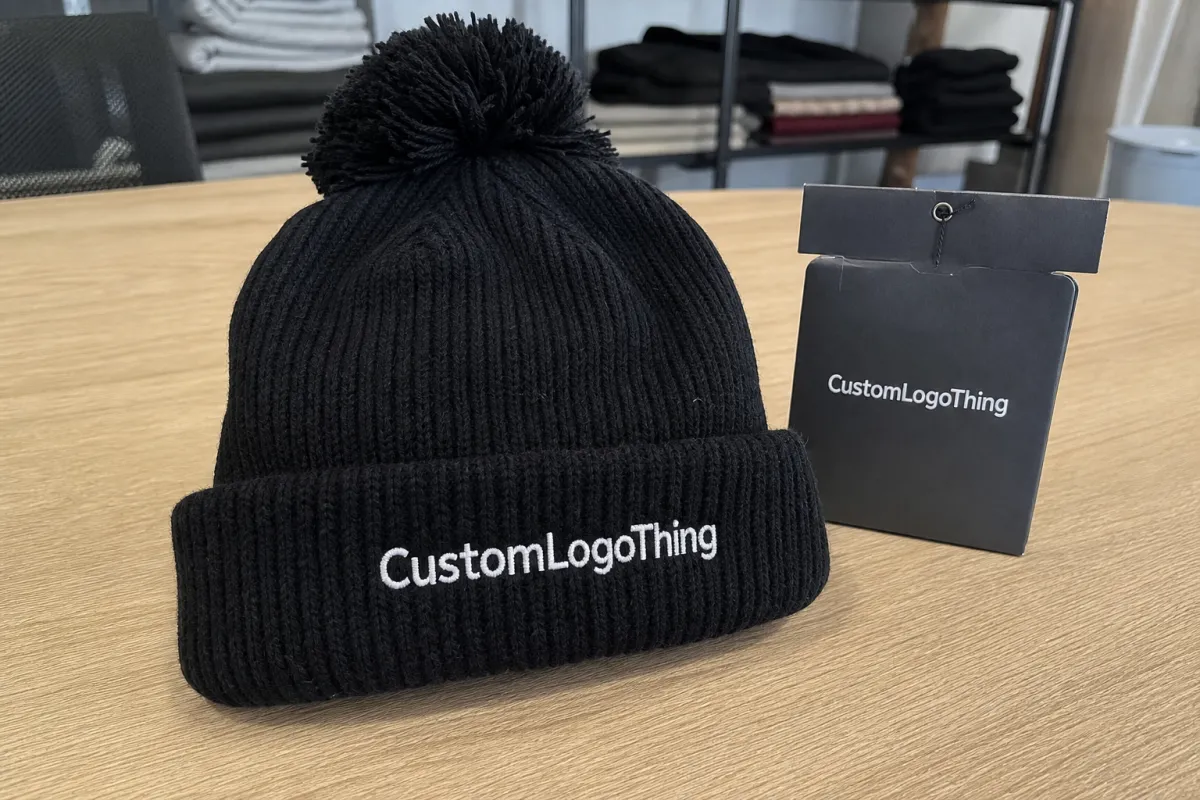
The biggest driver is usually not the pom itself. It is the full build around it. A tighter knit uses more yarn and more machine time. A heavier cuff adds material and changes the shape of the beanie. A more complex logo method can add setup work even if the decoration looks small on paper.
Yarn choice matters too. Basic acrylic is still the lowest-cost starting point for many bulk orders. Acrylic-wool blends sit higher because of material cost and hand feel. Recycled yarns can sit in a similar range, but the development cost may rise if the supplier needs to match color, softness, or shrink behavior. Buyers sometimes focus only on the fiber name. The real question is whether the chosen yarn can be knitted consistently at the required gauge and still hold the final shape.
The quote should make the cost logic visible. If one factory gives a flat number for a beanie with embroidery, woven label, and individual bagging, that number is hard to trust unless the spec sheet is attached. A meaningful Pom Pom Beanies factory quote should show the build, not just the total.
For practical comparison, ask for the following to be separated or clearly stated: product cost, sample cost, packaging, document handling, inspection, and freight terms. When those pieces are separated, a buyer can compare factories without accidentally comparing different products.
Practical test: if two quotes look similar but one supplier cannot explain the spec differences line by line, the comparison is not finished yet.
This is where seasonal timing also sneaks in. If a factory is busy with winter production, the same beanie can quote differently depending on capacity, yarn availability, and the schedule behind it. A quote written for a rush order is not the same as a quote written for a standard production window.
Pom Pom Styles, Knit Builds, and Branding Options
Pom Pom Beanies are not one product category. They are a cluster of small design decisions that look simple until the order moves into sampling. A cuffed beanie gives a structured front panel and usually works well for clean logo placement. A slouchy beanie has a softer silhouette and tends to favor fashion-led programs or retail collections that want a less uniform look.
The pom changes both cost and presentation. Yarn poms are generally the most economical. Faux fur poms read as more premium and often fit retail programs better, but they introduce more variability in size, density, and color consistency. Detachable poms can be useful for gift sets or style flexibility, yet they add hardware, assembly time, and extra inspection points. A weak attachment method is one of the most common causes of post-delivery complaints, so the factory should be clear about whether the pom is stitched, tied, snapped, or clipped.
Branding choices create another set of tradeoffs. Embroidery is direct and durable, but it can distort fine detail if the artwork is too small or the knit surface is too loose. Woven labels keep the branding crisp and usually hold up well on cuffs. Leather or PU patches add texture and a more retail-ready feel. Printed inserts or hang tags do not change the beanie itself, but they do change how the product is perceived on the shelf.
A rough fit guide helps buyers think about the right build:
- Retail programs: faux fur pom, structured cuff, woven label, hang tag, and individual polybag.
- Promotional orders: acrylic knit, yarn pom, one-color embroidery, and bulk packing.
- Sports teams: thicker cuff, durable stitching, strong color contrast, and simple logo placement.
- Gift sets: softer yarn, detachable pom, insert card, and folding carton.
The key is not to overbuild the product. A school fundraiser does not need the same finishing stack as a premium holiday retail item. The wrong specification can turn a simple beanie into a high-cost accessory that still misses the target audience. A good quote reflects the use case, not a generic sample.
Technical Specifications Buyers Should Confirm Before Ordering
A useful quote starts with a complete spec. At minimum, the supplier should confirm yarn composition, knit gauge, cuff height, size range, pom attachment method, and logo placement. Missing one of those fields usually means the factory is filling in the gap with a guess. That is how a low quote turns into a change order later.
Fit is where many first-time buyers get surprised. A beanie that looks right in a photo may sit too high, collapse at the crown, or feel tight across the forehead once it is worn. The issue is usually not the artwork. It is the relationship between depth, stretch, and rib recovery. A pre-production sample is the fastest way to see whether the cuff snaps back, whether the crown holds shape, and whether the pom stays centered after the beanie is pulled on and off.
Measurement details matter more than they sound. Crown depth, cuff width, body length, and finished stretch should all be written down. If a supplier is quoting a one-size beanie, the measurement range still needs to be defined. For children’s programs or mixed-size retail runs, that becomes even more important because one pattern can fit wildly differently across age groups.
Packaging is another place where assumptions create trouble. For bulk delivery, the quote should state whether the beanies go into individual polybags, whether size stickers or barcode labels are included, and how cartons are packed for warehouse intake. For retail orders, a folding carton, insert card, or hang tag may be needed. If paper inserts need certified sourcing, say so early. If the shipment needs transit testing, ask for the testing method before production begins rather than after the goods are packed.
Compliance can affect timing and price as well. Fiber content labeling, care instructions, and restricted-substance documentation are not glamorous details, but they are the kind that prevent customs issues and retailer rejections. The right factory will know whether those items are included in the quote or billed separately.
Logo position also deserves precision. Center front, left cuff, side seam, and woven label at the back all create different setup requirements. A shift of even an inch can change alignment, machine path, or needle count. That is why artwork approval should never stop at “the logo looks fine.” The exact placement needs to be fixed before the quote becomes a purchase order.
Pricing, MOQ, and Unit Cost Factors That Change the Quote
Pricing usually moves in steps. There is a sample fee, then a production cost that includes setup, then a repeat-order cost that is often lower because the factory already has the pattern and settings dialed in. Some suppliers absorb the sample fee later if the bulk order is approved. Others do not. That difference should be explicit.
MOQ is not a fixed industry number. It changes with yarn color count, decoration method, pom style, and packaging. A single-color acrylic beanie with one embroidery location can carry a lower minimum than a jacquard knit with a faux fur pom and custom carton insert. Buyers often ask for “the MOQ” as if one number applies to every version. It does not.
| Order Profile | Typical MOQ Pressure | Indicative Unit Cost Range | Main Cost Drivers |
|---|---|---|---|
| Basic acrylic, yarn pom, one-color embroidery | Lower | $2.10-$3.40 | Setup, stitch count, packaging choice |
| Acrylic-wool blend, faux fur pom, woven label | Medium | $3.20-$5.20 | Yarn quality, pom type, label format |
| Premium knit, detachable pom, retail packaging | Higher | $4.80-$7.50 | Assembly time, packaging, QC, carton spec |
Those numbers are directional. They will move with quantity, season, color matching, and shipping route. Still, they are useful because they show how quickly a quote changes once the product gets more complex. One extra decoration process can change a simple promotional item into a retail item with a very different margin profile.
Freight deserves special attention. On small orders, shipping can cost more than the beanie itself. On larger orders, carton size and gross weight start to matter. A low factory price is not a win if the carton count, packing density, or shipping mode pushes the landed cost above your target. That is why every serious Pom Pom Beanies factory quote should be read as a landed-cost exercise, not just a unit-price exercise.
Unit cost also changes with repeatability. A design that requires careful hand-finished pom placement or constant color correction is more expensive to keep stable. A simpler build with standard yarn and standard decoration usually gives the buyer better price consistency across reorders.
Process and Lead Time: From Spec Sheet to Shipment
The production path is fairly linear: inquiry, spec confirmation, sampling, sample approval, bulk knitting, finishing, inspection, packing, and shipment. The delays usually happen between sample approval and final sign-off. Buyers often ask for several revisions at once, which sounds efficient until the quote keeps changing underneath them.
A simple build can move faster than a complex one, but not by magic. Yarn must be reserved. Color must be matched. The pom needs to be sourced or made. Labels and packaging need to arrive before final assembly begins. Even when the knitting itself is quick, the supporting tasks create the real schedule.
Typical timing depends on the spec. A basic sample may be ready faster than a beanie with custom yarn or a special pom attachment. Bulk production often takes longer than buyers expect because the factory is handling multiple steps in sequence, not just knitting. A 15-business-day factory lead time does not include ocean freight, air freight booking, or domestic delivery at destination. Those are separate clocks.
Buyers can shorten the process with clean inputs. One approved artwork file. One measurement sheet. One decision-maker. If the team is still debating logo size, the factory cannot lock the quote or the sample. The slower the internal approval, the more likely the order slips into the next production window.
Seasonal scheduling is another practical constraint. Winter accessory orders compete for the same machine time. If the factory is under pressure, a quote can reflect that pressure in both price and lead time. That is not automatically bad; it is simply a signal that the buyer should lock the spec earlier rather than later.
For shipping, it helps to separate production time from transit time in every internal plan. That distinction sounds minor, but it prevents the most common planning error: assuming the factory lead time and the delivery date are the same thing. They are not, and the difference matters most during seasonal programs.
What Makes a Factory Quote Easier to Trust and Compare
A quote is easier to trust when the numbers tie back to specific decisions. If the factory says the price is higher because the pom is faux fur instead of yarn, or because the cuff is thicker, that is a useful explanation. If the supplier only repeats the total and avoids details, the buyer has to guess where the cost comes from. Guessing is expensive.
Fast replies help, but clarity matters more. A supplier who asks for missing measurements, confirms assumptions in writing, and points out unresolved artwork issues is usually easier to work with than one who throws out a low number and revises it later. The cheapest quote often becomes the most expensive order if it forces rework after approval.
Documentation is part of trust. The factory should be able to state what yarn was quoted, what labeling method is included, how the beanie will be packed, and whether inspection is part of the price. That does not require a thick compliance binder. It requires enough discipline that the order can be recreated without confusion if it is reordered months later.
Quality control also needs to be visible. For pom pom beanies, the most useful checks are simple: stitch consistency, pom attachment strength, color consistency across cartons, label placement, measurement tolerance, and odor or contamination checks before packing. If the buyer wants retailer-facing packaging, the outer presentation should also be checked for crush resistance and barcode readability.
Good sign: the supplier explains why one version costs more and what would need to change to bring it down.
That comparison logic becomes even more useful across product categories. Once a team knows how to read a quote for winter knitwear, the same discipline works for scarves, socks, and other seasonal items. The format stays useful because the cost drivers stay similar: material, decoration, packaging, and logistics.
What to Send Before Requesting a Quote
The shortest path to a reliable answer is a complete brief. Send quantity, size, color count, pom style, logo file, target delivery date, and destination. If packaging matters, include that too. If the shipment needs a specific carton count or pallet pattern, mention it now. A supplier can quote more accurately when the inputs are fixed.
It also helps to align internal stakeholders before the request goes out. Sales should confirm the market position. Design should approve the artwork and placement. Purchasing should define the target price and delivery window. If those three groups are pulling in different directions, the factory will end up quoting a moving target.
Common mistakes are predictable. Missing measurements. Low-resolution artwork. Asking for landed pricing without giving a destination. Requesting a price before deciding on fiber content. Each one slows the reply and increases the chance of a quote that looks attractive but cannot be compared fairly.
A clean brief usually saves more time than chasing five follow-up emails. It also forces the buyer to make the important decisions early: yarn, pom style, branding method, packaging, and timing. Those are the choices that shape the final price.
Next Steps After You Receive the Quote
Once the quote arrives, compare like with like. Match yarn, size, pom type, logo method, packaging, and quantity before comparing price. A premium faux fur build is not cheaper than a basic yarn-pom build just because the headline number is close. The spec has to match first.
Approve a sample only after the decoration method, label format, and delivery expectations are confirmed in writing. That avoids one of the most common failures in bulk orders: the sample is approved, then the production run quietly changes a detail because the factory assumed the buyer would accept a substitute. A stable build matters more than a slightly lower price.
Lock the production window, shipping term, and payment schedule before the order moves forward. If the beanies are tied to a retail season, school calendar, sports event, or holiday drop, the schedule needs to be treated as part of the spec. A strong pom pom Beanies Factory Quote should give enough detail to make that decision cleanly, without forcing the buyer to decode hidden assumptions.
In practice, the best orders are the ones that leave the factory with no mystery attached. The product is clear, the packaging is clear, and the dates are clear. That is what protects the margin later.
FAQ
What do I need to request a pom pom beanies factory quote?
Send quantity, size, color count, yarn preference, pom style, logo file, packaging needs, delivery date, and destination. If you have a mockup, include it. The closer the request is to the final spec, the fewer revisions you will need later.
How does MOQ affect pom pom beanies quote pricing?
Smaller quantities usually raise unit cost because setup is spread across fewer pieces. Complex yarn colors, custom labels, and special pom styles can also lift the minimum order. Ask for quantity breaks so you can see where pricing drops at each tier.
What is the typical lead time for custom pom pom beanies?
Sampling is usually faster than bulk production, but revisions can extend the schedule. Production time depends on yarn availability, decoration complexity, and order size. Shipping time is separate, so confirm whether the quote includes factory time only or total delivered time.
Can I get a sample before placing a bulk pom pom beanies order?
Yes, and in most cases you should. A sample lets you check fit, pom attachment, color, logo placement, and packaging. Ask whether the sample cost is credited back on the bulk order or charged separately.
How do I compare two pom pom beanies factory quotes fairly?
Use the same spec sheet for both quotes. Match yarn, size, pom type, logo method, packaging, and quantity. Then check whether freight, sampling, and inspection are included or billed separately so the cheaper quote does not become the costlier order.

