Buyer Fit Snapshot
| Best fit | Premium Paper Bags Printing Cost projects where brand print, material claims, artwork control, MOQ, and repeat-order consistency need to be specified before quoting. |
|---|---|
| Quote inputs | Share finished size, material target, print colors, finish, packing count, annual reorder estimate, ship-to region, and any compliance wording. |
| Proofing check | Approve dieline scale, logo placement, barcode or warning zones, color tolerance, closure strength, and carton packing before bulk production. |
| Main risk | Vague material claims, crowded artwork, missing packing details, or unclear freight terms can make a low unit price expensive after revisions. |
Fast answer: Premium Paper Bags Printing Cost: Pricing Breakdown should be specified like a repeatable production item. The safest quote records material, print method, finish, artwork proof, packing count, and reorder notes in one written spec.
Production checks before approval
Compare the actual filled-product size with the drawing, then confirm tolerance on folds, seals, hang holes, label areas, and retail display edges. Reserve space for logos, QR codes, warning copy, and material claims before decorative graphics fill the panel.
Quote comparison points
Review material grade, print process, finish, sampling route, tooling charges, carton quantity, and freight assumptions side by side. A quote is only useful when the supplier can repeat the same color, closure quality, and packing count on the next order.
Premium Paper Bags Printing Cost: Pricing Breakdown
A plain paper bag gets the product out the door. A well-built branded bag keeps doing a little more work after the sale, carrying the logo through the street, the office, the event venue, and sometimes back into the home. That is why premium paper bags printing cost is not as simple as a unit price on a quote sheet. The number reflects the stock, the structure, the handles, the finish, the print method, and the care taken during assembly. Those details are the difference between packaging that just holds something and packaging that supports how the brand is seen.
Retail, gifting, launches, and trade events all depend on packaging that feels considered from the first touch. A bag can act like a second box, a mobile display, and a low-key piece of advertising all at once. In the quote reviews I have sat through over the years, that is usually the moment buyers realize the premium paper bags printing cost is tied to experience, not only to ink on paper. The bag has to carry the item safely, but it also has to look like it belongs beside the product it contains.
There is a reason experienced buyers compare more than the print. A better paper grade can make the handle sit cleaner. A stronger base can stop the bag from bowing under weight. A sharper finishing choice can turn a routine handoff into something that feels deliberate. The bag starts to behave like part of the product story, and the cost follows that behavior.
Why premium paper bags printing cost is easier to justify than it looks
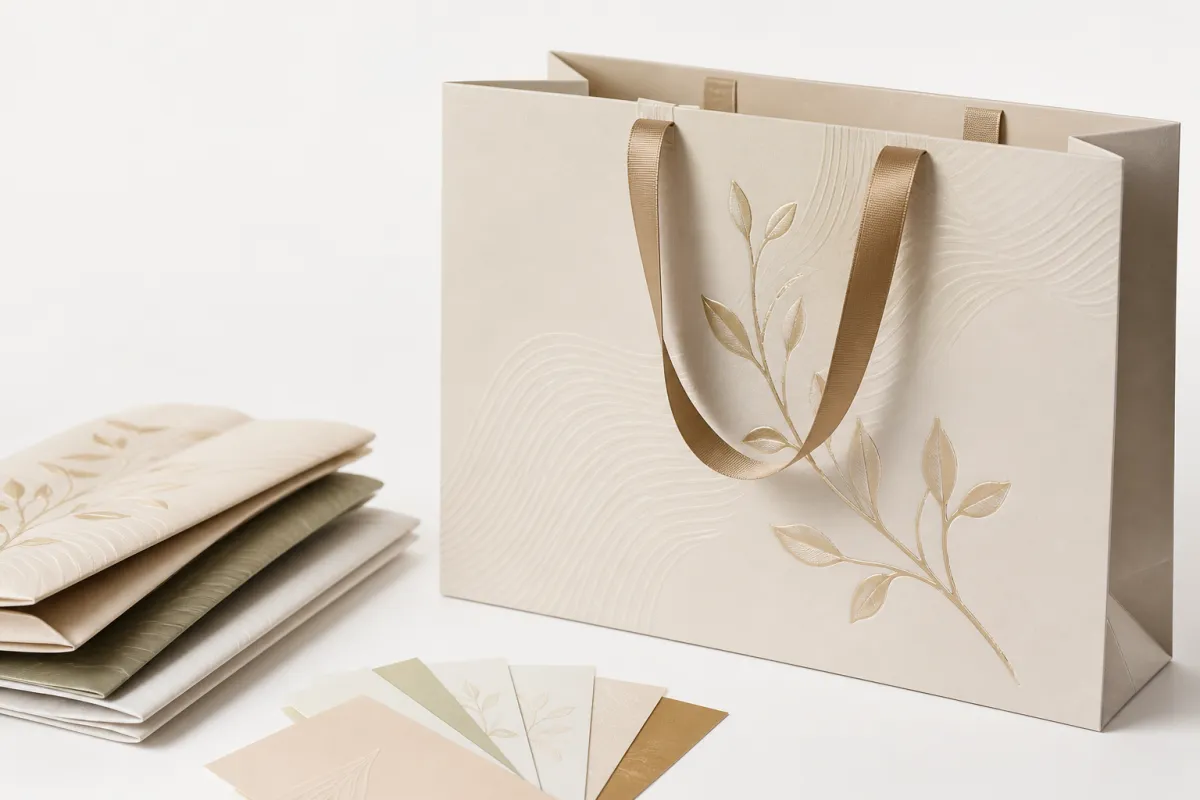
A paper bag has two jobs at once. It needs to carry the product without failing, and it needs to create a first impression the moment it changes hands. That is the real reason premium paper bags printing cost should be judged against brand impact, not only against raw material cost. A clean, well-proportioned bag can make a modest purchase feel considered. A flimsy one can make an expensive product feel oddly unfinished.
Structure changes value more than many buyers expect. A stronger board, a cleaner fold, a better handle attachment, and sharper registration on the print can change the entire feel of the package. The outside artwork matters, of course, but in practice premium paper bags printing cost is usually shaped more by construction, paper grade, and finishing choices than by the amount of ink on the surface.
That matters most in retail and gifting. Customers carry the bag after the sale, reuse it, and leave the logo visible in public spaces long after they leave the counter. The bag becomes a small moving media surface. A well-chosen spec can support a launch display, a boutique retail sale, a seasonal campaign, or an event giveaway without needing much explanation at checkout.
A good paper bag does not shout for attention. It quietly tells the customer the brand cared about the details before the product ever reached the counter.
If you are comparing premium paper bags printing cost across suppliers, start with one simple question: does the bag feel like it belongs with the product? If the answer is yes, the quote usually makes sense. If the answer is no, a lower unit price can still be expensive, because the bag fails the presentation test. That is the part that often gets missed when people only look at a spreadsheet.
Durability matters too. A well-built bag with a sensible handle and a solid base can survive more than one use, and repeated use extends visibility. I have seen a simple boutique bag show up again and again in office lobbies and coffee shops weeks after a sale. That kind of reuse is one reason buyers accept a higher premium paper bags printing cost for a premium retail run. It is packaging, yes, but it is also an object customers continue to carry.
Product details that shape the paper bag you actually receive
A quote only means something once the bag is defined properly. Size, side gussets, base width, handle style, reinforcement, and finish all shape the look and carrying performance. They also affect premium paper bags printing cost in ways that are easy to miss if the buyer focuses only on artwork.
Bag structure and weight support
A flat bag and a gusseted bag are not priced the same because they do not behave the same. A flat build uses less material and usually suits lighter items or simple retail presentation. A gusseted side and a wider base improve volume and stability, which is often necessary for apparel, cosmetics, small gift boxes, and boutique retail goods. Once the bag needs to stand upright or support a heavier load, the paper choice becomes more important, and premium paper bags printing cost rises with it.
Buyers often underestimate base reinforcement. A folded bottom, card insert, or base board changes how the bag carries weight and how it feels in the hand. That extra stiffness is part of why one bag looks expensive while another looks flimsy, even if both are printed well. If the product is heavy or boxed, you are gonna feel that difference immediately when the bag is lifted.
Handle choices and assembly impact
Handles are visible design features, but they are also production details. Twisted paper handles keep the build straightforward and suit retail bags that need a clean, recyclable look. Rope handles usually feel more premium and carry well, though they add assembly steps. Ribbon handles can suit gift packaging and fashion branding, while die-cut handles create a very clean silhouette that works best when the cut area and reinforcement method are planned carefully.
Each handle style changes the labor profile. That is one reason premium paper bags printing cost is not only a printing conversation. If the handle must be attached by hand, reinforced at the top, or matched to a specific paper weight, the quotation should reflect that extra work. It is kinda surprising how much a small handle decision can move the price, but in production terms it makes perfect sense.
- Twisted paper handles suit practical retail bags and keep the build efficient.
- Rope handles lift the look and feel, especially for premium shopping or gifting.
- Ribbon handles are strong on presentation for lighter luxury items.
- Die-cut handles work well when a sleek, minimal silhouette matters more than load capacity.
The most reliable approach is to match the bag to the product first, then decorate it. A cosmetics bag, a candle bag, and an apparel bag do not need the same structure. If the bag has to protect a boxed item, the base and side panels matter just as much as the print. That is how practical packaging buyers keep premium paper bags printing cost tied to actual use instead of guesswork.
It also helps to think about how the customer will carry the bag. A narrow handle can cut into the hand during a longer walk, while a better-padded rope handle makes the bag feel more refined and less disposable. That sort of detail may seem small on paper, but in real use it shapes whether the bag feels worth the spend.
Paper, handles, finishes, and print specifications
Paper selection changes both the visual result and the production path. Kraft paper gives a natural, earthy look and suits brands that want a warm, understated feel. Coated art paper supports cleaner image reproduction and richer color control, which helps fashion, beauty, and gift packaging. Specialty stocks can add texture or softness, though they should be used for a reason rather than because they sound impressive. Each step up in stock choice tends to push premium paper bags printing cost higher, especially once weight and finish are added.
The print method matters just as much as the artwork. Offset printing usually fits detailed graphics and larger runs where color consistency matters. Digital printing makes more sense for shorter runs, variable artwork, or quick turnaround needs. Flexographic printing can be efficient for simpler graphics and repeatable packaging work, especially on kraft-style materials. Buyers who understand these differences usually get a more accurate estimate of premium paper bags printing cost before the quote is even issued.
Color choice also affects the build. CMYK artwork works well for full-color images, gradients, and photographic elements, though it needs careful control if the design has large solid areas. Spot color is often the better option for logos, sharp brand marks, and repeat orders where consistency matters more than image complexity. A simple one- or two-color spot design can keep premium paper bags printing cost in check while still looking polished.
Finish choices often change the budget more than the base print. Matte lamination, gloss lamination, soft-touch coating, foil stamping, embossing, debossing, and spot UV each create a different tactile and visual result. Decorative finishing usually adds more to premium paper bags printing cost than the ink itself because it introduces extra setup, tooling, or handwork. That does not mean the finish is unnecessary. It means the finish should support the brand story rather than compete with it.
In pricing discussions, I like to separate “visible impact” from “manufacturing effort.” A foil logo on a small panel can create a strong premium feel without turning the whole bag into a complicated production run. Full-surface special finishes can look striking, but they also need more control. Honest supplier communication matters here, because a quote that hides that effort is not a helpful quote.
For responsible sourcing, many buyers ask for FSC-backed paper options. If chain-of-custody matters to your brand, the guidance at FSC is a useful reference point. If the bags will move through broader retail distribution and need to survive transport handling, the testing mindset used by ISTA can also help when you are thinking about load performance and shipment resilience. These references do not set a price by themselves, but they give the buying team a better frame for quality and handling.
A practical spec sheet should list the exact paper weight, board type, handle style, print colors, and finish selection up front. The more exact the spec, the cleaner the comparison. A quote for 250gsm kraft with one-color spot print is not comparable to 350gsm coated art paper with rope handles and soft-touch lamination, even if both are described as “premium.” That is where a lot of confusion around premium paper bags printing cost begins.
- Kraft stock usually supports a natural presentation and can be efficient for simple branding.
- Coated art paper supports sharper images and a more polished retail feel.
- Specialty stocks can elevate texture, but they raise material and finishing demands.
- Heavy coverage artwork may need extra care on press to keep colors even.
Even the same design can behave differently across methods. A logo that looks crisp in digital printing may need different trap and registration allowances in offset printing. A solid black field in flexographic printing may not hold the same depth as a coated offset run. All of that feeds back into premium paper bags printing cost because production control is part of the price. Buyers who understand that usually avoid a lot of last-minute surprises.
Premium paper bags printing cost: what drives pricing and MOQ
Here is the plain version: premium paper bags printing cost is driven by paper stock, bag size, handle type, print colors, finishing, quantity, packing method, and shipping. There is no single normal price because the build can change so much from one order to the next. A bag with a clean one-color logo and a twisted handle is a different job from a rigid-feel retail bag with foil, embossing, and rope handles. Trying to compare them as if they were the same thing usually leads to bad decisions.
The biggest unit-cost shift usually comes from quantity. Setup, cutting, assembly preparation, and color calibration all happen before the first good bag is packed. As the order gets larger, those fixed steps are spread across more units, so the per-bag number drops. That is why premium paper bags printing cost at 1,000 pieces can look very different from the same spec at 5,000 or 10,000 pieces.
MOQ, or minimum order quantity, matters because it is tied to how much fixed work the factory has to absorb before the run becomes efficient. Low MOQs are possible, especially with digital printing or simpler builds, but they usually carry a higher premium paper bags printing cost per bag. Higher MOQs often unlock better unit pricing and can make upgraded papers or finishes easier to justify. That does not mean bigger is always better; it just means the economics change quite a bit once the setup cost gets spread out.
A practical budgeting approach starts with the structure, then adds decorative elements only where they create real value. If the bag already looks strong and carries the product well, a more complex print finish may not be necessary. If the bag will be used for gifting, events, or high-visibility retail display, then a foil logo, embossed mark, or soft-touch finish may be worth the added premium paper bags printing cost. The point is to spend where the customer can see and feel it.
| Build option | Typical use | Relative unit cost | What it usually includes |
|---|---|---|---|
| 250gsm kraft, one-color spot print, twisted handle | Retail promos, light apparel, simple takeaway | Lower | Clean structure, efficient print, practical presentation |
| 300gsm coated art paper, CMYK print, rope handle | Boutique retail, cosmetics, gifting | Mid-range | Sharper graphics, better color feel, stronger premium impression |
| 350gsm art paper, foil logo, emboss, soft-touch finish | Luxury launches, VIP gifting, high-impact retail | Higher | Decorative finishing, richer hand-feel, stronger shelf presence |
Illustrative budget ranges help set expectations, even when the final quote depends on the exact spec. A simple Branded Paper Bag at 5,000 pieces may land in a lower range than a luxury retail bag with multiple finishes, while a short run often looks expensive per unit because setup costs are spread across fewer bags. In real buying terms, premium paper bags printing cost is best treated as a range tied to spec, quantity, and freight rather than as a single fixed number. That is the honest way to budget.
The landed cost matters as much as the factory price. A quote that looks attractive at the unit level can become less compelling once packing method, cartons, inland freight, or air shipment are included. A buyer comparing three suppliers should ask whether each quote includes the same stock, the same handle, the same finish, and the same delivery assumptions. If not, the premium paper bags printing cost comparison is not real yet.
If you want to understand where your order sits before you commit, ask for pricing at two or three quantity breaks. That shows how the unit cost moves and whether the MOQ is sitting at an efficient point for your project. In many cases, the difference between 2,000 and 5,000 pieces is enough to change the economics of a finish upgrade without changing the bag design itself.
One caution here: a lower unit price does not always mean a better buy. If the cheaper option uses thinner paper, a weaker handle attachment, or a less durable finish, the bag may fail earlier and reflect poorly on the product. Comparing apples to apples is the only comparison worth doing.
Process and timeline from quote to shipment
A clean production process helps control both schedule and premium paper bags printing cost. The usual flow starts with a request for dimensions, quantity, paper preference, handle type, print colors, and finish details. Once those basics are clear, a supplier can give a much tighter estimate and avoid the back-and-forth that often slows down first-time packaging projects.
The next stage is artwork review. This is where layout, bleed, logo placement, and color usage are checked against the bag structure. If the design uses CMYK, the color build should be reviewed for heavy solids, shadow areas, and small reversed text. If the design uses spot color, the ink targets need to be confirmed so the brand color stays consistent. Poor artwork preparation does not only slow production; it can also push premium paper bags printing cost up because of correction time or extra proofing.
Proof approval matters more than many buyers expect. Once a physical or digital proof is approved, the job moves into production with fewer chances for change. That is good for schedule control, but it also means the buyer should confirm size, color, finish, and handle placement before signing off. A rushed approval often creates expensive revisions later, and those revisions can change premium paper bags printing cost because they alter the manufacturing plan.
Typical timing checkpoints
- Quote stage: 1 to 2 business days when the spec is complete.
- Artwork and proofing: 2 to 5 business days depending on revisions.
- Sampling: usually a few extra days if a pre-production sample is required.
- Production: often 7 to 15 business days for standard runs, longer for decorative finishing.
- Packing and shipment: depends on destination and freight method.
Simple digital jobs can move relatively fast, while offset printing jobs with lamination, foil, or embossing usually need more production control. That does not automatically mean the order is slow; it means the sequence has more touchpoints. Buyers planning store openings, product drops, or event deadlines should work backward from the delivery date and leave enough room for proofing. That is the easiest way to keep premium paper bags printing cost from being distorted by rush charges or avoidable freight upgrades.
One practical tip: send the full specification in a single message if possible. Dimensions, quantity, stock, print method, finish, handle type, and delivery destination should all be included together. A complete brief shortens the quote cycle and tends to produce a more accurate number the first time. If the order needs performance or handling reassurance, ask for sample references and production notes that reflect how the bags will be used in real retail or gifting conditions.
There is a bigger lesson in that process. Packaging runs go sideways most often when the spec is fuzzy. When the brief is tight, the production line has less room for interpretation, and the buyer gets a cleaner result with fewer surprises.
A good production schedule is not just about speed. It is about giving the artwork, the paper, and the finishing enough room to come out right the first time.
For broader packaging planning, buyers sometimes compare a bag order with their carton or mailer programs and look at transport risk, presentation quality, and shelf consistency the same way they would for shipping boxes. That mindset usually leads to more stable results and a more realistic view of premium paper bags printing cost.
Why choose Custom Logo Things for branded paper bags
Custom Logo Things is a sensible fit for buyers who want packaging guidance that stays close to actual production behavior. The value is not in overpromising. It is in matching the bag to the product, the print method to the artwork, and the finish to the budget. That is how you keep premium paper bags printing cost under control without flattening the look of the final bag.
For a first-time buyer, technical support matters. Paper weight affects feel and carry strength. Handle choice affects assembly. Finish choice affects appearance and budget. When those details are explained clearly, the buyer can make sharper tradeoffs and avoid paying for features that do not improve the bag in any meaningful way. That kind of practical support helps a retail launch look premium while staying within an approved spend.
Our Manufacturing Capabilities page gives a better sense of how print, finishing, and assembly choices fit together. For more detail on available production routes, the same Manufacturing Capabilities overview helps show where a simple build ends and where a more decorative build starts. If you are just mapping out a project, it can also help to start from the Custom Logo Things home page and work toward the spec from there.
From a packaging buyer’s point of view, the best supplier is the one that asks the right questions before printing starts. Does the bag need to carry a boxed item? Will it be used at an event where the bag itself is part of the brand experience? Is the artwork better suited to CMYK or spot color? Those questions affect performance and budget more than most people realize, and they all feed into premium paper bags printing cost.
There is trust in plain communication. If a finish will increase lead time, that should be said early. If a stock looks beautiful but is not the best choice for heavy load, that should be said too. Buyers do not need hype; they need the right build for the job. That is the most practical way to approach premium paper bags printing cost for Branded Retail Packaging.
It also helps when the supplier can explain the tradeoffs without dressing them up. A slightly less decorative bag with stronger paper and a cleaner handle attachment may be the smarter choice for day-to-day retail, while a more elaborate finish belongs only on a launch or holiday program. That kind of judgment saves money where it should be saved and spends money where customers actually notice it.
Next steps to lock in the right premium paper bags printing cost
If you want a quote that is actually useful, gather four things first: bag dimensions, quantity, paper stock preference, and artwork files. Those four details create the base for a real premium paper bags printing cost estimate. Without them, the quote may be close enough for a rough budget, but not close enough for production planning.
After that, decide which upgrades are essential and which are optional. A strong stock, a clean logo, and a good handle style may already give the bag the right presence. You may not need foil, embossing, or soft-touch lamination on every order. In many cases, the smartest way to manage premium paper bags printing cost is to reserve the most decorative finishes for the logo or a small focal area rather than applying them across the full surface.
Compare suppliers only when the spec sheet matches. If one quote assumes 250gsm kraft and another assumes 300gsm coated paper, the lower number is not necessarily the better deal. The same rule applies to MOQ, packing method, and freight. An honest comparison should always isolate the same build, because that is the only way to see the real premium paper bags printing cost difference.
If you are preparing a retail launch, event giveaway, or premium gift program, send the exact spec and ask for a quote that shows the tradeoffs clearly. That gives you a clean way to choose between presentation, schedule, and budget without guessing. The practical takeaway is simple: define the load, define the look, and define the finish only after the first two are settled. That order keeps the bag honest and the budget easier to control.
What affects premium paper bags printing cost the most?
The biggest drivers are paper stock, bag size, quantity, handle style, print coverage, and finishing choices. Decorative upgrades such as foil, embossing, debossing, or soft-touch lamination usually raise premium paper bags printing cost faster than a standard printed surface. Large orders lower the unit price because setup costs are spread across more bags.
How much does MOQ change premium paper bags printing cost?
Lower quantities usually carry a higher unit cost because press setup, cutting, and assembly work are fixed upfront. Higher MOQ levels often reduce the per-bag price enough to make premium materials and finishes more practical. If your volume is uncertain, ask for pricing at two or three quantity breaks so you can see where the best value sits.
Can I reduce premium paper bags printing cost without making the bag look cheap?
Yes. Keep the structure clean, limit finish upgrades, and use a print layout that feels intentional rather than crowded. A strong stock with simple, sharp artwork often looks more premium than a busy design with too many effects. If you want one focal upgrade, a small foil mark or embossed logo can preserve the premium feel without raising premium paper bags printing cost across the whole job.
How long does a custom paper bag order usually take?
Timing depends on artwork approval, sample needs, quantity, and finish complexity. Simple jobs often move faster, while specialty papers or decorative finishing need more production control. The quickest path is to approve the full specification and artwork together before production begins so there are fewer delays and fewer changes to premium paper bags printing cost.
What information should I send for an accurate paper bags printing quote?
Send dimensions, quantity, paper stock preference, handle type, print colors, finish choices, and delivery location. Attach artwork files if they are ready, or send a clean logo file and a reference image if the design is still in progress. The more complete the brief, the more accurate the premium paper bags printing cost estimate will be.


