Buyer Fit Snapshot
| Best fit | Price for Custom Logistics Packaging Kits projects where brand print, material claims, artwork control, MOQ, and repeat-order consistency need to be specified before quoting. |
|---|---|
| Quote inputs | Share finished size, material target, print colors, finish, packing count, annual reorder estimate, ship-to region, and any compliance wording. |
| Proofing check | Approve dieline scale, logo placement, barcode or warning zones, color tolerance, closure strength, and carton packing before bulk production. |
| Main risk | Vague material claims, crowded artwork, missing packing details, or unclear freight terms can make a low unit price expensive after revisions. |
Fast answer: Price for Custom Logistics Packaging Kits: Key Drivers should be specified like a repeatable production item. The safest quote records material, print method, finish, artwork proof, packing count, and reorder notes in one written spec.
Production checks before approval
Compare the actual filled-product size with the drawing, then confirm tolerance on folds, seals, hang holes, label areas, and retail display edges. Reserve space for logos, QR codes, warning copy, and material claims before decorative graphics fill the panel.
Quote comparison points
Review material grade, print process, finish, sampling route, tooling charges, carton quantity, and freight assumptions side by side. A quote is only useful when the supplier can repeat the same color, closure quality, and packing count on the next order.
Price for Custom Logistics Packaging Kits: Key Drivers
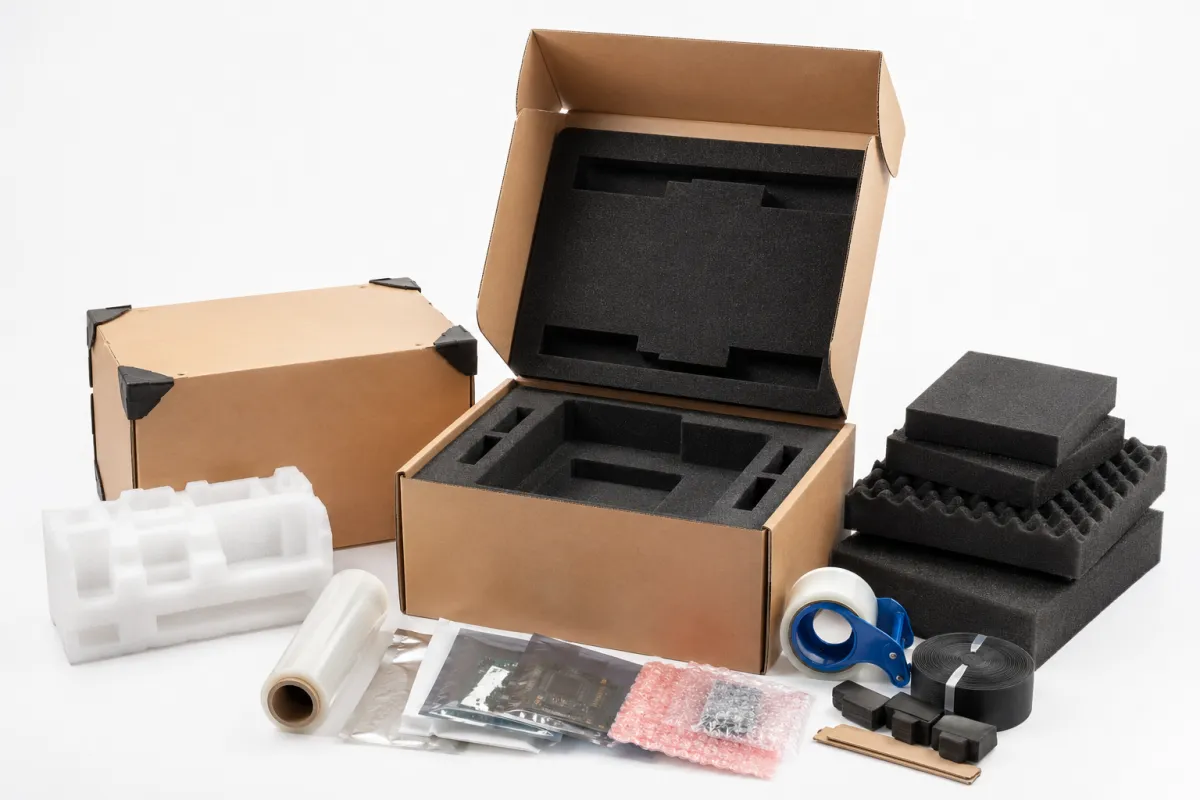
One extra inch in carton depth can cost more than a full logo redraw, and that is the kind of detail that quietly blows up a budget. I have sat through enough packaging reviews to see the same pattern repeat: a team focuses on the box surface, then gets surprised by freight, warehouse cube usage, or damage claims three weeks later. A 5,000-piece run with just a 5% increase in size can change pallet counts enough to alter freight class and storage density. That kind of shift can create a four-digit cost swing before the first kit reaches a dock. The Price for Custom logistics packaging kits is tied less to how the package looks and more to how efficiently the full shipping chain moves, which means the smartest teams treat it as a total landed cost decision, not a purchase-only line item.
Procurement teams often start with a quote and still lose money after launch because the first assumption was too narrow. The Price for Custom logistics packaging kits should be read like a systems estimate: packaging design, fulfillment labor, transport assumptions, and claim exposure belong in the same model. A comparison that focuses on one line item is usually comparing fragments, not programs. Custom Packaging Products make benchmarking easier because they let you compare against the exact spec set instead of a generic catalog entry. Packaging sample requests matter for the same reason; a sample shows where bends, scrapes, and rework begin, which is often exactly where the price for custom logistics packaging kits diverges from the original estimate.
Many buyers misread the quote because they compare unit price and ignore what happens after the shipment leaves the building. One supplier may say $1.05 per unit and another $1.15. That looks like a clean $0.10 gap. Then damage rates enter the picture. If one design reduces damage from 2.8% to 1.1%, a 5,000-unit run may avoid about 85 replacements. At $8 to $15 in handling per replacement, the savings can land between $680 and $1,275. The cheaper quote is not always the cheaper program. The real benchmark is landed protection cost per successful delivery, not sticker price alone.
The Price for Custom logistics packaging kits also reflects the balance between branding and function. Some buyers want branded packaging, a branded zipper, or premium Custom Printed Boxes because the recipient sees them. That spend can be justified, but only if the shipment environment, reuse policy, and recipient handling habits support it. A package in this category should never be priced by appearance alone. Performance, protection strategy, throughput, and returnability define the margin. In that sense, packaging economics and operation economics are twins, not neighbors.
If you treat the packaging bill of materials as a design artifact too, the price for custom logistics packaging kits becomes less mysterious. A denser board, a custom insert, and one extra closure material often signal a single objective: lower downstream failure. The paradox is that these "extra" inputs can lower cost per dispatch when labor and returns are pulled into the calculation.
Why Does the Price for Custom Logistics Packaging Kits Surprise Buyers?
If the first response to a quote is "that seems high," the real question is whether you are pricing cardboard or outcomes. That mistake appears every quarter. The same quote number can hide very different risk assumptions. A buyer sees a low price, ships two thousand kits, and then pays again for crash repairs, overtime kitting, and expedited replacements. I have seen a modest-looking packaging change trigger a second freight bill that erased the savings in one week. The math can be a little rude like that.
There is also an optical illusion in procurement: suppliers show a crisp sticker cost and omit uncertainty in handling, labor, or freight spikes. In plain terms, the number you see first is often an anchor, not a forecast. The price for custom logistics packaging kits becomes trustworthy only after each operational assumption is either included or explicitly excluded. If those assumptions stay fuzzy, the quote is kinda decorative.
The size change that quietly rewrites freight costs
A small dimensional shift can cause a large pricing ripple. A 2 cm height increase on an outer shipper can raise dimensional weight enough to move a shipment into a higher freight band. On palletized loads, that one change can raise LTL line-haul or parcel charges by $0.25 to $1.20 per kit, depending on lane. Print cost may only move by $0.03 to $0.07 for a heavier art file. The mind tends to anchor on the cheaper number and miss the multiplier effect of shipping math.
A useful rule: if the new structure adds 10% to volume, do not expect only a 10% cost increase. Once freight, labor, and storage overhead are included, the change can land between 15% and 22%, depending on warehouse density and route structure. That is why the price for custom logistics packaging kits gets harder to predict when dimensions are guessed. Exact dimensions matter more than people want them to.
What also surprises people is customs and transit friction. If route plans shift from coastal shipping to inland distribution mid-year, a configuration that looked efficient on paper can turn into a poor fit. It is less about aesthetics and more about fit-for-network behavior, and that can reverse the apparent advantage of a lower quote in under six months.
What is really inside the price stack
The cost stack is easier to understand when it is broken apart. A logistics kit usually includes:
- raw materials such as board, paper, foam, adhesives, tapes, and labels,
- structure design and dielines,
- tooling and setup,
- samples and approval costs,
- packaging labor for pre-assembled or flat-packed kits,
- fulfillment steps and repack preparation,
- freight class and lane-specific handling differences,
- and the value of damage prevention after arrival.
Each layer has its own trigger. If one team asks for a tighter fit to reduce puncture damage in transfer hubs, material density may rise. If another team asks for faster packing speed, labor complexity may drop and unit labor may fall. That tension is why unit price alone tells only part of the story.
The practical point is simple. Packaging protects margin twice. It lowers damage before claims. It also speeds loading, unloading, and scanning, which trims fulfillment labor and return handling. That is one reason the price for custom logistics packaging kits is not a pure procurement line item. It is an operational lever. In mature programs, teams call this a unit economics improvement, because each saved minute compounds across 20,000+ kits a year.
Consider the labor side. If a kit trims 3 minutes from each packing cycle and a team processes 4,000 units per week, the time saved is about 200 hours. At $22 per hour, that equals $4,400 in labor avoided, before counting fatigue, errors, or rework. Most teams miss that comparison because they are looking at the quote in one system and time loss in another.
And yes, this is where the price for custom logistics packaging kits can look stubbornly high: not because the material is wasteful, but because labor bottlenecks become expensive under hidden pressure. A better early question is not "can we cut $0.08," but "what does each minute saved save across the network?"
What Is Included in a Custom Logistics Packaging Kit?
From the buyer side, the confusion usually starts here. A quote can look complete and still leave out a critical piece. A buyer thinks the system is covered, then learns later that "protection" meant a sheet of paper and a hope. The price for custom logistics packaging kits only becomes meaningful when the scope is written line by line.
Core components buyers usually expect
Most logistics kits include the following core bundle:
- Outer mailer or shipper: the main rigid carton, sleeve, or heavy-duty mailer that meets stacking and load requirements.
- Insert system: foam blocks, molded pulp, corrugated partitions, or paper honeycomb based on shock and abrasion risk.
- Dividers or frames: useful for multi-product kits and common in spare parts or electronics replenishment.
- Cushioning: EPE/EPP foam, corrugated dunnage, or paper wraps for moisture and abrasion control.
- Labels: shipping labels, scan marks, hazmat or handling icons, and routing marks for destination control.
- Seals: tamper-evident tape, reseal features, or reinforced closures.
- Documentation: packing list inserts, compliance statements, QR links, and package branding details.
Warehouse transfers tend to favor impact resistance over decoration. E-commerce fulfillment often puts more weight on flat scan-friendly surfaces and barcode clarity. B2B replenishment may care more about opening and resealing patterns, while fragile industrial parts may need segmented partition systems. If the quote does not define the use case, it is not pricing the same solution.
One subtle implication is that every added insert and sleeve element should be linked to a measurable risk point. Otherwise you are paying for elegance with no measurable return, and the price for custom logistics packaging kits becomes difficult to defend during finance review.
What is standard and what is add-on
Standard inclusions should be priced before art approval. Usually included:
- structural design for the selected carton family,
- basic proofing and a digital mockup,
- single-run color setup within agreed specification,
- pre-shipping quality checks.
Common add-ons are usually priced separately:
- double-wall reinforcement beyond the base structure,
- specialized foam tooling changes,
- extra color matching for brand standards,
- multi-language labeling and barcoding upgrades,
- extra compliance wording, symbols, or legal inserts.
Some quotes assume pre-assembled kits. Others assume flat-packed components with downstream assembly. That single choice can change unit economics sharply. Assembly in-house can add 20 to 60 seconds per kit, depending on compartment complexity. At moderate labor rates, that is a swing of roughly $0.12 to $0.45 per unit at scale.
Branding and marks create another fork in scope. Package branding with a single-color logo may already be included in the base print package. Complex brand matching, CMYK calibration, metallic finish, or security inks can add cost. The same price for custom logistics packaging kits will look very different if the requirement reads "premium brand finish" instead of "minimal compliance labeling."
For operations teams comparing options, the useful distinction is whether each line item impacts the total landed cost in a stable way. If not, it may be an appearance cost disguised as a resilience cost.
Specifications That Affect the Price for Custom Logistics Packaging Kits
Specifications are where the price for custom logistics packaging kits moves from vague to measurable. Once specs are locked, pricing usually steadies. When specs are loose, the quote becomes guesswork and the guesswork gets expensive.
Dimensions, structure, and material density
Dimensions come first. If a product box is 330 x 240 x 190 mm, the kit should not jump to 360 x 260 x 230 mm unless that extra clearance serves a real purpose. Oversizing raises board usage and freight. Undersizing is worse because crush, tears, and punctures create claims. In practical planning, a target of 3 to 8 mm clearance around vulnerable parts is often better than 25 mm. Rigid inserts may narrow the tolerance band further to about 2 to 3 mm.
Board grade and flute profile matter next. A B/C single wall option may be enough for non-fragile transfers, while high-value industrial components may need double-wall or B-flute reinforcement. Material choices can move unit cost from around $0.30 to $0.95 per kit before print even enters the picture. When moisture exposure is a factor, coated stock and edge protection are not optional if the route includes coastal humidity or seasonal swings.
A useful rule for teams reviewing options: tie the structural choice to expected handling events, not shelf life alone. A heavy drop profile often justifies denser boards; a calm lane can justify lighter materials and a lower price for custom logistics packaging kits.
Insert system and protective behavior
Insert type is another major driver. Foam inserts often raise initial cost but can cut claims quickly when handling is rough. Paper-based systems are lighter and recyclable, yet they often need custom geometry and may protect angular parts less effectively. A hybrid insert can make sense when only corners need reinforcement. If damage is above 2%, a foam optimization cycle usually pays back fast. If damage is already under 0.5%, paper or semi-structural partitions may be enough.
The same logic applies to drop protection targets. A kit tested to 30 cm for short drops may be fine for office movement. A truck-and-warehouse network with conveyor transfer may need 76 cm equivalent impact profiles and top-load tolerance checks. That pushes design and material spend. Cold storage adds another layer, since humidity and temperature tolerance matter too.
When teams include a route-level shock map and correlate it to packaging stack points, the price for custom logistics packaging kits begins to look less like a guess and more like a risk-adjusted design exercise.
Print method and compliance requirements
Print method affects more than appearance. Offset, flexo, and digital each carry different price for custom logistics packaging kits implications. For short runs, digital tends to allow lower minimums but often higher variable cost. For repeated runs, flexo or offset can become cheaper beyond 1,000 units. Spot varnish, UV overprint varnish, and embossing are optional, yet they add setup and complexity.
Compliance and testing requirements can shift cost in a meaningful way. If the kit moves through carriers that expect structural standards, clarity matters early. Standards often used in logistics contexts include ISTA drop and vibration profiles, plus FSC chain-of-custody preferences for paper sourcing. ASTM references such as ASTM D4169 are often used as internal acceptance checks. When internal QA wants both, the quote gets more complex because tests and proof revisions are usually tied to sampling and preproduction checks.
Artwork changes are usually one of the cheaper edits. Structural changes are where hidden spend hides: new toolings, new structural proofs, and sometimes another sample cycle. Confirm product dimensions and loading behavior first, and the price for custom logistics packaging kits stays inside range. Skip that step, and every "quick tweak" turns into a rework cycle.
In long-run sourcing reviews, teams that separate "print spend" from "engineering spend" often negotiate better. If print-only changes are delayed to the template stage and structural changes are restricted after signoff, that often improves the price for custom logistics packaging kits without sacrificing speed.
Price and MOQ for Custom Logistics Packaging Kits
MOQ is where buyers discover that pricing is not linear. A 250-unit order can feel convenient, yet small batches often absorb most of the fixed costs per unit. That is why a buyer may see a low-quantity quote at $1.20 per unit and still pay almost the same setup bill as a 5,000-unit job. The pattern is predictable, even if the first quote feels a little rude.
The phrase that keeps coming back in supplier reviews is minimum order quantity. It is not a penalty; it is a fixed-cost dilution problem. If setup is fixed at $500 and production is only 250 units, the hidden burden is $2 per unit before freight. That is why the price for custom logistics packaging kits can look deceptively high for pilots.
How MOQ changes the math
Think in three buckets: one-time charges, recurring unit cost, and destination logistics. One-time charges usually include setup, prototypes, proofs, tooling, and sometimes color-matching trials. Recurring costs are the unit material and labor. Logistics adds per-pallet or per-shipment costs depending on freight mode. The right comparison is total landed price: unit cost + setup divided by quantity + freight handling + storage variance + return assumptions.
Here is a practical tier model used in many logistics kit projects:
| Quantity | Estimated Unit Price (USD) | One-Time Charges (USD) | Total Order Value (USD) | Estimated Landed Cost per Kit (USD) |
|---|---|---|---|---|
| 250 | $1.08 - $1.42 | $320 - $520 | $592 - $875 | $3.10 - $4.40 |
| 500 | $0.86 - $1.15 | $320 - $520 | $750 - $1,095 | $2.70 - $3.80 |
| 1,000 | $0.64 - $0.92 | $320 - $520 | $960 - $1,440 | $2.00 - $3.10 |
| 5,000 | $0.41 - $0.71 | $320 - $520 | $2,370 - $3,590 | $1.20 - $2.30 |
These figures are directional, and the spread changes with customization depth. The pattern is what matters. As quantity rises, one-time charges flatten out. That is why the price for custom logistics packaging kits can look punishing at low MOQ. It is not always a bad sign. Smaller runs can make sense for pilots, launches, and short production windows.
What teams often miss is the volume cliff after 5,000 units. A second run at 7,500 does not always reduce cost in a straight line if the same design is already optimized. A real decision is the point where unit economics begin to converge with operational stability.
Tiered quotes prevent surprises
Ask for a clean table like the one above and insist that the assumptions stay visible: print process, material, delivery method, and unit coverage. Avoid blended values without a clear line for sample cost, plate cost, and freight. Ask for 250, 500, 1,000, and 5,000 units at minimum. Ask for a second scenario if the launch may scale during the same cycle. If a supplier can only quote one quantity, you are missing a real procurement lever.
Ask for both unit price and total quote, including freight by destination zone. A domestic shipment to a single warehouse within a 200-mile radius behaves differently from a two-country shipment with different classes and duties. If the destination is still undecided, request best-case, base-case, and worst-case lanes. That gives a usable price for custom logistics packaging kits range for planning.
For teams under quarterly pressure, we have found that a single extra row for value-added services like kitting support or returns handling can prevent more disputes than any color proof can. It keeps everyone honest on what the quoted number truly includes.
Auditing setup versus recurring costs
These questions keep quotes honest before approval:
- Which charges are one-time: die setup, sample approval, prototyping, color calibration?
- Which charges repeat per shipment: labor, packing inserts, labels, tape, return-to-warehouse handling?
- Are pallets, strapping, or unit-level protective layers included, or billed separately?
- Is a revised proof loop included in the stated price, and how many rounds are covered?
That audit trail prevents arguments later about hidden adjustments. The price for custom logistics packaging kits becomes easier to check when each fee is mapped and each assumption is written down. Talk with our quoting team early and confirm whether sample and freight are bundled; one clear answer often saves several revision cycles.
Process and Timeline for Custom Logistics Packaging Kits
Speed is often where logistics decisions go wrong. Teams assume "faster" and "custom" should work together without sequencing. They can, but only when the inputs are complete and the timeline is treated as fixed.
There is a reliable pattern: delays usually cost less in direct labor than in carrying inventory, especially when the first shipment blocks production planning. A slower packaging design with clear gates can actually be cheaper than a rushed one that creates returns. That is why the price for custom logistics packaging kits is partially a schedule optimization problem.
Standard workflow from discovery to shipment
Typical workflow is straightforward:
- Requirements review: product dimensions, weight, fragility, route profile, storage constraints.
- Quote and feasibility pass: MOQ, print route, unit economics, and target lead time.
- Dieline or structural concept: package design and packaging design signoff.
- Proofing: structural and graphic proof review, plus brand mark verification.
- Sample build: physical or digital confirmation.
- Production release: tooling completion and manufacturing.
- Shipment: test batch and full release.
Stock-based customization on shared platforms may finish in 10 to 15 business days. Fully custom structural kits, especially those that need new insert geometry, can stretch to 22 to 35 business days. That gap is not drama. It is the real cost of setup.
"A one-week delay in artwork approval can cost more than a week of production labor, because sampling windows and freight cutoffs stack and force the entire shipment to move."
What makes it faster
Two things shorten the cycle: complete inputs and a single approval chain. If you send product photos, exact dimensions in mm, target MOQ, and final destination zip code at the start, response cycles shrink. If one person owns packaging, graphics, and logistics approval, the project avoids week-long waits while teams trade comments.
If the kit includes custom printed boxes for brand consistency, send brand color and trim specs during discovery. For package branding that must be production-accurate, that step is critical. Leaving it for later often adds one proof round and one sample round, each of which can add 2 to 6 days.
Another time sink is internal routing of exceptions. A team that handles exceptions in one shared queue can cut 10% to 25% from the correction loop in the first cycle, which is often the difference between on-time launch and a delayed replenishment wave. In plain terms, process design impacts the price for custom logistics packaging kits just as much as corrugate thickness.
Common delay points
Delays usually come from unclear specs, late artwork changes, and sample revisions. A weak first-pass spec can burn through two or three cycles. From the buyer side, the price for custom logistics packaging kits may stay the same, yet timeline drift creates carrying cost. In seasonal demand, that carrying cost is often the hidden penalty that hurts most.
Here is a practical buyer timeline:
- Week 1: final product profile and target quantities complete.
- Week 2: quote, structural concept, and first sample request.
- Week 3: proof and quality checks.
- Week 4: production confirmation and pilot batch.
- Week 5-6: full production and release.
If the launch date is fixed, map the plan backward and lock artwork at the first checkpoint. The easiest way to keep the schedule from slipping is to treat the price for custom logistics packaging kits process like an operations project, not a marketing request.
Why Choose Us for Custom Logistics Packaging Kits
There is no magic supplier label, yet real differences do exist between vendors who quote quickly and vendors who reduce total spend. A good packaging partner should reward predictability, not theater.
Transparent quoting and clearer spec checks
The strongest advantage is a visible cost structure. When a quote is itemized, like-for-like comparison becomes possible. That should include the baseline kit, optional inserts, labor assumptions, freight assumptions, sample scope, and compliance checks. Many buying teams fail here by comparing the first line and missing the exceptions. A structured quote with recurring and one-time charges labeled clearly creates confidence.
For teams handling mixed loads, our process keeps packaging design and kitting behavior consistent. Same material, same print registration, same dimensional tolerances. For procurement teams, consistency is not just a quality phrase. It is forecast accuracy. When each load behaves like the last, receiving runs faster and fewer exceptions reach the returns dock.
In our experience, the biggest practical edge is not the lowest unit price but the smallest gap between estimate and reality. That is often measured as variance. If your target is lower returns, shorter audits, and fewer rework hours, this is where you see the true value in the price for custom logistics packaging kits.
Support for small batches and scalable growth
Small pilot runs and larger replenishment orders both happen in the same environment. A team may order 300 kits for a pilot, then scale to 5,000 once SKU performance settles. A practical partner should show how the price for custom logistics packaging kits scales across that curve and avoid forcing a full re-quote every time volume moves by a few hundred units.
We build documented milestones: concept, sample, approval, and production. That documentation matters for purchasing audits, especially when teams are balancing cost control with reliability. If a warehouse team needs to prove impact reduction, consistent proof photos and spec sheets are far easier to defend than chat notes.
That same predictability helps route planning. If a distribution center changes its receiving schedule, you can see quickly whether to hold stock, move to more robust inserts, or change a delivery frequency. In that way the price for custom logistics packaging kits is not static; it is managed.
Quality controls and decision support
Quality checks are concrete. They include dimension checks against spec, corner crush resistance, and seal integrity. If the route uses multiple transfer points and manual handling, those checks matter more than gloss. Packaging used in real flows has to protect against the known impact event and the repeated stress of stacking and lateral movement, especially on long-haul moves.
The decision usually comes down to this: choose the structure that protects margin best. A more expensive build can still be right if it cuts damage. A cheaper build can still be right if the product is stable and the route is gentle. The call should come from measurable outcomes, not from the appeal of a nice-looking box.
I have watched programs over-specify packaging because nobody wanted to own a claim, and that can quietly drain money for months. The better answer is disciplined testing, a clear route profile, and honest acceptance thresholds. That is how the spend stays defensible instead of drifting into habit.
Next Steps to Get an Accurate Quote
You can decide faster and avoid confusion by sending a complete brief. The price for custom logistics packaging kits becomes more accurate when the starting assumptions are complete. The intake below helps prevent back-and-forth.
Send the right spec pack
Include these fields every time:
- Product dimensions in mm and maximum weight per unit.
- Kit contents, including accessories, manuals, and inserts.
- Target MOQ and likely volume ramp.
- Print requirements: color count, logo files, and exact package branding approvals.
- Destination zip code or country, plus preferred carrier and estimated shipment frequency.
- Warehouse storage constraints: shelf height, bin size, and handling route.
- Any exposure concerns: humidity, cold-chain transfer, vibration, or long layover exposure.
Share photos and, if possible, a current packaging sample. It often explains more than a paragraph of notes. For delicate goods, sample review frequently saves expensive correction cycles. That is not a sales flourish. It is simple control.
Also include whether your operation counts carton integrity failures only on arrival or at both transfer and final receipt. That one line can change the price for custom logistics packaging kits by changing where you set acceptance thresholds and rework triggers.
Request the quote that matters
Ask for at least two tiered quotes, ideally across the volume points used in this article. Ask for total order value, per-unit value, and landed-cost estimates if freight is excluded. Ask for one version pre-assembled and one flat-packed. In many operations, flat-packed lowers inbound handling at the plant and raises final site assembly time; depending on labor rates, the total can flip either way.
If needed, ask for a prototype on the full route: your product, your route, and your scan and stack environment. Sample pricing is usually a one-time cost; that does not always make it ideal for tiny pilots, but it is often justified for high-value or fragile shipments. The price for custom logistics packaging kits usually settles after that test, not before.
Approve with a no-surprises checklist
Use this four-step internal sequence:
- Gather product and transport specs with a single responsible owner.
- Confirm required performance target and handling conditions.
- Request tiered options and compare total landed cost per kit.
- Review sample timing, sign off on structure, and approve production only when both price and reliability targets align.
In the end, the price for custom logistics packaging kits is easier to control when the quote is built from exact data rather than assumptions. That is the practical way to protect margin, protect stock, and protect launch timelines, without fluff and without guesswork.
FAQ
What is the price for custom logistics packaging kits based on?
The price for custom logistics packaging kits usually depends on size, board grade, insert type, print method, assembly format, and order quantity. Complex protection needs, such as custom foam or multi-compartment inserts, usually raise unit cost. If freight, sampling, and tooling are not bundled into one package, those items can move the final landed value up or down.
What MOQ should I expect for custom logistics packaging kits?
MOQ depends on the structure and manufacturing route. More standardized components can allow smaller starts. Fully custom structural kits usually require higher initial volume, though small quantities are often still possible at a higher unit cost. Ask for tiered pricing so you can compare the price for custom logistics packaging kits across volume levels in the same framework.
Do samples change the price for custom logistics packaging kits?
Yes, samples can add a one-time charge, especially if new die-cut tooling or insert geometry is needed. For fragile items or strict warehouse handling conditions, a sample is usually worth it. It gives your team early confirmation of true fit and helps avoid expensive production changes later.
How long does it take to produce custom logistics packaging kits?
Lead times vary by complexity. Stock-based customization with stable dimensions can move faster, often in a couple of weeks. Fully custom structures with dedicated tooling and multiple proof cycles take longer. The fastest projects happen when dimensions, specs, and the approval contact are finalized before the first sample request.
What should I send to get an accurate quote for custom logistics packaging kits?
Send exact dimensions, weights, planned quantity, print and branding requirements, intended shipping destinations, and any storage limits. If the chain includes moisture, temperature shifts, or long transfer legs, include those conditions too. A photo or current packaging sample often speeds matching and reduces assumption errors in the price for custom logistics packaging kits.
If you need a quote That Holds Up under finance review, send exact dimensions, route data, handling conditions, and one physical sample. Without those four inputs, the price for custom logistics packaging kits is just a guess wearing a confident face.

