Printed Bucket Hats Artwork Checklist for Outdoor Event Sponsors
The printed bucket Hats Artwork Checklist for outdoor event sponsors usually saves a project before the first press run even starts. A logo can look polished on a monitor and still fail on a curved crown, especially once sunlight, sweat, and movement enter the picture. I have seen sponsor hats that looked perfect in a PDF and then lost their edge because nobody checked the true print area, seam breaks, or the contrast against the blank.
Outdoor events make those mistakes more visible. Bright light flattens low-contrast art. Wind pulls on the brim. Heat changes how some inks sit on fabric. If the hats are meant to travel through a field, a festival, a parking lot, or a stadium queue, the artwork has to work in motion and at a distance, not just in a mockup.
That is why the checklist is less about aesthetics and more about control. It links the file, the decoration method, and the hat blank so the sponsor item prints cleanly the first time. The best version of the process is not glamorous. It is practical, specific, and slightly unromantic.
For buyers, the real goal is simple: a hat that still reads as a sponsor asset after a full day outside. That means legible logos, stable color, sensible placement, and enough production margin to keep the schedule from cracking under pressure.
Printed bucket hats artwork checklist for outdoor event sponsors
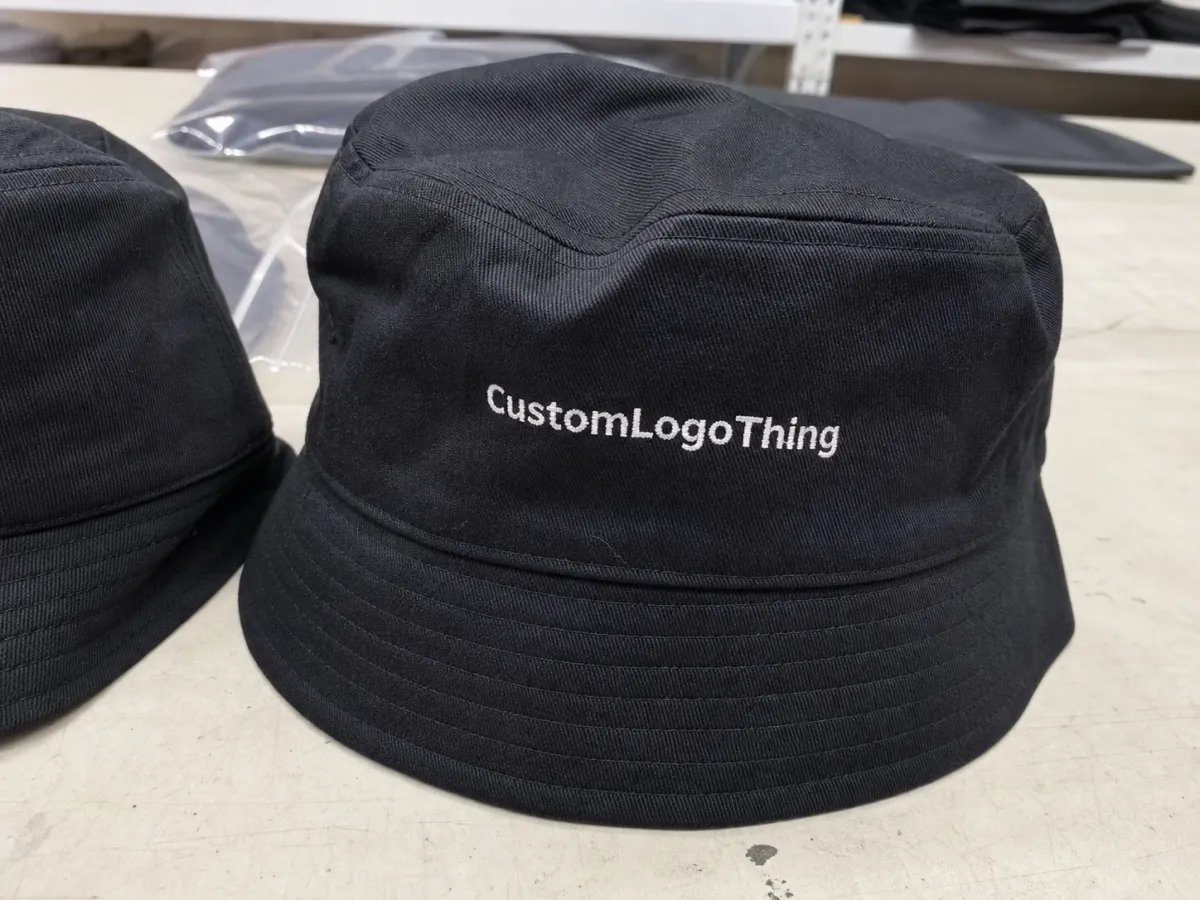
A useful checklist starts with the basics, but it does not stop there. It should confirm the file, the print method, the hat template, and the final use case. Bucket hats are not flat signage. The crown curves, the seams interrupt placement, and the brim can throw a shadow across the very area a sponsor wants to highlight.
That matters because event sponsors usually care about distance first. If the logo has to read from ten feet away, the art should be built for that purpose. A design that only looks good at 300 percent zoom is usually too delicate for field use. Smaller premium giveaways can support a subtler mark, but the artwork still needs enough contrast to hold up in outdoor light.
The fastest way to get into trouble is to approve a logo in isolation. A strong mark can become awkward if it lands across a seam or too low on the crown. A busy sponsor lockup can become muddy if every partner wants equal prominence. On hats, restraint often prints better than ambition.
Use the checklist to confirm:
- File type - vector art is preferred; raster only when there is no better source.
- Placement - front panel, side panel, or brim hit depending on the blank.
- Size - actual print dimensions, not guessed sizes from a screen.
- Color - PMS, spot ink, or fixed process values tied to the brand spec.
- Method - screen print, heat transfer, sublimation, woven patch, or embroidery.
That list sounds obvious until a rush order exposes the gaps. A sponsor run can look easy on paper and still fall apart if the logo uses too many colors, if the detail is too fine for the chosen method, or if the buyer approves a placement that the hat shape cannot support cleanly.
"If the logo needs a magnifying glass to survive the proof, it probably needs to be simplified before production."
Outdoor sponsors usually value clarity over decoration. A hat that reads instantly under glare and movement will do more work for the brand than a complicated piece that only looks impressive in studio lighting.
How printed bucket hat artwork gets set up for production
The cleanest production handoff starts with the best available source file. Vector files in AI, EPS, or press-ready PDF format are still the safest choice because they scale without losing edge quality. If the only artwork available is raster, it needs to be large enough to print at full size without soft edges, jagged curves, or blurry type.
Once the file is in hand, the decoration team should map it onto the correct hat template. That step is easy to skip and expensive to ignore. Bucket hats vary by crown height, seam layout, brim width, and fabric stiffness. A logo that sits neatly on one blank may creep into a seam on another or look too low once the crown bends around the head.
The print method changes the art setup too. Screen printing handles bold shapes and solid colors well, but tiny type and hairline detail can disappear. Heat transfer can carry more detail, though it still needs strong edges and a stable layout. Sublimation works best on polyester surfaces, while embroidery and woven patches usually demand simplification so the detail does not collapse into thread texture.
Fabric matters more than many buyers expect. Cotton twill gives a classic feel and usually takes print well, but technical polyester blends can be better for hot-weather events because they dry faster and stay lighter. Nylon styles can be useful for sport or coastal activations, though they often need tighter temperature control during decoration. A blank that feels premium in hand may still be a poor match for the chosen print system.
Proofing should show the actual hat blank, not a generic cap image. The right proof places the artwork on the proper panel, checks scale against the true decoration area, and flags anything that could be distorted by seams or stitching. A buyer who approves a real proof is far less likely to be surprised when the hats arrive.
For sponsor kits that include inserts or boxed presentation, shipment quality deserves attention early. If the packout is fragile, ISTA testing methods are a useful reference for how the carton should hold up in transit, and fiber-based packaging claims should line up with FSC expectations when those labels matter to the brief.
Good production prep does not add complexity for its own sake. It removes uncertainty. Once the file, blank, and placement are locked together, the checklist becomes a tool for keeping the job moving instead of a paper trail for mistakes.
Pricing, MOQ, and unit cost factors for sponsor orders
Price is usually driven more by decoration choices than by the concept of the design. Two bucket hats can look similar at a glance, yet one costs much more because it uses five ink colors, a larger imprint area, and a second decoration location on the side panel or brim.
Material choice affects pricing too. Cotton twill, nylon, polyester blends, and moisture-wicking fabrics behave differently under ink, heat, and thread tension. A basic cotton twill bucket hat often costs less to decorate than a technical polyester version that needs a transfer system or closer heat control. Dark blanks may also need an underbase or a stricter color match to keep the logo readable outdoors.
MOQ, or minimum order quantity, changes the math quickly. At 100 to 250 pieces, setup is spread across a small run, so unit cost can rise fast. Once the order reaches 500 pieces or more, the per-hat price usually improves because screen setup, plate work, and proofing labor are distributed more efficiently.
A practical buyer comparison often looks like this:
| Decoration method | Best for | Typical setup impact | Common unit range |
|---|---|---|---|
| Screen print | Bold sponsor logos, one to three colors | Low to moderate | $0.85-$2.25 add-on per hat at mid-volume |
| Heat transfer | Fine detail, small type, complex marks | Moderate | $1.10-$2.80 add-on per hat |
| Sublimation | Polyester blanks, full-color art | Moderate | $1.25-$3.00 add-on per hat |
| Woven patch or embroidery | Premium sponsor branding, textured finish | Higher | $1.50-$4.00 add-on per hat |
Those ranges are not fixed quotes. A plain cotton twill bucket hat might land around $2.25-$4.25 blank cost, while decorated sponsor pieces often finish in the $4.75-$11.50 range at 300-1000 units depending on coverage, method, and how clean the art file is before production begins. If the file needs cleanup, color correction, or repeated proofing, the cost climbs before the first stitch or screen is even used.
Other expenses appear in smaller pieces. Each extra logo color can add registration time. A larger imprint usually needs more ink or transfer material. A second location raises labor because the operator has to align and check a second placement. Rush timing can also add a meaningful fee, especially when the event date leaves little room for correction.
Sample charges deserve a line item of their own. A physical preproduction sample may cost $35-$125 depending on the method, and that cost is easy to justify if the sponsor is deciding between a bold front mark and a quieter placement. A sample is much cheaper than a full reprint.
Packaging can shift the total as well. Individual polybags, size stickers, carton labels, and kitting all add handling time. For large sponsor orders, those details matter because they affect not only cost but also how fast the fulfillment team can stage the hats for distribution on site.
Process and turnaround: from file review to final approval
The most efficient workflow starts with a complete file submission. The supplier should preflight the art, confirm format, check colors, and build a proof on the correct hat template. After that comes revision, approval, production, quality control, and shipment. Each step is manageable on its own; the delays usually come from missing assets, unclear instructions, or approval held up by too many voices.
Timing is part of the artwork review. A buyer who sends logo files, hat color, quantity, event date, and packaging needs at the start gives the supplier a real path from quote to shipment. A buyer who waits to decide on PMS values or imprint size can lose two or three business days before the proof even arrives.
A realistic timeline for a sponsor run often looks like this: one to two business days for file review, one day for a proof, one to three revision rounds if several people are involved, seven to fifteen business days for production, and two to five business days for domestic transit. A tidy order can still take two to three weeks if everyone responds quickly.
That buffer matters because outdoor events rarely offer grace. Load-in dates are fixed. Freight does not care that the logo was almost ready. Planning a few extra days is cheaper than paying for overnight shipping or scrambling to recover from a missed delivery window.
Approval should be locked in writing by one person with final sign-off authority. Sponsor orders often slow down because three stakeholders want tiny changes after the proof has already been circulated. The cleanest jobs move faster when one decision-maker owns the final yes.
A good supplier will also ask one grounded question before release: if this exact proof prints, will the client still be happy handing it out at the event? That question keeps the team focused on field use instead of on how polished the file looks on a laptop screen.
Step-by-step artwork checklist before you approve the proof
Before a sponsor approves a bucket hat proof, the artwork should go through a simple but strict review. It keeps the decision tied to fit, legibility, and production reality rather than instinct or habit.
- Check file quality. Vector artwork should stay crisp at any size. If a raster file must be used, it should be high resolution and built for the actual print area, not a web thumbnail.
- Read the art at true size. Tiny URLs, fine taglines, and thin sponsor lines should be reviewed at the exact imprint size. If the wording is hard to read from arm's length, it is probably too small for the hat.
- Confirm color behavior. Dark bucket hats, bright linings, and washed fabrics all change how ink reads outdoors. A proper PMS callout helps, but the blank still affects the final result.
- Measure placement. The logo should be checked against seam lines, crown curve, and brim shadow. Center points and offsets should be deliberate, not approximate.
- Review the production method. If the design uses gradients, hairlines, or fine registration, make sure the chosen print method can actually hold that detail.
- Save the approval trail. Final sign-off should be written and tied to the proof version so nobody debates which file was released later.
For complex sponsor lockups, it helps to ask whether every logo needs equal weight. Usually the answer is no. One strong primary mark and one smaller partner line often print more cleanly than three competing logos fighting for the same square inches.
A useful rule of thumb: if the proof feels crowded at 100 percent zoom, it will look even busier on the actual hat. In that case, remove fine text, reduce the number of elements, or move secondary marks to a side panel or woven label.
Outdoor wear also deserves a weather check. Sweat, sun, and movement expose weak contrast faster than a studio proof ever will. The checklist should answer one practical question: will this still read cleanly after six hours on a real person in bright light?
For buyers handling multiple sponsor versions, it can help to keep a master file naming convention tied to colorway, size, and proof number. That sounds minor until several revisions land in the same inbox and the wrong version nearly slips into production.
Common artwork mistakes that cause reprints or delays
Low-resolution art remains the most common failure. On screen, a pixelated logo may seem acceptable, especially if the design is simple and the file is small. Once it scales to hat size, the edges soften and the sponsor mark starts to look tired. That is a bad outcome for a premium event item.
Another frequent mistake is asking too much of a curved surface. Thin lines, tiny gradients, and dense blocks of copy often disappear around the crown or blur after wear. A bucket hat is better treated like a limited print field, not a miniature billboard.
Color assumptions create their own problems. Monitor color is not a production standard. A bright red on screen can come out deeper, warmer, or slightly muted depending on the blank, the ink system, and the cure method. If brand accuracy matters, the buyer should ask for a proper color callout rather than accepting a vague "close enough" sample.
Multi-logo sponsor lockups can also go wrong fast. If each partner wants equal prominence, the layout usually becomes crowded, the type size drops, and nobody wins. In many cases the cleaner answer is to simplify the grouping, enlarge the primary sponsor, and move the secondary partners to a separate placement or a lower-visibility position.
Skipping a sample review is expensive because a fix after the run starts can mean new screens, fresh transfers, or a full reprint if the artwork misses the mark.
Timing mistakes are just as damaging. The artwork may be fine, but if no one signs off until the week of the event, a simple logo becomes a rush job. The proof is the last safe point for correction, not a decorative formality.
Another issue shows up in mixed materials. A logo approved on a cotton swatch may look different on nylon or polyester, especially under outdoor light. If the order includes more than one blank type, each version should be checked separately rather than assumed to behave the same way.
Next steps for sponsor-ready bucket hat artwork
The easiest way to start is to gather five items: the logo files, the preferred hat color, quantity, event date, and any brand rules that affect placement or color. If those pieces are together before quoting begins, the supplier can usually return a more accurate price and lead time on the first pass.
One person should approve the proof. That single voice keeps the order moving and prevents small spacing debates from slowing production. If several people need input, gather it before the deadline so the revisions arrive in one clean round instead of three scattered ones.
A one-page art brief helps more than most buyers expect. Include imprint size, color targets, hat style, delivery address, and packaging needs such as individual polybags or carton labeling. A reference image is useful too, because "center front" means different things to different teams.
If the order is tied to a live event, build in a real buffer before load-in. Outdoor schedules do not forgive late freight, and one missing file can ripple into added shipping cost and stress on the day. A good checklist keeps the project calm because it keeps decisions visible.
Use the Printed Bucket Hats artwork checklist for outdoor event sponsors as a preflight tool, not a cleanup step, and the hats are far more likely to arrive sharp, readable, and worth the sponsor budget.
What files work best in a printed bucket hats artwork checklist for outdoor event sponsors?
Vector files such as AI, EPS, or PDF usually give the cleanest result because they scale without losing edge quality. If a raster file is the only option, it should be high resolution and built for the actual print size rather than for screen viewing.
How do I know if the logo will fit on a printed bucket hat?
Check the hat template and compare the logo against the crown shape, seam lines, and intended imprint width. If the design feels crowded at true size, reduce small text or secondary marks before approval.
What affects pricing most for printed bucket hats artwork?
Decoration method, logo color count, imprint size, and quantity are usually the biggest drivers. Rush timing, extra revisions, fabric choice, and packaging can also raise the final quote.
How long does the process usually take for sponsor hat artwork approval?
A fast proof cycle can move quickly if the files are ready, but missing assets or delayed approvals can stretch the timeline. The safest plan is to allow production lead time plus shipping time, with a buffer before the event.
What is the most common mistake on printed bucket hats for outdoor events?
The most common mistake is approving art that looks sharp on a screen but becomes too small, too detailed, or too low-contrast on the actual hat. A second common issue is ignoring how sunlight and curved surfaces change the way the sponsor logo reads in person.