Buyer Fit Snapshot
| Best fit | Printed Folding Cartons for Skincare projects where brand print, material claims, artwork control, MOQ, and repeat-order consistency need to be specified before quoting. |
|---|---|
| Quote inputs | Share finished size, material target, print colors, finish, packing count, annual reorder estimate, ship-to region, and any compliance wording. |
| Proofing check | Approve dieline scale, logo placement, barcode or warning zones, color tolerance, closure strength, and carton packing before bulk production. |
| Main risk | Vague material claims, crowded artwork, missing packing details, or unclear freight terms can make a low unit price expensive after revisions. |
Fast answer: Printed Folding Cartons for Skincare: Board, Finish, Dieline, and Unit Cost should be specified like a repeatable production item. The safest quote records material, print method, finish, artwork proof, packing count, and reorder notes in one written spec.
Production checks before approval
Compare the actual filled-product size with the drawing, then confirm tolerance on folds, seals, hang holes, label areas, and retail display edges. Reserve space for logos, QR codes, warning copy, and material claims before decorative graphics fill the panel.
Quote comparison points
Review material grade, print process, finish, sampling route, tooling charges, carton quantity, and freight assumptions side by side. A quote is only useful when the supplier can repeat the same color, closure quality, and packing count on the next order.
Printed Folding Cartons for Skincare: A Practical Guide
Printed Folding Cartons for skincare carry more weight than their size suggests. A 30 ml serum tucked into a plain sleeve can feel purely functional, while the same formula placed in printed folding cartons for skincare with the right board, crisp typography, and a controlled finish can read as deliberate, polished, and shelf-ready almost immediately. That shift happens fast, often before a shopper has even handled the pack.
From a packaging buyer's point of view, the carton is never only decoration. It is the print surface, the structure, the compliance space, the transit buffer, and the brand's first real handshake with the customer, all in one component. Well-made Printed Folding Cartons for skincare hold a bottle securely, keep copy readable, survive shipping, and still look good under harsh retail lighting or in a product photo. That is a demanding assignment for paperboard, which is exactly why the details deserve attention.
Printed Folding Cartons for Skincare: Why a Small Carton Changes Perception Fast
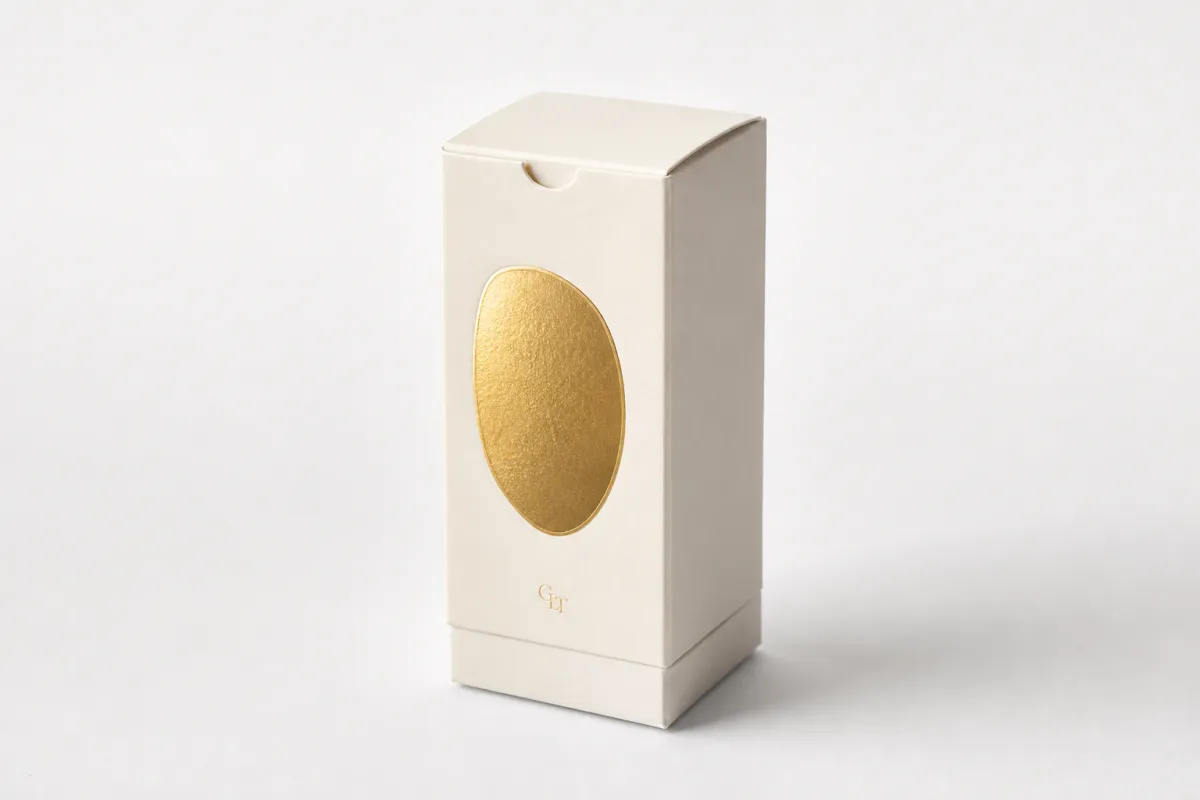
Skincare buyers usually judge with their eyes before they judge with their hands. A cream jar, a dropper bottle, or an eye treatment can be beautifully formulated and still feel ordinary if the carton looks thin, noisy, or underfinished. Strong printed folding cartons for skincare send a clear signal that the brand paid attention to the formula, the labeling, and the full experience rather than only the product inside.
That outer box carries unusual influence in skincare because the purchase rests on trust. Customers want ingredient clarity, a clean claims hierarchy, a tone that feels refined without getting theatrical, and enough information to feel confident placing the product on a bathroom shelf. printed folding cartons for skincare help organize that message. They also create a consistent front-of-pack presentation, which matters when a line includes serums, moisturizers, masks, and eye creams that need to look related without becoming repetitive.
The practical side matters just as much. Cartons protect labels from scuffing, reduce abrasion on glass, and keep droppers, pumps, and caps from rubbing against each other in transit. They can hold inserts, tamper evidence, or lot-coding space, and they let the brand print directions, warnings, and ingredient text without crowding the primary container. Good printed folding cartons for skincare do more than dress up a bottle; they help the whole packaging system behave like a system.
A carton should never pretend to be premium if it cannot make the trip from filling line to shelf. In skincare, durability is part of the story the package tells.
The visual payoff is easy to see too. A shelf of well-planned printed folding cartons for skincare creates a clean field of color, typography, and finish that is far easier to shop than a scatter of loose bottles. That matters in retail, and it matters online, where cartons often show up in product imagery, influencer content, and unboxing videos. The outer package becomes part of the memory, sometimes more than the jar itself.
Once the carton is treated as a working component instead of a wrapper, the remaining decisions get easier to sort through. Board selection, print method, finish, structure, and compliance layout all affect how printed folding cartons for skincare perform on the line and in the market.
Printed Folding Cartons for Skincare: Process and Timeline From Dieline to Delivery
The production path for printed folding cartons for skincare starts with the product, not the artwork. That sounds obvious, yet many delays begin when a design team works from rough assumptions instead of measured dimensions. The carton needs to fit the container, closure, insert, and any label build-up. A jar with a wide shoulder, a pump with a long neck, or a dropper with a fragile bulb can all change the internal clearance. If the fit is wrong, the carton can bulge, scuff, or fight the fill line.
The usual sequence runs in a clear order: collect container dimensions, choose the carton style, create the dieline, build the artwork, review proof files, print, finish, die-cut, fold, glue, pack, and ship. For printed folding cartons for skincare, the dieline acts as the map that keeps every panel in the right place. Once the board is cut and scored, small layout mistakes become expensive. A careful proof stage pays for itself very quickly.
Lead time depends on more than press speed. Simple printed folding cartons for skincare with standard board, one or two colors, and a basic aqueous coating may move through production in about 12 to 15 business days after proof approval. Add foil, embossing, a soft-touch coating, a custom insert, or multiple proof rounds, and the schedule can stretch to 18 to 25 business days or more. If a structural sample is needed first, plan on a few extra days before the final run begins.
Artwork approval can become the quiet bottleneck. Barcode checks, legal copy review, ingredient verification, and color correction all need room on the calendar. Teams often underestimate how long it takes to compare digital color to a physical proof, especially on darker brand palettes or matte boards that absorb ink differently. Well-run printed folding cartons for skincare usually move faster not because the plant hurries, but because decisions are locked early and the artwork is truly final.
That is the lesson worth keeping close: a realistic production calendar protects launch dates, retailer appointments, and replenishment plans. If a product reaches shelves one week late, the cost is not just freight or labor. It can mean missed promotions, reorder gaps, or a brand team forced to ship a fallback carton that never should have left the sample table.
Key Factors That Shape Printed Folding Cartons for Skincare
Material choice is usually the first major decision. SBS, recycled board, coated board, and specialty paperboard all behave differently. For printed folding cartons for skincare, SBS is popular because it prints cleanly and gives a smooth cosmetic-grade appearance. Recycled board can support a more natural story, but the surface texture and brightness may not suit every brand. Heavier products often need a stiffer board, usually in the 14 pt to 24 pt range, or roughly 300 gsm to 400 gsm depending on the construction and desired feel. Those numbers are only planning references, because caliper and stiffness can vary by paperboard mill, fiber content, and coating.
Structure matters just as much. Straight tuck end, reverse tuck end, auto-lock bottom, seal end, sleeve, and window cartons each solve different problems. A lightweight cream tube may work well in a simple tuck carton. A glass jar with a metal cap often benefits from stronger sidewalls or an auto-lock bottom because the base needs better support. For printed folding cartons for skincare, the best structure is the one that fits the product weight, the filling method, and the retail environment without adding unnecessary complexity.
Print and finish choices shape the brand's tone. CMYK can cover a lot of ground, but spot colors are useful when a brand relies on a very specific shade or a clean white field. Aqueous coating is a common workhorse because it helps with rub resistance and gives a controlled surface. Soft-touch coating can add a velvety feel, while gloss coating creates a more reflective look. Foil stamping and embossing work best in moderation, especially on printed folding cartons for skincare that need one premium cue rather than five competing effects.
Compliance and information architecture deserve serious care. There needs to be room for the ingredient list, the product name, warnings, barcodes, recycling marks, lot-code space, and any required claims language. Crowding that information into a small panel makes the package harder to read and often less attractive. A good layout for printed folding cartons for skincare treats regulatory copy as part of the design, not as an afterthought squeezed into the remaining corner.
Retail and ecommerce add another layer. Cartons need scuff resistance for carton-to-carton contact, enough compression strength for case packing, and enough contrast to read well in a thumbnail image. A soft gray carton that looks elegant on press can disappear in a white web listing. A deep black carton can show dust, fingerprints, or minor board defects. The practical answer is to test how printed folding cartons for skincare look under bright light, in a shipping case, and in a product photo before committing to a full run.
For brands trying to align sustainability with performance, two public references are worth keeping nearby: fsc.org for fiber sourcing information and ista.org for transit testing standards and guidance. FSC helps brands think clearly about certified paper sourcing, and ISTA is useful when a carton has to survive real distribution rather than only a mockup. ASTM testing methods can also be relevant, especially for compression, packaging integrity, and material performance checks.
Common board and finish options at a glance
| Option | Typical fit | Finish feel | Rough unit price at 5,000 | Notes |
|---|---|---|---|---|
| 16 pt SBS, aqueous coating | Light tubes, small bottles, slim cartons | Clean, crisp, straightforward | $0.18-$0.28 | Strong value for standard printed folding cartons for skincare |
| 18 pt SBS, matte or soft-touch | Serums, creams, mid-weight packs | More tactile, more refined | $0.26-$0.42 | Good balance of shelf presence and cost control |
| 20 pt recycled board, special coating | Eco-positioned lines, sturdy cartons | Natural, restrained, slightly textured | $0.24-$0.40 | Surface can be less bright than SBS, which affects color |
| Premium SBS with foil or embossing | Hero SKUs, gift sets, prestige skincare | High impact, more dimensional | $0.38-$0.70 | Best for selective use, not every SKU |
The table is only a planning reference, yet it shows how much the material and finish choice affect printed folding cartons for skincare. A brand can spend more and still miss the mark if the structure is wrong. A simpler box on the correct board often performs better than a heavily embellished carton with a weak fit.
Step-by-Step Guide to Ordering Printed Folding Cartons for Skincare
The cleanest orders start with a strong brief. For printed folding cartons for skincare, that brief should include exact product dimensions, fill weight, closure style, bottle or jar drawings, required copy, the target quantity, and any shelf or ecommerce requirements. If the product uses an insert, spacer, or inner tray, that belongs in the brief too. The more precise the inputs, the fewer surprises show up later.
Step 1: Confirm the product fit. Measure the primary container in its final form, including cap height, shoulder shape, and any label build-up. This matters especially for printed folding cartons for skincare with glass jars or tall droppers, since even small tolerances affect how the carton closes and how it appears on shelf.
Step 2: Choose the carton style and request the dieline. A dieline allows the design team to place copy, imagery, and barcode elements on the exact structure before artwork is finalized. For printed folding cartons for skincare, this avoids a common problem where a beautiful front panel ends up competing with a seam, tuck flap, or glue zone.
Step 3: Review proofs with a production eye, not only a design eye. Check barcode quality, panel orientation, spelling, ingredient order, warning statements, and how the carton opens. Make sure nothing important lands too close to a fold line. Many problems with printed folding cartons for skincare are not obvious in the first proof; they appear when someone tries to assemble the box or read the legal text under real light.
Step 4: Approve a structural sample or prototype if the project is new, fragile, or positioned at a higher end. A sample is especially useful for printed folding cartons for skincare with a tight fit, a soft-touch finish, or a special closure. The sample lets you test feel, stiffness, rub resistance, and shelf appearance before committing to the full run.
Step 5: Lock the production plan. Confirm quantities, pack-out details, freight destination, and the date the cartons need to arrive. If a filling line is waiting, that timing matters. A good supplier will ask whether the printed folding cartons for skincare are shipping flat, bundled, or palletized, because that changes both handling and damage risk.
Step 6: Tie packaging decisions back to launch and replenishment. If a line is expected to restock every six to eight weeks, the carton plan should support that cycle. If the product is seasonal or limited, the print plan may need to favor flexibility over embellishment. With printed folding cartons for skincare, the smartest order is the one that fits both the brand story and the operating rhythm.
A simple checklist helps:
- Final container dimensions and a sample if possible
- Required regulatory copy and barcode data
- Preferred board grade and finish level
- Quantity target and acceptable variance
- Launch date, ship-to address, and pack-out method
Once those pieces are in place, quoting becomes more accurate, and the project tends to move with fewer late-stage corrections.
Printed Folding Cartons for Skincare Cost, Pricing, and MOQ
Cost is where a lot of teams get surprised, mostly because they look only at the per-carton number and miss the setup math behind it. For printed folding cartons for skincare, the main cost drivers are board grade, carton size, print coverage, number of colors, finish complexity, structural style, and order quantity. A simple carton in a standard size is very different from a carton with foil, embossing, and a custom insert.
MOQ, or minimum order quantity, matters because the plant has fixed setup steps whether the run is 2,000 pieces or 20,000. Press make-ready, cutting plates or dies, scoring, folding, gluing, and proofing all carry cost. With printed folding cartons for skincare, lower quantities usually mean higher unit cost because those fixed steps are spread across fewer boxes. Larger quantities often reduce the unit price sharply, especially once the press is running efficiently.
Here is a practical way to think about pricing buckets for printed folding cartons for skincare:
- Structure: tuck style, auto-lock bottom, sleeve, or custom insert
- Material: SBS, recycled board, coated board, specialty stock
- Print: one-color, CMYK, spot colors, reverse print coverage
- Finish: aqueous, matte, gloss, soft-touch, foil, embossing, spot varnish
- Logistics: freight, kitting, palletizing, and storage
If you need a rough planning range, simple printed folding cartons for skincare often land around $0.18 to $0.28 per unit at 5,000 pieces, while more refined versions can move into the $0.38 to $0.70 range or higher depending on finish and structure. A mid-range carton with a strong board, full-color print, and one premium touch usually sits somewhere in the middle. At 10,000 or 25,000 pieces, the unit cost can improve meaningfully, but only if the structure stays efficient. Those are planning ranges, not promises, because print coverage, waste, carton size, and freight can shift the final number.
There are smart places to save money without stripping away the look. Use one premium cue, not three. Simplify the carton footprint. Reduce the number of panel transitions. Standardize sizes across a line if the bottles allow it. Choose a board grade that supports the product without overspecifying thickness. Those moves keep printed folding cartons for skincare clear and credible while protecting margin.
Brands should also ask for side-by-side quotes at multiple volumes. A quote at 5,000 pieces may look high, but the 10,000 piece quote can reveal how much better the economics get with scale. That comparison often changes the decision more than the design debate does. With printed folding cartons for skincare, the lowest-looking quote is not always the lowest total cost if it leads to weak shelf appeal or a carton that needs rework.
One more practical note: freight can shift the picture quickly. Flat cartons ship efficiently, but they still take pallet space, and rush shipping can erase savings from a lower unit price. Planning ahead usually saves more money than shaving a penny off print coverage.
Common Mistakes With Printed Folding Cartons for Skincare
The first mistake is designing before the product fit is confirmed. A carton can look perfect in Illustrator and still fail on the bench because the closure is too tall, the jar shoulder pushes the panel out, or the insert sits too high. With printed folding cartons for skincare, a few millimeters can change the way the box closes, how it stacks, and whether the front panel stays flat enough to read.
The second mistake is crowding the copy. Skincare cartons often need ingredients, warnings, directions, recycling marks, barcode space, and sometimes claim language or brand story copy. If all of that gets forced onto one small panel, the carton starts to look noisy and the type size drops too far. Good printed folding cartons for skincare leave breathing room where the eye needs it most.
Another issue is overcommitting to delicate finishes. A soft-touch coating can feel excellent, but it may show rub marks if cartons are packed tightly or handled repeatedly in fulfillment. Thin foil lines can crack if placed across a fold. Heavy matte black ink can show scuffs and dust. That does not mean premium finishes should be avoided. It means printed folding cartons for skincare need finish decisions that match the distribution path, not just the mood board.
Timeline mistakes are common too. Late copy changes, artwork revisions after proofing, and finish upgrades can push the schedule farther than a launch calendar allows. Once a dieline is approved and the press slot is booked, changes cost time. Teams that order printed folding cartons for skincare on a tight launch window should assume there will be one last review cycle, because that is usually where the hidden delay appears.
The cost trap is just as real. Some brands pile on too many effects because they want the carton to feel expensive, but the result can look busy rather than refined. A cleaner structure, a disciplined layout, and one strong tactile element often outperform a carton with foil, embossing, spot gloss, and a window all fighting for attention. Good printed folding cartons for skincare rarely need every effect available in the catalog.
Finally, teams sometimes ignore the real end use. A carton that looks beautiful on a design screen may not survive distribution if the board is too light, the print is prone to scuffing, or the glue seam is poorly placed. A production-minded review catches those problems early. That is where printed folding cartons for skincare earn their keep, by doing the dull but essential jobs well.
Expert Tips and Next Steps for Printed Folding Cartons for Skincare
If I had to give one rule of thumb, it would be this: choose one clear premium signal and make it excellent. Soft-touch with restrained foil, or a beautiful matte board with clean typography, usually looks stronger than stacking every finish onto the same carton. For printed folding cartons for skincare, restraint often reads as confidence.
Build a packaging checklist before you request quotes. Include product measurements, closure type, fill method, label placement, storage conditions, and any retail display requirements. That checklist keeps printed folding cartons for skincare aligned with manufacturing and marketing instead of drifting into separate conversations that never fully connect.
Request a sample pack or prototype whenever the product is new, fragile, or positioned as refined. Handle it in normal light. Stack it with other cartons. Rub the corners. Check whether the colors hold up on the actual board. That kind of review catches more issues than a screen proof ever will. It also gives a truer read on how printed folding cartons for skincare will look in a bathroom, on a shelf, or in an ecommerce photo.
Coordinate the carton decision with the rest of the operation. The filling team needs to know how the carton opens and packs. Fulfillment needs to know how it nests in a shipper. Marketing needs to know how it photographs. That coordination sounds basic, yet it is where a lot of packaging programs fall apart. Strong printed folding cartons for skincare should support the whole route to market, not just the first render.
Here is the practical next step sequence I recommend:
- Audit the current package and identify what is not working.
- Gather exact dimensions, product weight, and regulatory copy.
- Choose the carton style and request a dieline.
- Compare at least two board or finish options.
- Ask for a prototype if the product is new or refined.
- Set a realistic schedule that includes proof time and freight.
That sequence keeps the project grounded. It also gives the brand team enough information to make a proper decision instead of guessing at a box from a distance. If the goal is to make printed folding cartons for skincare feel polished, protect the formula, and keep the launch on schedule, discipline wins more often than flash.
Good packaging is rarely loud about its own work. It fits, it prints cleanly, it travels well, and it leaves the product looking more intentional than it did before. That is the real value of printed folding cartons for skincare, and it is why the smartest teams treat the carton as part of the product rather than an afterthought wrapped around it. If you are reviewing a carton spec now, start with fit, then proof the copy, then test the finish in real light; that order catches most of the expensive mistakes before they reach the press.
Frequently Asked Questions
What materials are best for printed folding cartons for skincare products?
SBS paperboard is a common choice because it prints cleanly and gives a bright, cosmetic-grade surface. Recycled or coated options can support a more natural brand story, but the thickness and stiffness still need to match the product weight. Heavy glass jars usually need a stronger board and a carton structure that resists bulging during shipping and shelf display.
How long do printed folding cartons for skincare usually take to produce?
Simple carton jobs can move quickly when the dieline is standard, artwork is final, and no specialty finishes are involved. Lead time grows when the project includes foil, embossing, custom samples, or multiple proof rounds. The fastest way to protect timing is to approve artwork quickly and confirm the structure before the production slot is locked.
What affects the cost of printed folding cartons for skincare the most?
Quantity is one of the biggest drivers because setup costs are spread across more or fewer cartons. Material grade, print coverage, special coatings, and premium finishes can all raise the unit price. Complex structures and inserts add tooling and labor, so simpler formats are often more economical.
Can printed folding cartons for skincare handle glass bottles and jars?
Yes, if the board grade, carton size, and structure are matched to the product's actual weight and shape. Glass containers often benefit from a tighter fit, stronger paperboard, and careful attention to closure tension. Testing a sample with the final fill is the best way to catch fit or scuff issues before full production.
How do I make printed folding cartons for skincare look refined without overspending?
Start with strong typography, disciplined layout, and one or two well-chosen finishes instead of adding every possible effect. Use color, white space, and material feel to create perceived value before leaning on expensive embellishments. A well-designed carton on the right board often looks more refined than a crowded carton with too many extras.
What should I ask for before placing an order?
Ask for a dieline, a proof, a quote at more than one quantity, and a realistic production timeline. If the product is new or refined, request a structural sample. Those steps give you a much clearer read on whether the printed folding cartons for skincare will fit, print well, and arrive on time.