Buyer Fit Snapshot
| Best fit | Printed Folding Cartons with Die Cutting projects where brand print, material claims, artwork control, MOQ, and repeat-order consistency need to be specified before quoting. |
|---|---|
| Quote inputs | Share finished size, material target, print colors, finish, packing count, annual reorder estimate, ship-to region, and any compliance wording. |
| Proofing check | Approve dieline scale, logo placement, barcode or warning zones, color tolerance, closure strength, and carton packing before bulk production. |
| Main risk | Vague material claims, crowded artwork, missing packing details, or unclear freight terms can make a low unit price expensive after revisions. |
Fast answer: Printed Folding Cartons with Die Cutting: Board, Finish, Dieline, and Unit Cost should be specified like a repeatable production item. The safest quote records material, print method, finish, artwork proof, packing count, and reorder notes in one written spec.
Production checks before approval
Compare the actual filled-product size with the drawing, then confirm tolerance on folds, seals, hang holes, label areas, and retail display edges. Reserve space for logos, QR codes, warning copy, and material claims before decorative graphics fill the panel.
Quote comparison points
Review material grade, print process, finish, sampling route, tooling charges, carton quantity, and freight assumptions side by side. A quote is only useful when the supplier can repeat the same color, closure quality, and packing count on the next order.
Printed Folding Cartons with die cutting do a lot more than hold a product. They frame the first impression, protect the contents, and quietly tell a buyer whether the brand paid attention to the details or just hoped the graphics would carry the day. I have seen a carton look excellent on a screen and then fall apart in the hand because the score was too tight, the board grain was wrong, or the tuck flap fought the structure. That kind of mismatch is frustrating, and it is also avoidable.
What makes Printed Folding Cartons with die cutting worth the extra planning is the way structure and print work together. The artwork can do its job only if the dieline respects folds, flaps, insert depth, and the way paperboard behaves under pressure. If the cut is sloppy by even a small amount, closures sit crooked, edges soften, and the package starts to feel less reliable. A good carton should open cleanly, stack neatly, survive shipping, and still look composed on the shelf after handling.
Custom Logo Things works with brands that want packaging to carry real business value, not just decoration. The cartons that tend to perform best are not always the flashiest ones. More often, they are the ones that fit the product correctly, keep their shape, and give the packing team fewer headaches on the line. That is the practical test for Printed Folding Cartons with die cutting: they need to look polished, yes, but they also need to work like a piece of production equipment. A package that only looks good in a mockup is kinda missing the point.
Printed Folding Cartons with Die Cutting: What They Are
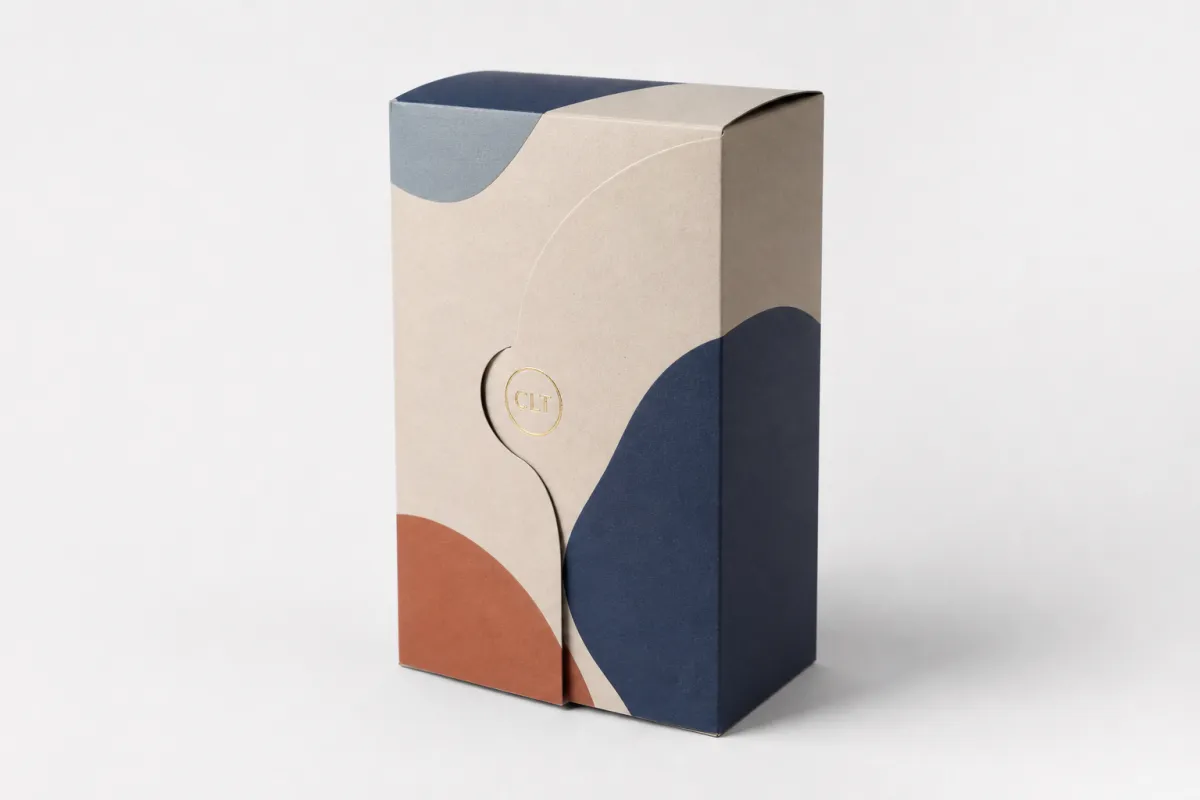
At the simplest level, printed folding cartons with die cutting are flat paperboard sheets that are printed, cut, scored, and folded into a finished carton. The die creates the shape. The scores create the fold memory. The glue flaps, tuck panels, locks, and inserts create the structure that holds the product in place. Once those elements are lined up properly, a flat sheet becomes a retail-ready package that can ship efficiently and still present the brand with intention.
That conversion from flat sheet to finished carton is the point where packaging earns its keep. A neat graphic system matters, but the structure decides whether the box closes properly and whether the product stays protected after repeated handling. Printed folding cartons with die cutting are especially useful when the package has to communicate quality quickly, since shoppers often read the carton before they ever read the label. A wide front panel, a clean window, and accurate registration can make a simple product feel more deliberate and trustworthy.
These cartons show up in cosmetics, supplements, food, electronics accessories, gift sets, and seasonal promotions because they solve a common problem: the need for a package that ships flat, converts cleanly, and still feels branded. They also work well in premium consumer categories where a rigid box would be overkill. Add foil stamping, embossing, soft-touch lamination, or spot UV, and the package can hold a stronger shelf signal without pushing the cost too far out of reach.
There is a production logic behind printed folding cartons with die cutting that buyers sometimes underestimate. A simple straight-tuck carton is fairly forgiving. A carton with a die-cut window, a locking bottom, a hanging tab, or a nested insert is much less forgiving. Board caliper, grain direction, panel size, and glue placement begin to influence how the carton behaves once it leaves the print file and enters production. The die is not just a drawing. It is the carton's structural map, and if that map is off, the whole job gets harder.
From a buyer's point of view, the decision usually comes down to standardization versus distinctiveness. A stock carton style can move fast and stay inexpensive. A custom dieline gives more room for branding and product fit, but it asks for tighter proofing and more careful communication between design and production. That tradeoff is not a flaw. It is the price of control. When the structure fits the product and the graphics suit the shelf, printed folding cartons with die cutting can raise perceived value without creating unnecessary waste.
One thing I always tell teams is this: the artwork carries the story, but the die decides whether the story survives production. If the logo lands across a crease or a panel sequence crowds the fold, the package starts working against itself. The strongest cartons treat structure and graphics as one system, not two separate tasks that get stitched together at the end.
Printed Folding Cartons with Die Cutting Process and Timeline
The production path starts before anyone opens a design file. It begins with the product brief: dimensions, weight, fragility, closure preference, shipping method, and the way the carton will be handled after it leaves the press. From there comes the dieline, which maps the cut lines, score lines, glue flaps, and panel sequence. Once the artwork is aligned to that structure, proofing begins. That stage matters because it is where fit, folding behavior, and graphic placement get checked before the run turns into a pile of expensive corrections.
For printed folding cartons with die cutting, the timeline is shaped by complexity and by how quickly decisions get locked. A simple tuck-end carton with ready artwork can move faster than a carton with a custom window, specialty coating, metallic ink, or a glued insert. Every extra feature adds another checkpoint. If the design still needs a structural sample, add time. If the artwork is still changing while the dieline is being reviewed, add more. Simple jobs may finish in roughly 10 to 15 business days after approval, while more involved cartons can take longer when tooling, samples, or press proofing are part of the path.
Four approvals can save a lot of pain later:
- Dieline review - Confirms panel logic, fold direction, glue flap placement, and safe zones before artwork creates a conflict.
- Digital proofing - Checks copy, color targets, barcode placement, and layout alignment without waiting for a full press run.
- Structural sample sign-off - Verifies fit, closure strength, and assembly behavior using the actual product or a close proxy.
- Press proof approval - Shows how the selected board, coating, and finishing choices behave in real production conditions.
The reason printed folding cartons with die cutting can pressure a schedule is not mystery; it is dependency. Each stage relies on the one before it being right. If the dimensions are off, the die is off. If the die is off, the sample is off. If the sample is off after the artwork has already been locked, the cleanup becomes slower and more expensive. A launch can absorb only so many changes before inventory dates and retailer commitments start to wobble.
Once the die is made, the printed sheets move into finishing. That conversion step is where the carton takes shape. The equipment cuts the openings, lays in the scores, removes waste, and prepares the sheet so it folds cleanly without cracking at the edges. Good conversion is easy to miss because it looks routine when it is done well. A sharp edge and a clean fold are signs of process control, not luck.
Sequence matters too. If cartons are tied to a launch while inventory is already moving through the warehouse, a late dieline approval can create a chain reaction. Sometimes the artwork is ready but the assembly method has never been tested. Sometimes the structure is approved but the print file misses a safe zone near the fold. Those are small misses with large consequences. Printed folding cartons with die cutting reward teams that treat the timeline as a chain of decisions, not a single print purchase.
"A carton that looks perfect on screen can still fail on the line if the score is too tight, the board is too soft, or the glue flap was never tested with the actual product."
In my experience, the smoothest jobs are the ones where structure gets approved first and decoration comes second. That order is not glamorous, but it works. Once the basic size, fold direction, and assembly method are stable, the finishing choices have room to support the design instead of fighting it. That is the difference between a controlled launch and one that keeps muttering, "we'll just fix it later."
Design, Materials, and Structural Factors That Shape the Result
Material selection shapes the whole outcome of printed folding cartons with die cutting. A lighter board can work for a low-weight retail item, but the carton may feel softer in the hand and show compression at the corners sooner than expected. A stronger board helps the package hold shape, stack more cleanly, and project more confidence on shelf. Common choices fall in the 16pt to 24pt range, with many branded cartons landing around 18pt or 24pt SBS or C1S depending on print method, product weight, and display expectations. That is not a universal rule, just a practical starting point.
Design and structure need to be discussed together, not one after the other as if artwork could be polished in isolation and the dieline fixed later. A graphic can look perfect in a flat layout and still fail once it runs across a score. Printed folding cartons with die cutting are unforgiving in one simple way: the fold lines always win. If a logo lands too close to a crease, it can distort. If a pattern crosses a tuck flap carelessly, the package can look misaligned even when the print itself is accurate. Artwork has to respect the structure, not wrestle it.
Finishing choices change the tone of the carton in ways that are easy to underestimate. Matte or gloss coatings shift the surface from restrained to reflective. Soft-touch lamination adds a smoother tactile feel and can help a premium product feel more deliberate in the hand. Spot UV can draw the eye to a logo or pattern. Foil stamping adds a reflective accent that catches attention in a crowded shelf bay. Embossing adds depth without depending on ink coverage. None of these are required, and each one adds cost or complexity. The right choice is the one that supports the brand without creating folding trouble later.
Product dimensions are more than a fit question. Internal clearance determines whether the item slides in smoothly or gets pressed into the panels. Headspace influences whether the carton looks full or underpacked. Inserts may be needed to keep the contents from moving, especially for electronics, glass jars, or kits with multiple parts. Even a small change in product height can change the way printed folding cartons with die cutting read on shelf, because the closure line looks different when the item sits too loose or too tight inside the structure.
Board grain direction is another detail that matters more than most people expect. If the grain runs against the wrong fold, the carton can crack or resist forming, especially on tighter scores. That is one of those little production details that separates an informed spec from a guess. When a carton has a premium finish, the board has to behave well under the surface, or the finish starts revealing every flaw.
Sustainability decisions belong in the same conversation. Brands trying to reduce packaging impact usually start with right-sizing, then move toward recycled content or FSC-certified board where appropriate. The U.S. EPA's materials guidance is useful because it keeps the focus on source reduction and recovery instead of loose claims that are hard to defend. See the EPA's packaging and materials resources at epa.gov for a practical view of reduction and recovery. FSC certification can also help buyers document responsible fiber sourcing when retail partners or brand standards require that kind of proof.
Printed folding cartons with die cutting often sit between a plain folding carton and a rigid box. That middle ground is part of the appeal. They can be efficient to ship and store, yet still polished enough to support a higher perceived value. That balance comes from choosing the right board, the right cut pattern, and the right finishing system, not from adding more decoration for its own sake.
How the carton moves through fulfillment matters too. A precise lock can speed packing. A window can increase consumer interest but may require film and stronger board. Heavy coating can hide fingerprints better, while uncoated stock can feel more natural and support a more restrained visual language. Printed folding cartons with die cutting are never only visual objects. They are working parts of the packaging line, and they have to behave like it.
Cost, Pricing, MOQ, and Quote Factors to Watch
Pricing for printed folding cartons with die cutting depends on more variables than most buyers expect. Board grade, print coverage, finishing, carton style, quantity, tooling, and assembly all affect the quote. A basic one-color carton on standard board can be efficient. A carton with full-coverage graphics, foil stamping, a custom window, and a special fold sequence will cost more because each added detail increases setup time and conversion complexity. That is not a penalty; it is just the math of production.
MOQ matters just as much as unit price. Small runs can look expensive on a per-piece basis because setup cost is spread across fewer cartons. Larger runs usually bring the unit cost down. For printed folding cartons with die cutting, that curve can be meaningful. A shift from 2,500 to 10,000 units can reduce unit cost materially, especially if the same die and print setup are reused. If a reorder is likely, ask whether the tooling can be held for a repeat run. Reusing the die is one of the cleanest ways to protect margin.
Quote comparisons can be misleading if they hide assembly or finishing differences. One supplier may quote cartons flat, another may include pre-gluing, and a third may include hand assembly for special inserts. Shipping method matters too. Freight for flat cartons is often far more efficient than shipping assembled packs. When comparing printed folding cartons with die cutting, ask what is included: board, print, die creation, finishing, folding, gluing, inserts, proofing, and freight. A lower headline number is not always a lower landed cost.
| Carton Style | Typical Setup | Best Fit | Approx. Unit Cost at 5,000 Units |
|---|---|---|---|
| Straight-tuck carton | Standard dieline, light finishing | Retail items with simple assembly and moderate protection needs | $0.16-$0.28 |
| Reverse-tuck carton | Standard dieline, efficient nesting | Products that need quick folding and low waste | $0.15-$0.26 |
| Window carton | Die-cut aperture, film patch, stronger board | Products where visibility helps sell the item | $0.22-$0.40 |
| Premium carton with foil or embossing | Custom die, specialty finish, tighter registration | Gift sets, cosmetics, and higher-value branded goods | $0.35-$0.70 |
Those ranges are directional, not universal. A heavier board, more print colors, tighter tolerances, or an added insert will move the number. So will the choice between UV coating and soft-touch lamination. Printed folding cartons with die cutting are best priced with a real sample and a clearly written spec sheet, not just a logo and a rough size estimate. That is why a supplier's Manufacturing Capabilities page can be useful: it helps a buyer understand whether the shop can handle the exact mix of printing, die cutting, finishing, and assembly the job needs.
There are savings levers buyers can control. Standardizing carton dimensions across a product family reduces changeover pressure. Simplifying the structure lowers tooling and assembly complexity. Reducing the number of finishing passes can cut cost and lead time. Planning repeat orders around the same die helps avoid new setup fees. In printed folding cartons with die cutting, good cost control usually comes from discipline rather than aggressive bargaining.
From a value perspective, a slightly higher carton cost can be justified if the structure improves line speed, reduces damage, or supports a stronger shelf presentation. That is especially true in categories where packaging is a large part of the buying decision. The least expensive carton is not always the most economical if it slows packing or fails in transit. Printed folding cartons with die cutting should be evaluated on total program value, not only the purchase order line.
Step-by-Step Guide to Ordering Printed Folding Cartons with Die Cutting
The cleanest way to order printed folding cartons with die cutting is to start with the product, not the artwork. Measure the product's width, depth, height, and weight. Note whether it has edges that snag, surfaces that scratch, or components that shift during transit. If the item is fragile, record the need for inserts, cushions, or a tighter closure. That information tells the packaging team what the carton has to do before anyone starts arguing about finish options.
Next comes the structural brief. Decide on the carton style, opening method, and any special features such as a window, hang tab, perforation, or locking bottom. This is also the point where you decide whether printed folding cartons with die cutting need to feel premium, functional, or somewhere in between. A supplement carton and a cosmetic carton may share a footprint, but they should not necessarily share the same structural language. The opening experience should match the product's position in the market and the customer's expectation of the brand.
Once the structure is defined, move to artwork. Align the design to the dieline, then check panel hierarchy. What sits on the front? What appears on the side panel? Where does legal copy belong? Are barcodes and lot codes placed where they can still be read after folding? Are image resolutions high enough for the print method being used? Those checks are not decorative. They prevent rework. Printed folding cartons with die cutting can hide mistakes until late in the process, and that is exactly when mistakes become expensive.
Before full production, approve a sample or proof. This is the moment to test the carton in the real world. Does it fold cleanly? Does the tuck stay closed? Is the product easy to insert? Do windows line up? Does the board crack at the score? Can the packaging line assemble the carton at a workable speed? These are practical questions, not academic ones. A sample shows whether printed folding cartons with die cutting are ready for scale or still need another adjustment.
Then handle logistics early. Decide whether cartons will arrive flat or pre-glued. Confirm warehouse space, because flat cartons can still take up meaningful room once they are packed by the pallet. Work out the arrival date relative to filling, kitting, and launch. If the carton will be assembled by hand, estimate labor. If it will be machine-folded, confirm machine compatibility. Printed folding cartons with die cutting can be beautiful, but they still need to fit the operation on the floor.
It helps to follow a simple order checklist:
- Final product dimensions and weight
- Carton style and opening method
- Board grade, coating, and finish
- Dieline approval and artwork placement
- Sample or proof sign-off
- Assembly method and delivery date
That checklist keeps printed folding cartons with die cutting grounded in the actual launch plan. If the carton is tied to a retailer deadline, a subscription schedule, or a seasonal promotion, the approval path should be shorter and more disciplined. The more moving parts there are, the more important it becomes to freeze decisions in the right order.
If the brief is still evolving, ask for two structural options before approving graphics. One can lean toward economy, the other toward a more premium look. That comparison often clarifies what matters most: speed, shelf presence, or cost. Printed folding cartons with die cutting are easier to buy well when the decision is framed as a tradeoff between visible benefits instead of a vague search for "the best box."
Common Mistakes That Raise Risk and Waste
The first mistake is choosing the wrong board for the product weight. A carton that is too light can bulge, crease early, or feel flimsy in the hand. That is not just a structural issue; it changes brand perception. Printed folding cartons with die cutting rely on rigidity in the right places, and when the board is underspecified, the package tends to telegraph that weakness right away. A heavier board can solve the problem, but only if the line can still fold it cleanly.
The second mistake is treating the dieline like a generic template. It is not. It is a production file. If scores, cut lines, and glue areas are not checked carefully, artwork can collide with the structure. Logos fall on creases. Product descriptions disappear into fold areas. Windows sit too close to edge cuts. Printed folding cartons with die cutting require the design team and the production team to read the same file the same way. If they do not, the project turns into a string of avoidable revisions.
The third mistake is ignoring how the carton assembles. A package can look sharp on a screen and still be awkward on the line. If the flaps do not lock in a natural order, filling slows down. If the glue area is too small, the seal becomes unreliable. If the opening action feels clumsy, the consumer notices. In practice, printed folding cartons with die cutting should be judged not only by appearance but by folding speed, hand feel, and closure reliability.
The fourth mistake is underestimating finishing. Coatings, foil stamping, spot UV, lamination, and embossing all change how a carton behaves under pressure. Heavy coverage can affect cracking at the score. Metallic effects may demand more precise registration. Soft-touch lamination can look excellent, but if the board is too stiff or the fold too tight, the finish can reveal stress where a simpler coating would not. Printed folding cartons with die cutting should be finished with intention, not stacked with effects because they sound premium in a sales deck.
The fifth mistake is skipping sample testing. This one often hurts the most because the carton seems ready until the first real sample is assembled. Maybe it fits on paper but not with the actual product. Maybe the insert shifts. Maybe the carton opens too easily in transit. Maybe the scoring is just a little too shallow. Those are the kinds of problems sample testing is built to catch. When printed folding cartons with die cutting are tested early, small corrections stay small.
There is also a sustainability mistake that shows up often: adding material to solve a branding problem that should have been solved structurally. Right-sizing is almost always a better first step than making the carton larger than needed. The U.S. EPA and FSC both point buyers toward more responsible material decisions, and that matches practical packaging work well. A carton that uses the right amount of board and ships efficiently is usually better for cost, transport, and waste outcomes.
For brands that want to avoid rework, the guiding principle is simple. Do not separate form from function. Printed folding cartons with die cutting succeed when the carton looks good, assembles cleanly, protects the product, and fits the launch plan. When any one of those pieces is ignored, waste rises and confidence falls.
Expert Tips and Next Steps for a Smarter Launch
Treat the carton as part of the product system. That may sound obvious, but many programs still miss it. The box is not decoration standing beside the product. It helps shape shelf value, handling efficiency, and the customer's first physical impression. Printed folding cartons with die cutting should be planned alongside product dimensions, fulfillment needs, and retail strategy. When those pieces are coordinated, the packaging feels more intentional and the launch usually moves with fewer surprises.
Ask for structural recommendations before finalizing the artwork. That simple move can prevent a great deal of trouble. A packaging partner can often suggest a tuck style, glue method, or window placement that better suits the product. Once the structure is sensible, artwork has room to breathe. Printed folding cartons with die cutting become much easier to approve when the die is supporting the design instead of boxing it in.
Document the final spec carefully. Record board type, dimensions, tolerances, coating, insert requirements, window film, glue areas, and any premium effects such as foil stamping or embossing. That documentation matters for repeat orders. It also reduces the chance that the next run will drift from the first one. In packaging, repeatability is underrated. A carton that is easy to reorder is often more valuable than one that is simply exciting the first time.
If launch timing is tight, simplify first. A cleaner carton with one strong finishing cue is usually safer than a highly layered structure with multiple special steps. You can always add complexity later. That is especially true for printed folding cartons with die cutting, where each extra feature can increase approval time and tooling risk. A good launch is often built on restraint, then expanded after the carton proves itself on press and on the line.
There is another practical habit that separates smoother programs from messy ones: compare two options, not one. A standard carton and a premium carton tell you different things about Cost, Lead Time, and shelf effect. That comparison can expose the real tradeoff. Maybe the premium option is worth it because it improves display impact. Maybe the standard one is smarter because it speeds assembly and frees budget for print quality. Either way, printed folding cartons with die cutting make more sense when you are choosing between clear alternatives instead of chasing a vague ideal.
For brands working with Custom Logo Things, the next step is straightforward: gather the product dimensions, identify the retail and shipping constraints, request a sample-oriented quote, and ask for a structural review before approving artwork. That sequence keeps the conversation practical. It also makes it easier to compare timelines and cost drivers in a way that reflects the actual packaging job rather than a generic template.
My view is simple. Printed folding cartons with die cutting are most successful when they are designed like a working tool and judged like a branding asset. That balance is where the value lives. If the carton supports the product, respects the line, and holds up on shelf, it is doing its job well. The best next move is to lock the structure first, confirm the sample against the real product, and only then let the graphics lock down around the dieline.
What are printed folding cartons with die cutting used for?
They are used for retail products that need a custom fit, strong branding, and a clean shelf presentation. Common categories include beauty, supplements, food, electronics, and specialty consumer goods. The die-cut structure can add windows, tabs, inserts, and locking features that improve both appearance and function.
How long does the process take for printed folding cartons with die cutting?
Timing depends on dieline complexity, artwork readiness, proof approval, and whether custom tooling is needed. Simple cartons move faster; cartons with windows, special finishes, or structural samples usually take longer. The fastest way to avoid delays is to approve dimensions and artwork early and keep the revision cycle short.
What affects the price of printed folding cartons with die cutting?
The biggest drivers are board type, print coverage, finishing, carton complexity, and order quantity. Custom dies and special structural features increase setup cost, while higher volumes usually lower unit cost. Shipping method and assembly requirements can also change the final quote.
How do I choose the right material for a die-cut folding carton?
Match the board strength to the product weight and how the carton will be handled in transit and on shelf. Use a sturdier board for heavy or premium products, and lighter board for low-weight items with simpler structures. Ask for sample options if you are balancing cost, stiffness, and print quality.
What should I check before approving a printed folding carton dieline?
Confirm product dimensions, fold direction, glue area, panel placement, and safe zones for artwork. Check that the design leaves room for scores, cut lines, and any windows or inserts. Review a sample or proof so you can catch fit or assembly issues before full production.
Printed folding cartons with die cutting reward careful planning. They ask for a stronger brief, a tighter proof cycle, and a clearer link between structure and graphics than many buyers expect. That is the upside too: when the package is done well, printed folding cartons with die cutting can sharpen shelf appeal, reduce handling problems, and give a product a more considered presence from the first glance to the final unboxing.


