Buyer Fit Snapshot
| Best fit | Printed Folding Cartons with Lamination projects where brand print, material claims, artwork control, MOQ, and repeat-order consistency need to be specified before quoting. |
|---|---|
| Quote inputs | Share finished size, material target, print colors, finish, packing count, annual reorder estimate, ship-to region, and any compliance wording. |
| Proofing check | Approve dieline scale, logo placement, barcode or warning zones, color tolerance, closure strength, and carton packing before bulk production. |
| Main risk | Vague material claims, crowded artwork, missing packing details, or unclear freight terms can make a low unit price expensive after revisions. |
Fast answer: Printed Folding Cartons with Lamination: Board, Finish, Dieline, and Unit Cost should be specified like a repeatable production item. The safest quote records material, print method, finish, artwork proof, packing count, and reorder notes in one written spec.
Production checks before approval
Compare the actual filled-product size with the drawing, then confirm tolerance on folds, seals, hang holes, label areas, and retail display edges. Reserve space for logos, QR codes, warning copy, and material claims before decorative graphics fill the panel.
Quote comparison points
Review material grade, print process, finish, sampling route, tooling charges, carton quantity, and freight assumptions side by side. A quote is only useful when the supplier can repeat the same color, closure quality, and packing count on the next order.
Printed Folding Cartons with lamination can change the way a product is read before anyone lifts the box. Two cartons can carry identical artwork and still feel wildly different in hand: one polished and confident, the other already tired from scuffs, fingerprints, and a week in a distribution center. Packaging gets judged in fragments of time, under bad lighting, on crowded shelves, and in the few seconds a buyer decides whether a carton looks worth trusting.
For packaging teams, Printed Folding Cartons with lamination sit at the intersection of appearance, durability, press performance, and budget. A carton that rubs through in transit can make a brand look careless. A carton that keeps color, resists abrasion, and converts cleanly can quietly carry a launch farther than a prettier but weaker alternative. I have seen that tradeoff show up most clearly in categories where the product itself is strong but the packaging has to earn the first impression.
The finish is not decoration alone. In practice, it belongs in the carton's performance spec.
Printed Folding Cartons with lamination deserve a practical review because the small details decide whether a package still looks credible when it reaches the customer, or tired before it ever leaves the warehouse. That difference can be measured in complaints, returns, retailer pushback, and plain old shelf appeal.
Printed Folding Cartons with Lamination: What They Are
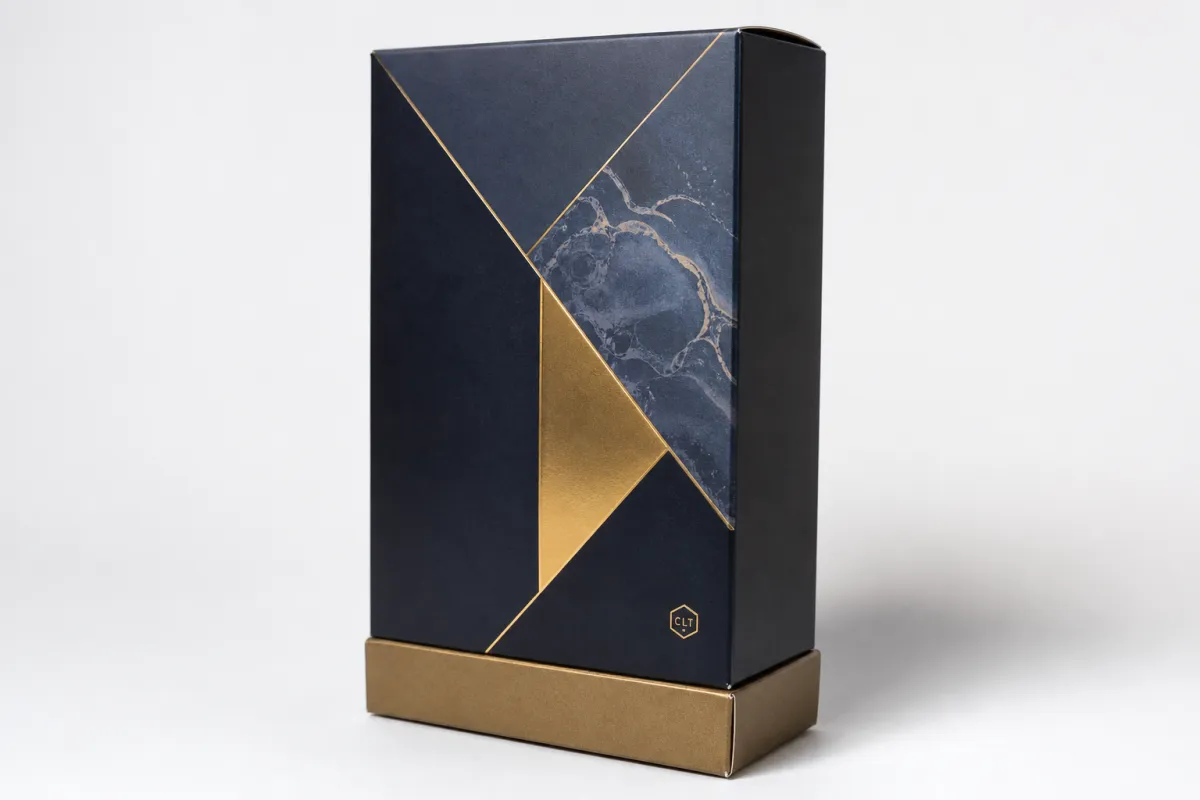
Printed folding cartons with lamination are paperboard cartons that are printed first and then covered with a thin protective film or laminated layer. That extra layer changes both the look and the wear profile of the carton. A printed surface that might pick up rub marks quickly becomes one that can tolerate more friction before damage shows.
The structure usually starts as a flat board, often a coated paperboard such as SBS, C1S, or a specialty kraft board. The design is printed, the ink is dried or cured, and then a laminate film is applied over the printed surface. After that, the sheet moves through die cutting, scoring, folding, and gluing. The result stays lightweight and, in many cases, recyclable depending on the board, film, local recovery systems, and adhesive package used. That last part matters; sustainability claims need to be specific, not assumed.
Brands choose printed folding cartons with lamination for a few practical reasons. The surface tends to resist scuffs, fingerprints, and corner wear better than a bare printed carton. Shelf presentation stays more consistent because the finish keeps artwork cleaner under handling. Tactile impression matters too. In cosmetics, wellness, specialty food, and consumer goods, touch often influences perception as much as color.
The best finish depends on the product and the route to shelf. A carton that rides in case packs to a retail distribution center may need an anti-scratch laminate. A carton that opens in-store under softer lighting may benefit from a matte or soft-touch finish. Printed folding cartons with lamination are flexible that way, which explains why they appear across so many categories.
One reason buyers keep returning to printed folding cartons with lamination is simple: the finish reduces variables. Plain cartons can look perfect at proof stage and then change after stacking, shipping, or repeated handling. Lamination creates a more stable surface, helping the carton stay closer to the approved sample by the time it reaches the customer. That consistency is not flashy, but it saves real money.
For teams building a shared packaging vocabulary, resources from organizations such as packaging.org can help clarify terms around board, converting, and finishing. A common language saves time when the art team, procurement team, and packaging supplier are all making decisions at once.
How Printed Folding Cartons with Lamination Work
The production sequence for printed folding cartons with lamination is fairly direct, but each step affects the next one. Work usually begins with file prep and a dieline review. Once the artwork matches the structure, the printer produces the sheets. After printing, the surface is laminated with the selected film, then the job moves to die cutting, creasing, folding, gluing, inspection, and shipment.
Sequence matters. Lamination usually comes after printing because the film is meant to protect the printed layer, not sit beneath it. If the laminate is applied too early, or with the wrong heat, pressure, or adhesive system, the finish can affect registration, board layflat, or even the way the carton folds later on the folder-gluer. Printed folding cartons with lamination rely on that sequence being disciplined.
Gloss, matte, soft-touch, and anti-scratch films are the common choices. Gloss tends to create the strongest visual pop. Color looks darker and more saturated, and photos often appear sharper. Matte reduces glare, which can help under retail lighting or in categories that want a quieter, more restrained feel. Soft-touch adds a velvety hand feel that reads premium almost immediately, though it can behave differently under rub and heat. Anti-scratch laminates are chosen when the carton is expected to take abuse during shipping or warehouse handling.
A tradeoff hides inside that list, and it is easy to underestimate. Printed folding cartons with lamination resist wear better, yet they can also expose fold and glue issues if the structure was not designed with the finish in mind. A film can crack on a tight crease if the board is too rigid, and glue adhesion can become less predictable if the adhesive system was not matched to the finish. Structure and finish need to be designed together, not treated as separate decisions.
Laminate often gets compared with other finishing methods. UV coating can provide surface protection and a quick cure, but it does not always deliver the same tactile depth or rub resistance as a film laminate. Spot UV can highlight logos or images selectively, but it is a decorative accent rather than a full protective layer. If the carton needs genuine scuff resistance, printed folding cartons with lamination usually outperform varnish-only approaches.
For teams that want technical clarity, the ISTA test framework is worth understanding, especially for cartons that travel through parcel networks. If a carton goes into e-commerce, the finish choice should reflect that distribution path. A carton that looks perfect on a bench but fails after vibration, drop testing, or case compression is not truly finished well.
Printed folding cartons with lamination also interact with details like embossing, foil stamping, and spot UV. A matte laminated surface can make foil stamping stand out more sharply, while embossing can create a luxury cue that soft-touch film amplifies. Those combinations can look striking, but they demand tighter process control because every added effect introduces another variable during converting.
I once watched a beauty carton move from mockup to production and lose half its appeal because the board and film were selected in separate conversations. The sample looked elegant; the delivered carton looked a little tense, almost like the fold lines were arguing with the finish. That kind of mismatch is avoidable, and it is one reason experienced buyers insist on seeing the full construction, not just a pretty chip.
Key Factors That Change Finish, Durability, and Shelf Appeal
Board choice sets the foundation. A smooth SBS board usually takes lamination differently than a rough kraft or textured substrate. Thickness matters too. A 16- to 24-point board can behave very differently from a thicker premium board when the carton is folded, creased, or glued. Printed folding cartons with lamination look best when the board and film are matched, not forced together.
Surface smoothness is another hidden variable. If the board surface is uneven, the laminate can telegraph flaws, especially on dark artwork or large solid fields. Broad black panels, rich navy backgrounds, and deep jewel tones often reveal issues sooner than lighter, more forgiving designs. Printed folding cartons with lamination can look striking in those colors, but they need cleaner prepress control and tighter press execution. There is no shortcut here.
Finish type changes the visual story. Gloss intensifies color and creates sheen, which can help a carton stand out in a crowded retail environment. Matte softens reflection and can make typography feel more restrained and premium. Soft-touch creates a more intimate, tactile relationship with the carton, which is one reason it is popular in beauty and specialty wellness. Anti-scratch tends to be the most practical choice for high-handling channels.
Environment matters just as much as design. If cartons are handled repeatedly by warehouse staff, packed into master cases, or shipped direct to consumer, printed folding cartons with lamination need more protection than cartons that move from carton to shelf with minimal handling. Humidity matters too. Cold storage, moisture swings, and condensation can all affect how the surface behaves over time. A carton spec that ignores the route is usually a weak spec.
Structural details can make or break the final result. Windows, tuck flaps, glued seams, and locking tabs all create weak points or stress zones. Embossing near a fold can be beautiful, but if it sits too close to a crease it may complicate folding. Foil stamping can add a clear premium cue, but heavy coverage near a glue panel can create adhesion problems. Printed folding cartons with lamination perform best when structure, decoration, and converting are planned together.
Artwork placement deserves equal attention. Fine type near a score line can distort. Barcodes need enough quiet space to scan consistently. Dense artwork near seams can look fine on screen and misbehave after die cutting and folding. In practice, the carton is only as good as the weakest panel. If one panel is overloaded, the whole pack feels less considered.
| Finish Option | Typical Benefits | Common Tradeoffs | Typical Add-On Cost at 5,000 Units |
|---|---|---|---|
| Gloss lamination | Bright color, strong shelf pop, simple premium look | More glare, fingerprints can show under strong light | $0.02-$0.05 per unit |
| Matte lamination | Lower glare, refined feel, better for muted branding | Can show rub burnish on some dark solids | $0.03-$0.06 per unit |
| Soft-touch lamination | Velvety hand feel, high-end tactile cue | Usually higher cost, can mark differently under friction | $0.05-$0.12 per unit |
| Anti-scratch lamination | Better rub resistance, strong for shipping and handling | May cost more than standard films | $0.04-$0.09 per unit |
That price table is directional, yet it shows the logic buyers run into every day. Printed folding cartons with lamination cost more when the finish is more specialized, but the added spend can be cheaper than absorbing damage, customer complaints, or retailer rejections later. The right choice is not always the lowest quote; it is the choice that protects the carton across the trip it will actually take.
Another practical point sits in photography. Gloss may look fantastic under studio lighting and harsher in-store. Matte may look understated online and elegant under ceiling lights. Printed folding cartons with lamination should be judged in the environment where they will sell, not only where they will be approved. Otherwise the packaging team ends up optimizing for a screen, which is a very expensive place to be wrong.
Process and Timeline: From File Prep to Delivery
A realistic timeline for printed folding cartons with lamination starts with structure approval, not printing. If the dieline is not final, every other step wobbles. Once the structure is locked, artwork can be placed correctly, finishes can be planned, and samples can be built without repeating work.
For a standard run, a common schedule might look like this: 2-4 business days for prepress and structural sign-off, 2-5 business days for proofing or mockups, 1-3 business days for sample review, 5-10 business days for print and finishing, and a few additional days for quality checks and freight. In practical terms, printed folding cartons with lamination often ship in about 12-15 business days after proof approval for straightforward jobs. Complex jobs take longer, and custom options can stretch that farther.
Custom tooling is one reason schedules stretch. Special die lines, foil stamping, embossing, or multiple finishing passes can add setup steps. Specialty film choices can do the same, especially if the supplier needs to source unusual laminate stock or tune the press for a specific surface. Printed folding cartons with lamination also slow down when artwork changes late in the process, because even small revisions can trigger new proofs or new plates.
Approval bottlenecks are usually ordinary, which makes them frustrating. Missing dieline notes. Low-resolution images. A barcode placed too close to a fold. Unconfirmed dimensions. None of these are dramatic, but they consume time. A line that is off by even a few millimeters can force rework, and rework is where budgets and launch dates begin to drift.
A useful rule keeps the job grounded: lock the specification before the art gets fancy. Once the carton size, board grade, finish type, and shipping method are fixed, printed folding cartons with lamination become easier to quote and easier to produce. If those variables keep moving, the vendor cannot optimize the run. The schedule turns mushy fast.
If the cartons will travel through parcel networks, ask for a test plan that reflects the route. ISTA methods and ASTM distribution testing are not just formalities. They show whether the finish can survive the bumps, drops, and vibration it will encounter. That matters especially for printed folding cartons with lamination used in e-commerce or subscription programs.
A practical sequence keeps launches on track:
- Approve the carton structure and dimensions first.
- Confirm board stock, laminate type, and any special decoration.
- Review print-ready files on the actual dieline.
- Sign off on a physical sample or press proof quickly.
- Hold the artwork stable once production starts.
- Confirm freight terms, pallet count, and delivery window before release.
The order looks ordinary, and that is exactly why it works. Printed folding cartons with lamination are not difficult to run when the inputs are clean. They become difficult when teams try to finalize everything at once.
For sustainability-minded buyers, board sourcing matters too. If a customer or retailer asks for responsible fiber sourcing, request FSC-certified board and verify what claims are allowed on-pack. Printed folding cartons with lamination can still support those goals, but the finish and the board spec should be documented clearly so the claim stays accurate. Nothing irritates a compliance team faster than a vague claim that sounded fine in a meeting.
Cost and Pricing: What Drives the Quote
Pricing for printed folding cartons with lamination comes from several moving parts, and each one causes a cost ripple. Quantity is the biggest driver. Carton size matters too. Board type, laminate type, print coverage, and finishing complexity all affect the quote. Shipping location matters as well, because freight can swing meaningfully depending on pallet count, distance, and whether the run is domestic or cross-border.
Small runs usually cost more per unit because setup work is spread across fewer cartons. Plates, dies, machine changeovers, and spoilage do not disappear just because the order is small. A 2,500-unit run can look expensive beside a 10,000-unit run even when the materials are similar. Printed folding cartons with lamination are especially sensitive to this because the finishing step adds another layer of setup and quality control.
As a broad working range, many buyers see standard printed folding cartons with lamination somewhere around $0.12-$0.30 per unit at mid-size quantities, with smaller runs often higher and specialty finishes pushing above that range. A simple gloss laminate on a standard structure usually sits lower than a soft-touch carton with foil stamping, embossing, and heavier print coverage. That is not a fixed rule, but it gives buyers a useful expectation before quote review. Real-world pricing can move outside that band if labor, freight, or unusual substrates enter the picture.
Not every upgrade raises cost in the same way. A premium film can increase unit price, yet it may also reduce cosmetic claims and warehouse damage. A carton with the wrong finish can create hidden costs later, which is why printed folding cartons with lamination should be judged on total packaging cost, not only on the initial quote. A few cents per unit can be cheap insurance if the product is fragile or highly visible at retail.
Buyers should always confirm quote details before approval. Ask whether the price includes overrun or underrun tolerance, whether samples are included, what the shipping terms are, and whether the vendor is quoting the same board and finish used in the sample. If the sample was shown on a premium substrate but production will use a lower grade, the final carton can look quite different. That mismatch is common enough to deserve a written check.
It also helps to ask where the savings come from. Sometimes a lower quote reflects real efficiency. Sometimes it means lighter board, reduced print coverage, a simpler die, or a less durable film. Printed folding cartons with lamination can be priced competitively without becoming flimsy, but only if the spec is clear. Cheap and appropriate are not the same thing, and procurement teams know it.
These are the levers that most often move the number:
- Quantity: higher volume generally lowers the unit price.
- Board grade: premium, heavier, or specialty board increases cost.
- Finish type: soft-touch, anti-scratch, foil stamping, and spot UV typically add more than a standard laminate.
- Coverage: heavy ink coverage or full-bleed artwork can increase press and waste risk.
- Structure: complex die cutting or non-standard shapes add setup time.
- Freight: delivery method and destination can materially change landed cost.
If you want to lower cost without making the carton feel cheap, there are sensible moves. Standardize carton dimensions across SKUs. Reduce the amount of ink-heavy coverage. Use one finish across a family of products. Consider matte instead of soft-touch if the tactile effect matters less than glare control. Printed folding cartons with lamination can still look premium with a restrained spec; expensive is not the same thing as effective.
One easy way to overspend is to solve a visual problem with too many effects at once. If the carton already has strong typography and good structure, you may not need foil stamping, embossing, and a specialty laminate in the same build. Printed folding cartons with lamination can do plenty of work on their own. Sometimes the smartest packaging decision is the one that stops one step earlier than the mood board suggests.
Common Mistakes That Raise Waste and Delay Launches
The biggest mistake is choosing a finish from a sample card and assuming the real carton will behave the same way. It will not. A flat sample chip cannot fully predict how printed folding cartons with lamination will look after folding, gluing, stacking, shipping, and retail handling. The carton earns its real appearance during conversion and distribution.
Ignoring fold-line behavior causes another round of trouble. Some laminates crack, craze, or whiten on hard creases if the board or score is not designed properly. Glue can also become less predictable when a finish changes surface energy. If the structure was drawn without the finish in mind, printed folding cartons with lamination can produce neat-looking samples and disappointing production cartons.
Proofing mistakes are expensive because they are often avoidable. Color shifts, weak contrast on small type, barcode placement, and artwork that crosses seams without enough margin can all create problems after die cutting. Approving artwork before checking how it behaves on the actual folded geometry is one of the fastest ways to lose time. Printed folding cartons with lamination deserve a prepress review that is stricter than a simple visual pass.
Underordering is another trap. A run that is too small can create shortages just as the launch gains traction. A run that is too large can tie up cash in inventory that may expire, change, or become obsolete. Printed folding cartons with lamination should be ordered around realistic sell-through and changeover timing, not hopeful forecasting. Packaging is operational inventory, and it behaves like it.
Channel mismatch causes real pain too. A carton that looks great on a retail shelf may scuff badly in parcel shipping. A carton that feels elegant in a boutique may not survive humid warehouse storage or repeated case opening. Printed folding cartons with lamination should be selected for the distribution route, not only for the marketing mood board.
There is also a habit of over-specifying finishes without asking what the carton actually needs to do. If the main problem is rubbing during shipping, anti-scratch protection may matter more than a decorative upgrade. If the main problem is shelf glare, matte may beat gloss. If the product is premium but fragile, a more disciplined structure may matter more than another effect layer. Printed folding cartons with lamination work best when the finish solves a defined problem.
Here are the mistakes I see most often:
- Approving a finish without testing it on the actual board.
- Ignoring how lamination interacts with fold lines and glue.
- Placing tiny text too close to creases or seams.
- Forgetting the difference between shelf handling and parcel handling.
- Combining too many embellishments without a clear reason.
That last point deserves emphasis. Foil stamping, embossing, and spot UV can all be attractive, but every effect adds complexity. If the job already includes printed folding cartons with lamination, keep asking whether another effect truly improves the carton or just raises the risk profile. The cleanest packaging choice is often the one that survives production with the fewest surprises.
Expert Tips and Next Steps for Better Results
If you are comparing printed folding cartons with lamination, ask for side-by-side samples on the actual board, not just on a generic chip. Lighting changes everything. A matte finish that looks subtle in a studio can appear dull under store LEDs, while gloss can look rich in one environment and harsh in another. Real samples are the only honest comparison.
A good spec sheet should spell out more than finish names. It should name the board grade, film type, film thickness, adhesive method if relevant, finishing order, and any known production limits. That kind of documentation makes printed folding cartons with lamination easier to compare across vendors because you are matching actual construction, not marketing language. It also gives the receiving plant a fighting chance of repeating the approved look.
It helps to build a launch checklist. The most reliable teams do not rely on memory. They track the dieline approval date, sample sign-off date, target ship date, freight booking date, and the internal owner for each step. Printed folding cartons with lamination move faster when every stakeholder knows what they own and when they need to approve it.
Think channel first, not finish first. If the carton will be opened in a subscription box, a soft-touch or matte laminate may feel premium in the hand. If it will sit under harsh lighting on a mass retail shelf, gloss may deliver better stand-out. If it will move through a warehouse and parcel network, anti-scratch may be the smartest spend. Printed folding cartons with lamination should follow the route to the buyer, because that route determines the abuse level.
When deciding whether to add embellishment, ask a simple question: does the effect support the product story, or just increase the count of finishes? A restrained carton with clean typography and a well-chosen laminate often beats a carton overloaded with foil stamping, embossing, and spot UV. Used well, those effects can elevate the design. Used casually, they can muddy it. I have seen both outcomes, and the difference is usually clarity, not budget.
Here is the sequence I would recommend for a cleaner buying process:
- Shortlist two or three finish options.
- Request a quote using the same board, size, and quantity for each option.
- Review actual samples under the lighting where the carton will sell.
- Ask the supplier how the laminate affects folding, glue, and die cutting.
- Confirm the timeline, including proof approval and production windows.
That process keeps printed folding cartons with lamination grounded in facts instead of assumptions. It also makes internal approvals easier because the tradeoffs are visible. A matte laminate may save you from glare. A soft-touch may elevate feel. A gloss laminate may sharpen color. None of those choices is abstract once the carton is sitting on a desk and someone has to decide what to buy.
If you are planning a launch soon, the smartest move is to compare a few options side by side, request a precise quote, and validate the finish against your real shelf and shipping conditions. Printed folding cartons with lamination can do a lot of heavy lifting, but only when the spec is aligned with the product, the channel, and the handling path. The takeaway is simple: choose the laminate for the journey the carton will actually take, then lock the structure and files before production starts.
What is the difference between laminated and coated folding cartons?
Lamination uses a separate film layer for stronger surface protection, while coating is usually a liquid finish applied directly to the print. Printed folding cartons with lamination usually offer better scuff resistance and a more tactile premium feel, especially on cartons that are handled often. Coatings can still be useful, but they usually solve a different problem.
Do printed folding cartons with lamination help prevent scuffing?
Yes. Lamination is one of the most reliable ways to reduce rub marks, corner wear, and fingerprint visibility during shipping and retail handling. Anti-scratch or matte films can perform especially well when printed folding cartons with lamination move through warehouses, case packs, or direct-to-consumer delivery. That said, no finish fixes poor board selection or a weak crease.
Which finish is best for printed folding cartons with lamination: gloss or matte?
Gloss usually makes color feel brighter and more saturated, while matte lowers glare and can read as more restrained or premium. The right choice depends on lighting, product position, and whether you want printed folding cartons with lamination to pop on shelf or feel understated. If the shelf is bright and crowded, matte can calm the package down. If the goal is maximum color pop, gloss usually wins.
How much do printed folding cartons with lamination usually cost?
Pricing depends on quantity, board, size, finish type, and how complex the print and converting steps are. Lower quantities usually raise unit cost because setup and waste are spread across fewer cartons, so printed folding cartons with lamination are typically more economical at higher volume. The ranges vary by region and supplier, so treat any early estimate as directional until the spec is locked.
What should I send to get an accurate quote for laminated folding cartons?
Send carton dimensions, board preference, finish preference, quantity, artwork status, and your target timeline. If possible, include the shipping method, retail environment, and whether you need samples before production so the quote for printed folding cartons with lamination reflects the real job. If you have a dieline and a reference sample, send those too; they save a lot of back-and-forth.


