Buyer Fit Snapshot
| Best fit | Printed Kraft Mailer Bags projects where brand print, material claims, artwork control, MOQ, and repeat-order consistency need to be specified before quoting. |
|---|---|
| Quote inputs | Share finished size, material target, print colors, finish, packing count, annual reorder estimate, ship-to region, and any compliance wording. |
| Proofing check | Approve dieline scale, logo placement, barcode or warning zones, color tolerance, closure strength, and carton packing before bulk production. |
| Main risk | Vague material claims, crowded artwork, missing packing details, or unclear freight terms can make a low unit price expensive after revisions. |
Fast answer: Printed Kraft Mailer Bags: Film, Print, MOQ, and Carton Packing should be specified like a repeatable production item. The safest quote records material, print method, finish, artwork proof, packing count, and reorder notes in one written spec.
Production checks before approval
Compare the actual filled-product size with the drawing, then confirm tolerance on folds, seals, hang holes, label areas, and retail display edges. Reserve space for logos, QR codes, warning copy, and material claims before decorative graphics fill the panel.
Quote comparison points
Review material grade, print process, finish, sampling route, tooling charges, carton quantity, and freight assumptions side by side. A quote is only useful when the supplier can repeat the same color, closure quality, and packing count on the next order.
Printed Kraft Mailer Bags: A Practical Packaging Guide
A plain mailer gets the parcel out the door. Printed kraft mailer bags do more than that. They set the tone before the customer touches the product, which is the whole point. A clean logo, a sharp pattern, or even a simple line of copy can make a shipment feel intentional instead of thrown together. That difference shows up everywhere: how the package looks on arrival, how it survives the route, how much it costs, and whether the brand feels worth remembering.
For a lot of ecommerce brands, printed kraft mailer bags sit in a useful middle ground. They are lighter than rigid boxes, easier to store than bulkier packaging, and more polished than a blank shipping sleeve. They can look premium without dragging the budget through the mud. The catch is that the spec has to make sense. Paper weight, adhesive quality, print coverage, and overall construction all affect how the bag performs and what It Really Costs.
I have sat through enough packaging approvals to know the pattern. Someone falls in love with a mockup, then the first sample shows a weak seal, a warped logo, or a bag that barely fits the product. Cute rendering. Bad packaging. That happens more than it should.
That is why this topic deserves more than a nice mockup and a hopeful email. A bag that looks great and splits on a wet dock is a bad bag. A bag that survives rough handling but eats too much margin is also a bad bag. The sweet spot is practical: printed kraft mailer bags that protect the product, support the brand, and keep the numbers sane.
For a quick material compare, Custom Poly Mailers make sense for wet routes, sharper product edges, and lower-cost protection when paper is not the right tool. If you are sorting out recycled fiber claims or disposal language, the EPA recycling guidance is a useful reference, and the FSC explains how responsibly sourced paper is tracked.
What Printed Kraft Mailer Bags Are and Why They Stand Out
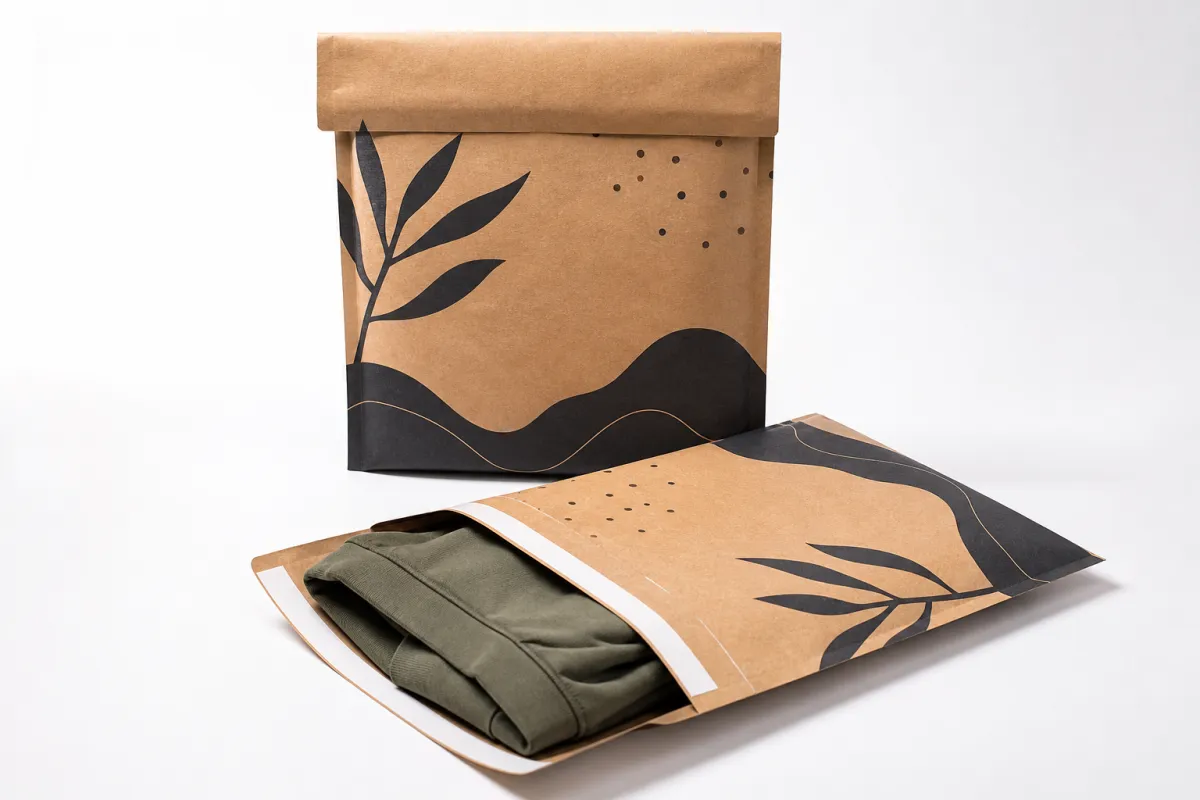
Printed kraft mailer bags are paper-based shipping bags made from kraft stock with custom branding on the outside, and sometimes inside as well. They are common for apparel, subscription kits, beauty items, small home goods, and other products that need more presentation than a stock mailer can give. When the item is light enough for paper construction and valuable enough to deserve better packaging, they fit the job well.
The appeal is easy to see. A logo on the outside changes the first impression immediately. A pattern or message can turn a shipping bag into part of the brand experience instead of just a container. Kraft also gives brands a cleaner sustainability story than heavy plastic packaging, assuming the claim matches the actual material. Smaller brands get another benefit too: the package looks established without forcing them into the cost of Custom Rigid Boxes.
That said, printed kraft mailer bags are not magic. Paper is paper. A more polished exterior does not turn it into armor. A lighter build may be fine for a folded tee and a poor choice for denim, boxed accessories, or anything with corners that want to punch through. Buyers get burned when they approve the artwork first and only ask about structure after the order is already moving.
Sustainability claims need the same kind of restraint. Kraft is often recyclable, but not every bag ends up in the same disposal stream. Coatings, laminations, mixed liners, heavy ink coverage, and adhesive strips can all affect what happens after the customer tosses the package. If a brand wants to make honest claims, specificity beats vague green language every time. Say what the bag is made from. Say whether it includes recycled fiber. Say where local recycling rules may differ. That is less flashy and far more credible.
From a packaging buyer's point of view, printed kraft mailer bags stand out because they handle shipping, branding, and perception in one format. That sounds efficient because it is. It also means the spec sheet has more moving pieces than people expect. If the brief starts with "we need something nice," the project usually drifts. If it starts with "we need a 9 x 12 bag for folded tees, a two-color matte logo, and a seal that survives warehouse handling," the conversation gets useful fast.
If the bag only looks good in a mockup, it is not a packaging spec yet. It is a picture.
For brands that want the tactile feel of paper without overspending, printed kraft mailer bags often land in the right spot. That spot is not glamorous. It is profitable. Different thing.
How Printed Kraft Mailer Bags Work in Real Fulfillment
Printed kraft mailer bags are not just outer shells with a logo stamped on them. A proper build usually includes an outer kraft layer, an inner barrier or liner depending on the format, a pressure-sensitive adhesive strip or seal flap, and sometimes a tear strip or reinforced seam. The exact construction depends on whether the bag is being packed by hand, through a semi-automated line, or at a simple folding station.
In fulfillment, the bag has a short list of jobs. It needs to hold the item, protect it from scuffs and light moisture, and keep the packing process moving. A well-sized paper mailer reduces dead space around lightweight products, which matters more than people admit. Empty space wastes shipping efficiency and makes the order feel sloppy. The package should look chosen, not improvised.
Printing usually happens on the outer kraft face before converting, and placement matters more than many buyers expect. A front-panel logo is the simplest route. Side-panel branding shows up during handling. Inside printing gives the customer a small surprise when the bag opens. Full-bleed artwork can look excellent, but it also raises production sensitivity and cost. More ink on natural paper usually means more setup attention, more waste risk, and more room for color variation.
Printed kraft mailer bags also need to work with operations, not just design. If the bag fights the packer at the table, the line slows down. If the adhesive grabs too fast, workers get annoyed. If the finish scuffs in transit, the customer sees wear before they see the product. Sampling matters for exactly that reason. A render tells you almost nothing about what happens once the bag is folded, loaded, stacked, and shipped.
For heavier routes or rougher handling, it makes sense to ask whether the shipment should be tested against ISTA transit testing profiles. No one wants a package that looks tidy in a showroom and fails in the truck. If the route includes moisture, sharp corners, or returns, compare paper with Custom Poly Mailers before deciding that kraft has to do a plastic job.
In practical terms, printed kraft mailer bags work best when the product class matches the material. Lightweight apparel, flat goods, soft goods, and compact kits are usually a strong fit. Bulky, abrasive, or moisture-sensitive products need a tougher conversation. Packaging is not about making every shipment look the same. It is about choosing the right material for the real job.
Key Factors That Shape Cost, Print Quality, and Performance
The cost of printed kraft mailer bags is not random, even if quotes sometimes read that way. Size, paper weight, print colors, ink coverage, order quantity, finishing, and setup all push the number around. Bigger bags need more material. Heavier paper costs more. More colors raise setup and waste. A cleaner spec can still be cheaper than a busy one if the print is simpler and the layout is smarter.
Setup matters a lot on small runs. A 1,000-piece order often costs more per bag than a 10,000-piece order because the prep is spread across fewer units. That is not a trick. That is manufacturing. Buyers who understand that can compare quotes honestly instead of chasing the lowest unit price and pretending freight, setup, and waste do not exist.
Here is a useful rough range. For shorter runs, printed kraft mailer bags may land around $0.55-$1.10 per unit depending on size and print complexity. At 5,000 pieces and above, the same style may drop into the $0.18-$0.42 range if the construction is straightforward and the artwork is sensible. Add specialty finishes, heavy ink coverage, or multiple print stations, and those numbers climb fast. Freight can push them higher too, which happens more often than people like to admit.
Print Method Matters
Different print methods fit different projects. Digital printing usually works better for shorter runs, frequent art changes, or designs with a lot of detail. Flexo is a better fit for larger quantities and simpler graphics. Offset can produce excellent results on certain paper constructions, especially when color control matters and the run size justifies the setup. None of them wins every time. Buyers who ask for the "best" method without giving volume, budget, or artwork style usually get a vague answer back. That is fair.
| Print Method | Typical Run Size | Typical Unit Price | Best Use Case | Main Tradeoff |
|---|---|---|---|---|
| Digital | 500-3,000 pcs | $0.55-$1.10 | Short runs, art changes, detailed graphics | Higher per-unit cost |
| Flexo | 5,000-20,000 pcs | $0.18-$0.42 | Simple branding, repeat orders, stable artwork | Less flexible for complex art |
| Offset | 10,000-50,000 pcs | $0.22-$0.50 | Sharper color control, refined artwork | Setup can be heavier |
Performance matters just as much as print method. Tear resistance, seam strength, adhesive reliability, and the way the bag holds shape after loading all affect customer satisfaction. A bag that collapses awkwardly during packing slows the line. A weak seal creates returns. A seam that splits on a corner becomes someone else's problem, usually in a warehouse at the worst possible hour. Printed kraft mailer bags should be judged the same way any shipping component gets judged: by how well they survive the actual route.
There are also hidden costs that get ignored until the invoice arrives. Art setup, plate charges, sampling, freight, storage, and rework can all change the real total. If you only compare the unit quote, you are not comparing the project. You are comparing one slice of it and pretending that is enough.
Printed Kraft Mailer Bags: Process and Timeline From Artwork to Delivery
The production path for printed kraft mailer bags is usually simple on paper and a little less graceful in real life. It starts with the bag size, then the construction, then the dieline, then the artwork fit. If those pieces are off, the job slows down fast. The bags will still get made, but not before a few extra emails and at least one round of "the logo needs to move."
- Confirm the product dimensions and choose the bag size with real internal space, not guesswork.
- Choose the construction, including paper weight, seal type, and any reinforcement needed for the shipment.
- Place the artwork on the dieline and verify fold lines, glue areas, and trim margins.
- Review the digital proof for layout, spelling, barcodes, colors, and placement.
- Approve a physical sample if the project has tight color standards or a heavier product load.
- Move to production once the spec is final and the approvals are signed off.
A digital proof checks structure and layout. A physical sample checks reality. That difference matters more than most teams want to admit. A logo can look perfect on screen and still sit too close to a fold. A rich brown kraft stock can shift a brand color enough that the tone reads darker than expected. A seal that looks fine in a mockup can open too easily once the bag is actually loaded. Sample first, regret less.
Lead times vary, but a practical planning range helps. If artwork is clean and the order is simple, proof approval can happen quickly. Sampling may add several days. Production often takes about 12-15 business days once everything is approved, though larger runs or more complex print can take longer. Freight is its own delay. Sometimes it is the slowest part, and that should not surprise anyone who has watched shipping move like it had another appointment.
Most delays come from preventable issues: missing bleed, low-resolution logos, unclear Pantone targets, last-minute copy edits, or a late decision to change bag size after the proof is already underway. The cure is simple, even if people resist it: lock the details early. Printed kraft mailer bags reward clear decisions. They punish indecision with extra time.
If the bags are tied to a launch, seasonal drop, or retail event, build margin into the schedule. A campaign that depends on the shortest possible turnaround is not a schedule. It is a gamble. The house usually wins.
Step-by-Step Guide to Choosing the Right Printed Kraft Mailer Bag
Choosing printed kraft mailer bags gets easier when the logo is not the starting point. Start with the product. Measure the item. Check the folded thickness or bundle size. Note whether the shipment is soft, rigid, sharp-edged, or moisture-sensitive. That is the real foundation. Artwork comes later.
Then match the bag to the sales channel. Ecommerce shipping needs a different spec than retail handoff. Subscription kits need a different feel than one-off merch drops. Returns need enough strength to survive a second trip, which means closure quality matters more than a pretty front panel. The wrong bag can still ship, but it will not age well under real use.
Here is the sort of logic that saves money:
- Folded tees and light apparel usually work with lighter paper and a standard adhesive strip.
- Denim, knitwear, and layered garments often need a larger bag and stronger seam support.
- Small accessories can use tighter formats that reduce empty space and improve presentation.
- Bulky or abrasive items may be better served by a different mailer style altogether.
Next, decide what the print should actually do. A logo is often enough. A short brand message can help if the package is meant to feel premium or giftable. Support details like recycling icons, social handles, or a brief product statement can be useful, but they should not crowd the design. On printed kraft mailer bags, visual hierarchy matters because the paper texture already adds character. There is no need to cram four competing focal points onto one panel.
Then compare quotes properly. Ask vendors to quote the same size, same paper weight, same print coverage, same quantity, and the same shipping terms. Otherwise, you are comparing different bags and pretending the numbers mean the same thing. They do not. A cheaper quote can hide thinner paper, weaker seals, or a more limited print process.
Order samples before committing. Check color, texture, seal strength, and how the bag looks once it is packed. The best mockup is the one that still feels right after loading and closing. That is where printed kraft mailer bags either prove themselves or fall apart. Sometimes literally.
Custom Logo Things can help brands compare specs without overcomplicating the conversation. The goal is not to sell the fanciest package. The goal is to choose a package that fits the product, the timeline, and the budget with as little drama as possible.
Common Mistakes with Printed Kraft Mailer Bags
Most problems with printed kraft mailer bags are not mysterious. They are predictable. Someone guessed the size. Someone skipped the sample. Someone pushed a brand claim that the structure could not support. Packaging mistakes usually come from decisions that nobody wanted to slow down for.
The first mistake is designing without respecting folds, seams, and glue areas. A logo that looks elegant in a flat mockup can vanish or distort once the bag is converted. Important copy can land too close to a seam and become hard to read. Full-bleed graphics can also show unexpected shifts if the dieline is ignored. The fix is basic: design to the structure, not around it.
The second mistake is choosing size by instinct. Too big, and you waste material, shipping space, and money. Too tight, and the product strains the seams or creates a bad customer experience. For folded apparel, leaving a sensible margin is better than forcing the item into a bag that looks neat on paper and awful in transit. Printed kraft mailer bags should hold the product calmly, not by force.
The third mistake is overselling sustainability. Kraft does not automatically mean "fully recyclable everywhere," and a printed bag with coatings or mixed materials may need a more careful explanation. Buyers should describe the actual material stack, not toss around green language because it sounds nice. Precise claims build trust. Lazy claims invite complaints.
The fourth mistake is ignoring the seal and seam specs. If the adhesive is weak, closures fail. If the seam is underbuilt, corners punch through. This gets worse with heavier apparel, boxed accessories, or products with rough edges. A lot of return issues start with packaging that looked fine during approval and never saw a real transit test. That is why printed kraft mailer bags should always be checked with the product inside, not outside the box with a sales sample.
The last mistake is skipping proof approval or sample testing because the schedule feels tight. Tight schedules are exactly when testing matters most. Fixing a print issue after production is expensive. Fixing a structural issue after production is worse. That is the part people forget until the warehouse has a stack of unusable bags and everyone suddenly develops an interest in quality control.
If you want a simple sanity check, ask three questions before you sign off: Does the bag fit the product without stress? Does the print still make sense after folding and sealing? Will the material and claim match how the customer will actually receive and dispose of it? If any answer is fuzzy, pause the order.
Expert Tips for Better Printed Kraft Mailer Bags and Next Steps
Good printed kraft mailer bags are rarely the loudest ones. They are the ones that fit the product, hold the seal, and make the brand look deliberate without fighting the material. The smartest packaging choices are usually the boring ones: the right size, the right paper weight, the right ink coverage, the right timeline. Boring ships on time. That matters.
Keep the color count low when you can. Simple art prints cleaner and usually costs less. On natural kraft surfaces, strong contrast beats fussy detail almost every time. A bold logo, clear typography, and one or two supporting marks tend to look sharper than a busy layout that turns muddy once the bag is folded and handled.
Respect the kraft texture. Do not design as if the bag were glossy coated board. Kraft has grain, warmth, and a look that works best when the art lets the material breathe. Dark inks, restrained layouts, and direct messaging often feel more premium than trying to cram every brand story into one panel. Printed kraft mailer bags reward confidence. They do not need decoration to prove they belong.
Plan inventory like you expect reality to show up. Order enough to cover the launch window, but do not trap yourself with months of stale stock. If artwork changes often by season, shorter runs may cost more per unit but save money overall by reducing dead inventory. There is no prize for storing boxes of old packaging in a back room for three years.
Keep sustainability language specific. Say what the material is. Say whether recycled fiber is included. Say whether coatings or mixed components affect disposal. If you want a standard to back that up, FSC certification helps explain sourcing, and the EPA has practical public guidance on recycling. That kind of detail gives printed kraft mailer bags more credibility than a generic green badge ever will.
Approve the final version only after you see the real bag in hand. Not a render. Not a mockup. The actual bag. Check the logo from a normal viewing distance. Check the seal. Check the feel. Check whether the product sits neatly or bulges. That last step tells you more than a stack of emails ever could.
If you are narrowing the spec now, compare two directions side by side: one printed kraft mailer bag that prioritizes presentation and one that prioritizes unit economics. Then sample both. The right answer is usually the one that protects margin without making the package feel cheap. That is the trick, and it is not especially glamorous. It just works.
Actionable takeaway: start with the product dimensions, pick the seal and paper weight that actually fit the shipment, then order a sample before you approve artwork. If the sample handles well, prints cleanly, and still makes sense after folding and sealing, you have a real packaging spec. If it does not, fix the structure first and the branding second.
Are printed kraft mailer bags strong enough for clothing shipments?
Yes, if the bag size and paper weight match the product weight and shape. For folded apparel, choose a bag with a reliable seal and enough room to avoid stretching the seams. For heavier items like denim or boxed accessories, ask for reinforcement or a thicker construction before ordering.
How much do printed kraft mailer bags usually cost?
Unit price depends on size, paper weight, number of colors, print coverage, and order quantity. Smaller runs cost more per bag because setup is spread across fewer units. Always compare the quote, sampling, freight, and any plate or setup charges before judging the real price.
What is the best print method for printed kraft mailer bags?
The best method depends on volume and artwork complexity. Digital can work well for shorter runs and more flexible designs. Flexo or offset may be better for larger quantities when you want stronger unit economics and more consistent output.
How long does production take for printed kraft mailer bags?
Lead time depends on whether artwork is ready, whether sampling is needed, and how complex the print is. A clean file and approved proof move faster than a project with revisions or special finishes. Freight time can add a meaningful delay, so production is not the only timeline to watch.
What should I check before approving printed kraft mailer bags?
Check bag size, seal strength, print placement, color accuracy, and material feel. Make sure the logo is readable after folding and that no critical art lands on seams or glue areas. Confirm the disposal and recycling claims are accurate for the actual bag construction.


