Buyer Fit Snapshot
| Best fit | Printed Mailer Boxes with Logo projects where brand print, material claims, artwork control, MOQ, and repeat-order consistency need to be specified before quoting. |
|---|---|
| Quote inputs | Share finished size, material target, print colors, finish, packing count, annual reorder estimate, ship-to region, and any compliance wording. |
| Proofing check | Approve dieline scale, logo placement, barcode or warning zones, color tolerance, closure strength, and carton packing before bulk production. |
| Main risk | Vague material claims, crowded artwork, missing packing details, or unclear freight terms can make a low unit price expensive after revisions. |
Fast answer: Printed Mailer Boxes with Logo: Branding That Ships should be specified like a repeatable production item. The safest quote records material, print method, finish, artwork proof, packing count, and reorder notes in one written spec.
Production checks before approval
Compare the actual filled-product size with the drawing, then confirm tolerance on folds, seals, hang holes, label areas, and retail display edges. Reserve space for logos, QR codes, warning copy, and material claims before decorative graphics fill the panel.
Quote comparison points
Review material grade, print process, finish, sampling route, tooling charges, carton quantity, and freight assumptions side by side. A quote is only useful when the supplier can repeat the same color, closure quality, and packing count on the next order.
Custom Logo Things
Printed Mailer Boxes with Logo: Branding That Ships
Printed Mailer Boxes with logo can sharpen unboxing, protect products, and keep packaging costs under control when the structure, artwork, and order volume are planned with the shipment in mind.
Printed mailer boxes with logo do more than move a product from warehouse to doorstep. They shape the first physical moment a customer has with a brand, and that moment tends to stick. The shipping box may sit on a desk, get photographed, be opened on camera, or get reused in a closet or office long after the order is gone. That gives printed mailer boxes with logo a practical role in branding, protection, and fulfillment all at once.
Packaging buyers usually need the box to do three jobs at the same time. It has to protect the item during transit, fit the packing line without slowing it down, and present the brand in a way that feels deliberate. Printed mailer boxes with logo work well when those needs are planned together instead of handled in separate silos. The best results usually come from matching structure, artwork, and order volume before the first proof is even opened.
That matters for ecommerce brands, subscription kits, PR mailers, retail replenishment, and premium sample packs. A plain corrugated carton can ship product just fine, yet printed mailer boxes with logo can turn a routine delivery into something customers remember and sometimes share. The difference is not always a dramatic budget jump. More often, it comes from cleaner file prep, a better fit, and a production plan that respects how the box will actually be used. Honestly, that part gets missed a lot.
There is also a trust piece here. A box that looks thoughtful signals that the brand paid attention to details before the product ever got opened. That signal matters because packaging is one of the few parts of the buying process a customer can touch, carry, and judge in real time. If the box feels flimsy, rushed, or awkward, the brand feels the same way.
Printed Mailer Boxes with Logo: Why They Matter
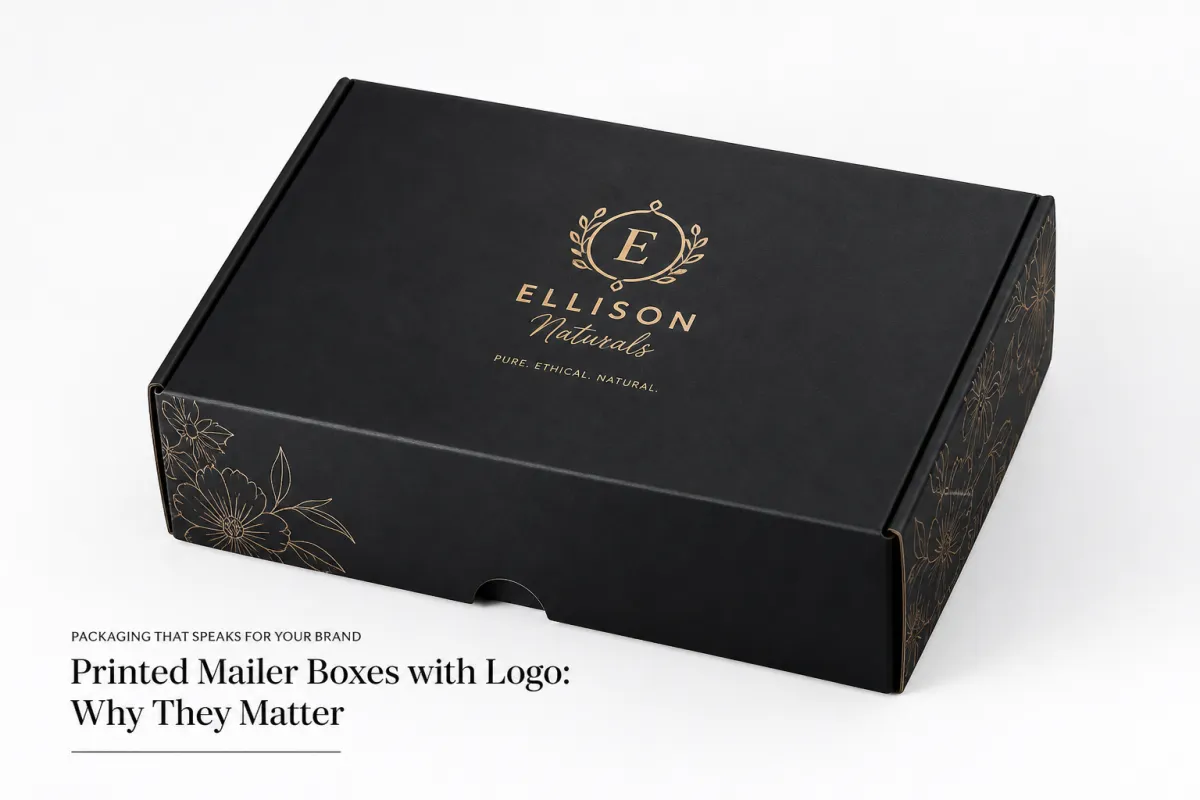
Printed mailer boxes with logo stand out because the package becomes part of the product story. The box is often the first thing a customer touches, and that touch carries more weight than many teams expect. A person may ignore a receipt email and still remember a shipment that arrived looking balanced, intentional, and ready for the brand behind it.
There is a practical upside too. Printed mailer boxes with logo can carry the brand without stickers, sleeves, or loose inserts that need to be applied by hand. That can cut down on handling steps in some workflows and keeps the branding on the outer layer where it stays visible during delivery and unboxing. If the box is reused, the logo keeps working in a home office, storage shelf, or closet long after the order has been opened.
The format is easy to describe, even if the production details vary. Printed mailer boxes with logo are usually corrugated or paperboard mailers with direct print, a printed sleeve, or a litho-laminated face that carries the logo on one or more panels. They are not the same as generic shipping cartons, which are built mainly for transit protection and often arrive without any branding at all. They are also different from Rigid Gift Boxes, which lean more toward presentation packaging than parcel packaging.
Where do printed mailer boxes with logo make the most sense? Any place the shipment should do more than simply arrive. Ecommerce orders, influencer mailings, subscription kits, samples, launch boxes, and replenishment packs all fit naturally. If a customer sees the package before the product, the box is already doing brand work. If the package gets photographed before it is opened, printed mailer boxes with logo may become part of the social story without any extra effort from the marketing team.
Not every box needs to shout. A kraft mailer with one carefully placed logo can feel more credible than a busy full-color design when the broader brand language is restrained. Printed mailer boxes with logo are strongest when the hierarchy is easy to read: one strong brand signal, one reason to remember the shipment, no clutter fighting for attention.
A plain carton protects a product. Printed mailer boxes with logo can also protect the brand story, which is much harder to recover if it gets lost in transit.
That does not mean every order needs a decorated box. It means the packaging format should match the role the shipment plays in the customer journey. If the box is the first physical contact, printed mailer boxes with logo often return value through perceived quality, repeat recognition, and a delivery experience that feels finished instead of forgettable.
How Printed Mailer Boxes with Logo Work
Printed mailer boxes with logo begin with structure, not artwork. The build matters: board grade, flute or paperboard thickness, dieline, fold style, closure tabs, and any insert or divider that keeps the product from shifting around. A box that looks clean on screen can fail in use if the internal fit is loose or if the closure tab is too stiff for the packing line.
Most logo mailers use corrugated board in common grades such as E-flute, B-flute, or a heavier double-wall option when the shipment needs more crush resistance. Lighter premium items can sometimes use a folding carton style. For harsher parcel networks, printed mailer boxes with logo usually perform better in corrugated construction because the board can absorb handling stress without crushing the product inside.
The production sequence is pretty straightforward once the spec is locked. Artwork goes in, the printer checks the dieline, and a proof is issued. After approval, the press handles print registration and color control, then the sheets move to cutting, creasing, and folding. Final packing may involve flat shipment, bundle wrapping, palletization, or carton packing depending on volume. A supplier that cannot explain that sequence clearly is usually creating more risk than certainty.
Decoration methods change both cost and appearance. Digital print often fits lower volumes or variable designs. Litho-lamination works well when rich color and smooth graphics matter more, especially on larger runs. Spot finishes such as matte aqueous coating, gloss varnish, foil, embossing, or spot UV can lift the panel hierarchy, but they also add process steps and cost. A simple printed mailer box with logo can be the stronger choice if the brand message is already clear.
Logo placement changes the experience more than many teams expect. A logo centered on the top panel reads differently from a mark on the tuck flap, and an interior print message can create a second reveal without changing the box size. Printed mailer boxes with logo can support unboxing on two levels: the outer shipping impression and the inside reveal. The structure stays the same, yet the feeling changes.
It helps to think about the box in three parts. The outside panel carries recognition, the inside panel reinforces the message, and the closure keeps the shipment reliable in transit. When those three parts work together, printed mailer boxes with logo feel intentional instead of assembled from separate decisions. When they are out of sync, the package may still function, but it will not feel designed.
One more detail that matters in the real world: ink and board interact differently depending on the stock. Kraft can mute bright colors and make some logos look more earthy than expected, while white-lined board gives cleaner contrast and more predictable color. That is not a flaw, just a material behavior you need to account for before signing off on a visual.
Printed Mailer Boxes with Logo Costs, Pricing, and MOQ
Printed mailer boxes with logo are priced through a mix of material, size, print coverage, finish complexity, and quantity. The logo itself is rarely the main cost driver. Board usage, press setup, and the number of production steps needed to make the box look right and survive shipping usually matter more.
Smaller runs tend to feel expensive because setup costs are spread across fewer pieces. Larger runs usually lower the unit price, sometimes sharply, once press time and tooling are divided across volume. That is why MOQ matters so much. A buyer comparing printed mailer boxes with logo should ask for the minimum order, the next price break, and how much the unit cost changes at each tier.
A low quote is not always the safest path. A number that looks attractive on paper can hide thin board, weak print control, a poor proofing process, or freight that appears later as an unpleasant surprise. Printed mailer boxes with logo should be priced as a landed package, not only as a factory figure.
Ask for a line-item quote whenever possible. Separate the box cost, setup or plate charges, sample cost, freight, and any added operations such as palletization or insert assembly. If a supplier cannot tell you whether tooling fees apply or whether artwork corrections are included, the quote is incomplete. Printed mailer boxes with logo can look simple from a distance, but the pricing becomes much clearer when every assumption is visible.
| Option | Typical Use | Indicative Cost Impact | Notes |
|---|---|---|---|
| Kraft corrugated mailer | Simple ecommerce shipping, natural brand look | Lower base cost; often the most economical for medium runs | Best with one-color logo and minimal finish |
| White-lined corrugated mailer | Bright graphics, stronger color contrast | Moderate increase over kraft | Good for full-color printed mailer boxes with logo |
| Litho-laminated mailer | Premium presentation, color-critical branding | Higher setup and finishing cost | Often chosen for launch kits and PR drops |
| Soft-touch finished mailer | Luxury feel, elevated unboxing | Higher per-unit cost and more process time | Can be worth it if touch matters to the brand |
For a sense of scale, a simple one-color kraft mailer at a few thousand units might land around $0.55-$0.90 per unit before freight, depending on size and board grade. A full-color litho-laminated version can move into the $1.10-$2.10 range or higher, especially when special finishes enter the spec. Those are directional ranges, not promises, but they are more useful than a vague “affordable” claim.
Watch the hidden costs too. Freight can matter more than expected when the boxes are bulky. Artwork revisions can add time if files are not clean. Reprints become expensive if approval is rushed and the color misses the mark. Even sample costs deserve attention, though a sample is usually far cheaper than discovering a fit problem after a full run of printed mailer boxes with logo has already been scheduled.
Storage costs deserve a seat at the table as well. A low unit price on a large run can still be the wrong choice if the boxes take over too much floor space or if the product line changes every quarter. The best pricing decision usually balances cash flow, shelf space, and how confident the team feels about the forecast.
Step-by-Step Process and Timeline for Printed Mailer Boxes with Logo
Start with a product audit. Measure the item at its widest, tallest, and deepest points, then add room for protection if the product has fragile corners, accessories, or inserts. If the pack needs cushioning, printed mailer boxes with logo should be sized around the complete bundle rather than the naked product. This is where projects often drift off course: the product fits in theory, then shifts in transit because the box was drawn too tight or too loose.
Artwork setup comes next. Ask for the dieline before design begins, not after. Place the logo on the most visible panel, keep text inside safe zones, and check bleed so important details do not get trimmed off. Printed mailer boxes with logo also need color decisions early. Kraft stock, white-lined board, and coated surfaces all handle ink differently, and a color that looks right on a screen can change once it lands on real board.
The timeline usually moves in a predictable sequence from first conversation to delivery. Quoting may take a day or two when the spec is clear. Proofing can take several more days if revisions are needed. Production often begins after sign-off and may run about 10-20 business days for many custom projects, with transit time added based on distance and freight mode. Complex orders or projects that need samples before full production can push printed mailer boxes with logo beyond that window.
The delays that slow projects down most often are easy to name. Incomplete files. Late color changes. Approving a proof before the dieline is checked. Forgetting to confirm shipping dates. One slow response can move the whole schedule, especially when the boxes are tied to a launch or a subscription cycle. Printed mailer boxes with logo stay more predictable when the buyer treats proofing like a real production gate, not a casual email thread.
Here is the sequence I would recommend for most teams:
- Confirm product dimensions and any insert requirements.
- Request the correct dieline and file specs.
- Prepare logo files in vector format where possible.
- Review a digital proof and check all panel placement.
- Approve a sample or short run if the project is new.
- Lock the production schedule and freight plan before sign-off.
That process sounds basic, yet it is where most of the risk sits. If printed mailer boxes with logo are part of a public launch, build in buffer time. A cushion of five to seven business days can save the project when a proof needs a correction or a freight booking shifts.
If the supplier offers a sample, take it seriously. A physical sample can reveal weight, flap tension, print contrast, and shipping behavior in a way a PDF never will. Under deadline pressure, that sample can feel like one more task. In practice, it is often the cheapest way to avoid a disappointing first shipment of printed mailer boxes with logo.
A useful habit is to separate the design calendar from the production calendar. Creative teams often think in mockups and revisions, while operations teams think in cutoffs, freight windows, and carton counts. When those calendars get mixed together, a box that looked finished on Monday can still miss the truck on Friday.
Key Factors That Change Results
Material choice changes almost everything. Kraft board gives a natural, earthy look and can feel honest or utilitarian depending on the design. White-lined corrugated makes printed colors read more sharply. Heavier corrugated grades improve shipping durability, while lighter paperboard constructions may suit presentation-led packs that do not face a rough parcel journey. Printed mailer boxes with logo should match the actual shipping environment, not the mood board.
Size matters more than many brand teams want to admit. An oversized mailer wastes board, adds void space, and can let the product move around inside the box. A box that is too tight stresses flaps and can damage the product at the corners. The best printed mailer boxes with logo usually fit with just enough clearance for safe packing and efficient line work. That target is narrow, but it saves money and improves appearance.
Finish decisions change the outcome too. Matte coatings can make a box feel calmer and more premium. Gloss can sharpen graphics but sometimes brings glare with it. Foil, embossing, and spot UV create emphasis, though they only make sense when the brand has a clear reason to highlight specific elements. A restrained printed mailer box with logo can outperform an over-decorated one because the message is easier to read.
Sustainability belongs in the conversation, but it works best when it stays practical. Recyclable corrugated structures are familiar to buyers and recipients, and many teams want packaging that fits recycling expectations without extra mixed materials. If that matters to your brand, ask suppliers about fiber sourcing and chain-of-custody. For added context on performance testing, the ISTA site is useful for understanding transit-related test standards, and the FSC site explains certified fiber sourcing. Those references do not replace supplier data, but they help ground the discussion.
Brand impact sits on the other side of the same decision. A box can be technically sound and still feel flat. It can also look beautiful and fail in transit. Printed mailer boxes with logo work best when structure, finish, and graphic hierarchy all support the same idea. That sounds simple, and it still ends up being the hard part of the job.
The shelf or desk effect is easy to underestimate. Some customers keep the box because the graphics are clean, the structure is useful, or the size works well for storage. That reuse extends the life of the brand mark. Printed mailer boxes with logo can act like small mobile billboards, but only if the package feels worth keeping.
If your shipping mix includes different product families, the packaging system should stay coordinated. You might use one box format for your main SKUs, then pair it with Custom Packaging Products for other presentation needs or Custom Poly Mailers for lighter outer transit. That keeps the visual language consistent while still matching each item to the right structure.
One more thing from the production floor: if a box needs to survive rough carrier handling, ask how the supplier tests corner crush, flap recovery, and tape performance. Those checks are not glamorous, but they tell you more about real shipment behavior than a polished render ever will.
Common Mistakes to Avoid with Logo Mailer Boxes
The biggest mistake is designing before confirming dimensions. It sounds obvious, yet it happens constantly. A small sizing error can create movement, damage, crushed corners, or wasted void space that makes the box feel sloppy. Printed mailer boxes with logo should be built around the product’s real dimensions, the protection material, and the closure method. Anything else is guesswork.
Logo placement mistakes are just as common. Printing too close to folds can distort the mark. Shrinking the logo because the artwork was copied from another format can make the entire package feel timid. Choosing ink colors that disappear on kraft stock can flatten the design, especially under warehouse lighting. Printed mailer boxes with logo need contrast, spacing, and a panel hierarchy that survives both photography and real-world handling.
Proofing errors can be expensive. People approve artwork without checking panel alignment, barcode placement, or inside prints. Others focus on the front panel and forget the side flap or tuck area. The proof is not a formality. It is the last chance to catch the details that make printed mailer boxes with logo look deliberate instead of accidental.
Planning mistakes come close behind. Some teams order too close to launch and then scramble when production or freight takes longer than expected. Others choose a finish that looks elegant in mockups but slows packing or scuffs during transit. Experienced buyers ask for a timeline with buffer time, not just a production estimate. Printed mailer boxes with logo need room for reality.
Overdesign is another trap. It is tempting to print every panel because the space exists. That rarely improves the package. Usually, one or two strong brand moments do more work than a full wrap of visual noise. A clean exterior, a smart interior message, and a structural fit that feels precise often outperform heavy decoration.
The most expensive mistake is not the print finish. It is the box that arrives on time, but still feels wrong in the hand.
Finally, do not ignore the supply chain around the box itself. Ask how the supplier packs finished goods, whether they palletize or carton-pack, and how they handle reprints if a defect appears. Printed mailer boxes with logo are only as reliable as the process behind them. That includes the file handoff, the press run, the packing method, and the freight booking.
There is also a brand mistake that is harder to measure: trying to make the box carry too much messaging. If the packaging has to explain the product, the brand story, the promotion, and the holiday theme all at once, the panel gets crowded fast. A cleaner layout usually reads better and feels more expensive, even when the materials are modest.
Expert Tips and Next Steps for Printed Mailer Boxes with Logo
Start with a tight checklist. Define product dimensions, decide on quantity, gather the logo files, and request quotes from at least two suppliers. Printed mailer boxes with logo are easier to compare when every supplier is quoting the same structure, the same board grade, and the same finish assumptions. If one quote looks far lower, read the notes carefully. The difference is often hiding in the spec.
If the design is new, order a sample or a small pilot run before committing to the full volume. That one decision can expose issues with fit, print contrast, and fold behavior that are hard to predict from a drawing alone. A short run also gives the team something concrete to test with customer service, fulfillment, and marketing. Printed mailer boxes with logo work best when the people handling the product every day have already seen the box in person.
Score suppliers on more than price. Communication speed matters. File support matters. Proof quality matters. Turnaround clarity matters. Shipping reliability matters. A vendor that answers clearly and flags risks early is often worth more than a slightly cheaper quote, especially if the project is tied to a launch window. Printed mailer boxes with logo are a production item, not just a design asset.
One useful internal test is simple: ask whether the box still makes sense if the logo is removed. If the structure, finish, and fit would still feel premium, the packaging system is probably strong. If it falls apart without decoration, the design may be carrying too much weight. Good printed mailer boxes with logo should work because of the whole system, not a single graphic.
My practical advice is straightforward. Keep the structure clean, keep the file prep disciplined, and keep the order plan realistic. If the product is fragile, test it. If the launch is fixed, add buffer time. If the cost feels too high, revisit the size, finish, and quantity before cutting the logo. That approach usually produces a better balance than chasing the cheapest possible line item.
Printed mailer boxes with logo are not magic. They are a measurable packaging choice that can change how a customer perceives value, how a warehouse packs orders, and how much risk the shipment carries. If you get the spec right, the print legible, and the timeline honest, the box does exactly what it should: protect the product and make the brand easier to remember.
For teams that are still sorting out the brief, the cleanest path is to choose the structure first, confirm the print method second, and only then decide whether the logo belongs on the top, inside, or both. That order keeps the design grounded in the real package instead of in a pretty mockup.
What is the difference between printed mailer boxes with logo and custom shipping boxes?
Printed mailer boxes are usually designed for presentation and a tighter product fit, while shipping boxes are built more around external transit protection. If the box will be seen before it is opened, printed mailer boxes with logo usually create a stronger brand impression per shipment.
How many printed mailer boxes with logo should I order first?
A short-run test is useful if your design, size, or product mix is still changing. If demand is stable, compare MOQ pricing tiers so you can balance unit cost against storage space and cash flow. For many teams, the first order is less about volume and more about learning how the box behaves in fulfillment.
How long does production usually take for logo mailer boxes?
The timeline depends on proof approval, print method, order size, and whether samples are required before the run starts. Build in extra time for revisions, freight delays, and any design changes after the first proof. Printed mailer boxes with logo are most predictable when the artwork is approved early and the shipping plan is locked before production begins.
What file format works best for a logo on mailer boxes?
Vector files are usually best because they keep edges clean at any size and make color control easier. Ask the printer for dieline files and artwork specs before design starts so the logo lands on the correct panels. That one step can prevent many of the placement and scaling issues that show up late in the process.
How can I lower the cost of printed mailer boxes with logo without losing quality?
Keep the structure simple, limit special finishes, and avoid oversized boxes that waste board and increase freight costs. Use one strong logo placement and a clean brand system instead of printing every panel just because the space is there. Printed mailer boxes with logo often stay cost-effective when the design is disciplined and the specification matches the real shipping job.
Printed mailer boxes with logo are most effective when the branding, structure, and freight plan all point in the same direction. If you treat the box as a measured packaging tool instead of a decoration exercise, the result is usually better-looking, easier to pack, and easier to justify on the budget.


