Buyer Fit Snapshot
| Best fit | Printed Padded Mailers for Jewelry Quote Checklist projects where brand print, material claims, artwork control, MOQ, and repeat-order consistency need to be specified before quoting. |
|---|---|
| Quote inputs | Share finished size, material target, print colors, finish, packing count, annual reorder estimate, ship-to region, and any compliance wording. |
| Proofing check | Approve dieline scale, logo placement, barcode or warning zones, color tolerance, closure strength, and carton packing before bulk production. |
| Main risk | Vague material claims, crowded artwork, missing packing details, or unclear freight terms can make a low unit price expensive after revisions. |
Fast answer: Printed Padded Mailers for Jewelry Quote Checklist should be specified like a repeatable production item. The safest quote records material, print method, finish, artwork proof, packing count, and reorder notes in one written spec.
Production checks before approval
Compare the actual filled-product size with the drawing, then confirm tolerance on folds, seals, hang holes, label areas, and retail display edges. Reserve space for logos, QR codes, warning copy, and material claims before decorative graphics fill the panel.
Quote comparison points
Review material grade, print process, finish, sampling route, tooling charges, carton quantity, and freight assumptions side by side. A quote is only useful when the supplier can repeat the same color, closure quality, and packing count on the next order.
For jewelry brands, the best shipping format is rarely the fanciest one. It is usually the one that protects the item, keeps the pack line moving, and still looks like it belongs to your brand. That is the real job behind a Printed Padded Mailers for jewelry packaging supplier quote checklist: make sure the spec is right before anyone starts arguing about price. If the spec is wrong, the quote is just a polished mistake.
Jewelry orders are often small, light, and repetitive. That makes them a good fit for padded mailers instead of rigid cartons in many programs. A mailer can hold down freight cost, reduce packing labor, and still deliver a clean first impression when the customer opens the parcel. For a lot of brands, that balance matters more than a premium box that looks impressive and ships like a brick.
Buyers usually start looking at padded mailers after a few ugly lessons. Plain envelopes feel cheap. Heavy boxes waste space. Loose fills and oversized cartons create more damage claims than anyone wants to explain to finance. A good branded mailer sits in the middle. It looks intentional, protects the product, and keeps the fulfillment process from turning into a craft project.
The mistake is chasing the lowest quote before the basic details are locked. One supplier may price a mailer with a different closure, another may use lighter padding, and a third may quietly change the print setup. Those are not equivalent bids. A quote only means something if the size, material, print coverage, and packing spec are the same. Otherwise the cheapest line item is just the easiest one to misunderstand.
Why Jewelry Mailers Win on Cost and Presentation
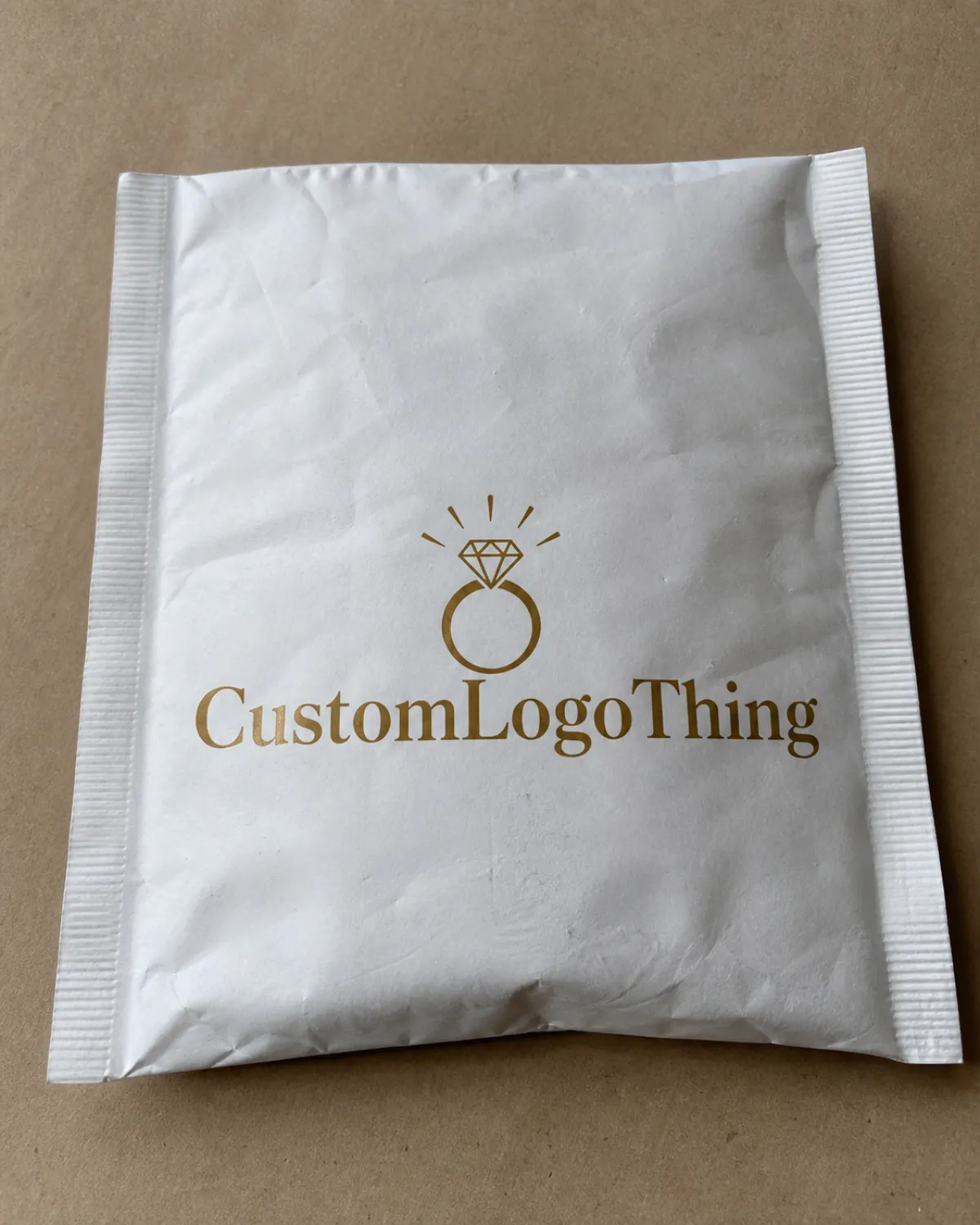
Jewelry is a strong use case for padded mailers because most pieces do not need heavy structural protection. Earrings, slim chain necklaces, bracelets, and small gift sets fit comfortably in compact packaging. That helps with dimensional weight pricing, which is where shipping carriers quietly drain margins. A few millimeters of unnecessary bulk can push an order into a higher bracket. Carriers have an odd affection for charging extra for empty space.
The other advantage is pack speed. A printed padded mailer usually removes steps from the workflow. No folding carton. No separate void fill. No extra tape pass. No hunt for the right insert card because somebody mixed the bins again. When orders stack up, those small savings matter. A team packing 500 to 2,000 parcels a day can feel a 10-second difference per order by lunch.
Presentation still matters. Jewelry is personal, even at low price points. Customers notice texture, print sharpness, closure feel, and whether the package looks like a branded piece or a random shipping supply. A restrained logo, a clean one-color mark, or a simple pattern can do more for perceived value than a busy design that tries too hard. Quiet confidence usually ages better than loud packaging.
That is why the Printed Padded Mailers for jewelry packaging supplier quote checklist should start with use case, not artwork. A repair return, a subscription drop, a holiday gift set, and a standard DTC order all have different needs. A return mailer for a bracelet repair does not need the same finish level as a presentation mailer for a gift launch. The order type should drive the spec, not the other way around.
From a buyer's point of view, three things carry the most weight:
- Protection - The mailer needs to limit movement and survive ordinary parcel handling.
- Presentation - The outer pack should support the brand without inflating the budget.
- Repeatability - The same result should be possible on reorder, not just on the sample.
That last point gets missed too often. If the first batch looks great and the second batch comes back with color drift, poor sealing, or a different hand feel, the savings disappear fast. A package that cannot be repeated cleanly creates work for purchasing, fulfillment, and customer service. Cheap is not cheap if it keeps breaking the process.
A practical jewelry mailer protects the product, supports the brand, and stays consistent across reorders. Miss one of those three, and the savings usually disappear somewhere inconvenient.
Product Details: What a Printed Padded Mailer Includes
Before asking for pricing, know what you are actually buying. A printed padded mailer usually has an outer face stock or film, a cushioning layer, a sealed edge structure, a closure strip or adhesive flap, and a printable exterior area for branding. Some suppliers also include a tear strip or tamper feature. Others do not. The difference matters because each detail affects cost, feel, and how the package behaves on the packing table.
Padding is the first technical choice. Bubble padding gives light cushioning and a familiar feel. Paper-based padding creates a more fiber-led look and may fit brands that want a lower-plastic presentation, depending on the exact structure and local recovery system. Neither option is automatically better. The right call depends on product fragility, shipping distance, and how much abuse the package is likely to take before it lands on the customer's doorstep.
For jewelry, the inner surface deserves attention. Chains catch on rough liners. Coated surfaces can scuff if the finish is wrong. Glossy films look sharp in mockups, then show fingerprints and abrasion after a few bumps in transit. These are small problems with very visible results. Jewelry buyers handle packaging up close, and they notice the details that generic parcel recipients ignore.
Print choice changes both cost and appearance. A one-color logo is cleaner and easier to control. Full-coverage artwork creates stronger shelf impact, but it usually adds setup complexity and more room for variation between runs. Some brands want a front print only with a blank back for labels. Others want full wrap branding. Both can work. The better choice depends on how much visual presence you need and how much variability you can tolerate in production.
Size is another place where practical thinking beats wishful thinking. Too large, and the contents move, freight rises, and the package feels less premium. Too tight, and packers fight the mailer, which slows fulfillment and puts stress on delicate items. Close-fitting dimensions are usually the sweet spot for jewelry shipments. A 4 x 6 inch or 5 x 7 inch mailer can work well for a small pouch or slim box, while a 6 x 9 inch size is common for bracelet sets or multi-item bundles.
Here is a simple way to compare common structures:
| Option | Best For | Typical Strength | Tradeoff |
|---|---|---|---|
| Bubble padded mailer | Light jewelry, repair returns, standard DTC orders | Good cushioning with low weight | Can feel less paper-forward in some markets |
| Paper padded mailer | Brands favoring a fiber-based presentation | Cleaner sustainability story in many programs | May cost more or need more crush testing |
| Printed poly mailer with insert | Very light accessories and cost-sensitive programs | Low material weight and strong branding potential | Usually needs an inner protective layer for jewelry |
| Small custom printed box | Gift sets, premium unboxing, retail presentation | Strong structure and presentation | Higher freight cost and more pack labor |
A typical paper-based build might use a 200gsm printed face, a 60gsm kraft inner liner, and a 3 mm bubble or paper cushioning layer. Some programs add a 350gsm C1S insert or reinforcement card so the package feels stiffer without turning into a rigid box. That can be enough for a necklace pouch, a bracelet set, or a small gift item that needs better hand feel without the cost of full carton packaging.
If you are comparing this format with Custom Packaging Products more broadly, the useful question is not whether a mailer beats a box. The better question is whether the mailer fits the product, the shipping lane, and the brand experience. For plenty of jewelry lines, it does.
If your packaging mix already includes flexible formats, it can also help to compare against Custom Poly Mailers so you can see where padding adds enough value to justify the extra thickness and cost.
Specifications to Confirm Before You Request Samples
The fastest way to get a useful quote is to send a complete brief on the first pass. Half-finished requests trigger follow-up questions, and then everybody pretends the quotes are still easy to compare. They are not. If the supplier has to guess at size, material, or print coverage, the price will be built on assumptions you never approved. That is how a tidy sourcing project turns into a mess with a spreadsheet.
Start with finished dimensions and usable interior space. Ask for the total outside size, the inside fit, and any tolerance on width, height, or seal area. Two mailers with the same nominal size can behave very differently if one uses a wider flap or a thicker padding layer. If the jewelry ships inside a pouch, tray, or gift box, measure the packed unit, not the bare item. A ring box and a velvet pouch may hold the same ring, but they do not occupy the same space.
Next, confirm the material construction. Is the outer layer paper, film, or a laminated mix? Is the padding bubble or paper-based? Is the closure pressure-sensitive adhesive, peel-and-seal, or something else? Does the mailer include a tear strip, and if so, where does it sit? These are not cosmetic choices. They affect handling, opening behavior, and how premium the package feels in the customer's hand. They also affect whether the packer can close the mailer without fighting it.
Print details need the same attention. Give the supplier the number of colors, the coverage area, the placement, and the artwork format. A simple one-color logo on a stock mailer is a different job from full-coverage artwork on a fully custom structure. Confirm whether they want vector art, what bleed is required, what safe zone to leave clear, and what color system they use for proofing. If repeat color matters, ask how they control consistency on reorder. "Close enough" is not a production standard.
Jewelry buyers should also check the performance points that tend to get ignored until something fails:
- Adhesive hold - The seal should stay closed through normal parcel handling.
- Seam strength - Corners and edges should not split during compression or sortation.
- Rub resistance - Printed surfaces should not scuff before delivery.
- Snag resistance - The interior should not catch on chains, clasps, or soft inserts.
- Compression behavior - The mailer should protect the contents when stacked or squeezed in transit.
Compliance belongs in the brief as well. If your brand uses recycled content claims, FSC-style sourcing language, or limits around inks and finishes, say so up front. You can review responsible sourcing guidance through FSC, and you can also cross-check transport damage testing concepts and packaging performance topics with the ISTA framework. Those references help shape the conversation even if your package does not need formal certification.
If appearance is a major part of the buying decision, ask for a sample before production. That matters for premium jewelry lines, where small differences in line sharpness, finish, closure feel, and stiffness can change the customer experience quickly. It also matters for launches where the packaging is part of the product story rather than a disposable shipping layer.
Pricing & MOQ: How to Compare Supplier Quotes
Printed padded mailer pricing usually has several moving parts, so ask for all of them. The quote should show unit cost, setup or plate charges, sample fees, freight, duties if they apply, and any surcharge tied to special sizes, inks, adhesives, or finishes. A low unit price can hide a much higher landed cost. Landed cost is the number that matters once the mailers hit your warehouse.
For a common run of 5,000 pieces, a realistic price range is often around $0.15-$0.24 per unit, depending on size, padding type, and print coverage. Smaller sizes with simple branding usually sit at the lower end. Larger sizes, full coverage graphics, foil accents, and heavier cushioning push the number up. At 10,000 pieces, the unit price may drop into the $0.11-$0.19 range if the spec stays straightforward and repeat production is not unusual for the supplier.
MOQ changes the math quickly. Lower minimums often raise unit cost because the setup gets spread over fewer pieces. Bigger runs can improve pricing, but they also create inventory risk, especially if your assortment changes seasonally or your packaging refresh is close. The right MOQ is not the largest one. It is the one that matches demand, storage, and launch timing without locking cash into stock you cannot use yet. For stock-size mailers, an MOQ of 3,000 to 5,000 pieces is common. For fully custom dimensions or multi-color print, 5,000 to 10,000 pieces is more typical.
Quote comparison only works if every supplier is quoting the same thing. If one bid uses a slightly larger mailer, another uses a different closure, and a third quotes heavier padding or extra print coverage, the prices are not directly comparable. Use one exact spec sheet across all bids, and ask each supplier to confirm that they are pricing against it. Otherwise you are comparing apples, oranges, and one suspiciously cheap banana.
These are the cost traps that show up most often:
- Different carton pack counts that change freight efficiency.
- Sample fees waived by one supplier but not another.
- Extra proof rounds that add time and art charges.
- Freight assumptions that leave out residential delivery, duty, or brokerage.
- Small size changes that increase material waste and unit cost.
Use total landed cost, not headline unit price alone. That is the number that matters once the order arrives and enters regular use. If you need to show finance or operations a clean comparison, keep the columns the same every time:
| Quote Element | Supplier A | Supplier B | What to Check |
|---|---|---|---|
| Unit price | $0.22 | $0.19 | Confirm that size, material, and print match exactly |
| Setup / plate cost | $180 | $260 | Check whether setup is one-time or repeats on reorder |
| Sample cost | $25 | $40 | Check whether the sample is production-like or only a reference |
| Freight | $145 | $210 | Verify carton count, delivery terms, and destination assumptions |
| Lead time | 12 business days | 16 business days | Ask whether this starts after proof approval or order placement |
You can also lower cost without wrecking the package. Keep print to one or two colors. Use an existing size if it fits the packed item. Standardize artwork across product families so larger orders can share one spec. Plan reorders early enough that you are not paying rush pricing just because procurement waited too long. Those are better savings than shaving material until the mailer barely functions.
Ask the useful question: what will the customer actually notice? If the answer is a slightly larger logo or a finish that does not change the experience much, the spec may be overpriced for the category. A lot of jewelry packaging improves through clarity, not decoration.
Process and Timeline: From Artwork Proof to Delivery
A clean sourcing process saves time and avoids the kind of confusion that eats half a week. The normal flow runs through inquiry, spec confirmation, artwork submission, digital proof review, sample approval, production, inspection, packing, and shipment. Skip a step, and the order gets kicked back later. A rushed order can still work, but it usually costs more and leaves fewer chances to fix problems before production starts.
Lead time stretches for a few predictable reasons. Incomplete artwork slows the supplier down. A structural sample adds another approval round. A tighter color match needs more proof cycles. A material that is not already in stock pushes the schedule again. None of that is unusual, but it should show up in the quote so nobody acts surprised later. For many Printed Padded Mailers, production is often 12-15 business days from proof approval, with transit added on top. If a supplier says "about two weeks," ask whether that includes approval, packing, and freight. Usually it does not.
A strong quote request shortens turnaround because the supplier can confirm material availability, print method, and machine capacity without guessing. The clearer the brief, the faster the answer. That helps when a packaging change affects both the visual and the line speed. If your team knows the finished size, exact print area, and quantity up front, the supplier can tell you quickly whether the job fits a standard run or needs a custom schedule.
Here is the approval sequence that protects the order:
- Digital proof - Confirms layout, logo placement, copy, and artwork scale.
- Physical sample - Confirms feel, closure behavior, print quality, and fit.
- Pre-shipment review - Confirms carton counts, labeling, and any pallet or master pack requirements.
That order matters because a proof can look correct and still fail in hand. A mailer may pass visual review and still feel too stiff, too loose, or too fragile once it is folded, sealed, and handled on a busy packing table. For jewelry, that tactile part is part of the package decision, not extra credit. The mailer has to work the way the customer expects, not just the way the render looked.
It also helps to separate production time from transit time. A supplier may quote 10 to 15 business days for manufacturing, but that does not include the trip to your warehouse. If the shipment is overseas or the receiving site is remote, transit can add several days or more. Buyers who track only production often miss the actual arrival date. If a launch is fixed, work backward from the shelf date, not the factory date.
A conservative schedule is usually the safer one. Leave room for proofing, sample review, and freight variability. That matters even more if your jewelry launch sits on a promo calendar or retail drop, because late packaging can wreck the sales window without warning. A two-day delay on mailers can become a two-week delay on the launch if the rest of the line is waiting.
One practical way to reduce delay is to set a decision matrix before the sample arrives. If the sample is good on closure, print quality, and fit, but one small visual detail is not perfect, decide in advance whether that detail is worth another round. Good packaging programs move because the team knows which criteria actually matter. If everything is a priority, nothing gets approved.
Why Choose Us for Jewelry Packaging Programs
Jewelry packaging works best with a supplier who understands both presentation and process control. The point is not to sell the most expensive structure every time. It is to match the mailer to the product, the shipping lane, and the brand standard. That means consistent sizing, reliable adhesive performance, and print control that holds up from one reorder to the next. If the first run works and the second run drifts, the process was never really under control.
Good packaging guidance saves money in ways that are easy to miss in a pricing sheet. A supplier who sees that your product fits a smaller size can reduce freight cost and material waste. A supplier who recommends a simpler print structure can move budget toward the parts the customer actually notices. That is the difference between generic packaging advice and practical purchasing support. A good supplier also knows when a fancy finish is worth it and when it is just expensive decoration.
At Custom Logo Things, the focus is packaging that supports the shipment without turning the process into a circus. For jewelry programs, that usually means checking the mailer against the actual product footprint, the brand's visual standards, and the customer's unboxing expectations. The right answer is rarely the flashiest one. It is the one that performs the same way every time. Pretty is fine. Predictable is better.
That matters even more once a brand moves from first order to reorder. The first run gets all the attention. The real value shows up later. If the same spec can be reordered without surprise changes in closure feel, print quality, or size tolerance, the packaging stops being a recurring headache and becomes part of normal operations. No one wants to retrain a warehouse team because the mailer changed under them.
We also treat sample-first thinking as standard. For jewelry, feel and finish can matter as much as the visual. A sample tells you whether the outer surface scuffs, whether the seal closes properly, and whether the mailer is actually usable for packers on a busy line. Those details are invisible on a screen and obvious in your hand. If a sample feels flimsy or the adhesive grabs badly, you will know quickly.
For brands that may expand into other formats later, it helps to view the mailer as one piece of a larger packaging system. The same product family might later use Custom Packaging Products for premium kits, or pair the mailer with custom inserts, branded tissue, or retail-ready outer packs. The point is to build a packaging structure that can grow without starting over every time the line changes. A smart mailer program gives you room to add presentation where it matters.
If you are sorting through options and want a quote built around the actual use case instead of a placeholder spec, our team can help organize the numbers and keep the usual mistakes out of the process. That keeps the printed Padded Mailers for Jewelry Packaging supplier quote checklist grounded in what the shipment really needs, not what looks tidy in a spreadsheet.
Next Steps: Build Your Supplier Quote Checklist
The cleanest way to get an accurate number is to send a one-page brief with the essentials. Include the finished size, material preference, print colors, quantity, shipping destination, target launch date, and any brand or compliance requirements. If you already know you need a sample, say so in the first message. Nobody enjoys guessing games. Nobody enjoys six follow-up emails about whether the mailer is 5 x 7 or 5.25 x 7.25 either.
Then ask every supplier to quote in the same format. Unit price, setup fees, sample costs, freight, MOQ, and Lead Time should appear in the same order. If one quote lists only unit cost and another includes landed cost, the comparison starts crooked. Consistent formatting makes supplier selection much easier and makes it obvious which supplier actually read the brief.
If print clarity, padding feel, or seal strength affects the customer experience, order samples before you commit to production. That is especially smart for gift-ready jewelry packaging where presentation is tied closely to perceived value. A small difference in print quality or closure performance can change how the parcel feels when it lands on the customer's desk or doorstep. The customer may not know the exact spec, but they know when something feels flimsy.
Score the responses using practical criteria, not just the lowest headline price. Spec match matters. Communication matters. A realistic timeline matters. Stable landed cost matters. A supplier who answers precisely and flags problems early is usually worth more than the one with the cheapest first quote and the messiest follow-up. If they are vague now, they will be vague later, and that gets expensive.
For buyers comparing branded packaging programs across product lines, remember that jewelry mailers are judged differently than larger cartons or heavy-duty shipping packs. Fit, finish, and repeatability carry the most weight. That is why the printed padded mailers for jewelry packaging supplier quote checklist should stay focused on the details that affect the parcel in real life, not just the number that looks lowest on paper. Good packaging is measurable. So is bad packaging, usually by the time complaints start rolling in.
The clean takeaway is simple: lock the spec before you compare prices. Measure the packed jewelry item, choose the right padding and closure, confirm print coverage, and ask for landed cost in the same format from every supplier. Do that, and the quote stops being a guessing exercise and starts becoming a usable sourcing decision.
When you are ready, send those specs to Contact Us and ask for a quote built around the exact use case. The more specific the brief, the better the proposal, and the easier it becomes to choose a mailer that protects the jewelry, supports the brand, and keeps fulfillment moving without drama. That is the job: keep the pieces safe, keep the brand sharp, and keep the packing table moving.
What should I include in a printed padded mailers for jewelry packaging supplier quote request?
Include finished size, print colors, artwork files, quantity, closure type, shipping destination, and whether you need samples before production. Add any jewelry-specific details such as scratch protection, tamper evidence, or premium branding requirements so the supplier can quote accurately. If the item ships in a pouch or box, include those dimensions too. That is usually the part people miss.
What MOQ is typical for printed padded mailers for jewelry packaging?
MOQ depends on size, material, and print complexity, but a standard stock size usually allows a lower minimum than a fully custom structure. For many programs, 3,000 to 5,000 pieces is common, while fully custom or multi-color runs often start around 5,000 to 10,000 pieces. Ask the supplier whether the MOQ changes with one-color versus full-coverage print, since decoration method often drives the order floor.
How do I compare two printed padded mailers for jewelry quotes fairly?
Use one identical spec sheet for every supplier and confirm that size, padding, print coverage, and closure style all match. Compare total landed cost, not only unit price, by including setup fees, sample costs, freight, and any surcharge tied to short runs. A quote for 5,000 pieces at $0.18 is not better than one at $0.21 if the first one quietly adds a larger minimum, a weaker seal, or more freight.
Are printed padded mailers strong enough for delicate jewelry items?
Yes, for many light jewelry items, provided the mailer has the right padding, secure closure, and a size that prevents excess movement. Common builds use a printed face, a cushioning layer, and a closure flap that stays shut through parcel handling. For high-value or especially fragile pieces, pair the mailer with an inner presentation card, pouch, or protective insert. A tiny bracelet should not be rattling around like loose change.
How long does the quote and production process usually take?
A quote can move quickly when the buyer sends complete specs, clean artwork, and a clear quantity target. Production lead time is often 12-15 business days from proof approval, then transit time gets added on top of that. Sample approval, artwork changes, and freight distance can extend the schedule, so plan both manufacturing and delivery together. If the launch date is fixed, work backward with a buffer instead of a wish.