Buyer Fit Snapshot
| Best fit | Printed Padded Mailers for Coffee Roasters Finish Comparison projects where brand print, material claims, artwork control, MOQ, and repeat-order consistency need to be specified before quoting. |
|---|---|
| Quote inputs | Share finished size, material target, print colors, finish, packing count, annual reorder estimate, ship-to region, and any compliance wording. |
| Proofing check | Approve dieline scale, logo placement, barcode or warning zones, color tolerance, closure strength, and carton packing before bulk production. |
| Main risk | Vague material claims, crowded artwork, missing packing details, or unclear freight terms can make a low unit price expensive after revisions. |
Fast answer: Printed Padded Mailers for Coffee Roasters Finish Comparison should be specified like a repeatable production item. The safest quote records material, print method, finish, artwork proof, packing count, and reorder notes in one written spec.
Production checks before approval
Compare the actual filled-product size with the drawing, then confirm tolerance on folds, seals, hang holes, label areas, and retail display edges. Reserve space for logos, QR codes, warning copy, and material claims before decorative graphics fill the panel.
Quote comparison points
Review material grade, print process, finish, sampling route, tooling charges, carton quantity, and freight assumptions side by side. A quote is only useful when the supplier can repeat the same color, closure quality, and packing count on the next order.
A printed Padded Mailers for Coffee roasters print finish comparison stops being abstract the moment a carton leaves the pack table and enters a real shipping lane. Belts scrape it. Bins crush it. Labels get slapped on crooked. Other parcels rub against it for miles. A finish that looks rich under a controlled proof light can pick up scuffs, fingerprints, or flat spots before the customer ever sees it. Coffee brands feel that damage quickly because the outer mailer is not just a container. It is the first touchpoint a subscriber, buyer, or sample recipient handles.
Most buyers do not compare color alone. They compare glare, scuff resistance, ink depth, label performance, and how the surface behaves under warehouse lighting. A finish that looks clean in a studio can turn noisy in a distribution center. A finish that feels premium in hand can still fail if it rubs too easily. Coffee roasters live in that gap every day. Their packaging gets seen at the cafe counter, in a home kitchen, and in a wholesale buyer's office before the bag is opened.
The practical question is simple: which finish keeps the brand looking sharp after transit without blowing up cost or slowing production? The answer depends on print method, substrate, ink coverage, and how rough the handling path really is. A careful Printed Padded Mailers for Coffee roasters print finish comparison usually saves a roaster from approving the prettiest surface and regretting it after the first shipment run.
A mailer does more than carry coffee. It carries the first judgment a customer makes about the brand before a single bag is opened.
Why finish choice changes the first impression fast
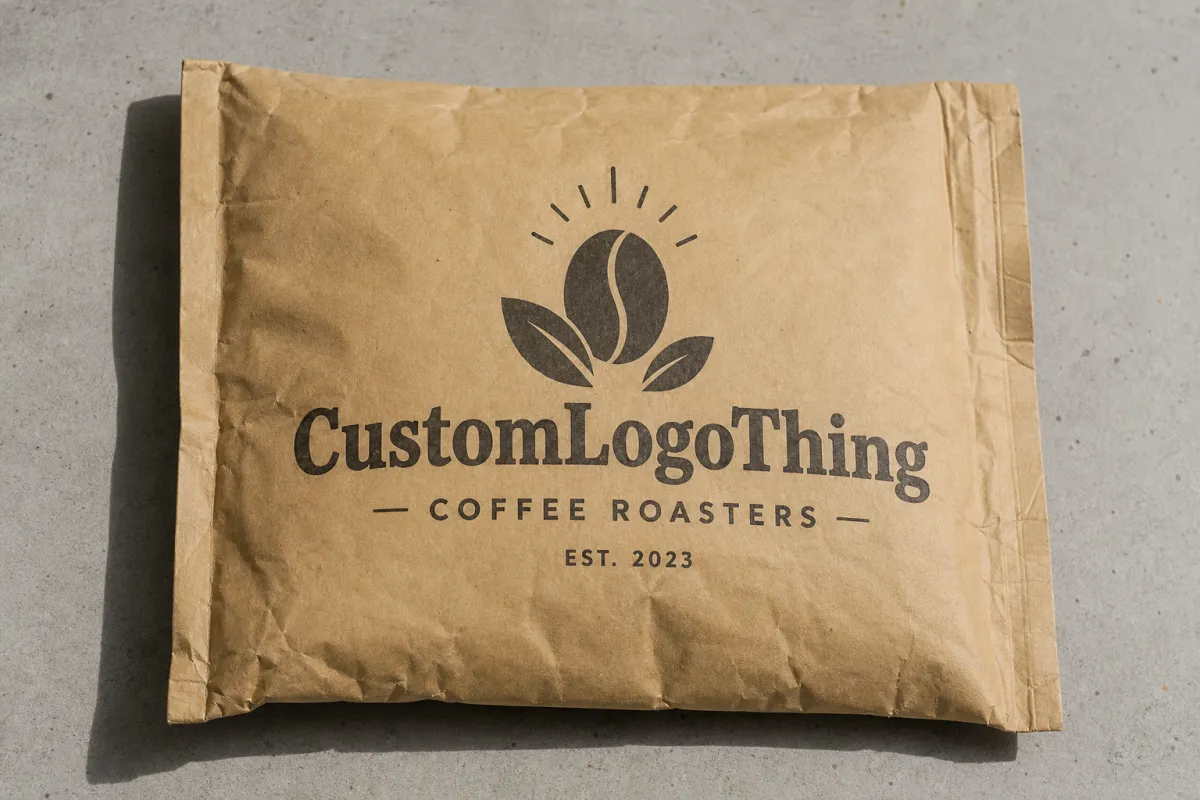
Coffee is a category built on small cues. A customer sees the mailer, the bag, the label, the typeface, the color, and the way all of it holds together. Then they decide whether the brand feels deliberate or thrown together. Subscription drops, seasonal releases, and wholesale sample packs do not get much time to make that case. The outer finish gets one shot to look organized before shipping marks start doing their work.
Surface finish changes the read immediately. Gloss throws more light and looks louder. Matte softens the look and feels quieter. Soft-touch adds a velvety surface that makes the pack feel more intentional in the hand. None of those options changes the padding inside the mailer, but each one changes the mood the package delivers before the seal is broken.
That difference matters more than most teams want to admit. Cushioning is about keeping the contents alive through impact, compression, and whatever else a delivery network throws at the parcel. Print presentation is about keeping the artwork legible, the logo clean, and the brand tone intact. A mailer can protect the contents and still look beat up. Not exactly a win.
Coffee roasters notice this because shipping is part of the brand story. A sample order to a wholesale buyer, a subscription send-out, or a holiday gift pack may pass through several hands and lighting conditions before the recipient opens it. A finish that holds its look through those steps gives the package more staying power and less “we rushed this.”
Finish also changes perceived quality when the structure itself is simple. A basic mailer with the right surface can feel thoughtful. A premium structure with the wrong surface can feel cheap. That is the whole point of a printed Padded Mailers for Coffee Roasters print finish comparison: start with handling conditions, not a clean mockup sitting on a desk that has never seen a conveyor belt.
How printed padded mailers are made and finished
A padded mailer has three jobs at once: hold the product, cushion the contents, and present the artwork. The outer face takes the print, the inner layer handles impact, and the closure keeps everything shut until delivery. Finish lives on the outside, where it can protect ink, shift sheen, and change how the mailer feels in the hand.
Printing method affects the finish outcome
Different print methods set up different finish results. Offset printing is a strong choice for fine detail, crisp spot colors, and artwork that needs tight visual control. Digital printing works better for shorter runs, fast artwork changes, and jobs that need variable data or seasonal updates. Flexographic printing usually fits larger runs and simpler graphics, especially when the artwork stays stable and the volume is high.
The print method matters because ink laydown, drying behavior, and surface tension affect how the finish bonds and how the package wears. Heavy CMYK coverage may look brilliant under gloss and more restrained under matte. Spot colors can also shift the feel of a logo, especially when the brand depends on a specific black, brown, or accent tone. On coffee sample mailers, that is not a tiny detail. It affects how the line looks on a shelf, at a buyer meeting, or in a stack of incoming shipments.
Where the finish is added
Finish can be built into the run or added after printing. Some jobs use an inline coating. Others add a varnish or laminate later, which can increase abrasion resistance and change the sheen. Specialty surfaces may use soft-touch layers or protective clear coats meant to absorb handling damage. Each choice shifts cost, schedule, and look in slightly different ways.
If the finish happens inline, the job often moves faster. The tradeoff is flexibility. If the surface gets a separate coating or lamination step, durability tends to rise and the finish can feel more distinctive, but production stretches out. Coffee brands with launch dates, subscription cutoffs, or retail windows need that timing as much as they need the visual effect. A beautiful mailer that shows up late is still a late mailer.
Practical details matter too. Labels read differently on glossy and matte surfaces. Fingerprints show more clearly on some coatings. Dark artwork can show rub marks faster on high-shine surfaces, especially when orders are stacked tightly or tossed into transit bags. A smart finish choice keeps the package tidy and readable even after the abuse that comes with shipping.
For brands building a wider packaging system, it helps to review related formats such as Custom Packaging Products and, for lighter shipping needs, Custom Poly Mailers. The same logic applies across those categories. The best finish is the one that keeps the brand clear after handling.
Stackability matters too. Some surfaces slide around in bins and make fulfillment harder. Others grip just enough to behave. Buyers who test samples under actual warehouse lighting usually make better calls than buyers who approve a finish from a tiny swatch and a hopeful nod.
Printed padded mailers for coffee roasters print finish comparison
Here is the comparison coffee brands actually need. Gloss, matte, soft-touch, and UV or clear protective coating all push the package in different directions, and each one handles logistics in its own annoying little way. A finish that works for one roaster can be wrong for another if the brand tone, shipping path, or handling frequency changes.
Gloss is the brightest option. It deepens color, gives logos more punch, and makes artwork pop in photos or retail displays. That can help newer brands with bold palettes or loud typography. The downside shows up as soon as the mailer gets handled: gloss reveals fingerprints, small scratches, and glare under fluorescent warehouse lighting. A mailer that looked sharp at proof stage can start looking busy before it reaches the customer.
Matte is calmer and usually more forgiving in daily use. It softens reflections, hides small rub marks better, and gives coffee packaging a more crafted look. Buyers often read matte as more premium because it feels less promotional and less desperate to be noticed. Dark artwork can lose some punch if the layout is not planned carefully, but for many coffee roasters matte lands in the sweet spot between presentation and durability.
Soft-touch adds a velvety hand feel that makes even a plain mailer feel more deliberate. It works well for brands that want a boutique or giftable feel. The surface can make the package seem more refined, but it needs testing, because rough handling, repeated stacking, and long shipping lanes can expose wear if the coating is not matched to the structure. Soft-touch is strongest when the mailer lands in a customer's hands early and not after three sorting hubs and a mild beating.
UV or clear protective coating gives targeted shine or added scuff resistance. Spot UV can highlight a logo, origin graphic, or seal panel without turning the whole mailer into a mirror. Full clear coating adds protection where the pack is likely to rub. That can help on dark artwork or high-contrast layouts where the important elements need to stay crisp. Cost and complexity usually rise, but premium programs often justify it.
| Finish | Visual effect | Handling performance | Brand tone | Typical cost impact on a 5,000-piece run |
|---|---|---|---|---|
| Gloss | High shine, strong color pop, reflective surface | Moderate scuff visibility, fingerprints show easily | Bold, energetic, promotional | Usually base to +$0.02 per unit |
| Matte | Low sheen, softer contrast, understated look | Good at hiding small rub marks and glare | Calm, premium, craft-focused | Usually base to +$0.03 per unit |
| Soft-touch | Velvety, tactile, distinct hand feel | Good feel, but needs testing for heavy handling | Luxury, boutique, unboxing-focused | Often +$0.04 to +$0.10 per unit |
| UV or clear protective coating | Selective shine or fully protected surface | Stronger resistance in high-wear zones | Premium, precise, detail-driven | Often +$0.03 to +$0.08 per unit |
Those numbers are planning ranges, not a quote from the sky. Order size, artwork coverage, substrate choice, and print method move the final number around. Still, the table gives buyers a way to compare proposals without letting one polished sales sheet hide the tradeoffs.
For coffee brands, the right finish usually depends on what the package needs to say before it gets opened. Gloss makes a launch feel louder and more energetic. Matte makes a subscription feel curated. Soft-touch turns a premium sampler into something worth keeping. UV protects the most important artwork while giving the rest of the design room to breathe.
One rule makes this easier: compare every finish using the same artwork, the same size, and the same handling conditions. Do not compare a matte sample with quiet graphics against a gloss sample with dense full-bleed art and pretend that tells you anything useful. The finish is the variable. The rest should stay fixed.
Process and lead time for custom printed padded mailers
A custom padded mailer usually moves through a few predictable stages before it reaches a packing bench. Artwork intake comes first. The printer checks the dieline, bleed, color usage, and safe areas. That review matters more than most people think, because the print surface is only part of the finished pack. Seams, folds, seals, and cut lines all affect where the artwork lands.
Once the artwork is approved, the printer prepares a proof. That might be a digital proof for layout and copy, or a more exact production proof when color is sensitive. Brands with strict color standards should treat the proof stage seriously. CMYK covers a wide range, but it does not behave exactly like a spot color match. Coffee packaging leans hard on visual consistency, so that difference can sting.
Print setup comes next. Offset and flexographic jobs usually take longer to set because plates, registration, and ink balance need adjustment. Digital printing can shorten that stage, especially for shorter runs or frequent artwork changes. After printing, the finish is applied, whether that is a coating, varnish, laminate, or specialty layer. The material then has to cure or dry before converting, when the printed sheet or web gets cut, formed, and turned into mailers.
Lead time depends on the finish. A standard gloss or matte job on a simple size can move faster than a soft-touch or multi-step UV build. A straightforward run might land in the 10 to 15 business day range after proof approval. A premium finish or a crowded seasonal schedule can push that to 15 to 25 business days or more. Custom revisions, specialty materials, and freight from a distant plant can stretch the calendar again.
So the better question is not just “What does it look like?” It is “How many steps happen after I approve the art?” A roaster planning a product drop or subscription refresh should ask for a calendar that includes proof timing, coating or curing time, converting, packing, and shipping. If a supplier cannot lay out the full chain, the schedule deserves a hard second look.
Shipping validation helps too, especially when the contents are fragile or the mailer will travel through automated handling. Packaging teams often use ISTA test methods to check vibration, compression, and drop performance before launch. It does not replace sampling, but it gives a better view of what the package will survive once it leaves the plant.
Drying time after finishing is another detail that gets ignored until it causes problems. A surface can feel dry and still be curing. Stack it too soon, wrap it too tightly, or store it in a hot dock, and blocking becomes a headache. Beautiful finish, miserable warehouse. Great trade.
Cost, pricing, MOQ, and unit-cost tradeoffs
Pricing for custom Printed Padded Mailers usually comes down to six things: material choice, print coverage, finish complexity, quantity, mailer size, and shipping assumptions. Change one of those, and the quote can shift more than buyers expect. A small increase in artwork coverage or a move from matte to soft-touch can move the total more than a quantity bump does, especially on smaller runs.
MOQ, or minimum order quantity, matters because setup cost needs enough units to make the job practical. On many custom programs, MOQs land somewhere between 1,000 and 10,000 units depending on size, structure, and print method. Digital printing can support lower minimums in some cases. Offset and flexographic printing tend to make more sense as quantities rise. Bigger runs usually cut the per-unit cost because the setup gets spread out across more mailers.
The cheapest quote is not always the best buy. A low number can hide a thinner structure, lighter ink coverage, a weaker finish, or freight that was quietly left out. Some buyers only learn the real cost after reprints, damage, or late deliveries. The cleaner way to compare quotes is to hold size, artwork coverage, finish description, seal style, and freight basis constant across every proposal. If one supplier quotes gloss and another quotes a satin-like coating, those are not the same offer.
On a medium-size run, a standard printed padded mailer might fall somewhere around $0.28 to $0.55 per unit before freight, depending on structure and print coverage. Add a specialty surface like soft-touch or heavy UV and the range can move toward $0.40 to $0.85 per unit. Those are planning figures, not promises, but they help when a brand is building a launch budget or comparing multiple converters.
Total landed cost matters more than the headline unit price. That includes unit price, freight, storage, overages, samples, and the cost of any reprint if the artwork or finish misses the mark. A mailer that costs a few cents less but shows up late or scuffs too easily can end up more expensive than the better-built option. Packaging buyers know this lesson. The lowest quote on the page is not always the lowest cost in the real world.
There is also a sourcing piece. If the mailer uses paper-facing or recycled content, or if the brand wants to make a fiber claim, the spec may need to account for FSC-certified fiber sources. That will not apply to every padded mailer, especially polymer-based builds, but it matters for paper-based outer layers, recycled sleeves, and mixed-material programs where sustainability claims need to be accurate.
Practical shortcut: ask for three things on every quote: the exact size, the exact finish, and the exact freight basis. If those line up, the comparison gets clearer fast. If they do not, the cheapest number may be the most misleading one in the batch.
Step-by-step finish selection for coffee roasters
Start with brand position. Should the mailer feel bold and shelf-ready, soft and artisanal, or quiet and premium? Pick that first. Then choose the finish. A launch brand with punchy colors may want gloss or selective UV. A subscription roaster with earthy tones may do better with matte. A special release or gift-style send-out can justify soft-touch because the tactile feel does real work.
Map the shipping environment next. Will the mailers be packed by hand or machine? Do they sit in a warehouse for days before dispatch, or leave the same day? Are they headed to retail buyers, consumers, or wholesale accounts? The more often a package gets handled, the more the surface needs to hide scuffs and resist marking. If it runs through automated sorting, test abrasion at seams, edges, and high-contact zones.
Then request samples with the same artwork across two or three finishes. That sounds basic because it is basic. Still, people mess it up constantly. Comparing a glossy sample with one design against a matte sample with another design tells you almost nothing useful. Keep the art constant so the differences stay visible. If the design includes a logo, a coffee origin panel, and a dark background, those pieces will show how each surface handles contrast and wear.
After that, test the sample in real use. Fold it. Stack it. Rub it against itself. Put a shipping label on it. Set one sample under the same lights used in fulfillment and another under the light a customer might see at a cafe or office. Those small tests usually reveal whether gloss is too reflective or whether matte dulls the artwork more than expected. If the mailer is going out with an insert, test it filled, not empty, because the structure changes once weight and shape are inside.
Finish details around the surface matter too. Dark designs often need a finish that hides scratches. Logos with sharp edges may need a coating that preserves crisp lines. Photograph-heavy layouts can look better with controlled gloss, while type-led packaging can feel more refined in matte. The surface should support the art, not fight it for attention.
For buyers still building the packaging program, browsing a broader line of Custom Packaging Products can help set a consistent visual language across mailers, boxes, and inserts. That wider view matters because the mailer rarely stands alone. It sits inside a whole packaging system with labels, tape, inserts, and shipping paperwork all doing their own version of the job.
If a roaster wants a quick decision framework, this one works without much drama:
- Choose the brand tone first.
- Confirm how rough the shipping path is.
- Request samples in the same art file.
- Test the samples after stacking and rubbing.
- Pick the finish that still looks good after handling.
That sequence keeps the decision grounded. It also cuts the odds of choosing a finish because it looked nice in a mockup but fell apart the second it met a packing bench.
Common mistakes, expert tips, and next steps
One common mistake is choosing a finish from a tiny swatch or a screen render. Small samples never show how a full mailer reflects light under warehouse fixtures. Another mistake is ignoring the zones that take the most abuse. Seams, corners, edges, and seal areas usually show wear first, so judge the finish there instead of staring only at the center panel. Buyers also approve proofs without checking the package after a label is applied, which is a good way to create surprises in the first production batch.
Overloading dark artwork is another repeat offender. Deep black or charcoal layouts can look elegant, but they also show rub marks fast if the coating is too reflective or too delicate. A matte base with a selective gloss logo often performs better than a full-gloss surface on busy transit paths. That kind of contrast gives the brand a sharp focal point without asking the entire mailer to do too much.
Smart packaging teams usually reserve special effects for the highest-value parts of the design. Gloss on the logo, matte on the background, and a clear protective layer where contact happens can be a strong combination. The eye gets a focal point. The surface stays cleaner longer. The mailer looks less tired after the third handoff, which is where a lot of these things quietly fail.
Another useful habit: review how the finish interacts with sealing and label application. Some coatings accept adhesive well. Others need more care. If the program uses handwritten notes, date stickers, or thermal postage labels, test those directly on the actual finish before production starts. A mailer can look excellent and still create chaos if labels peel or smear.
For coffee roasters trying to balance shelf appeal, shipping performance, and budget, the safest path is usually narrow and disciplined: choose two finishes, request a sample set, test them under the same lighting used in fulfillment, and compare how each one looks after stacking, rubbing, and labeling. If the mailer still looks intentional after that abuse, it belongs in production. That is the real takeaway from a printed Padded Mailers for Coffee roasters print finish comparison: pick the finish that survives the shipping lane, not just the proofing stage.
Which finish hides scuffs best on printed padded mailers for coffee roasters?
Matte and some clear protective coatings usually hide small rub marks better than high-gloss surfaces. If the mailers will be handled often, ask for a sample that has already been stacked, folded, and rubbed before you decide.
Is matte or gloss better for coffee subscription mailers?
Gloss gives stronger color pop and a brighter shelf look, while matte gives a quieter premium feel and often hides handling marks more easily. For subscription programs, matte is often the safer all-around choice unless the brand is built around bold, glossy visuals.
Do specialty finishes raise the unit cost a lot?
Yes, finishes like soft-touch or multi-step UV treatment usually cost more because they add materials, setup, or extra production steps. The cost difference can shrink on larger runs, so ask for pricing at more than one quantity level.
How does finish choice affect lead time or turnaround?
Simple finishes usually move through production faster because they need fewer passes and less curing time. Premium coatings, specialty laminates, or proof revisions can add time, so confirm the schedule before approving artwork.
What should I send a printer before requesting a quote?
Send the size, quantity, artwork file, desired finish, and any must-have details like seal style, padding type, and shipping deadline. If you have sample mailers or finish references, include them so the quote matches the look and performance you want.