Buyer Fit Snapshot
| Best fit | Printed Padded Mailers for Sample Kits projects where brand print, material claims, artwork control, MOQ, and repeat-order consistency need to be specified before quoting. |
|---|---|
| Quote inputs | Share finished size, material target, print colors, finish, packing count, annual reorder estimate, ship-to region, and any compliance wording. |
| Proofing check | Approve dieline scale, logo placement, barcode or warning zones, color tolerance, closure strength, and carton packing before bulk production. |
| Main risk | Vague material claims, crowded artwork, missing packing details, or unclear freight terms can make a low unit price expensive after revisions. |
Fast answer: Printed Padded Mailers for Sample Kits: Pricing Factors should be specified like a repeatable production item. The safest quote records material, print method, finish, Artwork Proof, Packing Count, and reorder notes in one written spec.
Production checks before approval
Compare the actual filled-product size with the drawing, then confirm tolerance on folds, seals, hang holes, label areas, and retail display edges. Reserve space for logos, QR codes, warning copy, and material claims before decorative graphics fill the panel.
Quote comparison points
Review material grade, print process, finish, sampling route, tooling charges, carton quantity, and freight assumptions side by side. A quote is only useful when the supplier can repeat the same color, closure quality, and packing count on the next order.
A sample kit gets judged almost instantly. Usually faster than the brand expects, which is never a fun surprise. The outer mailer creates the first quality cue, and that is why printed Padded Mailers for Sample kits wholesale pricing factors matter before anyone touches the product inside. A crushed corner, a weak seal, or a mailer that looks like it came from a forgotten storage shelf can undo a strong sample in seconds. If the kit includes a folded insert card, a 350gsm C1S artboard piece, or a small vial tray, the outer mailer has to protect that structure instead of pretending it does not exist.
That is why brands and fulfillment teams keep coming back to printed padded mailers. They protect small items, put the logo front and center, and give the shipment a deliberate look instead of an accidental one. Teams comparing options across channels should think about the full packaging program, not just the outer mailer. Our Wholesale Programs page and broader Custom Packaging Products range are useful starting points if the goal is a repeatable kit system instead of a one-off promo send.
Most packaging buyers do not need the flashiest option in the stack. They need the one that holds the product, keeps freight under control, and still looks good when the customer opens it. A well-sized padded mailer can trim wasted space, cut damage claims, and improve the unboxing moment without turning fulfillment into a mess. That is the kind of practical win that matters when the kit is part of a sales workflow and not just a handout at a trade show. For a run that ships in volume, even a few cents per unit and a few seconds per pack add up quickly.
Why Sample Kit Mailers Fail Before the Product Is Seen
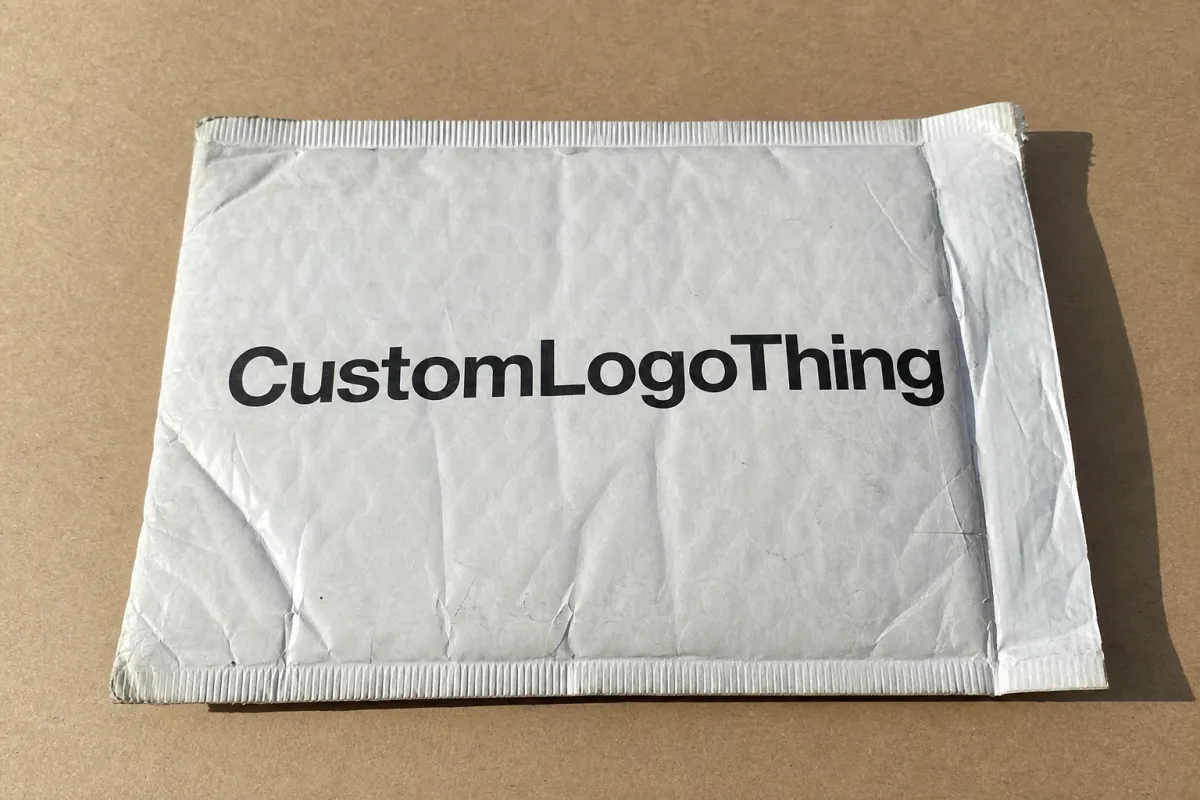
Many sample kits are built carefully and then stuffed into packaging that does not match the value inside. A plain mailer with a label can move a parcel from point A to point B. It does almost nothing for the brand. Buyers notice seam quality, edge crush, print sharpness, and whether the package feels like it belongs with the product category. That first judgment usually happens before the flap opens.
Damage is the other problem that stays quiet until the customer complains. A weak seal, thin face stock, or undersized mailer can leave bent corners, scuffed graphics, and crushed inserts. That matters even more for cosmetic samples, health and beauty kits, beverage sachets, tech accessories, and retail samplers because those items are often chosen to signal precision or premium quality. If the outer package arrives tired, the sample loses some of its selling power before it gets a chance to do its job.
Printed padded mailers sit in a useful middle ground. They are lighter and easier to handle than a corrugated box, but they give more surface presence and a cleaner branded impression than an unprinted padded envelope. For a lot of outbound programs, that is the sweet spot: enough protection for everyday parcel handling, enough print area for a strong logo or campaign message, and enough packing speed to keep the line moving without extra fuss. A simple sample kit with a couple of sachets can often ship well in a padded mailer, while a heavier kit with glass or rigid parts may need a thicker liner, a tighter fit, or an inner carton.
A good sample kit mailer has to do three jobs at once: protect the contents, present the brand clearly, and stay simple enough that the run can repeat without drama.
In the warehouse, the package has to work for the picker and the recipient. If the closure fights back, the flap tears, or the mailer is too loose around the insert, packing slows down and presentation gets inconsistent. Strong sample kit programs are built around repeatability. Every unit should feel like part of the same system, whether the order is 500 pieces or 50,000. That means the same opening direction, the same seal placement, and the same insert orientation every time.
That is why the buyer should think like a production manager, not just a designer. The point is not decoration for decoration's sake. The point is to choose a package that fits the contents, survives transit, and reinforces the value of the sample inside. That keeps decisions grounded in real shipping conditions and avoids paying for features that do not move the customer experience. A pretty mailer that crushes the insert is still a bad mailer.
Printed Padded Mailers for Sample Kits: Material, Print, and Fit
The structure of a padded mailer looks simple. The details are not. The outer face stock or film shapes the print result, the internal padding affects cushioning and crush resistance, and the closure style changes both security and packing speed. A paper exterior gives a warmer, more natural look. A poly exterior offers stronger moisture resistance and a smoother print surface. That difference matters more than most buyers expect once the kits start shipping in volume.
Paper-based mailers tend to fit brands that want a recyclable or fiber-forward presentation, especially when the kit carries lightweight inserts and printed literature. Poly constructions usually make more sense when the shipment may hit damp conditions, abrasion, or longer transit chains. Hybrid formats can also work when a buyer wants the visual softness of paper but needs more durability in the outer shell. If you are comparing this format against a more flexible film package, our Custom Poly Mailers page is a useful reference point.
Print coverage is one of the clearest cost drivers, but it also changes the merchandising value of the mailer. A one-color logo on a clean field often looks sharp and efficient. Full-coverage graphics, patterns, or messaging on both sides can turn the mailer into a campaign asset, especially for product launches, subscription samples, or influencer kits. The tradeoff shows up in ink usage, setup complexity, and a longer approval cycle for color accuracy. A simple one-color run can often move through proofing faster than a multi-color design that needs tighter registration checks.
Fit is where many programs either work quietly or burn money on every shipment. An oversized mailer creates void space, and void space lets inserts shift, bend, or settle at the bottom of the pack. A tight mailer can strain seams, weaken seal strength, and make hand packing slower than it should be. Good sizing starts with the actual kit dimensions, not the catalog size that looks close enough in a spreadsheet. Buyers should specify insert count, the deepest point of the product stack, and whether the kit ships flat, boxed, or with a rigid card or tray inside.
Sample kits with multiple components should be matched to the most fragile piece, not just the smallest one. That may mean leaving room for a card sleeve, a sample vial, or a folded instruction sheet. If the kit mixes soft and rigid items, the interior layout matters almost as much as the outer dimensions. A well-fitted mailer keeps the contents centered, which reduces impact movement and improves the feel of the package when it opens. For example, a beauty sampler with two sachets, a folded brand card, and a small jar usually packs very differently from a stack of promo cards and a single sample packet.
Brands also need to think about where the kit lives after it arrives. A sample set meant for a showroom shelf, a reception area, or a sales rep's carry bag usually needs a cleaner exterior and a flatter profile than a mailer that only needs to survive postal transit. Packaging specs should start with the use case, not the other way around. The structure, print, and finish all need to support how the kit will actually be handled. If the mailer doubles as display packaging, the face stock and print quality have to hold up under repeated handling, not just the first unboxing.
Printed Padded Mailers for Sample Kits Wholesale Pricing Factors
Wholesale pricing is rarely one neat number with a tidy bow on it. It is the sum of material grade, size, print coverage, ink colors, finishing, tooling, and order volume, plus freight and any proofing or plate charges that apply. If two quotes look wildly different, the first question should be whether the specs actually match. A smaller mailer, lighter padding layer, or simpler print method can make a quote look friendly while missing the real requirements of the kit.
MOQ, or minimum order quantity, changes the math more than many new buyers expect. A higher MOQ usually lowers unit cost because setup expenses get spread across more pieces. That works well for mature programs with stable demand, but it can create storage pressure or cash-flow pain for a launch that is still being tested. A lower MOQ costs more per unit, yet it can be the smarter move if the brand is still validating the kit, the artwork, or the sample mix.
For planning purposes, a basic printed padded mailer for sample kits often lands around $0.15-$0.24 per unit at 5,000 pieces, depending on size, print coverage, and material choice. Once you move into more colors, heavier padding, or a smoother poly exterior, the number can move into the $0.22-$0.38 range at similar volume. Short runs below 2,500 pieces usually cost more per unit because setup and tooling do not shrink just because the quantity did. A one-color paper mailer will almost always price differently from a full-coverage, double-sided piece with a custom closure.
Those ranges are planning numbers, not promises. Supplier location, freight lane, material availability, and order timing can move a quote more than buyers expect. A quote for a paper mailer with a single logo and standard padding should not be compared directly with a heavier poly build that needs more ink and a more complex run. The format has to be matched to the actual kit, not to the friendliest line on the estimate.
When comparing Printed Padded Mailers for Sample kits wholesale pricing factors, look at landed cost instead of only factory price. A lower base price can get wiped out by freight, large carton counts, or a spec that creates waste in fulfillment. The real number is the one that puts the finished mailer in your warehouse or 3PL, ready to pack and ship. That means asking whether the quote includes carton packing, inner polybags if needed, and the freight method used to move the order.
| Mailer Option | Typical Use | Common Wholesale Range | MOQ Snapshot | Main Tradeoff |
|---|---|---|---|---|
| Paper padded mailer with 1-color logo | Light sample kits, clean natural presentation | $0.15-$0.24 per unit at 5,000 pieces | Often 3,000-5,000 pieces | Good brand feel, less moisture resistance than poly |
| Poly padded mailer with full-color print | Transit-heavy kits, moisture-sensitive shipments | $0.22-$0.38 per unit at 5,000 pieces | Often 2,500-5,000 pieces | Stronger durability, less fiber-based appearance |
| Heavier-duty custom padded structure | Premium sample sets, glass or higher-value inserts | $0.35-$0.70 per unit depending on size and finish | Often 1,000-3,000 pieces | Better protection, higher total commitment |
The ranges above are planning numbers, not promises. Size, ink coverage, padding thickness, case pack, and freight zone can move a quote fast. A mailer with a simple one-color logo on a standard size stays efficient. A larger format with double-sided print and a heavier liner will cost more, because physics refuses to care about marketing timelines. Use the table to compare structure and tradeoffs, then ask for a quote against your exact insert dimensions and shipping assumptions.
There is a real difference between what looks cheap on paper and what is actually economical in production. If a mailer is too small, damaged units and repacks erase the savings. If it is too large, freight cost rises and the kit can shift around inside the package. A well-matched structure often saves more money in real operations than shaving a few cents off the unit price ever will. A quote that looks 8 cents lower but creates 15 cents in rework is not a win.
For teams that do not want to over-spec early, a practical buying method is to request two or three comparable options: a basic version, a heavier-duty version, and a premium print version. That comparison makes the cost drivers visible. It also gives purchasing and marketing a clean way to agree on what matters most, whether that is padding, appearance, or speed to market. In many cases, the right answer is not the lowest quote; it is the one that fits the launch plan with the fewest hidden costs.
Printing method matters too. Screen print can work well for simpler artwork and heavier ink laydown, while flexographic or digital methods may be better suited to more complex graphics or shorter runs, depending on the supplier's equipment. Each process has its own setup, color, and consistency profile. Ask how the art will be reproduced, how many colors are included, and whether there is a charge for each additional pass or plate. If a supplier is quoting a 5,000-piece run, ask whether the price assumes a single pass, one plate per color, or a digital setup with no plate charge at all.
Specifications That Affect Protection and Shelf Appeal
Before asking for pricing, confirm the finished size, interior usable space, closure width, and whether the mailer needs room for extra inserts or a protective card. Those are not small details. They decide whether the kit lands flat, bends in transit, or needs extra packing labor. The more exact the spec, the easier it is to get a quote that reflects reality instead of a guess.
Padding deserves real attention. Bubble density, lining thickness, and the way the interior cushioning bonds to the outer shell all affect protection. A small glass vial or a rigid cosmetic sample needs more crush resistance than a stack of cards or sachets. If the product has sharp corners or narrow edges, the padding should resist puncture and compression under normal parcel handling, not just look thick in a photo. A common paper padded mailer uses an inner bubble layer around 1/8 inch thick, while higher-protection builds may add a firmer liner or heavier bubble pattern.
Color and print tolerance belong in the spec too. Buyers should ask whether the supplier can match a PMS target, how much registration drift is acceptable, and whether the print will appear on one side or both. If the kit spends time in transit before it opens, contrast matters. Strong contrast keeps the logo visible under imperfect lighting and after minor handling marks. If the artwork has fine type, thin rules, or a boxed layout, the supplier needs enough print tolerance to keep those elements readable at production speed.
Appearance details can shift perception even when the structure is fine. A glossy surface can feel energetic and high-visibility, while a matte or soft-touch finish can read as more restrained and premium. Seam placement matters as well, especially for broad graphics that get interrupted by joins or folds. If the mailer scuffs easily, that shows up long before the product comes out, so abrasion resistance should be part of the buying conversation. For a sample kit that gets stacked on a reception desk or tossed into a sales bag, scuff resistance matters more than most teams expect.
Operational specs matter just as much as visual ones. Fulfillment teams need to know whether the closure is peel-and-seal, what the seal strength feels like after repeated packing, how many units come per case, and how the cartons stack on a pallet. A run that packs smoothly by hand may not behave the same way at higher speed. As volumes rise, little inefficiencies in insertion and sealing can become real labor costs. If a packer needs to re-seat the flap on every tenth piece, the spec is already too loose.
- Finished size: must match the actual insert footprint, not a nominal catalog size.
- Padding level: should reflect the fragility of the contents, especially glass or hard edges.
- Print layout: should leave room for logos, instructions, and any required mailing marks.
- Closure type: needs to support the packing method and shipping abuse expected in transit.
- Case pack: should align with storage space and packing line flow.
For shipping programs that need extra verification, transit testing standards are worth a look. The ISTA test methods are widely used to evaluate parcel packaging under drop, vibration, and compression conditions, which helps when a sample kit has to survive more than one handling point. If the packaging is made from fiber-based materials, sourcing certifications can matter too. Many buyers ask for FSC-certified paper where it fits their brand and procurement policy.
Those standards do not replace practical judgment, but they do give the buyer a cleaner way to compare options. In the packaging trade, the best spec is the one that can be produced consistently, packed efficiently, and shipped with enough margin to handle normal parcel handling. That is the kind of detail that keeps sample kits from turning into a damage or rework headache later.
Production Process, Timeline, and Lead Time Expectations
Production usually starts with spec confirmation, artwork review, proof approval, and then manufacturing. If a new structure or size is involved, there may also be dieline confirmation, sample signoff, or a preproduction check before the full run is released. Buyers tend to stare at the ship date. The real schedule is built from a stack of smaller approvals that happen before the first unit gets made.
Lead time depends on several moving parts. Print complexity, material sourcing, seasonal demand, freight timing, and whether the project uses an existing structure or a custom format all play a role. A straightforward run with a clean art file and stock-size mailer can move quickly. A custom build with multiple colors and special finish requests takes longer. If materials have to be sourced for the job, that can add days or weeks before production even begins.
Approval speed is often the hidden bottleneck. A delayed art correction, a late change to the size, or a color adjustment after proof review can push the whole run back more than most buyers expect. Complete specs help here. When the supplier has the insert dimensions, print instructions, and quantity target upfront, they can quote more accurately and schedule more confidently. That is also how you avoid the classic email chain where every answer creates a new question.
For a typical wholesale order, many programs should plan on 12 to 15 business days from proof approval for standard sizes and straightforward print work. Custom structures, heavier finishes, or multi-color graphics often push that to 15 to 20 business days, and peak-season ordering can stretch it further. Add transit time on top of that. A quote that says "two weeks" without a proof cycle or freight estimate is not a schedule. It is a wish.
A good request for quote should include the production window you need, the freight destination, and whether a staged release would help. If the kit is tied to a product launch or a trade event, leave room for samples, revisions, and a backup buffer. In packaging, schedule pressure usually appears when the art is only half ready or the final insert dimensions are still changing. A complete brief is the simplest way to protect the timeline. If the launch date is fixed, say so early. Nobody enjoys discovering a deadline on the day the proof arrives.
Freight matters too. A fast production line does not help much if the shipping method adds several days or the cartons have to move across a long zone. Buyers should ask for both production and transit estimates so the timeline is real, not wishful. That matters even more for programs with fixed launch dates, seasonal campaigns, or promotional windows tied to sales outreach. If the order needs to land at a 3PL first, include that address instead of just the billing office.
Why Choose Us for Wholesale Sample Kit Packaging
Custom Logo Things fits sample kit programs when the buyer wants packaging built for repeat wholesale use, not just a single promo event. The value is consistent print, stable sourcing, and clear guidance on what a mailer can actually do in a shipping environment. A good supplier should help match the structure to the contents, then keep the process simple enough that reorders stay manageable.
That matters because sample kit programs change. Quantities move. Inserts change. Seasonal messaging gets updated. The sales team wants a smaller run for a test market after the first launch. Packaging support should handle that kind of variation without forcing a full rebuild every time. Clear proofing, practical sizing advice, and quick revision handling keep the program from slowing down. A supplier that can quote a reorder without making you rebuild the whole spec from scratch saves real time.
Experience shows up in the details that prevent problems. A supplier that works with printed padded mailers every day will spot weak closures, a size that leaves too much void space, or a print layout that will be difficult to reproduce cleanly. That kind of feedback saves money because it cuts trial-and-error in production. It also protects brand presentation, which matters when the mailer is the first thing the customer sees. Nobody wants the package to make a bad first impression before the sample gets the chance to do a good one.
If your kit program includes related packaging components, it usually makes sense to source the whole group from one partner who can keep the spec aligned. That may include inner wraps, labels, inserts, or protective mailers from our Custom Packaging Products selection. When the outer mailer and the inner materials are planned together, packout gets faster and the final presentation looks more deliberate. A mailer sized around a 350gsm C1S artboard card, for example, can reduce shifting and make the entire unboxing feel tighter.
Here is the buying approach that tends to work best: transparent pricing, clear MOQ expectations, and recommendations based on the actual contents instead of a generic catalog standard. A supplier should not push a premium structure onto a small kit if a simpler format will do the job, and it should not underbuild a kit that needs stronger protection. Honest guidance is the quickest path to a repeatable program. If a quote does not explain why one option costs more, keep asking until it does.
From a purchasing standpoint, that kind of support reduces risk. It helps the brand avoid over-ordering, lowers the chance of damaged sample kits, and makes it easier to compare printed Padded Mailers for Sample kits wholesale pricing factors without getting buried in vague quotes. The result is a cleaner approval cycle and a package that is easier to produce again later. That matters on reorder number two, not just on the first launch.
Next Steps to Request a Quote and Build Your Run
The most useful quote request is built on real kit data. Before you ask for pricing, gather the sample dimensions, estimated fill weight, target quantity, branding files, and shipping destination. If you know whether the kit ships flat, boxed, or with a rigid insert, include that too. Those details help the supplier size the mailer correctly and avoid hidden changes later in the process.
It helps to decide what matters most before the first quote lands. Some buyers need the lowest per-unit cost. Others care more about stronger padding, faster turnaround, or a more polished printed exterior. If the priorities are clear, the quote can be shaped around the actual business need instead of a generic best guess. A simple spreadsheet with size, quantity, print colors, and destination is enough to stop a lot of confusion before it starts.
When the project is still in development, ask for two or three comparable options so you can compare structure rather than just price. A standard version, a heavier-duty version, and a more visible branded version will show where the cost moves and why. That comparison is usually more useful than a single number because it creates a real discussion about protection, print presence, and budget fit. A small test run can also reveal whether the chosen fit saves packing time or creates a stack of repacks.
Before final approval, confirm the sample-test expectations, any insert requirements, and the case-pack plan. A small amount of checking here can prevent rework once production starts. It is also smart to confirm whether the packing team needs a specific opening direction, seal format, or carton count to keep the line moving efficiently. Those little operational details matter more than most launch schedules admit. If the team is packing 1,000 units a day, one awkward flap design becomes a bigger problem than a slightly lower unit price.
If you want to review the broader packaging mix while you plan, the Wholesale Programs page is a useful place to compare order structures, and the rest of our packaging lineup can help if the sample kit grows into a larger campaign. The goal is to match the mailer to the product story and the shipping reality at the same time. That is usually how a small sample program avoids turning into a messy packaging puzzle later.
The decision usually comes down to fit, protection, print coverage, and quantity planning. When those four pieces line up, the package feels intentional, the fulfillment team packs it faster, and the customer sees a cleaner presentation from the moment the mailer arrives. If you are building a run now, start with exact insert dimensions, realistic quantity targets, and the shipping lane the cartons will actually travel. That is the shortest path to a quote that makes sense and a sample kit that arrives looking like it was planned, not improvised.
FAQ
What drives printed padded mailers for sample kits wholesale pricing?
The main drivers are material grade, finished size, print coverage, number of ink colors, and overall order quantity. Freight, proofing, tooling, and any special finishing can also change the final landed cost, so compare quotes against the same specification set. A 5,000-piece order with one-color print and a standard paper build will usually price lower than a shorter run with full-color artwork and heavier padding.
How does MOQ affect sample kit mailer pricing?
Higher MOQ usually lowers unit cost because setup and print costs are spread across more pieces. A lower MOQ may cost more per mailer, but it can reduce storage risk and upfront cash commitment, which is useful for a new launch or test program. A 1,000-piece pilot can make sense if the kit is still changing, while a stable repeat run usually benefits from a larger buy.
What specs should I confirm before requesting a quote for printed padded mailers for sample kits?
Confirm interior dimensions, insert weight, closure type, print coverage, color count, and target order volume. Include whether the kit needs moisture resistance, extra padding, or a premium finish so the quote reflects the real shipping and presentation needs. If the kit includes a rigid insert card, sample tray, or 350gsm C1S artboard component, say that up front so the fit is not guessed.
How long does production usually take for wholesale printed padded mailers?
Timeline depends on artwork approval, material availability, print complexity, and freight distance. Fast approvals and complete specs shorten lead time more reliably than rush requests made late in the process, and a clean proof cycle is usually the best way to keep the order on schedule. For standard runs, 12 to 15 business days from proof approval is a common planning window, while more complex jobs often need 15 to 20 business days.
Can printed padded mailers be customized for different sample kit sizes?
Yes, they can be sized and printed to match the specific kit contents and shipping needs. The best approach is to balance fit, protection, and cost so the mailer supports the kit instead of overpowering it, especially when the contents vary from one program to the next. Different kit builds may need different mailer depths, closure widths, or insert allowances, even if the branding stays the same.


