Hotels used to rely on plain mailers for a lot of internal shipments and guest-facing sends, but that approach starts to look unfinished once a guest receives an amenity kit, retail order, or replacement linen in a thin generic bag that could belong to any business. Custom Poly Mailer Bags for hotel brands create a cleaner handoff, improve resistance to moisture and scuffing, and give the shipment a more deliberate look before it is even opened.
For a packaging buyer, that is more than a visual upgrade. Shipping has become part of package branding, part of the guest experience, and part of the operational story that leaves the property every day. A mailer may be a small line item, but it often shapes the first impression of the contents inside.
Hotels also have a practical reason to care. A branded mailer can replace heavier cartons in many cases, which helps with storage, packing speed, and freight weight. That combination matters most when the items are soft goods, compact kits, or apparel that do not need rigid protection.
Why hotel shipping has outgrown plain mailers
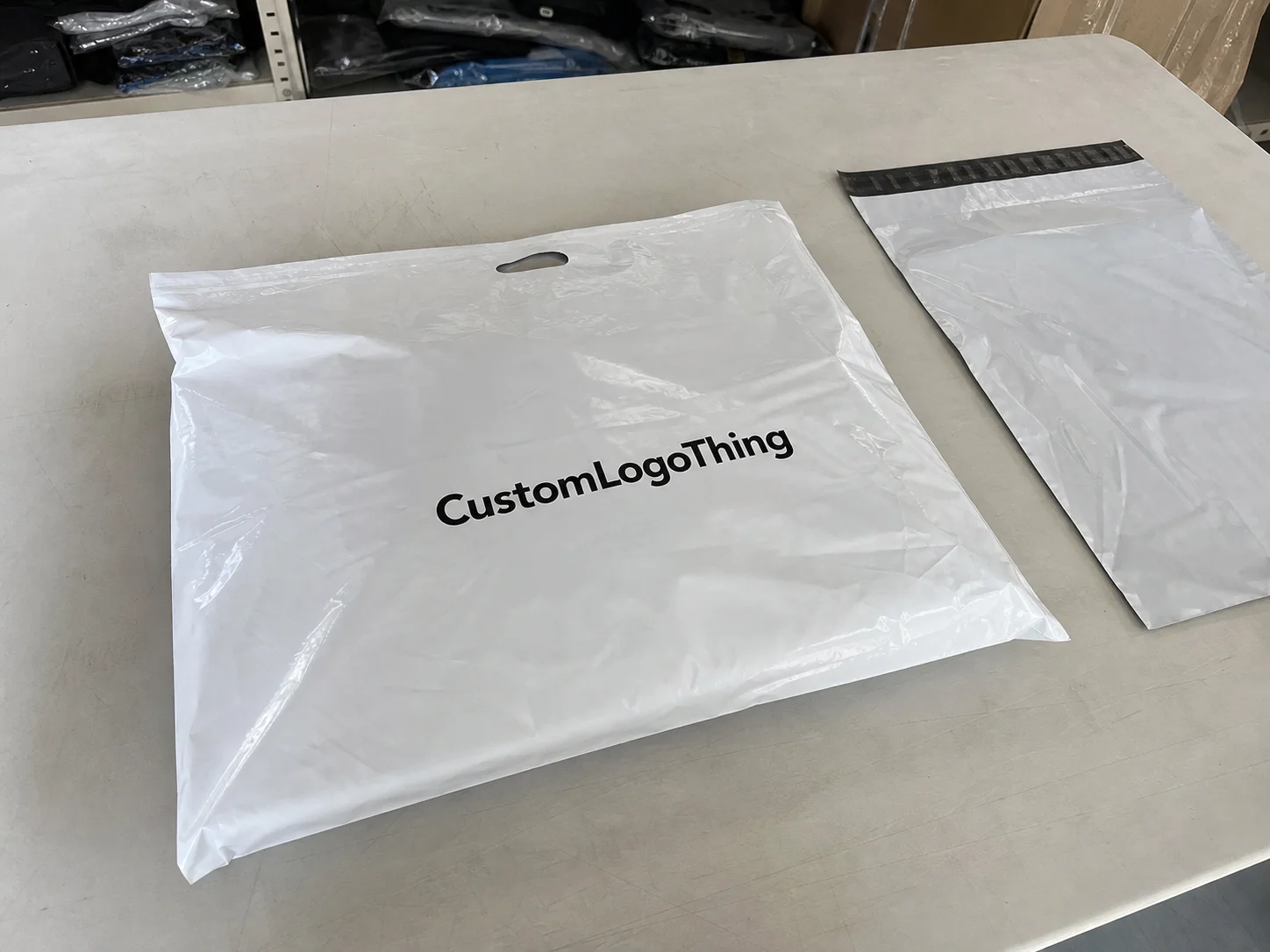
Think about a guest ordering a robe, slippers, or spa item from a hotel shop and receiving it in a wrinkled, unmarked mailer with a weak seal and no visual link back to the property. The product may be perfectly fine, yet the packaging quietly lowers the perceived value. That is the gap Custom Poly Mailer Bags for hotel brands are designed to close.
These are lightweight polyethylene shipping bags printed with a logo, color block, pattern, or short message that connects the shipment to the hotel. They are common in retail packaging, loyalty gifts, staff distribution, guest welcome kits, and back-of-house movement where low shipping weight still matters. You will see them used for apparel, folded textiles, paper goods, and compact amenity sets.
The effect is often bigger than people expect. A replacement pillowcase shipment can feel like a thoughtful service touch instead of an anonymous supply item if the package looks intentional. That matters for boutique properties, luxury brands, and even larger hotel groups that want the packaging to support a consistent image across channels.
“The best hotel mailer is the one that stays out of the way operationally, then quietly makes the brand look cleaner, more organized, and more considered when it reaches the guest.”
There is a technical side to the decision as well. Poly mailers offer decent tear resistance for their weight, good moisture resistance, and a smaller dimensional footprint than corrugated packaging. That can reduce freight charges, save shelf space in the packing area, and keep textile or paper contents cleaner in transit. For many hotel use cases, that mix of presentation and protection is hard to beat without moving into much more expensive packaging formats.
How custom poly mailer bags are built and printed
Most hotel mailers are made from LDPE or co-extruded polyethylene film. LDPE is flexible, light, and economical. Co-extruded film uses multiple layers and can improve puncture resistance, opacity, or surface finish depending on how the bag is built. In practice, the bag may be clear, tinted, white, or fully printed on the outside with a matte or gloss finish.
Film thickness is usually described in mils or microns. Thinner gauges are easier to store and usually cost less, while heavier gauges feel sturdier and tolerate sharper edges better. A 2.5 mil bag can work well for folded tees or slippers, while a 4 mil option is often a better fit for bulkier amenity kits or items packed with small cartons inside.
Printing method has a real impact on both cost and consistency. Flexographic printing is the workhorse for larger runs because it handles repeatable designs efficiently once plates are made. Digital printing can suit shorter runs, variable artwork, or programs that need frequent updates. The more colors and coverage you add, the more the setup becomes part of the conversation.
Hotel buyers should look past the print alone and check the functional features too. A bag that looks polished on a screen can still be awkward in the packing area if the closure is difficult or the seal lands poorly.
- Self-seal adhesive strips for faster packing
- Tamper-evident closures for guest confidence and internal control
- Tear strips for cleaner opening
- Gussets for thicker folded items
- Opaque film where privacy or a more premium presentation matters
Artwork placement deserves more care than many teams expect. Seams, folds, and seal zones can cut into logo visibility if the layout is not planned with the actual bag structure in mind. The strongest-looking design on a flat mockup can become awkward once it meets a production dieline. Good packaging starts with the packed item, then the print layout follows.
For buyers comparing broader packaging formats, Custom Packaging Products can help clarify what belongs in a poly mailer program and what should move to a retail carton or another structure. If the goal is to review standard bag structures, Custom Poly Mailers is a useful reference point.
Key material, size, and branding factors to compare
Size is where many hotel programs go wrong first. A mailer that looks right on paper may be too tight once a robe, amenity box, or set of pillowcases is folded and packed. Measure the actual packed item, then allow room for the seal area and enough slack for the bag to close without straining the seams.
That point matters because hotel items are rarely perfectly uniform. A folded textile stack behaves differently from a boxed set, and a welcome kit with mixed components may shift more during packing and transit. When a bag is too small, it tends to wrinkle, bulge, and seal poorly. The result looks rushed, even if the contents are fine.
For hotel use, common contents include folded robes, slippers, pillowcases, makeup towels, retail apparel, amenity boxes, and multi-item welcome kits. If the contents vary in shape, pick a bag wide enough to keep the stack flat. Overstuffing creates a rougher appearance and usually shortens the life of the seal.
Thickness should match the contents, not the budget alone. A lightweight bag is often enough for soft textile goods, but a heavier gauge is better when corners, cartons, or rigid inserts are involved. Extra film thickness usually improves puncture resistance and gives the bag a more substantial hand feel, which can matter for upscale hospitality packaging.
Branding choices are broader than many buyers expect. A hotel can use a single-color logo, a restrained corner mark, a repeat pattern, a full-coverage print, or a seasonal graphic for special events. A discreet mark often suits luxury properties, while a bolder print can help a retail-leaning hotel stand out. The design should support the brand rather than crowd the surface.
Material claims need careful handling too. Some suppliers offer recyclable film options or recycled-content alternatives, but the right choice depends on performance, local recycling access, and whether the contents need extra protection. Right-sizing the bag is one of the simplest ways to reduce material use without changing the guest experience. For paper-based programs, references to FSC make sense; for poly mailers, the material statement should match the actual film and the real disposal path.
Hotels should also think about how the mailer will be used day to day. Flat-packed bags save storage space, and a self-seal strip speeds up fulfillment, but if the bag is too slick or too small, packers spend more time fighting the package than filling it. Add barcode labels or variable-data printing if internal tracking matters, and decide up front whether an opaque film is necessary for privacy.
| Option | Best for | Typical tradeoff | Approx. use case |
|---|---|---|---|
| 2.5 mil printed poly mailer | Soft goods, slim kits | Lower cost, lighter feel | T-shirts, slippers, small amenity sets |
| 3.0-3.5 mil printed poly mailer | Most hotel retail and guest shipments | Balanced cost and durability | Robes, pillowcases, welcome packs |
| 4.0 mil co-extruded mailer | Heavier or sharper contents | Higher unit cost, stronger feel | Mixed kits, boxed items, bulk linen packs |
| Opaque premium finish | Luxury presentation and privacy | More material or print complexity | Guest-facing retail packaging and branded gifting |
For brands that want to coordinate shipping packaging with broader guest presentation, the broader packaging system matters as much as the individual bag. A mailer should not feel disconnected from retail packaging, gifting, or the property’s visual standards.
Cost, pricing, and MOQ basics hotel buyers should know
Pricing for custom Poly Mailer Bags for hotel brands is shaped mainly by size, film thickness, print coverage, number of colors, custom features, and quantity. Larger bags, heavier films, and full-surface graphics usually raise the unit price. Simpler artwork and higher volumes usually bring it down.
MOQ, or minimum order quantity, matters because setup costs are fixed or semi-fixed and need to be spread across the run. A 2,000-piece order often carries a much higher per-unit cost than a 10,000-piece order, even if the bag design is identical. That does not automatically mean the largest run is the right choice; it simply means volume changes the economics quickly.
For many hotel buyers, the real decision is not cheapest versus most expensive. It is whether the bag fits the operation, looks appropriate for the brand, and protects the contents well enough to avoid waste later. The lowest quote can become the most expensive option if it slows packing or causes replacements.
As a rough planning range, simpler custom poly mailers often land around $0.18-$0.28 per unit at 5,000 pieces, with heavier film, additional colors, or special features pushing higher. Smaller quantities usually move noticeably above that range. These are planning figures, not fixed quotes, because freight, ink coverage, packaging configuration, and artwork complexity can move the final number.
Ask for pricing at several volumes. A quote at 3,000, 5,000, and 10,000 pieces will show where the pricing breakpoints sit, which makes inventory planning easier. Sometimes the larger quantity is worth it because the unit cost drops enough to offset storage and carrying expense. Other times, the smarter choice is to buy less and keep cash available.
Do not forget landed cost. Freight, carton configuration, inner packing, and artwork prep all affect the total spend. A low unit price with high shipping charges is not always the best deal, especially if the bags are tied to a guest amenity program, a retail launch, or a seasonal campaign with a fixed date.
Process and timeline: from artwork to delivery
The production flow is usually straightforward, but each step depends on clean input. It generally begins with specification review, then artwork setup, proof approval, printing, curing or finishing, packing, and freight. If a hotel launch is seasonal or tied to a campaign date, the schedule should be mapped before the order is placed, not after.
Simple runs with ready artwork can move quickly. More complex graphics, special finishes, or larger volumes need more time. A realistic planning window is often 12-15 business days from proof approval for uncomplicated orders, followed by transit time. More detailed jobs can run longer, especially if the artwork needs revisions or the color targets are tight.
The delays usually come from a small set of avoidable issues: missing dielines, low-resolution logos, vague approvals, and late changes to copy or placement. A logo pulled from a web file can create print setup problems, and a small text change after proof approval can ripple through the schedule. Packaging work tends to reward discipline.
Before production starts, verify these items carefully:
- Logo size and placement
- Pantone targets or approved color references
- Bag dimensions and seal area
- Artwork bleed and safe zone
- Copy accuracy and web or phone details, if included
If the mailer supports a launch event, convention season, or a new room-service promotion, build in enough margin for revisions and freight variability. The strongest order is the one that arrives before the calendar gets tight.
Common mistakes when ordering branded poly mailers
The first mistake is choosing a bag that is too small. When folded robes or multi-item kits are squeezed into a tight mailer, the seams take extra stress, the package looks overfilled, and the seal becomes less dependable. A little extra room usually improves both appearance and handling.
The second mistake is under-specifying the film. Sharp-edged contents, boxed amenity sets, or items with rigid corners can puncture thin film during transit. If the buyer only watches unit cost, that small savings can turn into rework, replacements, or a damaged guest impression later.
Another common issue is overloading the artwork. Tiny copy, too many colors, or a design trying to say everything at once often prints less cleanly than expected. Strong branding usually works better with a confident logo, a controlled palette, and enough open space for the eye to rest.
Skipping sample approval is another weak spot. Under warehouse lighting or in a guest room, a finish can feel different than it did on a screen. A gloss that looked elegant in concept may read louder than intended; a matte finish can look more premium, but only if the ink contrast holds up. Samples catch those problems early.
Hotels also forget the packer on the other side of the process. If the bag is awkward to open, hard to align, or slow to seal, the operation pays for it every day. A mailer that saves ten seconds per unit may not sound dramatic, but across a high-volume program it becomes real labor.
For programs that need to align shipping packaging with retail packaging or guest gifting, consistency matters. The mailer should fit into the broader system instead of feeling like a one-off purchase made only to satisfy a print request.
Practical next steps for a cleaner hotel packaging program
Start by listing exactly what each mailer needs to hold. Measure the packed size of the actual item rather than the theoretical size from a product sheet, because folded textiles and amenity kits rarely behave like perfect rectangles. Once you know the real dimensions, quote requests become much more accurate.
Then decide what matters most for the brand: lower unit cost, a more premium appearance, stronger protection, or faster turnaround. Not every hotel needs the same answer. A boutique property with guest-facing e-commerce may care more about presentation, while a larger operation may put pack speed and inventory efficiency first.
A simple spec sheet usually covers the essentials:
- Bag size
- Film thickness
- Print colors and coverage
- Seal style
- Quantity range
- Intended use case
Once you have a quote and a sample or digital proof, test the bag with real items from the operation. Check fit, seal strength, scuff resistance, and presentation under normal light. If guests will see the package, the test should happen in a guest-facing setting, not only in a procurement file.
Keep the approved spec and artwork centralized so reorders stay consistent. That makes future campaigns easier and prevents the slow drift that happens when different teams reorder from memory. For hotels building a more organized packaging system, custom Poly Mailer Bags for hotel brands work best as part of a broader plan that also includes retail packaging, staff distribution, and guest gift presentation.
If you are comparing branded formats, Custom Poly Mailers and Custom Packaging Products are useful reference points for building a coordinated program without overcomplicating procurement.
For quality and testing discussions, buyers often review guidance from groups such as ISTA and technical packaging resources from the EPA, especially when shipment protection and environmental claims need to line up with real handling. That kind of discipline keeps the packaging honest.
Bottom line: custom Poly Mailer Bags can have a surprisingly large operational effect for hotels. When the size is right, the film suits the contents, and the print supports the brand, they make shipments look more intentional, protect the contents better, and help the guest experience feel more polished. If you are building or refreshing custom poly mailer bags for hotel brands, buy for the actual use case rather than the lowest quote.
FAQs
What should hotel brands look for in custom poly mailer bags?
Look for the right size, film thickness, seal strength, and print quality for the items being shipped. Also consider whether the bag needs to be opaque, tamper-evident, or designed for premium guest presentation.
Are custom poly mailer bags for hotel brands good for retail and guest amenities?
Yes, they work well for retail apparel, spa items, welcome kits, replacement linens, and other lightweight hospitality shipments. They help keep items clean and create a more polished branded unboxing experience.
How does pricing change for custom poly mailer bags?
Pricing is mainly driven by size, thickness, print coverage, number of colors, and order volume. Larger quantities usually lower the unit cost because setup expenses are spread across more bags.
What is a typical timeline for custom poly mailer bag production?
Timeline depends on artwork readiness, proof approval, print complexity, and order size. Simple jobs move faster, while more detailed printing or special finishes usually add time to production.
Can hotels use recycled or recyclable options for custom poly mailer bags?
Many buyers ask about recyclable films or recycled-content options, depending on supplier availability and performance needs. It is important to balance sustainability claims with durability, appearance, and how the bag will actually be used.


