Buyer Fit Snapshot
| Best fit | Printed Product Sleeves with Logo projects where brand print, material claims, artwork control, MOQ, and repeat-order consistency need to be specified before quoting. |
|---|---|
| Quote inputs | Share finished size, material target, print colors, finish, packing count, annual reorder estimate, ship-to region, and any compliance wording. |
| Proofing check | Approve dieline scale, logo placement, barcode or warning zones, color tolerance, closure strength, and carton packing before bulk production. |
| Main risk | Vague material claims, crowded artwork, missing packing details, or unclear freight terms can make a low unit price expensive after revisions. |
Fast answer: Printed Product Sleeves with Logo: Material, Print, Proofing, and Reorder Risk should be specified like a repeatable production item. The safest quote records material, print method, finish, artwork proof, packing count, and reorder notes in one written spec.
Production checks before approval
Compare the actual filled-product size with the drawing, then confirm tolerance on folds, seals, hang holes, label areas, and retail display edges. Reserve space for logos, QR codes, warning copy, and material claims before decorative graphics fill the panel.
Quote comparison points
Review material grade, print process, finish, sampling route, tooling charges, carton quantity, and freight assumptions side by side. A quote is only useful when the supplier can repeat the same color, closure quality, and packing count on the next order.
Printed product Sleeves with Logo can look simple at first glance, but that simplicity is kind of deceptive. A good sleeve can change how a product reads in a few seconds, and it can do that without forcing a full redesign of the box, bottle, jar, or tray underneath. For brands that need speed, presentation, and room to shift messaging from one campaign to the next, printed product sleeves with logo often pull more weight than people expect.
Shoppers usually do not inspect the base carton first. Their eyes land on the outer layer, the color story, the copy hierarchy, the finish, and the way the pack sits in relation to everything else on the shelf. Printed product sleeves with logo use that first glance to establish the brand before the product is even picked up.
The operational upside matters too. One base package can support seasonal campaigns, retailer-specific versions, promotional bundles, and limited editions through sleeve changes instead of a structural overhaul. That is a big reason printed product sleeves with logo show up so often in launch briefs, refresh projects, and line extensions.
"A sleeve is a small piece of packaging, but it can carry the weight of the brand story when the base container is already doing the functional job."
What Printed Product Sleeves with Logo Actually Do
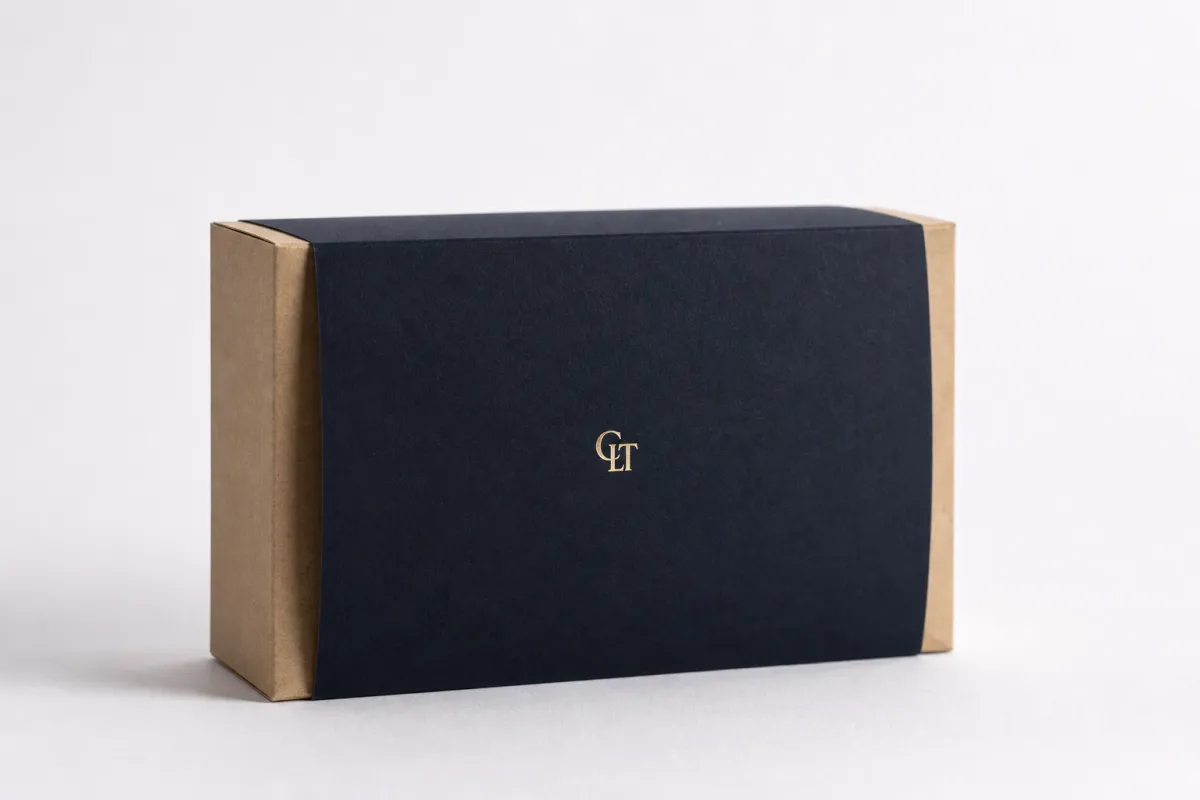
At the simplest level, printed product sleeves with logo are a branded outer layer. They may act as a wrap, band, cover, or jacket around an existing product or carton. Depending on the application, they can be folded paperboard sleeves, label-stock wraps, or heavier carton sleeves that add more structure to the pack.
That plain description hides the real value. Printed product sleeves with logo are not just there to decorate a package. They can carry the headline message, the logo, the scent or flavor cue, the promo offer, the barcode, the legal copy, and even the sustainability statement. Many brands use them to turn a plain stock box into a retail-ready presentation without rebuilding the whole packaging system.
The strongest use cases are easy to spot. Seasonal gift sets need quick visual changes. Limited editions need short runs with a clear identity. Subscription boxes need a lower-risk way to test a concept before committing to a new structural format. In each case, printed product sleeves with logo help the brand stay nimble while the core container stays put.
Sleeves sit in a smart middle ground in the packaging hierarchy. Compared with a label, a sleeve gives more visual space and usually feels more intentional. Compared with a fully custom carton, it is often faster to produce and easier to update. Compared with a belly band, printed product sleeves with logo can offer more structure, more graphic protection, and a more premium read when the stock and finish are chosen well.
That is why sleeves make sense when the business question is not, "How do we reinvent the package?" but rather, "How do we refresh the package without disrupting operations?" If the jar, bottle, tray, or folding carton already works from a fit and fulfillment standpoint, printed product sleeves with logo let the brand add a fresh message without starting from zero.
From a buyer's point of view, the flexibility is the real draw. One sleeve format can support multiple SKUs, multiple retailers, or multiple campaigns. A coffee brand can keep one base bag and vary the sleeve by roast. A skincare line can hold the primary bottle steady and change the sleeve for bundles or holiday sets. Printed product sleeves with logo make that possible without multiplying the cost of a full redesign.
That flexibility also lowers risk early in a launch. If market response is uncertain, a sleeve can be updated far faster than a carton shape or container size. For smaller brands, printed product sleeves with logo can be the difference between testing an idea and loading inventory before demand is proven.
Another detail often gets missed: sleeves can improve the buyer's sense of consistency. When a product family looks organized, the shelf story becomes easier to read. Matching logo placement, a steady typography system, and a clear structural language can make a line feel larger and more coherent than it really is. Printed product sleeves with logo do that with relatively little material.
I have seen teams spend months debating a full packaging redesign when a well-built sleeve would have solved the retail problem much faster. That is not a knock on custom structures; it is just a reminder that the cleanest answer is not always the biggest one.
How Printed Product Sleeves with Logo Work
The production logic is fairly direct, but the details decide whether the sleeve feels crisp or awkward. Most printed product sleeves with logo begin as a die-cut flat sheet. The sheet is printed, scored, trimmed, and folded into a shape that fits around the container or carton. Depending on the design, the sleeve may slide over a box, wrap around a bundle, or lock in place with a tab, tuck, or adhesive point.
Fit is where many first-time buyers underestimate the process. A sleeve that is even a few millimeters too loose can rotate, drift, or sit crooked on shelf. A sleeve that is too tight can scuff the stock, crush corners, or slow down packing. Printed product sleeves with logo are as much about dimensional accuracy as they are about artwork.
Design usually starts with a dieline. That template shows cut lines, fold lines, bleed, and the safe zone. Once the dieline is fixed, artwork can be placed with confidence. Proofing follows, then press setup, finishing, and application. If the sleeve will be applied by hand, the crew needs enough room to work efficiently. If it will go on a line, the machine or applicator should be tested before the full run is approved.
Print method matters as well. Digital printing is useful for short runs, variable artwork, and quick changes. Offset printing usually brings tighter color control and cleaner large-area solids, which suits premium printed product sleeves with logo. Flexographic printing tends to fit larger repeat volumes where speed and unit economics matter more than highly customized work.
Material choice shapes both the feel and the behavior of the sleeve. Paperboard in the 14pt to 24pt range is common for sleeves that need a firmer profile. Lighter stock can work for simple wraps or labels, but it will not behave like a sturdier carton sleeve. If the sleeve needs to travel through distribution, survive handling, or keep crisp edges, the stock and coating should be chosen with those realities in mind.
Printed product sleeves with logo can also simplify the component count. A single sleeve can carry branding, UPC placement, marketing copy, and compliance text, which means fewer separate items to manage. That can help inventory planning, especially when one base package supports several campaigns. The catch is simple: the sleeve must be designed carefully so it does not become the only place where critical information lives.
For brands that care about transit performance, it helps to think about the sleeve inside the larger packaging system. The structure itself may not be the direct target of ISTA or ASTM tests, yet the finished pack still has to withstand distribution, vibration, compression, and handling. The International Safe Transit Association outlines common distribution testing protocols at ista.org, and that reference becomes useful when the outer package is doing more than sitting on a shelf.
Cost, Pricing, and MOQ for Printed Product Sleeves with Logo
Pricing gets interesting quickly, because the final number depends on several moving parts. Size is one factor. Material is another. Then there is print coverage, number of colors, finish, die-cut complexity, and whether the design includes windows, special folds, or glue points. Two sleeves that look nearly identical on a screen can land at very different costs once they reach the pressroom.
MOQ, or minimum order quantity, changes the equation as well. Lower quantities usually cost more per unit because setup work, proofs, plate costs, and press prep are spread across fewer pieces. A small run of printed product sleeves with logo may still be the right choice if the goal is a test launch, a retailer-specific pack, or a seasonal campaign, but the economics should be evaluated in total, not only by unit price.
As a practical benchmark, many small-run paperboard sleeves fall somewhere around $0.18 to $0.45 per unit at mid-range quantities such as 5,000 pieces, while more complex jobs can run higher. Very short runs can move above that, especially if the design includes specialty finishes, windowing, or manual assembly. Those figures are directional rather than universal, but they are useful for setting expectations before quotes arrive.
The larger point is simple: printed product sleeves with logo should be priced as part of a packaging system, not as an isolated printed sheet. Freight, sampling, proof corrections, assembly, kitting, and line application all matter. A quote that looks cheaper on paper can become more expensive once labor and shipping enter the picture. The total landed cost deserves the real attention.
| Print Method | Best For | Typical Strength | Lead Time | Relative Cost |
|---|---|---|---|---|
| Digital | Short runs, fast updates, seasonal tests | Quick changeover, variable artwork | Often the fastest once artwork is approved | Higher unit cost at larger volumes |
| Offset | Color-critical branding and medium to high volumes | Excellent image consistency and solids | Moderate, depending on finishing | Balanced at scale |
| Flexo | Longer runs with repeat artwork | Efficient production for larger volumes | Can be efficient for repeat jobs | Usually strongest on unit economics at scale |
That table is why quote comparisons need discipline. If one vendor prices printed product sleeves with logo on 16pt SBS with matte AQ coating and another prices them on 14pt C1S with no coating, those are not the same job. The same goes for die-cut complexity, ink coverage, or whether the quote includes folding and packing. Comparing apples to apples sounds basic, yet that is where a lot of packaging budgets drift off course.
Finishing choices can quietly drive cost. Soft-touch lamination, spot UV, foil accents, embossing, and specialized varnishes all improve shelf presence, but each one adds time and expense. A sleeve does not need every finish to look premium. Sometimes the stronger move is a restrained design on a clean stock with one high-contrast detail. Printed product sleeves with logo often look better when the finish supports the message instead of competing with it.
One more economic angle matters to operations teams: printed product sleeves with logo can reduce the need for a full structural change. If the base package is already approved, stocked, and familiar to the line, the sleeve becomes a lower-friction refresh. That does not automatically make it cheaper in every case, but it often costs less than replacing the entire primary package.
For buyers who want to keep sustainability claims grounded, FSC-certified stocks are worth asking about. The Forest Stewardship Council explains chain-of-custody and sourcing criteria at fsc.org. If the sleeve carries a recycled-content or responsible sourcing message, the paper grade and certification status should be checked before artwork is locked.
Production Process and Timeline: From File to Finished Sleeves
Production begins before anyone touches a press. First comes the brief, which should include product measurements, target quantity, application method, finish preference, and any compliance text that must appear on printed product sleeves with logo. Then the dieline gets built or reviewed. If the dimensions are even slightly off, the rest of the process gets more expensive than it needs to be.
Artwork usually comes next. Good prepress habits save time here. Vector files are cleaner than flattened images. Fonts should be outlined or packaged correctly. Bleed should be set properly, and the safe zone should respect the fold. If barcodes, lot codes, or legal statements need to live on the sleeve, they should be placed early rather than squeezed in at the end.
Proofing is the first gate where delays often appear. One round of corrections is normal. Three rounds usually mean something upstream was not settled. Color tweaks, structural changes, and late content updates can all push printed product sleeves with logo out of the queue. It is not the printer being difficult; it is the job asking for more setup each time the spec changes.
As a rough planning framework, simple digital jobs can sometimes move through production in 5 to 10 business days after proof approval. Offset or flexo work may need 10 to 18 business days, especially if die-cutting and finishing are involved. Specialty coatings, foil, embossing, or manual assembly can stretch that window further. The exact timeline depends on volume and complexity, but the sequence usually stays the same: proof, print, finish, inspect, ship.
Printed product sleeves with logo also need a practical application test. If they are going onto a line, the pack-out team should verify how the sleeve slides, folds, stacks, and holds under speed. What looks fine on a sample bench can behave differently when 500 or 5,000 units move through the workflow. That is especially true for sleeves that must stay aligned without adhesive.
Distribution testing may sound excessive for a sleeve, but it is not if the outer pack is doing brand and protection work at the same time. Packaging engineers often reference ISTA methods or ASTM-oriented transit testing when a product is vulnerable to scuffing or shifting during shipment. Even the clearest branding can lose impact if the sleeve arrives rubbed, crushed, or misaligned.
For buyers who want a broader packaging education, the Packaging School and trade organizations such as packaging.org can be useful references for design basics, materials, and distribution thinking. That kind of context helps teams make better decisions before they commit to a run of printed product sleeves with logo.
Common Mistakes Brands Make with Sleeves
The most common mistake is also the most expensive: designing printed product sleeves with logo before the final product dimensions are confirmed. Mockups are useful, but they are not measurement tools. A sleeve that looks elegant in a render can fail in production if the carton varies by just a few millimeters or the closure creates extra thickness at the fold.
Visual overload shows up often too. Buyers want the sleeve to work hard, so they add a logo, a product description, a benefit claim, a seasonal message, a QR code, a barcode, legal copy, sustainability claims, and three different finishes. The result can feel crowded rather than premium. Printed product sleeves with logo usually perform better when the hierarchy is disciplined: one main message, one support point, one clear action.
Scuffing is underestimated as well. Dark solids, delicate type, metallic effects, and heavy ink coverage can show handling marks more quickly than a plain carton. That matters in fulfillment, retail replenishment, and e-commerce. A buyer may approve the proof because the art looks good on screen, then be surprised when the final sleeve picks up rub marks during packing. Printed product sleeves with logo should be judged on handling, not only on visual intent.
Compliance placement creates trouble when teams leave it too late. Barcode zones, recycling marks, legal statements, and country-of-origin copy need room. If they are added at the end, they can crowd the design or force a layout reset. A better approach is to reserve that space before artwork gets polished. Printed product sleeves with logo stay cleaner when the functional elements have a planned home.
Approval lag is the quiet mistake that shows up as a budget overrun. Every late change can trigger reproofing, extra press work, and schedule resets. If a sleeve changes after approval, the price and timing may shift more than expected. That is why printed product sleeves with logo should be treated like a production spec, not a casual design file.
There is also a sourcing mistake worth calling out. Some brands compare sleeves by price only and ignore stock grade, coating, or finishing method. Then the cheaper quote arrives with a thinner sheet, a weaker fold, or color that does not hold the brand standard. A low quote is not a win if it fails on shelf. Printed product sleeves with logo need a spec sheet as much as a visual brief.
Finally, do not ignore how the sleeve will be packed. Flat-packed sleeves, pre-applied sleeves, and sleeves inserted at the end of the line each create different labor patterns. If no one tests the actual application step, the job can look perfect in procurement and awkward in operations. That mismatch is more common than people expect.
Expert Tips for Better Shelf Impact
The best sleeves read quickly. That sounds obvious, yet many designs miss the point by trying to say too much. A strong visual hierarchy helps printed product sleeves with logo work in real life: one headline, one brand cue, one supporting detail. If a shopper has to decode the pack, the sleeve has already lost some of its power.
Finish choice should match brand position, not just taste. Matte surfaces usually feel quieter and more refined. Gloss can feel louder and more promotional. Soft-touch often suggests a higher-end price point, but only if the rest of the artwork supports that promise. Printed product sleeves with logo should not look more expensive than the product can justify, because buyers catch that mismatch quickly.
Context testing pays off. A color that looks rich on screen may flatten under store lighting. A delicate type treatment may disappear next to a crowded competitor set. A sleeve that feels right in a PDF may not stand out once it sits among 20 other packs with similar tones. Printed product sleeves with logo should be reviewed on a shelf mockup whenever possible, not only in a digital proof.
Multi-SKU systems are where sleeves really shine. A core structure can be reused across variants, with color, copy, or icon changes doing the sorting work. That keeps the family consistent while reducing redesign time. For brands with five flavors, four scents, or a range of sizes, printed product sleeves with logo can turn a scattered line into a coherent system.
Retailers also like clarity. If the sleeve makes it easier to understand what changes from one SKU to another, the shelf set becomes easier to shop. That can help with recognition, and speed matters more than many teams admit. People do not spend much time studying packaging; they scan. Printed product sleeves with logo help the scan work in the brand's favor.
Use the sleeve as a campaign surface, not just a label replacement. A seasonal claim, a giftable message, a bundle cue, or a limited-edition marker can live on the sleeve without changing the base package. That keeps the core pack stable while giving marketing a fresh visual vehicle. Printed product sleeves with logo are especially effective when the campaign message is clear enough to understand at a glance.
One practical detail separates average sleeves from strong ones: how the edges are handled. Clean folds, accurate trim, and consistent registration tell a buyer the packaging was built with care. If those small signals are off, the whole pack can feel cheaper. Printed product sleeves with logo often win or lose on these production details, not on the idea itself.
Next Steps Before You Request a Quote
Start with measurements. Not approximate measurements, actual measurements. Length, width, depth, closure allowance, and any variation in the base package should all be captured before the quote request goes out. If the product is handmade or the carton tolerances vary, note that upfront. Printed product sleeves with logo are much easier to spec correctly when the real-world size is known.
Then gather the non-visual inputs. Brand files, logo formats, copy, barcode requirements, compliance text, finish preferences, and any sourcing expectations should all be ready before pricing begins. The more complete the brief, the more accurate the response. That matters because printed product sleeves with logo can be quoted very differently depending on whether the supplier is estimating a simple wrap or a detailed branded component with multiple finishing steps.
Ask for samples if the sleeve will be handled often, shipped flat, or displayed in a setting where scuffing matters. A prototype can reveal whether the stock bends cleanly, whether the image sits where you expect, and whether the application step is realistic on the line. Printed product sleeves with logo should earn their place under real use, not just under fluorescent proof-room light.
When you compare vendors, keep the specs identical. Material, print process, finish, quantity, lead time, folding, assembly, and freight should all be lined up side by side. A lower unit price can disappear once labor or shipping is added. Printed product sleeves with logo make sense when the comparison is disciplined and the quote reflects the whole job.
There is also a strategic way to use sleeves that many teams overlook. Treat them as a staged launch tool. Validate the look, test fit, check line speed, and watch the product in actual retail conditions. Then scale the winning version across the rest of the range. Printed product sleeves with logo are often strongest when they are used to learn first and expand second.
That is the core advantage: flexibility without giving up polish. If your base package already works, a sleeve can elevate the presentation without forcing a structural reset. If the brand needs to respond quickly to a season, a channel shift, or a launch window, printed product sleeves with logo can deliver that response with less friction than a full custom box program. For many packaging teams, that is the smartest trade on the table.
What products work best with printed product sleeves with logo?
Printed product sleeves with logo work especially well for cartons, jars, bottles, bars, kits, and seasonal gift sets where the base package already exists. They are also strong for multi-SKU families because the same structural sleeve can carry different graphics without changing the whole pack. In practice, they shine when you want a branded outer layer for retail display, promotions, or short-run launches.
Are printed product sleeves with logo cheaper than custom boxes?
Often yes, because a sleeve can improve the look of an existing package without paying for a full custom structural redesign. The final cost depends on quantity, stock choice, finish, and how much setup work the printer needs. For small runs, compare total quote cost and unit cost side by side so you do not miss setup or freight charges.
How long does it take to produce printed product sleeves with logo?
The timeline usually starts with proofing and dieline approval, which can be the longest part if artwork is still changing. After approval, production time depends on the print method, quantity, and any special finishing or die-cutting. Rush jobs are possible in some cases, but faster turnaround usually means fewer finishing options and tighter approval windows.
What file should I send for printed product sleeves with logo?
Send vector artwork whenever possible, ideally on the correct dieline with bleed, safe area, and fold lines clearly marked. Use outlined fonts, high-resolution images, and the correct color mode so the printer can build an accurate proof. If the sleeve includes barcodes, legal copy, or variable text, separate those elements so they are easy to verify during prepress.
How do I choose the right stock and finish for printed product sleeves with logo?
Choose stock based on the handling conditions: some sleeves need stronger rigidity, while others need better flex and fold performance. Use finishes to support the brand story; matte feels understated, gloss feels louder, and soft-touch signals a more premium position. If the sleeve will be shipped or handled often, ask about scuff resistance and coating options before you approve the final spec.
Printed product sleeves with logo work best when the dimensions are right, the spec is honest, and the design respects the way people actually handle packaging. Get those three things aligned, and the sleeve can do far more than decorate a box. It can organize a product family, sharpen shelf presence, and make the entire pack feel more deliberate. If you are planning a sleeve program, the practical move is to lock the measurements first, then build the artwork around how the pack will be printed, folded, shipped, and touched in the real world.
Related packaging resources
Use these related guides to compare specs, costs, quality checks, and buyer decisions before making the final call.


