Printed PVC Zipper Garment Bags Low MOQ Quote Guide for Smaller Runs
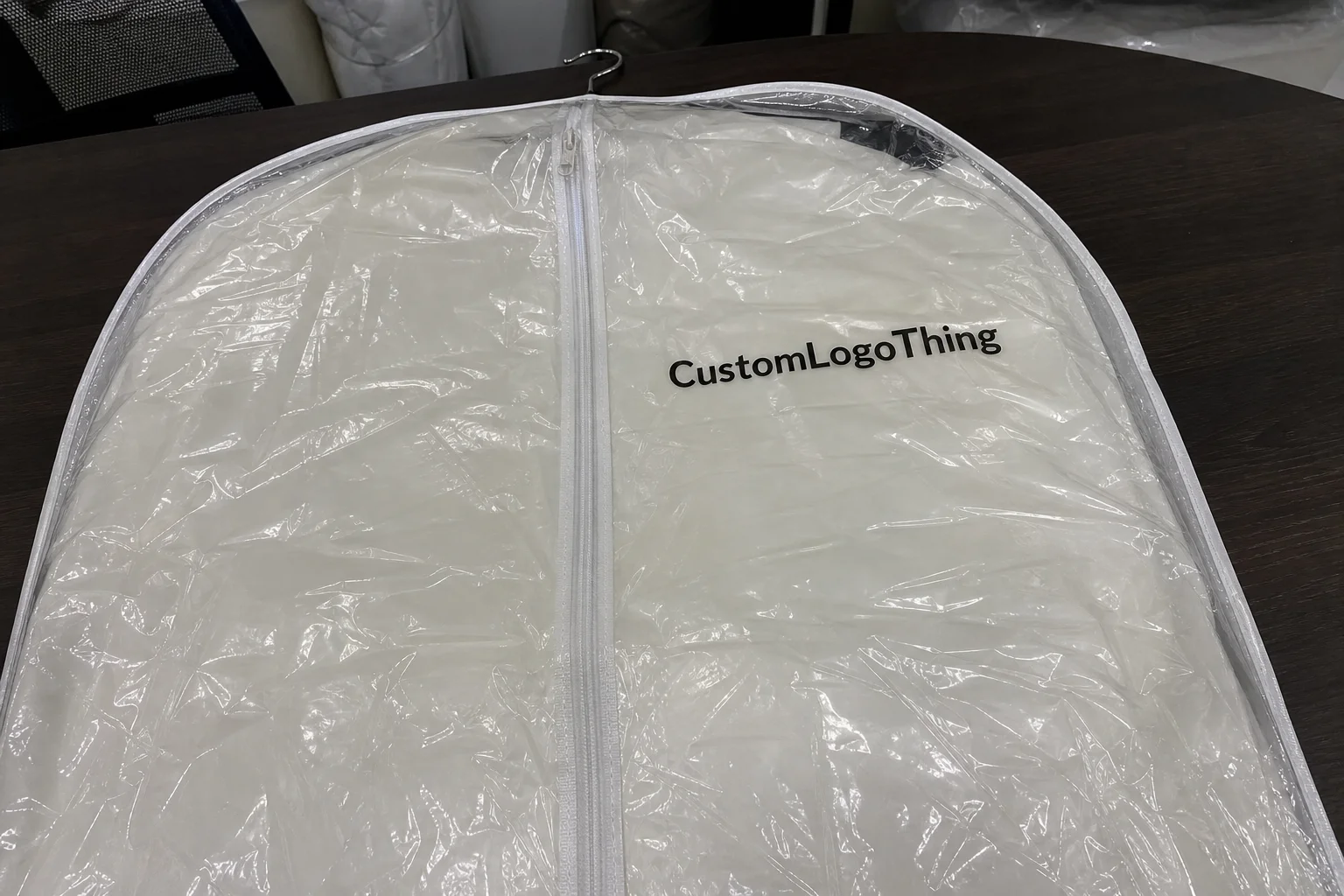
A boutique apparel brand may need only 300 to 800 garment bags for showroom samples, retail sets, uniform issue, or a seasonal launch. That is exactly where a printed PVC Zipper Garment bags low MOQ quote guide earns its keep. Large packaging suppliers are often built around high-volume runs, but smaller apparel programs still need clear answers on film thickness, zipper construction, print placement, cost per piece, and lead time before money gets parked in packaging inventory.
Low MOQ PVC Zipper Garment Bags solve three basic jobs at once. They improve presentation, protect garments from dust and handling marks, and keep the product visible without opening every pack. For suits, dresses, outerwear, uniforms, dancewear, costumes, bridalwear, and packaged apparel, that clear view matters. Staff can identify the garment quickly. Customers can inspect color and shape. Warehouse teams avoid opening and repacking bags just to check what is inside.
This is not a luxury add-on. It is functional plastic packaging. A well-sized PVC garment bag can reduce showroom wear, limit short-term exposure to dust and light handling moisture, and keep lint, fibers, and fingerprints away from finished fabric. For short retail cycles, sample-room organization, and customer handoff, 0.12 mm to 0.18 mm PVC may be enough. For repeated handling, travel samples, uniforms, or higher-value garments, many buyers move toward 0.20 mm to 0.30 mm film, depending on size, garment weight, and structure.
Low MOQ does not mean loose specs. Actually, the opposite is true. Small runs leave less room for waste, rework, and “we’ll fix it next time” thinking. The cleaner the size, thickness, print, zipper, and packing details are, the faster a supplier can quote without padding the price for unknowns.
Buyer callout: If the quote request says only “clear garment bag with logo,” expect follow-up questions or a cautious price. If it lists dimensions, gauge, zipper length, print colors, and quantity breaks, the quote gets sharper fast.
What Buyers Get with Custom Printed PVC Zipper Garment Bags
A custom printed PVC Zipper Garment bag usually starts with transparent or lightly tinted PVC film, a front zipper opening, sealed or stitched edges depending on construction, and a hanger opening at the top. The design may also include a side gusset, bottom gusset, reinforced top panel, fabric-style edge binding, carry handle, snap closure, or printed information panel. Those choices matter because a garment bag used once at retail does not need the same build as a sample bag opened 40 times by sales staff.
The zipper is a practical upgrade over flap-only garment covers. A flap can work for light dust protection, but it often tears, curls, or creases after repeated use. A zipper lets staff open the front, check size labels, inspect trim, repack the garment, and carry it without forcing the product in from the bottom. Standard nylon coil zippers are common because they are flexible and cost-efficient. Colored zipper tape or a metal-look slider can be added when presentation matters, although those details can push up cost on small runs.
Most print goals are simple. A buyer may want a one-color logo near the chest area, care instructions along the lower panel, a repeat pattern, size coding, product line names, or a brand mark placed where it stays flat while the garment hangs. Screen printing is common for spot-color logos because it gives good opacity on clear PVC. Larger print zones and full-color decoration can be reviewed, but tiny type, soft gradients, and heavy ink coverage need testing on flexible film. PVC is not a glossy catalog page. It bends, rubs, and moves.
Showroom bags, retail take-home bags, sample-room bags, and warehouse garment covers should not be specified the same way. A showroom bag may prioritize clear film and a neat logo. A retail handoff version may need handles and stronger zipper travel. A warehouse cover may be plain, larger, and cheaper. A sales sample bag may need a heavier gauge because it will be opened, zipped, moved, packed, and reopened until everyone is tired of looking at it.
PVC gives a crisp clear view and a slightly structured hand feel, but buyers selling into larger retailers should confirm material restrictions before ordering. Some retailers have PVC policies, phthalate restrictions, labeling rules, or internal packaging guidelines. Export programs may also need destination-market review. For broader packaging performance and distribution thinking, organizations such as ISTA publish useful testing frameworks, while the EPA provides material and waste guidance that can help internal teams review packaging choices.
Material Thickness, Size, Zipper, and Print Specifications
Good quoting starts with the physical build. PVC thickness is usually discussed in millimeters or microns, and the right choice depends on use. A light dust cover may use about 0.10 mm to 0.12 mm PVC. A retail or showroom bag often sits around 0.15 mm to 0.20 mm. Reusable sample bags, uniform issue bags, and heavier outerwear covers may call for 0.22 mm to 0.30 mm, especially if handles, gussets, or frequent zipper use are involved.
Thicker film is not automatically better. It costs more, weighs more, and can feel too stiff on small bags. Thin film is not automatically cheap junk either. For a short-term dust cover, it may be exactly right. The mistake is choosing thickness from a photo. Photos hide weight, flex, edge finish, zipper feel, and how the bag hangs once loaded.
Size planning should start with the garment on the hanger that will actually be used. Shirts and light jackets may fit shorter bags around 24 to 30 inches long. Suits and uniforms often need 40 to 48 inches. Dresses, coats, gowns, and bridalwear can require 54 to 72 inches or more, with extra width if the garment has padding, volume, or structured shoulders. A bag that is 1 inch too narrow can create zipper strain and wrinkles, so confirm the finished width instead of relying only on garment size labels.
Width is where buyers get burned. Broad suit hangers, padded shoulders, layered garments, and bulky coats need room. If the zipper is pulled tight every time the bag closes, the problem is not the zipper. The bag is undersized. A gusset can help, but it adds material and assembly cost, so it should be specified because the garment needs it, not because it sounds premium.
Zipper choices affect both cost and function. A full-length front zipper gives easy access, but it uses more material and assembly time than a shorter opening. A standard nylon coil zipper with a plastic slider is usually the best value. Colored tape, branded pullers, metal-look sliders, double sliders, and extra-long zipper runs add cost. For a low MOQ order, stay focused on features that improve use. Decorative hardware is nice until the setup charge lands.
Print method belongs in the first quote conversation. Screen printing works well for simple logos, one-color artwork, and strong opacity. Heat transfer or label-style decoration can suit certain graphics, depending on the film surface and quantity. Flexible PVC does not reproduce very fine lines, tiny reversed-out text, or soft gradients the same way as paperboard or rigid plastic. A clean vector logo, Pantone reference, and marked print location reduce back-and-forth.
- Common quote details: finished width and length, PVC thickness, zipper length, hanger hole style, gusset depth, print color count, print area, handle type, edge binding, and individual packing.
- Useful artwork files: AI, EPS, PDF, or clean vector artwork, with Pantone references if brand color matching is expected.
- Fit detail: padded garments, broad hangers, and bulky coats often need extra side space or a gusset to prevent stress at the zipper.
- Material caution: confirm PVC requirements for your sales channel, especially if bags are going to major retailers or regulated export markets.
Pricing, MOQ, and Unit Cost Factors Buyers Should Expect
Unit cost is driven by bag size, PVC thickness, zipper length, print colors, print area, gussets, handles, reinforcement, packing method, and order quantity. A small plain cover with one-color printing will price very differently from a long gown bag with a side gusset, full zipper, reinforced handle, edge binding, and individual poly packing. Obvious, yes. Still the source of half the quote confusion.
Low MOQ orders cost more per unit because setup time is spread across fewer bags. Material cutting, print screen preparation, ink matching, zipper preparation, line changeover, inspection, and packing still have to happen whether the order is 300 pieces or 3,000 pieces. Tooling fees and setup charges may be modest for simple screen printing, but they hit harder on small runs.
Buyers can reduce cost without weakening the bag. Choose a standard size if it fits the garment. Use one-color printing. Keep the print area moderate. Avoid hardware that does not improve daily use. Consolidate SKUs when possible, because three separate 300-piece sizes are usually less efficient than one 900-piece run. Request quantity breaks at 300, 500, 1,000, and 3,000 pieces so purchasing teams can see where the price starts to improve.
Exact pricing varies by market, material cost, labor, freight, and exchange rates. As a broad planning range, simple low MOQ PVC garment bags may land anywhere from under a dollar to several dollars per piece depending on size and build. Larger, heavier, reinforced, or multi-color printed bags can move higher. Treat that as budgeting context, not a quote. Any supplier pretending one price fits every garment bag is being cute.
| Order Type | Typical Specification | Buyer Benefit | Cost Effect |
|---|---|---|---|
| Low MOQ launch run | 300 to 500 pieces, standard size, one-color logo | Lower inventory risk and faster decision-making | Higher unit cost because setup is spread over fewer bags |
| Replenishment run | 1,000 to 3,000 pieces, approved size and artwork | Better repeat consistency and easier planning | Improved cost per piece and fewer proofing steps |
| Reusable sample bag | 0.22 mm to 0.30 mm PVC, longer zipper, reinforced handle | Better durability for sales teams and showrooms | Higher material and assembly cost |
| Retail dust cover | 0.12 mm to 0.18 mm PVC, simple zipper, moderate print | Clear presentation and basic protection | Lower cost if size and print stay simple |
A proper quote should show material thickness, finished dimensions, print method, zipper details, packing, proofing steps, estimated lead time, freight terms, and any setup or sample fees. If those items are not listed, ask for clarification before comparing suppliers. Many buyers lose time by comparing a bare unit price against a detailed quote and assuming both include the same construction. They usually do not.
Artwork, Sampling, and Production Timeline Before Shipment
The normal production path is practical: specification confirmation, artwork review, digital proof, optional pre-production sample, material preparation, cutting, printing, assembly, inspection, packing, and shipment. A simple repeat order can move faster because the size, print, and construction have already been approved. New custom sizes, color matching, wide print coverage, or added hardware need more control.
A digital proof checks placement, layout, logo scale, and general artwork direction. It does not prove film feel, zipper pull, finished size, or print opacity under real lighting. A physical sample does. For a first-time order of 500 pieces, some buyers skip a sample to save time. For a higher-value garment program, a sample can prevent expensive fit problems. Not every project needs sampling, but complex bags usually benefit from it.
Typical timing depends on the production queue and freight method, but buyers should think in stages. Artwork review and proofing may take 1 to 3 business days if files are complete. A physical sample may add roughly 5 to 10 business days, depending on materials and decoration. Production after approval may take around 12 to 20 business days for many straightforward custom PVC garment bag orders, while heavier construction or multiple SKUs can take longer. These are working ranges, not promises, because material availability and shipping method can change the schedule.
Common delays are easy to avoid. Missing logo files, no Pantone reference, changing dimensions after proofing, late sample approval, unclear hanger-hole requirements, and freight decisions made after production can all push a project off track. Share the delivery deadline early, whether it is tied to a retail launch, trade show, uniform issue date, photo shoot, or garment shipment schedule. Production planning works better backward from the date the bags are actually needed.
- Confirm garment type, hanger style, and finished bag size.
- Approve artwork placement through a digital proof.
- Review a sample if the bag is new, bulky, reusable, or brand-sensitive.
- Approve production only after size, print, zipper, and packing are clear.
- Choose freight early so shipment timing is not left until the end.
Quality Checks That Prevent Zipper, Print, and Fit Problems
Quality control for PVC garment bags should be simple but firm. Before approval, check finished width and length, hanger opening, garment fit, zipper travel, seam strength, edge finish, print position, print opacity, and packing count. If the bag has a handle, lift it with the intended garment inside. If it has a gusset, confirm the garment sits naturally instead of twisting toward the zipper.
Several common mistakes are avoidable. A bag that is too tight for padded garments will make the zipper work harder and may wrinkle the garment. Artwork placed across a fold or near a heavy handling zone can scuff faster. Very fine type may lose clarity on flexible PVC, especially if the film has texture or the print area flexes. Hanger shape matters too; a broad suit hanger needs more room than a thin retail hanger.
Functional testing does not need a laboratory for the first pass. Open and close the zipper 10 to 20 times. Insert the real garment. Hang it for a few minutes and check whether the shoulders sit correctly. Lift the bag by any handle. Look at the print under normal showroom lighting, not just at a desk. If the bag is meant for travel samples, pack it the way the sales team will pack it. Gentle testing tells you almost nothing.
Print durability depends on ink selection, curing time, film surface, and where the artwork sits. Proper curing helps reduce transfer and smudging. Smaller logos placed on flatter zones usually perform better than large ink blocks across bend points. For distribution packaging, buyers may also use ASTM or ISTA-style thinking around handling, compression, and transit stress, even if the garment bag itself is not a shipping carton.
Approved samples reduce disputes because both buyer and manufacturer are measuring the same finished bag, not estimating from a general description. Keep one approved sample on file if repeat orders are likely. It gives purchasing, design, and production a shared reference for gauge, print color, zipper length, edge finish, and packing style.
Low MOQ Order Planning Without Overbuilding the Bag
Small custom packaging orders work best when the bag is matched to the job. Retail-ready presentation, warehouse protection, sales sample organization, event apparel packing, branded customer handoff, and reusable uniform distribution all have different stress points. Overbuilding a simple dust cover wastes money. Under-specifying a reusable sample bag creates zipper failures, poor fit, and rushed reorders. Nobody enjoys paying freight twice because the first bag was too flimsy.
Start with the use case, not the logo. A bag that sits in a stockroom for two weeks can be lighter than one that travels with a sales rep for six months. A bridal gown cover needs different length and volume than a uniform shirt bag. A showroom sample may need stronger clarity and cleaner print placement than a back-of-house storage cover. Once the use is clear, the material, size, zipper, and packing method are easier to choose.
Low MOQ pricing improves when the design uses standard materials, efficient cutting, simple decoration, and consolidated bag sizes. If the project needs several sizes, heavy print, reinforced handles, or special zipper colors, those details can still be quoted, but they should be identified early. Surprises late in proofing usually turn into revised pricing or longer timelines. Charming, in the same way a delayed shipment is charming.
A fact-focused process helps buyers compare real options. Confirm the use case. Define the dimensions. Pick the PVC thickness. Choose the zipper style. Review artwork. Request quantity breaks. Identify any production detail that could affect price or schedule. If questions come up before sending files, the custom packaging FAQ is a useful starting point, and the Contact Us page is the direct route for project details.
For many smaller apparel brands, this quote process is less about chasing the lowest number and more about avoiding the wrong number. The cheapest bag on paper can become expensive if it is too short, too thin, badly packed, or hard to use every day.
Next Steps to Request an Accurate Garment Bag Quote
A clean quote starts with a clean checklist. Send the garment type, finished bag size, order quantity, PVC thickness preference, zipper style, print color count, logo file, packing requirement, and delivery destination. If the thickness is undecided, describe the use case. A retail dust cover, showroom display bag, and reusable sales sample bag may look similar in a photo, but they do not need the same film gauge or reinforcement.
If you have a current bag, send a reference photo or physical sample. Visible details such as gussets, zipper length, hanger opening, edge binding, seam style, and handle placement can change the quote. A photo of the garment on its hanger helps even more. Include whether bags should be individually packed, bundled in 25s or 50s, or packed by size, because packing method affects labor, carton count, and warehouse handling.
Ask for quantity breaks rather than one quantity only. Pricing at 300, 500, 1,000, and 3,000 pieces shows how MOQ, bulk pricing, setup charges, and cost per piece change as volume increases. That makes it easier to decide between a low MOQ launch order and a larger replenishment order. It also helps finance teams see whether holding more inventory is worth the unit cost reduction.
After the inquiry, specs are reviewed, missing details are clarified, pricing is prepared, artwork proofing begins after approval, and sampling can be added if the project needs confirmation. Send complete specs through Custom Logo Things contact support so the quote can be built around the actual bag, not a rough guess dressed up as a number.
FAQ
What information is needed for a printed PVC zipper garment bags low MOQ quote?
Provide finished bag size, PVC thickness, quantity, zipper style, print colors, logo file, packing method, delivery location, and whether you need a sample before production. If size or thickness is undecided, share the garment type, hanger style, and a reference photo so the quote can include practical recommendations instead of assumptions.
What is a realistic low MOQ for custom PVC zipper garment bags?
Low MOQ depends on size, material availability, print method, and construction complexity. Simpler standard-size bags with one-color printing are usually easier to quote at lower quantities, while special sizes, multiple SKUs, heavy decoration, or custom hardware may need higher volume. Request several quantity breaks so you can compare launch-order cost against larger runs.
How does PVC thickness affect the price of printed garment bags?
Thicker PVC increases material cost and shipping weight, but it can improve structure, handling feel, and durability for reusable garment bags. Lightweight PVC may work for dust protection or short-term retail use, while heavier gauges are better for samples, uniforms, bridalwear, and frequent handling. The right choice depends on garment weight, use cycle, and presentation expectations.
Can I print a full-color logo on PVC zipper garment bags?
Full-color decoration may be possible depending on artwork, film surface, print area, and order quantity, but simple one-color or spot-color logos are often more cost-efficient. Fine gradients, tiny text, and large ink coverage should be reviewed before quoting because flexible PVC behaves differently than paper, rigid plastic, or coated board.
How long do printed PVC garment bags take to produce after approval?
Lead time depends on sample needs, material availability, print complexity, production queue, and freight method. Simple repeat orders are usually faster, while new custom sizes, heavy decoration, color matching, or added hardware require more proofing and quality checks. Share the delivery deadline early so production planning can work backward from the required arrival date.


