Fast Printed PVC Zipper Garment Bags Quote for Apparel
Why Apparel Buyers Ask for PVC Zipper Bags Before Cartons
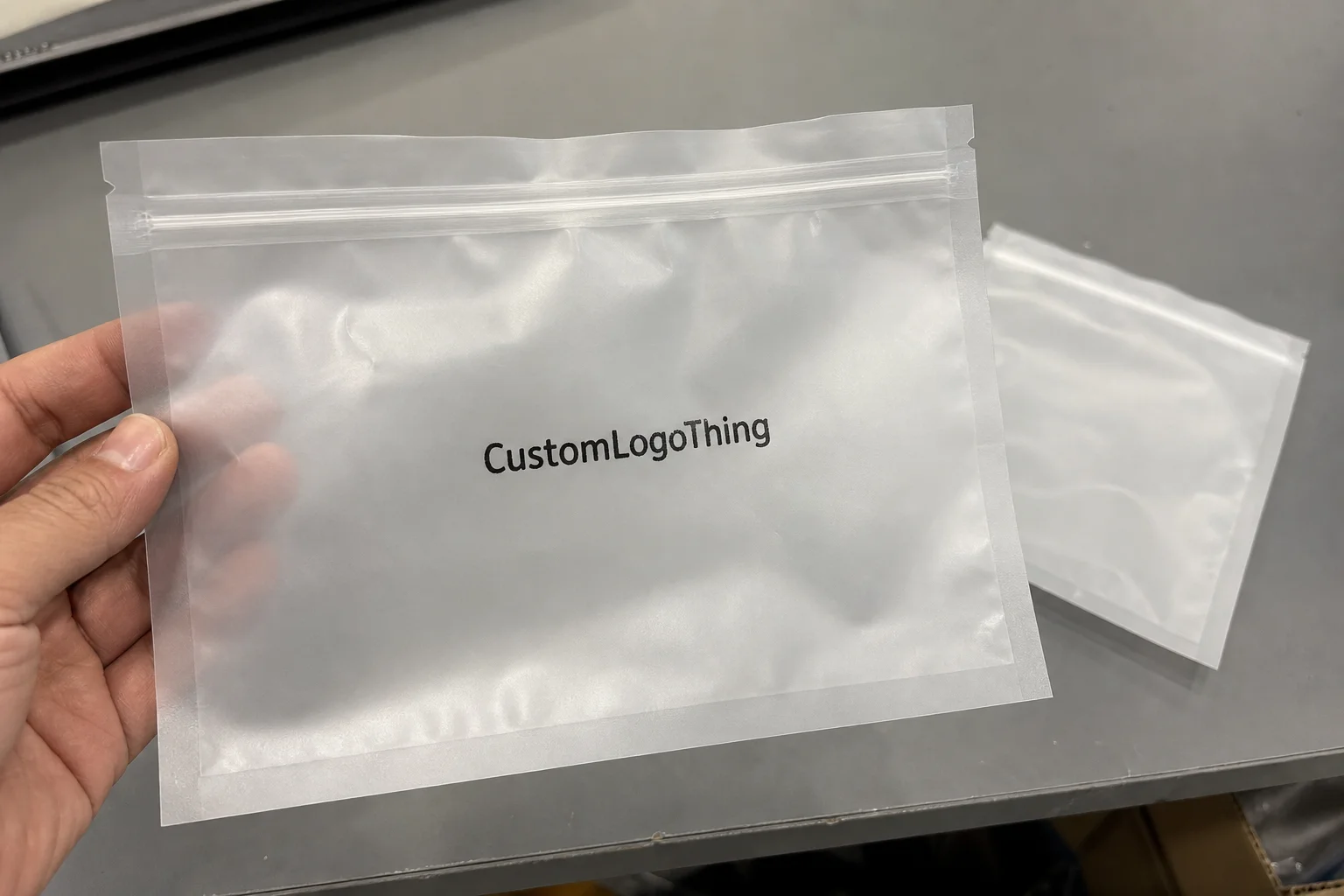
A $180 jacket can survive freight inside a master carton and still arrive looking second-rate. If the first thing a retail buyer sees is a cloudy, wrinkled sleeve with a weak closure, the garment has already lost value before anyone checks the stitching, fit, or trim.
Buyers requesting a printed PVC Zipper Garment Bags quote for apparel are usually trying to solve several practical problems at once: presentation, protection, SKU control, and repeated handling. Garment packaging is not only about preventing rips. It also helps reduce dust marks, misplaced belts or accessories, mixed sizes, hanger abrasion, and the repacking that happens after showroom review or internal inspection.
Basic flat poly bags are cheaper, and for many programs they are the correct choice. A lightweight LDPE garment sleeve can work well for one-way warehouse protection, especially for shirts, basics, or low-margin replenishment items. PVC Zipper Garment Bags sit in a different lane. They are more structured, more reusable, and better suited to outerwear, uniforms, formalwear, private-label samples, costumes, gowns, and retail presentation kits.
Visibility matters. Clear or frosted PVC allows sales teams, warehouse staff, and retail buyers to identify style, color, size, trim, and included accessories without opening the bag. That can cut handling, and less handling usually means fewer wrinkles, fewer missing pieces, and fewer repacks.
Packaging buyer reality: apparel damage is rarely only a tear or stain. Creasing, dust, missing belts, detached hangtags, weak SKU separation, and a poor first impression all create cost.
Custom Logo Things helps buyers move from a vague “how much are garment bags?” question to a quote built around measurable specifications: size, PVC thickness, zipper style, print colors, quantity, packing method, and delivery deadline. A proper quote should not be one random number. It should show what drives the cost and where the buyer can adjust specs without weakening the package.
Product Details That Matter for Apparel Presentation
The core product is straightforward: a flexible PVC garment bag with a zipper closure, custom logo or instructions, optional hanger opening, reinforced seams, and size options for folded or hanging garments. The details decide whether it feels like protective packaging or an afterthought.
Common uses include suits, dresses, coats, gowns, uniforms, costumes, dancewear, teamwear, retail samples, private-label outerwear, and showroom pieces. A short jacket bag may need only enough clearance for the shoulders and sleeves. A gown bag may need a longer body, gusseted depth, and a stronger zipper pull because staff may open and close it repeatedly.
PVC is used because it offers clarity, water resistance, scuff resistance, and enough body to feel more substantial than thin disposable packaging. It is not always the correct material for every program. PEVA, non-woven garment bags, or standard poly garment covers may make more sense depending on budget, retailer rules, sustainability requirements, and reuse expectations. Still, for visual apparel presentation, PVC remains popular because buyers can see the product while the garment stays protected.
Closure choice has a direct effect on usability. A standard zipper is usually fine for basic apparel storage. Nylon zipper tape can reduce snagging and gives more color options. Metal-look pullers add a premium cue without necessarily using heavy hardware. Double zippers help with long garment bags, especially gowns or travel-style covers. Side zips are common for hanging garments; center zips can be easier for retail handoff and sample review.
Handles and hanger features deserve more attention than they usually receive. A die-cut handle may be economical, but it needs reinforcement if the garment is heavy. Stitched handles or non-woven handles improve carrying comfort. Hanger holes should be placed cleanly and may need reinforced patches if the bag will hang for weeks in a stockroom or showroom. Gussets, often in the 2-inch to 6-inch range, help prevent compression on coats, embellished dresses, or multi-piece uniforms.
Branding options range from a one-color logo to more detailed print systems. Typical choices include one-color screen print, two- or three-color logo printing, heat transfer labels, full-panel artwork, warning text, size grids, barcode blocks, care instructions, return routing, or retailer-specific compliance copy. Screen printing is efficient for clean logos and limited colors. Heat transfer can support finer details, gradients, or smaller typography, but it needs review for adhesion and placement on the selected PVC surface.
The best bag is not automatically the thickest or most expensive one. This is one of the more common mistakes in apparel packaging buying. A reusable sales kit for a $600 coat may justify heavier gauge PVC and cleaner print registration. A temporary warehouse cover for mid-price uniforms may not. The right specification depends on garment weight, storage life, handling frequency, and whether the end customer will see the bag.
Material, Size, Thickness, and Print Specifications
Quote accuracy depends on technical variables. The main ones are bag width, height, gusset depth, PVC thickness, zipper type, print area, print colors, handle style, hanger opening, seam reinforcement, and packing method. Small changes can matter. Increasing a long garment bag by 2 inches in width and 4 inches in height adds material across every unit, every carton, and every freight calculation.
PVC thickness is usually discussed in gauge, micron, millimeter, or mil, depending on the supplier and market. Buyers do not need to become polymer engineers, but they should know the practical categories. Lighter gauge material suits shirts, light garments, or short-term storage. Mid-range PVC is common for jackets, uniforms, suits, and sample programs. Heavier gauge material fits coats, gowns, reusable retail covers, and bags expected to handle repeated opening.
| Typical Use | Common Specification Direction | Buyer Watchout |
|---|---|---|
| Light shirts or folded apparel pouches | Lighter PVC, simple zipper, one-color logo | Do not overspec thickness if the bag is short-term packaging only. |
| Suits, uniforms, teamwear, samples | Mid-range PVC, side zipper, hanger opening, logo plus size grid | Confirm shoulder width and zipper path before approving artwork. |
| Coats, gowns, formalwear, showroom kits | Heavier PVC, gusset, reinforced hanger area, stronger zipper pull | Freight volume can rise quickly because these bags pack bulkier. |
| Retail-facing premium programs | Clear or frosted PVC, clean print registration, reinforced seams | Request proofing or a pre-production sample if brand presentation is critical. |
Measure the garment first. Copying an old bag blindly is risky because apparel patterns, hangers, and trim packages change. Measure shoulder width on hanger, garment length from hanger hook to hem, the widest bulk point, sleeve clearance, embellishments, shoulder pads, belts, hangtags, and any accessory pouch. Add enough clearance so staff can insert the garment without forcing the zipper. For a bulky coat, that extra room may be the difference between a reusable cover and a zipper failure.
Typical size families include short jacket bags, suit-length bags, dress-length bags, folded garment pouches, and travel-style garment bags. There is no single universal standard. A blazer sample and a bridal-style gown cover are both “garment bags,” yet their material usage and zipper stress are entirely different.
Print specifications also influence cost and approval time. One-color screen printing is usually the most economical route for bold logos, care text, or inventory panels. Multi-color screen printing requires tighter registration and more setup. Heat transfer can handle finer details or complex logos. Larger print coverage increases ink use, setup review, drying or curing considerations, and the risk that seams or zipper tracks interfere with artwork.
Compliance copy should be settled early. Suffocation warnings, recycling marks where applicable, material identification, barcode areas, country or retailer requirements, and care or return instructions need space on the dieline. For transport testing and distribution expectations, buyers often reference standards from groups such as ISTA. For broader packaging policy and waste considerations, the EPA Sustainable Materials Management hierarchy is a useful framework, especially if internal teams are comparing reuse, reduction, and material choices.
Artwork should be supplied as vector files whenever possible. Pantone references help with color matching, although exact color can vary on clear, frosted, or tinted PVC. Dielines should show logo placement, zipper location, hanger opening, seam allowances, handle position, gusset fold, warning text, and any barcode block. If those details are missing, the quote may still be possible, but the risk of revisions rises.
Printed PVC Zipper Garment Bags Quote for Apparel: Cost, MOQ, and Unit Cost
Pricing is driven by material usage first. Bigger bags and thicker PVC usually raise unit cost faster than small changes in logo size. A buyer may focus on whether the logo is 4 inches or 6 inches wide, while the supplier is calculating square inches of PVC, zipper length, gusset construction, packing volume, and labor steps.
The main cost drivers are PVC gauge, bag dimensions, gusset depth, zipper quality, number of print colors, print coverage, handle style, reinforced components, order quantity, carton packing, freight destination, and delivery deadline. A clean one-color logo on a standard suit bag may quote very differently from a frosted dress-length garment bag with double zippers, reinforced hanger patch, full-panel print, and individual poly wrap.
MOQ depends on the specification. Lower quantities may be possible for simple one-color printed bags, but better unit economics usually appear once production can run efficiently with fewer material changes and setup interruptions. A 500-piece order may be reasonable for samples, showroom pilots, or new product launches. A 3,000-piece or 5,000-piece order often reduces the per-bag cost because fixed setup charges are spread across more units.
For context, a relatively simple custom printed apparel zipper bag might land in a broad range such as $0.85 to $2.20 per unit at moderate quantities, while larger or heavier retail-facing garment covers can move into the $2.50 to $6.00+ range before freight. That range is not a promise. It depends on size, thickness, print, zipper, packing, and origin. A formal printed PVC Zipper Garment Bags quote for apparel should separate product cost, setup cost, sample cost, and estimated freight so the buyer can see what is driving the number.
Setup charges may include screens, artwork preparation, color matching, sampling, or tooling for unusual handles and custom shapes. Some charges are one-time if artwork and construction stay the same. Others return with each order, especially if color matching, new print screens, or special handling are required.
| Quote Factor | Typical Impact on Cost | Practical Buyer Question |
|---|---|---|
| Bag size | High | Can the garment fit with 1 to 2 inches of clearance instead of excessive oversizing? |
| PVC thickness | High | Is the bag disposable, reusable, or customer-facing? |
| Print colors | Medium to high | Can the logo work in one strong brand color? |
| Zipper and puller | Medium | Will staff open the bag once, ten times, or dozens of times? |
| Handles and reinforcement | Medium | Does the garment weight justify stitched or reinforced carrying features? |
| Freight volume | Medium to high | Are cartons bulky enough to affect landed cost more than expected? |
Freight deserves a hard look. PVC garment bags can be bulky because they do not compress like thin poly mailers. Carton size, shipping method, destination ZIP or port, and required delivery date can shift landed cost significantly. Air freight may protect a trade show deadline but ruin the economics of a low-margin replenishment order.
To price accurately, provide target quantity, finished bag size, thickness preference, print colors, zipper style, handle or hanger needs, delivery location, required in-hands date, and whether a pre-production sample is needed. If specs are not final, Custom Logo Things can still give a directional range, but a firm quote needs defined construction.
Production Steps, Proofing, and Lead Time
A good order process is boring in the best way. Specification review. Price estimate. Artwork check. Dieline confirmation. Sample or digital proof. Deposit. Production. Quality control. Packing. Shipment. Each step removes ambiguity before money and material are committed.
Proofing matters more with zipper garment bags than with many flat packaging formats. Seams, folds, hanger openings, gussets, zipper tracks, and stitched areas can all interfere with logo placement. A logo that looks centered on a flat dieline may sit too close to the zipper once the bag is filled. A barcode block may become unreadable if it lands near a fold.
Sample options vary. An existing sample can confirm material feel, thickness, zipper function, and general construction. A printed pre-production sample gives the best approval point for final logo placement and print quality. Production photo approval can work when timeline or budget is tight, but it is less reliable than holding the actual bag, especially for premium apparel.
Lead time depends on order quantity, material availability, print complexity, sample approval speed, and shipping method. A simple one-color logo order may move faster than a multi-color frosted PVC program with custom trim and reinforced handles. In many custom packaging runs, buyers lose more time before production than during production because artwork is incomplete or specifications keep changing.
The most common delay is not unusual at all. It is a late change to size, thickness, zipper position, or print colors after pricing. Those changes can alter material consumption, setup, dielines, screens, and carton planning. If a buyer asks for a printed pvc zipper garment bags quote for apparel and then changes from a short jacket bag to a gusseted coat bag, the quote should be rebuilt rather than patched.
Rush production may be possible for simple one-color logo bags using standard construction. Complex bags need more review. Custom zipper trims, double zippers, special hanger patches, multi-color printing, unusual shapes, or retail compliance panels all add approval points. Rushing those steps can create expensive errors.
Quality checks should include size tolerance, zipper function, seam strength, hanger opening placement, print adhesion, color consistency, carton labeling, and count verification. For apparel programs distributed through warehouses or retail systems, carton marks and SKU labeling can be as important as the bag itself. A well-made bag packed into poorly labeled cartons still creates receiving friction.
Reverse-plan from the real deadline: apparel launch, showroom appointment, trade show, photo shoot, retail handoff, or warehouse receiving date. Asking only for the fastest production date ignores proofing, payment, export packing, transit, customs, and final delivery. That is how packaging arrives two days after the samples needed it.
How Our Custom Packaging Team Reduces Ordering Risk
Custom Logo Things works as a custom packaging partner, not just a catalog page with fixed sizes. That distinction matters for apparel buyers because a garment bag is shaped by the product it protects. A gown, a uniform set, and a padded winter coat should not be forced into the same template.
The team reviews garment type, distribution channel, presentation requirement, and budget before recommending thickness, zipper style, print method, and reinforcement. If the buyer needs a showroom sample cover, the recommendation may lean toward better clarity, stronger zipper function, and cleaner logo placement. If the buyer needs warehouse organization, the emphasis may shift toward SKU visibility, size grids, carton labeling, and lower unit cost.
Experience across plastic and soft packaging formats helps prevent overbuying. Poly bags, PVC bags, zipper bags, drawstring bags, retail bags, and apparel packaging all solve different problems. A buyer asking for a PVC garment bag may actually need PEVA because of retailer preference. Another may be better served by non-woven garment bags for reuse and fabric-like presentation. A third may need standard poly garment covers because the product is high volume and margin-sensitive.
Risk reduction starts with clear specifications. Better measuring reduces fit problems. Approved dielines reduce logo placement disputes. Material checks reduce surprises over clarity or stiffness. Production photos, when needed, help buyers confirm construction before an order leaves the factory. Carton labeling and shipping details reduce receiving errors.
Small spec upgrades can be economically rational. A better zipper or modest thickness increase may cost cents per unit, while a damaged showroom kit can require replacement garments, emergency reshipping, staff time, and a weaker buyer impression. The math is not always visible on the packaging line item, but it shows up in returns, resends, and sales meetings.
Higher cost does not automatically mean better packaging. A heavy-gauge bag for a one-way basic apparel shipment can be wasteful. A full-panel print may be unnecessary if a one-color logo and barcode panel do the job. A credible quote should give options, not pressure every buyer into the most expensive construction.
For a clean starting point, buyers can send details through Contact Us and ask for a specification review. The most useful quote conversations include garment photos, target quantity, approximate bag size, intended use, artwork, and delivery requirements.
Next Steps to Get an Accurate Apparel Garment Bag Quote
The fastest quote is not always the best quote. The best quote is the one built from the same assumptions production will use. Size, material, print, zipper, packing, and freight all need to be aligned before comparing suppliers.
Start with a short checklist:
- Confirm garment type: suit, coat, dress, gown, uniform, sample, costume, or folded apparel.
- Measure finished bag size: width, height, and gusset if the garment has bulk.
- Choose material appearance: clear, frosted, tinted, matte effect, or colored trim.
- Select a thickness target: light-duty, mid-range, or heavier reusable construction.
- Decide zipper style: side zip, center zip, double zipper, nylon tape, color-matched tape, or upgraded puller.
- Count print colors: one-color logo, multi-color mark, warning text, size grid, barcode block, or full-panel design.
- Define quantity: sample run, launch quantity, replenishment order, or annual program estimate.
Send artwork early. Vector logo files are preferred because they scale cleanly and reduce redraw time. Pantone references help with brand color review. If retailer packaging requirements exist, include them before proofing: suffocation warnings, recycling marks, barcode size, placement rules, warning text, carton labels, or material restrictions.
Photos can save hours of guessing. A front view of the garment on hanger, a side view showing bulk, and an image of the current packaging problem tell the quoting team what numbers alone may miss. Wrinkling, dust exposure, poor zipper performance, unclear SKU identification, and weak retail presentation are different problems, and they do not need the same bag.
State the real business goal. Lowest unit cost. Premium presentation. Showroom reuse. Retail handoff. Trade show sample protection. Warehouse organization. Each goal changes the specification. If the goal is trade show protection for 150 high-value samples, a pre-production sample and stronger zipper may be justified. If the goal is low-cost internal storage for 10,000 basic garments, the quote should be engineered around efficiency.
Compare quotes fairly. Align thickness, size, zipper type, print colors, setup charges, sample fees, carton packing, and freight assumptions before deciding. A quote that looks cheaper may exclude setup. Another may use thinner PVC. A third may quote product cost only and leave freight unresolved. The lowest number is not always the lowest landed cost.
A sensible decision path is simple: request a price range first if specs are unfinished, request a formal quote once size, quantity, print, and delivery location are known, and request a pre-production sample for retail-facing, premium, or high-value apparel programs. To receive a precise printed pvc zipper garment bags quote for apparel, send bag size, order quantity, logo file, thickness preference, zipper style, delivery location, and required delivery date through Contact Us.
FAQ
What information do I need for a custom PVC zipper garment bag quote?
Provide bag width, height, gusset if needed, PVC thickness, zipper style, print colors, logo file, order quantity, delivery location, and required in-hands date. If you are unsure about size, send garment dimensions or photos so the bag can be estimated around the actual apparel rather than a generic template.
What affects the unit cost of printed zipper garment bags for apparel?
The biggest cost drivers are bag size, PVC thickness, zipper quality, print coverage, number of print colors, handle or hanger features, order quantity, and freight volume. Setup costs may also apply for screens, artwork preparation, color matching, sampling, or special construction details.
What is the MOQ for printed PVC garment bags with zippers?
MOQ depends on the size, material thickness, print method, and customization level. Simple one-color printed bags may have a lower practical MOQ than large, heavy-gauge Bags with Custom handles, multiple print colors, or special zipper hardware.
How long does production take for custom printed PVC zipper apparel bags?
Timeline depends on artwork approval, sampling requirements, material availability, order quantity, print complexity, and shipping method. The fastest way to avoid delays is to approve the dieline, logo placement, size, thickness, and zipper layout before production begins.
Are PVC zipper garment bags better than standard poly garment bags?
PVC zipper garment bags are typically better for reusable, retail-facing, showroom, formalwear, outerwear, and sample applications because they offer more structure and a stronger closure. Standard poly garment bags are usually better when the priority is low-cost, lightweight, one-way garment protection.


