What Printed Return Address Labels Actually Fix
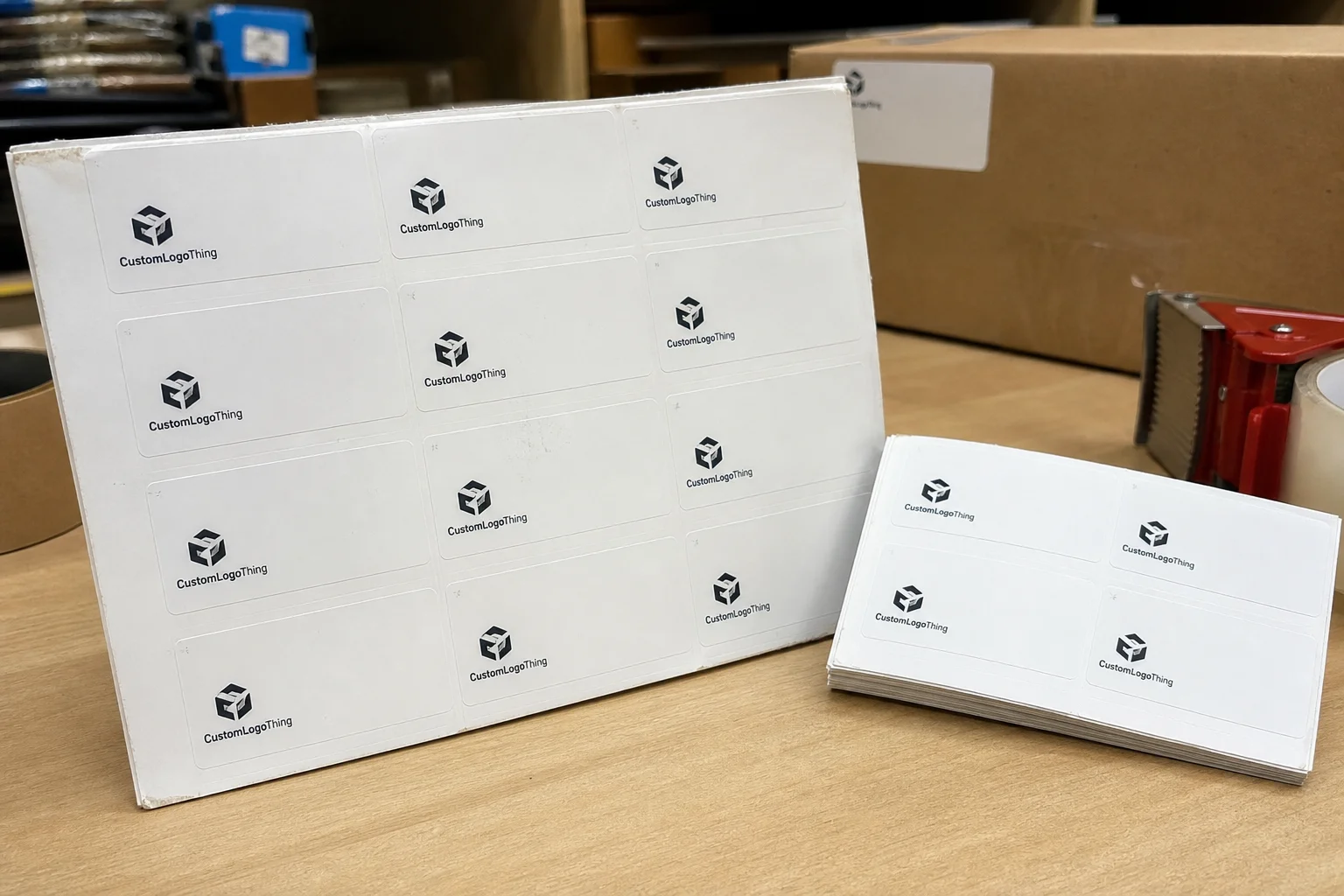
Printed Return Address Labels solve a small problem that grows fast once order volume rises. They keep sender information consistent when several people are packing, and they remove the handwritten variation that creeps in after the tenth parcel, then the fiftieth. Misspellings, uneven spacing, smudged ink, and half-legible ZIP codes are not dramatic failures on their own. They become costly when they are repeated across a shipping table all week.
For apparel brands, the label is more than a sender block. It helps carriers identify where the parcel should go if delivery stalls, gives returns staff a fixed reference point, and makes it easier for warehouse teams to route packages back to the correct department. If a business uses multiple packing locations, the label can also carry a suite number, fulfillment site, or team name so returns do not land in the wrong pile.
The practical value shows up in the middle of the process, not only at the end. A clean address label speeds the handoff from packing to pickup because no one has to stop and confirm a handwritten line or replace a sticker that curled at the corner. That sounds minor until you multiply it across hundreds of parcels. Small delays become a pattern.
There is also a presentation effect that buyers sometimes underestimate. A neatly printed sender label makes the mailer feel coordinated with the rest of the packaging system, especially if the brand already uses custom cartons, inserts, or branded tape. A handwritten return address can still work, but it reads as a temporary workaround. Printed sender information reads as a set standard.
The label is not decoration. It is a control point. If it is hard to read, the entire parcel becomes harder to route, return, and audit.
That is why these labels belong in the same planning conversation as your mailers, inserts, and Custom Labels & Tags. The pieces should agree with each other. When they do not, the packing bench absorbs the friction.
Production Process and Turnaround
The production path is simple in concept and unforgiving in detail. Artwork is reviewed first. A printer checks dimensions, bleed, safe margins, address line breaks, logo placement, and any variable fields such as department names or secondary locations. If a barcode or QR code is included, that element needs to be tested at the actual final size, not just admired on a mockup. Too many proofs look fine on a monitor and then fail once they are scaled to the real label.
Proofing deserves attention because most preventable errors are caught there. One line break too many can crowd the address block. One misplaced comma can shift the return line into the trim zone. If the type is too small, the label may still be technically printable while becoming unpleasant to read in warehouse lighting. A good proof review is less about aesthetics than about preventing avoidable waste.
After approval, the job moves into print, finishing, die cutting or slitting, and packing. Standard labels on familiar stocks usually move faster because the plant already has the setup, the size is common, and the handling path is routine. Custom shapes, special facestocks, and unusual adhesives add time. So do multiple proof rounds. A simple artwork file can still turn into a longer lead time if the production spec is unstable.
For apparel launches and seasonal shipping spikes, schedule matters. If labels arrive after the first outbound run, the packaging team ends up improvising. That often means handwriting, temporary stickers, or a second order placed under pressure. None of those options is efficient. A safer plan is to allow time for proofing, a sample check if the substrate is unusual, and the actual production window before the shipping date.
For a standard order, a realistic turnaround is often around 12 to 15 business days after proof approval. That can move faster or slower depending on stock, queue length, label format, and freight method. Rush production exists for some jobs, but the premium is only worth paying when the launch date is fixed and the cost of delay is higher than the expedited fee.
One detail that gets missed often: a turnaround quote is only useful if it includes the time for corrections. A plant can print quickly and still lose days if the artwork goes back and forth because the return address changed or the label dimensions were never finalized.
Materials, Adhesives, and Finishes That Hold Up
Material choice should start with the packaging surface, not the design file. Paper facestocks are common for cartons, inserts, and general office use. They are easier to write on and often cost less. Film stocks such as polypropylene are a better fit when the label has to resist scuffing, humidity, or repeated handling. On poly mailers, film usually keeps its edges cleaner and holds up better during transit.
Adhesive matters just as much as facestock. Permanent adhesive is the standard choice for outbound shipping because the label has to survive sorting, truck movement, and parcel handling. Removable adhesive makes sense for internal routing, sample circulation, or temporary return workflows, but it is usually the wrong choice for a package that will travel through several hands before delivery.
Surface texture changes everything. Smooth cartons behave differently from recycled kraft mailers or lightly dusty poly bags. A strong adhesive on a clean test panel can still fail once it meets a textured or less stable surface. Corner lift is the first warning sign. If the label starts to curl, the bond was not right from the start.
Finish also shapes the result. Matte reduces glare and tends to read better under warehouse lights. Satin and gloss can make artwork look sharper, but they show abrasion more readily and can reflect light at the wrong angle. For sender labels, readability matters more than visual shine. A label that can be scanned, checked, and understood quickly is doing its job.
Buyers who want a higher level of confidence should ask about how adhesive performance is tested and what the material supplier can document. In packaging, peel and tack tests are often used to verify whether a label will stay put on the intended surface. If sustainability claims matter, ask for certification documents rather than relying on marketing language. Responsible fiber sourcing is usually confirmed through FSC documentation, and that should be verifiable, not implied.
There is no universal best stock. A paper label can be the right answer for rigid cartons and low-moisture storage. A film label can be the right answer for poly mailers and rougher handling. The better choice is the one that matches the actual path the parcel takes, not the one that looks most polished in a sample book.
Cost, Pricing, and MOQ Factors
Pricing for printed Return Address Labels usually comes down to quantity, size, stock, adhesive, finish, and print complexity. The pattern is predictable: the more labels you order, the lower the unit cost tends to be because setup is spread across a larger run. The trap is assuming that the lowest per-label price is automatically the best deal. It is not, if the minimum order leaves you with more inventory than you can realistically use.
For smaller apparel brands, the real question is cash flow versus convenience. A large run may look efficient on paper, but if it ties up storage space and locks you into an address that may change in six months, the savings start to disappear. A slightly higher unit price can be rational if it lets the team reorder more often, keep the address current, and avoid dead stock.
There are practical price bands worth keeping in mind. Short digital or short-run jobs with basic artwork usually sit at the higher end per piece because setup is spread over fewer labels. Larger roll runs on standard sizes often reduce the cost sharply once production is stable. Special finishes, custom shapes, and uncommon adhesives push the number back up. Freight can move the final total more than buyers expect, especially on lower quantities.
Here is a quick comparison that helps make the tradeoffs visible:
| Option | Typical Best Use | Common Tradeoff | Price Behavior |
|---|---|---|---|
| Sheet labels | Low-volume packing, office use, manual application | Slower at a busy packing station | Good for small runs; setup is manageable, but unit cost rarely gets very low |
| Roll labels | Higher-volume fulfillment and repeated application | Needs compatible dispensing workflow | Better economics once quantity rises and application speed matters |
| Paper stock | Cartons, envelopes, and controlled indoor handling | Less durable on scuffed or damp surfaces | Usually the lower-cost material option |
| Film stock | Poly mailers, moisture-prone storage, higher abrasion risk | Higher material cost | Costs more up front, but often reduces waste and rework |
Other cost drivers are easy to miss. Multiple address versions, extra proof rounds, custom die shapes, specialty adhesive, and expedited freight all affect the quote. If a supplier only gives a unit price, that is not enough. Ask for the full landed cost so the comparison includes setup, production, and shipping.
One more caution: a low MOQ can look attractive, but it sometimes comes with a higher per-piece cost, more frequent reorder work, and less room for price negotiation. That is not bad by default. It is just a different operating model. Some teams need flexibility more than they need the absolute lowest unit cost.
An Ordering Workflow That Reduces Reprints
The safest ordering process starts with information control. Gather the exact sender name, department, street line, city, state, ZIP, and any secondary routing details. Then decide where the label will sit on the package. A narrow mailer flap and a flat carton panel do not have the same usable space, and the label size needs to reflect that.
Choose one primary size before asking for a quote. If the artwork might be resized later, the proof becomes harder to judge and the production file gets less stable. The right test is not whether the layout looks balanced on a screen. It is whether the address block fits the real package without crossing a seam, fold, warning mark, or barcode zone.
A physical test is worth the extra step when the substrate is glossy, recycled, textured, or slightly uneven. Adhesive issues often show up only after the label has been pressed onto the real surface. So do placement problems. A design can be perfectly centered in the file and still look off once it is applied by hand to a filled mailer.
For repeat ordering, treat the label spec like a controlled document. Record the exact size, stock, finish, adhesive, quantity, pack format, and approved artwork version. That prevents the common scramble where an older file gets pulled from an email thread and sent back to production without anyone noticing that the return address changed three months ago.
If the business uses several packaging components, align the sender label with the rest of the system. The outer mailer, insert card, tissue, and any matching label or tag should all feel like they came from the same set of decisions. That kind of consistency reduces packer confusion and gives the customer a cleaner unboxing sequence.
A useful habit is to compare the sender label spec against the broader packaging catalog before every reorder. That is especially true if the brand also sources Custom Labels & Tags, because drift between items is easy to miss until the boxes are already on the floor.
Common Mistakes That Create Waste
The most common error is size. A label that is too large for the available surface gets forced into a corner, wrapped across a fold, or scaled down until it is harder to read than it should be. None of those outcomes looks deliberate. The address block should fit the package, not compete with it.
Low contrast is the next problem. Thin type on a light background can disappear under warehouse lighting, especially after handling. That is not a design issue in the abstract. It is a legibility issue. If the address cannot be read quickly, the packer slows down and the carrier has less room to interpret the parcel correctly.
Adhesive failures are expensive because they are often delayed. A label may look fine when it leaves the packing bench and still lift later on a coated or dusty surface. By the time the failure appears, the package is already in transit, which means the fix costs more than the original label did. Rework, customer service time, and replacement shipments can all trace back to that one weak bond.
Address changes are another silent source of waste. Brands open a seasonal warehouse, switch fulfillment partners, or add a separate returns team and forget to update the labels already in circulation. Old stock then carries the wrong address. That is preventable if the team ties label versions to a live spec sheet or a controlled distribution list.
Placement can slow the line as well. If the label covers a seam, perforation, or barcode, the operator has to adjust every parcel by hand. That may sound small. It is not when the team is handling hundreds of units per shift. Packaging should be designed for movement, not for repeated alignment corrections.
One final mistake: approving art before checking it on the actual mailer. Digital mockups do not reveal everything. Real surface texture, fold lines, and application pressure change the result. Reprints usually begin there.
Next Steps for a Cleaner Apparel Mailer Setup
Start with a short audit of every place sender information appears. Check outer mailers, return envelopes, insert cards, wholesale sample packs, and internal transfer labels. If the same address is written in more than one format, standardize it before the next production run. That one cleanup step often removes more friction than buyers expect.
Then decide whether one label version can cover most shipments or whether you need separate versions for retail, wholesale, and customer service returns. A lot of apparel businesses do not need a complex system. They need one stable format and one fallback version for special cases. The key is to match the structure to how the team actually ships.
Request a proof, sample, or short pilot run before a large order. Check color, edge quality, adhesive hold, and fit on the real package. If the label will be applied by hand, have the same person who will work the line test it. Hand pressure, speed, and angle matter. A layout that looks fine in review can behave differently in production.
Keep the spec sheet current. Record the size, stock, finish, adhesive, quantity, pack format, and approved art version. That makes reordering cleaner, helps preserve consistency across seasons, and gives you a better basis for comparing suppliers later.
If the label is chosen carefully, it stops being a loose office supply and becomes part of a repeatable packaging system. That is the point where printed Return Address Labels start saving time instead of consuming it.
How are printed return address labels different from plain mailing labels?
They are preformatted for a sender address that gets used repeatedly, so packers do not have to handwrite or retype the same information every time. That reduces variation and makes the packaging process more consistent. They can also be sized and finished to match the mailer, which matters more than many buyers expect.
What size works best for return address stickers on clothing mailers?
The best size is the one that fits the available flat space without crossing a fold, seam, or flap edge. Smaller rectangular formats are common on apparel mailers because they can hold a name, street line, and city line without crowding. The real mailer should always be the final test.
Should I choose roll labels or sheet labels for a small apparel brand?
Roll labels usually make more sense once the packing table is moving quickly, because they dispense faster and stay organized. Sheet labels can work well for lower-volume teams or office use, especially if the label is applied by hand. The better choice depends on order volume, application speed, and whether the team uses a dispenser.
What drives the quote for custom return address labels?
Quantity, stock type, size, adhesive, finish, and print complexity are the main drivers. Setup, proofing, and freight should be included so the quote reflects the real total cost. Multiple address versions or rush production can raise the price even if the artwork looks simple.
How long do printed address labels usually take to produce?
Lead time depends on proof approval, stock availability, print method, and whether the order is standard or custom. Simple jobs on common sizes usually move faster than jobs with custom shapes, specialty finishes, or extra revisions. For most apparel buyers, the safest approach is to plan around the production window rather than assume the labels will arrive in a few days.