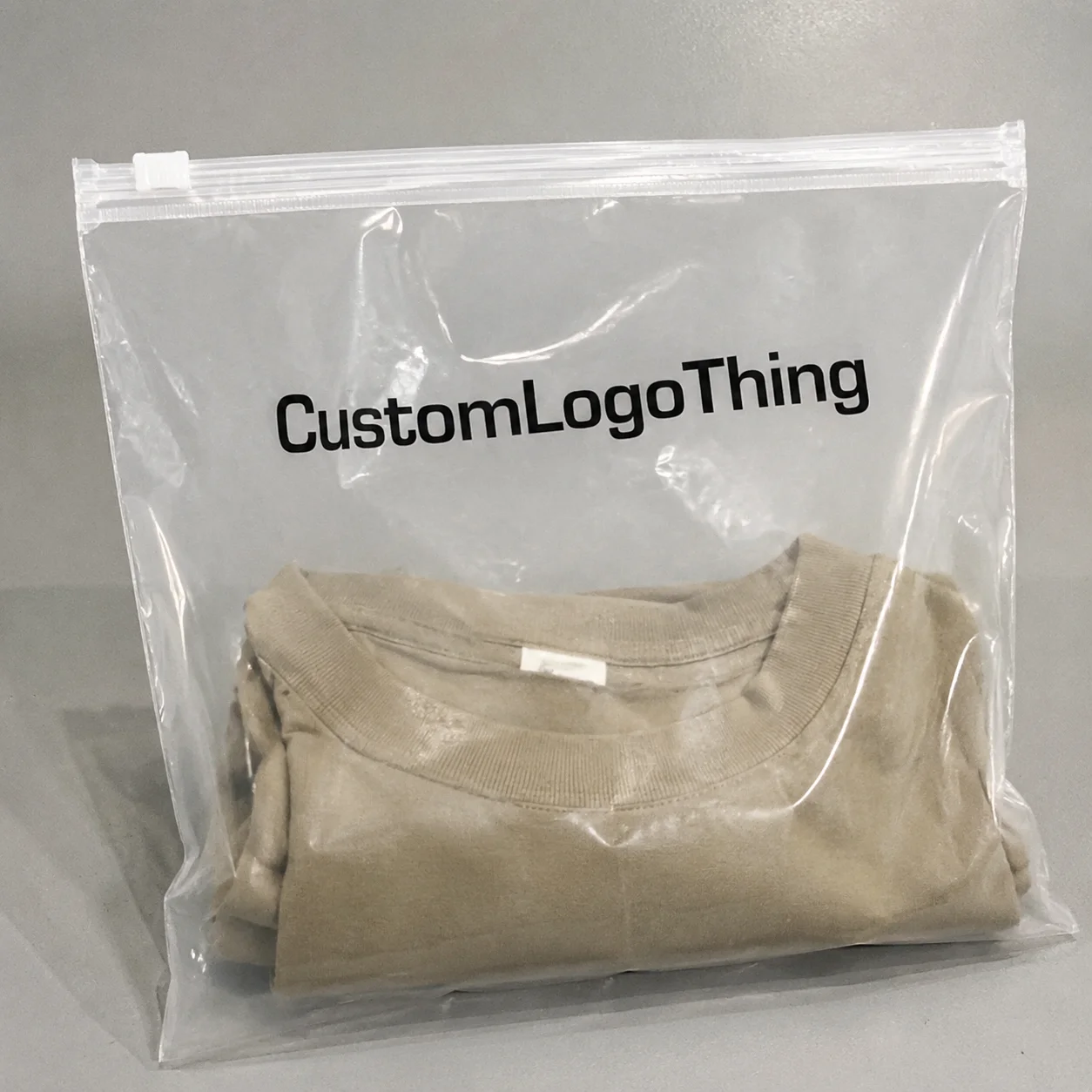
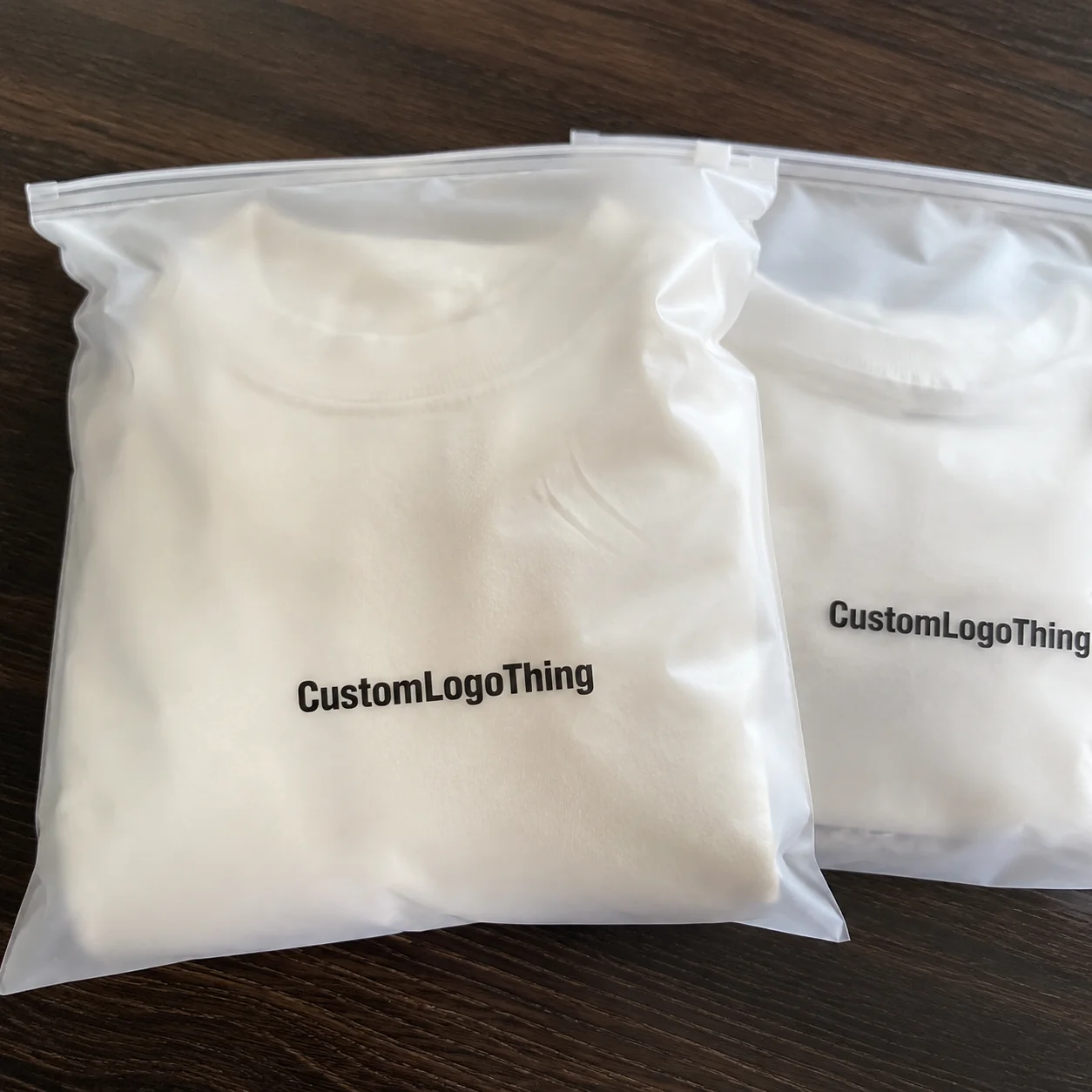
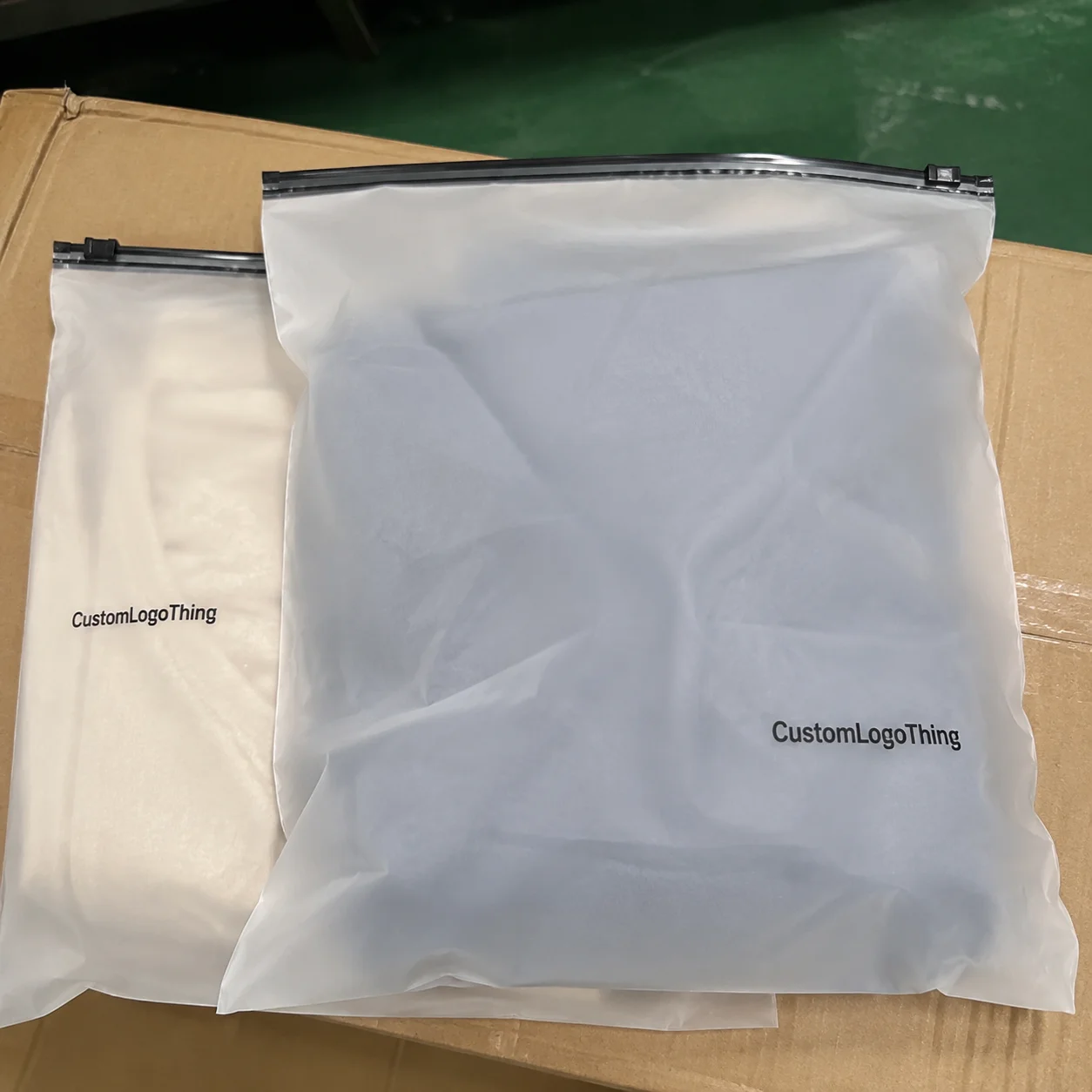
If you need a Printed Slider Lock Clothing Bags quote for apparel, start with the garment, not the logo. The bag has to fit the folded item, protect it through packing and freight, and make the product look intentional when the carton opens. A hoodie forced into a thin open-ended poly bag shifts around, catches on the closure, wrinkles the label, and makes the whole presentation feel cheaper than the garment inside.
Slider lock bags are useful because the closure changes how the package behaves after it leaves the packing table. It can be opened for inspection, closed again for storage, reused for returns, and handled by the customer without tearing the film. That is why apparel buyers often look at them for DTC orders, boutique retail, subscription programs, uniforms, promotional clothing, resort merchandise, teamwear, and warehouse-packed basics.
The print is part of the work, but it is not the whole job. A good apparel bag can carry size codes, suffocation warnings, recycle marks, SKU boxes, UPC areas, QR codes, reorder references, and brand artwork without looking crowded. Done well, it protects the garment and quietly supports the workflow around it.
Why Slider Lock Bags Make Apparel Look Retail-Ready
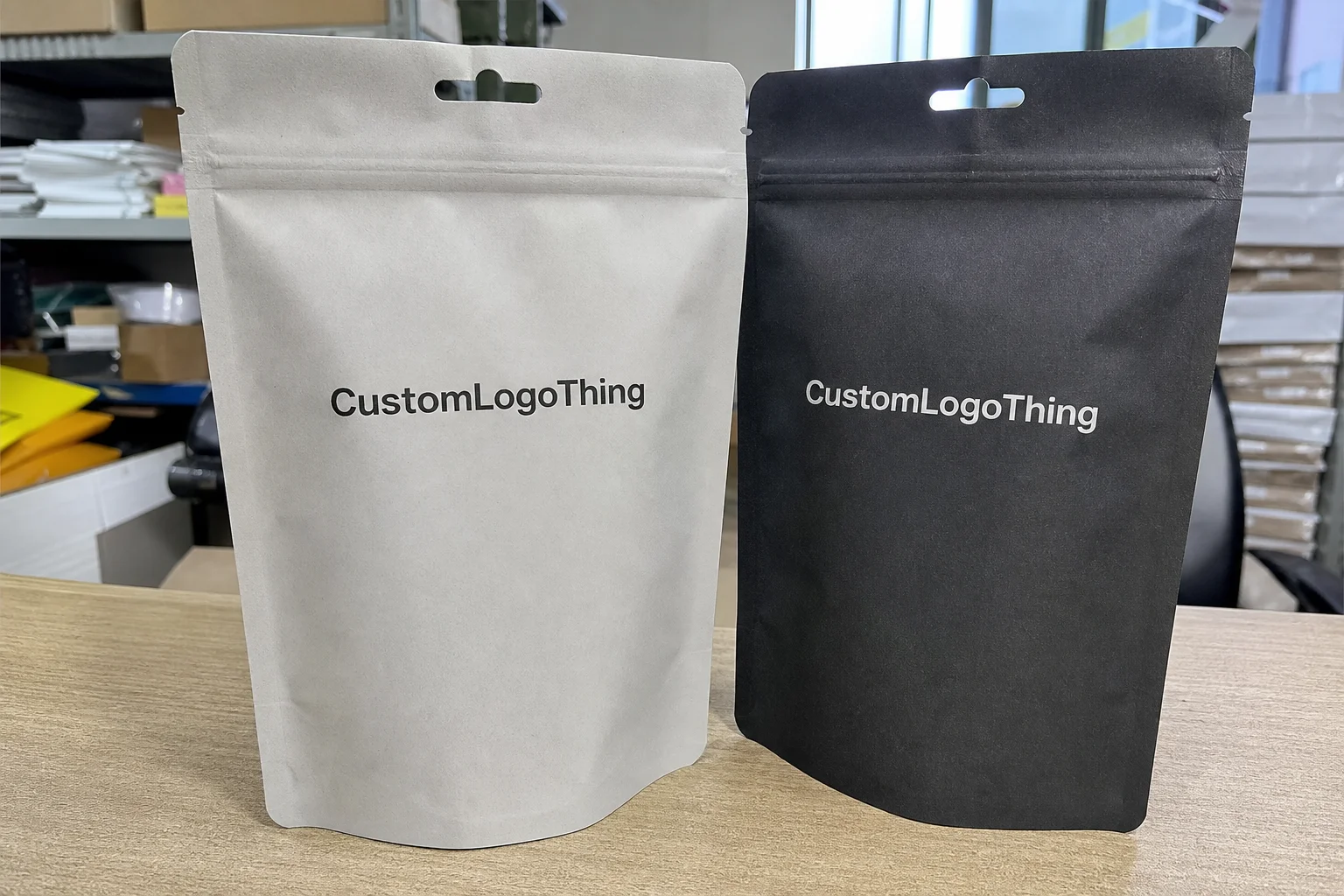
A plain self-seal poly bag can do the job for many garments, especially where the package is only there to keep dust off the item until it reaches the customer. A slider lock bag feels more deliberate. The closure is visible, the opening is repeatable, and the bag usually survives more handling before it starts to look tired.
That matters on a packing bench, in a warehouse bin, in a retail back room, and on a customer’s desk. A bag that stays closed keeps folded apparel under control. A bag that opens cleanly lets staff check color, size, and decoration without slicing through the packaging with a knife. If the item is returned, the same bag may still be usable instead of turning into loose plastic around a wrinkled shirt.
There is also a presentation value that is easy to underestimate. Premium basics, outerwear, uniform sets, accessories, and giftable apparel all benefit from packaging that looks measured rather than improvised. The bag is not the star of the product, but it is the frame around the first physical impression. If that frame is oversized, cloudy, torn, or half-open, the product has to work harder to look worth its price.
Slider bags also help when multiple sizes or SKUs are packed in the same operation. Printed size markers, barcode zones, or simple check boxes can speed sorting and reduce handling errors. Those small controls are not glamorous, but they are often where packaging earns its keep.
Printed Slider Lock Clothing Bags Quote for Apparel: What We Need
A quote is only as accurate as the information behind it. Guessing at bag size, material, or print coverage creates weak pricing and slows the job later. The fastest quotes usually come from buyers who send a clean set of specs at the beginning, even if a few details still need to be confirmed.
For a useful printed Slider Lock Clothing Bags quote for apparel, gather these basics:
- Bag width and height, measured in inches or millimeters
- Garment type and folded garment dimensions
- Film thickness or target feel
- Material preference, such as LDPE, HDPE, CPP, or recycled-content poly
- Closure style and any slider requirements
- Print colors, print coverage, and one-side or two-side printing
- Print location, including barcode, QR code, warning, or size-mark areas
- Order quantity and desired quantity breaks
- Packing method, including inner packs, carton labels, or SKU sorting
- Delivery address and target in-hand date
Width is measured left to right. Height is measured from the bottom seal to the top of the bag, but the full height is not always usable. Slider tracks, header space, seams, hang holes, and bottom gussets can reduce the area available for the garment or artwork. If the item is bulky, folded unusually, or packed with tissue, hang tags, inserts, or accessories, send the folded dimensions with those pieces included.
Artwork should be supplied as vector art whenever possible. If color matters, include Pantone references, but be realistic about the difference between plastic film and coated paper. A brand red printed on clear LDPE may not look exactly like the same red on a paper box. That does not mean the print is wrong; it means the substrate is doing what plastic does.
Buyers also tend to forget carton packing and freight until the end. Inner pack count, case quantity, carton markings, barcode readability, export labels, and pallet requirements can all affect pricing. Plastic bags are light, but finished cartons are bulky, and rush shipping can change the economics quickly.
A cheap apparel bag is not cheap if it tears, jams the packing line, or makes a $90 jacket look like clearance-bin leftovers.
Bag Materials, Thickness, and Closure Details That Matter
The material choice sets the feel, clarity, strength, print behavior, and perceived value of the bag. Common options include LDPE, HDPE, CPP, and recycled-content poly where the application allows it. LDPE is flexible, familiar, and forgiving. HDPE feels crisper and can be strong at lower gauges, though it is usually less clear. CPP often gives a cleaner, glossier appearance with better clarity, which can help for retail-facing apparel.
Recycled-content film can be the right Choice for Brands with packaging goals, but it needs to be specified carefully. Recycled content may affect clarity, color consistency, tensile strength, or seal behavior depending on the blend. If a sustainability claim will be printed on the bag, make sure the material documentation supports the claim before artwork is approved.
Thickness should match the garment and the handling conditions. Lightweight tees, socks, swimwear, and folded basics often work in thinner film if the bag is not being reused heavily. Hoodies, denim, jackets, uniforms, heavier knits, and embellished garments usually need stronger material. For many apparel applications, 2.0 to 4.0 mil is a practical planning range. Going lighter can save money, but it can also create stretching, punctures, cloudy stress marks, or weak seals if the garment is too bulky.
The closure deserves close attention. A slider should move cleanly without catching, and the track should close with consistent pressure across the full opening. Weak track engagement can look fine during a quick sample check and then fail after repeated handling. The side seams and bottom seal also need enough strength for the garment’s weight and shape, especially if warehouse staff will stack or pull bags by the top edge.
Useful options include:
- Vent holes for air release and, where required, safety compliance
- Hang holes for peg display or retail backstock organization
- Bottom gussets for hoodies, sweaters, jackets, and other bulky folded items
- Reinforced headers when the bag will be handled repeatedly
- Clear, frosted, tinted, matte, glossy, or opaque finishes depending on presentation needs
Suffocation warnings deserve a real review, especially for children’s apparel, e-commerce shipments, and retail packaging. Requirements vary by market and retailer, and warning size can depend on bag dimensions. If transportation damage or distribution testing is part of the program, the test methods published by ISTA are worth knowing before the bag is finalized.
For broader packaging claims, education resources from The Packaging School can help buyers separate useful material specs from vague language. Claims are easy to print. Verified specs are harder, and far more valuable.
Print Options, Branding Space, and Compliance Marks
Printed apparel bags have limited real estate, and that space has to work. The layout may need to hold a logo, care reminder, size mark, warning, recycle mark, SKU field, barcode, QR code, and sometimes a campaign message. Without restraint, the bag can turn into a cluttered label wrapped around a garment.
For larger runs, flexographic printing is common because it handles repeat production efficiently and works well on flexible film. For shorter runs or special projects, digital or other short-run methods may be available depending on the supplier’s equipment and the required film. Each method has tradeoffs in setup cost, color control, minimum quantity, and print detail.
Color count is one of the simplest cost drivers to understand. A one-color logo is easier to produce and proof than a multi-color layout with small type, tight registration, heavy solids, and fine line work. One-side printing typically costs less than two-side printing. Spot printing usually costs less than full-coverage artwork. Heavy ink coverage may also affect drying, blocking, film feel, and inspection time.
Placement should respect the bag structure. Avoid putting critical artwork where the slider track, seals, gussets, vent holes, or hang holes will distort it. Barcodes and QR codes need a flat area, strong contrast, and enough quiet space to scan reliably. If a barcode wraps around a fold or lands too close to the slider, the problem may not show up until cartons are already packed.
Small type needs caution. Fine warning copy or care instructions can fill in during print, especially on flexible material. If the text must be readable, it should be sized for the process and the film, not for how it looks on a screen proof. A digital proof confirms layout and content; it does not fully prove ink density, film clarity, or scan performance.
Most apparel brands are better served by a clean, readable layout than by a busy one. Let the garment remain visible if visibility matters. If privacy or premium presentation is the goal, use tint, frost, or opacity deliberately rather than covering the bag with ink to hide the product.
Pricing, MOQ, and Unit Cost Drivers
Pricing is built from the spec: size, thickness, material, closure quality, print method, color count, coverage, quantity, setup, packing, and freight. Any quote that skips those details is only a rough placeholder.
For planning, a standard clear slider bag with a simple one-color logo may land around $0.18 to $0.35 per unit at moderate quantities, depending on dimensions and gauge. Larger bags, heavier film, custom colors, two-side printing, multiple SKUs, or premium closures can move the price higher. As order quantity increases, unit cost usually drops because setup and production costs spread across more pieces.
| Quantity | Typical Spec | Broad Planning Range | What Usually Pushes Cost Up |
|---|---|---|---|
| 5,000 pcs | Clear film, 1-color print, standard size | $0.22-$0.40 | Thicker film, custom dimensions, rush freight |
| 10,000 pcs | Clear or lightly tinted film, 1-2 color print | $0.16-$0.29 | Two-side print, barcode detail, heavier slider |
| 25,000 pcs | Custom apparel bag, moderate print coverage | $0.11-$0.21 | Custom film, special packing, higher color count |
| 50,000 pcs | Large production run, confirmed repeat spec | $0.09-$0.17 | Complex artwork, multiple SKUs, premium closure |
These are planning ranges, not guaranteed prices. They are useful because they show the curve. Lower quantities carry more setup burden per piece. Higher quantities can improve unit pricing, but they also take more storage space and tie up more cash. A large run makes sense for a stable core item; it is riskier for seasonal apparel, changing size scales, or artwork that may be updated soon.
MOQ depends on the customization level. Standard sizes with simple printing may start lower. Custom dimensions, custom film color, specialty closures, recycled-content requirements, or multiple versions usually require higher minimums. Ask for several quantity breaks, such as 5,000, 10,000, 25,000, and 50,000 pieces, so the price difference is visible.
Freight should be shown clearly. Air freight is fast but expensive, and bulky cartons make that pain sharper. Ocean freight is usually more economical for larger orders but needs more calendar time. Domestic warehousing, split shipments, liftgate delivery, residential delivery, or special carton labeling can also change the final landed cost.
Process, Proofing, and Production Timeline
The usual order path is simple: inquiry, spec review, quote, artwork check, digital proof, sample or production proof if needed, production, inspection, packing, and shipping. The work becomes difficult when the bag size is guessed, the artwork is incomplete, or the delivery date is treated as separate from the proof schedule.
Lead time depends on material availability, order size, print complexity, custom sizing, and the production schedule. Many straightforward production runs fall in the 12 to 15 business day range after proof approval, though special film, multiple colors, custom closures, or sampling can extend that. Repeat orders often move faster because the structure, artwork, and packing method are already established.
Common delays are predictable: missing dielines, low-resolution artwork, unclear Pantone references, late proof approval, changed warning text, revised dimensions, or rush freight decisions made after production is underway. None of those are unusual, but each one adds friction.
Proofing should be handled like a production checklist. Confirm bag width, bag height, usable opening, slider direction, print location, logo scale, warning copy, barcode position, QR code size, color references, carton count, and packing orientation. If the garment will be folded a certain way, check the artwork against that packed shape, not against an empty flat bag.
Samples can be worth the time when the order is large, the garment is bulky, the artwork is sensitive, or the packaging will be used in retail display. A stock sample can confirm material feel and closure function. A printed sample can help with layout and color expectations. A pre-production proof is more useful when the cost of being wrong is high.
Do not chase the ship date before the spec is stable. Changing the bag height by half an inch after approval may sound minor, but it can affect material usage, print placement, carton count, and the production slot.
How to Compare Suppliers Without Getting Burned
Compare quotes line by line, not only by the final unit price. A low number can hide thinner film, lighter sliders, unclear freight terms, missing setup charges, or vague packing details. The cheapest quote is not useful if it leaves out the parts that determine whether the bag performs.
A complete supplier quote should identify the material, thickness, dimensions, closure type, print method, number of print colors, print location, MOQ, setup fees, proofing process, lead time, packing details, freight terms, and payment terms. If the description says only “Custom Poly Bag,” ask for the missing details before treating it as comparable.
Quality control should be part of the conversation. Ask how slider function is checked, how seal strength is reviewed, how print registration is controlled, how ink adhesion is tested, how dimensions are measured, and how carton counts are verified. For apparel, also ask whether the supplier can support suffocation warnings, garment-specific sizing, barcode placement, SKU sorting, and retail presentation requirements.
Look closely at the sample. Open and close the slider several times. Pull gently at the side seams. Check whether the film stretches, clouds, or tears around the closure. Place the actual folded garment inside and see whether the bag still looks clean once it has volume in it. Then scan any barcode or QR code through the bag’s normal curve and shine, not just on a flat proof.
Custom Logo Things helps buyers tighten the spec before production by asking these detailed questions early: what garment is going inside, how it will be folded, where the bag will be handled, what the print has to communicate, and how soon the bags need to arrive. That kind of early friction is useful. It is much better to find a size or closure issue during proofing than after finished cartons arrive.
For samples, specs, quantity breaks, and print options, use Contact Us to start the quote process with the right details in place.
Next Steps Before You Request a Custom Bag Quote
Before sending a request, gather folded garment dimensions, target bag size, quantity range, artwork files, preferred material feel, number of print colors, delivery location, and the date the bags truly need to be in hand. If possible, include a photo of the current packaging or a garment packed the way your team handles it now.
For mixed apparel lines, test the actual products. A tee, hoodie, pair of leggings, swimsuit, cap, and jacket do not belong in the same bag unless the fit has been checked carefully. Forcing one size across too many garments often creates wasted space for small items and slow packing for bulky ones.
Decide what the bag needs to do. Warehouse protection, retail display, return packaging, subscription presentation, and premium unboxing are different jobs. A warehouse bag can stay simple. A retail-facing bag needs cleaner material, sharper print, and disciplined placement. A return-friendly bag needs a closure that opens and recloses without damaging the package.
Choose quantity breaks based on real reorder volume. A tiny run can make the unit cost uncomfortable. A huge run can leave cash sitting in inventory if the artwork, garment fold, size mix, or seasonal assortment changes. The best quantity is usually the one that balances unit cost with realistic usage.
The cleanest path to a dependable apparel bag quote is simple: send exact specs, real artwork, compliance text, packing notes, and a realistic timeline in one message. That gives the quote a firm base, and it gives production fewer chances to drift away from what the garment actually needs.
What affects a printed slider lock apparel bag quote the most?
The biggest cost drivers are bag size, film thickness, material type, slider quality, print color count, print coverage, order quantity, setup fees, packing requirements, and freight. A one-color logo on a standard clear bag will usually price much lower than full-coverage printing on custom film across multiple bag sizes.
What MOQ should I expect for custom printed slider lock clothing bags?
MOQ depends on size, material, print method, and customization level. Standard-size printed bags may have lower minimums, while custom sizing, custom color film, recycled-content requirements, or specialty closures usually require higher production quantities. Ask for multiple quantity breaks so the unit-cost curve is clear.
How do I choose the right size for slider lock clothing bags?
Measure the garment after it is folded the way your team will actually pack it, including hang tags, tissue, inserts, or accessories. Add enough room for easy insertion, but avoid oversized bags that let garments slide around. For mixed apparel lines, test separate sizes for tees, hoodies, outerwear, and accessories.
Can printed slider lock bags include warnings, barcodes, or QR codes?
Yes. Custom printed bags can include suffocation warnings, recycle marks, size codes, SKU areas, barcodes, QR codes, and brand messaging. Barcodes and QR codes need strong contrast, proper quiet space, and placement away from seams, slider tracks, curved areas, and gussets so they scan reliably.
How long does production take after approving a custom apparel bag quote?
Lead time depends on material availability, order quantity, print complexity, proof approval speed, and shipping method. Many standard runs are planned around 12 to 15 business days after proof approval, though sampling, special materials, or custom components can extend the schedule. Repeat orders usually move faster because the specs are already confirmed.