A printed Slider Lock Clothing Bags quote for food is easiest to price when the buyer treats the bag as a working package, not just a printed pouch. The format can protect dry goods, present a clean retail face, and give customers a closure they will actually use again after opening. That combination is why food brands keep coming back to it for trial-size snacks, spice blends, tea, dried fruit, and other products that need a tidy shelf presence without the cost of a rigid box.
The catch is that the word “clothing” in the format name can confuse the buying process. The bag may have started in apparel packaging, but once it moves into food, the questions change. Film structure, food-contact suitability, print durability, closure feel, and fill behavior all matter. A quote that ignores those details is usually not a quote yet, just an estimate with missing assumptions.
For buyers comparing options, the right starting point is a clean spec sheet: dimensions, product type, artwork status, and target quantity. If those are fixed early, the rest of the pricing conversation gets much sharper. If they are not, two suppliers can give you completely different numbers for what sounds like the same bag.
Why food brands use slider-lock bags when apparel-style packaging matters
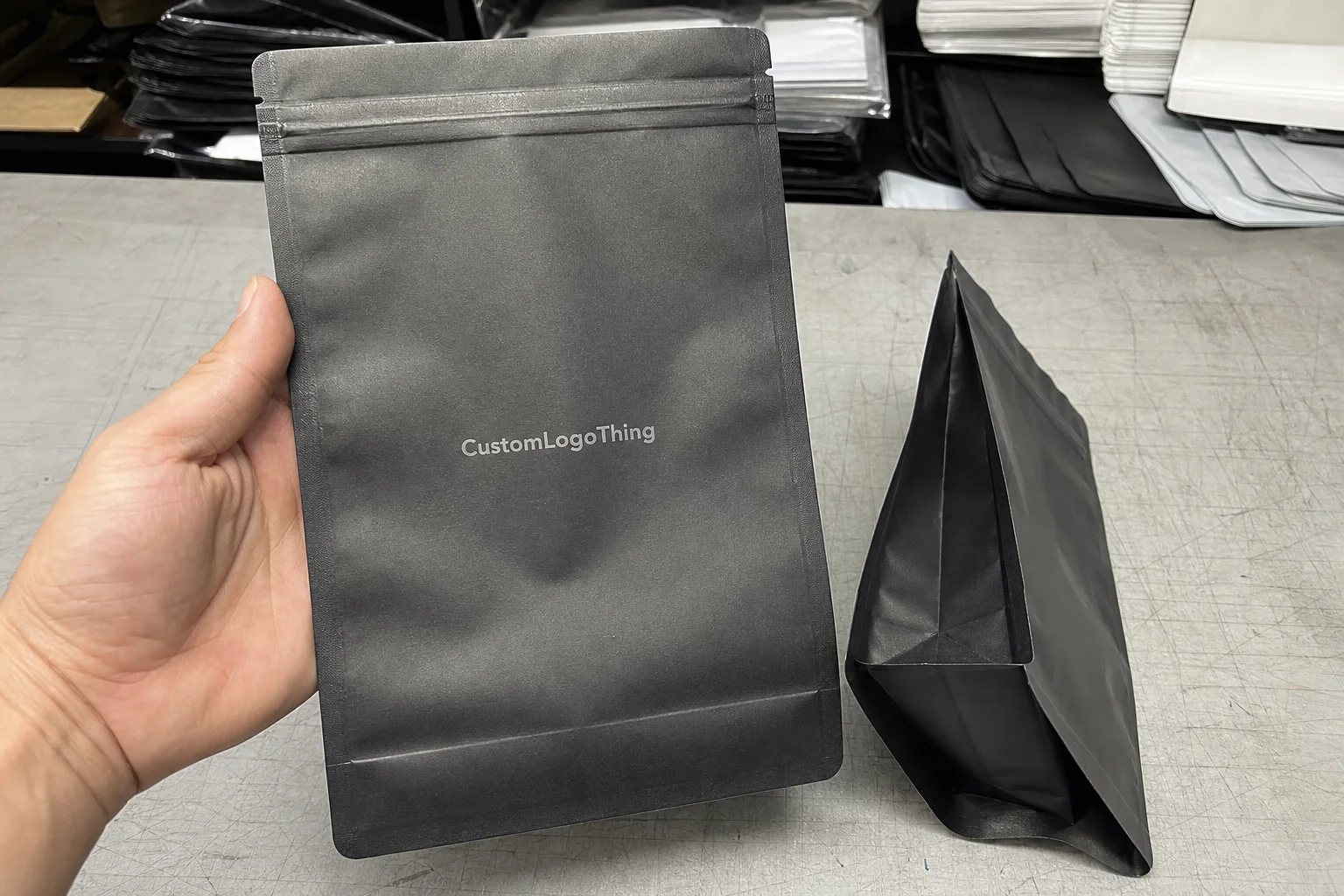
Food brands usually choose this format when they need something more polished than a plain poly bag but less expensive and less rigid than a carton or tray. The slider closure gives the package a sense of utility. The clear or partially clear body lets the product do some of the selling. For shelf-stable food that benefits from repeated opening and closing, that is a practical combination rather than a decorative one.
There is a real merchandising benefit too. A bag with structure stands up better in display trays, ships more predictably in cartons, and keeps artwork legible after handling. That matters in retail, subscription fulfillment, and sample programs where the package is seen before the product is fully understood. A bag that collapses or wrinkles badly can make the brand look lower value than the product inside.
The closure is not just a convenience feature. It changes customer behavior. If the slider moves smoothly and seals consistently, customers are more likely to keep the bag in use. That matters for snacks and dry ingredients because the package is often opened several times before it is empty. A good reseal also reduces complaints about freshness loss that have more to do with packaging frustration than with the product itself.
For food applications, the line between “looks good” and “works well” is thin. A clean printed surface can still fail if the material is too thin, the seal area is inconsistent, or the slider is stiff. The package has to survive packing, transit, shelf handling, and consumer use. That is why experienced buyers ask about the actual film stack instead of just the printed face.
From a brand perspective, the format is useful because it gives room for a front panel, a rear information area, and a consistent reseal point. It can also be adapted to clear window designs, matte bodies, or hybrid panels that balance visibility with branding. Those options change the feel of the package more than many teams expect. A small shift in transparency or finish can make the product read as more premium or more utilitarian.
If the order is for food, the supplier should be ready to discuss use conditions directly: dry versus greasy product, odor sensitivity, moisture exposure, and expected shelf life after opening. Those points are not extra detail. They are what separates a usable package from a pretty sample.
Practical rule: if the bag will be opened more than once, the closure belongs in the buying decision from the start. Treat it like part of the product, not a minor accessory.
Product details buyers should confirm before ordering
Most quote errors begin with loose specs. A supplier cannot price a meaningful job if the buyer only gives a product name and a logo. The bag needs to be defined as an actual production item, with dimensions, material preference, closure type, and print scope all tied down before pricing starts.
Start with the size. Confirm the width, height, and any gusset or expansion area. For food, usable fill space matters as much as the outside measurement because the package may need headspace for the slider and enough room for clean sealing. A bag that is technically large enough can still perform badly if the fill volume crowds the closure or distorts the front panel.
Then define the film. Clear, opaque, matte, and mixed-panel bags each solve different problems. Clear panels show the product well, but they can reveal fill inconsistency and dust. Opaque bodies improve branding and hide internal variation, but they reduce visibility. Matte finishes can look more refined, yet they can also cost more and show scuffing differently than gloss.
The print setup matters just as much. One-color graphics are easier to proof and usually cheaper to run. Full-color work can be strong visually, but it creates more room for registration drift, color variation, and file cleanup. If the artwork wraps around the pouch, the supplier also needs to know where the front panel ends, where the back panel starts, and how close the design can run to the zipper line without causing problems in production.
Closure details should not be left vague. Ask whether the slider is standard or premium, whether its color can be matched or must be stock, and how the bag feels when opened and closed repeatedly. Some sliders run smoothly but feel loose. Others seal firmly but are awkward for customers with one hand. The buyer should know which behavior matters more for the end use.
It also helps to ask for the internal working dimensions, not just the outside dimensions. A bag can look right on paper and still create filling issues if the usable width is narrower than expected. That is a common source of avoidable labor cost. Packing line operators notice it fast, and so do customers if the zipper area gets crowded.
- Film type: clear, opaque, matte, or hybrid construction.
- Thickness: often given in mils or microns, depending on the factory.
- Closure: slider style, color, and opening feel.
- Print method: one-color, spot color, or full-color process.
- Panel layout: full print, clear window, or mixed front/back treatment.
For food-facing packaging, it is sensible to ask how the supplier handles material compliance for the intended market. That does not replace your own regulatory review, but it does tell you whether the supplier is used to packaging that must touch food or sit immediately beside it. A low quote is not useful if the material stack is wrong for the product.
Before approving the order, request a dimensioned drawing or a labeled proof. That extra step catches mistakes early, especially when the artwork and the bag shape were developed separately. If the bags will be shipped to distribution centers or fulfillment sites, it is also worth checking whether the supplier understands the same transit-stress logic used in ISTA testing. That does not make the bag automatically shipment-proof, but it does show the supplier is thinking beyond the press.
Specifications that change your printed slider bag quote for food
Price differences usually come from five levers: size, film thickness, print coverage, slider hardware, and how the bags are packed for shipment. Change one of those and the number may move more than expected. Change several and the quote can shift into a different category entirely. That is normal. A bag is a bundle of material, setup, and handling decisions, not a single line item.
Larger bags use more film. Heavier gauges use more resin. More print colors require more setup and more proofing. A custom slider choice can add cost even if the bag looks simple from the front. The supplier is not inventing those costs; they are following the amount of material and labor the job actually requires.
Some changes look small but are expensive in production. Moving from a stock dimension to a custom width may trigger tooling work. Choosing a specialty finish can slow the run and increase scrap risk. Tight color matching across multiple panels can add time in prepress and more checks during the press run. These are the kinds of details that determine whether a supplier quotes carefully or just guesses.
A good request package usually includes the following:
- Exact bag dimensions, including width, height, and any gusset or expansion area.
- Product type and fill weight, plus whether the contents are fragile, dusty, oily, or aromatic.
- Material preference, surface finish, and whether the product must remain visible.
- Artwork status, including whether files are print-ready or need cleanup.
- Target order quantity and any second quantity you want quoted for comparison.
Samples are worth asking for if the closure or film choice is still uncertain. A specification sheet can tell you the dimensions. A sample tells you whether the slider tracks smoothly, whether the print looks crisp at hand distance, and whether the bag stands the way you expected once filled. Those are not minor sensory details. They affect customer satisfaction and line efficiency.
One more point that often gets missed: the product itself changes the quote. A dry seasoning mix behaves differently from a crumbly snack or an aromatic herbal product. Grease resistance, odor retention, and static attraction all affect material choice. If the supplier does not ask about the product’s behavior, the quote may not be tied to the real use case.
Pricing, MOQ, and unit cost for printed slider lock clothing bags quote for food
MOQ is usually driven by setup cost, film sourcing, and the minimum order on the slider component. That is the simple version. The more practical version is that custom-printed slider bags only become economical when the fixed work is spread across enough units. Small runs carry more overhead per bag because proofing, setup, and changeover costs do not shrink just because the order is smaller.
For planning, ask for pricing at more than one quantity. A single number tells you little about the cost curve. Side-by-side quantities show where the unit price starts to improve and whether a slightly larger order would save enough money to justify the extra inventory. In many packaging programs, the best value is not the absolute lowest total. It is the order size where per-unit cost and storage risk balance out.
| Quantity band | Typical use case | Indicative unit cost | What usually drives the price |
|---|---|---|---|
| 5,000 pieces | Test launch, seasonal SKU, sample program | $0.22-$0.38 | Setup burden is high relative to volume, and slider cost weighs more heavily per unit |
| 10,000 pieces | Initial retail run or regional rollout | $0.15-$0.27 | Better spread of print setup and more efficient use of material and labor |
| 25,000 pieces | Repeat order or broader distribution test | $0.09-$0.18 | Lower unit price, but more cash tied up in inventory and storage |
Those ranges are only useful as a working reference. Size, print coverage, finish, slider type, and freight method all move the final number. A one-color logo on a standard dimension bag will not cost the same as a full-coverage pouch with a specialty surface and custom dimensions. If a quote looks too low, ask what it excludes. The missing items are often proofing, freight, artwork cleanup, or a change fee that appears later.
It also helps to compare landed spend rather than just the headline unit price. A lower base price can become the more expensive option if the freight is poor, the minimum quantity is too high, or the approval cycle drags on. For buyers managing launches, the real cost includes timing as well as currency. A late bag can be more expensive than a slightly pricier one that lands on schedule.
Reliable vendors usually provide enough detail to let you check the math. They can tell you the film spec, the print process, the closure style, and the expected carton configuration. That does not guarantee the best price, but it does make the quote comparable. Vague bids are difficult to evaluate because they often leave out the exact items that later become charges.
Production steps and timeline from artwork to delivery
Most orders follow a familiar path: inquiry, spec confirmation, artwork review, proof approval, production, quality check, packing, and shipment. The sequence is straightforward. The delays usually come from the gaps between those steps. A missing dieline, unclear logo file, or last-minute color change can slow the job before it reaches the press.
Once the artwork is clean and the specifications are locked, production often takes 12-15 business days. That is a practical range, not a promise. Custom dimensions, specialty materials, and heavier print coverage can extend the schedule. Shipping time sits on top of that. Air freight is faster and more expensive; sea freight lowers the transport cost but stretches the calendar. For promotional packaging or retail launch dates, that choice should be made early, not after proof approval.
The shortest path is usually the most disciplined one. Send the final logo files. Confirm quantity. Lock the dimensions. Resolve panel layout questions before the proof goes out. If the supplier is waiting on a color change or a resize decision, the schedule slips even when the machine time is available.
Rush orders can work, but only when the job is already clean. The material has to be available, the artwork has to be print-ready, and the proof needs immediate approval. A rush request layered on top of open questions is where timelines break down. That is not a production problem as much as a planning problem.
A useful habit is to ask for three dates in writing: proof-ready date, production start date, and ship date. Those checkpoints are easier to manage than a vague delivery promise. They also expose whether the supplier has actually reserved capacity or is only speaking in general terms.
Quality control usually happens at more than one point. Reputable suppliers check artwork before printing, inspect the press output during the run, and verify the packed cartons before shipment. Buyers should ask how those checks are documented. A clear answer matters because reorders should match the approved first run as closely as possible.
What separates a reliable food-packaging supplier from a low-price bid
Low price and good purchasing decisions are not the same thing. A reliable supplier shows the work behind the number. They confirm the material spec, explain the print method, define the closure choice, and ask questions that reveal how the package will actually be used. That is the baseline for a serious food-packaging order.
Consistency matters because packaging should not drift from one run to the next. If the first order uses a certain film structure, slider style, and artwork placement, the reorder should reproduce that same package. That protects the brand and reduces customer-service problems. A small change in closure feel or print placement can create a very visible difference on shelf or in fulfillment.
Good suppliers also manage approvals cleanly. They send proofs that are readable. They flag problems instead of hiding them. When a spec changes, they update the price instead of acting as if nothing happened. That level of discipline is not glamorous, but it is what keeps a packaging order from turning into a scramble.
There are a few practical signs of a stronger bid:
- Reliable bid: clear dimensions, documented material, defined print spec, and a repeatable reorder path.
- Cheap bid: a low headline price with missing details and a higher chance of revision later.
- Good supplier: asks about product behavior, shelf use, and shipping conditions before pricing.
If the bags will move through distribution, ask about outer case packing and transit exposure. A supplier who understands shipping stress, carton efficiency, and moisture risk is usually thinking like a packaging partner rather than a print vendor. That difference matters when a package has to survive handling outside the plant.
The hidden cost of a weak quote tends to show up in one of four places: artwork rework, launch delays, inconsistent print, or a bag that does not fit the product properly. Any one of those can cost more than the spread between a careful bid and a careless one. That is why the cheapest quote is often the most expensive outcome later.
For buyers who want a wider view of materials and packaging basics before finalizing a spec, the resources at packaging.org are useful. A little technical context usually makes supplier comparisons more precise.
Next steps to request an accurate packaging quote and place the order
The cleanest way to request pricing is to write the Order Like a Production brief. Include the bag dimensions, product type, closure preference, artwork status, target quantity, and delivery date. If the package needs to be food-facing, say so clearly. If the bag also has to support retail display and repeated opening, include that as part of the use case. Those details shape the quote more than the logo does.
It is usually smart to ask for two pricing scenarios. One should match the launch quantity. The second should show a larger run so you can see how the unit cost changes. That comparison helps buyers decide whether the first order should be a test batch or a fuller buy. In many programs, the right answer depends on storage space as much as on demand forecasts.
Do not ask for a final quote until the critical variables are locked. A number built on partial information is not useful. A number built on a fixed size, defined material, approved artwork, and known quantity is. That is the level of detail needed for a Printed Slider Lock Clothing Bags quote for food that can actually be approved without surprises later.
Before the order is released, confirm these five items:
- Artwork is final and legible at the chosen size.
- Quantity matches the launch plan and storage limits.
- Material and closure fit the product and its handling conditions.
- Lead time includes proof approval and shipping.
- The delivery address and receiving window are correct.
Once those points are set, the project becomes much easier to manage. The right bag should protect the product, present the brand cleanly, and close again without frustration. If those three pieces line up, the purchase decision is straightforward, and the quote becomes a tool rather than a guessing exercise.
What information do I need for a printed slider lock clothing bags quote for food?
Provide exact dimensions, material preference, print colors, and target quantity. Include the product weight and whether the bag will be used as food-facing packaging, retail-facing packaging, or both. Share print-ready artwork if you have it, or state clearly that file cleanup will be needed.
How does MOQ affect slider-lock bag pricing for food packaging?
MOQ is usually tied to setup cost, film sourcing, and the minimums on the slider component. Smaller runs carry more overhead per bag because the fixed work is spread across fewer pieces. Larger orders usually lower the unit cost, though they require more cash and storage capacity.
Can a slider lock bag for food still look premium?
Yes. Premium presentation depends on more than the artwork. Panel choice, finish, print coverage, and closure quality all affect how the bag reads on shelf. A restrained layout with clean print often looks sharper than a crowded design with too many colors and effects.
What slows production after I approve the quote?
Missing artwork details, late proof changes, and unclear sizing are the most common delays. Lead time also depends on whether the bag needs a custom dimension or specialty material. A complete approval package usually moves faster than one that still has unresolved variables.
How can I compare two quotes without guessing?
Compare the same specs side by side: size, material, print colors, quantity, and shipping method. Look at unit cost at each quantity break rather than only the headline total. Check whether each quote includes proofing, samples, freight, and any setup charges.


