Custom Slider Lock Clothing Bags for food brands make sense when the package has to do more than arrive clean. It needs to hold shape, open and close without drama, and present apparel, uniforms, or promo kits like they were planned as part of the brand system rather than tossed into a generic pouch.
Custom Slider Lock Clothing Bags for Food Brands: What They Solve
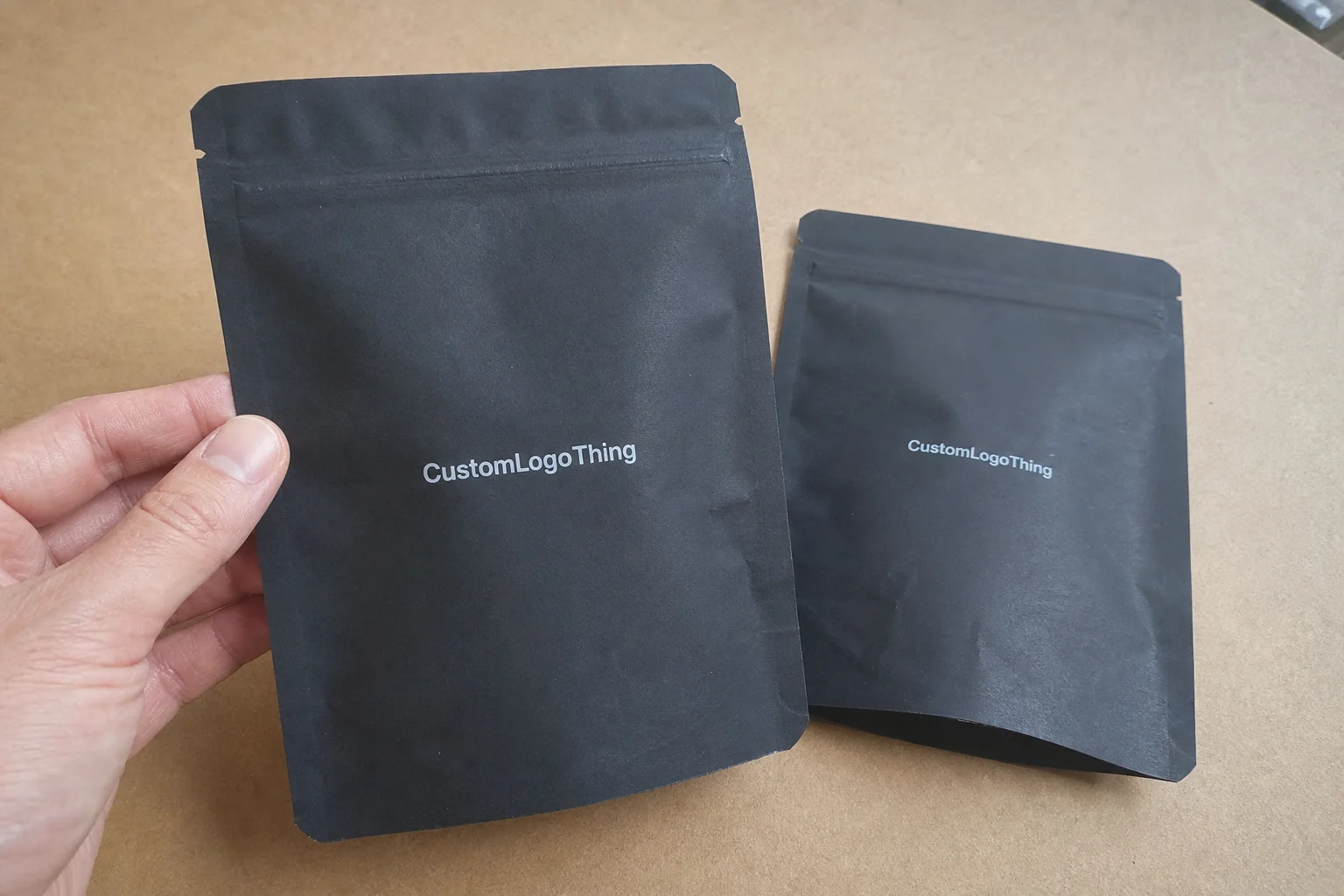
Most packaging problems do not show up during design review. They show up when the bag is being packed at speed, stacked on a shelf, opened by a buyer, or handled again at a retail counter. That is the real use case for custom Slider Lock Clothing bags for food brands: they keep apparel and merchandise presentable after repeated opening, while still giving the package a finished retail look.
For food brands, the “clothing bag” usually means apparel or branded add-ons rather than direct food containment. Think folded tees, aprons, chef jackets, staff uniforms, event shirts, or seasonal merchandise kits. In that setting, the bag is part of the branded packaging experience. It protects the item, carries the logo, and makes the product feel deliberate instead of improvised.
The most common failures are not caused by the slider itself. They come from a bag that is the wrong size, film that feels too soft, or a spec that ignored how the package would actually be handled. If the garment shifts around too much, the presentation looks cheap. If the film is too thin, the bag creases, wrinkles, and loses shelf appeal before it ever reaches the customer. That is a product packaging issue, not just a closure issue.
If a bag will be opened, checked, and closed again several times, the film and the closure need to survive that use pattern. Spec it like a one-time mailer and the package usually pays for that mistake later.
These bags are usually chosen when presentation matters as much as protection. They work well for retail add-ons, subscription inserts, employee kits, backstage bundles, and merch programs where customers or staff need to inspect the contents more than once. That is a different job from a simple poly bag, and it needs a different spec.
If you are comparing formats, it helps to look at broader options in Custom Packaging Products and a few real ordering patterns in Case Studies. Mockups rarely show the handling issues that matter after the order lands.
How the Slider Lock Actually Works
The mechanism is simple. The slider moves along a track at the top edge of the bag and opens or closes the seal with one motion. That sounds minor, but it changes the experience more than most buyers expect. A hand-pressed zipper can be fiddly, especially for staff packing quickly. A slider gives a more consistent close and a cleaner open, which matters when the package is checked, reopened, and closed again.
Compared with a flap seal, a slider lock is the difference between “good enough” and easy to use. Flaps are fine for short-term containment and lower-cost packing jobs. Standard zipper bags are better for repeated access, but the slider usually feels faster and more forgiving. That is why custom Slider Lock Clothing Bags for food brands show up in retail packaging and fulfillment workflows where speed and presentation both matter.
The slider is not a cure-all. It improves access and reuse, but it does not make the bag tamper-evident. It also does not turn a clothing bag into a barrier package for sensitive contents. If the product needs moisture resistance, odor control, or regulated food-contact performance, this is the wrong format. Be clear about the job before placing an order.
Here is a practical comparison:
| Closure type | Best use | Typical cost impact | Handling experience | Main tradeoff |
|---|---|---|---|---|
| Flap seal | Short-term packing, simple inserts | Lowest | Fast, basic | Weak for repeated access |
| Standard zipper | Reusable apparel bags, light retail packaging | Moderate | Good, but can be fiddly | Hand closure can vary by user |
| Slider lock | Branded apparel, promo kits, retail add-ons | Higher | Fast and consistent | Adds cost and a little bulk at the top edge |
If the bag will go through fulfillment teams, store staff, or customers who may inspect it more than once, the slider often earns its place. If the package is truly one-and-done, the hardware may be unnecessary expense.
Spec Factors That Change Performance and Brand Feel
Size comes first. If the garment or kit is packed too tightly, the film gets stressed and the closure feels awkward. If the bag is oversized, the item slides around and the package looks sloppy. For folded apparel, it is usually smarter to measure the packed form rather than the flat garment. Add room for a card insert, tissue, or hang tag if those are part of the presentation.
Film thickness is the next major lever. Lighter gauges save money, but they can feel soft and thin in hand. Heavier film adds stiffness and usually survives shipping abuse better. For custom Slider Lock Clothing Bags for food brands, the right gauge depends less on the bag itself and more on how the bag is used. A premium retail feel may justify heavier film. A low-cost promo kit may not.
Clarity matters too. Clear film shows the product and works well when the garment is part of the visual appeal. Frosted or tinted film can hide wrinkles, reduce the warehouse-plastic look, and make the pack feel more deliberate. If the graphic is carrying the message, keep the layout clean. One strong logo and one useful line usually work better than a crowded print job. Packaging should support the item, not fight it.
Useful add-ons include hang holes, side gussets, perforations, venting, and slider color. Each one solves a different handling problem. Hang holes help with retail display. Gussets add volume for thicker folds. Perforations can improve opening. Venting is useful when trapped air makes the pack look puffed and awkward. Colored sliders can tie back to the brand, but they also add another production variable that has to be approved and controlled.
For print, ask for proof details that show logo placement, ink coverage, and clear zones. If the brand also uses custom printed boxes or paper inserts, keep the colors aligned across every piece. That is what makes package branding feel intentional instead of assembled from leftovers.
On the technical side, ask suppliers what they can actually verify. Film tensile and elongation can be discussed against ASTM methods such as ASTM D882 when relevant, and shipping validation should be tied to a real distribution test rather than a guess. For transit, look at ISTA profiles that match your route and carton setup. If paper inserts or hang tags are part of the package, FSC-certified stock from FSC is a straightforward choice.
Cost, Pricing, and MOQ: What Moves the Quote
The quote usually comes down to six things: size, film thickness, print coverage, slider hardware, special features, and volume. If you want a useful answer instead of a vague “pricing depends,” those are the variables that matter.
Small quantities are expensive because setup, proofing, and waste get spread over fewer units. That is normal. A first run of 1,000 to 3,000 bags may land noticeably higher per unit than a 10,000-piece run, especially if the artwork uses multiple colors or full-area coverage. At 5,000 units, many buyers find a workable middle ground where the unit price starts to make sense without overcommitting inventory.
As a rough buying range, a printed slider bag can often land around $0.18-$0.42 per unit at 5,000 pieces, depending on bag size, gauge, print complexity, and closure configuration. Simpler builds can come in lower. Oversized or heavily printed bags climb quickly. That is why comparing only the unit price is incomplete. Compare the landed cost.
| Quantity | Typical unit cost pressure | Best for | Risk |
|---|---|---|---|
| 1,000 to 2,000 | High | Testing fit, short campaigns | Unit cost can look inflated |
| 3,000 to 5,000 | Moderate | Launches, seasonal merch, retail packaging | Storage still needs planning |
| 10,000+ | Lower | Stable programs, repeat apparel drops | Inventory risk if artwork changes |
Ask whether the quote includes tooling, plates, freight, samples, and carton packing. Some suppliers bundle them. Some do not. A quote that looks cheap until freight is added is not cheaper. It is incomplete. If you need a broader benchmark against other product packaging purchases, compare it against your other branded packaging lines before you commit.
MOQ behavior also depends on print method and material availability. A simple one-color logo on stock film may be easier to source than a fully custom film structure. If the supplier is also building a matching promo kit, the bag cost may look better because other components are being ordered in the same production window. That can help, but only if the bag spec stays clean.
Production Steps and Timeline: From Proof to Delivery
The usual sequence is straightforward: specs confirmed, artwork checked, digital proof issued, sample or pre-production review approved, manufacturing starts, inspection happens, then the order ships. The step that breaks timelines is usually approval. Someone changes the logo size after proofing, or the dimensions were never measured correctly, and the job slips.
Lead time varies, but custom work takes longer than stock bags because the size, print layout, and closure configuration all need to line up. A practical range is often 12 to 18 business days after proof approval for production, then shipping on top of that. Offshore freight can add more time. Domestic freight can still surprise you if it is left too late.
Build a buffer. If the bags support a launch, holiday drop, or retail rollout, assume you need extra days for revision, approval, and transit. That is not pessimism. It is basic project planning. The cheapest packaging is the packaging that arrives before it is needed.
Production checks should not stop at a visual scan. A useful inspection usually covers seal integrity, slider travel, print registration, clear film consistency, bag dimensions, and carton count. If the closure binds, if the print shifts, or if the bag size varies outside tolerance, those problems are much easier to catch before shipment than after the pallets are in transit.
Where do delays come from?
- Late artwork changes after proof sign-off.
- Unclear measurements for the packed garment or insert.
- Color expectations that were never tied to a target.
- Approval delays while the order waits in queue.
- Freight choices made after the production slot is already booked.
For custom Slider Lock Clothing Bags for food brands, timing is part of the spec. If the bag needs to arrive for a retail calendar, a mailer drop, or an event, it should be scheduled like any other critical production item.
Step-by-Step Buying Process for First-Time Buyers
Start with the use case. Are you packing folded apparel, employee uniforms, promo kits, or a retail add-on? That single answer drives size, film, print, and closure choice. If the bag will be reused by the customer, the slider becomes more important. If it is only for internal packing, the spec can stay simpler.
Measure the packed item, not just the flat garment. Fold it the way it will actually ship, then record the length, width, and thickness. Add room for inserts, branded cards, or tissue. Buyers often miss the last 5 to 10 mm of clearance, which is enough to make the closure feel tight or force the package to bulge.
Then decide how much the bag has to carry the visual story. If the logo is the hero, keep the layout focused and the print crisp. If the item itself is doing the selling, go with a clearer film and a lighter touch. That sounds basic, but packaging often goes wrong when the graphic team and the packing team are solving different problems.
Request two samples if possible: one blank sample for fit and closure feel, and one printed sample for color, logo placement, and overall presentation. That small step saves more money than most buyers expect. A sample shows whether the slider glides properly, whether the bag survives repeated use, and whether the package looks like retail packaging or a generic pouch with a logo placed on top.
If you are ordering related pieces, keep the system aligned. Your bag, tissue, insert card, and any custom printed boxes should feel like they belong together. That consistency is what makes the overall package branding read as finished.
Before a quote is issued, lock five things: product dimensions, target quantity, print requirements, delivery address, and approval deadline. If those are still uncertain, the quote will be fuzzy and the timeline will drift. Clean inputs produce cleaner pricing. That applies to bags, boxes, and every other packaging buy.
Common Mistakes That Waste Money or Delay Orders
The first mistake is buying to the artwork instead of the product. A beautiful bag that wrinkles the garment, shifts the contents, or fights the closure is not a good bag. It is expensive decoration.
The second mistake is under-specing the film. Thin bags can look acceptable in a mockup and still fail in real use. They crease, tear, or feel too soft in hand. Then packers complain, customers complain, and the second order costs more than doing it right the first time.
The third mistake is comparing quotes badly. If one supplier includes freight and another does not, you do not have a price comparison. You have a math trap. The same is true for samples, tooling, and packaging. Read the quote line by line.
The fourth mistake is leaving no time for adjustments. If the order is tied to a launch, trade show, or seasonal retail window, last-minute buying becomes expensive quickly. Rush shipping, shortened approvals, and fewer material options all push the price up. That is not mystery behavior. It is how production works.
There is a fifth mistake that shows up often: making the package too busy. More print does not automatically mean better branding. Often it means more cost, more clutter, and less clarity. A clean logo, the right size, and a decent film choice usually beat a bag trying to do five jobs at once.
Another avoidable problem is skipping real-world handling checks. A bag can look perfect in a flat proof and still feel wrong on a packing line. The slider may snag, the closure may not align cleanly, or the bag may bow once the contents are inserted. Those are the kinds of issues that only show up when the actual product is inside the actual package.
Expert Tips and Next Steps Before You Request Quotes
Keep the design simple unless the bag is carrying a real brand story. One strong logo placement, one clear color direction, and one useful visibility choice usually outperform a crowded layout. That is especially true for custom slider lock clothing bags for food brands, where the bag often sits beside other branded pieces and should not compete with them.
Standardize bag sizes across product lines whenever possible. Fewer sizes mean less inventory clutter, easier reorder planning, and fewer mistakes in fulfillment. If three apparel programs can fit into two bag sizes instead of four, that saves time and reduces dead stock.
Ask for pricing at multiple quantities. A quote at 2,000 units, 5,000 units, and 10,000 units will show where the meaningful breakpoints are. Sometimes the jump from 3,000 to 5,000 units is where the real savings appear. Sometimes it is not. You will not know until you see the numbers side by side.
For buyer evaluation, look at four things in the sample: slider smoothness, seal consistency, film stiffness, and print alignment. Those four checks tell you more than a polished mockup ever will. If the bag fails any of them, the issue will probably show up again in production unless the spec changes.
Where possible, keep the broader packaging system consistent. The bag, insert card, tissue, and any product packaging pieces should feel like one family. That consistency matters more than flashy graphics. It makes the brand look organized, and organized packaging usually performs better on the shelf, in storage, and in the customer’s hands.
Custom slider lock clothing bags for food brands work best when the spec is honest, the quantity is realistic, and the package is built for how people actually handle it. That is the real standard. Everything else is decoration.
Are custom slider lock clothing bags for food brands better than standard zipper bags?
Usually yes if you need a cleaner presentation, easier repeated opening, and a closure that feels more controlled in retail or fulfillment use. Standard zipper bags can be cheaper, but slider bags are often easier for staff or customers who will open the package multiple times.
What information do I need to get an accurate quote for custom slider lock clothing bags for food brands?
Provide the packed product dimensions, desired bag size, film thickness, print details, quantity, and ship-to address. Include any special requirements up front, such as hang holes, gussets, frosted film, or sample approval before production.
How do I choose the right thickness for slider lock clothing bags?
Use lighter film for small, flat, low-weight items and heavier film when the bag needs more stiffness, durability, or a more premium feel. Test the actual folded product inside the bag before ordering, because the right gauge depends on fit, friction, and how often the package will be reopened.
What affects MOQ and unit cost the most?
The biggest cost drivers are size, material, print coverage, slider hardware, and how many units you order in one run. Lower quantities usually cost more per bag because setup, proofing, and waste are spread across fewer units.
How long does production usually take for custom slider lock clothing bags for food brands?
Lead time depends on proof approval, sample needs, artwork changes, production queue, and shipping method. Build in extra time for revisions and freight, because last-minute changes are the fastest way to turn a normal order into a rushed one.


