Small Retail Paper Bags Unit Cost Breakdown & Ordering
For a buyer comparing quotes, the small retail paper Bags Unit Cost Breakdown can look straightforward and still be misleading once freight, setup charges, and finishing are added. A low per-bag number is not the same thing as a low landed cost. That gap is where a purchase that looked efficient on paper becomes expensive after artwork, packing, or shipping are counted.
The useful way to evaluate a quote is line by line. Paper grade, handle style, print coverage, reinforcement, carton pack-out, and transit distance all change the final number. Once the spec is clean, the comparison gets much sharper: you are no longer judging offers on a headline price that hides the real job.
Why the Cheapest Bag Often Costs More at Checkout
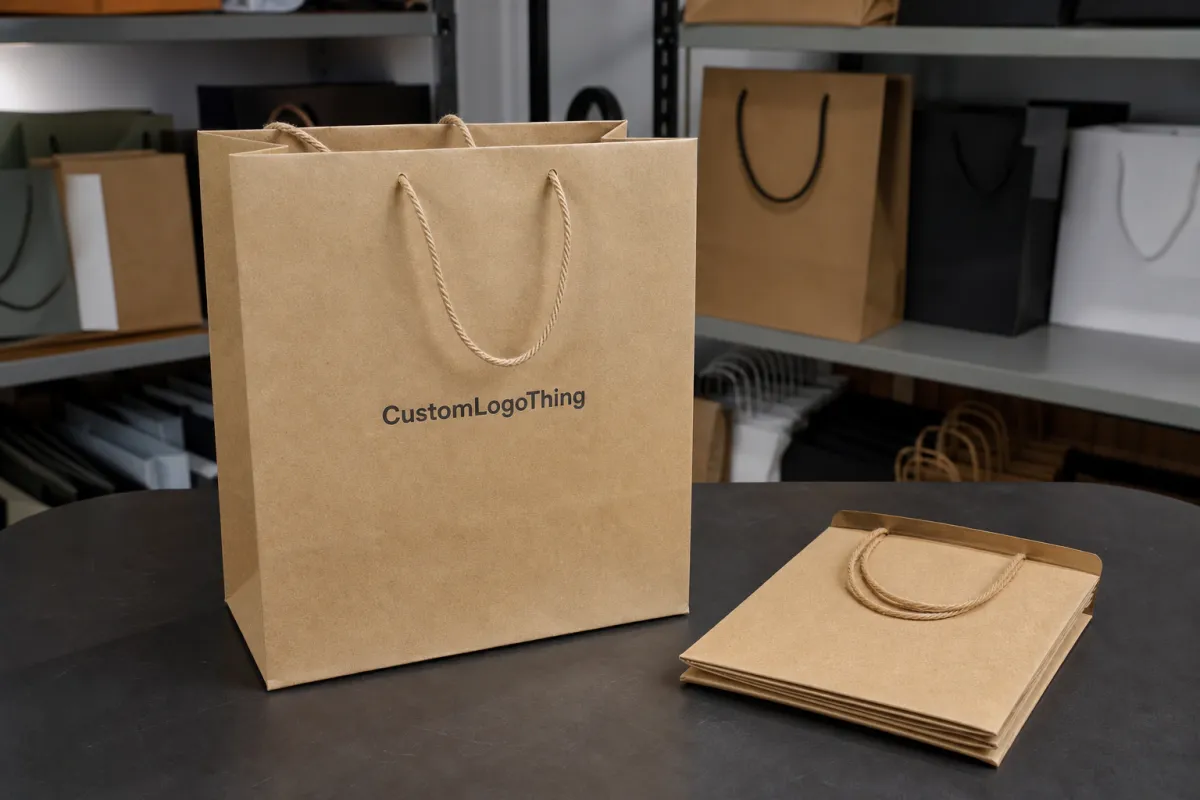
The lowest quote on a paper bag can turn into the most expensive order once production and freight are fully counted. The pattern is familiar: a buyer compares only the shell price, then discovers that print plates, proofing, glue changes, carton upgrades, and shipping add a second layer of cost. None of those are side items. They are part of the actual purchase.
A plain kraft bag may look cheaper at first glance, but if the handles are weak, the bottom is under-reinforced, or the stack quality is inconsistent, the saving is quickly erased by returns, complaints, or a reprint. In retail, the bag is part of the brand experience and part of the load-bearing system. If it fails under normal use, it failed the job.
Lowest unit price is not the same as lowest total spend. Ask for landed cost, not just the factory quote.
That is the point of a small retail paper Bags Unit Cost Breakdown. It gives the buyer a practical way to compare materials, construction, and logistics without getting distracted by a single price number that hides most of the work.
Small retail paper bags unit cost breakdown by materials and build
Paper stock is usually the first cost driver. Kraft paper, white kraft, coated paper, and recycled-content sheets all behave differently on the machine and under print. Weight matters too. GSM measures paper weight; caliper measures thickness, so the two are not interchangeable. A move from 120gsm to 180gsm often adds stiffness, improves hand feel, and raises cost faster than buyers expect.
Construction adds a second layer. Side gussets, a reinforced base, and a bottom board each add material and labor. Twisted paper handles are usually the most economical option for light to medium retail use. Flat tape handles sit in the middle. Rope handles tend to cost more because the material is higher grade and the assembly takes longer. Die-cut handles can be efficient on the right style, but they usually need reinforcement to resist tearing at the grip area.
Print method matters as much as the structure. One-color flexo on kraft is usually the leanest option for simple branding. Two-color work still stays efficient if the artwork is restrained and the registration is not too tight. Offset printing can produce sharper detail on white or coated stock, but it usually brings plate costs, more setup time, and tighter waste control. Full-coverage graphics raise the price again because the line has to manage coverage, drying, and inspection more carefully. In practice, clean one- or two-color branding on a sensible paper weight tends to offer the best balance of appearance and spend.
Finishing is the last piece many buyers undercount. Varnish, lamination, foil, embossing, and specialty inks can lift the look, but they also slow production and introduce extra inspection points. A small retail bag rarely needs luxury finishing unless the product and shelf price justify it. For most everyday retail programs, construction quality matters more than decorative extras.
Size, paper grade, and handle options that change performance
Bag size changes more than the visible footprint. A slightly wider gusset or taller body uses more board, takes up more carton volume, and can raise freight because the shipment stacks less efficiently. Two sizes that look close on a drawing can land at very different unit costs once the paper yield is calculated. If the merchandise fits cleanly in a smaller format, oversizing the bag for visual effect is rarely a good trade.
Kraft paper remains the default choice for everyday retail because it is durable, familiar, and easy to print. White kraft gives a cleaner background and usually improves color accuracy. Coated paper creates a brighter, more polished image, but it is not needed for every category and can push the price higher without improving function. Recycled content is a sensible option when the brand wants that story to be visible, but it should be paired with the right weight and print process so the bag still holds up.
Handle selection is practical, not cosmetic. Twisted paper handles suit light to medium loads and keep costs low. Flat tape handles are comfortable in hand and work well on certain folded retail styles. Rope handles feel more premium, which is useful for higher-ticket merchandise, but they cost more. Die-cut handles look clean and compact, yet they need careful reinforcement if the bag will carry anything beyond lightweight accessories or folded apparel.
One useful buyer check is simple: ask how the bag behaves under load, not just how it looks empty. A bag that photographs well but creases badly at the bottom panel or loosens at the handle after a few uses is not a value buy. For most small retail programs, the right answer is a modest build with controlled print and reinforcement only where the stress actually lands.
Pricing, MOQ, and quote structure buyers should expect
MOQ changes the whole cost picture because setup charges get spread across the run. If the plant has to prepare plates, adjust the folding line, approve print, and verify glue performance, a small order carries a larger share of that overhead. A bigger quantity usually lowers unit cost, but only if the bags will be used before styles or branding change. Inventory that sits too long becomes its own expense.
Buyers should ask for a quote that separates the major cost items. A useful quote lists the bag specification, tooling or plate fees, proofing, freight, carton configuration, and any special packing requirement. If one supplier includes inner wrap and another does not, the numbers are not comparable. The same size, same paper, same handle, same print coverage, and same shipping terms must be used across every offer.
| Option | Typical MOQ | Approx. unit cost | What drives it |
|---|---|---|---|
| Plain kraft, twisted handle, one-color flexo | 3,000-5,000 | $0.18-$0.30 | Simple construction, low print setup, efficient converting |
| White kraft, two-color print, reinforced base | 5,000-10,000 | $0.26-$0.42 | Better print finish, more setup, extra board and labor |
| Coated paper, rope handle, full-coverage graphics | 5,000-10,000 | $0.55-$0.95 | Premium look, color control, higher waste and finishing time |
| Recycled kraft, die-cut handle, light reinforcement | 3,000-8,000 | $0.21-$0.36 | Material choice, handle cutout, added reinforcement steps |
Those ranges are working figures, not promises. Freight distance, carton count, paper availability, and print coverage can move them quickly. Still, they provide a useful frame for a small retail paper Bags Unit Cost Breakdown, especially if you are deciding whether a premium finish is worth the extra spend.
Process and timeline from artwork review to final shipment
A clean production path saves money because it reduces revision loops. The usual sequence is straightforward: spec review, quote approval, artwork check, proof or sample, production, inspection, packing, and shipment. The time lost on a job usually comes from handoffs and corrections, not from the machine run itself.
- Confirm the bag size, paper type, handle style, and print colors.
- Check artwork for bleed, line weight, and color limits.
- Approve a proof or sample before production starts.
- Run the order, inspect the lot, and pack cartons for shipment.
Lead time should be divided into approval time, manufacturing time, and freight transit time. A simple order with clean artwork may move in 12-15 business days after proof approval. A more complex build with coated stock, heavier coverage, or custom handles usually needs longer. Rush orders can be possible, but only if the spec is locked and the line has room. Late artwork changes, color corrections after proof approval, and size revisions midstream are the most common reasons a job slips.
Buyers sometimes underestimate the impact of proofing. A digital proof can confirm layout, but it will not fully predict how a specific paper stock takes ink or how a handle assembly behaves under load. If the bag is critical to a launch or seasonal event, a physical sample is worth the time because it catches the issues that do not show up in a screen file.
How to compare suppliers on consistency, compliance, and service
A good sample is useful, but it is not the whole story. Ask how the supplier controls paper weight, glue strength, print alignment, and stack quality from the first carton to the last. If the sample looks sharp and the run arrives with warped bottoms, loose handles, or folding errors, the quoted savings disappear quickly.
Quality control should be specific. Buyers should ask whether the plant checks bag dimensions, handle adhesion, print registration, and carton count before release. For heavier retail use, it also helps to ask about load testing or pull testing at the handle area. Those checks are not glamorous, but they show whether the supplier understands the difference between a sample sheet and a production lot.
Compliance questions should match the use case. If the bags use recycled content, ask for supporting documentation. If they will touch unpackaged food, confirm that the inks, adhesives, and paper are suitable for that application. For shipments that will travel through rough distribution, carton performance matters too. A supplier familiar with common transit tests such as ISTA protocols is usually better prepared to avoid damage in the field.
Communication matters more than many buyers expect. When artwork, timing, or delivery windows change, a responsive supplier can prevent a small issue from becoming a missed ship date. Industry references such as packaging.org and FSC chain-of-custody guidance at fsc.org are useful if you need a neutral check on terminology or material claims. Fewer defects, fewer reprints, and fewer surprises all reduce the real cost per finished bag.
What to send for an accurate quote and cleaner production handoff
The fastest way to get a reliable quote is to send the complete spec up front. At minimum, include bag size, paper type, handle style, print colors, quantity, target delivery date, and shipping destination. If any of those items are missing, the quote is only an estimate, and the unit cost will shift once the missing detail is filled in.
- Artwork files in the right format, with fonts outlined and linked images embedded or packaged correctly.
- Brand standards, Pantone targets, and a reference sample if color matching matters.
- Use case notes, such as apparel, cosmetics, accessories, or lightweight gift items.
- Any packing preference, including carton count, inner wrap, or retail-ready packing.
That use-case detail is more valuable than it first appears. A boutique apparel bag may need a stronger base and a more comfortable handle. A small accessories bag may only need a lighter build and sharper print. If the budget is fixed, say so early. A good supplier can often suggest a different paper grade, a simpler handle, or a leaner print method that preserves the look without inflating the order.
One practical habit saves time on almost every job: compare two or three quotes on the exact same spec, confirm sample approval before production, and lock timing only after the construction is settled. If anything changes, ask for a revised quote immediately so the numbers stay honest.
What drives the small retail paper bags unit cost breakdown the most?
Paper grade, bag size, handle style, and print complexity usually move the price the most. MOQ matters because setup charges are spread across the run, so smaller orders carry a higher unit cost. Freight and special packing can matter just as much as the bag itself once the order is landed.
How does MOQ affect the unit cost of small retail paper bags?
A higher MOQ usually lowers unit cost because plates, die setup, and machine changeover are distributed over more bags. Very small runs often cost more per piece even if the design is simple. The best quantity is the one you will actually use before the packaging changes.
Which bag specs usually raise the price the fastest?
Heavy paper, rope handles, lamination, extra reinforcement, and multi-color print all add cost quickly. Nonstandard sizes can also increase waste and setup complexity. If price is tight, simplify the structure first before cutting quantity.
What information do I need for a reliable retail bag quote?
Provide size, paper type, handle style, quantity, print colors, and delivery destination. Share artwork files and any brand color requirements so the quote reflects the real production job. If you have a target budget, mention it early so the supplier can suggest practical alternatives.
How long does production usually take after approval?
Lead time depends on artwork approval, sample status, quantity, and finishing complexity. Simple orders move faster than custom builds with special handles, coatings, or heavy print coverage. Ask for separate timing for approval, production, and freight so the delivery date is clear.

