Small Retail Paper Bags Sample Approval Checklist for Buyers
A Small Retail Paper Bags sample approval checklist for buyers should do more than confirm that a bag looks good on camera. A sample can sit flat on a table and still fail once it is filled, carried, stacked, or handed across a counter. The handle may feel loose, the base may bow, or the print may soften after lamination.
Use the small retail paper bags sample approval checklist for buyers to catch size errors, weak paper, bad handle placement, print issues, and finish problems before production starts. Once the sample is approved, it becomes the reference for the full run, so unclear points quickly turn into extra cost later. For deeper packaging comparisons, see our paper bag handle types guide and kraft paper bag material guide.
A good sample proves the bag can hold the product, carry well, and still look clean at the counter.
Small retail paper bags sample approval checklist basics
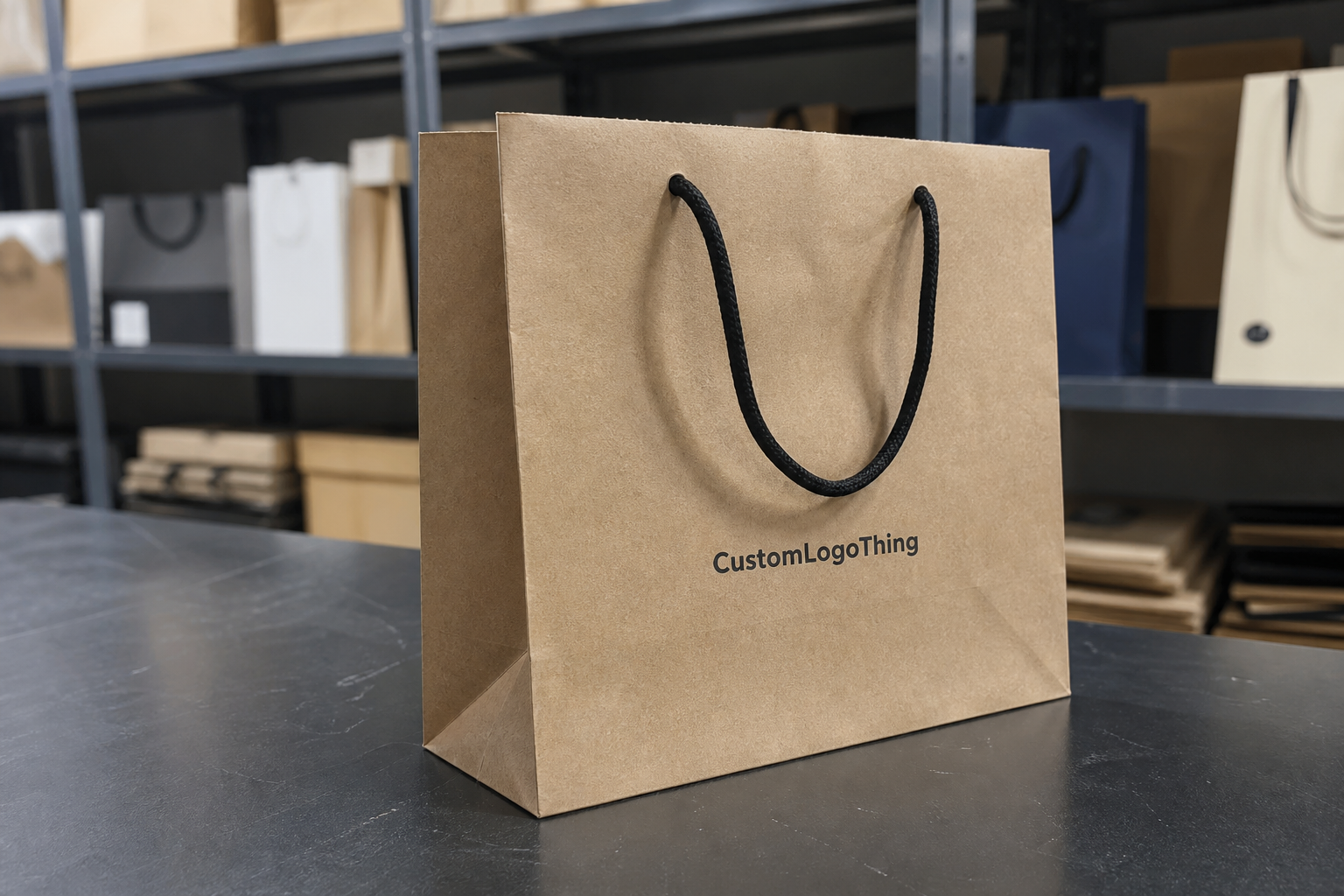
Start with fit. A bag for lightweight cosmetics is not the same as a bag for candles, boxed accessories, or folded apparel. Common material choices for small retail paper bags sample approval checklist for buyers projects include 150-210 gsm kraft for lighter use and 190-250 gsm C1S or art paper for a more polished finish. If the product is heavier, ask for stronger handles and a reinforced bottom.
A practical approval checklist should confirm six things: size accuracy, paper strength, print quality, handle attachment, finish consistency, and load behavior. If the sample only proves one or two of those, it is not ready for approval.
The sample also protects the buyer. If the factory later changes paper stock, shifts the handle placement, or adjusts the fold line, the approved sample gives you a fixed reference. Without that reference, quality discussions quickly become vague and expensive. That is why a small retail paper bags sample approval checklist for buyers is a control tool, not a formality.
In short, the checklist keeps the bag, the factory, and the shelf presentation aligned before production money is committed.
Sample approval process and timeline
The process is usually straightforward: dieline confirmation, blank mockup, printed sample, buyer review, revisions if needed, and final sign-off. If the bag includes foil stamping, embossing, lamination, or a specialty handle, expect extra time because those details often need a second pass.
Timeline depends on what the sample needs to prove. A blank structural sample is often ready in 2-4 business days. A printed sample usually takes 5-10 business days. Complex artwork, strict color matching, or premium finishes can take longer. A small retail paper bags sample approval checklist for buyers works best when the sample schedule is written down before the first proof is sent.
Ask the supplier for a dated review window and a clear revision policy. If feedback is due by a certain date, say so early. If the first correction is included but a second correction costs extra, that should be visible before approval. Small delays at sample stage often turn into bigger delays at production stage.
For shipping and durability questions, use recognized test references instead of opinions. ISTA methods help when you need a drop or vibration benchmark. If fiber sourcing matters, FSC is the place to verify chain-of-custody or certification claims.
Size, paper, and print checks that matter most
Measure the sample first. Check width, gusset, height, handle drop, bottom depth, and mouth opening, then compare those measurements against the product. A bag can still fail in use even when it is technically close to spec, especially if the item rubs the seam or sits too low for a clean presentation.
Paper choice affects both cost and performance. Lighter stock saves money but may collapse too easily or show waves after printing. Heavier stock improves structure and shelf presence, but it adds weight and cost. For many projects, the real question is not what paper looks premium, but what paper survives the product, the handling, and the shipping route.
A 157 gsm art paper bag with lamination can work well for gifting and cosmetics. A 190 gsm kraft bag is often better for natural brands that want structure without gloss. The right option depends on load, finish, and price point. There is no universal winner, which is why a small retail paper bags sample approval checklist for buyers should always tie the material choice to the actual product.
Print checks should be specific. Confirm Pantone match if color consistency matters, logo placement if the artwork is centered, and barcode readability if the bag also serves as a retail carrier or promo pack. Fine type deserves review under normal store lighting, not only under bright inspection lamps. Ink rub resistance also matters; if the print smears with a light rub, the sample is not ready.
Structural checks deserve the same attention. Review glue lines, bottom reinforcement, fold memory, and handle attachment. A twisted fold or weak handle anchor can ruin the result even when the print is correct. Buyers often focus on artwork first because it is easier to judge, but the boring parts are usually where the trouble lives.
Handle style changes the whole bag. Twisted paper handles keep the look clean and are common for lightweight retail packaging. Cotton or ribbon handles feel more premium, but they increase cost. Flat tape handles sit in the middle. If the bag must carry real weight, ask for a pull test on the handle area rather than relying on a visual check. A strong small retail paper bags sample approval checklist for buyers includes both the look and the load.
Step-by-step review before you sign off
Use a simple order. First, compare the sample to the approved spec sheet. Second, inspect every panel in neutral light. Third, check the handles for symmetry, attachment strength, and comfortable drop. Fourth, load the bag with the actual product. Fifth, check how it stands, closes, and carries. That sequence catches more issues than staring at the logo alone.
- Match the sample to the dimension sheet.
- Check print placement on front, back, sides, and gusset.
- Test the handles with the intended product weight.
- Inspect the bottom for glue, reinforcement, and shape retention.
- Photograph every issue and note the fix clearly.
That last step matters more than many teams admit. A photo without notes is a memory aid, not a correction tool. Write down what failed, where it failed, and what should change. “Move handle down 8 mm” is useful. “Handle looks off” is not.
Add a quick load test and a shelf test. A bag can survive in hand and still look awkward next to competing packaging because the proportions are wrong. Check whether it collapses too much after being set down. Retail customers notice that even if they do not comment on it. This is a good place to use a small retail paper bags sample approval checklist for buyers with measurable pass/fail points.
If the bag must travel through distribution, ask for a transit-test reference too. A desk squeeze is not a substitute for a shipping check. For heavier or more fragile goods, an ASTM D4169 or ISTA-style approach gives a more honest result than guesswork.
Cost, pricing, and MOQ checks before approval
Sample cost and production cost are not the same thing. In 2026, a plain structural sample often lands around $20-$50 depending on size and tooling. A printed pre-production sample usually falls in the $50-$150 range. A specialty sample with foil, embossing, soft-touch lamination, or custom handles can reach $150-$350+ if multiple setup steps are involved.
For production, unit pricing moves with quantity and finish. A simple custom retail paper bag at 5,000 pieces may sit around $0.20-$0.38 per unit. Add heavier paper, richer print coverage, lamination, recycled-content stock, or upgraded handles, and the price can move into the $0.32-$0.65 range. Lower MOQ usually means higher unit cost because setup is spread across fewer bags.
| Sample type | Typical use | Typical cost | What it proves |
|---|---|---|---|
| Blank structural sample | Size, fit, folding, handle layout | $20-$50 | Dimensions and basic construction |
| Printed pre-production sample | Artwork, color, logo placement | $50-$150 | Print accuracy and visual approval |
| Finished specialty sample | Foil, embossing, lamination, premium handles | $150-$350+ | Final look and production complexity |
Before approval, ask three questions: whether the sample charge is refundable or credited, whether shipping is included, and what change triggers a new quote. Watch for hidden costs too. Rush fees, extra revisions, upgraded handle material, and late artwork changes can all move the final number.
If you are comparing suppliers, compare more than the unit price. Some quotes leave out lamination, handle insertion, or export carton costs. Others build in weak allowances for waste and add charges later. A low number that keeps changing is not really low; it is a moving target. A disciplined small retail paper bags sample approval checklist for buyers helps you compare apples to apples.
2026 trends that affect approval, price, and lead time
Several 2026 packaging trends are changing how buyers approve small retail paper bags. More suppliers now offer recycled-content kraft, water-based coatings, and soy-based inks as standard options instead of premium upgrades. That helps brands that need better sustainability claims without moving to a fully custom structure.
Digital short-run printing is also gaining ground. For seasonal retail, limited-edition drops, or lower MOQs, digital proofs can speed up approvals and reduce the cost of artwork changes. In recent sample rounds, the fastest approvals came from buyers who sent a marked-up PDF, a physical reference bag, and a clear load target on the first round. That is where a small retail paper bags sample approval checklist for buyers pays off most: fewer corrections, fewer surprises, and cleaner handoff to production.
Another shift in 2026 is documentation. Retailers are asking for more than a nice-looking bag. They want FSC or PEFC paperwork where claims are printed, basic transit-test references for e-commerce or mail-order use, and clearer traceability on recycled content. If a supplier cannot back up the claim, the claim should not go on the bag.
Pricing has also become more sensitive to paper availability, energy costs, and freight swings. That does not mean every quote changes weekly, but it does mean quote validity matters more than before. Ask how long the offer holds, whether paper stock can be locked before artwork sign-off, and whether a later change in coating or handle stock will trigger a full re-quote. A small retail paper bags sample approval checklist for buyers should include those commercial points, not just the physical sample.
Common mistakes that cause reprints and delays
The biggest mistake is approving from photos alone. Photos are useful for progress updates, but they do not reliably show color, texture, stiffness, or glue quality. A kraft bag can look warm in one image and flat in another depending on lighting. For retail packaging, physical approval is safer.
Second mistake: vague instructions. “Make it premium” means very little unless it is backed by paper weight, finish type, color reference, and handle style. If you want a clean result, describe it in measurable terms: 200 gsm art paper, matte lamination, twisted paper handles, Pantone-matched logo, and a 100 mm handle drop.
Third mistake: forgetting the hidden parts. Handle type, coating, insert compatibility, and bottom reinforcement can all be wrong while the front panel still looks good. Then the bag fails in use, and everyone acts surprised.
Small unapproved changes also pile up fast. One slightly different handle, one softer board, one shifted fold line, and the whole batch starts to feel off. That is why the small retail paper bags sample approval checklist for buyers should be treated like a control document, not a casual reference.
Another common problem is ignoring tolerance. Paper packaging is not machined metal. A small amount of variation is normal, but the buyer still needs to define where the line is. If handle spacing, print alignment, or bag height drifts outside the agreed range, that is a production problem, not a style choice.
Expert tips for cleaner approvals and fewer surprises
Use a one-page approval sheet. Keep it blunt. Include measurements, Pantone codes, finish notes, handle type, tolerance limits, and a checkbox for each critical feature. If a factory can see what matters in under a minute, there is less room for guesswork.
Keep one physical master sample in the office. Not a photo. Not a PDF. A real sample. When a reorder comes back months later, you want something tangible for paper feel, color tone, and bag structure. Memory is unreliable, and email threads are worse.
Set tolerance ranges up front. A common approach is to allow a small size variation of 1-2 mm on simple paper packaging while keeping tighter control on logo placement and handle spacing. Color shift is trickier because paper stock, ink absorption, and lamination all affect how the final bag reads under store lighting.
Finish the review with a written recap. Summarize what was approved, what changed, and what was accepted as a tolerance. That one message prevents a lot of “we thought you meant...” conversations later.
Clean approvals are usually boring: clear spec, clear sample, clear sign-off. Trouble starts when flexibility is never defined.
Keep a second eye on the details that are easy to overlook: bag base squareness, side gusset symmetry, handle knot placement, and the way the bag sits after opening. These are not glamorous checks, but they separate a bag that feels intentional from one that feels rushed. A strong small retail paper bags sample approval checklist for buyers catches those small failures before they spread through production.
Next steps after the sample gets approved
Once the sample is approved, lock the spec sheet, archive the signed master sample, and confirm the production file version. Then verify carton count, packing method, outer carton labels, and delivery date before the order is released. If the bag will be reused for a later reorder, keep the approved sample in a labeled storage bag so the team can compare future runs against the same reference.
This is also the right time to confirm whether any final change affects price or lead time. Even a small handle swap can change the schedule if the supplier needs new stock or a different insertion method. A last check against the small retail paper bags sample approval checklist for buyers prevents that kind of silent drift.
If you need a second reference for future orders, keep one sample for structure and one for print. That makes reorders easier, especially if seasonal colors or limited-edition artwork change from batch to batch. The more consistent your archive, the faster your approvals stay in 2026 and beyond.
FAQ
How many samples should a buyer approve?
One master sample is usually enough for the spec archive, but keep a backup if the order uses premium finishes or a complex handle. For a small retail paper bags sample approval checklist for buyers, one approved physical reference is better than a folder full of photos.
Can photos replace physical approval?
No. Photos help with progress checks, but they do not show stiffness, glue strength, ink rub resistance, or how the bag carries weight.
What is the best paper choice for 2026?
There is no single best option. Recycled-content kraft, 157-210 gsm art paper, and water-based coated stock are all common 2026 choices. The right one depends on the product weight, the brand style, and the price target.
How do I keep pricing stable?
Lock the spec early, confirm paper stock and handle type, ask for quote validity, and avoid late artwork changes. A well-built small retail paper bags sample approval checklist for buyers keeps the quote from shifting after the sample stage.
Should I ask for a transit test?
Yes, if the bags will ship long distances, stack in cartons, or carry heavier goods. ISTA or ASTM-style checks can expose failures that a desk review will miss.