Buyer Fit Snapshot
| Best fit | printed stand-up pouch supplier selection for packaging buyers who need material clarity, print proof, packing fit, cost control, and repeat-order reliability where brand print, material, artwork control, and repeat-order consistency matter. |
|---|---|
| Quote inputs | Share finished size, material target, print colors, finish, packing count, annual reorder estimate, and delivery region. |
| Proofing check | Approve dieline scale, logo placement, barcode or warning zones, color tolerance, and any recyclable or compostable wording before bulk production. |
| Main risk | Vague material claims, crowded artwork, or missing packing details can create delays even when the unit price looks attractive. |
Fast answer: Printed Stand-Up Pouch Supplier Selection: Film, MOQ, and Lead Time should be specified like a repeatable production item. The safest quote includes material, print method, finish, artwork proof, carton packing, and reorder notes in one written spec.
What to confirm before approving the packaging proof
Check the product dimensions against the actual filled item, not only the sales mockup. Ask for tolerance on folds, seals, hang holes, label areas, and retail display edges. If the package carries a logo, QR code, warning copy, or legal claim, reserve that space before decorative graphics fill the panel.
How to compare quotes without losing quality
Compare board or film grade, print process, finish, sampling route, tooling charges, carton quantity, and freight assumptions side by side. A lower quote is only useful if the supplier can repeat the same color, closure quality, and packing count on the next order.
Printed Stand Up Pouches Supplier: How to Choose One
Choosing a printed Stand Up Pouches supplier is not a branding exercise with a prettier bag at the end of it. A pouch can look excellent on a computer screen and still fail the product as soon as it hits filling equipment, a hot warehouse, or a delivery truck that takes the scenic route. I have seen brands get fixated on artwork while the real problem sat in the seal width, the laminate structure, or the zipper spec. That part tends to show up later, and by then the headache is already expensive.
The right printed stand up pouches supplier does more than print. They help choose materials, barrier layers, finishes, closures, and conversion details that decide whether the package protects the product or just dresses it up. Coffee, snacks, supplements, pet treats, powders, and oily foods all place different demands on the pouch. A supplier that understands those differences is doing real packaging work, not just taking orders.
Cheap quotes are easy to admire for about five minutes. Then the product needs shelf life, transport durability, a consistent print match, and a pouch that does not wrinkle or split under pressure. The rest of this piece is about how to judge a printed stand up pouches supplier using the facts that matter: structure, performance, quality control, and the kind of follow-through that keeps a launch from going sideways. No fluff. Just the stuff that saves money later.
Why a printed stand up pouches supplier can make or break your launch
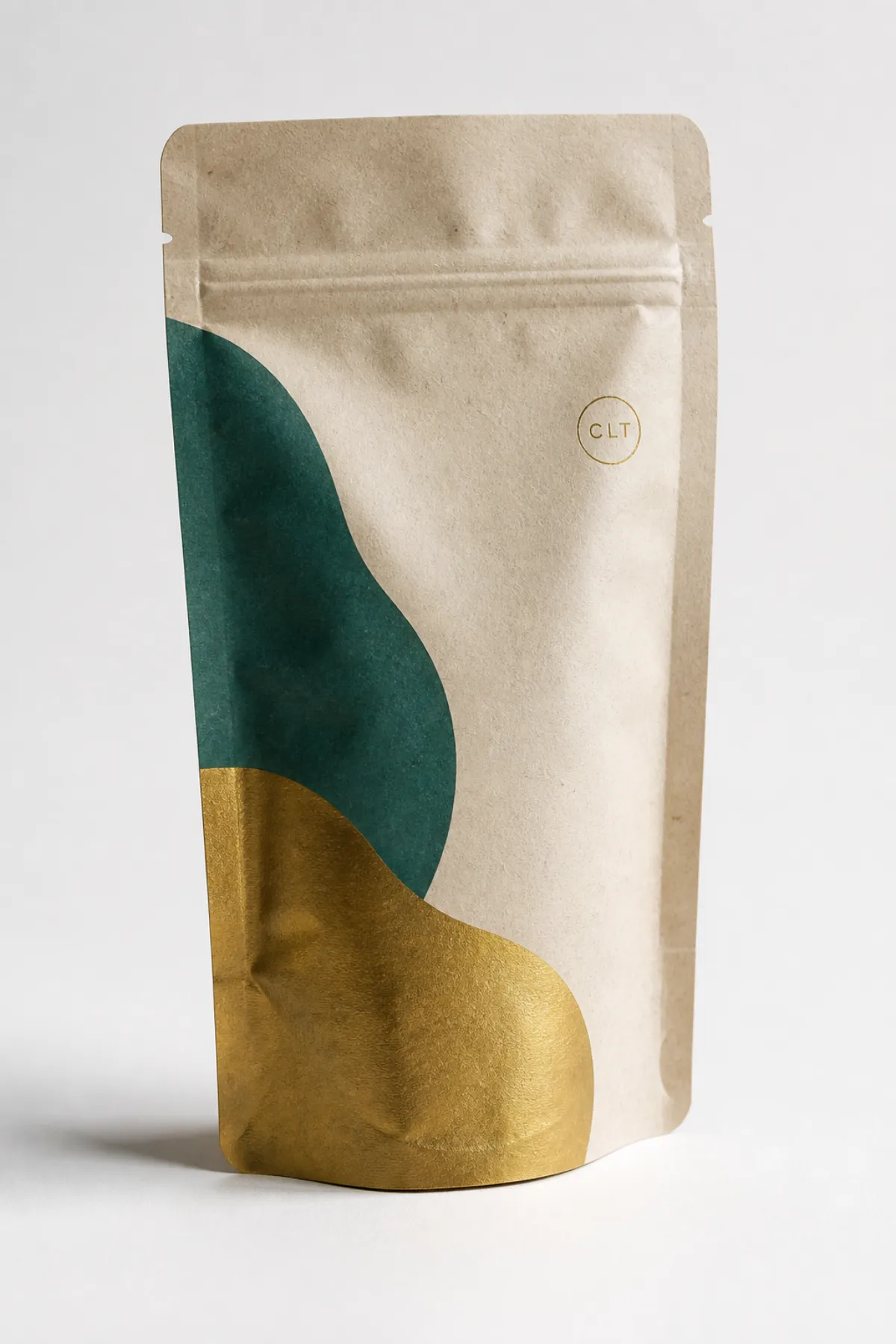
A printed stand up pouches supplier can help a launch look polished, or quietly wreck it. That sounds dramatic until you remember how many packaging failures come from the material system rather than the artwork. A pouch can be beautifully printed and still fail because the seal is too narrow, the film has poor puncture resistance, or the barrier layer is wrong for the product. A nice graphic never fixes a bad structure. It just makes the failure look more expensive.
In practical terms, the supplier’s job is part engineering and part production management. They have to understand the base film, the barrier film, the print face, the adhesive system, and the way those layers behave once they are laminated and formed into a pouch. If you need a matte finish, a tear notch, a zipper, a spout, a degassing valve, or a hang hole, those choices all affect the final structure. A good printed stand up pouches supplier can explain how those pieces fit together without sounding like they are reading from a brochure.
Here is the part buyers often learn the hard way: the lowest price is not always the lowest cost. A low-cost pouch may be fine in a short test, then fail when it spends two weeks in a warm warehouse or gets stacked under heavier cartons. A snack that loses freshness early is not a packaging win. A supplement that absorbs moisture is not a brand story. A reliable printed stand up pouches supplier balances shelf life, machine performance, and shelf appeal so the package does its job in the real world, not just in the proof file.
From the buyer side, the best suppliers ask questions that feel mildly annoying at first and very useful later. Fill weight. Product texture. Drop risk. Storage temperature. Shelf-life target. Retail display. Export route. If a printed stand up pouches supplier skips those questions, they are probably trying to get to a quote quickly instead of solving the packaging problem. That is not usually a great sign.
A pouch should protect the product first and sell it second. If a printed stand up pouches supplier cannot explain the barrier, seal, and finishing choices in plain language, I would treat that as a warning sign rather than a bargain.
Industry references can help keep the conversation grounded. ISTA publishes shipping and transit test standards that show how packages behave in distribution, while the FSC system matters if your structure includes paper-based components. Those organizations do not choose the pouch for you, but they do help separate real performance from sales talk. That distinction matters a lot more than people like to admit.
A practical shortcut: ask whether the printed stand up pouches supplier can tell you the film structure, barrier level, closure type, and test method before they start talking about decoration. If they can, you are usually in better hands. If they cannot, keep asking questions until the answers get specific or the conversation gets short.
How the printed stand up pouches supplier process and timeline works
The production flow with a printed stand up pouches supplier is usually more structured than first-time buyers expect. It starts with a brief, moves into quoting, then artwork review, material selection, proofing, printing, lamination, pouch converting, inspection, and packing. That sounds tidy on paper. In reality, one small change can shift everything. A different zipper style can affect pouch height. A change from gloss to matte can change how the print reads. A stronger barrier layer can alter cost and lead time. That is why a good supplier prefers a full spec sheet instead of a one-line request and a hope-filled emoji.
A realistic first-order timeline, assuming normal communication and no surprises, usually looks something like this:
- Brief and quote: 1-3 business days if the spec is complete.
- Artwork review and technical check: 1-5 business days depending on file quality and revisions.
- Material selection and proofing: 3-7 business days, longer if the structure needs testing or the color match is tight.
- Production: often 10-20 business days for digital or short-run work, and 15-30 business days for larger custom runs.
- Inspection and packing: 1-3 business days before shipment.
Repeat orders are usually faster because the spec is already locked. That is where a good printed stand up pouches supplier earns its keep. If the dimensions, artwork, and material structure stay the same, the order can move into production with far less back-and-forth. Capacity still matters, and shipping method still matters. Air freight reduces calendar time but raises cost. Ocean freight lowers landed cost but asks for patience. A smart buying decision depends on stock risk, not wishful thinking.
Delays usually happen in a few predictable places. Artwork arrives in the wrong format. The buyer wants a tighter color match after proof approval. Someone changes the zipper style after the pouch has already been queued. Or the supplier never got the product’s fill weight, shelf-life target, or storage condition, so they had to stop and ask for the missing facts. A printed stand up pouches supplier can only move as fast as the information they get.
Rush orders deserve real caution. Some suppliers can compress proofing and production windows, and sometimes that is fine. But speed cuts into review time, and review time is where you catch problems like color drift, weak structure choices, or missing fit details. If the product is delicate, flavored, oily, or headed for export, rushing can cost more later than the expedite fee saves now. A trustworthy printed stand up pouches supplier should say that plainly, even if it is not the answer the buyer wanted.
First runs are also more fragile than reorders. The first order includes setup work, structure validation, and extra approvals. A reorder is easier because the pouch spec is already proven. If a printed stand up pouches supplier quotes them differently, that is normal. Those jobs are not identical, and pretending they are would be lazy.
Printed stand up pouches supplier pricing, MOQ, and quote factors
Pricing from a printed stand up pouches supplier is driven by more than print coverage. Material structure, pouch size, barrier level, finish, closure style, and order volume all change the number. A 3.5 x 5 inch pouch for a dry sample is not priced like a 9 x 12 inch high-barrier coffee pouch with a zipper, tear notch, and soft-touch laminate. It sounds obvious, but people still compare those jobs as if they were the same thing with different labels.
MOQ, or minimum order quantity, is where a lot of buyers get turned around. A lower MOQ usually means a higher unit price because setup, print, and converting costs have fewer pieces to spread across. Digital printing can support smaller orders, though the per-unit cost is usually higher. Flexo and gravure make more sense at volume, but they need more pieces to become economical. A solid printed stand up pouches supplier should explain that tradeoff in plain numbers, not in cloudy sales language. If the answer sounds too polished, it is probably hiding something.
Below is a practical benchmark table. These ranges are directional, not universal. The real number depends on size, structure, print coverage, closure type, finish, and whether the order needs special handling. I would use this as a sanity check, not a promise.
| Print method | Typical MOQ | Approx. unit price range | Best fit | Main tradeoff |
|---|---|---|---|---|
| Digital print | 500-3,000 pieces | $0.55-$1.40 each | Launches, seasonal SKUs, test markets | Higher unit cost at scale |
| Flexo print | 3,000-20,000 pieces | $0.16-$0.45 each | Steady-volume consumer products | Setup and plate costs |
| Gravure print | 20,000+ pieces | $0.10-$0.30 each | Large-volume, long-run programs | Higher initial tooling cost |
A quote can look appealing and still be incomplete. A low number may leave out plates, cylinders, freight, samples, or overage allowance. It may also assume a lighter material structure than the product actually needs. That is why buyers should ask every printed stand up pouches supplier for a full quote that states pouch dimensions, film structure, print method, closure style, finish, tolerance, and shipping assumptions. If those details are missing, the savings are probably a mirage.
Hidden costs tend to follow a few predictable patterns. Metallic finishes add complexity. Soft-touch coatings cost more than standard gloss. A one-way degassing valve adds cost. A spout pouch costs more than a basic zipper pouch. High-barrier laminations, especially for oxygen-sensitive or aroma-sensitive products, also raise the price. A competent printed stand up pouches supplier will tell you which upgrades are functional and which are mostly cosmetic. That distinction is very useful, and kind of rare if you only talk to the sales desk.
Another trap is comparing quotes without matching the spec. If one printed stand up pouches supplier quotes 5,000 pieces with a 12-month shelf-life barrier and another quotes a looser film with no closure details, those are not competing offers. They are different jobs wearing the same shirt. Ask for apples-to-apples numbers or the comparison turns into theater.
Key quality factors when choosing a printed stand up pouches supplier
Quality starts with barrier protection. A printed stand up pouches supplier should be able to explain oxygen barrier, moisture barrier, light protection, and aroma retention in the context of your product. Coffee usually needs strong oxygen and aroma control. Snacks care about moisture. Nutritional powders may need a blend of puncture resistance and moisture protection. If the barrier spec is wrong, the product ages badly no matter how good the pouch looks.
Seal strength matters just as much. A pouch can pass a visual check and still fail if the seal is too narrow or contaminated by powder during filling. Puncture resistance matters for products with sharp corners, heavy fill weight, or coarse particles. Stackability matters for shipping cartons and store shelves. A good printed stand up pouches supplier will talk about seal width, gusset stability, and film toughness without pretending those details are optional.
Print quality has its own set of checks. Color accuracy, registration, finish consistency, and ink durability all affect how the package reads in hand and under store lighting. A proof should be close to the final run, but buyers should understand that proofs and production are not identical. A supplier that explains expected variance is more trustworthy than one that promises perfection and then blames the press later. A reliable printed stand up pouches supplier should also explain how they handle spot colors, black density, and matte versus gloss behavior.
Compliance is not the exciting part of packaging, but it matters. Food-contact requirements, child-resistant features, and product-specific regulations may apply depending on the category and market. If the product travels through parcel networks, transit testing can be useful. If the structure includes paper-based components, FSC certification may matter. The goal is not to collect certificates like trophies. The goal is to match the package to the actual risk.
Think in terms of structure rather than vague “premium” language. A printed stand up pouches supplier might suggest a PET/PE structure for general packaging, a metallized layer for improved barrier, or an EVOH-containing structure for higher oxygen resistance. Those choices are not interchangeable. They affect shelf life, sealing behavior, finish, and cost. A supplier should explain the tradeoffs in a way your operations team can actually use without needing a translation layer.
If a printed stand up pouches supplier tries to push the same material recipe for every product, they are selling convenience for themselves, not performance for you.
That is the core quality test: does the supplier adapt the pouch structure to the product, or do they just pull the same answer off the shelf? The second option is easier to explain and harder to live with.
Step-by-step: how to evaluate a printed stand up pouches supplier
The easiest way to evaluate a printed stand up pouches supplier is to start with your product facts. Not your logo. Not your mood board. Facts. Send fill weight, viscosity, shelf-life target, storage conditions, distribution channel, and any filling equipment constraints. If the product is oily, acidic, powdery, or odor-sensitive, say so. The supplier cannot recommend the right pouch structure if you keep the important details hidden like they are state secrets.
Then request quotes using identical specs. Same pouch dimensions. Same print coverage. Same closure type. Same finish. Same quantity. That is the only fair way to compare one printed stand up pouches supplier against another. If one supplier quotes 10,000 pieces and another quotes 12,000, or one includes a zipper while the other does not, the numbers are not directly comparable. Clean comparisons save time and prevent false savings, which is a lot more valuable than it sounds.
Samples matter, but only if they are relevant. Ask for samples that match your product category as closely as possible. If you are packaging coffee, do not judge the pouch by a cosmetic sample with completely different barrier needs. Ask for a pre-production sample or digital proof if color, finish, or fit matters. A capable printed stand up pouches supplier should be willing to show you how the pouch behaves before you commit to a full run.
- Check communication speed: Fast replies help, but technical clarity matters more.
- Check technical depth: The supplier should explain material structures without hand-waving.
- Check risk awareness: Good suppliers flag issues before they become production delays.
- Check scale ability: A supplier that can only handle a tiny run may not support growth.
Ask about the testing process. Does the printed stand up pouches supplier run seal tests? Do they inspect print registration? Do they confirm dimensions and closure placement? Do they test against filled product or only empty pouches? These details matter more than the polished renderings in a sales deck. A supplier that can talk through testing methods usually has a firmer grip on production reality.
Also ask how they handle future reorders. The first order is one thing. The second and third orders reveal whether the supplier has a real process. A dependable printed stand up pouches supplier keeps records of approved specs, print references, and production settings so the next run is not rebuilt from scratch. If every reorder feels like a new launch, there is probably a process problem hiding in there.
My practical recommendation is simple: score every printed stand up pouches supplier on five points - spec accuracy, technical communication, sample quality, price transparency, and reorder readiness. If one supplier is strong in four areas and weak in one, you can decide whether that weakness is acceptable. If they are weak in three or more, keep moving. Packaging is too important for wishful thinking.
Common mistakes when working with a printed stand up pouches supplier
The most common mistake is choosing a printed stand up pouches supplier on price alone. That move is tempting because quote sheets are easy to compare and quality is harder to measure. But a pouch that cannot protect the product, survive filling, or hold up in transit is expensive in the wrong direction. Rework, complaints, returns, and wasted inventory are not hidden savings. They are delayed bills, and usually bigger than the buyer expected.
Another mistake is sending vague artwork or incomplete specs and then acting surprised when the result misses the mark. If the file does not show bleed, dielines, safe zones, or color expectations, the supplier is forced to guess. Guessing is not a production method. A strong printed stand up pouches supplier will catch some issues, but the buyer should still provide clean files and a finished spec sheet.
Many buyers also wait too long to decide on zipper style, tear notch position, or hang-hole placement. Then the design gets approved, the pouch enters production, and somebody notices the closure detail is wrong. That creates delays that were completely avoidable. A careful printed stand up pouches supplier will push for those decisions early for exactly that reason. It is not nitpicking. It is the difference between a clean run and a dumb surprise.
Testing is another place where good projects go off the rails. Buyers approve a pouch sample but never fill it, store it, or ship it under actual conditions. Then the first shipment sits in a hot warehouse or rides through a rough parcel network, and the package underperforms. If your product needs shelf-life validation, drop testing, or transport testing, use that data before the big order. A practical printed stand up pouches supplier should support that step rather than rush past it.
Finally, do not assume one pouch structure works for every SKU. A coffee blend, a protein powder, and a flavored snack may share a brand, but they do not share the same packaging needs. Different weights, oils, aroma levels, and shelf-life targets can justify different film structures. A smart printed stand up pouches supplier treats each SKU as its own packaging problem instead of forcing a one-size-fits-all answer.
Here is the blunt version: most pouch problems are not mysterious. They come from missing information, rushed approvals, or chasing the lowest quote without checking what was left out. That is not bad luck. That is bad process, and it can be avoided.
Expert tips and next steps for your first order
Build a spec sheet before you ask for quotes. That is the cleanest way to get useful pricing from a printed stand up pouches supplier. The sheet should include pouch size, fill weight, product type, shelf-life target, barrier needs, closure preference, finish, print coverage, and estimated quantity. If you have a filling machine with size limits, include those too. The clearer the brief, the better the quote. It is one of those dull tasks that saves real money, which is why people skip it and then regret it later.
If color, sheen, or fit matters, ask for a pre-production sample or digital proof. A finished proof can reveal problems that flat artwork cannot. Matte and gloss behave differently under light. Metallic layers change how colors read. Heavy ink coverage can shift the final feel of the pouch. A thoughtful printed stand up pouches supplier will not mind the extra check because it lowers the odds of a reprint. If they act annoyed, that tells you something useful.
For products that are still changing, start with a small validation run. That can be the smartest money you spend. A pilot order lets you test filling speed, seal performance, shelf appearance, and shipping durability Before You Buy a large volume. If the formula changes or the retailer asks for a new format, you have not overcommitted. A good printed stand up pouches supplier should understand that a controlled first run is not a sign of distrust. It is a sign of disciplined buying.
Build a reorder plan early. Know your target stock level, your backup lead time, and your approval checklist for repeat orders. Decide who signs off on art changes, who confirms the material structure, and who checks the final shipping terms. When a printed stand up pouches supplier gets a reorder with that kind of clarity, the process gets much cleaner. Nothing wastes time like hunting for the last approved file while the launch calendar keeps moving.
One last thing: a printed pouch is not just a container. It is also a production asset. If you treat it like a commodity, you will keep paying for the same mistakes in different ways. If you treat the printed stand up pouches supplier relationship like a technical buy, you get better shelf life, fewer delays, and fewer awkward conversations when the cartons arrive looking “almost right.” Almost right is not a category anyone should budget for.
So the practical next steps are straightforward: gather your product specs, request three comparable quotes, review samples, verify the structure and timeline, and place a controlled pilot order with your printed stand up pouches supplier. That sequence takes more time than firing off a cheap inquiry, but it usually costs less in the end. Packaging has a way of punishing shortcuts, and it does not do that gently.
FAQ
How do I compare printed stand up pouches supplier quotes fairly?
Use the same pouch size, material structure, print coverage, closure type, and order quantity for every quote. Ask whether tooling, plates, samples, freight, and overage are included so you are not comparing one complete quote with one that leaves half the job off the page. A fair comparison is boring, but it works.
What is a normal MOQ for a printed stand up pouches supplier?
MOQ depends on print method, pouch size, and customization level, so there is no single universal number. Expect digital runs to be lower and fully custom printed orders to require higher volumes to keep unit cost reasonable. A good printed stand up pouches supplier will tell you where the breakpoint sits for your exact job instead of dodging the question.
How long does it take to produce custom printed stand up pouches?
First orders usually take longer because artwork, proofing, and material approval add extra steps. Repeat orders are faster once the spec is locked, but timeline still depends on capacity and shipping method. A realistic printed stand up pouches supplier estimate is more useful than an optimistic one that falls apart later.
What information should I send to a printed stand up pouches supplier for an accurate quote?
Send product type, fill weight, pouch dimensions, barrier needs, closure preference, print coverage, and expected order quantity. Include your target launch date and where the product will be stored or shipped so the supplier can recommend the right structure. The more complete the brief, the less room there is for expensive guessing.
How do I know if a printed stand up pouches supplier is reliable?
Look for clear technical answers, fast follow-up, sample quality, and a quoting process that matches your spec closely. A reliable supplier points out risks early instead of pretending every idea is perfect. That is usually the difference between a real packaging partner and a quote machine.
Choosing a printed stand up pouches supplier is about protection, consistency, and fit, not just decoration. If you pay attention to barrier specs, seal strength, price structure, and real lead times, you will get a pouch that actually does the work instead of one that only looks good on a screen. The best move is simple: write a complete spec, compare like for like, test a sample that matches your product, and place a controlled pilot order before scaling up. That is how you keep the packaging honest and the launch on track.