Buyer Fit Snapshot
| Best fit | Printed Sustainable Pouches for Retail projects where brand print, material claims, artwork control, MOQ, and repeat-order consistency need to be specified before quoting. |
|---|---|
| Quote inputs | Share finished size, material target, print colors, finish, packing count, annual reorder estimate, ship-to region, and any compliance wording. |
| Proofing check | Approve dieline scale, logo placement, barcode or warning zones, color tolerance, closure strength, and carton packing before bulk production. |
| Main risk | Vague material claims, crowded artwork, missing packing details, or unclear freight terms can make a low unit price expensive after revisions. |
Fast answer: Printed Sustainable Pouches for Retail: Film, Print, MOQ, and Carton Packing should be specified like a repeatable production item. The safest quote records material, print method, finish, artwork proof, packing count, and reorder notes in one written spec.
Production checks before approval
Compare the actual filled-product size with the drawing, then confirm tolerance on folds, seals, hang holes, label areas, and retail display edges. Reserve space for logos, QR codes, warning copy, and material claims before decorative graphics fill the panel.
Quote comparison points
Review material grade, print process, finish, sampling route, tooling charges, carton quantity, and freight assumptions side by side. A quote is only useful when the supplier can repeat the same color, closure quality, and packing count on the next order.
Printed sustainable pouches for retail can look polished on shelf and still create headaches in the warehouse if the seal is weak, the barrier is underspecified, or the hanging feature was chosen without thinking through the display method. That is why printed sustainable pouches for retail deserve the same level of attention as any other packaging decision: they are not just artwork wrapped around a pouch, they are a protection system, a shipping format, and a signal about the brand all at once.
From a packaging buyer's standpoint, the format has a lot going for it because it combines several functions in one structure. A flexible pouch can stand upright, hang from peg hooks, give designers a generous front panel, and travel through distribution with less weight than rigid packaging. The catch is straightforward: printed sustainable pouches for retail only perform well when the material family, print method, closure, and end-of-life claim all make sense together for the product inside.
That is where many brands misread the opportunity. They see a lower-material package and assume the sustainability question is solved. It is not. A pouch can be recyclable, compostable, recycled-content, or simply material-efficient, but those are different claims with different evidence behind them. For printed sustainable pouches for retail, the strongest choice is the one that protects the product, fits the shelf, and holds up through the real path to market.
Printed Sustainable Pouches for Retail: Why They Matter
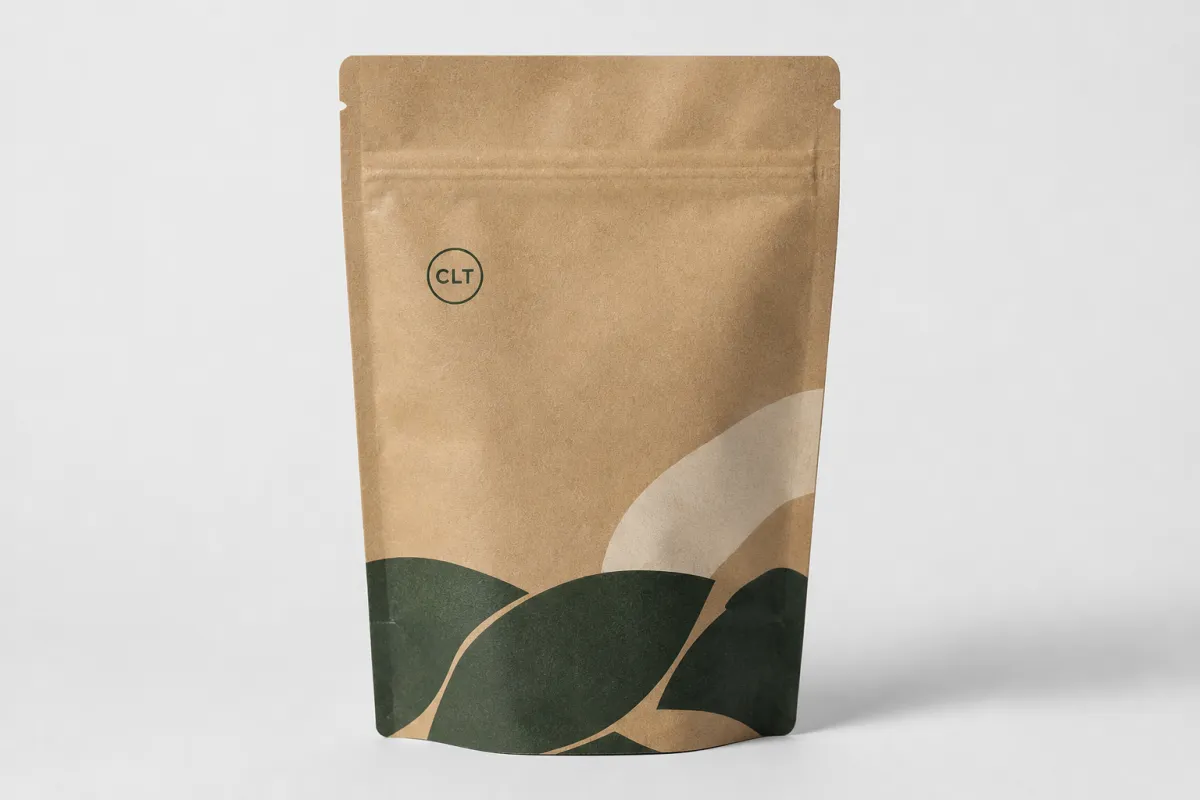
Retail packaging has two jobs before a shopper ever touches it: get attention and survive the journey. Printed sustainable pouches for retail handle both well because they give the design team a large printable surface while using less material than cartons, clamshells, or jars. That matters in categories where shoppers compare quickly, often in less than ten seconds, and where the shelf is crowded with products making similar promises.
In practice, shelf performance is often a matter of visual discipline. A pouch can stand tall, use matte and gloss contrast in a controlled way, carry a clear product story, and still stay light enough to reduce outbound freight. Those advantages are not abstract. If a 10-ounce snack or a refill pouch ships 20 to 40 percent lighter than a rigid pack, the difference shows up in handling, pallet efficiency, and sometimes even retail compliance. Printed sustainable pouches for retail make room for branding without forcing a bulky footprint.
Still, sustainability does not point to one universal answer. A pouch built from a recyclable mono-material PE structure is not the same thing as a paper-forward pouch with a barrier coating, and neither is automatically better for every SKU. The right spec depends on shelf life, moisture sensitivity, drop resistance, and how the retailer wants the item displayed. A pouch that looks responsible but fails after six weeks on shelf is not sustainable in any practical sense.
Useful rule: if the package saves material but increases product waste, the design missed the point. The best printed sustainable pouches for retail protect the product first, then improve the brand story around it.
The business case is often stronger than many teams expect. Brands focus on the film itself, but the broader equation includes freight savings, fewer secondary components, better case pack density, and a more flexible print strategy across multiple SKUs. In some launches, printed sustainable pouches for retail also reduce the risk of sitting on outdated printed inventory because artwork can be localized or updated with less waste than a carton run.
There is a real tradeoff, though. Sustainable structures can add complexity in sourcing and testing, especially if the package needs to satisfy recyclability guidance, ASTM compostability standards, or retailer-specific scorecards. A good spec is rarely the cheapest line on the quote sheet. It is the one that avoids returns, spoilage, and shelf embarrassment. For that reason, printed sustainable pouches for retail should be evaluated as a system, not as a single component.
One detail gets overlooked more than it should: the package is part of the sales conversation. If the front panel explains the product clearly, the closure is easy to open, and the sustainability claim is credible, the pouch becomes a shelf salesperson. That is especially true in premium snacks, supplements, dry goods, beauty refills, and pet treats, where form and function sit close together. In those categories, printed sustainable pouches for retail can carry more brand meaning than a label on a bottle ever could.
How Printed Sustainable Pouches for Retail Work: Process and Timeline
The workflow is more deliberate than many teams expect. Printed sustainable pouches for retail usually start with product requirements, not artwork. A buyer or brand owner should define fill weight, shelf life, sensitivity to oxygen or moisture, distribution conditions, and the retail presentation goal before anyone starts sketching the front panel. Without that brief, the pouch spec drifts into a design exercise with no engineering discipline.
From brief to proof
Once the product profile is clear, the supplier can recommend a base structure. That might be a mono-material PE or PP film, a recycled-content laminate, a paper-based build, or a compostable structure if the end market and certification path support it. The print stack matters just as much as the film. In many printed sustainable pouches for retail programs, the ink set, coating, and lamination method have to line up with the sustainability claim, which is why the package cannot be treated like a generic print surface.
Digital printing is usually the quickest route for lower volumes or early-stage launches. It handles artwork changes well and often supports smaller minimums. Flexographic and gravure routes can make sense at scale, especially when the same design will run for a long time, but they need more setup, more lead time, and more process control. A practical rule: if the brand expects frequent flavor changes or cautious pilot runs, printed sustainable pouches for retail often start digitally and then move to higher-volume methods later.
Where time is gained or lost
A realistic timeline usually includes brief development, structural recommendation, artwork setup, proofing, samples, production, and transit. For simple digital runs, production may move in about 12 to 15 business days after proof approval, though that depends on capacity and the number of revisions. More complex structures can take longer, especially if the pouch includes a zipper, clear window, spout, tear notch, or a special barrier layer. In practice, the longest delays usually come from artwork corrections, legal copy review, and sample approval, not from the press itself.
That matters during retail launches. Seasonal resets, planogram changes, and co-packer schedules do not wait. A one-week delay on printed sustainable pouches for retail can cost more than the difference between two suppliers' unit prices if it pushes the launch past a retailer reset or distributor cutoff. The calendar cost is real, even when the package looks simple on paper.
Quality checks are the final gate. A good supplier will confirm seal integrity, panel registration, zipper function, burst resistance, and drop performance before shipment. For distribution testing, many teams rely on recognized methods from the ISTA test family, while material claim verification may involve standards such as ASTM D6400 or ASTM D6868 for compostability, depending on the structure. Not every pouch needs the same test stack, but printed sustainable pouches for retail should never skip product-fit validation.
Samples are not a formality. A pouch can look excellent in a PDF and fail the first time it is filled. Seal contamination, panel curl, zipper stiffness, or a slightly undersized hang hole can turn a clean launch into rework. I have seen teams spend days debating color density only to discover the real issue was a weak top seal that let the pouch creep open during transit. That is why experienced teams treat printed sustainable pouches for retail as a process with checkpoints, not a single purchase order. The packaging is gonna tell on itself once it meets actual product and actual handling.
Key Factors That Decide Shelf Performance and Sustainability
Barrier comes first. If the product needs oxygen protection, moisture control, grease resistance, or light shielding, those needs define the pouch more than the artwork does. A greener structure that shortens shelf life is not a win. For printed sustainable pouches for retail, the most common mistake is choosing the sustainability story before checking the product's technical profile.
Mono-material PE and PP structures are often preferred because they can simplify recyclability claims where local recovery systems support them. Recycled-content films can help brands reduce virgin plastic use, although availability and print quality can vary by substrate. Paper-forward pouches can create a strong natural look, but they may need a barrier layer or coating to perform in humid or oxygen-sensitive categories. Compostable constructions can make sense for certain applications, but they need careful claim management and market-specific verification. There is no universal winner among printed sustainable pouches for retail; each structure solves a different problem.
Retail presentation details matter just as much. Matte finishes can feel more premium and less glossy under bright store lighting. Gloss can sharpen color contrast and help the pack pop on shelf. A clear window can help shoppers see the product, but it also reduces printable area and can complicate barrier performance. Zipper style, tear notch placement, and hang-hole reinforcement affect both usability and display. These are not cosmetic afterthoughts. They shape how printed sustainable pouches for retail sell and how they are handled in-store.
Claims are another pressure point. If a pouch is marketed as recyclable, compostable, or made with recycled content, the claim has to match the actual structure and the destination market. A package can be technically recyclable in one region and practically unrecoverable in another. The same logic applies to FSC-certified paper components: if the pouch uses paper as part of the structure or outer layer, the certification chain must be traceable. For reference, the FSC site is a useful place to verify current certification language and chain-of-custody basics.
Category context should guide the final spec. A premium snack brand may prioritize shelf appeal and reseal performance. A supplement brand may care more about oxygen barrier and dosing clarity. A beauty refill may need a lighter-looking pack with strong visual hierarchy. A pet treat pouch may need better puncture resistance and a more aggressive barrier. That is why printed sustainable pouches for retail are better treated as category-specific engineering than as a one-size-fits-all green option.
If the product will move through e-commerce as well as brick-and-mortar, the pouch should also be checked for shipper compatibility. Retail shelves are one stress test; parcel networks are another. ASTM and ISTA-type testing can reveal whether the pack survives compression, vibration, and drop impacts. The point is not to overtest every launch. The point is to test the risks that are actually present. That is the discipline that separates good printed sustainable pouches for retail programs from expensive experiments.
Choosing Printed Sustainable Pouches for Retail: Step-by-Step
The cleanest way to choose a pouch is to separate the decisions. Start with performance, then structure, then graphics, then manufacturing. Teams that mix those steps usually end up with expensive revisions. For printed sustainable pouches for retail, the order matters because the artwork should fit the pouch, not the other way around.
- Define the product profile. Write down fill weight, shelf life target, moisture and oxygen sensitivity, temperature exposure, and whether the pouch will sit upright, hang from a peg, or ship in a carton.
- Choose the structure first. Select mono-material, recycled-content, paper-forward, or compostable architecture before design starts.
- Confirm closure and format. Decide on zipper, heat seal only, tear notch, hang hole, spout, or window based on the retail use case.
- Build artwork around the dieline. Check panel widths, seal zones, copy placement, barcode quiet zones, and regulatory text.
- Order samples and fill tests. Review color, feel, seal strength, and shelf stance before the full run is approved.
- Lock production documents. Keep the spec sheet, final art, tolerance notes, and packing instructions aligned so everyone works from the same version.
That workflow may sound basic, but it prevents the most common launch problems. A logo that looks perfect in a flat mockup can disappear once the zipper line is added. A sustainability claim can be accurate and still fail if the closure material creates a mixed-material package that the target market cannot recover. The best printed sustainable pouches for retail projects are the ones where procurement, brand, operations, and compliance all agree on the same spec before production starts.
Testing should reflect how the package will actually be used. If the pouch is resealable, the zipper needs to open and close cleanly after repeated handling. If it sits in a gravity-fed display, the bottom gusset must support the load. If it will be stacked in transit, compression resistance matters. If the product is oily or aromatic, seal contamination and flavor transfer should be checked. These tests do not need to become overcomplicated, but they do need to be relevant to printed sustainable pouches for retail.
A small market trial can prevent a lot of trouble later. Place the new pouch beside the current pack, watch sell-through, and listen for practical feedback: Do shoppers understand the product? Does the zipper feel intuitive? Does the pouch stand straight after opening? Are there scuffs, wrinkling, or panel distortion after shipping? Those are the kinds of observations that show whether printed sustainable pouches for retail are ready for a larger roll-out.
One practical tip: ask for two or three samples that differ in material, not just in print. Compare a film-forward recyclable structure against a paper-forward one, or a digital print sample against a flexographic proof. The visual differences can be surprisingly small, while the functional differences can be decisive. That is often the moment when a brand realizes the right printed sustainable pouches for retail choice is not the one with the nicest marketing language, but the one that performs best in real use.
Cost, Pricing, MOQ, and Quote Drivers for Retail Pouches
Pricing usually starts with material, but it does not stop there. For printed sustainable pouches for retail, the quote is shaped by film family, print method, pouch size, closure type, special finishes, and the number of colors or print passes. A simple two-color digital pouch and a high-barrier laminated pouch with matte varnish, zipper, and tear notch are not comparable products, even if both sit in the flexible packaging aisle.
MOQ is just as context-driven. Digital printing often supports lower volumes because it avoids the plate costs and long setup of traditional print methods. Flexographic production can be more economical at higher volumes, but the minimum order is usually larger because setup has to be spread across enough units. The same is true for special structures. If a brand wants a custom barrier or unusual finish, minimums may rise because the material commitment is larger. That is normal. It is one reason printed sustainable pouches for retail are best quoted against an exact spec, not a generic package type.
| Option | Typical MOQ | Typical Unit Range | Best Fit | Tradeoffs |
|---|---|---|---|---|
| Digital mono-material pouch | 1,000-5,000 units | $0.18-$0.42 | Pilots, short runs, fast artwork changes | Higher unit cost at scale, fewer finishing options |
| Flexographic recyclable pouch | 10,000-25,000 units | $0.08-$0.22 | Stable SKUs, moderate to high volume | Plate/setup cost, longer lead time |
| Paper-forward barrier pouch | 5,000-15,000 units | $0.20-$0.50 | Natural look, premium specialty retail | Barrier limits, finish variability |
| Compostable pouch | 10,000+ units | $0.22-$0.55 | Defined composting programs, strong claim strategy | Certification checks, narrower market fit |
Those ranges are directional, not universal. A pouch with a wide zipper, custom window, or high-coverage print can sit above them quickly. Shipping can also move final cost more than expected, especially for overseas production or rush airfreight. Some suppliers quote plate charges, tooling, freight, and sample costs separately, while others bundle them. That is why two quotes for printed sustainable pouches for retail can look close on paper and still land very differently in the landed-cost model.
The smartest comparison is not unit price alone. Compare like-for-like: same dimensions, same barrier, same closure, same print coverage, same finish, same claim structure. Then look at support quality. Did the supplier catch a technical issue in the artwork? Did they flag a problem with the recyclable claim? Did the sample arrive with accurate color and seal strength? Those soft factors matter because a packaging mistake can cost more than the pouch itself. For printed sustainable pouches for retail, reliability is part of price.
There is also a hidden economics piece that finance teams sometimes miss. Better Shelf Appeal can improve sell-through, and lighter packaging can reduce freight and handling cost. If the pouch prevents product damage or reduces the need for secondary packaging, that savings belongs in the model too. A slightly higher quote may still be the better decision if it supports faster turns and fewer claims. That is the retail math behind printed sustainable pouches for retail.
Common Mistakes Brands Make With Retail Pouches
Printed sustainable pouches for retail are easy to get wrong in familiar ways. The first mistake is choosing a sustainability claim before confirming the structure. A team may want the word recyclable on the front panel, but the full pack could include mixed layers, a closure that complicates recovery, or a coating that changes the claim. If the market cannot support the claim, the packaging language becomes a liability instead of a sales asset.
The second mistake is designing before the pouch dimensions are fixed. That leads to cropped logos, tiny legal text, a barcode too close to a seal, or a headline that gets lost near the zipper line. Flexible packaging gives designers more room than a label, but that room still has boundaries. A good dieline should be treated like engineering input, not a late-stage formatting detail. In printed sustainable pouches for retail, the pouch controls the canvas.
The third mistake is ignoring real distribution conditions. Heat, humidity, compression, vibration, and long transit routes can all stress the seal or cause panel distortion. A pouch that looks fine in a showroom may wrinkle badly after pallet stacking or soften in a hot truck. That is why printed sustainable pouches for retail should be checked against the actual lane, not an idealized lab condition.
The fourth mistake is shopping only on unit price. Low quotes can hide plate charges, expensive freight, weak communication, or poor sample quality. A cheaper supplier who misses the compliance review or ships the wrong zipper style can create delays that wipe out the savings. For this reason, supplier responsiveness and technical clarity should sit beside price in the scorecard. The best printed sustainable pouches for retail suppliers do more than print; they help prevent expensive packaging errors.
The fifth mistake is assuming one structure will work across every SKU. Flavor variants, size changes, and shelf-life differences often require different barrier levels or even different pouch architectures. A dry snack and a creamy powder do not need the same film. Neither do a refill pouch and a premium beauty sachet. One spec cannot serve every use case, and trying to force it often weakens both the shelf story and the product protection of printed sustainable pouches for retail.
One more issue shows up late: overpromising on sustainability without educating the team that sells the product. If retail staff, distributors, or e-commerce teams cannot explain the claim in one sentence, the marketing message gets fuzzy. The strongest packs make the claim obvious and credible. That is a better outcome than a bold claim that needs a long explanation. Clear, honest printed sustainable pouches for retail packaging always performs better than packaging that sounds greener than it is.
Expert Tips and Next Steps for Launching the Pouch
My first recommendation is to request a small set of materially different samples. Compare at least two structures if budget allows. One might prioritize recyclability with a mono-material film, while another might prioritize tactile premium feel with a paper-forward build. That comparison usually reveals more than a spreadsheet. It shows how printed sustainable pouches for retail feel in hand, stand on shelf, and survive filling.
Second, use a scorecard. Rate each option against the same five criteria: product protection, sustainability claim strength, shelf impact, cost, and supplier support. Put a weight beside each category if some factors matter more to the brand than others. A scorecard keeps the conversation honest. Otherwise, the loudest opinion in the room tends to win. With printed sustainable pouches for retail, structure should beat instinct.
Third, pull operations into the process early. Co-packers know where seals fail. Procurement knows what the budget can absorb. Regulatory reviewers know which claims are safe in which markets. If those groups only see the art late in the process, revisions become expensive. A simple pre-approval checkpoint can save weeks. That is especially true for printed sustainable pouches for retail, where a change to the pack can affect every downstream step.
Fourth, test the pouch in the real channel before scaling. A pilot can be as modest as a single store region or a limited online run. Watch for sell-through, returns, scuffs, leakage, zipper complaints, and transit damage. Data beats opinions here. If the pouch outperforms the current pack, the case for expansion gets much easier. If it does not, the brand can adjust without carrying a full inventory burden of printed sustainable pouches for retail.
Fifth, keep the documentation clean. Final artwork, approved spec sheet, closure details, tolerance ranges, and claim language should all live in the same handoff packet. That reduces version drift, which is one of the most common causes of launch errors. A package is only as good as the information attached to it. That principle is especially true for printed sustainable pouches for retail, where the claim and the structure must match.
Here is the practical action plan I would use. Audit the current pack and identify the top failure points. Request two quotes for exact matched specs, not rough equivalents. Order one or two samples and run a filling test. Then compare shelf presence, freight impact, and claim credibility side by side. If the numbers hold up, printed sustainable pouches for retail are ready for rollout. If not, the test still pays for itself because it shows where the spec needs work.
For brands that are still early in the process, the right question is not whether the pouch looks green on a sales deck. It is which printed sustainable pouches for retail structure protects the product, supports the story, and fits the budget with the least compromise. Start there, and the packaging decisions get a lot clearer. Skip that step, and you are kinda guessing with a very expensive piece of the launch.
Frequently Asked Questions
Are printed sustainable pouches for retail actually recyclable?
Sometimes, but only if the full structure matches local recycling rules and the pouch is built from a compatible material family, such as a mono-material PE or PP format. A pouch with mixed layers may still be a better material-efficiency choice, but it should not be marketed as recyclable unless the claim is verified. Closures, inks, and coatings also need to be checked because they can affect the end-of-life pathway of printed sustainable pouches for retail.
What is the typical MOQ for printed sustainable pouches for retail?
MOQ depends on the print method, size, and structure. Digital printing usually supports smaller runs, often in the 1,000 to 5,000 unit range, while flexographic setups may need 10,000 units or more to be economical. Custom barriers, special finishes, and unique formats can raise minimums, so ask for a quote based on the exact spec for printed sustainable pouches for retail.
How long does the process take for printed sustainable pouches for retail?
Lead time usually includes artwork approval, sample review, production, and freight, so the total calendar depends on how quickly each step is signed off. Simple digital runs can move faster than highly customized laminated structures, but revision cycles can erase that advantage. If the launch depends on compliance review, color matching, or co-packer testing, add extra time for printed sustainable pouches for retail.
How do I compare pricing between different pouch suppliers?
Compare the same pouch size, barrier level, closure type, print coverage, and sustainability claim so you are not mixing different products. Look for hidden costs such as plates, tooling, shipping, and rush charges, because those can make a low quote more expensive overall. Supplier support and sample quality should also count, since launch mistakes can cost more than the pouch itself when buying printed sustainable pouches for retail.
What products work best in printed sustainable pouches for retail?
Dry foods, snacks, supplements, refills, pet treats, and non-liquid personal care items often benefit from the format because they need shelf appeal and product protection. Products with high moisture or oxygen sensitivity may need a more advanced barrier, so the structure has to be chosen carefully. If the product is fragile or highly regulated, the pouch can still work, but testing becomes more important than the design concept for printed sustainable pouches for retail.
For brands that want a sharper shelf presence without ignoring material efficiency, printed sustainable pouches for retail are one of the most practical formats available. The strongest results come from matching barrier, print method, closure, and claim strategy to the actual product, not to a trend line. Get that right, and the pouch does more than look good: it protects the item, supports the story, and keeps the launch economics honest.
Related packaging resources
Use these related guides to compare specs, costs, quality checks, and buyer decisions before making the final call.