Buyer Fit Snapshot
| Best fit | Recycled Shipping Cartons Factory Direct projects where brand print, material claims, artwork control, MOQ, and repeat-order consistency need to be specified before quoting. |
|---|---|
| Quote inputs | Share finished size, material target, print colors, finish, packing count, annual reorder estimate, ship-to region, and any compliance wording. |
| Proofing check | Approve dieline scale, logo placement, barcode or warning zones, color tolerance, closure strength, and carton packing before bulk production. |
| Main risk | Vague material claims, crowded artwork, missing packing details, or unclear freight terms can make a low unit price expensive after revisions. |
Fast answer: Recycled Shipping Cartons Factory Direct: Board, Finish, Dieline, and Unit Cost should be specified like a repeatable production item. The safest quote records material, print method, finish, artwork proof, packing count, and reorder notes in one written spec.
Production checks before approval
Compare the actual filled-product size with the drawing, then confirm tolerance on folds, seals, hang holes, label areas, and retail display edges. Reserve space for logos, QR codes, warning copy, and material claims before decorative graphics fill the panel.
Quote comparison points
Review material grade, print process, finish, sampling route, tooling charges, carton quantity, and freight assumptions side by side. A quote is only useful when the supplier can repeat the same color, closure quality, and packing count on the next order.
Recycled shipping Cartons Factory Direct is usually a better buy than buyers expect. The recycled fiber is rarely the problem. The spec is. The size is. The handling assumptions are. A carton that crushes in transit, forces extra void fill, or pushes freight higher is not a bargain. It is a low-price problem with a second invoice attached.
Factory-direct buying means you work with the manufacturer instead of a reseller sitting in the middle. That usually gives you tighter control over board grade, carton dimensions, print, inserts, and shipping terms. It also removes one layer of interpretation, which is helpful if you ship the same item every week, keep a fixed carton inventory in the warehouse, or run a fulfillment operation that depends on repeatable packaging.
For brands shipping at scale, the real question is not whether recycled cartons are acceptable. They are. The question is whether the carton fits the product, the route, and the warehouse. Get those pieces right, and recycled shipping cartons factory direct can reduce cost without turning packaging into a guess-and-hope exercise.
Recycled Shipping Cartons Factory Direct: What It Means
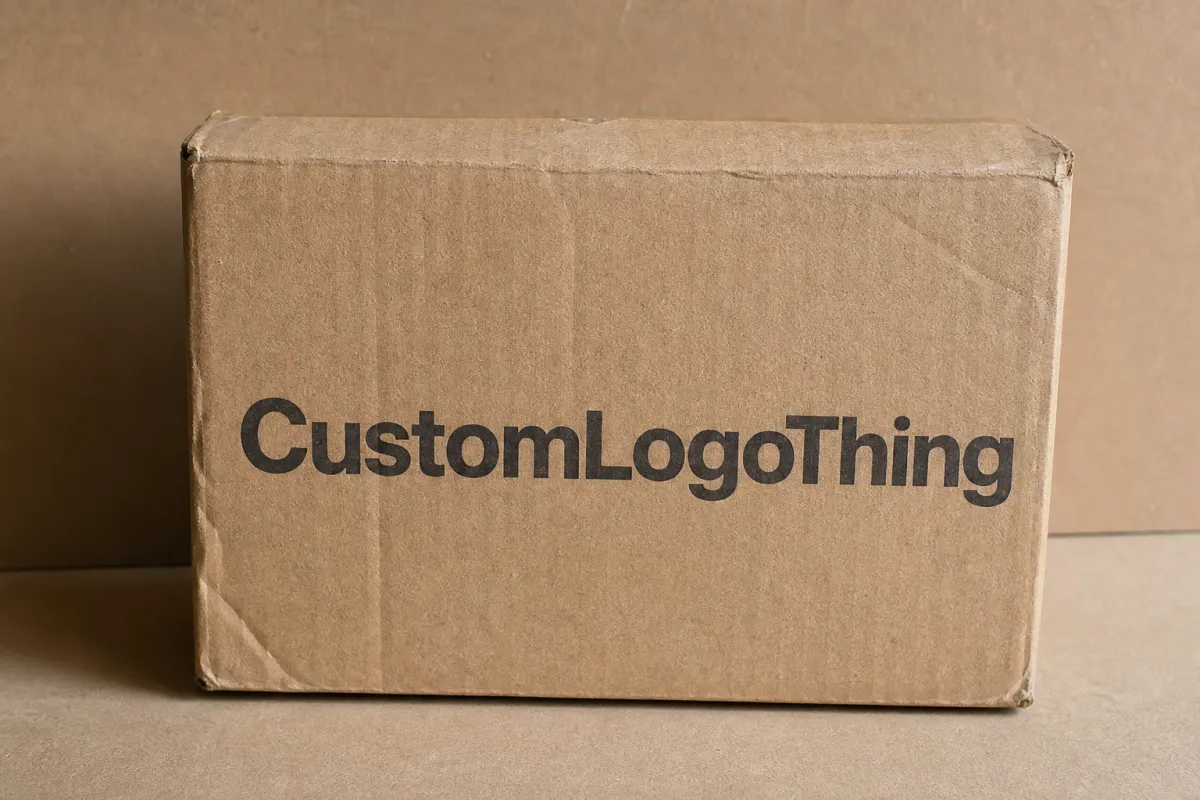
Recycled shipping cartons are corrugated boxes made with recycled fiber content, often blended with virgin fiber when the application calls for better performance. That does not make them weak by default. Weak cartons usually fail because the flute is wrong, the edge crush rating is too light, the board caliper is off, or the box size has nothing to do with the actual load.
Good recycled board can work very well for ecommerce shipping, retail replenishment, subscription programs, and plenty of warehouse-to-store routes. The material is only one part of the equation. The rest is engineering. That is the part many buyers skip because it feels less exciting than choosing a logo or a kraft finish.
Factory direct is the buying model, not the box itself. You deal with the plant, not a middle layer adding markup and, more irritatingly, adding confusion. The upside is cleaner specs, access to more board options, and fewer surprises between the quote and the finished carton. The tradeoff is simple: you need to know what you want, or at least know enough to ask useful questions. A distributor can translate vague notes. A factory usually turns vague notes into delays.
Repeat orders benefit first. So do teams that already know their finished dimensions, shipping weights, and print needs. If you order the same carton every month or quarter, direct sourcing usually improves pricing discipline and makes supply more predictable. A one-off promo run is a different animal. Small runs can get eaten alive by setup, tooling, and freight.
There is also a practical shift in how you think about packaging. Factory direct is not only about a lower unit price. It is about controlling the variables that determine package protection. Board construction matters. Stack strength matters. Fit matters. A box that leaves too much empty space creates movement and extra dunnage. A box that is too tight crushes corners and slows packing. The right carton does its job quietly. The wrong one creates returns and complaints.
If your packaging mix includes other formats, such as mailers or Branded Retail Cartons, compare the carton decision against the rest of the program. A shipping setup that uses Custom Packaging Products or lightweight Custom Poly Mailers may need a very different carton strategy than a palletized wholesale operation.
Buyer reality check: recycled content is not the same thing as weak performance. Most failures come from bad specs, not from the fiber content itself.
How the Process Works From Quote to Delivery
The workflow is simple on paper and messy in real life. Inquiry comes first. The factory reviews dimensions, product weight, shipping environment, print needs, and quantity. Then pricing comes back, sometimes with a dieline or a sample. After approval comes production, quality checks, packing, and freight booking. If you have ever watched a shipment slip because one dimension was missing, you already know why every step matters.
Spec review is usually the first bottleneck. If finished dimensions are vague, the factory has to guess. If product weight is missing, board grade cannot be judged properly. If nobody knows whether the carton should be single-wall, double-wall, or a custom die-cut structure, revision cycles start multiplying. That is how a quote that should take one day turns into a week of back-and-forth.
Artwork and proofing can slow things down too. Plain cartons move faster because setup is lighter. Custom Printed Cartons take longer because color, logo placement, and proof approvals need to line up before press time. Structural Cartons with Inserts, partitions, or unusual folds take longer still, because the factory may need tooling or a better sample pass before locking the run. None of that is mysterious. It is just production reality.
Lead time depends on complexity, stock, and factory load. A plain unprinted order can often move in about 7 to 15 business days after approval. Custom printed cartons often land closer to 12 to 25 business days after proof approval. If the board has to be sourced, the structure is complex, or the freight lane is awkward, add time. The people who plan for the shortest possible timeline are usually the same people who end up paying for air freight later.
One detail worth clearing up early is the shipping term. FOB is not a magic word that means the same thing in every quote. Depending on the contract, it can refer to the point where responsibility changes hands. Ex-works means you arrange pickup from the factory. Delivered terms include transport to your door, but you still need to read the small print around accessorials, liftgate service, residential delivery, and appointment fees. A quote can look cheaper until those extras appear.
What helps the factory move quickly?
- Finished carton dimensions, not "roughly this size"
- Product weight and any top-load or stacking requirement
- Print details, including number of colors and artwork format
- Target quantity and reorder pattern
- Delivery location, dock requirements, and timing window
- Any moisture, warehouse dwell, or pallet stack concerns
Direct communication matters because every handoff creates room for interpretation drift. One person imagines ecommerce shipping. Another imagines pallet storage in a humid warehouse for two weeks. Those are not the same use case. Give the factory the real use case, not the polished version.
Recycled Shipping Cartons Factory Direct: Cost, MOQ, and Quote Drivers
Cost gets optimistic fast. The unit price can look great until freight, tooling, test requirements, and minimum order quantity show up. Then the math starts acting like math again. For recycled shipping cartons factory direct, the biggest drivers are board grade, flute profile, carton dimensions, print coverage, coatings, inserts, quantity, and shipping distance.
MOQ matters because setup cost has to land somewhere. If you order 1,000 boxes, the press setup, die charge, and freight are split across 1,000 units. If you order 10,000, the fixed costs spread out and the unit price usually drops. That does not mean every bigger run is better. It means the order size should match actual usage and storage capacity.
Quote terms matter more than most buyers expect. Ex-works means you handle freight from the factory. Delivered pricing includes transport to your dock, but you still need to read the fine print around accessorials, liftgate service, residential delivery, and appointment fees. A quote can look cheaper until those extras show up like a bad magic trick.
Here is the kind of comparison that saves money and arguments:
| Option | Typical Use | Cost Profile | Tradeoff |
|---|---|---|---|
| Plain recycled shipping cartons | Warehouse replenishment, ecommerce shipping, internal transfers | Lowest setup cost, often lower MOQ | Less branding; depends on correct sizing and board choice |
| Custom printed recycled cartons | Brand-forward unboxing, retail shipments, marketing-heavy programs | Higher setup and proofing cost | Better presentation, slower approval cycle |
| Double-wall or reinforced cartons | Heavy product, long transit, stacking pressure | Higher board cost, better performance | More expensive, but often cheaper than damage claims |
| Die-cut cartons with inserts | High-value items, tight fit, premium package protection | Tooling and setup are usually higher | Excellent fit, less forgiving on lead time |
For the quoted price to mean anything, compare apples to apples. Same finished dimensions. Same board spec. Same print coverage. Same quantity. Same delivery term. Same test standard, if one is required. If one supplier quotes a 32 ECT box and another quotes a 44 ECT box, that is not a price comparison. That is a trap with a spreadsheet attached.
To keep the quote honest, ask for landed cost. That is the number that actually hits the budget after freight, handling, and any accessorial charges. A lower unit price can still cost more overall if the boxes arrive in multiple partial shipments, need repacking, or create damage in transit. The cheapest carton on paper is often the most expensive carton in the warehouse.
If you need a broader box program, a factory that also handles Custom Shipping Boxes can sometimes keep the carton family more consistent across sizes, which helps with storage, picking, and procurement discipline.
Key Factors That Decide Strength, Sustainability, and Fit
Strength starts with the board, not the marketing copy. Corrugated cartons are usually judged by metrics like ECT, burst strength, and compression performance. Edge crush matters when the box stacks. Burst strength still shows up in some legacy specs, especially in older packaging programs. Compression strength is what matters when the carton sits under load in a pallet or on a conveyor.
If you ship heavy products, this is not the place to guess. I have seen buyers approve a carton because it looked fine in a sample room, then wonder why the same box failed after warehouse humidity, pallet stacking, and a three-day truck lane. The box did not change. The load conditions did.
Flute profile changes the outcome more than many buyers expect. A C-flute box behaves differently from a B-flute or E-flute carton. Single-wall can work for lighter items and short routes. Double-wall often makes sense for heavy products, rough handling, or long shipping lanes. The right answer depends on product weight, stack height, and how the carton behaves in your actual warehouse, not in a tidy PDF on somebody's laptop.
Fit matters just as much. Oversized cartons waste board and raise freight costs through dimensional weight. They also create movement inside the box, which means more fill material, more labor, and more risk. A carton that is too tight can crush product corners or slow packing. The best fit usually balances clearance, protection, and pack speed without turning the team into contortionists.
Sustainability gets oversold constantly, so keep the claims honest. Recycled content is good. Post-consumer content is better when it is available and appropriate. Recyclability matters, but only if the carton can actually enter the local waste stream. FSC certification can support responsible sourcing, and you can review certification guidance at FSC. None of that replaces sound engineering. A box that fails is not sustainable just because it has a green logo on it.
Testing is where theory meets ugly reality. Industry groups such as ISTA publish transit test methods that simulate vibration, drops, and compression. That matters because real shipping is not gentle. Humidity, dwell time, pallet stacking, and route length all change how recycled shipping cartons behave. A carton that survives a local route can fail on a cross-country lane with no warning.
Print and finish choices can support the sustainability story without wrecking performance. Water-based inks are common. Minimal coatings can help with moisture resistance. But if the finish gets over-specified just to make the box look polished, the money may go into the surface while the structure underneath stays underfunded. That is the packaging version of polishing the hood while ignoring the engine.
Practical rule: choose the lightest carton spec that still survives your real shipping conditions, then test it under stack, moisture, and transit stress before scaling up.
Step-by-Step Buying Guide for a Better Order
If you want a cleaner order, start with a packaging audit. Measure the product. Record the shipping weight. Note whether it ships individually or in bundles. Check how cartons are packed on the line. Look at damage history for the last few months. That data tells you more than a generic "we need a strong box" request ever will.
Then translate the goal into specs. Do you care most about compression strength? Print quality? Faster packing? Lower freight cost through better dimensional weight control? You cannot optimize all of those at once without tradeoffs. A buyer who knows the priority can make sharper decisions. A buyer who wants everything maxed out usually ends up overpaying for three things and solving none of them.
Request samples early, but test them with the actual product. Empty mockups hide a lot. A carton may fold nicely and still fail once the product weight, internal pressure, and warehouse humidity show up. That is why pilot runs matter. If you are launching a new SKU or changing a shipping lane, a small test order is far cheaper than a full production mistake.
Lock artwork and dielines before production starts. Revisions after the press is scheduled cost time and sometimes money. If the carton is printed, make sure the artwork is final, color expectations are documented, and tolerances are clear. If the packaging includes product labels, inserts, or outer cartons that touch the same order flow, align the full set before you approve anything. That includes adjacent formats such as Custom Packaging Products or secondary ecommerce shipping materials that need to work together.
Then build a reorder plan. Decide how much safety stock you need, how much warehouse space you can spare, and what lead time is acceptable before you run low. A nice carton with a late delivery date is not a good carton. The same goes for shipping materials that show up in the wrong month and clog the dock.
One more practical move: ask for a full spec sheet, not just a price. You want the board grade, flute type, test standard, dimensions, print method, and packaging format on the same sheet. That gives you a real basis for comparison and a clean record for the next reorder. In procurement, memory is expensive. Paper is cheap.
Common Mistakes That Blow Up Cost or Performance
The first mistake is buying on unit price alone. Unit price matters, but it is only one part of the spend. Freight, warehouse handling, storage, damage claims, and reprints can erase the savings from a lower quoted carton very quickly. A box that saves three cents and causes one percent more damage is not cheaper. It is just more annoying.
The second mistake is vague spec language. "Make it strong." "Make it eco-friendly." "Make it premium." Those phrases are how good buyers accidentally create bad orders. Factories need measurable inputs. Give them dimensions, weight, board targets, and any stack or moisture conditions. If recycled content matters, say how much. If compression resistance matters, say the load and the route. Vibes are not a spec.
The third mistake is ignoring operational details. Pallet count matters. Carton orientation matters. Storage conditions matter. Line speed matters. If the carton is hard to fold or awkward to load, the team will feel it immediately. A small productivity loss multiplied across thousands of shipments becomes real money, not a spreadsheet footnote.
Another common miss is approving an empty sample and assuming the job is done. It is not. Test the carton with the real product, on the real pallet, under the real stack height. If the carton sits in a damp warehouse for a week, test for that too. Recycled content does not cancel physics. Moisture still weakens board. Compression still matters. Shipping lanes still punish weak decisions.
Watch the hidden cost of dimensional weight. A box that is even a little too large can raise freight charges in ecommerce shipping, especially when carriers price by dimensional weight rather than actual mass. That means the carton spec can affect transportation cost as much as the freight rate itself. Packaging and logistics are tied together whether anybody likes it or not.
Finally, do not assume all recycled cartons are equal. Fiber mix, board structure, and supplier quality control vary. Some cartons are excellent. Some are cardboard-shaped regrets. If a supplier cannot explain the board spec or refuses to quote against a test standard, that is not convenience. It is a warning label.
Expert Tips and Next Steps Before You Order
Here is the simplest pro move: ask for the spec sheet, test method, and sample match before you compare factories. If one supplier quotes a 44 ECT carton and another quotes a 32 ECT carton, you are not comparing bids. You are comparing two different solutions. That is how procurement gets messy and everybody pretends the numbers are "close enough." They are not.
Compare landed cost, not just unit cost. If you have to explain the budget to finance, landed cost is the number that matters. It includes freight, accessorials, and any special handling that shows up between the factory gate and your dock. A quote that ignores those details may look tidy, but tidy is not the same thing as accurate.
For new products or new shipping lanes, run a pilot. Fifty to two hundred cartons is often enough to catch obvious problems without creating a mountain of waste. Watch for corner crush, seam failure, oversize fit, slow packing, and stack behavior. If the pilot passes, scale with more confidence. If it fails, congratulations: you just saved yourself from ordering a very expensive mistake.
Keep a vendor checklist and use it every time. You do not need a giant strategy document. You need a short, repeatable list.
- Finished dimensions
- Product weight
- Print needs and artwork status
- Target quantity and reorder frequency
- Ship-to location and delivery window
- Pallet, storage, and warehouse constraints
If your business balances cartons with other shipping materials, keep the whole package system aligned. A carton that works with a branded insert but fails with your outer distribution case is still a problem. Packaging works best as a system, not a pile of unrelated parts.
My last practical suggestion is also the easiest one to ignore: ask every supplier to quote the same basis. Same spec. Same quantity. Same delivery term. Same test requirement. Same assumptions. Then compare the finished numbers, not the sales pitch. Do that, and recycled shipping cartons factory direct turns into a controlled buying decision instead of a cardboard guessing game.
Are recycled shipping cartons factory direct actually cheaper?
Usually yes on repeat orders, because you remove distributor markup and buy closer to the source. The savings are less reliable on tiny runs, where setup and freight can erase the advantage fast. Compare landed cost, not just the sticker price, or you are basically gambling with better paperwork.
What MOQ should I expect for recycled shipping cartons factory direct?
MOQ depends on carton size, print complexity, and board spec, so there is no honest single number. Plain cartons often allow lower minimums than custom printed or die-cut designs. Ask for tiered pricing so you can see how the per-unit cost changes as volume rises.
How long is the process or lead time for factory-direct cartons?
Simple unprinted cartons usually move faster because there is less setup and proofing. Artwork approval, sample testing, and freight booking are the usual bottlenecks. If you have a hard deadline, give the supplier the ship-to location and delivery window on day one.
Can recycled shipping cartons still be strong enough for heavy products?
Yes, if the board grade, flute profile, and compression strength match the load. Recycled content does not automatically mean weak; bad sizing and bad specs cause most failures. Test with the actual product, stack height, and shipping conditions before you commit.
What should I send to get an accurate quote?
Send finished carton dimensions, product weight, print needs, quantity, and shipping destination. Add photos, sample references, and any pallet or storage limits so the factory does not have to guess. The more exact the spec, the less likely you are to get a quote that changes later.
If you are narrowing down a carton program right now, start with the real product, the real route, and the real budget. That is the only way recycled shipping cartons factory direct stops being a buzz phrase and turns into a box that actually does its job. The next step is not hard: define the finished dimensions, weight, and lane first, then ask factories to quote the same spec on the same terms.

