If you need a Printed Woven Labels Quote for boutique orders, the best place to start is the actual specification, not a rough idea of what you think labels should cost. Label pricing is usually driven less by the raw material itself and more by setup, size, fold style, finishing, and how much detail the artwork asks the production team to hold. That is not the flashy answer, but it is the one that keeps a quote honest.
Boutique brands tend to spend their energy on hang tags, packaging, and presentation pieces because those items are easy to see. Labels do more quiet work. They make the garment feel complete, carry the brand name where the customer expects to find it, and help the product read as retail-ready once it is in hand. For small collections, the goal is not to chase the lowest number in isolation. It is to get a label spec that can be approved, produced, sewn in, and reordered without creating waste or delays.
Why boutique brands often pay less for labels than they expect
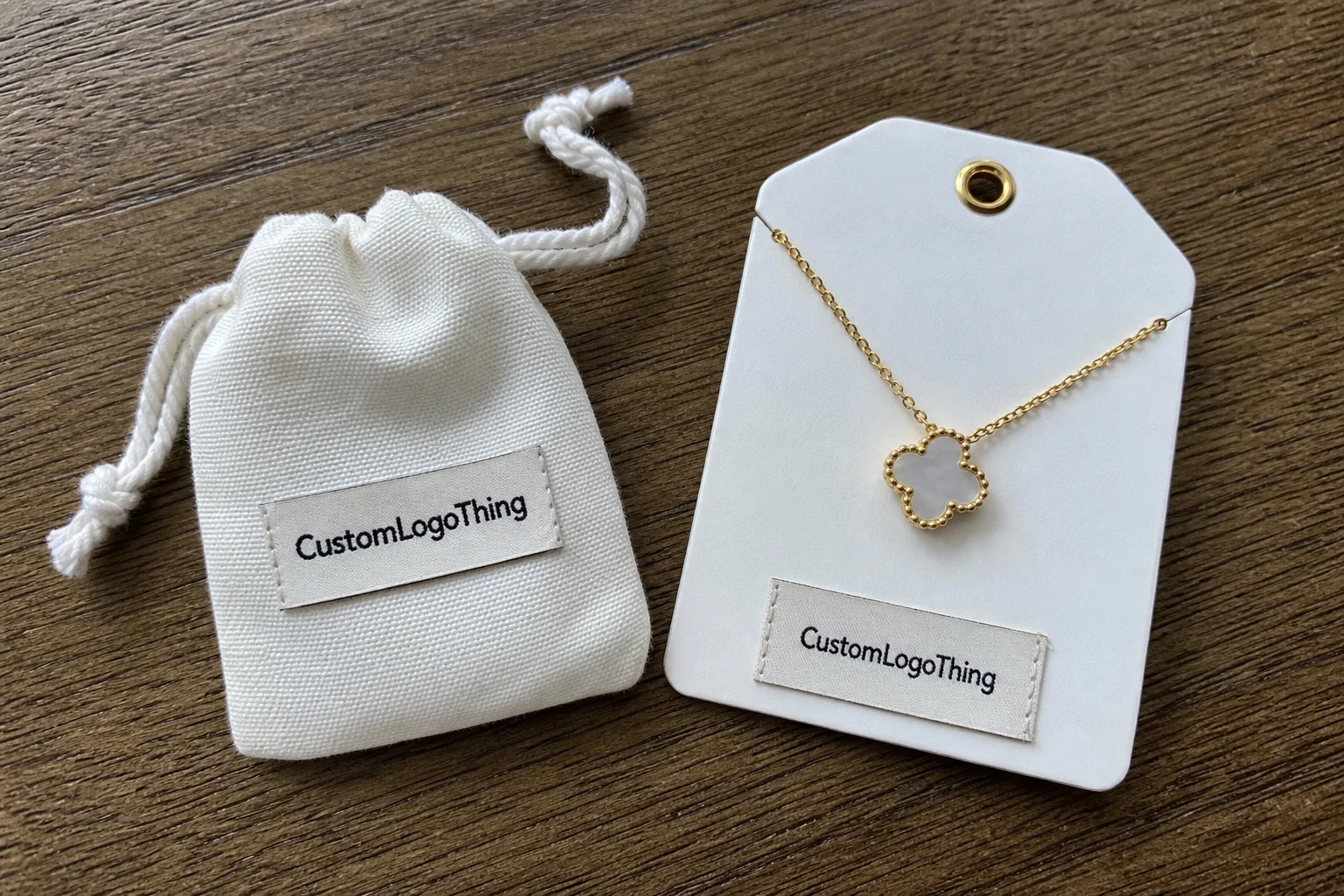
A Printed Woven Labels Quote for boutique orders often lands lower than many first-time buyers assume because the construction can be efficient at small scale when the spec is kept practical. A printed-on-woven format gives you the texture and garment-ready feel many brands want, while avoiding some of the complexity that comes with highly intricate fully woven artwork. That matters when the collection is small and the label needs to look polished without turning into a production headache.
The buyers who do best with label sourcing usually understand one simple thing: the quote is not just a price for a piece of fabric. It is a price for converting a design into a repeatable production item. That conversion has moving parts. A small logo with clean text is easy to quote. Tiny script, layered icons, and multiple folding instructions take more care, and the quote reflects that.
In boutique work, the most common cost drivers are straightforward:
- Dimensions — width and length both affect material use and finishing.
- Fold style — end fold, center fold, loop fold, or straight cut each create different finishing work.
- Artwork detail — fine type, thin borders, and dense information need tighter control.
- Color handling — more colors or more coverage can increase production complexity.
- Order quantity — lower volumes cost more per piece because setup is spread across fewer labels.
A quote that looks low on paper can become expensive if it locks you into a large run you do not need yet. That is the trap for many boutique launches. A label should support the collection, not force inventory decisions that belong to your merchandising plan.
“A good boutique label quote fits the garment, the launch schedule, and the reorder plan, not just the lowest number on a spreadsheet.”
Printed vs woven label construction for small collections
Buyers often use the word “woven” to cover several label constructions, which is where confusion starts. A printed woven label usually refers to a woven base with printed detail, or a format that combines a woven look with printed information for cleaner readability. In practical terms, the point is to keep branding legible and the label comfortable enough to live inside the garment.
This approach is especially useful for neck labels, side seam labels, care-content labels, and small brand tabs where the text needs to stay readable without crowding the design. It is a strong choice if the logo is minimal, the copy is short, and the brand wants a premium finish without forcing a complicated weave structure. Fully woven labels can look excellent, but not every small collection needs them, and not every logo benefits from being translated into a dense weave pattern.
The end use matters as much as the art. A neck label should stay soft and flat. A side seam label should sit cleanly without scratching. A care label must remain legible after folding and sewing, because once it is stitched in, there is no graceful fix for unreadable content. That is why the application method should be part of the quote request from the start.
Finish choices also change the final result in ways that are easy to overlook. A satin backing can improve comfort against skin. A folded edge can make the label look neater inside the garment. Straight cut labels are practical, but they need a clear plan for how they will be attached and how the edges will behave in wear. For boutique apparel, small comfort improvements matter because customers are more likely to notice them on close inspection.
Color reproduction deserves care too. A screen preview can make a cream background look brighter than it will print, deepen a black logo, or flatten a muted tone. For that reason, digital proofs are useful, but they are not the same thing as a production result. If the artwork depends on exact brand color, ask how the supplier handles color matching and whether a sample or strike-off is available before full production.
For boutique buyers, the best labels are the ones that balance readability, comfort, and finish without making the garment feel overdesigned. A tiny label with good proportions usually does more for the product than a crowded label with too much information squeezed into too little space.
Specifications that shape the quote: size, fold, color count, and material
To get an accurate Printed Woven Labels Quote for boutique products, the supplier needs a real spec sheet. A vague request often leads to a vague number, and then the project gets slowed down by revisions that should have been solved before pricing began. The fastest quotes usually come from buyers who send clear measurements, fold direction, artwork files, quantity options, and intended placement.
These are the details that usually move the number:
- Size: A compact neck label uses less material than a longer care-content label.
- Fold: End fold, center fold, loop fold, and straight cut each affect finishing time.
- Color count: More colors or more coverage can increase setup and production complexity.
- Material base: Softer constructions and specialty finishes can cost more than standard options.
- Artwork detail: Small text, thin lines, and decorative typefaces need more precise handling.
Boutique labels usually fall into a few recognizable use cases. Neck labels are compact because they sit against the skin and should not distract from comfort. Side seam labels can include brand identity or size information and may allow a little more room. Care-content labels tend to be the longest because they have to fit fiber content, washing instructions, and any required compliance text. If the label must meet garment labeling rules, clarity comes first and decoration comes second.
Fold style is not a minor detail. It determines how the label sits on the garment and how the sewing team handles it during attachment. End fold works well for labels that need to tuck neatly into a seam. Center fold is common for neck labels and hanging applications. Loop folds can create a tidy sewn-in look. Straight cut labels are simple to produce, but the edges and application method need to be planned so the final result does not feel rough or unfinished.
Artwork prep can save or waste time. Vector files are usually best. Clean lines are better than compressed screenshots. Fonts should be outlined if possible, and tiny decorative type should be used carefully because it can blur or collapse at production size. If the label will be sewn into a seam, topstitched, or folded over, say so in the request. That one detail can change the recommended spec and the final quote.
Common boutique label sizes tend to cluster around a few practical dimensions rather than one universal standard. A neck label may be around 0.5" x 1.5" to 0.75" x 2", depending on the logo and fold. Care labels are often longer, especially if they include multiple lines of text. Decorative brand tabs may be smaller but can cost more if they use finer detailing or a more elaborate finish. There is no one-size answer here, and a sensible supplier will not pretend there is.
| Label option | Typical boutique use | Quote impact | Practical note |
|---|---|---|---|
| Small neck label | Brand identity inside apparel | Lower material use, moderate setup | Best for clean logos and short text |
| Side seam label | Size mark or brand tag | Often similar pricing, depending on fold | Comfort matters more than size |
| Care-content label | Fiber content and washing instructions | Longer length can raise cost | Legibility and compliance come first |
| Decorative branding tag | Collection story or premium detail | Can rise with color and detail complexity | Helpful for boutique presentation |
If you need pricing for more than one label type, ask for each version separately. A combined number can hide the real difference between a short neck label and a longer care label. Separate pricing makes it easier to judge whether the spec is reasonable and whether one version is driving cost more than the others.
For teams comparing trim options, it helps to review Custom Labels & Tags before sending the final brief. If the project is ready for production review, use Contact Us so the artwork and quantity details reach the production side together.
Pricing, MOQ, and unit cost for boutique orders
When you Request a Quote, ask for four numbers at minimum: unit price, setup fee if any, minimum order quantity, and freight estimate. That is the baseline for comparing suppliers fairly. Anything less leaves room for surprises later, especially once sample charges, shipping, and extras are added in.
Smaller boutique orders usually carry a higher unit cost because the supplier has to spread setup and finishing work across fewer pieces. That is normal. The real question is whether the quantity matches your sales plan. If you are testing a new label for a limited release, paying a little more per piece may be the correct tradeoff. If the label is for a stable core product, a higher run can reduce unit cost enough to justify the larger order.
For practical comparison, ask for tiered pricing at different quantities. A quote at 500, 1,000, and 5,000 pieces shows the price curve and helps you decide where the breakpoints are. Many boutique buyers find that a small increase in quantity lowers the unit cost enough to matter. Others discover that the lowest tier is still the smartest choice because inventory risk matters more than per-piece savings. Either answer is useful.
Typical pricing for boutique labels varies by material, fold style, detail level, and quantity, but the pattern is consistent: prototypes and low-MOQ runs cost more per piece, while repeat production lowers the unit cost once the artwork has already been approved. Sample pricing should be separated from production pricing. If a supplier blends those two together, the quote becomes harder to evaluate and easier to misread.
The cheapest number is not always the best value. A label that curls, scratches, or prints with muddy text can cost more in rework than a slightly better option would have cost up front. That kind of problem is especially visible for boutique brands because the product line is smaller and the label is part of the customer’s first close look at the garment. A weak finish can make the entire item feel less considered, even if the rest of the product is well made.
Most buyers do not need elaborate pricing theory. They need a quote they can trust. That means the supplier should state what is included, what is not, and whether freight, proofing, or sampling changes the total. If the numbers are split cleanly, you can compare them against your margin plan without guessing.
For broader packaging and material planning, references such as the Institute of Packaging Professionals and the EPA recycling guidance can help teams think through waste, material selection, and end-of-life considerations. Labels are small, but they still sit inside a larger packaging system.
Proofing, production steps, and turnaround
A clean order process usually follows the same sequence: inquiry, artwork review, quote confirmation, proof approval, production, finishing, and shipment. If the supplier cannot explain those stages clearly, expect friction later. Clear process language matters because it shows where responsibility changes hands and where the buyer still has a chance to correct an error.
Proofing is the point where most label mistakes are caught. Check dimensions first, then fold direction, then color balance, and then the text itself. Spelling, spacing, and placement should all be confirmed on the proof before anything goes to production. A mistake on a care label is not something to shrug off. It can delay garment packing, force relabeling, or make the item harder to sell through normal channels.
Turnaround depends on artwork readiness, order size, and finishing requirements. Clean vector files and a final spec move faster. Blurry screenshots, missing measurements, and back-and-forth over the fold style slow things down. That is not the supplier being difficult; it is the normal cost of having to resolve unfinished inputs.
For standard boutique orders, production after proof approval often falls in the 10–15 business day range, though simple specs may move a little faster and complex orders can take longer. Rush production is sometimes available, but it usually adds cost because the job has to be inserted into an existing queue and may need expedited freight. A realistic calendar is better than a hopeful one, especially if the labels must arrive before a launch deadline.
Before approving the final proof, make sure these basics are locked:
- Final artwork file in vector format.
- Exact label size.
- Fold style and application method.
- Quantity by version.
- Target ship date.
- Delivery address and contact details.
If labels are part of broader garment shipments, transit planning matters too. Packaging standards from groups such as the ISTA test standards can be useful when teams want to think through handling, compression, and shipping durability. That may sound like overkill for a small trim, but trim failures are usually caused by ordinary logistics, not dramatic production disasters.
How to compare suppliers before you send artwork
Price matters, but consistency matters just as much. Boutique brands work with smaller margins for error, so the label supplier has to be reliable not only at quoting time but also at proofing and reordering. A quick reply is good. A clear reply is better.
Before you send artwork, compare the basics that reveal how a supplier actually works. Ask how proofs are prepared. Ask whether the quote includes setup, finishing, and freight. Ask what happens if a minor defect appears in the first run. Suppliers that answer plainly before the sale usually stay easier to work with after the order is placed.
Watch for signs that the quote is too loose to trust:
- No separation between setup, production, and freight.
- Vague answers about fold style or base material.
- Unclear minimum order quantity.
- No proof with measurements.
- No explanation of tolerance, finish control, or reorder consistency.
The useful questions are often the dull ones. What is the size tolerance? How are edges finished? How is text alignment checked? What happens if you reorder six months later? Can the supplier match the first batch closely? Those answers tell you more than a polished sales pitch ever will.
Reorder consistency deserves special attention. A label that appears across multiple SKUs needs to look the same each time, even if the production date changes or the collection expands. Color drift, width changes, or fold variation can make a line feel disjointed. That may sound minor on paper, but customers notice when the same brand mark looks different from one garment to the next.
If your brand uses multiple trims, look for a supplier that can keep the label system coherent across neck labels, side seam labels, and care labels. The artwork should stay recognizable, the scale should stay controlled, and the finish should remain consistent from batch to batch. That is the kind of detail that makes a small line feel professionally managed.
How to request an accurate printed woven labels quote for boutique orders
The cleanest way to get an accurate Printed Woven Labels Quote for boutique orders is to send the full spec the first time. Not a rough sketch, not a screenshot with a few notes, and not a message that says “please price these for me.” The more complete the request, the fewer the revisions, and the easier it is to judge whether the quote fits your actual plan.
Use a request package that includes:
- Artwork file
- Label size
- Fold style
- Quantity options
- Target ship date
- Placement notes
- Delivery address
Send at least two quantity options so you can compare launch economics against reorder economics. If the labels are for a capsule release, say that. If they are for core inventory that will be restocked, say that too. The production approach may change depending on whether speed, flexibility, or lower unit cost matters most. A supplier can only quote intelligently when the use case is clear.
Before you approve production, check spelling, measurements, orientation, and stitch direction one more time. If the label needs to sit softly against the skin, say so before the quote is finalized. If it will be sewn into a seam, topstitched, or folded over, specify the application method early. Those details can change the recommended build and the final cost.
For boutique brands, the best label order is usually the one that meets three conditions at once: the quote is understandable, the proof matches the spec, and the finished label looks exactly like the approved version once it is sewn into the garment. That is the real standard. Everything else is noise.
If you keep the request specific, compare more than one quantity, and approve only after the proof lines up with the garment, you can get a practical printed woven labels quote for boutique orders without paying for preventable mistakes or excess inventory.
How do I get a printed woven labels quote for boutique clothing lines?
Send the supplier the label size, artwork file, fold style, quantity, and target ship date. Ask for pricing at more than one quantity so you can compare unit cost. Request a proof before production so spelling, measurements, and placement can be checked early.
What affects the cost of printed woven labels for boutiques?
Size, fold type, artwork detail, number of colors, material base, and order quantity all affect price. Lower MOQs usually cost more per piece because setup is spread across fewer labels. Freight and sampling can also change the final total.
What is a normal MOQ for boutique printed woven labels?
MOQ varies by supplier and label construction. Smaller boutiques usually look for low-MOQ options so they can test designs without overbuying. Ask for tiered pricing to see how cost changes at different quantities.
How long does production usually take after proof approval?
Turnaround depends on artwork readiness, order size, and finishing requirements. For standard boutique orders, production after proof approval often falls in the 10–15 business day range, though complex specs can take longer. Rush orders may be possible, but they usually add cost.
Can I order different label sizes for the same boutique collection?
Yes, but each size may need its own quote depending on setup and quantity. It helps to group sizes by placement, such as neck, side seam, and care label. Send each variation clearly so the supplier can price it accurately.


