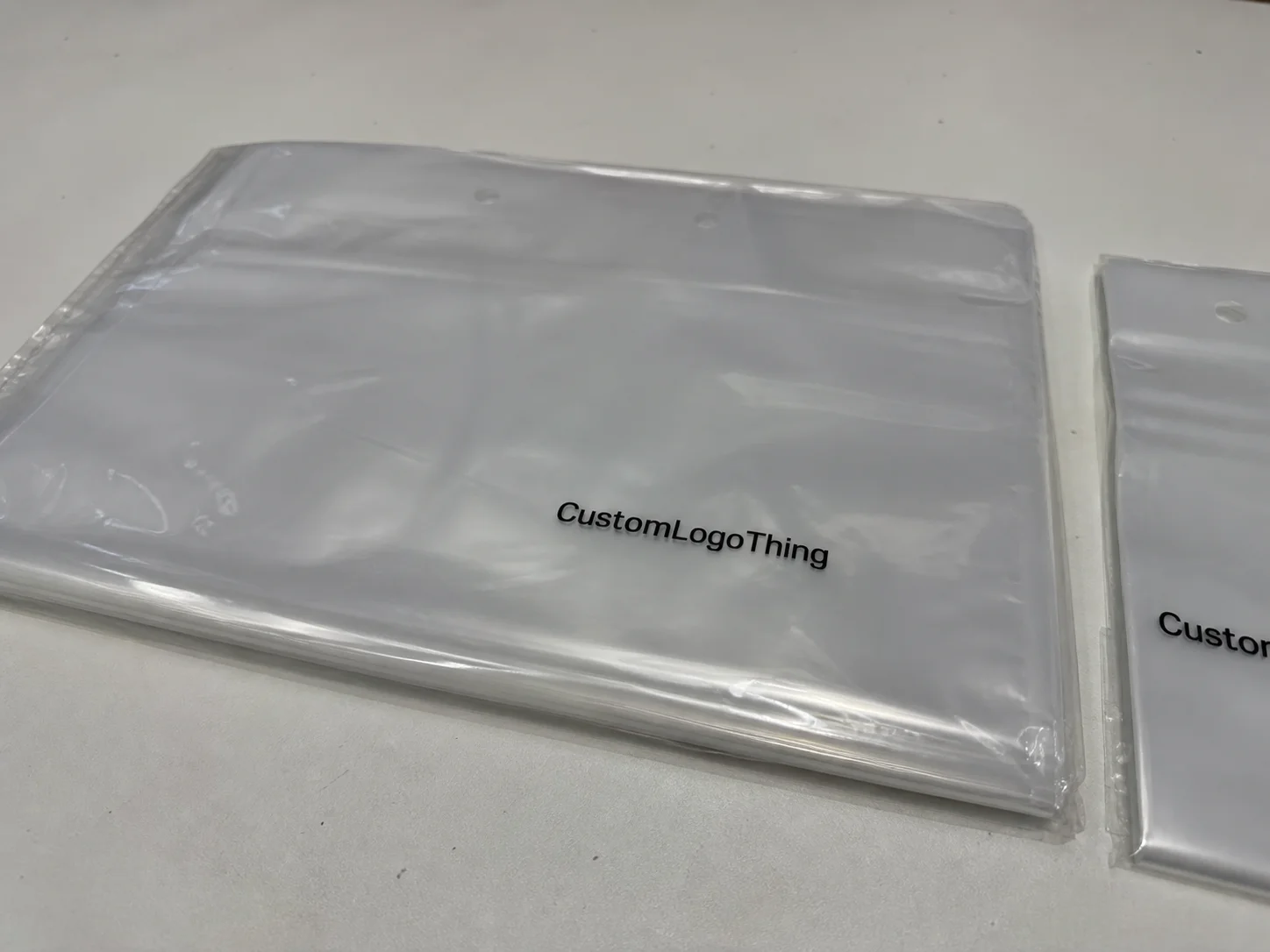
A Private Label Apparel Poly Bags supplier should do more than quote a price. The real job is to match bag size, Film, Closure, Print, and carton pack to the garment and packing line so the packaging supports the operation instead of slowing it down.
The lowest quote is not always the best buy once labor, waste, and reorders are included. A bag that splits at the seal, wrinkles badly, or looks rough on shelf can erase the savings quickly. Buyers usually judge a private label Apparel Poly Bags supplier on repeatability, fit, and landed cost.
If your packaging program includes other branded pieces, compare the full set, including Custom Labels & Tags, Custom Packaging Products, and Custom Poly Mailers.
What a Private Label Apparel Poly Bags Supplier Actually Does
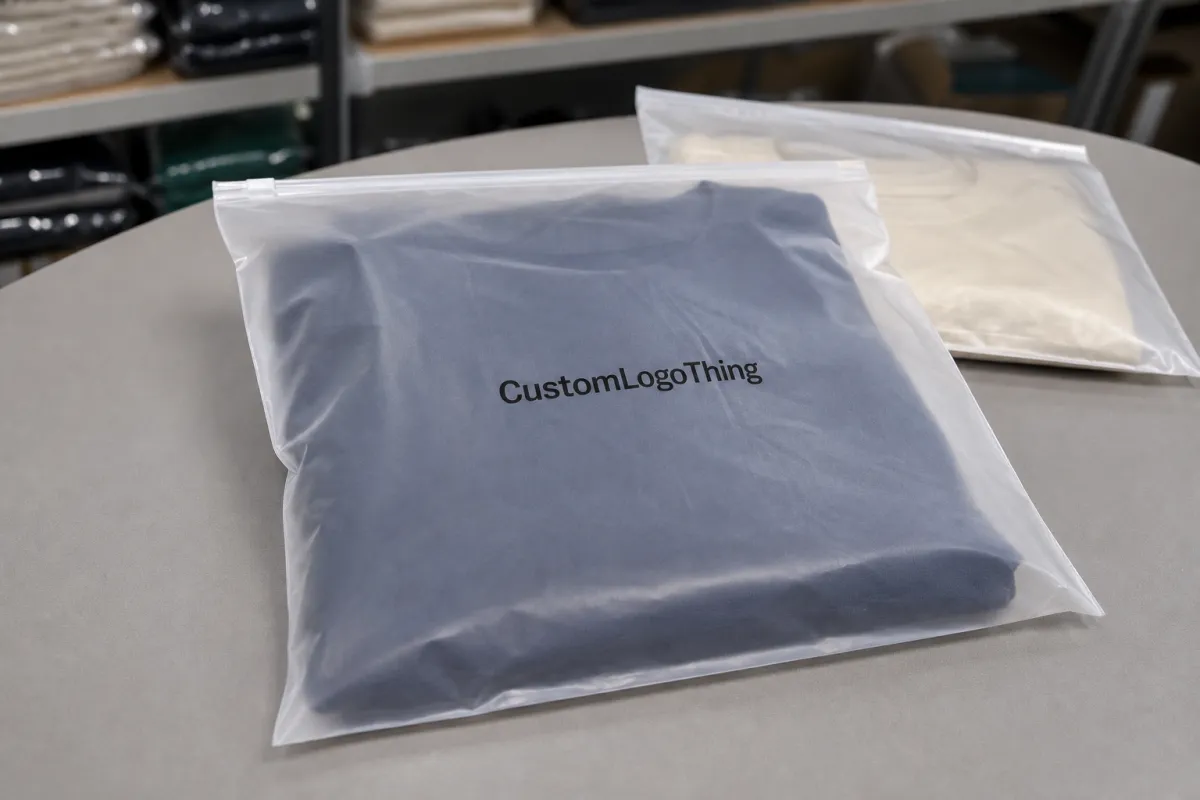
A serious supplier is translating a garment and packing process into a repeatable spec. That includes film type, gauge, bag dimensions, seal style, perforation or venting, print method, and the carton count your team can handle without bottlenecks.
That matters because a stock bag may be fine for overflow or internal use, but wrong for a private label line. If packers have to fight the film, force a hoodie into a narrow bag, or pull damaged bags because the seal fails, the real cost shows up in labor and waste.
A useful bag protects the product, keeps the fold intact, and helps the pack-out move at a steady pace. If the package only looks inexpensive on a spreadsheet, it is not doing enough.
The best bag is usually the one nobody has to think about twice. It fits, closes cleanly, and leaves the garment looking exactly like it should.
That is the practical test. If the packaging protects the item, speeds the line, and holds up after handling and transit, it is doing its job.
Production Steps and Lead Time: From Art Approval to Cartons
The production path is usually RFQ, spec review, artwork setup, proof or sample approval, production, QC, packing, and shipping. Miss a detail early and the delay tends to show up later, usually after someone has already promised a ship date.
The most common slowdowns are predictable: unclear artwork, a size change after approval, or late debate over film thickness and seal style. If garment measurements are still moving, finish them before asking for final pricing. A clean spec sheet saves time.
Typical lead times often look like this:
- Stock, unprinted bags: often 7-10 business days if inventory is available.
- Simple custom print: often 12-15 business days after art approval.
- More complex or offshore runs: 20-35 business days is common, plus transit.
Rush work can happen, but only if the supplier already has the right film, a simple layout, and a production slot. New tooling, special inks, or unusual film structures push the timeline out.
Before you request a slot, send the full set of details: garment dimensions, fold method, quantity, artwork, bag style, carton pack, destination, and any retail rules. If you are still deciding between formats, compare printed bags with Custom Poly Mailers for shipped orders or browse Custom Packaging Products for the broader program.
Cost, MOQ, and Quote Drivers That Change Unit Cost
Price moves because bag cost is tied to more than one variable. Film type, gauge, size, print colors, seal style, venting, hang holes, and carton pack all change the number. A standard 2 mil unprinted bag in a common size will price very differently from a 3 mil retail pack with custom print.
MOQ matters because setup costs get spread across the run. If a supplier has to prepare art, make plates, or schedule a short batch, a small order can push the unit price up fast. A fair comparison should use pricing at several volumes, not one.
| Option | Typical Use | Approx. Unit Cost at 5,000 pcs | Notes |
|---|---|---|---|
| Stock unprinted bag, 2 mil | Basic packing, internal use | $0.04-$0.09 | Lowest setup cost, limited branding value |
| One-color printed bag, 2-2.5 mil | DTC or retail-facing apparel | $0.08-$0.16 | Good balance of cost and presentation |
| Heavy-duty printed bag, 3 mil+ | Hoodies, sets, heavier knits | $0.15-$0.30 | Better tear resistance, higher material cost |
Compare landed cost, not the bag price on the PDF. Freight, sampling, setup, testing, and rework can move the real number more than a few cents on the unit quote. The right question is simple: what does one packed garment really cost once the whole process is included?
Heavier film is worth the spend for bulky, sharp-edged, or heavily handled products. Better print is worth it when the package is visible to the shopper. If the bag goes straight into a carton and never sees a customer, a premium finish may be unnecessary.
Film Gauge, Gusset, and Fit for Tees, Hoodies, and Sets
Film gauge affects clarity, tear resistance, and the way the bag behaves during packing. Thin film can work for lightweight tees, but it wrinkles more and is easier to split under pressure. Heavier film feels stiffer, holds shape better around bulky garments, and usually looks more deliberate on shelf.
A practical starting point is straightforward. Lightweight tees often work in the 1.5-2 mil range, standard hoodies usually need 2-3 mil, and multi-piece sets or thick fleece can justify 3 mil or more. That is a starting point, not a rule. Fold style, insert method, and trim details can change the answer.
Size should follow the folded garment, not a catalog number. Measure folded width, length, and stack height. If the bag is too loose, the product shifts and looks sloppy. If it is too tight, packing slows down and wrinkles show up.
Gussets, side seals, bottom seals, and reseal options all change how the bag performs. Side gussets help with volume. Bottom seals are common and simple. Reseal strips matter if the garment may be reopened for inspection or handling. Vent holes help bulky items release air and keep the pack from ballooning.
Anti-static film can help in dry warehouses where bags cling to everything nearby. Moisture control matters more on long storage runs and humid transit lanes. None of this is flashy, but it keeps packaging acting like a tool instead of an obstacle.
Printing Choices That Make Retail Packs Look Premium
Printing changes the read of the package immediately. A plain bag says protected. A clean printed bag says the brand pays attention. You do not need to cover every inch to get that effect. Often a logo, size mark, and a small SKU or care note are enough.
For most apparel programs, one-color flexo or a simple spot print is the easiest route. Full-color graphics can work, but they raise cost and demand tighter proofing. Frosted film, clear-window panels, and white ink effects can look strong when the layout is restrained.
Printing cost rises with coverage, colors, and registration complexity. White ink adds steps. Fine lines need careful proofing because what looks crisp on a screen can drop out on film. Always ask for a physical proof or press proof before the run starts.
Retail and DTC packs also need room for barcode labels, size labels, and handling marks. If the warehouse scans items, leave space for that. If the bag needs tamper visibility, design for it instead of hoping the logo covers the problem.
For programs that include sewn-in or hang-tag elements, pair the bag with Custom Labels & Tags so the package and the garment tell the same story.
Quality Checks, Compliance, and Warehouse Storage Risks
A reliable supplier should be able to check dimensions, seal integrity, clarity, print alignment, and count accuracy before shipment. If they cannot explain QC in plain language, that is a warning sign. You need evidence that the bags leaving the dock match the spec sheet.
For compliance, ask how the supplier handles recycled content claims, retail packaging rules, and any requirements tied to your customer or store network. If a program needs documented performance, ask for test references such as ISTA methods for transport pack testing or material checks tied to common standards like ASTM tensile and impact testing. If a sustainability claim is involved, FSC language should be backed by documentation, not a vague promise.
Storage matters more than many buyers expect. Heat, humidity, dust, and long compression in cartons can damage appearance or make bags harder to use. Keep cartons off the floor, out of direct sun, and away from hot dock doors.
Reorders should match the first run. That means the supplier has to hold the spec stable: same film, same print file, same dimensions, same carton pack. If the second batch looks different, the spec drifted somewhere along the way.
Common Mistakes That Inflate Waste and Reorders
- Guessing the bag size: one bad dimension choice can create wrinkles, splits, or extra labor at scale.
- Approving art too early: if garment size or fold is still changing, the print layout can end up wrong.
- Chasing the lowest quote: a bargain unit price means little if freight, setup, and waste push the real cost higher.
- Skipping line tests: always test the bag with the actual fold, seal, and packing motion before locking the run.
- Designing for photos only: a nice-looking bag that slows the warehouse is packaging theater, not a useful spec.
Vague specs are expensive. They create rework during sampling, confusion during production, and delays during packing. A bad size, a wrong finish, a mismatched carton count, or a barcode window in the wrong place can all trigger a reorder.
One missed detail on a custom printed program can cascade into more waste than most teams expect. The fix usually costs more than the original upgrade would have cost.
Next Steps: Turn Your Specs Into a Cleaner RFQ
Before you send quotes, gather the basics: garment dimensions, fold style, target quantity, print file, delivery location, and any retail requirements such as hang holes, barcode space, or compliance notes. If you already know the customer-facing look you want, build a simple reference sheet so the supplier is not guessing.
Then ask every supplier the same questions. What is included in the quote? Are setup, plates, samples, and testing extra? What is the lead time after proof approval? What carton pack is standard? That is how you compare offers apples to apples.
Do not request a sample before the spec is final. That burns time and creates more back-and-forth than it solves. A sample should confirm a decision, not help make it from scratch.
The simplest buyer test is still the best one. If the bag protects the product, speeds packing, and stays inside budget after freight and setup, it is the right choice. If it misses those marks, the search is not finished.
How do I compare private label apparel poly bags supplier quotes?
Match the same bag size, film gauge, print method, carton pack, and freight terms before comparing numbers. Ask whether setup, plates, samples, and testing are included or billed separately. Compare landed cost per packed garment, not just the bag unit price.
What MOQ is normal for a private label apparel poly bag supplier?
MOQ depends on film, print complexity, and whether the supplier is running stock or custom production. Simple unprinted bags usually allow lower MOQs than printed retail packs. If the MOQ feels high, ask whether changing print coverage or size can bring it down.
Which bag thickness should I choose for shirts versus hoodies?
Light tees usually need less film than heavy hoodies or multi-piece sets. Choose enough gauge to resist splitting during packing, shipping, and store handling. If the bag feels flimsy in hand, it will probably fail in a warehouse.
How long does production usually take for custom apparel poly bags?
Timing changes with artwork approval, print complexity, order size, and whether tooling is already in place. Standard runs move faster than fully custom printed orders. The fastest way to lose time is sending incomplete specs and changing them after proof approval.
What should I send before requesting a quote from a private label apparel poly bags supplier?
Send garment dimensions, fold style, target quantity, print file, and delivery destination. Add any retail requirements such as barcode space, hang holes, or compliance notes. The cleaner the spec, the cleaner the quote.