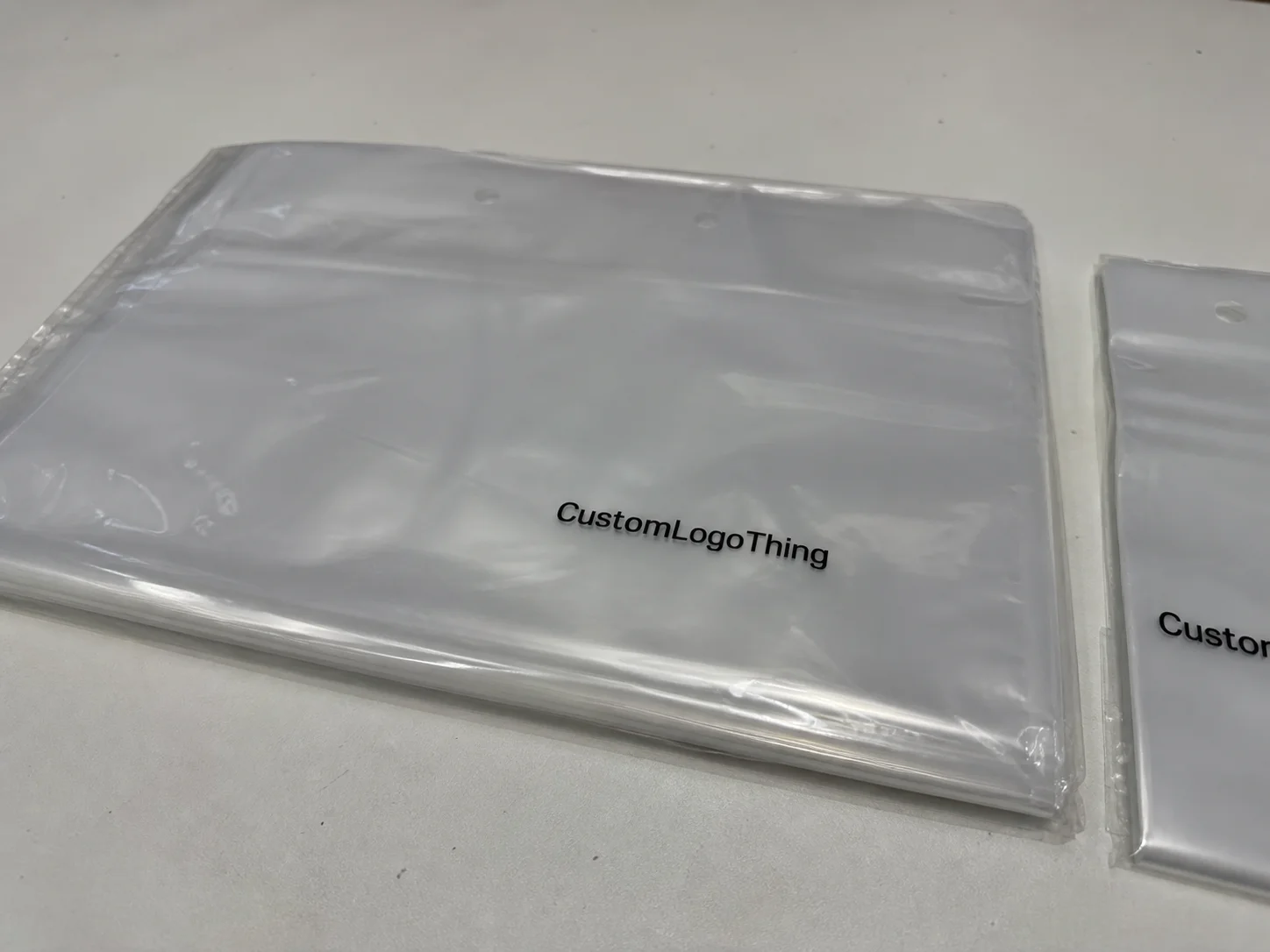
If you are building a Private Label Buyer apparel poly bags production quality checklist, the first trap to avoid is treating the approved sample like proof that the whole run will behave the same way. Samples are useful, but they are still just samples. A bag can look crisp on a desk and then drift on film thickness, seal integrity, print placement, or carton counts once the line is moving at scale.
Apparel Poly Bags do more than wrap a folded garment. They protect the product, keep the warehouse moving, and shape how the brand feels when the box is opened or the carton is stocked. A practical checklist keeps sourcing, production, and receiving aligned around the same standard instead of relying on memory, shorthand, or a photo from the approval stage.
The weak spots are rarely dramatic. They show up as a seal that looks fine until it splits under pressure, a print that is a few millimeters off-center, a bag stack that sticks together in dry weather, or a carton count that does not match the paperwork. None of those problems feels large at first. All of them create labor, delay, or avoidable waste later.
Private Label Buyer Apparel Poly Bags Production Quality Checklist
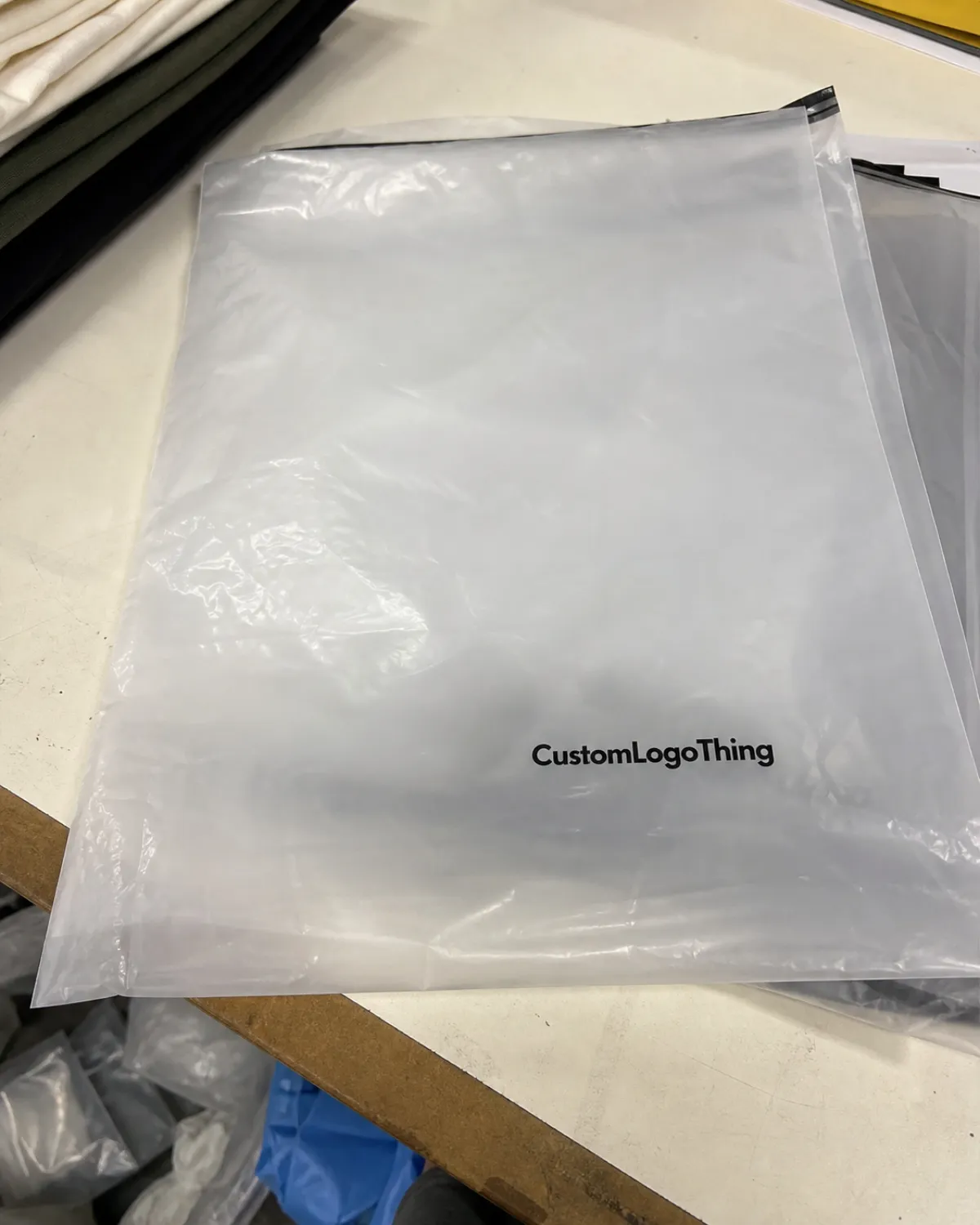
The most useful way to use a Private Label Buyer apparel poly bags production quality checklist is to keep the same written spec in circulation from the first quote to the final receiving check. Many orders go off track because the buyer reviews size in one email, artwork in another, and pack-out somewhere else. That split process leaves room for interpretation, and packaging tolerances do not improve when people improvise.
From a buyer's perspective, the bag has three jobs. It has to fit the garment properly. It has to present well in retail, warehouse, or direct-to-consumer handling. And it has to run cleanly through packing and receiving without adding friction. If the bag is loose, the product slides and looks careless. If it is too tight, the film stresses around the seal or opening. If the carton count is wrong, the warehouse spends time reconciling inventory before anyone can use the shipment.
A strong checklist should lock down the details that actually determine whether the shipment performs like the sample:
- Bag size with tolerance spelled out, not just a nominal dimension.
- Film gauge and the acceptable thickness range across the run.
- Seal and cut quality so the bags stack well and close cleanly.
- Print placement, barcode position, warning text, and safe margins.
- Carton pack-out, master pack count, and pallet configuration.
Use one sheet for quoting, sample approval, production release, and receiving. That sounds basic because it is. It also keeps the order from drifting as people hand it off from one desk to another. A checklist does not replace judgment, but it gives every department the same target.
Film, Size, and Finish Specs That Shape the Final Bag
Most apparel poly bags are made from LDPE, LLDPE blends, or clearer film blends chosen for presentation and sealing behavior. LDPE tends to be softer and is often a good fit for tees, basics, and lighter knitwear. LLDPE usually adds puncture resistance, which matters more when the garment is bulky or the shipment will see repeated handling. Clearer blends can improve presentation under store lighting, but they generally cost more and may require tighter control during production.
Thickness should be tied to the garment and the use case, not a vague promise that the bag is "strong enough." Lightweight tees may work in the 1.25 to 1.5 mil range. Heavier sweaters, uniforms, and bulkier multipacks often land between 1.75 and 2.5 mil, depending on the bag size and how the carton will travel. If the bag needs to survive warehouse sorting and multiple touches, ask for thickness tolerance in writing. Nominal gauge alone is not enough.
Size matters just as much. Width, length, gusset depth, and opening style all affect how the garment sits inside the bag. A folded shirt bag with a center fold can tolerate modest variance. A narrow blouse bag or a thicker hoodie bag often cannot. One buyer mistake I see often is assuming the quoted size refers to the same measurement the factory uses for the finished bag. It may not. Ask whether the tolerance applies to the cut size, the folded size, or both.
Finish choices also change how the bag behaves. Gloss adds visual pop. Matte can feel calmer and less reflective. Slip additives help bags separate on the line, while anti-static treatment reduces cling in dry air. If recycled content is part of the brief, write down the target percentage and the acceptable visual range. Post-consumer material can affect clarity and surface feel, which is normal, but the buyer should know that before approving the spec. For broader packaging context, the trade group at packaging.org is a useful reference.
Product type should drive the spec. Folded tees need clarity and neat stacking. Dresses need more length and better crease control. Uniform packs need repeatability and efficient carton counts. Multipack apparel needs enough film strength to keep the set together without crushing the product. The more specific the use case, the less likely you are to get a quote that looks good on paper and fails in practice.
Print, Labeling, and Retail Presentation Checks
Print quality can make a basic bag feel deliberate and branded, or it can make the whole order look hurried. Flexographic print is common because it handles simple one-color messaging efficiently and scales well for larger quantities. Once the artwork adds multiple colors, small type, or tighter placement, registration control matters more. A logo that looks sharp on a screen can still land soft, low-contrast, or slightly shifted on film.
Artwork should be locked before production starts. That includes the dieline, ink references, barcode or SKU placement, suffocation warning text where required, and clear margins around the top seal and any hanger hole. If the bag will be scanned in a warehouse, the barcode needs enough quiet space around it for reliable reading. If the item will hang in retail, the hanger hole has to fit the fixture, not just the art layout.
For proof review, check the details that are easy to miss when people glance at a PDF too quickly:
- Logo sharpness and edge clarity at normal viewing distance.
- Color consistency between proof, reproof, and sample.
- Ink opacity on clear film so text stays legible.
- Registration on all printed elements, especially thin type and borders.
- Copy accuracy around warnings, SKUs, and handling instructions.
Retail presentation deserves equal attention. Fold direction should let the garment open cleanly without fighting the seam. The warning text should sit where it can actually be seen, not tucked behind the folded product. If the bag is part of a display program, the print should support that system rather than crowd it. Many buyers also pair the bag spec with Custom Labels & Tags so the garment, hangtag, and bag all tell one consistent story.
Packaging choices affect perception more than people expect. A bag with clean print and a steady fold suggests the same discipline that buyers want in the garment itself. A bag with sloppy registration or smudged copy makes the product look cheaper, even if the apparel is solid. That mismatch is expensive because it shows up before the customer has touched the item.
Seal Strength, Cut Quality, and Other Production Checks
Seal strength is one of the first things to verify because a clean-looking bag with a weak seal fails in the warehouse, not in the sample room. The seal should be straight, consistent in width, and fully closed across the edge. Wavy seals, thin spots, and heat marks point to issues with temperature, dwell time, or pressure control. If a supplier cannot explain how they monitor those variables, treat that as a risk.
Cut quality matters just as much. The bag edge should be smooth, evenly trimmed, and free of burrs or sharp fibers that snag during packing. Length should stay within the agreed tolerance from carton to carton, and the stack should sit square when the bags are counted. A shipment can look fine in a single photo and still produce irregular stacks that slow the line and cause count errors.
Repeatability is where many jobs fall apart. Do not inspect only the first carton. Check the first, middle, and last cartons, then compare gauge, print shade, cut length, and seal appearance. If the order is large enough, sample across multiple pallets. That is the practical way to catch drift before the warehouse discovers it one pallet too late. For more complex programs, buyers often reference transit testing methods from ISTA so packaging is evaluated under handling conditions instead of just on a bench.
Contamination and handling issues can also slow a line. Look for gels, specks, dust, wrinkles, static cling, and mixed counts. None of those always makes a bag unusable, but each one adds friction. If workers have to stop and sort, the bag is no longer a background component. It becomes a labor problem, and labor problems are the kind that quietly expand across an entire receiving shift.
A clean sample is not proof of a clean run. The real test is what happens on carton 200, not carton 2.
Pricing, MOQ, and Unit Cost Drivers Buyers Should Compare
Quotes move for understandable reasons, and buyers save money when they know which levers actually matter. Resin cost, film thickness, bag size, print colors, special additives, packaging format, and freight all affect the final unit price. A plain clear bag with no print is priced very differently from a branded retail bag with warning text, color ink, and custom carton pack-out. The cheapest line item is not always the lowest landed cost.
MOQ usually rises when the bag needs custom printing, a nonstandard size, or a film blend that requires setup time and dedicated material. A supplier may still accept a small run, but the unit cost rises because the fixed setup is spread across fewer pieces. That is normal. The question is whether the buyer understands the tradeoff before the PO is issued.
Here is a practical comparison for apparel buyers:
| Bag Type | Typical Spec | MOQ Range | Indicative Unit Price | Buyer Use Case |
|---|---|---|---|---|
| Stock clear poly bag | 1.25-1.5 mil, unprinted | 1,000-5,000 | $0.03-$0.09 | Basic storage, internal packing, fast replenishment |
| Custom one-color retail bag | 1.5-2.0 mil, flexo print | 5,000-10,000 | $0.08-$0.18 | Private label basics, folded apparel, brand presentation |
| Custom multi-color or higher-clarity bag | 1.75-2.5 mil, tighter print control | 10,000+ | $0.14-$0.32 | Retail programs, premium apparel, display-focused packaging |
Buyers should also ask about setup and hidden charges. Plate charges can run roughly $75 to $250 per color. Artwork changes may add $25 to $100. Rush fees often add 10% to 20% when the schedule is compressed. Inland freight, palletization, and special carton labeling can also change the landed cost. A quote that lists only the bag price leaves too much out. If the order needs broader packaging support, the Custom Packaging Products page is a useful place to compare the program against other components. For apparel shipped directly to consumers, it may also make sense to compare with Custom Poly Mailers so secondary packaging matches the distribution path.
Some buyers focus only on piece price and miss the operational cost. A slightly better bag can reduce line stoppages, rework, and customer complaints. That does not mean spending more always makes sense. It does mean the cheapest option should be measured against the actual labor and replacement cost of a failure.
Process and Timeline From Spec Sheet to Shipment
The cleanest jobs follow a predictable flow: RFQ, spec sheet, artwork review, sample approval, production scheduling, final QC, packing, and transit. Each step should close before the next one opens. If the buyer is still debating size or print placement while the factory is preparing material, the schedule gets brittle very quickly.
- Send a written spec sheet with size, gauge, material, print, carton count, and delivery target.
- Review the artwork and dieline before asking for pricing finalization.
- Approve a pre-production sample or reference sample in writing.
- Confirm tolerances, pack-out, and labeling before the line starts.
- Inspect the first cartons on receipt against the approved standard.
Delays usually come from incomplete artwork, vague tolerances, or sample feedback that arrives in scattered rounds instead of one clear response. I have seen orders lose a week because the buyer said the print was "close" but never said what had to change. I have also seen last-minute packaging revisions because the carton count was assumed rather than written. Those are process problems, not factory mysteries.
Lead times depend on complexity, but a practical range is often 12 to 18 business days from proof approval for straightforward custom bags, with longer timelines if the order needs special film, multiple print colors, or overseas transit. Sample development can add 3 to 7 business days before production even starts. If a launch date is tied to seasonal apparel or a retail event, build the cushion early; otherwise the buyer ends up paying for urgency instead of buying confidence.
No production should start until the buyer has approved the sample, tolerances, and carton pack-out in writing. That signoff protects both sides. It also gives the warehouse a fair receiving target instead of a moving one.
What a Reliable Supplier Should Document Before Launch
A serious supplier should be able to show the material spec sheet, production capability, sample process, QC checkpoints, and a clear contact for order status. If the supplier cannot answer basic questions about resin blend, film thickness tolerance, print method, or carton configuration, the buyer is not buying a managed process; they are buying a guess. That is not enough for a private label program.
Communication quality matters as much as machine capability. Buyers need quick, accurate answers on measurements, print files, packaging format, and schedule changes. If one person handles quoting, another handles samples, and nobody owns the final order status, the project slows down in the gaps. A dependable partner keeps those handoffs tight and documented.
For controlled programs, ask whether the supplier records production inspections, shares photo evidence from the line, and documents nonconforming goods when a run falls outside tolerance. That paper trail matters if a shipment arrives with a print shift, seal issue, or count discrepancy. It also tells you a lot about how the factory handles problems before they reach the dock.
Good suppliers think beyond the bag itself. They should understand line efficiency, carton labeling, and how the product will be stored, scanned, and opened at receiving. If the order involves recycled content or forest-based inserts, ask about chain-of-custody documentation from FSC. That kind of detail is not decoration; it tells the buyer whether the supplier can support a documented brand program instead of just a one-off shipment.
The strongest suppliers usually ask harder questions than the buyer expects. They want to know the garment weight, folding method, how many times the product will be handled, and whether the bag is for warehouse use, retail, or direct mail fulfillment. That is a good sign. It means they are trying to match the packaging to the job instead of forcing the job to fit the packaging.
Next Steps Before You Release the Purchase Order
Turn the brief into a one-page RFQ with one line for each critical spec: size, gauge, material, print, carton count, and target delivery date. Keep the language plain and measurable. If a detail can be interpreted two ways, rewrite it until it cannot.
Before releasing the PO, ask for a pre-production sample or approved reference sample and compare it against the tolerance sheet. Then set an incoming inspection plan for the first cartons so warehouse staff know what to measure, what to reject, and who signs off on acceptance. That step prevents the common mistake of assuming everyone is checking the same standard when they are not.
Use this Private Label Buyer Apparel Poly bags production quality checklist before you place the order, then keep it attached to every reorder. It is a simple way to protect pricing, presentation, and production discipline without adding noise to the process.
How do I use a private label apparel poly bags production quality checklist before ordering?
Lock the spec sheet first: size, gauge, print, carton count, and tolerances should be written before you compare quotes. Review one approved sample against the checklist so every department checks the same standard, then use the same checklist again at receiving so the shipment is measured against the original approval, not memory.
What gauge should I request for apparel poly bags in a buyer checklist?
Choose the gauge based on garment weight, bag size, and whether the bag is for display, storage, or shipping. Heavier folded apparel usually needs a stronger film than lightweight tees, especially if cartons travel long distances. Ask the supplier to confirm actual thickness tolerance, not just the nominal gauge on the quote.
How do pricing and MOQ change a custom poly bag quote?
MOQ usually rises when the bag needs custom print, special film, or a nonstandard size that requires setup and run time. Unit price drops as volume increases, but freight, packaging, and plate charges can still change the landed cost. Compare quotes only after confirming the same gauge, count per carton, and delivery terms.
What quality problems show up most often in apparel poly bag production?
The most common issues are weak seals, uneven cuts, print misregistration, and inconsistent bag thickness across the run. Buyers also see dust, static cling, wrinkles, and carton count errors when handling or packing controls are weak. A good checklist catches these issues before the shipment reaches the warehouse.
What should I ask for before approving shipment on a production checklist?
Ask for final photos, a measured sample, and confirmation that the carton pack-out matches the approved spec. Verify that the print, size, seal quality, and warning text all match the signed sample. Request the supplier's inspection results if the order is high volume or tied to a retail launch.