The quickest way to lose margin on a packaging program is to approve a sample that looks right on screen but fails in the hand, in the carton, or on the peg. A Private Label Buyer OPP Header bags sample approval checklist gives buyers a practical way to verify size, print placement, header fit, seal behavior, and pack-out before the run starts, which is where most avoidable reprints begin.
For private label work, the sample is not a formality. It is the point where retail readiness gets proven or rejected. The bag has to do more than look clean in a photo. It has to hang straight, hold its shape, present the artwork in the right zone, and arrive packed the way the receiving team expects. If any one of those pieces is off, the order can still be technically produced and still be unusable.
Why a private label buyer OPP header bags sample approval checklist prevents costly reprints
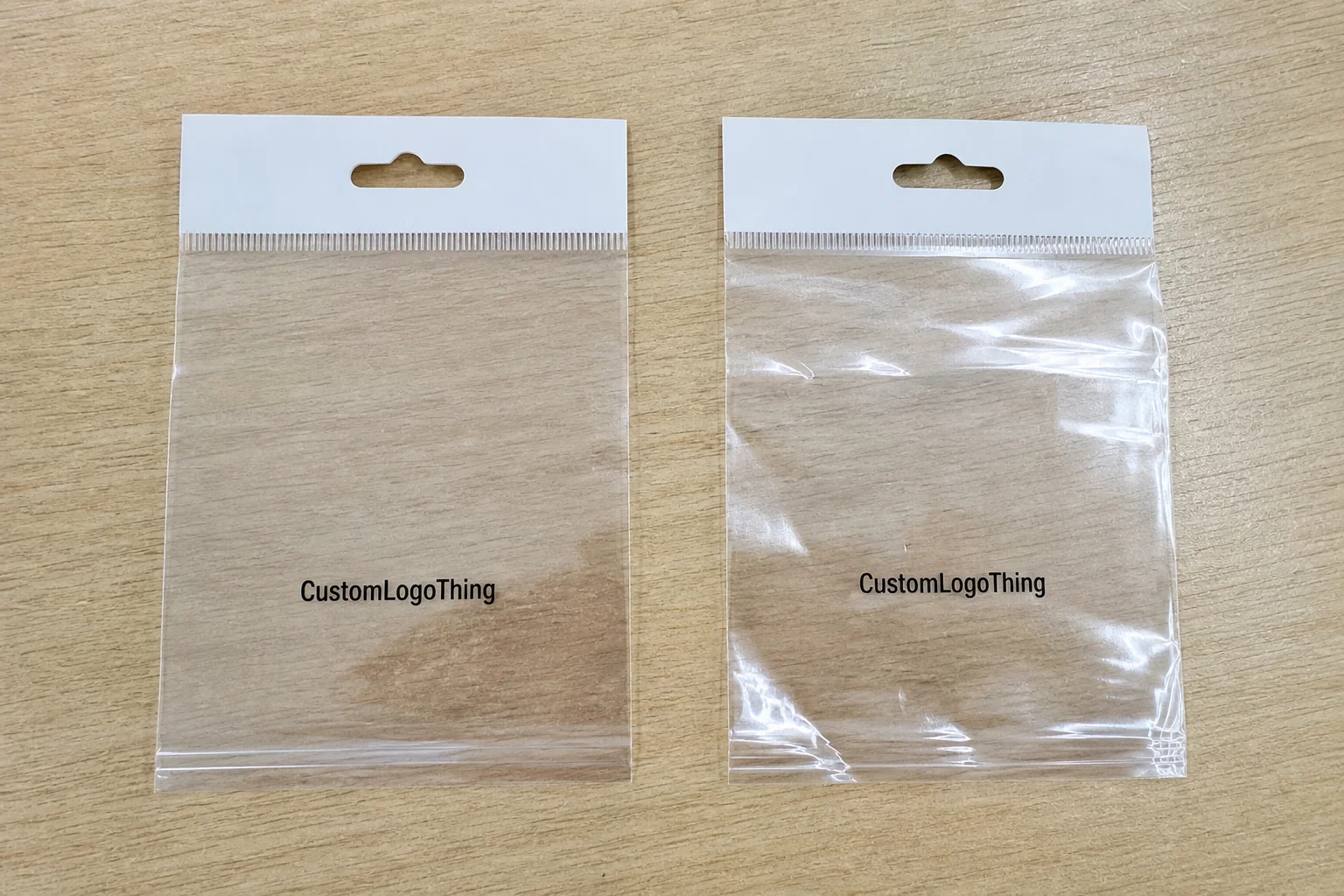
Most header bag delays do not come from the bag structure alone. They come from one missed detail: a logo that shifts 4 mm, a header that punches too close to the top seal, or a finished size that looked fine in the proof but sits awkwardly on shelf. That is why the Private Label Buyer opp header bags sample approval checklist matters. It replaces guesswork with a clear sign-off process and measurable points.
From a buyer’s point of view, approval has to confirm three things at once. The visual presentation must match the brand. The physical pack must fit the retail or shipper requirement. The bag also needs to be repeatable in production so the second carton looks like the first carton, not a loose interpretation of it.
That matters more in private label programs, where the packaging is part of the product promise. A bag used for peg display, shelf display, or bundled shipping needs to meet the buyer’s spec every time. If the header sits unevenly, the euro slot is off-center, or the bottom seal takes too much usable fill width, the product becomes harder to merchandise or harder to open, even though the proof was approved.
“Approve the dimensions first, then the artwork, then the pack-out. If that order gets reversed, the correction often costs more than the sample ever did.”
That is not theory. In practice, the cheapest sample is the one that exposes a useful correction before the run is released. A careful checklist protects both sides: the buyer gets the right bag, and the supplier avoids a production stop caused by vague instructions or late changes.
For buyers who want to align packaging decisions with broader industry practices, the Institute of Packaging Professionals and the International Safe Transit Association are useful references. Neither one is specific to a single bag format, but both help frame the kind of test discipline buyers should expect.
Construction, print, and sealing details buyers should verify
OPP film gives a clear, glossy presentation that works well when the product inside needs visibility. It shows color cleanly and avoids the dull look that heavier films can create. The tradeoff is that details matter more. Film gauge, seal strength, handling, and storage all affect how the finished pack looks after conversion.
The header is not decorative trim. It is the functional top structure that carries the hang feature, supports branding, and helps the package stand straight on display. If the header is too thin, it can curl. If it is too rigid, or too close to the seal, it can crack at the fold line or crowd the punching area. For Private Label Buyers, that balance matters because the header often carries the brand mark, SKU, barcode, or warning text.
Print method matters too. Some programs use surface printing directly on the film, while others use a label, a preprinted insert, or a custom header card. Each choice changes the approval logic. A direct print proof needs color and registration review. A label application needs placement control. A header card needs fit, stiffness, and insertion alignment. None of those checks are interchangeable.
Seal behavior is another point buyers should inspect carefully. A clean side seal or bottom seal should not reduce usable fill area more than the approved drawing allows. If the seal width is wider than expected, the bag loses internal capacity. If it is too narrow, the package loses strength. Perforation, tear notch placement, and hole position also matter because they affect machine feeding, shelf hanging, and the way the consumer opens the pack.
For many private label programs, the bag has to work in one of three environments: retail, promotional distribution, or subscription fulfillment. Each creates different pressure points. Retail needs display consistency. Promotions need cost discipline. Subscription packs need shipping durability. The same OPP header bag can serve all three, but only if the approved sample matches the actual use case.
Specification checklist for artwork, film gauge, and header fit
A useful sample starts with a complete specification. The basic items are simple, but they are also the ones that get missed most often: finished bag width, finished bag length, header height, film gauge, seal type, and any gusset or fold requirement. Without those dimensions, a “close enough” sample can still fail during packing.
Artwork needs the same discipline. Buyers should provide final logo files, preferably vector art, with the exact placement reference, bleed expectation, and any copy that must appear on the header or bag face. If the product needs a barcode, warning statement, or origin marking, those details should be included before the first sample is made. Retrofitting compliance text after the fact is where small jobs become expensive.
Private label programs often need retail compliance details as well. That can include suffocation warnings, SKU labels, carton marks, and master case identification. For broader retail channels, buyers should also confirm whether the final pack needs a UPC in a fixed location and whether that position conflicts with the hang hole, printed logo, or header fold.
A good spec sheet should include tolerances. If the header punch must stay within a narrow window above the top seal, write it down. If the printed logo can shift only a few millimeters without affecting shelf presentation, define that. If the bag depends on a specific fill width, document it. Tight designs fail when nobody states the acceptable movement.
Pack configuration belongs on the checklist too. Carton pack counts, master carton dimensions, and pallet expectations should be reviewed before approval, not after. A sample that looks correct but ships in the wrong carton count still creates a receiving problem. This is one reason many buyers cross-check the sample against Custom Labels & Tags or related packaging components, because consistency across the program matters more than any single item in isolation.
What a buyer should lock before sign-off
- Finished width and length
- Header height and punch position
- Film gauge and seal style
- Artwork files, bleed, and copy placement
- Barcode, warning text, and carton mark requirements
- Pack count, master carton size, and pallet target
Cost, pricing, MOQ, and quote inputs buyers need
Price for OPP header bags is driven by concrete inputs, not by a vague “custom” label. Film thickness, print coverage, header complexity, die-cut shape, and special dimensions all move the number. A clear bag with a simple header costs less to make than a fully printed pack with a custom punch and a tight spec window.
MOQ follows the same logic. It usually ties back to setup time, material utilization, and run efficiency. If the line has to stop and reset for a highly specific header format, the supplier needs enough volume to justify that changeover. That is why a buyer may want 2,000 units but be quoted on a higher minimum. The MOQ is often about production economics, not just the order count.
For a usable quote, the supplier needs exact size, print colors, packing method, target quantity, and delivery location. It also helps to state whether the request is for a blank fit sample, a printed pre-production sample, or a final approval sample. Those are not the same thing, and mixing them up slows the project down.
Unit cost usually drops as volume rises, but only when the spec stays stable. If the first revision changes header height, artwork coverage, or carton pack count, the original quote may no longer apply. Buyers usually save more by locking the spec early than by chasing the lowest line item on paper.
Comparing quotes only by price is a weak filter. Two quotes can differ because one includes proofing support, a second sample revision, or tighter dimensional control. If the sample is the approval reference, the quote should match that reference closely. Otherwise the buyer thinks one spec was approved and receives another.
| Option | Typical use | Cost pressure | Buyer impact |
|---|---|---|---|
| Blank OPP header bag | Internal packing, simple retail use | Lower setup and print cost | Fastest path, least branding control |
| Single-color printed header | Private label retail or promotion | Moderate print setup | Good balance of cost and presentation |
| Full custom print with special punch | High-visibility shelf programs | Higher setup, tooling, and QC attention | Best branding control, tighter approval needed |
For sustainability-aligned packaging programs, it also helps to review material and disposal considerations against a source such as EPA recycling guidance. The finished bag may not be recyclable in every local stream, but buyers should still understand the material choice they are approving.
Sample approval process, timeline, and production steps
The cleanest approval process starts with a spec review, not a sample request. First comes the inquiry, then the artwork check, then the sample build, then buyer review, and only after that does the order move to final sign-off. That sequence sounds ordinary, but many programs go wrong when too many edits are made at once.
Timelines depend on what is already finished. If the buyer sends final artwork, exact dimensions, and pack-out details on the first pass, a sample may be ready quickly. If the request arrives with missing logo files, a revised barcode, or unclear fold lines, the schedule stretches. Most delays are caused by missing inputs, not by the bag conversion itself.
Once the sample is approved, production usually moves through material conversion, printing, header forming, sealing, inspection, and carton packing. Each stage has a place where error can creep in, which is why the approval sample should be treated as the reference standard. The production team should know exactly which dimensions and visual points are locked before the run starts.
Communication checkpoints matter. A buyer should know when the proof is ready, when the sample is being reviewed, and when any revision has been accepted. If there is a change after approval, it should be logged as a revision, not folded into a silent update. Silent changes are where traceability breaks down.
A practical approval sequence
- Confirm finished size, header style, and artwork requirements.
- Review proof images or a digital layout for placement and text.
- Inspect the physical sample for fit, hang, and seal behavior.
- Record any changes in one approval note.
- Release production only after the final written sign-off.
Quality controls that make private label header bags easier to approve
Good QC starts with the basics: print registration, seal integrity, punch alignment, count accuracy, and finish consistency across cartons. Those checks sound ordinary, but ordinary is exactly what private label buyers need. If every carton opens to the same result, the program is stable. If carton three looks different from carton one, the approval process was not strong enough.
A supplier should flag spec conflicts before the sample is made. For example, if the requested header height, artwork block, and hang hole are all trying to occupy the same space, someone needs to say so early. Likewise, if the top seal sits too close to the punch line, the bag may be technically manufacturable but poor in use. Catching that conflict early prevents a messy correction later.
Sample documentation should be part of the approval record. Buyers should receive proof images, measured dimensions, and notes on any accepted variance. If the sample is approved with a small tolerance, that tolerance needs to be written down. Otherwise the production lot can drift without a clear rule for what changed.
Reorder consistency is the other major issue. Private label buyers need the same visual and physical result when the product returns months later. The color should not drift, the header should not shift, and the carton count should not change because a newer setup happened to be “close enough.” That is why process discipline matters more than a low quote. A good supplier reduces rework by spotting problems before they become waste.
Material consistency also matters across seasons and replenishment cycles. OPP film can vary in stiffness, clarity, and handling feel depending on gauge and converting conditions. Buyers do not need the chemistry lesson; they need the same approved result every time. That is the real standard.
“If the approved sample cannot be measured, packed, and repeated, it is not an approval standard. It is just one acceptable-looking piece.”
Next steps to approve and release your order with confidence
Before requesting the sample, gather the final artwork files, target quantity, size requirements, pack-out details, and delivery destination. That simple step saves more time than any rush request ever does. If logo placement or barcode size is still under debate, the sample will only create a false sense of progress.
Review the sample against a written checklist, then keep all changes in one place. Do not send one set of notes by email, another in a call, and a third in a spreadsheet no one is using. Production should receive one confirmed version only. If the sample needs changes, issue a revised approval note with the same clarity used on the original spec.
It also helps to decide whether the first production run should match the sample exactly or whether a limited, approved adjustment is acceptable for efficiency. Sometimes a small change in carton pack count or packing orientation is fine. Sometimes it is not. The buyer has to draw that line before the order is released.
For buyers managing private label assortments, the best habit is simple: treat the Private Label Buyer Opp Header bags sample approval checklist as the release gate, not paperwork. Once the bag size, artwork, seal, and carton configuration are verified together, the order can move forward with far less risk of reprints, receiving issues, or retail rejection.
What should be included in a private label buyer opp header bags sample approval checklist?
Start with finished dimensions, header height, film gauge, seal type, and punch location. Then confirm artwork placement, barcode position, warning text, carton counts, and any allowed tolerance so the production run matches the approved sample.
How many samples should I review before approving OPP header bags?
One physical pre-production sample is often enough when the spec is clear and the buyer is only checking fit and appearance. If the first sample shows a size, print, or header alignment issue, request a revised sample before sign-off. For retail programs, many buyers review both a visual proof and a finished sample.
What drives OPP header bag pricing and MOQ for private label orders?
Film gauge, print coverage, header complexity, and special die work are the main cost drivers. MOQ is usually tied to setup efficiency, material usage, and production run economics. Larger quantities usually lower unit cost, but only when the spec stays stable across the run.
How long does sample approval usually take for custom header bags?
Timing depends on artwork readiness, spec clarity, and whether a revision is needed after the first sample. A clean request with final files can move faster than a project with repeated dimension changes. The safest schedule is built around proof review, sample approval, and the time needed for any corrections.
What if artwork or dimensions change after the sample is approved?
Any post-approval change should be treated as a spec revision, not a minor edit. Even small shifts can affect print placement, seal location, or carton packing. Reissue the approval notes so production works from the latest confirmed version only.