If you are preparing a Private Label Buyer opp header bags factory quote checklist, the real goal is not to chase the lowest number on the page. It is to get a quote that reflects the product, the retail channel, and the actual cost of making the bag the way you need it. A quote that looks attractive but leaves out film thickness, header construction, or packing method usually becomes more expensive after artwork approval, and that is where many first-time buyers lose control of the budget.
OPP header bags seem straightforward until you start comparing offers line by line. One factory may quote the same dimensions as another, yet the bags arrive with a thinner film, a different hole style, weaker seals, or packing that adds labor on your side. For private label packaging, those details are not minor. The bag has to protect the item, support the brand, and survive handling from production to shelf without creating rework or complaints.
That is why a practical quote checklist matters. It keeps suppliers pricing the same product, reduces revision loops, and makes launch costs easier to forecast. It also helps buyers separate real factory differences from quote padding, which is often hidden in the gaps between vague wording and incomplete specs.
Why a header bag quote can look cheap and still cost more
The lowest quote is often the one that omits something useful. A factory may price the film but not the header thickness. It may exclude print setup, carton packing, or a special punch. Another supplier may be using a lower gauge film that seems acceptable on paper but wrinkles more easily, seals less consistently, or gives the product a flatter shelf appearance than you expected.
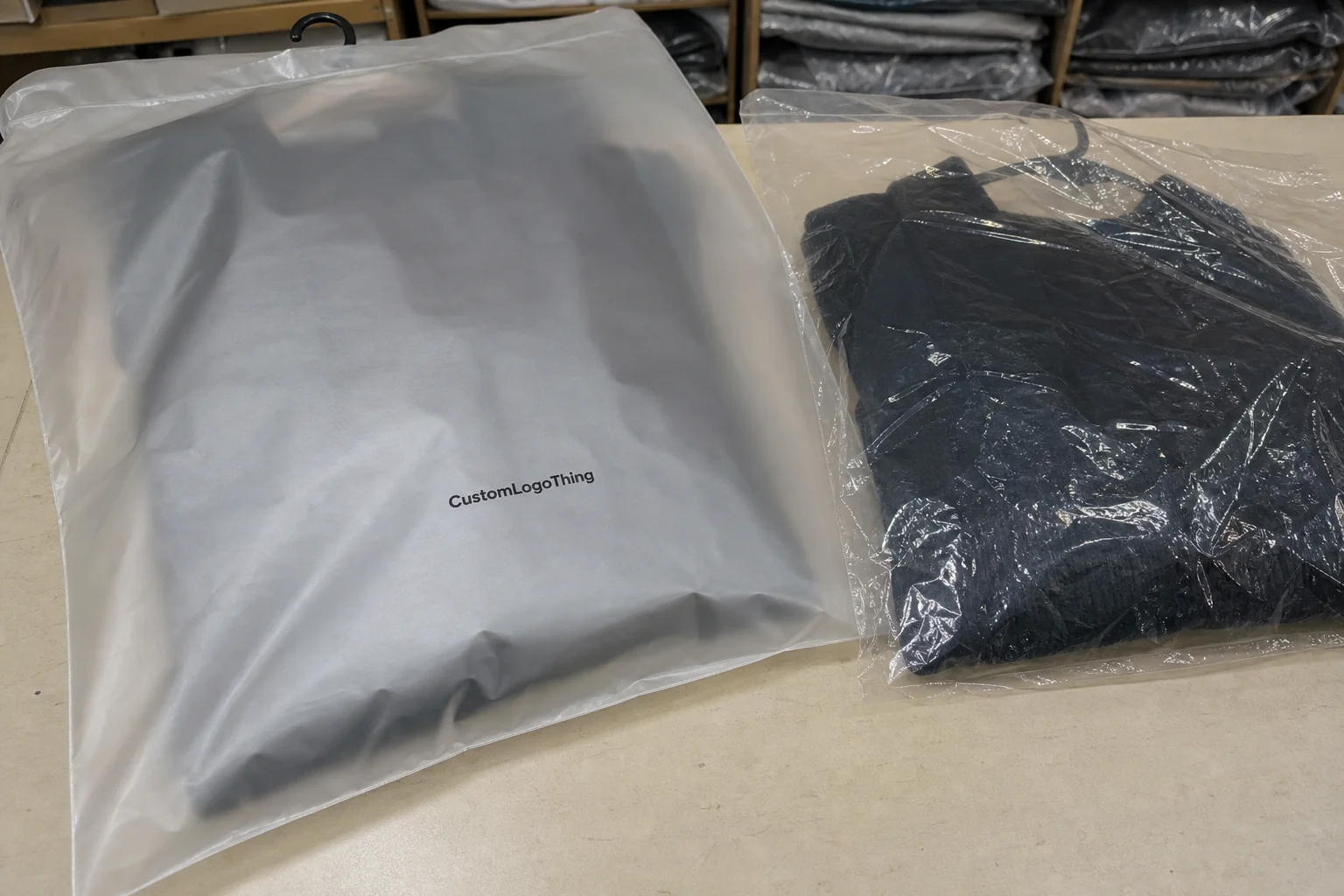
Two OPP header bag quotes can show the same size and still describe different packaging structures. One version may use clearer film with stronger presentation. Another may use a thinner structure that saves cents per unit but creates a softer feel, more visible creasing, or more damage during packing. The difference becomes obvious when bags are counted, loaded, or hung on a retail peg.
“If the quote does not specify film gauge, header height, print method, hole style, and packing, I assume the missing pieces will show up later as extra charges.”
That is the core risk with vague pricing. Words like “standard” or “normal” mean very little unless they are tied to actual measurements. A proper Private Label Buyer OPP Header bags factory quote checklist closes those gaps before the supplier starts building the estimate. It protects the order from hidden changes that are easy to approve on email and expensive to correct after production starts.
For private label launches, the packaging has to do more than simply exist. It needs to present the brand cleanly, fit the product without awkward slack, and stay consistent on reorder. If the bag looks fine in a proof but warps on the peg, clouds the product, or arrives with irregular seals, the cost of fixing that mistake is usually higher than the cost of specifying it properly from the start.
OPP header bag specs that actually affect your order
OPP header bags are built around a simple idea: a clear oriented polypropylene film body, a top header section, and a hanging feature for retail display. In production, though, each of those parts affects price, appearance, and usability. The quote should name them clearly, because a bag that is technically “the right size” can still be the wrong bag if the header is too short or the hole placement is off.
Size is the first spec to lock down. Width, length, and header height all matter, and they interact with one another. A 100 x 180 mm bag with a 30 mm header is not equivalent to the same bag with a 50 mm header. The longer header changes the amount of printable space, the sealing zone, and the way the pack sits once the product is inside.
Film thickness comes next. Many header bags for light retail items land somewhere in the 25 to 40 micron range, although the right gauge depends on the weight, sharp edges, and handling pressure of the product. Thinner film can reduce cost, but it usually shows wrinkles sooner and can feel softer in hand. Thicker film costs more, yet it often hangs cleaner and gives a more stable retail look.
The hanging feature matters more than buyers sometimes expect. Round hole, euro slot, and custom punch shapes all change how the bag will work in store fixtures. If the product is meant for a standard pegboard or retail hook, the hole needs to match the hardware. A mismatch is annoying enough in a sample room; in a receiving warehouse it becomes wasted inventory.
Branding is another decision point. Some private label programs need a single-color logo on the header. Others require a product code, barcode, caution text, or a multi-color identity lockup. For smaller runs, a printed header is not always the best use of budget. In many cases, a plain header with a label is more practical, especially if the product line is still changing. Pairing the bag with Custom Labels & Tags can keep the order flexible while preserving branding control.
The most important specs are usually the ones buyers forget to ask about:
- Bag width and length for product fit
- Header height for branding and sealing space
- Film thickness for clarity, stiffness, and durability
- Hole style for retail hanging compatibility
- Print method for appearance and setup cost
- Seal type for consistency and handling strength
For accessories, stationery, garments, and small electronics, OPP header bags are often chosen because the product remains visible. That is useful only if the packaging stays clean and doesn’t overpower the item. A bag that clouds the product or swallows it in excess header space can look cheaper than it really is.
There is also the question of sealing behavior. Some products are forgiving; others are not. If the item is slightly uneven, sharp, or tightly fitted, the bag may need more clearance or a stronger seal area. That kind of adjustment should be discussed before quote approval, not after the first sample has already been made.
How to build a factory quote request that gets accurate numbers
If you ask for a “standard OPP header bag,” you are likely to receive a standard amount of confusion. Factories can price much more accurately when the request includes exact dimensions, artwork details, and packing needs. The quote does not need to be long, but it does need enough detail that the supplier is not guessing at the structure.
Start with the product itself. Share the item dimensions, weight, and whether the item is rigid, soft, fragile, or irregularly shaped. A photo helps. A physical sample is better. Those inputs tell the factory how much clearance the bag needs, where the header should sit, and whether the hanging hole should be centered differently for display balance.
A workable request usually includes:
- Product dimensions or a sample for measurement
- Target bag size and fit allowance
- Quantity for the first order and likely reorders
- Artwork files and total number of print colors
- Header height and hole style
- Packing method, inner pack count, and carton count
- Shipping destination and target delivery window
Usage matters too. Retail display, warehouse packing, and promotional distribution are not the same job. A bag destined for store hooks needs a more careful approach to header height and hole placement than a bag used only for internal packing. If the item is fragile, seal performance becomes more important. If the product is squeezed into a tight display pack, the width allowance becomes part of the design, not an afterthought.
Ask for tolerances as well as nominal size. A bag listed at 100 mm wide is not useful if the acceptable production range is unclear. For loose items, a small deviation may not matter much. For premium goods or close-fit accessories, tolerance control can be the difference between a bag that hangs properly and one that causes problems during packing.
One useful habit is to request that every factory quote the same format: material, thickness, size, print, hole style, packing, and freight. That is the practical heart of a Private Label Buyer OPP Header bags factory quote checklist. It gives you a fair comparison and cuts out the back-and-forth that usually slows down early sourcing.
Cost, pricing, MOQ, and what moves the unit cost
OPP header bag pricing is driven by a short list of variables, and nearly all of them are predictable. Film thickness, bag dimensions, print coverage, header format, and order quantity are the biggest levers. A larger bag with heavier gauge film and branded printing will cost more than a simple clear version. That is normal manufacturing math, not a hidden charge.
MOQ shapes pricing because setup costs do not disappear on a small run. Printing plates, machine adjustment, trial runs, and waste during setup all have to be absorbed somewhere. On a 2,000-piece order, those fixed costs have less room to spread out, so the unit price climbs. At 10,000 pieces, the per-bag cost usually improves because the setup is diluted across more units.
Buyers often see rough pricing patterns like these for custom OPP header bags:
| Order type | Typical pricing behavior | What drives cost |
|---|---|---|
| Plain clear bag | Lowest unit cost | No print setup, standard size, simple packing |
| Single-color printed header | Moderate increase | Print setup, plate cost, registration control |
| Multi-color branded header | Higher unit cost | More plates, more checks, more setup waste |
| Custom size with special hole | Highest cost on small runs | Tooling, waste, extra setup, lower efficiency |
For rough planning, simpler unprinted runs can sometimes fall around $0.05 to $0.18 per bag, depending on size and thickness, while custom printed or larger-format versions may run higher. At larger quantities such as 5,000 pieces and beyond, the unit price can improve, often into the $0.03 to $0.10 range for straightforward formats, though that changes quickly with print coverage, gauge, and packaging requirements. These are working ranges, not promises, and a buyer should treat them as budget markers rather than fixed market rates.
There are a few straightforward ways to protect the budget without making the package look weak:
- Use a standard bag size if the product fits it properly
- Limit printing to one or two colors
- Choose a common hole style instead of a special punch
- Keep the header height practical rather than oversized
- Ask for pricing at three quantity levels so volume breaks are visible
Also ask for landed cost, not only ex-factory pricing. Packing, export paperwork, palletizing, inland delivery, and freight mode can all change the final number. Air freight can become expensive very quickly for packaging, even when the unit weight is light. Ocean freight usually lowers the per-unit transport cost, but it requires more lead time and more disciplined planning.
Production steps, lead time, and sample approval flow
A normal order follows a fairly predictable path: inquiry, spec confirmation, artwork review, sample approval, production, inspection, and shipment. The process sounds tidy, yet delays usually come from small changes made at the wrong time. Late artwork, revised dimensions after sampling, or unclear packing instructions are enough to throw off the schedule.
Plain OPP header bags are usually faster than printed ones. A simple unprinted run may take about 7 to 12 business days after approval, depending on factory capacity and order size. Printed jobs often need 12 to 20 business days, and sometimes longer if the artwork is complex, the hole shape is special, or there are revisions after proofing. Custom sizes can add prep time because tooling and trial runs may be required before mass production begins.
Sampling usually falls into two stages:
- Digital proof for layout, copy placement, and visual alignment
- Physical pre-production sample for fit, seal, and print verification
A digital proof is fast and useful, but it cannot tell you how the film feels, how the hole punches behave, or whether the bag hangs correctly on the intended fixture. A physical sample takes longer, yet it is worth approving for higher-value products, tight-fit packaging, or any item where the final shelf appearance affects sales. If the brand is strict about presentation, the sample should be approved under conditions as close to production as possible.
Lead time also shifts with season and materials. Busy periods can extend schedules even when the design is simple. Some film grades, print colors, or carton formats may require additional sourcing time. A buyer who needs a firm launch date should build in revision time rather than assuming the first proof will be final.
If you are comparing suppliers on quality control rather than just price, ask whether they inspect for appearance, dimensions, sealing, and carton count using a defined sampling method such as AQL. For shipping-sensitive packaging, references like ISTA can be useful when discussing transit expectations. If your broader packaging program includes certified paper components, FSC is also relevant for sourcing conversations.
Factory capabilities that matter for private label consistency
Private label buyers should care less about polished sales language and more about repeatability. Can the factory hold size tolerance from one run to the next? Can it keep print registration stable? Does the seal remain consistent across a larger batch? Those are the questions that determine whether a packaging program stays predictable.
Inspection should cover edge trim, header alignment, hole placement, print clarity, seal strength, and carton count. A bag can look fine in a sample and still create problems if the header is crooked or the print shifts too close to the seal area. That is not just a cosmetic issue. It affects how the pack hangs, how the brand appears on shelf, and whether the bag feels trustworthy to the customer.
Packing style matters as well. Some programs use bulk packing to keep costs low. Others prefer inner packs or more controlled carton loading to reduce dust, handling damage, or distortion during transit. Palletizing can make receiving easier, but it also affects freight volume. There is no universal best option; the right choice depends on warehouse setup, shipment size, and how the bags will be used once they arrive.
A reliable factory should answer with measurements, limits, and count standards rather than vague reassurance. Ask for:
- Size tolerance range
- Print registration tolerance
- Carton count per master carton
- Inner pack configuration
- Reorder consistency on locked specs
If a supplier cannot repeat the same spec on reorder, the packaging program will never feel stable. Small differences can show up in product photography, store presentation, or warehouse packing time. In private label work, packaging is part of the brand system, so consistency is not cosmetic polish; it is operational control.
Good communication is part of manufacturing capability. A supplier that quotes cleanly, confirms dimensions, and flags production limits early is usually easier to work with than one that keeps details blurry until the invoice is due. Clear answers save both time and money.
Next steps for requesting a clean factory quote
Before asking for pricing, build a one-page spec sheet. Keep it compact: one product photo, one target bag size, one quantity target, one artwork file, and one shipping window. That alone will improve the quality of the quotes you receive and make it easier to compare offers without interpreting each one differently.
Then ask suppliers to separate the quote into material, printing, tooling, packing, and freight. A line-by-line format is much easier to verify than a single lump sum. If one factory gives only a total price, request a breakdown. Otherwise, it becomes difficult to know whether you are comparing the same bag or just different accounting styles.
A simple order of operations usually works best:
- Send product dimensions or a sample
- State the exact bag size and header height
- Provide artwork and print color count
- Confirm MOQ and price breaks
- Ask for sample cost and approval timing
- Confirm packing method and carton count
- Review freight separately before approval
If you need to compare suppliers line by line, use the Private Label Buyer Opp Header bags factory quote checklist as the filter. It keeps every supplier on the same measurement standard, which is the only fair way to evaluate quotes. Without that structure, the cheapest number may simply be the one that hides the most assumptions.
If you need help tightening the specs or turning rough product details into a usable quote request, Contact Us.
FAQs
What should a private label buyer include in an OPP header bag factory quote request?
Include bag size, header height, film thickness, quantity, product dimensions, artwork files, number of print colors, and packing requirements. If you have a target shipping date or destination, add that too. The more exact the request, the less likely the quote will be missing key costs or using a different spec than the one you intended.
Why do two OPP header bag quotes from factories look so different?
One quote may exclude print setup, carton packing, or freight. Another may be based on a different gauge, hole style, or header construction. MOQ also changes unit cost a lot. A low quote is not useful if the spec is incomplete or the packing assumptions are different.
What is a normal MOQ for custom OPP header bags?
MOQ varies by size, print method, and factory setup. Smaller runs usually cost more per bag because setup and waste are spread across fewer pieces. Ask for price breaks at multiple quantities so you can compare launch volume and reorder volume before committing.
How long does production usually take for printed OPP header bags?
Plain bags are usually faster than printed bags. Printed orders often take about 12 to 20 business days after artwork and sample approval, though complex specs can take longer. Lead time also depends on season, workload, and material availability.
How can I reduce unit cost without hurting the presentation?
Use a standard size when possible, limit the number of print colors, simplify the hole style, and order at a quantity that reaches a better pricing tier. A plain header with a good label can also be a smarter choice than overcomplicating the print on a small run.
A better quote starts with better inputs. Replace “standard” with measurements, quantities, artwork details, and packing instructions, then compare every supplier on the same terms. That is the practical value of a private label buyer opp header bags factory quote checklist: fewer revisions, fewer surprises, and a quote that actually means something.