If you are sourcing packaging for a private label SKU, a private label buyer OPP Header Bags material spec guide should do one job well: prevent expensive guessing. Header bags look simple. They are not. Film thickness, print method, hole placement, and seal style all affect how the pack hangs, how it ships, and how it looks in a customer’s hand. Miss one spec and you get samples, revisions, delays, and the kind of emails nobody wants to reread.
OPP Header Bags are popular because they solve a very specific problem: they give lightweight products a clean retail presentation without forcing you into rigid packaging. That is useful for accessories, craft goods, small hardware, stationery, and other items that need visibility plus a hanging display. The bag has to show the product clearly, hold up in handling, and stay within a price target. Not glamorous. Just important.
Here is the part buyers learn quickly: a pack that looks “close enough” on screen can fail on the shelf. Too much headroom. Hole too low. Artwork cramped into the header. Film too thin. The bag still exists, technically. It just does not sell as well, and the sell-through rate is the whole point.
Why OPP header bags still win for retail display
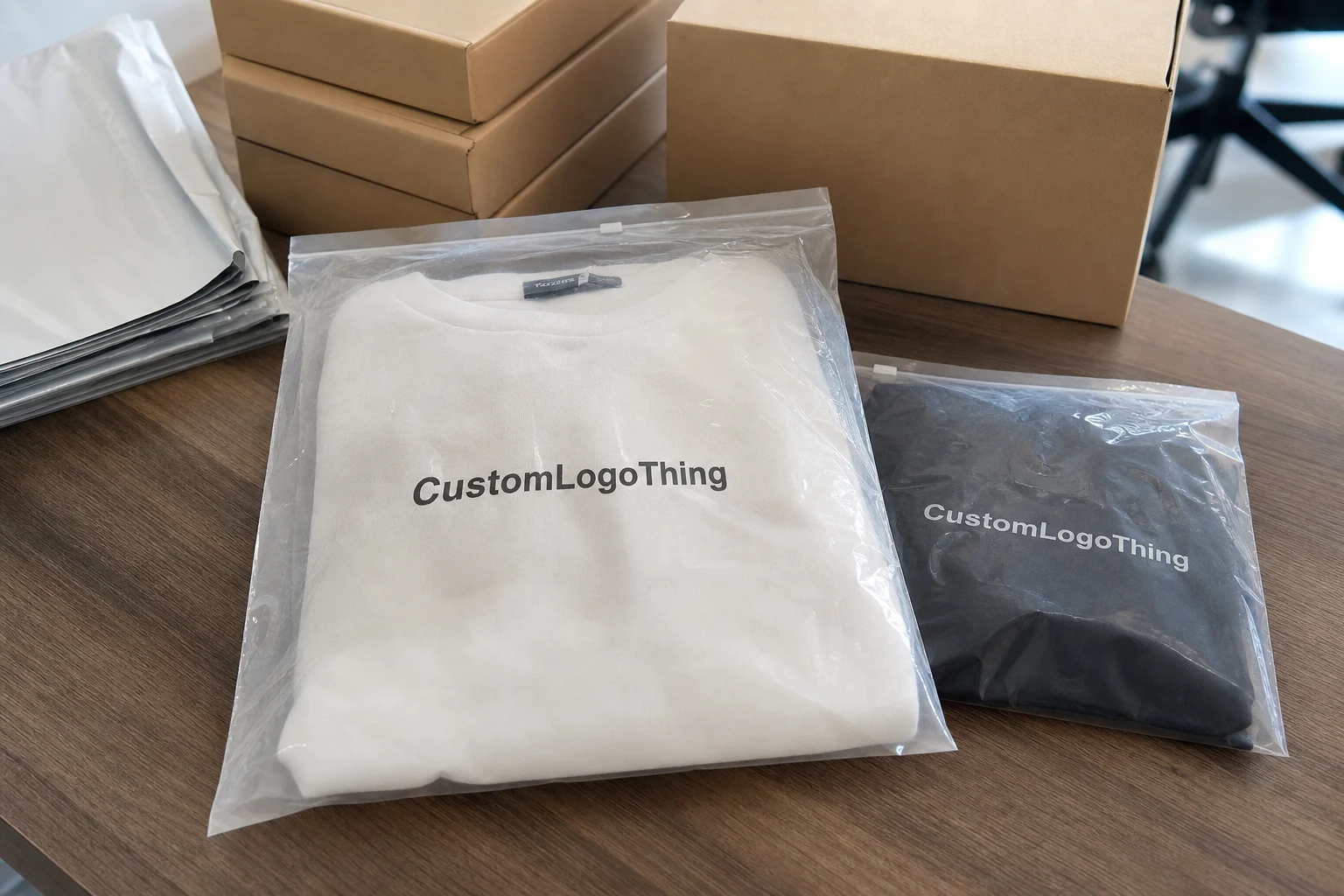
OPP, or oriented polypropylene, is used because it brings better clarity and stiffness than plain poly in many retail-facing applications. That matters when the package needs to carry part of the brand message. Clear film lets the product stay visible. The header carries the logo, barcode, SKU, and any legal copy. For a lot of private label programs, that is the sweet spot.
The visual difference is not subtle. OPP usually has higher gloss and a cleaner look than lower-grade flexible films. On peg hooks, that can make a low-cost item look more deliberate and more retail-ready. If the product has color variation, texture, or a premium finish, the transparency helps the item do the selling instead of forcing the packaging to do all the work.
There is a limit, though. OPP is chosen for presentation and efficiency, not for abuse resistance. If your product has sharp corners, if your cartons get crushed in transit, or if the warehouse handling is rough, you should not pretend a standard OPP bag will fix bad logistics. It will not. For harsher handling, buyers sometimes move toward thicker film, laminated structures, or a different pack style entirely.
In buyer conversations, OPP header bags usually compare against plain poly bags, PVC-free display bags, and paper-based options. Plain poly is cheaper and can be good enough for utility items, but it often looks softer and less crisp. Paper packaging supports a different branding story, but it sacrifices visibility. There is no universal winner. There is only the best fit for the channel, item weight, and brand position.
“A good header bag should help the product sell. If it becomes the reason for returns, the spec was wrong.”
If sustainability is part of the launch brief, be precise. OPP is plastic film, not biodegradable packaging. If you need recycled-content claims, a paper-forward story, or FSC certified secondary packaging, check what the supplier can actually document before anyone prints the marketing copy. Claims need evidence. Packaging departments know this. Marketing teams usually learn it the hard way.
For sellers using broader packaging systems, the display bag should also fit the rest of the pack architecture. If you are pairing the bag with printed labels, inserts, or outer cartons, the branding should stay consistent across formats. A polished bag inside a sloppy master carton still feels sloppy when the shipment arrives. Customers notice the whole experience, not just the front-facing piece.
Size, structure, and fit decisions that affect the final pack
Good sizing starts with the product, not with a guess. Measure the item as it will actually ship: assembled if needed, bundled if needed, and with anything that changes the profile. Then add enough clearance for insertion and sealing, without creating extra space that lets the product slide around. Oversized bags are not safer. They just look loose and waste film.
A standard header bag typically includes the body film, the header area, a hang hole, and the bottom seal. Depending on the item, you may also need side seals or a gusset. Flat items usually need less clearance. Irregular shapes, rigid corners, and multi-piece sets need more. The bag should hold the product neatly, not act like storage for a loose object.
As a rule of thumb, flat goods may only need a few millimeters of clearance per side. Small accessories and bundled items often need more room, especially if the set has mixed shapes. If the product moves around too much, the pack looks cheap and the item can shift into awkward positions on the shelf.
Header height matters just as much. That top panel is not decorative space. It has to hold branding, barcode space, and sometimes country-of-origin or warning text. If the header is too short, the layout gets crowded. If it is too tall, the pack starts to look top-heavy and you burn film for no reason. Most retail programs land somewhere in a practical range of 30-80 mm, but the right number depends on how much information has to live there and what kind of hang display you are targeting.
What to confirm before requesting quotes
- Product dimensions as packed for sale
- Desired bag dimensions or enough information for the supplier to recommend them
- Header height and usable print area
- Hang hole style such as round hole, euro slot, or reinforced punch
- Seal style including bottom seal and any side seals
- Artwork content for logo, barcode, warnings, and SKU information
- Packing format such as flat-packed, nested, or inner packs
The hole position deserves more attention than most buyers give it. A few millimeters off can make the bag tilt on the hook. Once that happens, the product looks poorly merchandised even if the print is perfect. That is the kind of mistake people only spot after the first sample run, which is exactly why sample approval exists.
For new private label projects, get one size and one structure approved before final artwork is locked. If the bag size changes after print plates or cylinders are committed, the fix can be irritatingly expensive. Packaging suppliers are not being dramatic when they push for early confirmation. They are trying to avoid rework.
Material, print, and construction specs buyers should lock before quoting
This is where buyers separate clean quotes from messy ones. If the material spec is vague, the supplier will fill in blanks differently from the next supplier, and the prices will not mean much. Two quotes can look close while describing very different packs. That is not a bargain hunt. That is a comparison problem.
Most retail header bags use clear OPP in the 25-40 micron range. Thinner film reduces cost and gives more flexibility. Thicker film gives the pack more body, resists wrinkles better, and usually feels more premium. The tradeoff is obvious: more material means more cost, and thicker film can be slightly less forgiving during folding and packing.
Some programs move to CPP-laminated structures when they need better seal performance or a softer hand feel. Others ask for reinforced structures if the product has sharper edges or if handling is rough. For small, lightweight goods, standard OPP is often enough. For awkward shapes or items with more abrasion risk, a stronger construction is worth asking about early.
Print decisions that change the final result
Surface print and reverse print are not interchangeable. Surface print is straightforward and cost-effective for simple branding. Reverse print puts the ink on the inner side of the clear film, so the graphic sits behind the substrate. That usually improves abrasion resistance and can give the artwork a cleaner protected finish. If the pack will be handled a lot, that extra protection matters more than people expect.
Print complexity also changes the outcome. Spot colors work well for crisp logos and controlled brand colors. Full-color artwork is possible, but only if the design is prepared with the print limits in mind. Fine lines can disappear. Small text can lose legibility. Tiny barcodes can become difficult to scan if the artwork is not built correctly. The machine does not care that the logo looked perfect on a laptop.
Before quoting, lock these specs:
- Film thickness and acceptable tolerance range
- Seal type and seal width
- Print method and number of colors
- Gloss level or any matte finish request
- Hole style and placement tolerance
- Food-contact requirements, if relevant
- Anti-static needs if the product or channel requires them
- Any venting or extra handling features for awkward items
Compliance should be part of the quote stage, not an afterthought. If the item touches food, ask for the right documentation early. If you are making recycled-content claims, confirm the resin source and whether the claim can be supported in the target market. If the order includes paper cartons or inserts, ask whether those are standard kraft or FSC certified. Different substrate, different evidence. The paperwork does not magically assemble itself later.
For display-led items, clarity and gloss usually matter more than special treatment. For protective packs, seal strength and puncture resistance move up the list. You do not need every possible upgrade. You need the right ones for the product and the channel. Buying packaging is basically the art of resisting unnecessary specs.
| Spec Option | Typical Use | Approx. Cost Impact | Buyer Tradeoff |
|---|---|---|---|
| Standard clear OPP, 25-30 microns | Light retail items, accessories, display-focused packs | Lowest | Best price, less abuse resistance |
| Thicker OPP, 35-40 microns | Premium look, better body, less wrinkling | +8% to +18% | Better shelf feel, higher material cost |
| CPP-laminated structure | Stronger sealing or tougher handling | +15% to +30% | More durable, more spec complexity |
| Reverse print with multiple colors | Branded retail presentation | +12% to +25% | Cleaner appearance, more setup detail |
If you compare factories, keep the basis identical: same dimensions, same thickness, same print count, same hang hole, same seal style, same packing count. Otherwise you are not comparing price. You are comparing three different products and hoping the math behaves.
Cost, MOQ, and price drivers that change your unit cost
Price is driven by a handful of predictable factors. Size. Thickness. Print complexity. Quantity. Packing requirements. That is the real list. Fancy terms do not lower unit cost, and “premium quality” is not a line item.
MOQ behaves differently depending on whether the order is a simple clear bag or a custom printed program. Stock-like formats can start lower. Custom print runs usually need more volume because setup cost has to be spread across the batch. Larger bags and more colors raise the threshold further.
Practical buying ranges often look something like this:
- Low MOQ orders of 1,000-3,000 pieces: about $0.18-$0.45 per unit, depending on size, print, and setup
- Mid-volume orders of 5,000-10,000 pieces: about $0.08-$0.22 per unit
- Higher volume orders of 20,000+ pieces: sometimes $0.04-$0.12 per unit for simpler specs
Those numbers are buying ranges, not promises. A larger format, special punching, tighter tolerances, or multiple print colors will move the price. So will nonstandard packing, inserted cards, or stricter count control. If the quote looks unusually low, check what got removed from the spec. Usually something did.
The other issue buyers underestimate is setup. On a small run, the setup fee gets spread over fewer pieces, so the unit price jumps. On a larger run, the per-piece cost settles down quickly. That is why a slightly bigger order can sometimes be cheaper per unit even though the invoice total is higher. Packaging pricing loves that kind of annoying logic.
Packing format matters too. Inner packs, master carton labeling, palletization, and exact count control all add labor. Not much, usually. But enough to matter if you are chasing a tight margin. If the product has a retail launch date, that extra control can be worth more than the small price bump because it reduces receiving errors and awkward warehouse rework.
If the brand story includes recycled material or greener secondary packaging, ask what is actually supported. Some suppliers can document paper cartons, FSC certified outer packaging, or certain recycled-content claims. Others cannot. Do not mix up a cleaner-looking carton with a different resin spec. A better-looking shipper is still just a shipper if the bag itself does not match the claim.
Lead time, workflow, and what usually slows orders down
The ordering process is plain enough if the spec is clear. Inquiry. Specification confirmation. Artwork review. Proof approval. Sampling if needed. Production. QC. Shipping. The order gets messy when the buyer sends partial information and expects the factory to fill in the rest. That approach wastes time every single time.
First orders take longer than repeat runs. That is normal. There are more variables to confirm: sizing, hole placement, print alignment, barcode placement, and any compliance copy. Once those are locked, repeat production moves faster because everyone is working from an approved reference instead of a fresh guess.
Typical timing for a custom order often looks like this:
- Artwork proofing: 1-3 business days, longer if the file needs cleanup
- Sampling: 5-10 business days if a physical sample is needed
- Production: 12-18 business days after proof approval for standard custom runs
- Freight: air can take days; sea usually adds 2-5 weeks depending on route and customs
The slowdowns are usually obvious once you know what to look for. Dielines that do not match the product. Missing barcode files. Artwork changes after proof approval. Confusion over whether the pack needs to hang or sit flat. Compliance wording that has to be checked three times because nobody wanted to ask earlier. The factory can move quickly once the inputs are stable. Before that, everything feels slower than it should.
Use a real approval process. A golden sample helps lock color, print placement, and hole position. Pre-shipment photos help verify count, carton marks, and packed appearance before goods leave the facility. Those steps are cheap compared with a return or a reprint. They are also less dramatic than trying to explain to finance why the launch packaging arrived wrong.
Transport deserves attention too. Header bags often travel inside corrugated cardboard cartons, and carton strength affects damage risk. If your shipment is going through rough handling, say so. Standard kraft cartons may be enough for clean lanes. For tougher distribution, stronger shippers or better palletization can save more money than they cost. Packaging does not stop being part of the system at the outer box.
For buyers who want practical reference material, packaging performance and shipping durability guidance is available from ISTA, and recycling-related best practices are covered by EPA recycling guidance. If the order includes paper components, those resources can help keep claims and testing language grounded.
Quality control, compliance, and packing details that protect margin
QC on header bags should stay practical. You are checking the things that affect sell-through, scanability, and returns. Seal strength. Print registration. Hole placement. Film clarity. Thickness consistency. Count accuracy. If those are out of spec, the bag is not “close.” It is wrong.
Compliance depends on the category. Food-related items need the correct documentation. Recycled-content claims need support. Country-of-origin text needs to be readable and placed correctly. Any regulatory copy has to match the market where the product will sell. A claim that sounds good in a brochure can become a problem fast if the substrate does not support it.
Approval samples are worth the time. So are golden samples, especially for repeat runs. They give both sides a fixed visual and physical reference for future production. If the supplier keeps one approved unit, there is less room for interpretation later. That matters more than people like to admit.
Packing format changes the experience for the warehouse and the customer. Bags can be packed flat, nested, or in inner packs of 50, 100, or 200. The right count depends on how the end user handles the product and how your distribution center receives it. If bags arrive stuck together, bent, or crushed, the “cheap” unit cost stops looking cheap.
Ask for a QC checklist that includes:
- Seal strength and uniformity
- Hole accuracy for hanger fit
- Print clarity and registration
- Thickness checks across the run
- Carton count accuracy and label accuracy
The outer packaging is part of quality, not an accessory to quality. A solid OPP bag inside a weak shipper can still arrive damaged. If the order is tied to a retail launch, the master carton spec, inner packing, and pallet wrap all matter. The bag gets the customer’s attention. The shipper gets the product to the shelf.
How to order without rework
If the goal is fewer revisions, start with the basics and keep them consistent. Define the product dimensions, the target bag size, the artwork, the print colors, the quantity, and the shipping destination. With that information, a supplier can quote properly instead of throwing out numbers that only sort of fit your brief.
For a first custom order, it usually makes sense to request a spec sheet, compare two thickness options, approve one sample, and then move into the full run. Skip the sample only if you enjoy surprises. For new size, new artwork, or new seal specs, sample approval is the cheapest insurance in the order.
Before you send files, confirm these points:
- Hang hole style and placement
- Seal style and seal width
- Header height and printable area
- Carton pack format and count per inner pack
- Compliance text and barcode position
If you are still deciding between packaging formats, compare the header bag against labels, cartons, and insert options. A custom OPP header bag is often the right answer for hang-sell items. Sometimes a label on kraft paper packaging or a different retail format makes more sense. The right choice is the one that fits the product, the channel, and the margin target. Novelty is not a strategy.
Most rework comes from incomplete specs, not from impossible production. Clear dimensions. Clear print instructions. Clear pack counts. Clear approval path. That is how you keep the job moving and avoid the usual back-and-forth that burns time and somehow still ends with a revised dieline. If you need a working checklist, use this Private Label Buyer opp header bags material spec guide as the baseline and lock the details before asking for a final quote.
FAQ
What material spec should I request for private label OPP header bags?
Start with film type, thickness, seal style, header height, hole style, and print method. For lightweight, display-focused products, standard clear OPP is often enough. If the item needs more stiffness or stronger sealing, ask about thicker film or laminated options.
How do I know the right MOQ for custom OPP header bags?
MOQ depends on bag size, print colors, and whether the factory is running a custom print job or a closer-to-stock format. Smaller quantities are possible, but the unit cost rises quickly because setup work is spread across fewer pieces.
What affects pricing the most on private label OPP header bags?
The biggest drivers are size, thickness, print complexity, and total quantity. Secondary drivers include special punching, reinforced headers, tighter tolerances, and packing requirements.
How long is the typical lead time for custom header bags?
After artwork approval, production time is usually shorter for repeat orders and longer for first runs that need proofs or samples. Shipping method also changes the total timeline: air is faster, sea is cheaper, and customs can move either one around.
Can I order a sample before placing the full private label run?
Yes, and you should if the artwork, seal, or sizing is new. A sample helps confirm clarity, fit, hole placement, and print appearance before you commit to the full order.