Why matte zipper bags can change shelf appeal and margin fast
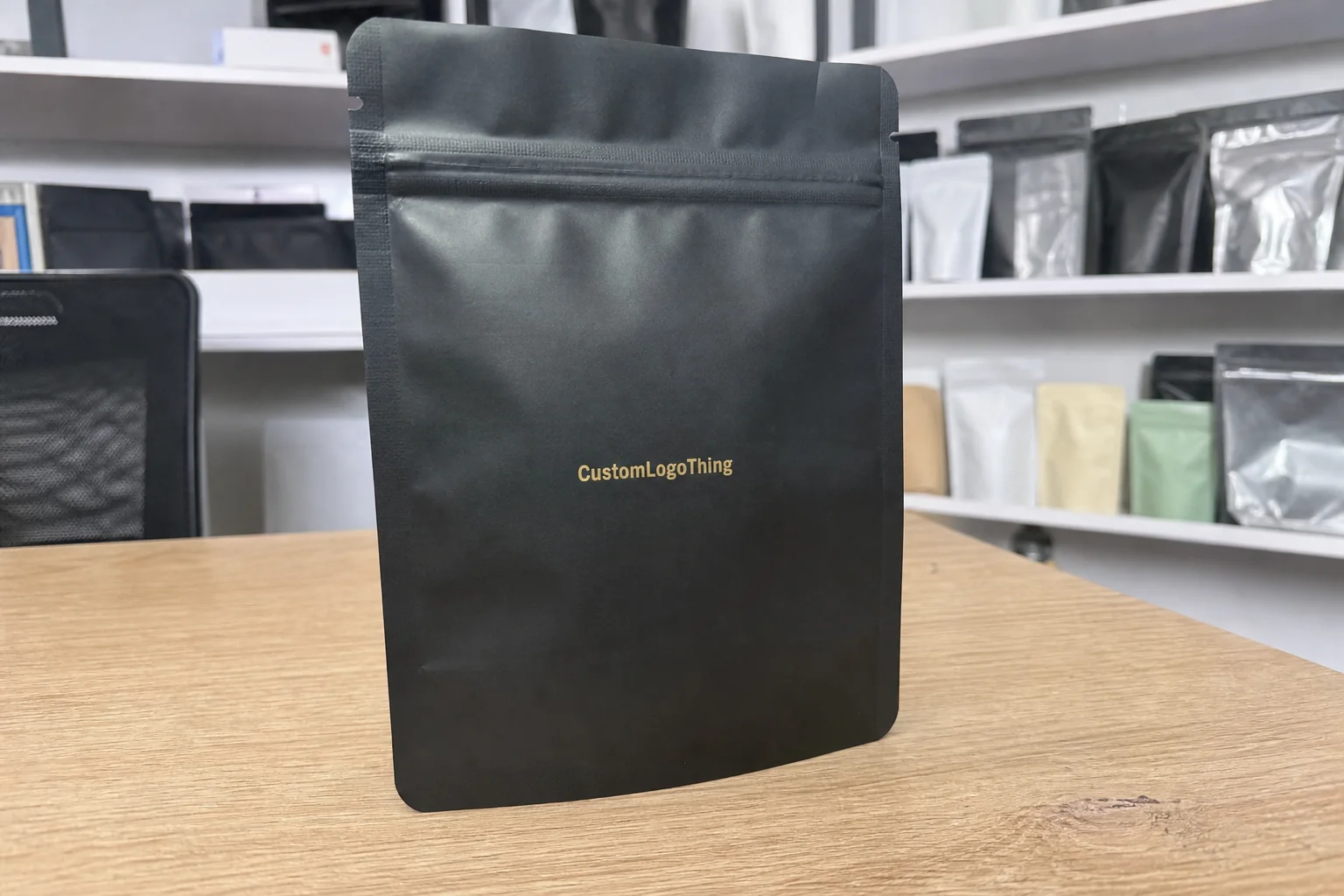
A Private Label Buyer Matte Zipper Bags factory quote checklist matters because matte packaging can do a lot of work on shelf without adding much to the product itself. Matte reduces glare, softens the visual surface, and usually makes branding easier to read under store lighting. That is useful for food, supplements, pet treats, coffee, and any category where the package has to look more expensive than the contents.
The problem is that the word "matte" hides a wide range of build choices. Two bags can look similar in a product photo and still land at very different price points because one is a basic BOPP/PE pouch with a simple zipper and the other is a thicker PET/VMPET/PE structure with better barrier, better print control, and a more durable finish. Buyers who only ask for matte zipper bags tend to get a quote shaped by the factory's assumptions, not by their actual requirements.
That is where margin gets distorted. A low quote may look attractive until the supplier adds charges for plates, artwork revisions, stronger film, better seals, or a zipper change. A higher quote may actually be cleaner if it already includes the specs you need. The only fair comparison is line by line, on the same basis.
For private label programs, the package has to survive more than a pretty sample photo. It has to handle shipping, warehouse movement, store replenishment, and repeated opening and closing. If the matte layer scuffs easily or the zipper feels weak, the premium look disappears fast. A bag that arrives damaged is not premium packaging. It is a problem with a nice finish.
The finish is the easy part. The structure, seal, zipper, and print control are what decide whether the bag actually performs.
That is why a Private Label Buyer matte zipper bags factory quote checklist is not just a procurement form. It is the shortest path to a quote a buyer can trust, compare, and defend internally.
Material, finish, and zipper details that affect performance
The first thing to pin down is the film structure. BOPP/PE is usually the lighter, cost-conscious option and works well for simple graphics and dry products. PET/PE gives a cleaner print face and a stronger overall feel. PET/VMPET/PE adds barrier and stiffness, which makes more sense for products sensitive to moisture, oxygen, or light.
Thickness matters more than many first-time buyers expect. A bag at 90 microns feels different from one at 120 microns, and that difference shows up in puncture resistance, seal confidence, and freight weight. Thicker is not automatically better, but thin material can create handling problems if the product is sharp, dense, or packaged in a rough distribution chain.
Finish choice is another place where quotes drift. A true matte lamination usually gives a more consistent, premium surface than matte varnish alone. Varnish can work for lower-cost jobs, but it is more likely to show marks from rubbing, stacking, and carton movement. Some factories describe every dull surface as matte. They are not the same thing. Ask how the finish is built, not just what it is called.
Zipper selection also changes the quote and the customer experience. A standard single-track zipper keeps production simple and usually gives reliable resealability. Slider zippers add convenience and a more premium feel, but they increase unit cost and can slow production. Child-resistant closures should be treated as a separate specification, not an upsell, because they require a different level of compliance review and design control.
Practical features should be stated clearly in the request. These are often small details, but they affect both usability and cost:
- Bottom gusset for stand-up shelf presence and better fill capacity.
- Side gusset for slimmer shelf profiles or taller bags.
- Tear notch for opening control.
- Rounded corners for safer handling and cleaner presentation.
- Hang hole or euro slot if the pack will go on a peg display.
For products that touch food, supplements, or fragrance-sensitive goods, ask the supplier to confirm material suitability and the ink system being used. If shelf life matters, the discussion should include barrier expectations and seal integrity, not just appearance. Printing should also be checked for registration tolerance, because thin type, small logos, and dense artwork show defects quickly.
General packaging references from the Flexible Packaging Association can help frame material choices, and transit-oriented expectations are often discussed through ISTA methods when a package has to survive distribution abuse. Those references do not replace supplier testing, but they give buyers a better baseline for the questions they should ask.
What belongs in a private label buyer matte zipper bags factory quote checklist
A strong RFQ removes guesswork. The Private Label Buyer matte zipper bags factory quote checklist should define the bag precisely enough that two factories can quote the same thing. Start with the finished width, height, and gusset depth. If the product already has a known fill weight or target volume, include that too. A small dimensional change can move film usage enough to affect the unit price, especially on larger runs.
Thickness should be given in microns or mils, not loosely described as "thick" or "premium." That avoids the usual back-and-forth where one factory quotes a light structure and another quotes something much stiffer. If you want a specific hand feel or puncture resistance, say so directly. If the bag must stand upright after filling, mention that as a functional requirement rather than a design preference.
Print specs belong in the first request. Note the number of colors, whether the artwork uses process color or spot color, whether white ink is required, and whether the finish includes matte with gloss accents. Dense graphics, metallic effects, and fine text all affect setup and waste. Factories price those jobs differently because they are different jobs.
Compliance language should also be explicit. If the package is for food, supplements, or aroma-sensitive goods, the RFQ should state that the materials must be suitable for that use and that inks should meet any required migration-safe standards. If a specific shelf life or storage condition matters, explain the product sensitivity instead of expecting the supplier to infer it from the artwork file.
Carton packing details are easy to overlook and expensive to ignore. Include carton count, master case dimensions, pallet expectations if relevant, and destination. A quote that skips these details can make freight and warehousing costs look smaller than they really are. That is a common mistake with private label programs because the bag price gets attention and the handling cost does not.
Include tolerances, overrun or underrun policy, proofing expectations, and sample approval requirements. Buyers often focus on the final unit price and forget that approval delays, added revisions, and undocumented tolerances can push the real cost higher. A Private Label Buyer Matte Zipper bags factory quote checklist should make those variables visible before anyone starts negotiating.
- Exact finished dimensions and gusset depth.
- Target fill weight or fill volume.
- Film structure and thickness.
- Matte finish type and any special print effects.
- Zipper style, tear notch, hang hole, and slot requirements.
- Artwork file type, revision count, and proof approval expectations.
- Carton count, master carton specs, and destination.
Cost, quote, and MOQ drivers buyers should compare line by line
The matte surface itself is rarely the main cost driver. Price is shaped by the full build: film structure, thickness, print coverage, zipper type, size, and quantity. A simple one-color bag at 5,000 pieces can price very differently from a full-coverage, multi-color pouch with a premium zipper and a barrier layer.
For rough planning, simpler custom matte zipper pouches can fall in the range of $0.18 to $0.30 per unit at modest volume, while thicker laminate builds, better barrier films, slider zippers, or stricter compliance requirements may move the number to $0.28 to $0.55 per unit or higher. Those are broad ranges, not promises. Volume changes the math fast. A 10,000-piece order can be much cheaper per unit than a 3,000-piece order even if the artwork is identical.
Do not accept a headline price without a breakdown. Ask for base bag cost, printing, tooling, samples, packaging labor, and freight terms. Tooling charges may be one-time, but they still affect the comparison. Plate costs, cylinder costs, artwork prep, rush fees, and inspection charges can all sit outside the number that gets quoted first. If they are not listed, assume they are missing, not included.
MOQ is usually tied to production setup. Film sourcing, print setup, and zipper configuration all affect the minimum viable run. Some suppliers can combine similar SKUs in one production window. Others price every version separately. If you manage several flavors or variants, ask whether the same film family can be shared across the range. That can reduce waste, lower setup cost, and make reorders less painful.
Use a line-by-line comparison instead of comparing total prices in isolation:
| Option | What It Changes | Typical Quote Impact |
|---|---|---|
| BOPP/PE with matte varnish | Lower material cost, lighter hand feel, suitable for simple graphics | Usually the lowest price tier, often best for larger private label runs with straightforward artwork |
| PET/PE with true matte lamination | Better premium look, better surface durability, stronger shelf presence | Mid-tier pricing, usually more expensive than varnish-only finishes |
| PET/VMPET/PE with matte finish | Higher barrier, stiffer feel, more protection for sensitive products | Usually priced above standard laminate because of the extra barrier layer |
| Slider zipper | Better user convenience, more premium retail perception | Raises unit cost and may slow production compared with a standard zipper |
| Child-resistant zipper | Additional safety function for specific categories | Higher cost and tighter specification review before quoting |
Freight terms also need to be clear. FOB, CIF, and EXW are not interchangeable, and domestic delivery is not the same as export delivery. A quote can be correct and still be useless if the terms are mixed. The private label buyer matte zipper bags factory quote checklist should force each supplier to state what is included, what is excluded, and where ownership changes hands.
Process and timeline from artwork approval to delivery
The production path is usually simple on paper: inquiry, spec confirmation, artwork review, sample approval, payment, production, inspection, and shipping. The schedule changes when the quote is vague or the artwork needs multiple corrections. New plates, cutter tooling, and zipper revisions add time quickly.
For standard custom zipper pouches, production often runs 12 to 18 business days after proof approval if materials are available and the order is straightforward. If the job needs new tooling, a specialty zipper, or a more complex print structure, the window can move to 18 to 25 business days or longer. Then freight starts its own clock. A fast factory does not equal a fast landed delivery.
Request milestone dates in writing. Proof approval, sample dispatch, mass production start, final inspection, carton loading, and estimated ship date should all be visible. That is especially useful when a launch depends on retail booking dates or a seasonal selling window. Silence at any stage usually means delay later.
Rushed orders deserve extra caution. If a supplier skips sampling or compresses quality checks to hit a deadline, the risk tends to show up downstream in the warehouse or on shelf. It is usually better to lose a few days during approval than to inherit a first-run problem that has to be fixed after delivery.
For long transit routes or rough handling, ask whether the supplier has experience with transit-oriented checks tied to ISTA-style expectations. That does not mean every pouch needs formal lab testing. It does mean the factory should understand why seal strength, zipper alignment, and carton compression matter after shipment. Packaging that looks perfect at dispatch can still fail in transit if those basics are weak.
If the brief is still being shaped, use Contact Us to tighten the quote request before it goes out. If the launch also needs matching secondary packaging or brand tags, pairing the pouch with Custom Labels & Tags can keep the presentation consistent without overloading the bag artwork.
How to compare factories on consistency, support, and quality control
Price does not tell you whether a supplier is dependable. Consistency does. A good factory keeps the dimensions stable, the zipper line straight, the seals clean, the matte finish repeatable, and the print registration within tolerance. If those things drift from batch to batch, the packaging starts creating problems instead of solving them.
Ask for samples from recent production, not just polished marketing photos. Better still, ask to see the exact construction you are buying: zipper style, bottom seal, gusset build, and surface finish. A supplier who can share internal QC notes or test summaries is usually easier to evaluate than one who only sends generic bag images. Look for checks on seal strength, dimensional accuracy, and visual defects.
Quality control should happen at more than one point. Incoming materials should be inspected, production should be checked inline for seal and print registration, and packed cartons should be reviewed before shipment. Some buyers use AQL sampling for the finished goods. That is reasonable, especially for a first private label launch where there is no room for a messy opening order.
Support speed is not a soft factor. It affects the whole project. Small changes to artwork, zipper profile, or fill behavior can change machine settings and delay shipment. A factory that responds clearly and explains tradeoffs is usually more valuable than one that gives a low quote and then disappears until approval time.
The useful supplier is the one that can suggest a lower-cost alternative without wrecking the retail presentation. A slightly different film, a different matte finish method, or a simpler zipper may save money while keeping the brand look intact. That kind of input is worth more than a price cut that creates defects later.
If the supplier cannot explain how they keep repeat orders consistent, keep moving. A small price advantage is not worth losing control over reorders, especially once the private label program starts scaling.
Next steps for a cleaner matte zipper bag sourcing request
The best RFQ packet is short, specific, and hard to misread. Put the size, film structure, matte finish type, zipper style, artwork file, target quantity, and destination in one document. If the product needs special handling, say it plainly. If carton count or pallet pattern matters, include that too. A supplier should not have to guess what "premium" means.
Ask for two quote versions. One should match the target spec exactly. The second should show a cost-optimized alternative the factory recommends. That comparison is useful because it shows whether the premium structure is necessary or whether a small change can bring the budget back in line without hurting the shelf presentation.
Request a production sample or at least a digital proof before final approval. A proof is fine for artwork placement, but it does not tell you how the matte surface feels, how the zipper runs, or how the bag looks under real light. Those details matter if the finish is part of the brand promise.
Before issuing a purchase order, confirm payment terms, freight terms, carton packing, and inspection arrangement. A few minutes spent on those items can save days of back-and-forth later. That is the practical value of a private label buyer matte zipper bags factory quote checklist: it turns a vague inquiry into a comparable, answerable quote package and reduces the odds of hidden cost later.
What should a private label buyer include in a matte zipper bag factory quote request?
Include exact bag dimensions, film structure, matte finish type, zipper style, print colors, quantity, and freight destination. Add compliance needs, packaging format, and sample approval expectations so the factory can quote the real job, not a guessed version of it.
Why do matte zipper bag quotes vary so much between factories?
Price differences usually come from material structure, zipper quality, print setup, finish method, and order quantity. Some quotes also leave out tooling, artwork prep, samples, or freight, which makes the first number look cheaper than the actual landed cost.
What MOQ is typical for custom matte zipper bags?
MOQ depends on bag size, print complexity, and material sourcing, so there is no single standard number. Ask whether the supplier can combine SKUs, share materials across variants, or offer a pilot run for a first order.
How long does production usually take after artwork approval?
Standard production often takes 12 to 18 business days after proof approval, but new tooling, special zippers, or complex print builds can push the timeline longer. Freight time should be added separately because it is not part of factory production time.
How can I compare two factory quotes for matte zipper bags fairly?
Compare the same specs line by line: size, thickness, finish, zipper type, print coverage, MOQ, and freight terms. Ask for a cost breakdown so you can see whether one quote is cheaper because it excludes setup, samples, or shipping.