Private Label Buyer RFQ Checklist for Header Bags
If you are searching for the phrase private label buyer OPP Header Bags buyer rfq checklist, the job is simpler than the string looks: tighten the request so suppliers price the same bag, not three different interpretations of it. One missing dimension, one uncertain hang style, or one artwork file in the wrong format can turn a two-day quote into a week of clarifying emails. Header bags are sensitive to small changes. A few millimeters of header height, a different film gauge, or a revised punch location can shift cost, appearance, and line speed.
Private label programs depend on that discipline because the package is part of the product. A header bag has to protect the contents, hang straight on a retail display, present the brand cleanly, and survive handling without making the item look cheap. That is true in snack aisles, hardware assortments, sample packs, promotional kits, and lightweight apparel. It is also true in private label, where the buyer usually carries the risk of rework, delay, and excess inventory if the quote was built on guesswork.
Why a Clean RFQ Matters for Header Bags
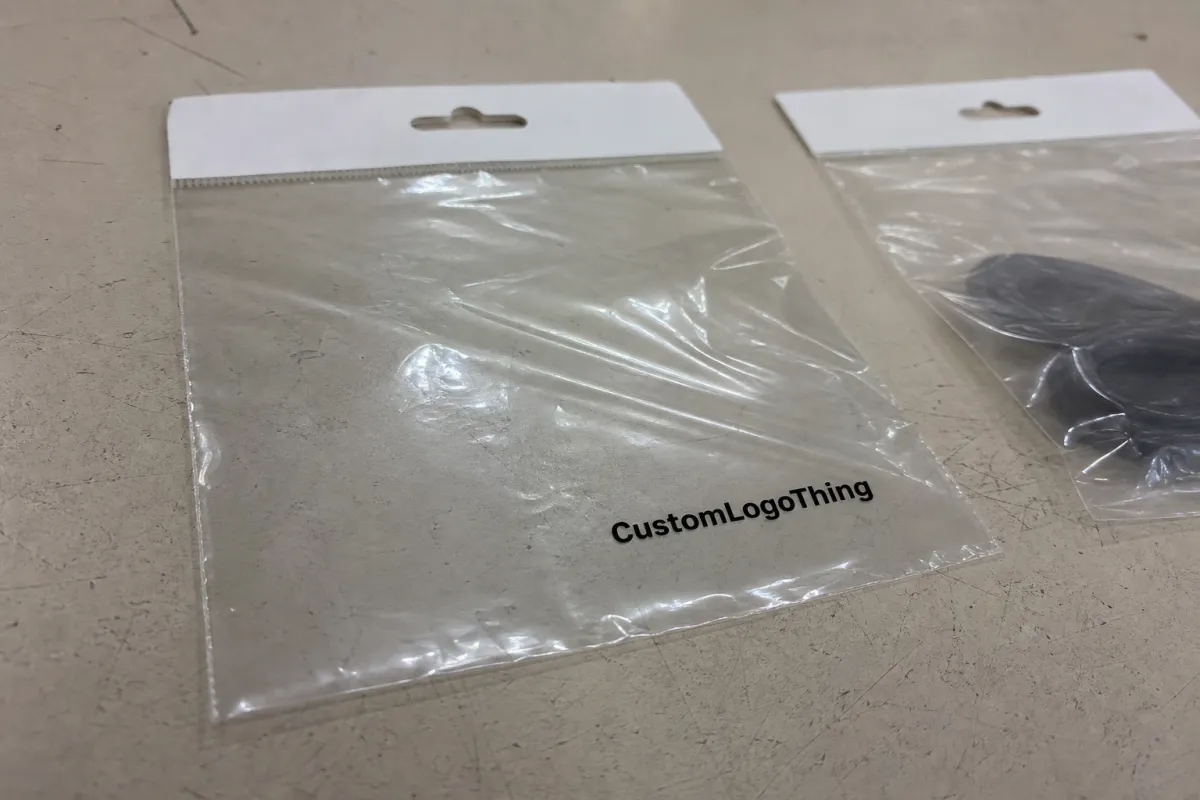
Quoted packaging looks simple until the details start moving. Header bags are a good example because the format sounds generic, but the production decisions underneath it are not. A flat bag with a punched hole is one thing. A gusseted retail pack with a euro slot, print on the header, and a shelf-ready carton count is another. Suppliers need to know which version they are pricing, or they will fill in the blanks themselves.
A clean RFQ reduces that drift. It forces every supplier to quote the same dimensions, the same film, the same print area, the same pack-out, and the same delivery expectation. That matters more than many buyers expect. Two quotes can look close on paper while hiding different assumptions about thickness, seal width, color count, freight, or Minimum Order Quantity. The headline number then becomes a poor comparison tool.
A good RFQ is not paperwork. It is the control point that keeps small ambiguities from turning into expensive corrections.
Buyers also need to remember that a header bag is doing several jobs at once. It must carry the brand, support merchandising, protect the contents, and fit the retailer’s display hardware. A bag that hangs straight on a peg hook may still fail if the contents pull the seal open or the header tears under load. A bag that prints beautifully may still be hard to fill if the opening is too narrow or the film is too stiff. The RFQ needs to describe the whole job, not just the artwork.
Product Details to Lock Before Requesting Pricing
Start with the bag format. “Header bag” can mean a lot of things, and the production method changes with each variation. Is the bag flat, gusseted, side-sealed, bottom-sealed, or supplied on a roll for automatic filling? Is the hang feature a punched hole, a euro slot, or a reinforced header with a tab? Will the top area carry print, or will it remain blank for labeling later? Those choices affect both price and lead time.
The product itself matters just as much. A soft, lightweight item behaves differently from a rigid one with sharp corners. Snacks may need a tighter seal and better moisture control. Hardware may need puncture resistance. A sample kit may need clarity and a polished front panel, while a promotional item may need extra hang strength because shoppers pull it on and off the hook repeatedly. Suppliers can only size the film and seal structure if they know what sits inside the bag.
- Bag style: flat, gusseted, side-sealed, bottom-sealed, perforated, or roll-fed.
- Hang feature: punched hole, euro slot, hang tab, or reinforced header.
- End use: snacks, hardware, apparel, sample kits, retail accessories, or promotional packs.
- Fill behavior: loose product, sharp edges, fragile contents, or moisture-sensitive items.
- Display method: peg hook, clip strip, bin display, or shelf hang presentation.
That last line is easy to overlook, but it changes the structure. A bag can look fine in a carton and still fail on the peg because the load point is wrong or the center of gravity sits too low. Retail buyers notice that fast. They see whether the package hangs square, whether the artwork is readable from a distance, and whether the top feature looks sturdy enough to survive handling. That is why the RFQ should say how the bag is meant to be displayed, not only how it is meant to be filled.
Pack-out also needs clarity. “Loose packed,” “case packed in 1,000s,” and “packed to count” are not interchangeable terms. Neither are “packed to net weight” and “packed to finished count.” The difference changes labor, carton sizing, and the risk of damage in transit. If your program includes outer cartons, shelf tags, or item labels, keep the packaging brief aligned with the secondary components so one part does not move while the others stay frozen.
Specs That Control Fit, Strength, and Print Quality
Once the format is set, the real pricing levers are dimensions, film, thickness, seals, and print. This is where many RFQs get vague. “Clear printed bag” is not enough. A supplier needs exact numbers or the quote will include assumptions that surface later as revisions.
Use finished measurements whenever possible. State the bag width, height, and header height. If the bag is exact-fit, include tolerance. If the film needs to be 2 mil LDPE, 3 mil coextruded film, PP, PET laminate, or another structure, name it directly. If the bag needs a matte finish, gloss finish, white ink underprint, or a certain seal width, include that as well. The more specific the brief, the fewer surprises in prepress and production.
- Dimensions: finished size, header height, fill area, and tolerance.
- Material: LDPE, LLDPE, PP, PET laminate, or another specified structure.
- Thickness: film gauge or micron value, with minimum or nominal clearly stated.
- Seal details: side seal width, bottom seal width, top seal position, and reinforcement around the hang feature.
- Print details: number of colors, print coverage, finish, color tolerance, and whether the header is printed.
- Compliance: food-contact needs, retailer rules, test method requirements, or documentation requests.
If the product must hold up during distribution, ask the supplier how they test or validate the structure. Not every header bag needs formal certification, but the risk should be visible before the order starts. For shipping abuse, transportation testing such as ISTA methods may be relevant. For paper components tied to the same launch, FSC documentation may matter if the brand is making sustainability claims. That is not decoration. It affects what the supplier can say, print, and prove.
Color control deserves a line of its own. A small logo on a clear bag may tolerate minor variation, but a brand-heavy header usually cannot. If color is important, say what the supplier should match against: approved artwork, a physical sample, a standard swatch, or a specific target. Otherwise two factories can both claim they matched the file while delivering slightly different results. That is common, and it is avoidable.
How to Compare Pricing, MOQ, and Landed Cost
Header bag pricing usually moves on five levers: material gauge, bag size, print colors, header complexity, and volume. Buyers who only ask for a unit price usually miss the rest of the cost stack. Setup charges, tooling or plate fees, sample charges, freight, and carton assumptions can shift the real landed cost more than the headline number suggests.
For a simple custom printed header bag, a small run of 5,000 units might land anywhere around $0.07-$0.16 per bag for plain structures, $0.11-$0.24 for light print, and $0.18-$0.45 or more for heavier film, multiple colors, reinforced hang features, or tighter pack-out requirements. Those are working ranges, not promises. The final number depends on the film, the print coverage, the quantity tier, and whether the supplier already has the right material on hand.
| Quote Input | Clean RFQ Request | Why It Matters |
|---|---|---|
| Dimensions | Finished size, header height, and tolerance | Prevents wrong film use and re-quoting |
| Number of colors, coverage area, and finish | Affects plates, setup, and color control | |
| MOQ | Target quantity plus alternate tiers | Shows where unit cost drops or jumps |
| Packaging | Bag count per case and pallet assumption | Changes labor, freight, and warehouse cost |
| Delivery | Ship-to location and required date | Impacts freight and production slot timing |
Ask suppliers to split the quote into visible pieces: unit cost, setup cost, sample cost, freight estimate, and any special pack-out charge. That separation matters because a low unit price can hide an expensive setup, while a low setup can be balanced by freight or carton charges. A fair comparison table should also normalize carton counts and destination. Otherwise one quote may look cheaper only because it assumes a different delivery point or a lighter packing method.
MOQ deserves a realistic conversation. A lower minimum often costs more per unit. A higher minimum may improve the unit cost, but it can also create inventory risk if the program is new or the artwork is still changing. The best comparison is not just “which quote is lower?” It is “which quote matches the launch volume, storage capacity, and reorder forecast?” That is a more useful question and usually a cheaper one.
Timing From RFQ to Approved Production
The quote is only one stage. The timeline starts with RFQ intake, moves through artwork review, proof approval, sampling if needed, production scheduling, and then freight booking. If any one of those steps is vague, the lead time stretches. Buyers often blame manufacturing delay when the real issue is an incomplete brief.
In practice, first runs are slower than reorders. The supplier has to confirm the spec, review print files, set up the line, and sometimes produce a strike-off or sample for approval. A common range for first production runs is 12-18 business days after proof approval, while a reorder can sometimes ship in 7-12 business days if the material is available and the file is already locked. Rush service may be possible, but it narrows the margin for error and usually costs more.
- RFQ intake: supplier reviews format, dimensions, print, quantity, and delivery target.
- Artwork check: prepress confirms file type, bleed, die area, and placement.
- Proof stage: buyer approves layout, copy, and target color references.
- Sampling or strike-off: used when the design, film, or finish is new.
- Production slot: order is scheduled after approvals are complete.
- Pack and ship: cartons are labeled, palletized, and released for freight.
Buyers who need a fixed launch date should ask for milestone dates, not a single lead-time number. Ask when the proof is due, when approval is required, when production starts, and when shipping is expected. That keeps operations, sales, and inventory planning aligned. If the launch includes matching cartons, shelf labels, or item tags, keep the artwork timeline synchronized so one component does not hold up the rest.
There is a practical reason to be explicit here. A supplier can only hold a slot if the file is final and the approval cycle is short. Late changes are expensive. A color shift, a revised logo placement, or a new regulatory line can push the job back into the queue. That is normal in packaging, but it should not be hidden inside an optimistic promise.
What a Capable Supplier Should Be Able to Show
A capable supplier does more than answer the price question. They show control. That starts with how they handle material sourcing, inspection, artwork, and revision history. If the team cannot explain where the film comes from, how the seals are checked, or who signs off on the proof, slow down.
Ask for evidence instead of adjectives. Useful evidence includes sample photos, dimensional checks, print references, test data, and a revision trail that makes it clear which file was approved. If the supplier is serious about private label packaging, they should also ask smart questions early: product weight, fill method, shelf display, ship-to location, whether the design is locked, and whether the pack-out is changing. Those questions are not a hassle. They are a warning system.
The strongest suppliers do not try to win by saying yes to every request. They win by exposing the risks before the line is running.
Quality control should be specific. For header bags, that usually means checking dimensions against spec, verifying seal integrity, inspecting punch or slot placement, confirming print registration, and reviewing carton counts before shipment. If the bag is meant to hang under load, the hang area should be checked for tear resistance or at least visual consistency across the run. If the contents are sharp or heavy, puncture risk deserves attention. A pretty sample does not prove the run will hold up.
Documentation matters too. If sustainability claims are part of the brief, ask for chain-of-custody records where relevant. If the packaging will face distribution abuse, ask what validation process the supplier uses. The right partner can answer directly. The wrong one uses vague language and hopes the buyer will not notice the gap.
Common RFQ Mistakes That Distort Quotes
Most bad quotes begin with incomplete inputs. The cheapest-looking number often comes from a vague RFQ that left the supplier room to guess. That is risky, especially for private label work where the buyer may be committed to a launch calendar, a retailer promise, or a planned reorder window.
- Missing dimensions: no finished size, no header height, no tolerance.
- Unclear film spec: “clear plastic” instead of a real material and thickness.
- Artwork confusion: logo file only, no dieline, no print area, no color target.
- Mixed assumptions: one quote includes freight, another excludes it.
- Wrong comparison set: 10,000-piece pricing compared with 25,000-piece pricing.
- Ignored pack-out: different carton counts and pallet rules buried in the fine print.
Another common mistake is skipping the approval gate. Buyers sometimes assume a logo file is enough, then discover the supplier still needs a dieline, bleed allowance, and placement instructions. That can push the schedule back by days or weeks. If the artwork is not print-ready, the quote is not fully final. It is a placeholder with a number on it.
Timeline errors cause similar damage. A quote built on a relaxed schedule may not hold if the order suddenly becomes urgent. That is why the RFQ should always include the real launch date, not a hopeful one. A missing date pushes the supplier into guesswork, and guesswork ends up in the invoice.
Freight is another place where buyers lose control. A compact master carton does not behave like a loose pack. A domestic ship-to does not behave like a distribution center with appointment scheduling, pallet rules, and receiving windows. If those details are not fixed, the quote is not clean. The landed cost can move after award, and that is usually the moment when a “good deal” starts looking ordinary.
How to Send a Better RFQ
The fastest way to get a usable quote is to compress the RFQ into one clear brief and attach the few items suppliers actually need. Buyers do not need marketing copy. They need dimensions, material, print, pack-out, and timing. The rest can wait.
- Include: finished dimensions, header height, film type, thickness, print colors, finish, MOQ target, and ship-to location.
- Attach: artwork, a simple layout, or a placeholder dieline if final art is still moving.
- State: required delivery date, sample timing, and whether rush pricing should be shown separately.
- Ask for: setup fees, sample fees, freight assumptions, and MOQ tiers in writing.
- Compare: only equivalent quotes built on the same spec sheet and the same destination.
If you only need two or three options, make them meaningful. Compare two film gauges or two volume tiers, not five random variations that make the decision harder. More quotes do not help if each one is built on a different assumption. Fewer, cleaner quotes usually produce a faster award.
For brands managing multiple packaging elements, this is also the right point to line up cartons, shelf tags, inserts, and product labels so the visual system stays consistent. That consistency matters in private label because the package often carries more of the brand load than the product itself. Once the bag spec is locked, the rest of the launch is easier to control.
Use the checklist as a working tool, not as a formality. Send a request that can be quoted without guessing, compare landed cost instead of a headline number, and ask for timing that matches the real launch plan. That is how buyers get cleaner awards, fewer revisions, and a header bag program that behaves like a managed supply item rather than a moving target.
Common Questions
What should a private label buyer include in a header bag RFQ?
Include finished dimensions, film type, thickness, print colors, pack count, hang-hole style, MOQ target, ship-to location, artwork status, and the required delivery date. If the bag must meet a retailer rule or compliance standard, state that too so the supplier prices the same job the first time.
How do MOQ and unit cost affect a header bag quote?
Higher volume usually lowers the unit price because setup and waste are spread over more bags. The opposite is also true: special print, extra colors, or reinforced hang structures can raise setup costs even if the per-unit number looks good. Ask for tiered pricing so the breakpoints are visible.
Can suppliers quote private label header bags without a dieline?
They can estimate, but a production quote usually needs either a dieline or exact dimensions. Without that, the supplier is guessing on header size, artwork placement, and seal area, and those guesses change the final number. A clean layout speeds approval and cuts the odds of rework.
What lead time should buyers expect after artwork approval?
Lead time depends on material availability, print complexity, and order size, but first runs often take 12-18 business days after proof approval. Reorders can move faster if the spec is locked and the supplier has the right material on hand. Ask for separate timing for sampling, production, and shipping.
How can a buyer compare two header bag quotes fairly?
Normalize both quotes to the same dimensions, film thickness, print coverage, carton count, and delivery destination. Then check whether setup fees, freight, samples, and payment terms are included. If the RFQ language is consistent, the comparison becomes much more reliable.

