Most packaging failures do not announce themselves in a mockup. They show up in a carton corner that splits, a hang-hole that tears after one rough pass, or a bag that looks perfect until a folded sweatshirt makes the seal buckle. That gap between appearance and performance is exactly why a private label buyer apparel poly bags Sample Approval Checklist matters. It gives merchandising, QA, and procurement one practical standard before production starts.
A proof can look clean and still fail on the line. The width may be slightly tight for a fleece hoodie, the print may shift a few millimeters off center, or the bag may open too stiffly for fast packing. None of those problems is dramatic in isolation. Together, they slow the room down, create rework, and turn a simple packaging order into a hidden cost. A good Private Label Buyer apparel poly bags Sample Approval Checklist keeps the decision tied to measurable specs instead of subjective preference.
The strongest approval process is usually the least glamorous one: compare the physical sample against the spec sheet, the artwork, and the pack-out target, then record every mismatch before anyone signs off. That sounds basic. It is also where most repeat problems get prevented.
What Buyers Miss Before Approving Apparel Poly Bags
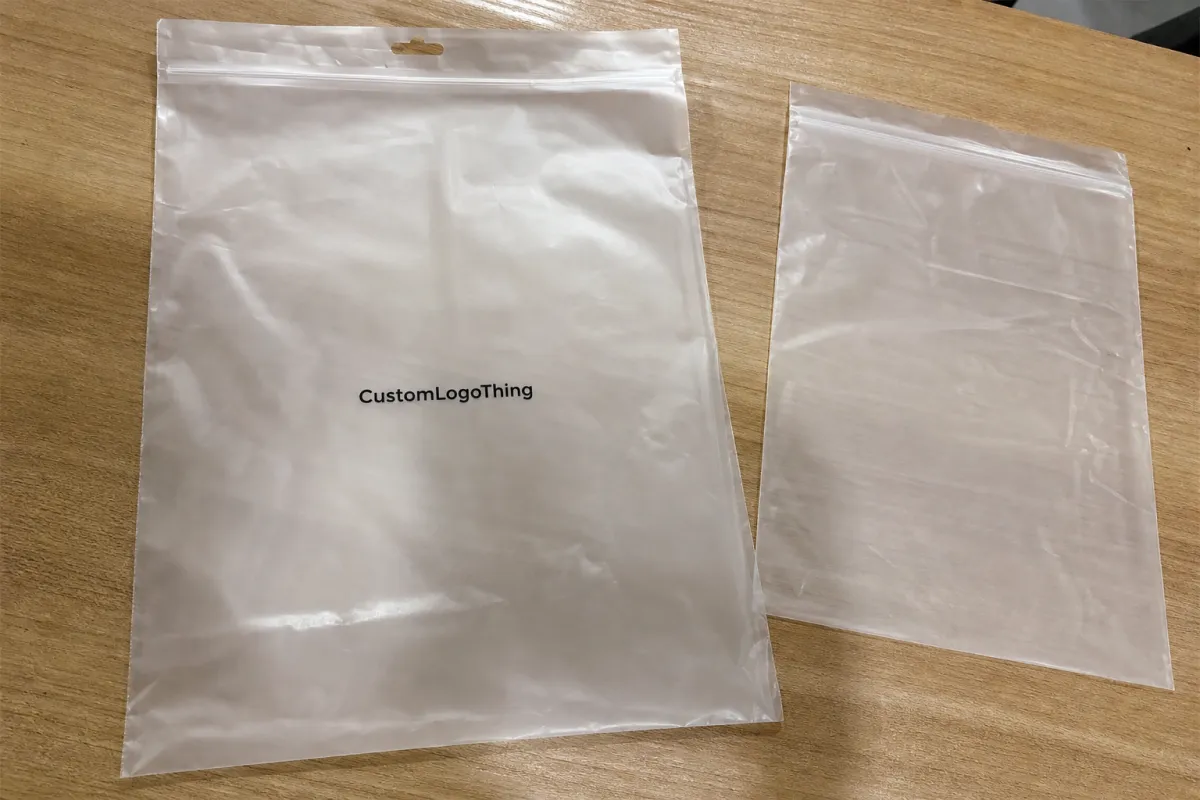
The biggest misses happen when teams approve the artwork and forget the packaging job. An apparel poly bag has to hold a folded garment, protect the finish, survive handling, and still present well at retail. A bag that only looks right on a screen is not approved; it is only visually plausible. The checklist should force the team to test the bag as an object, not as a file.
From a buyer's point of view, the hidden failure points are usually flat width, gusset depth, seal type, opening direction, venting, and hang-hole placement. A flat mockup can be misleading because usable interior volume is always smaller than it appears. That is especially true when the program shifts from tees to fleece, denim, or multi-layer knits. A size that works for one category may fail the next by a margin too small to notice until pack-out.
Another common mistake is treating a PDF, an email thread, or a rendered image as the approval record. Those documents are useful, but they do not show how the film behaves, whether the seal edge catches, or whether the print remains legible after the bag is filled. Physical samples matter because packaging is tactile. The hand of the film, the clarity of the material, and the stiffness at the fold all affect how the bag behaves in real use.
It also helps to separate aesthetic approval from production approval. A merchandising team may like a glossy finish; QA may care more about seal integrity; operations may care about whether the bag opens fast enough for a packing crew. Those are not conflicting goals, but they do need to be reconciled in writing. A Private Label Buyer Apparel Poly bags Sample Approval Checklist gives the buyer a way to keep those priorities in the same document instead of scattered across messages.
The cleanest approval is the one that can be recreated later: same sample, same measurement method, same written record, same signoff.
That may sound procedural, yet procedure is what keeps the order from drifting. Once a private label program starts moving across seasons, sizes, and replenishment cycles, memory becomes a weak control. Documentation is the stronger one.
Film, Seal, and Finish Details That Affect Performance
Film choice shapes more of the final result than many buyers expect. Clear LDPE remains a common option because it balances clarity, softness, and cost. LLDPE usually adds toughness and stretch resistance. CPP can offer a crisper appearance and stronger presentation, though the feel and price profile are different. None of these materials is universally best. The right one depends on whether the program values shelf appearance, puncture resistance, or faster pack-out.
Gauge matters just as much. A lighter film in the 1.25 to 1.5 mil range can reduce cost and look clean for simple apparel packaging. A heavier 1.75 to 2.5 mil structure can hold shape better, resist splitting at the fold, and tolerate more handling. The catch is that two bags with the same size on paper can feel very different once a garment is inside. That is why sample approval should always use the actual product, not an empty shell.
Seal construction deserves equal scrutiny. Bottom seals, side seals, resealable adhesive flaps, perforation lines, and venting all change how the bag performs during packing and after shipment. If the bag is intended for a folded garment that will be unpacked and repacked, the opening needs to behave consistently. If the style includes a hang-hole or header area, check the clearance carefully; a hole placed too close to the seal can weaken the top edge and create avoidable tearing.
Finish is not just a cosmetic choice. Some private label programs want a crystal-clear display. Others need a matte surface, anti-static properties, or a slightly stiffer hand that keeps the garment centered. Print-heavy bags need extra attention here because ink appearance changes with the surface. A deep navy logo may look sharp on one film and flat on another. Always inspect the sample under the same lighting the customer will see, not just under office light.
A practical test helps here. Open the bag repeatedly if it is resealable. Fold and insert the actual garment. Rub the printed panel lightly to see whether the ink marks or dulls. Then apply a bit of compression in the carton format the warehouse will use. Those small checks reveal far more than a single glance.
For teams that want a more formal testing language, groups such as ISTA offer distribution and handling references that can support the buyer's own criteria. Those standards do not replace the checklist. They make it easier to defend the checklist.
Specification Checks for Size, Print, and Pack-Out
A sample only means something when it is compared against a real specification. The buyer should confirm flat width, length, gusset, opening width, and tolerance range before the order moves forward. Small dimensional differences matter. A tee may fit comfortably in a slightly undersized bag, while a sweater or denim style may bind at the gusset or rise too close to the seal.
Print placement needs the same level of discipline. Check logo position, panel orientation, barcode legibility, copy accuracy, and whether the art still reads correctly once the bag is filled. A barcode can scan in proof form and still fail after print gain or a minor shift in placement. Copy errors are even more unforgiving: one missing care line or country-of-origin line can trigger a hold that has nothing to do with the packaging structure itself.
It is smart to inspect the sample in stages. First, review it empty. Then review it with the correct garment. Then inspect the packed unit in the carton. That three-step approach catches different failure points. The empty bag tells you about structure. The filled bag shows whether the dimensions work. The carton shows whether the pack-out is operationally usable.
Pack-out is where many freight and warehouse surprises begin. Confirm inner pack count, bundle configuration, master carton quantity, and pallet pattern. If the bag is packed 100 per bundle and the receiving team expects 200, the labor hit is immediate. If the carton dimensions are even slightly off, freight density and storage efficiency can suffer quickly. A private label buyer apparel poly bags sample approval checklist should include those logistics points before the purchase order is issued.
- Dimensions: flat width, length, gusset, opening, and tolerance band.
- Artwork: logo location, color count, barcode, warning copy, and country-of-origin text.
- Pack-out: bundle count, carton count, carton dimensions, and pallet layers.
- Use case: folded tees, knit tops, denim, sweaters, or mixed-size assortments.
That same checklist logic helps when the apparel bag belongs to a larger packaging family. If the item ships alongside Custom Labels & Tags or inside Custom Poly Mailers, the buyer should confirm that the print tone, handling expectations, and pack format do not clash. Consistency is easier to manage than correction.
Cost, Pricing, MOQ, and Quote Inputs
Pricing for apparel poly bags depends on a small set of variables, but each one moves the number. Size is the obvious one. Film gauge and resin blend are next. Then come print colors, closure style, special finishes, carton configuration, and any extra handling such as a custom hang-hole or vent pattern. A simple clear bag and a fully printed retail bag can sit in entirely different cost bands even when the footprint is similar.
MOQ usually tracks with setup complexity. A stock-style clear bag may support a lower minimum because tooling and press change are limited. A custom printed run with a unique size, multiple colors, or special construction often needs a higher minimum to keep production efficient. Buyers should ask whether the MOQ is tied to one size, one colorway, or one artwork version. That distinction changes the real buying decision far more than the headline number does.
For a fair comparison, every supplier should quote the same inputs. That means the same dimensions, film spec, artwork version, pack count, destination, and approval stage. Otherwise the numbers are not comparable. A sample quote based on an unfinished proof is not the same as a production-ready sample with the correct print plate, carton spec, and pack-out. Buyers often discover that the low quote assumed a simpler structure than the one actually needed.
| Option | Typical Unit Price | Common MOQ | Best For |
|---|---|---|---|
| Stock-style clear apparel bag | $0.04-$0.08 | 1,000-5,000 | Simple folding, low print needs, fast replenishment |
| Custom printed LDPE or LLDPE bag | $0.09-$0.18 | 3,000-10,000 | Private label retail presentation with logo and barcode |
| Heavier gauge or special finish bag | $0.16-$0.30 | 5,000-15,000 | Premium hand feel, extra puncture resistance, specialty display |
Ask for separate line items for sample charges, tooling or plate costs, freight, and unit price. That keeps the landed cost visible. It also prevents the usual trap where a low headline price turns into a more expensive order once revisions, repacking, or extra freight are added later. A cheap quote that creates three extra approval cycles is not cheap.
Process and Timeline: From Sample Request to Signoff
The cleanest process is straightforward: send specs and artwork, receive the sample, inspect it, mark corrections, then issue final approval. The practical problem is that delays creep in when one part of the file set is missing. A color reference without print placement is not enough. A size note without tolerance is not enough. A private label buyer apparel poly bags sample approval checklist helps lock those inputs down before the sample request goes out.
Timelines vary by complexity. A stock sample can move quickly if the size and material already exist. A custom sample takes longer because the artwork, seal structure, and construction may need to be built from scratch. In practice, many buyers see 3 to 7 business days for straightforward sample requests, while more customized development can take 7 to 15 business days before a physical piece is ready for review. Production after approval may then run another 12 to 20 business days, depending on order size and print complexity.
That timeline is only realistic if the buyer gives clear inputs. Artwork should be final or clearly marked as provisional. Color targets should be named, not implied. Carton requirements should be confirmed before the sample stage if warehouse handling matters. Most schedule slips come from avoidable issues such as missing files, unclear pack counts, or slow internal feedback from merchandising, QA, and purchasing.
One approval chain works better than three conflicting ones. Have one person own the final signoff, but route the sample through the teams that actually touch the package. Merchandising sees brand presentation. QA checks spec control. Operations checks pack-out and storage. That structure keeps the record clean and reduces the risk of approving different versions by accident.
Production release should only happen after the sample, the spec sheet, and the written approval all match. If one of those documents disagrees with the others, the order is not really approved yet. The factory can only make what is written, and if the paperwork is vague, the result will be vague too. A tight approval checklist prevents that drift before the press starts running.
Approval Mistakes That Lead to Reorders and Chargebacks
Approving by appearance alone is a quick way to create trouble. A bag may look right on the table and still fail once it is filled because the seal opens too easily, the opening is too tight for the garment, or the hang-hole tears during handling. The approval checklist should require a filled sample, not just an empty one.
Barcode and copy errors are another late-stage problem. A code that scans in proof may become unreadable after print gain, lamination, or a slight shift in panel position. Truncated care text, missing country-of-origin copy, and logos that drift off-center are the kinds of errors that turn into rework. Once cartons ship, those mistakes become chargebacks or retail holds instead of simple corrections.
Version control matters more than most teams admit. If the sample gets annotated by email and then forwarded twice, somebody will eventually approve the wrong revision. Keep one master record with dated notes, revision numbers, and a clear owner. That is not bureaucracy for its own sake. It is how a private label program avoids paying for its own confusion.
Warehouse reality should be checked before signoff. A sample approved in a clean room can still fail once it reaches receiving if the carton pattern does not match the warehouse process. A visually acceptable bag is not automatically a usable production package. The written approval should cover the bag, the carton, and the pack-out together.
There is also the sustainability layer, which now affects more private label programs than it used to. If the team needs to document resin content, recyclability language, or source reduction claims, the supplier should be able to explain the film structure clearly. The EPA's packaging guidance helps frame that discussion without overpromising what a given material can do. EPA packaging guidance is a useful reference point for that internal language.
What a Reliable Poly Bag Supplier Should Provide
A dependable supplier does more than quote a price. They review dimensions, film, print, and pack-out before production starts so the buyer does not have to discover mistakes later. That kind of support saves time because it catches mismatched artwork, unrealistic tolerances, and carton issues while the order is still flexible. A good private label buyer apparel poly bags sample approval checklist is easier to enforce when the supplier understands the process too.
Look for clear communication on sample notes, revision history, and approved records. Those documents matter for repeat orders because private label programs rarely stop at one production run. When the buyer needs the same fit, same print, and same pack-out months later, the record should tell the story without a long search through old email chains. A supplier that keeps that history clean reduces friction on every reorder.
Technical guidance should be practical, not vague. If the film needs to be a little heavier to hold a folded sweater, that should be said plainly. If a closure style creates faster pack-out or fewer returns, that should be explained in concrete terms. If a print layout needs to move a few millimeters so the barcode stays scannable, that is the kind of detail a buyer wants before approval, not after a defect shows up.
Reliable documentation also helps when different packaging components need to align. Buyers managing multiple SKUs often need the same tone of control across labels, tags, mailers, and retail bags. That is one reason procurement teams often keep all such items within the same Custom Packaging Products framework: fewer blind spots, fewer mismatched assumptions.
For buyers who care about paper and fiber content in the broader packaging mix, certification language can matter too. The FSC standard is useful when cartons, inserts, or companion packaging need a documented sourcing story. It does not apply to every poly bag, but it is part of a cleaner procurement conversation when the full package is being reviewed.
The best suppliers behave like process partners. They help protect quality, schedule, and margin by making the approval path more exact and less dependent on guesswork.
Next Steps Before You Release the Order
Before the next quote or revision goes out, gather the final size spec, artwork files, barcode data, pack-out count, and target MOQ in one place. Then run the sample through the checklist line by line. Compare the physical piece against the sheet, not against memory or a thread that has already drifted into six replies. If anything differs, write it down clearly and request a corrected proof or revised sample.
That is the most reliable way to avoid a rushed approval that creates trouble later. Confirm the production timeline, shipping method, and internal signoff owner before the order moves forward. If merchandising wants one finish, QA wants another, and purchasing wants a lower minimum, those needs should be settled before release, not after the cartons are already moving.
If the sample is close but not right, do not settle for partial approval. Ask for the exact correction. The extra day or two now is cheaper than a reprint, a repack, or a chargeback later. A disciplined private label buyer apparel poly bags sample approval checklist keeps the buyer, the supplier, and the warehouse on the same page, which is the real job of private label packaging control.
How do I use a private label buyer apparel poly bags sample approval checklist?
Review the physical sample against the final size, film, print, and pack-out specs line by line. Mark every mismatch in writing, then get signoff from merchandising, QA, and purchasing before production is released.
What should be included in an apparel poly bag sample approval checklist?
Finished dimensions, tolerance band, film gauge, seal style, closure details, artwork placement, barcode readability, copy accuracy, inner pack count, carton pack-out, and any warehouse handling notes.
How can I compare quotes for private label apparel poly bags fairly?
Use the same dimensions, film spec, print colors, and pack configuration for every supplier. Separate sample, tooling, freight, and production costs so the unit price is not misleading.
What affects MOQ for custom apparel poly bags?
Custom sizes, special films, multiple print colors, and added features usually raise the minimum. Stock-style dimensions or simpler print often allow lower quantities, but the exact MOQ still depends on setup and run efficiency.
How long does sample approval usually take for apparel poly bags?
Stock sample reviews can move quickly if the spec is already clear. Custom samples take longer because artwork, size, and construction need to be built and checked, and production starts only after final written approval.

