Private Label Caps small batch custom order programs give brands a practical way to test headwear without locking up cash in inventory that has not proven itself. The real advantage is not just lower risk. Smaller runs expose problems sooner: a crown that sits too tall, a front panel that buckles under embroidery, a color that looks different under retail lighting than it did on screen.
From a packaging buyer’s perspective, that matters. A cap is not a flat item with a logo pasted on top; it is a shaped product with structure, closure hardware, seam placement, and a front panel that either supports the mark or competes with it. For retail tests, ecommerce launches, team merchandise, golf programs, local events, and seasonal drops, a Private Label Caps small batch custom order often gives better launch data than a large blind buy.
Small batches also suit brands that need a fast read on fit and presentation. A run of 48 to 300 units gives enough product to inspect hand feel, photo performance, and decoration quality without stretching the budget beyond what a first test should carry. If the first order is off, the damage is contained. If it is right, the buyer has a cleaner base for scaling.
Private label caps small batch custom order: a low-risk launch path
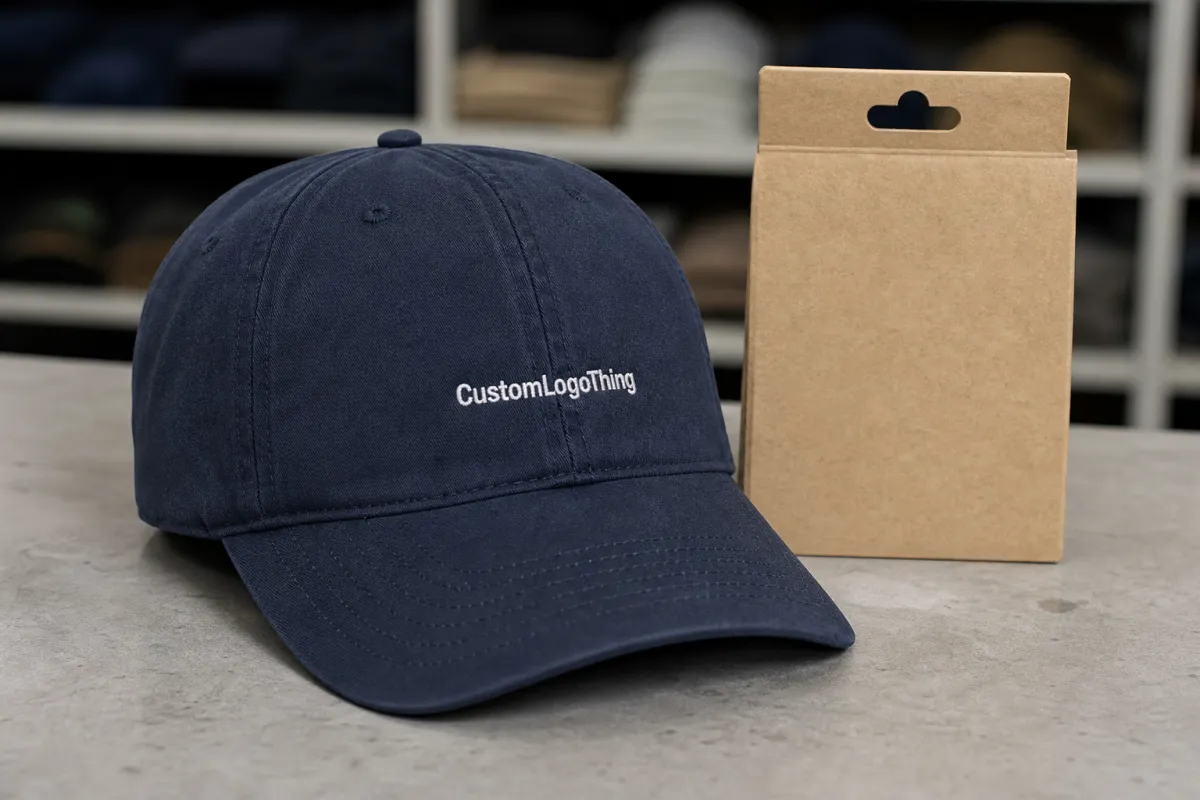
A good Private Label Caps small batch custom order is a risk tool disguised as product development. Cap fit is unforgiving. A front panel that feels stiff in the sample may look perfect at the proof stage and still sit awkwardly on real heads. A logo that clears the artwork review can pucker once stitching compresses the fabric. On a 5,000-piece program, those errors are expensive. On a 100-piece test, they are useful information.
That is why small runs fit brands that need proof before they scale. Retail pilots, pop-up stores, influencer merch, regional promotions, and event giveaways all benefit from seeing an actual finished cap in the wild. Mockups help, but they do not reveal how the cap photographs under overhead lighting, whether the profile reads premium or promotional, or how the closure feels after a day of wear.
Headwear also behaves differently from many other private label products. The silhouette changes the brand story. A structured six-panel cap signals something different than an unstructured dad hat. A trucker style reads more casual and more breathable. A fitted cap pushes toward a sportier, cleaner profile. Even the closure matters; snapback, strapback, and fitted constructions each carry a distinct retail expectation.
The smallest run is often the sharpest test. It shows whether the cap shape, decoration method, and price point belong in the same product line.
That is the point of small batch work: lower exposure, tighter quality control, and a shorter line between concept and finished goods. A buyer can refine the spec, improve the packaging, and scale from a more reliable starting point instead of hoping the first large order happens to be right.
Cap styles, branding methods, and private label finishes
The first decision is the silhouette. Structured six-panel caps remain popular because they hold their shape and give the front logo a predictable surface. Unstructured caps feel softer and more relaxed. Five-panel caps allow wider front graphics. Dad hats, truckers, snapbacks, and strapbacks each bring their own expectations around fit, style, and retail price.
The decoration method should match the cap, not fight it. Flat embroidery is durable, clean, and usually the easiest place to start when the logo is simple and the strokes are strong enough to survive stitching. 3D puff embroidery adds height and works best with bold marks that have enough width to stand up under foam. Woven patches are a strong answer for finer detail. Leather patches and silicone patches create a more premium texture and often read better for lifestyle branding than stitching alone.
Private label work extends beyond the front logo. Interior woven labels, size tabs, hang tags, barcode stickers, and retail folding all affect how the cap presents on shelf or in a fulfillment box. If the goal is a finished product, the cap spec should be planned alongside the packaging spec. That is why many buyers pair headwear with Custom Labels & Tags and, for retail-ready sets, Custom Packaging Products.
A practical split looks like this:
| Cap style | Best branding method | Typical small-batch MOQ | Why buyers choose it |
|---|---|---|---|
| Structured 6-panel snapback | Flat embroidery or woven patch | 48-100 pieces | Holds shape well and supports bold front graphics |
| Unstructured dad hat | Flat embroidery or leather patch | 48-120 pieces | Relaxed feel and an easy lifestyle retail fit |
| 5-panel cap | Patch or embroidery with wider art | 72-150 pieces | Cleaner front panel for horizontal marks and slogans |
| Trucker cap | Patch, embroidery, or mixed decoration | 60-150 pieces | Breathability and a familiar promotional profile |
| Premium retail cap | Leather, silicone, or woven patch plus custom label | 100-300 pieces | More polished shelf impact and stronger private label presentation |
Premium brands usually care about the finishing details most. A label sewn straight, a patch with crisp edges, and a hang tag that matches the rest of the packaging can make a low-volume program feel intentional. Promotional buyers often care more about durability and cost control, so they may skip extra packaging features and focus on a cap that survives shipping, display, and repeated wear.
Small trim choices can change the product more than buyers expect. A contrast underbill print, a clean sweatband, and closure hardware that matches the color story can lift the cap without pushing the unit cost out of range. That balance is central to a private label caps Small Batch Custom order: enough detail to feel branded, not so much that approval drags or repeat orders become too expensive.
Specs that control fit, durability, and logo clarity
Fit starts with a few specs that should never stay vague. Crown height changes how the cap sits. Panel count changes how the logo spans seams. Brim curve changes the visual balance from the front. Closure type affects comfort and also the buyer’s sense of quality. If those details are left open, a sample can look fine in photos and still feel wrong in hand.
Material choice shapes both durability and brand perception. Cotton twill gives a classic feel and works well for casual retail. Brushed cotton feels softer and a bit more refined. Polyester mesh improves breathability in trucker styles, while blends usually hold shape better through repeated wear. The exterior material should also fit the rest of the product story, especially if the order includes branded cartons, mailers, or hang tags.
Logo clarity depends on decoration area and placement. A mark that looks balanced in a vector file can become cramped once it crosses a seam or sits too close to the panel edge. Fine type, narrow strokes, and small icons all need a reality check at cap size. Embroidery has its own limits: lines that are too thin break up, while dense fills can stiffen the front panel more than expected.
Fit checks deserve the same attention as decoration checks. Ask for the head circumference range, the closure range, and the intended wear profile: relaxed, snug, or firm. A useful sample tells the truth about the finished run. If the target customer needs a roomy retail fit, that should be written into the spec rather than left to interpretation.
For packed goods, some teams reference ISTA test methods to judge whether caps and cartons will hold their shape through shipping. If paper hang tags, cartons, or inserts are part of the order, FSC-linked materials can support a more responsible packaging story without changing the cap itself.
Those details are what keep a private label caps Small Batch Custom order consistent from sample to final carton. Measurable specs lower the odds of rework, returns, and unpleasant surprises after production is already underway.
Pricing, MOQ, and unit cost for small batch caps
The pricing logic behind a private label caps Small Batch Custom order becomes clearer once it is split into parts. There is the base cap, the decoration method, the number of decorated areas, the complexity of labels or patches, and any packaging requirement. That is the only honest way to compare quotes. A low headline price can turn expensive once the order includes interior labels, a second decoration location, or printed cartons.
MOQ usually follows the construction. Standard bases and simple embroidery support lower minimums. Add specialty patches, custom woven labels, multiple colorways, or premium hardware, and the minimum rises because each added step carries its own labor and material cost. That is normal. A supplier quoting very low on a complex build is probably assuming away a few costs that will reappear later.
Ballpark pricing for small batch programs, assuming one main decoration location and standard materials, tends to look like this:
| Order type | Typical unit cost at 100 pcs | Typical unit cost at 300 pcs | What affects price most |
|---|---|---|---|
| Simple embroidered cap | $4.50-$7.50 | $3.20-$5.80 | Stitch count, base cap, and thread color count |
| Patch cap | $5.25-$9.00 | $3.80-$6.75 | Patch material, edge finish, and application method |
| Private label retail build | $6.50-$11.00 | $4.75-$8.25 | Interior labels, hang tags, and packaging design |
The goal of a small batch is not the lowest possible unit price. It is controlled exposure. A buyer can test one style, read the response, and then adjust quantity, finish, and packaging before a larger run. That is why smaller orders often make sense for first launches, even when the per-unit cost is higher than a bigger program.
To get a useful quote quickly, send the supplier the quantity, cap style, color choice, logo file, decoration placement, packaging needs, and target delivery date. If the order includes branded packaging or printed cartons for retail distribution, say so early. Packaging requirements can change the production plan and the final cost in ways that catch buyers off guard when they ask for cap pricing alone.
For broader launches, the smartest quote request covers the cap and the related packaging items together. That gives a more realistic view of the total program budget, which is usually where the real decision-making happens.
Process and turnaround from proof to packed cartons
The production path should be easy to follow. Choose the base cap style. Confirm the decoration method. Send the artwork. Review the proof. Approve a sample if the build is unusual. Then release production. After that comes cutting, sewing, panel assembly, embellishment, trimming, inspection, and final packing. If a supplier cannot describe that sequence clearly, the order carries more risk than it should.
For a private label caps small batch custom order, the timeline depends on stock availability and on how many variables still need approval. A stocked cap with a simple embroidered logo may move in about 12-15 business days after proof approval. Add custom labels, mixed colors, or premium packaging, and the schedule often stretches because each extra detail adds a sourcing step or a review cycle.
Artwork revisions can slow things down too. Vector files make production easier because they hold shape cleanly at embroidery or patch size. If the logo needs cleanup, sizing adjustments, or color matching, give that work enough time before production starts. A rushed proof can lead to a cap that is technically correct but visually off.
Packaging choices influence timing more than many buyers expect. Folding the cap a certain way, inserting it into a retail box, or pairing it with custom printed cartons changes the labor flow and the carton count. If the product will be sold online or through retail shelves, package branding should be decided at the same time as the cap spec, not after the caps are already moving through production.
Inspection should be more than a quick glance. Good teams check stitch density, logo centering, panel alignment, trims, thread ends, and closure condition. That is the cheapest point to catch mistakes. Once cartons are sealed, every issue takes longer and costs more to fix.
What a dependable private label cap supplier should handle
A dependable supplier does more than accept the order. They check whether the artwork fits the decoration area, whether the logo contains details that will fail at cap size, and whether the packaging request matches the product structure. That review step prevents a lot of future trouble.
Communication matters just as much on small runs as it does on large ones. Buyers need proof updates that are clear, realistic lead times, and direct answers about what can still change without affecting the schedule. Vague reassurance creates problems for launch timing and for the downstream packaging and fulfillment plan. In private label work, the cap often has to align with retail packaging, shelf display, and wholesale expectations at the same time.
Quality control should show up in the details. Thread color should match the approved reference. Patches should sit straight. Logos should stay centered rather than drifting a few millimeters from piece to piece. Interior labels should be attached cleanly. If the order includes inserts or branded mailers, the packout should arrive ready for resale or distribution, not requiring extra handwork before it can ship again.
The biggest risk is rarely decoration alone. Inconsistent fit, trim quality, packaging accuracy, and label placement can undermine an otherwise good cap run.
For launch work, the right partner helps reduce rework, missed ship dates, and uneven product presentation. That is what makes a private label caps small batch custom order worth handling carefully. It protects the brand before the order scales.
Next steps for placing a small batch cap order
Before asking for a quote, gather the target quantity, preferred cap style, color options, logo files, branding placement, and packaging requirements. If the brand has a deadline, include it. If the cap needs to match a box, tag, or mailer, include those specs too. The more complete the request, the more useful the first pricing conversation will be.
Then narrow the options. Pick one core silhouette, one main decoration method, and one backup colorway. That usually gets a faster answer than asking for six versions at once. If the brand needs subtle private label identity, one interior label detail and one outer decoration feature often do more work than stacking every option into the same first run.
Review the proof with care. Check thread color, patch color, logo placement, and fit notes. Confirm whether the cap should feel relaxed, structured, or low profile. If a sample is available, use it to check how the product actually sits on the head and whether it presents well in photos and packaging.
For broader launch planning, the cap, labels, cartons, and mailers should be considered together. The stronger the relationship between the product and the package, the more coherent the final presentation tends to feel. That is especially true for small batch headwear, where every visible detail carries extra weight.
For a private label caps small batch custom order, the cleanest path is usually the simplest one: lock the spec, approve the proof, and keep the first run tight enough to learn from. Small batches are most valuable when they reveal what the market will actually accept.
FAQ
What is the typical MOQ for a small batch private label cap order?
MOQ depends on the cap style, decoration method, and whether the base cap is stocked or custom-built. Simple embroidered caps usually support lower minimums than patch-heavy or fully custom builds. If the order includes mixed colors or private label packaging, the minimum usually rises because each variation adds setup time.
Can I mix colors in one private label caps small batch custom order?
Yes, but each color often counts toward the minimum and can affect unit cost. The cleanest approach is to keep the run to one to three colors unless the order size is large enough to support more variation. Mixed colors work best when the same cap style, decoration, and packaging are used across all units.
What artwork files do you need for a custom cap quote?
Vector files such as AI, EPS, or PDF are best because they hold shape cleanly at embroidery or patch size. If vector art is not available, a high-resolution PNG can work for review, though it may need cleanup before production. Include logo placement, color references, and any Pantone targets if color matching matters.
Which branding method works best for private label caps?
Flat embroidery is a strong choice for simple logos that need durability and a clean retail look. Patches work well when the design needs texture, a premium feel, or sharper detail than stitching alone can deliver. Interior labels and woven tabs are useful when the brand wants subtle private label identity beyond the front logo.
How long does turnaround usually take for a small batch cap order?
Turnaround depends on stock, proof approval, decoration complexity, and whether the order needs custom packaging. Small runs often move faster when the cap style is standard and the artwork is approved without revisions. The safest timeline includes proof review, production, inspection, and packing before the delivery deadline.


