Private Label Caps small batch custom order quotes usually look more reasonable once the structure of the order is clear. The blank cap body is rarely the real cost driver. Setup, decoration, labels, packaging, and the number of decisions a factory has to manage tend to move the price more than the fabric itself. For a new brand, a retail test, a team order, or a limited merch release, a smaller run protects cash while still delivering a product that feels intentional.
That matters because headwear gets judged fast. If the crown sits awkwardly, the embroidery is too tall, or the closure feels flimsy, buyers notice before they read the hangtag. A focused private label caps Small Batch Custom Order gives you room to validate fit, color, logo placement, and sell-through before you tie up inventory in a larger run.
The best first order is not the most ambitious one. It is the clearest one. You want a cap style that fits the audience, decoration that matches the price point, and a production plan that gets you from artwork to shipment without surprises. That means practical choices, not padded specifications.
Why a small-batch private label cap order often saves the first launch
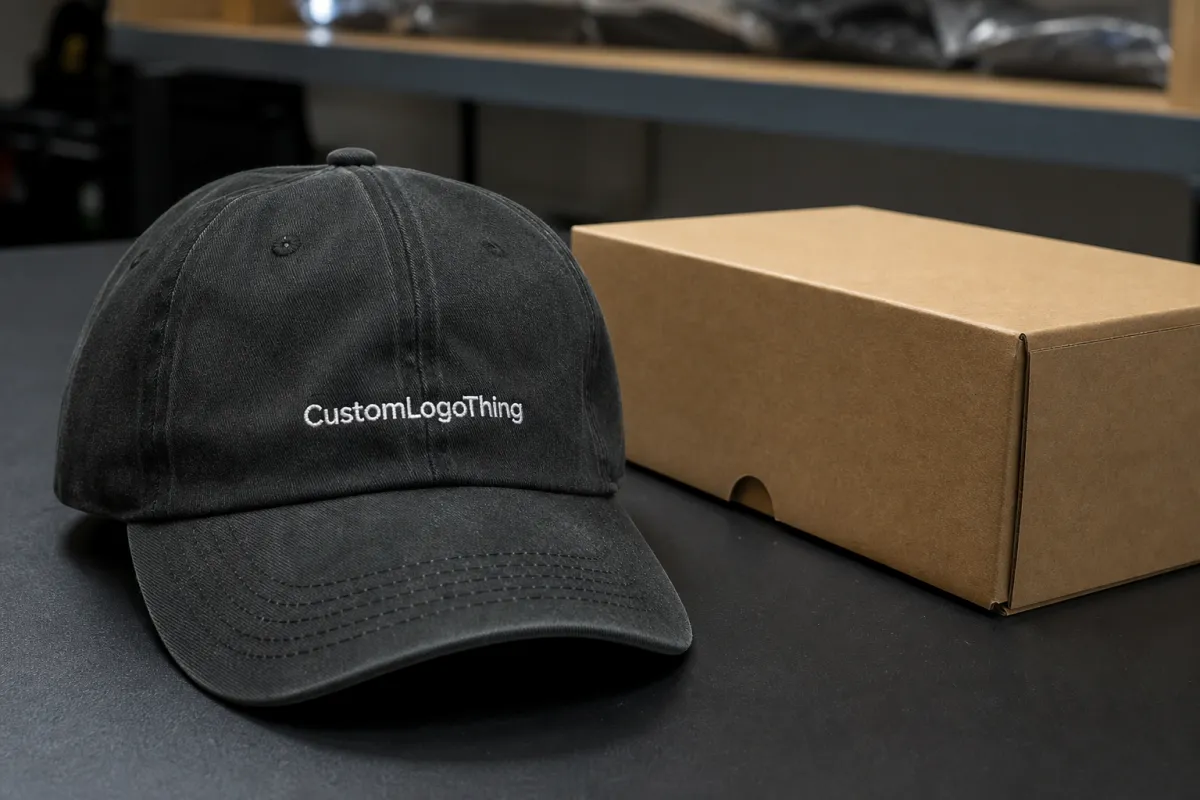
A first launch usually runs into one of two problems: the product is too expensive to buy in useful volume, or it is too generic to feel like a real brand. A Private Label Caps small batch custom order helps with both. You keep the initial commitment modest, but still add enough branding to make the cap look retail-ready rather than promotional.
That logic is familiar in packaging and product presentation. You do not overbuild the first run. You build just enough finish to support the price you want to charge. In headwear, that often means a clean cap body, one strong logo location, and one or two private label details like an inside label, a woven tag, or a printed seam tape element.
Small-batch ordering also gives a more honest read on demand. If a 200-piece drop moves quickly, you can repeat it with confidence. If a 500-piece run slows down, you still have space to adjust the color, closure, or logo size before scaling. That is a better position than guessing on a large run and hoping the market agrees.
For retail tests and event merchandising, this approach protects budget in a direct way. You are not paying to store cartons that may never move. You are paying for enough finished product to test the market, collect feedback, and decide whether the cap deserves a replenishment order.
One detail buyers sometimes miss: caps are simple to wear, but not simple to quote if the spec is vague. A factory can price a standard 6-panel cotton twill cap with embroidery very differently from a fully custom build with patch decoration, custom inside labels, and special packaging. A reliable Private Label Caps small batch custom order starts with a limited spec, not a wish list.
“A small first run is not a compromise if the spec is tight. It is often the smartest way to prove the product before buying it in volume.”
Cap styles, materials, and decoration choices that work in small runs
Start with the silhouette. Most buyers narrow the field to five familiar types: structured 6-panel caps, unstructured dad caps, 5-panel caps, snapbacks, and trucker styles. Structured caps hold shape well and usually present embroidery cleanly. Unstructured caps feel softer and more relaxed, which often suits lifestyle brands. 5-panel caps have a flatter front panel and lean modern. Trucker caps use mesh backs that help airflow in heat, but the look is specific enough that they do not fit every brand.
Material choice changes the hand feel and the cost. Cotton twill is still the easiest starting point for a private label caps Small Batch Custom order because it cuts and sews predictably and accepts embroidery well. Brushed cotton feels a little softer and can support a more premium position. Polyester blends and performance fabrics are better for activewear or outdoor use because they dry faster and hold up under sweat and sun. Mesh backs solve heat problems, but they also change the product’s visual language.
Decoration is where many first-time buyers overcomplicate the order. The easiest small-batch methods to produce cleanly are flat embroidery, 3D puff embroidery on select designs, woven patches, merrowed patches, and printed patches. Flat embroidery is usually the safest starting point because it is readable, direct, and easy to repeat. Patches can work well if the artwork needs more detail, but they add another material decision and another production step.
For most private label caps, one focal point is enough. A front logo with an inside label, or a front patch with a small side hit, usually feels more polished than branding every panel. That discipline helps control labor, improves consistency, and makes the style easier to reorder later.
- Best for simple branding: structured 6-panel cap with flat embroidery
- Best for relaxed retail style: unstructured dad cap with woven label
- Best for streetwear or drops: 5-panel cap with patch decoration
- Best for heat and sports use: performance fabric or trucker construction
If the launch includes retail packaging, hangtags, or carton labeling, think of the cap as part of a larger presentation system rather than a single item. The cap itself may be simple, but the way it is packed can carry a lot of perceived value. For related finishing components, see Custom Labels & Tags and Custom Packaging Products.
Specs that matter before you approve a private label cap order
A private label caps Small Batch Custom order should never move forward on logo art alone. The quote is only accurate when the full construction is defined. That includes crown shape, panel count, brim curve, closure type, sweatband construction, stitch density, logo size, and the exact placement of the brand mark.
Fit is a bigger issue than many buyers expect. A low-profile crown and a deeper athletic crown wear very differently, even if the front decoration is identical. Closure style matters too. Snapbacks, metal buckles, strapbacks, and Velcro closures all change how the cap feels on the head and how it presents in retail packaging. If the first run is for a broad audience, that comfort detail can affect returns and repeat orders.
Inside branding is another area worth getting right. Woven labels, printed labels, size stickers, care labels, and seam taping help the product feel finished. They also make the cap easier to place alongside other branded packaging elements. A buyer planning a broader launch should treat the cap and the carton or insert as one coordinated presentation, not two separate jobs.
Artwork should be approved carefully. For embroidery, thread color is never identical to a Pantone chip, so the goal is a controlled match, not a perfect one. For printed patches or labels, send vector files and clear color references instead of screenshots or compressed images. If you have a prior production sample, use it. It gives the quoting team a practical benchmark for size and placement.
For paper-based components like inserts, tags, or carton sleeves, sustainable sourcing can matter. If that is part of the brand standard, look at FSC guidance for responsibly sourced material selection at FSC. For shipping cartons and distribution handling, ISTA testing guidance is useful when the order includes retail-ready packout or broader freight movement.
Clear specs do two things at once: they reduce quoting errors and they reduce production arguments later. The fewer assumptions a factory has to make, the more useful the quote becomes.
Pricing and MOQ for small-batch cap orders
MOQ is not one fixed number. It changes with the cap style, decoration method, and whether the factory is building from standard blanks or custom components. A simple embroidered cap with standard materials can support a lower minimum than a cap with custom panels, special closures, or multiple private label details. That is why two quotes for what sounds like the same item can look very different.
Most buyers get better value by keeping the body simple and spending the budget on the logo and finish. That usually means one cap style, limited color changes, and one decoration plan. Extra patches, multiple embroidery locations, custom hangtags, individual polybags, and special labels all raise the total, even if each item seems minor on its own.
Below is a useful planning range for a private label caps Small Batch Custom order. These are working estimates, not promises, and they move with quantity, artwork complexity, and packaging requirements.
| Cap option | Typical MOQ feel | Approx. unit price | Best use case |
|---|---|---|---|
| Structured 6-panel with flat embroidery | Lowest practical threshold | $3.80-$6.20 | Retail test, team program, simple brand launch |
| Dad cap with woven inside label | Moderate | $4.20-$6.90 | Lifestyle brand, softer premium feel |
| 5-panel with printed or woven patch | Moderate to higher | $4.50-$7.80 | Streetwear drop, limited merch release |
| Trucker cap with mesh back and patch | Moderate | $4.40-$7.50 | Outdoor, event, summer retail |
| Fully custom body with special trim | Highest | $7.50-$12.00+ | Premium launch, highly branded program |
If a supplier gives one flat number without explaining what is included, ask for the line items. Sampling, setup, decoration, label application, carton packing, and freight readiness should all be visible somewhere in the quote. That is the only way to compare suppliers fairly.
For most launches, the most cost-controlled private label caps small batch custom order is also the cleanest brand decision: one cap body, one main logo location, one inside label, and no unnecessary extras in the first run. Complexity can wait until the style proves itself.
Process and lead time from artwork to shipment
The production path is straightforward, but each step depends on buyer response. A private label caps small batch custom order usually moves through request and quote, artwork review, spec confirmation, sample or proof approval, material prep, decoration, final inspection, packout, and shipment. The schedule stays manageable when each handoff is clear.
Artwork review is usually the first point where a project gains or loses time. Vector files save time. Clear color references save time. So do accurate logo dimensions and a simple note about placement. If a cap needs special labeling or packaging, that should be stated early, because those additions can change the work order and the packing sequence.
Proof approval is not the same as full production approval. A proof confirms placement, size, and construction intent. It does not always show every final behavior of the cap after production. That is why a careful supplier still inspects decoration quality, measures stitch consistency, and verifies the finished piece before shipment. Buyers sometimes rush this stage and ask for changes after materials have already been cut. That is where delays start.
Lead time depends on order complexity and the speed of feedback. Simple small-batch headwear can move relatively quickly once approved, but late changes to logo size, cap color, label instructions, or packaging add days. Peak season load matters too. A factory with a full calendar will not move a custom order as quickly as one with spare capacity, so realistic planning matters more than optimistic planning.
Shipping expectations should include carton packout and transit planning, especially if the caps are part of a broader retail packaging program. If cartons need printed markings, if units need bagging, or if a retailer has strict carton quantity requirements, those details belong in the schedule from the start. A small order can still run late if finishing is treated as an afterthought.
In a typical approved flow, a buyer may spend a few days refining the artwork, then confirm the proof, then see production and finishing move within a short window. The key is keeping decisions tight. Fast replies and a clean spec sheet often shorten the schedule more than any promise of rush service.
There is also a quality-control side that gets overlooked. A useful QC check on caps is not glamorous, but it is specific: measure crown depth against the approved sample, check that the brim curve is consistent across the run, confirm logo placement from seam to seam, inspect thread tension on embroidery, and verify that labels are centered rather than drifting into the side seam. On small runs, those details matter because there is less room to absorb waste.
What to check before placing the order
Before placing the order, qualify the supplier like a buyer who expects to reorder. Ask whether they can handle private label labels, whether they can show similar samples, what the smallest workable run is, how they handle defects, and what shipping options are available. A supplier who answers those questions directly is usually easier to work with than one that only talks about price.
Then separate the project into parts. Choose one cap style. Send vector artwork. Select quantity and colorway. Confirm branding locations. Ask for a line-item quote that separates product, decoration, and freight-related costs. If the order includes cartons, hangtags, or inserts, mention those too. The more the quote reflects the actual build, the fewer surprises appear later.
For many brands, the first run should be built on a repeatable base style. That makes replenishment easier and keeps the private label presentation aligned across launches. A consistent cap body also helps merchandising because the fit and appearance stay familiar from one drop to the next. That matters whether the product is sold through retail, wholesale, or direct-to-consumer channels.
It also helps to think ahead about the rest of the program. If this cap is part of a larger line, the same artwork and finish logic may apply to hangtags, bags, boxes, or insert cards. The launch does not need every component on day one, but the choices should not fight each other.
For buyers who want a practical next step, gather three things before asking for a quote: the spec sheet, the logo file, and the target ship date. Once those are in hand, the conversation gets easier, the quote becomes more accurate, and the order has a better chance of arriving on time and looking right the first time.
What is a realistic MOQ for private label caps in a small batch custom order?
MOQ depends on cap style and decoration method, but small-batch orders are often built around standard bodies and limited colorways rather than fully custom construction. A lower MOQ is easier when the cap uses simple materials and one primary logo placement, while custom labels, special patches, or multiple artwork locations can raise the minimum.
Which cap styles are best for a small batch private label order?
Structured 5-panel and 6-panel caps, dad caps, and snapbacks are common starting points because they are familiar to buyers and easier to price clearly. The best style is usually the one that matches your audience and lets you keep the first production run simple, repeatable, and easy to reorder.
Can I add inside labels to private label caps with a small order?
Yes, many small runs can include woven labels, printed labels, or other inside-branding details if the supplier supports that construction. The key is to confirm the label method early, because some applications are easier to add during decoration than after the cap is fully assembled.
How do embroidery and patch decoration change the price of small batch caps?
Embroidery pricing usually rises with stitch count, thread color changes, and coverage area, while patch pricing is affected by patch type, border style, and attachment method. If cost is the priority, one clean logo placement is usually more efficient than stacking multiple decorative elements on the same cap.
What files do you need for a private label caps small batch custom order quote?
Send a vector logo file, your target quantity, preferred cap style, color direction, decoration method, and any inside-label or packaging requirements. If you have a sample reference or previous production spec, include it, because that gives the quoting team a more accurate starting point.


