Private Label Cuffed beanies rarely price off the cap alone. Quantity, yarn, decoration, labels, packaging, freight, and sample approvals all affect the final number. Buyers who understand those variables can compare quotes faster and avoid paying for options that do not change the product in a useful way.
For sports teams, cuffed beanies are an efficient winter item because they are one-size, easy to decorate, and simple to store. They also photograph well on the cuff, which makes them useful for sideline wear, campus shops, and fan programs where presentation matters almost as much as cost.
Why Team Beanies Beat Generic Winter Merch
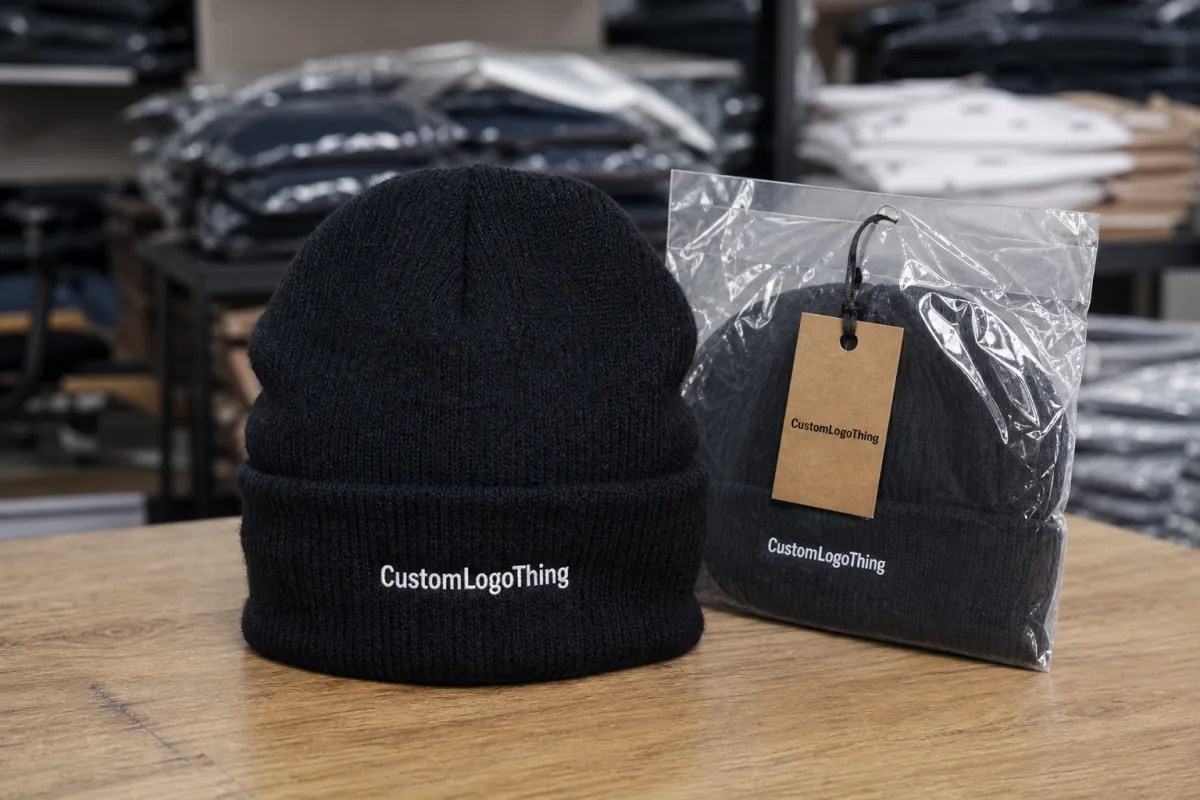
Beanies usually beat bulkier winter items on the balance of cost, size simplicity, and visibility. Scarves use more material and jacket-style items bring more sizing risk. A cuffed beanie sits in the middle: low enough in cost to move in volume, but visible enough to feel like real merchandise.
One-size construction is a major advantage for schools, clubs, and athletic programs. It reduces size runs, lowers order complexity, and leaves less dead stock after the season. For buyers, that means fewer line items and a cleaner reorder process later.
They are also easier to control in production. If a logo is too dense for embroidery, that can be adjusted before bulk production. If the crown depth or cuff height is off, sample approval can catch it without turning the issue into a multi-size exchange problem.
Cheapest is not always best. A slightly higher unit price can still be the better buy if the beanie sells through faster, reorders cleanly, and presents well in photos and on a retail shelf. The real metric is often landed cost versus sell-through, not unit price alone.
"A team beanie works best when the decoration is readable from a distance and the base blank stays consistent from one run to the next. That is what keeps it useful as both merch and uniform-adjacent gear."
What Private Label Cuffed Beanies Include
Private label means the item is built around the buyer's brand instead of being sold as a generic blank. A program may include woven labels, hangtags, retail bags, inserts, or side tabs. Those details affect how the beanie is received in a team store or fundraising drop, not just how it looks on a spec sheet.
A cuffed beanie has three main parts: crown, body, and folded brim. The cuff is the most valuable branding area because it gives the logo a stable panel. In most programs, cuff height lands around 2.5 to 3.5 inches, though knit density and logo size can shift that.
Decoration choices should follow the artwork. Embroidery is the usual choice for simple school marks or mascots. Woven patches work better when the logo needs more detail or a cleaner retail look. Leather and silicone patches add texture, while woven labels or side tabs keep the front minimal.
Packaging also changes the perception of value. A beanie in a plain bag reads like stock apparel. The same beanie with a branded hangtag, folded insert, and correct label placement reads like planned merchandise. That difference matters for booster clubs, campus shops, and resale programs that need margin.
For buyers who need repeatable assortment support, a vendor with established Wholesale Programs is easier to work with than a one-off decorator. Mixed quantities, restocks, and consistent branding are simpler when the files, placements, and packaging notes are already documented.
Fabric, Fit, and Decoration Specs That Change the Order
Fabric choice affects comfort, price, and how the finished piece reads. Standard acrylic is the most common starting point because it is warm, lightweight, and stable in cost. Recycled acrylic can support sustainability goals without changing the silhouette much. Wool blends usually cost more but often feel more premium and hold shape better in cold conditions.
Knit gauge matters more than many buyers expect. A tighter knit gives embroidery a cleaner base because the stitches sit on a more controlled surface. A looser knit feels softer, but the front can distort if the decoration is too large or too dense. Ask for stitch-count guidance before artwork is finalized.
Fit is about more than stretch. Crown depth, cuff depth, and recovery all affect how the beanie sits on the head and where the logo lands in photos. A beanie that looks right flat on a table can ride too high once worn, so sample approval should confirm actual wear, not only a mockup.
The decoration method should match the artwork and the budget. Embroidery is usually the best value for simple logos with one to three thread colors. Woven patches or leather patches cost more, but they can look stronger on retail shelves. Labels are quieter and better for a premium or understated identity.
Color control deserves attention. PMS references help, but yarn, thread, and patch materials do not always match perfectly. If the brand is strict about color, ask for yarn swatches, thread references, and photo approval before the order moves forward. That is especially important when the cuff and crown use different colors.
Material and packaging claims should be checked before they are printed on inserts or hangtags. If recycled content is part of the pitch, the supplier should be able to provide documentation. For transit-sensitive shipments, ISTA guidance is useful for packaging expectations, and FSC is a practical reference for paper-based inserts and tags.
| Build Type | Typical MOQ | Relative Unit Cost | Typical Use |
|---|---|---|---|
| Stock acrylic + embroidery | 100-250 pcs | $ | Fast-turn team stores and budget fan merch |
| Stock body + woven patch or label | 150-300 pcs | $$ | Retail-style presentation with moderate setup |
| Custom label + hangtag + embroidery | 250-500 pcs | $$$ | Booster drops, campus shops, and branded resale |
| Fully private label package | 500+ pcs | $$$$ | Programs that need repeatable retail consistency |
Private Label Cuffed Beanies Wholesale Pricing for Sports Teams: MOQ and Unit Cost Breakpoints
Quantity is the first pricing lever, but it is not the only one. Blank style, yarn type, decoration method, label count, packaging level, and pre-shipment handling all move the number. A simple acrylic beanie with one-color embroidery will not price like a custom knit with a woven patch, branded label, and insert card.
For a practical range, a straightforward acrylic cuffed beanie with one-color embroidery may land around $4.50 to $6.50 per unit at 250 pieces, depending on logo size and stitch count. Add a woven patch, branded label, and retail bag, and the same program can move into the $6.75 to $9.25 range. If the yarn changes to recycled acrylic or a wool blend, the unit cost usually rises again.
Those ranges are only useful when they include the rest of the order. Sample charges, digitizing, freight, and rush premiums can change the final number more than a small unit-price difference. A quote that looks cheaper at first can become more expensive once shipping and approval timing are included.
MOQ usually rises as the build becomes more custom. A stock-style program can stay lower because the supplier is not building a unique knit from scratch. Fully private label orders need more volume because labels, packaging, and color coordination create more setup work. The cleanest quote should show tiers at 100, 250, 500, and 1,000 units so the buyer can see where the breakpoints actually are.
Decoration method also affects labor and rejection risk. A logo that is too detailed for embroidery may look fine in a mockup and weak on the finished beanie. In that case, a patch or label can protect both appearance and margin better than forcing thread to carry too much detail.
For sports teams sourcing private label cuffed Beanies Wholesale Pricing for Sports teams, the strongest quote request is the one with the fewest assumptions. Quantity, logo file, target color, delivery date, and ship-to ZIP code give the supplier enough information to build a real starting number instead of a guess.
Production Steps and Timeline From Artwork to Delivery
The approval path should be predictable. Artwork intake comes first, then spec confirmation, then a digital mockup or photo proof, then final sign-off. Production should not begin until those points are closed. If a supplier is promising speed without a proof stage, that usually means risk is being pushed downstream.
Stock-blank runs move faster because the body already exists. The supplier is adding decoration and packaging, not knitting a new product. Fully custom knit orders take longer because the body has to be built to spec, and custom inserts or labels add another step. That difference matters most for seasonal launches, where a missed cold-weather window can hurt sell-through.
A realistic lead time for a stock-based private label cuffed beanie is often 12 to 15 business days after proof approval, plus freight time. More custom builds can take longer, especially if packaging is customized or multiple logo placements are involved. Rush service can work, but only if artwork, colors, and counts are already locked.
Most delays happen in three places: unclear art, slow approvals, and missing shipping details. That is less a manufacturing issue than an information issue. The faster the buyer answers the basic questions, the faster the order moves.
Shipping structure should also be defined early. Team stores, booster clubs, and school programs often need split deliveries. If that is not discussed in advance, freight can jump and the packing plan can get messy. Shipment instructions belong in the spec, not in the last email before production.
How We Keep Sports Team Reorders Consistent
Consistency is where many suppliers quietly miss. A team may like the first run, then see the second run arrive with a slightly different yarn tone, a different cuff depth, or a patch placed a few millimeters off center. Those changes are avoidable if the spec is documented carefully.
The fix is recordkeeping. Save the artwork files, stitch count, label dimensions, placement notes, color references, and packaging details so the next order starts from the same baseline. Reorders go smoother when the original blank, decoration method, and label setup are repeated instead of substituted.
Small changes matter more than buyers expect. If the first run used a woven patch at 2.25 inches wide, switching to 2.5 inches sounds minor on paper. On the finished beanie, it can alter the balance of the front panel. That is how brand inconsistency creeps in.
Quality control should be visible, not implied. Check cuff height, logo placement, thread tension, and packaging finish before shipment. A small placement issue across 500 units becomes expensive quickly. A disciplined QC process protects the current shipment and the next reorder.
The strongest private label programs act like retail programs rather than one-off merch buys. They keep the same spec language, the same color references, and the same packaging logic from season to season. That is the most reliable way to keep pricing predictable instead of renegotiating every fall.
Next Steps for an Accurate Team Quote
Start with five details: target quantity, logo file, preferred color, required delivery date, and shipping ZIP code. That is enough for a supplier to build a real quote instead of a rough estimate. If the logo is still being finalized, send the closest version and say what remains open.
Decide the branding level before asking for pricing. Embroidery, patch, woven label, and packaging insert each move the number differently. If the look is still under discussion, request tiered options so the cost of each presentation level can be compared side by side.
Ask for sample cost and quantity breakpoints in the same conversation. One price at one quantity is not enough for a buying decision, especially for a team store or resale program. The useful information is where the per-unit price starts to fall and how far it drops at the next tier.
For buyers comparing private label cuffed Beanies Wholesale Pricing for Sports teams, the best quote is usually the one with the fewest surprises: fixed spec, clear art, clear freight, and clear packaging. If those pieces are settled early, the order can move on time and stay within budget.
What is the usual MOQ for private label cuffed beanies for sports teams?
Many programs start around 100 to 250 pieces, but the real MOQ depends on decoration, label setup, and how many colorways are involved. Simpler builds usually allow lower entry quantities. Fully custom labels, patches, or packaging can raise the minimum, so a tiered quote is the best way to see the actual breakpoints.
How do embroidery and patches affect wholesale pricing on team beanies?
Embroidery is usually the lowest-cost branding method for simple logos with fewer thread colors. Woven, leather, or silicone patches typically cost more but can create a cleaner retail look and stronger perceived value. The more complex the decoration, the more likely setup and labor will move the unit price upward.
How fast can private label cuffed beanies be produced for a team deadline?
Stock-based orders with straightforward decoration can move faster than fully custom knit programs. Approval speed matters just as much as production speed; delayed artwork, color changes, and missing shipping details are the most common reasons timelines slip. If the delivery date is fixed, ask for a realistic lead time plus freight before approving the order.
Can one order mix different team colors or player groups?
Yes, but mixed colorways usually need separate minimums and may create different pricing tiers. The cleanest setup is one shared blank with the same decoration, then dividing the order by color or destination as needed. If the logo stays the same, ask whether the vendor can keep setup consistent across variations.
What should I send to get an accurate quote for private label cuffed beanies wholesale pricing for sports teams?
Send the logo file, quantity, preferred decoration, brand colors, delivery date, and shipping ZIP code. Include any packaging or hangtag requirements early, because presentation changes can affect both cost and production time. If you want the fastest answer, ask for unit price at multiple quantities and state whether the order is for resale or direct team distribution.


