A cap has very little workable space, so the best result is usually the clearest one. If you are asking for a Private Label Caps logo print quote, start with the cap style, decoration method, and imprint area, not just the logo file. Those details drive cost, proofing, and whether the art fits without distortion.
Clear specs also make the order easier to compare. When the supplier knows the panel shape, fabric, closure, and packaging requirements up front, the quote is tighter and the sample stage moves faster. Missing information creates assumptions, and assumptions create delays.
Why a simple cap logo often sells better than a busy one
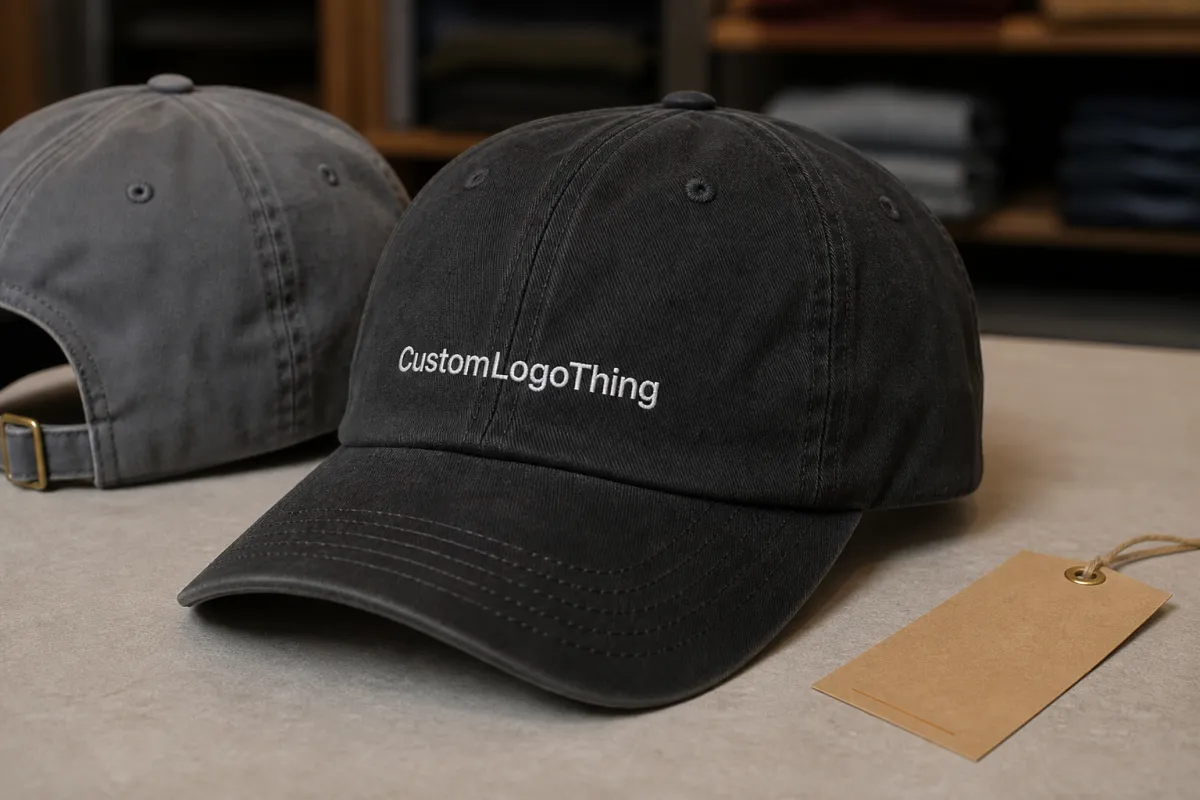
Caps are small-format products. A logo that looks balanced on a screen can fall apart once it is reduced to about 2.5 to 3.5 inches wide. Simple marks usually read better from a distance, sit more cleanly on the crown, and feel more premium because buyers can identify them quickly.
Printing is often the better choice when the art includes tiny text, thin lines, or fine detail. Direct print or transfer keeps those elements sharper than embroidery on many cap styles, especially low-profile six-panels and structured dad hats where the front panel should stay smooth. If the logo depends on micro type, stitches can turn it into texture.
Private-label headwear is not only decoration. The cap is the product presentation, so placement, scale, and contrast matter as much as the logo itself. A strong one-color mark on a clean cap often performs better than a busy multi-color graphic that is hard to read at a glance.
A good cap quote should read like a spec sheet, not a sales flyer. The cleaner the art and the tighter the brief, the cleaner the numbers.
Artwork problems raise cost before production starts. Oversized files, too many colors, and awkward placement can trigger extra proofing or simplification. If the logo needs adjustment, it is cheaper to make that decision before sampling than after the schedule has already slipped.
Cap styles and decoration methods that change the end result
Cap style drives both fit and decoration limits. A structured dad hat, unstructured six-panel, trucker, snapback, five-panel, or knit cap will not all behave the same. Panel shape, seam layout, crown depth, and front stiffness affect where the logo can sit and how much distortion you need to allow for.
Material matters too. Cotton twill, brushed canvas, polyester, and foam each take print differently. A soft unstructured cap can absorb more ink and hide minor registration issues, while a stiff structured front usually prints sharper but makes poor placement more obvious. If the front panel has a center seam, usable decoration space can shrink quickly.
Decoration method is a separate cost and quality decision. Screen print is usually the best value for bold graphics and larger runs. Heat transfer works better for smaller art, sharper detail, and shorter runs. Patch application adds a more retail-ready look. Embroidery still makes sense when texture matters more than fine detail, but it is not the best answer for every logo.
| Decoration method | Best fit | Typical cost impact | Tradeoffs |
|---|---|---|---|
| Screen print | Bold front logos, simple 1-3 color art | Lowest on larger runs, often about $0.18-$0.45 per cap for straightforward work | Less ideal for tiny text or heavily textured fabric |
| Heat transfer | Small graphics, sharper detail, faster setup | Commonly $0.35-$0.90 per cap depending on size and coverage | Can feel less tactile than stitch or patch work |
| Patch application | Retail-ready look, brand-heavy programs | Often $0.60-$1.50 per cap | Patch shape, edge finish, and backing type affect approval time |
| Embroidery | Textured logos, simple marks, heritage feel | Usually $0.55-$1.40 per cap | Fine detail can collapse on small front panels |
Private-label finishing changes the product as much as the cap decoration. Woven labels, inside tags, under-brim print, custom stickers, and retail-ready packing all affect how the cap looks and what it costs to produce. If the goal is a branded item rather than a decorated blank, those details belong in the initial brief.
Packaging art follows the same rule. Offset printing is a strong fit for sharp premium hang tags, digital printing works for smaller label quantities or variable data, and flexographic printing fits repeat label runs. If the artwork is built for print, decide on CMYK or spot colors before proof approval.
For buyers building a full private-label program, Custom Labels & Tags can be the difference between a plain cap and a product that feels retail-ready.
Specs buyers should lock before they request samples
Quote drift usually starts with missing information. If the cap style, fabric, closure type, crown shape, bill curve, panel count, and target decoration area are not locked, the supplier has to assume. That is where expensive mistakes begin.
Color needs the same discipline. A vague navy or forest green is not enough if the run is being matched to a Pantone target or pulled from stock fabric. Confirm whether the job uses a standard body color, a custom-dyed material, or a close stock substitute, because that changes both price and lead time.
Print specs should be specific as well. State the imprint size, number of colors, logo location, and whether the artwork needs simplification to fit the cap surface. A design that works at 4 inches wide may need to be reduced or rebalanced at 2.75 inches, especially on a curved front panel.
Packaging belongs on the spec sheet too. Polybag, size sticker, hang tag, carton labeling, and tissue wrap all move the unit price. A low-cost cap with premium packaging is no longer a low-cost cap.
For transit-packed retail programs, ask how cartons are packed and whether the shipper can follow an ISTA-style transit check. If paper components are involved, FSC-certified materials are worth asking about. See the standards references at ISTA and FSC for the kind of documentation serious buyers should expect.
Private label caps logo print quote: what changes the price
A Private Label Caps logo print quote is mostly shaped by five variables: quantity, decoration method, artwork complexity, number of print locations, and whether the cap body is stock or custom sourced. Everything else is secondary to those levers.
MOQ matters because setup is spread across fewer units on small runs. A 150-piece order with a custom patch, inside label, and retail hang tag is paying for the cap, the decoration setup, label production, and extra packing labor. At 1,000 pieces, the same work is easier to absorb. Smaller quantity usually means a higher per-unit rate.
One-time charges should be visible. Digitizing an embroidery file, cutting a custom patch, preparing transfer film, and setting up a label run all add cost, even if each fee looks modest by itself. If those charges are buried inside an all-in unit price, comparing suppliers gets harder and reorders become less predictable.
- Base unit price - the cap body plus the main decoration.
- One-time setup - screens, transfer prep, digitizing, or patch tooling.
- Sampling fees - pre-production sample or photo sample charges.
- Private-label extras - labels, tags, stickers, or special packaging.
- Shipping - carton count, destination, and service level.
Cost jumps also come from practical choices. Multi-color logos add registration work. Custom labels and special packing add labor. Mixed cap colors can create extra SKUs. If one order is split across too many styles, the quote becomes less efficient even when the total quantity looks large.
The best quote shows breakpoints clearly. Pricing at 300, 500, and 1,000 units tells the buyer whether the next volume tier is worth it. It should also show what is included and what is billed separately. A delayed setup fee is not clever pricing; it is a surprise.
For stock caps with simple decoration, a realistic starting range is about $0.18-$0.45 per unit for basic screen print at scale, $0.35-$0.90 for cleaner transfer work, and roughly $0.55-$1.50 when a patch or more involved finish is added. Exact pricing depends on cap style, coverage, and run size, but those ranges are more useful than a vague we-can-do-better response.
Production steps, proofing, and lead time from artwork to carton
The normal flow is simple: quote review, artwork intake, digital proof, sample or pre-production approval, bulk run, inspection, and packing. Delays usually appear when someone skips a step or changes the art after approval while expecting the schedule to stay fixed.
Most production problems come from missing vector art, color mismatch, late proof changes, or approving a sample without checking placement in daylight. A logo can look fine indoors and disappear outside, so the final placement should always be checked on the actual cap, not only on a screen.
Lead time depends on the build. A stock cap with a simple print can often move in 10-15 business days after proof approval. A custom body, custom labels, or retail packaging usually stretches the job to 15-25 business days, sometimes longer if materials need sourcing. Buyers who need speed should say so early so the quote reflects the schedule from the start.
A proper handoff before shipment should include production photos, quality check notes, carton counts, and tracking once the order leaves the facility. The supplier should also check print alignment, color consistency, curing or adhesion, and label placement before packing. If those checks are not mentioned, the process is too loose for a bulk buy.
Common artwork mistakes that slow approval and raise costs
Low-resolution files are the classic mistake. A JPEG pulled from a website may look fine on a laptop and still print muddy on a cap crown. Raster files, tiny text, and thin lines all create problems because the art has to survive on a smaller, curved surface than the buyer often imagines.
Too many colors cause another round of changes. A small logo with six shades can look busy, cost more, and still fail to read clearly. For cap decoration, fewer colors are usually better. A strong spot-color version often prints cleaner than a noisy full-color treatment, especially on textured fabric.
Placement errors are just as common. If the buyer does not specify left side, front panel, center front, or back closure, the proof process drags. The supplier has to guess, then guess again after the buyer says the logo feels off. One sentence should be enough to describe placement.
Seam interference is another frequent issue. A design centered on a mockup may land directly on a seam once mapped to the real cap. That can split lettering, distort circles, or push a logo too close to the stitching line. A flat art file is not enough; the decoration area has to be checked against the panel pattern.
If the order includes tag printing, hang tags, or insert cards, those files should be prepared separately. Mixing cap art with packaging art in one loose folder is how approvals slip. Use clean filenames, final files, and one version of each asset.
Why repeat buyers stay with one private-label cap partner
Repeat buyers care less about hype and more about consistency. They want the logo to land in the same place every time, pricing to stay predictable, reorders to move quickly, and emails to stay short because the spec is already locked.
A supplier who handles multiple cap programs well can keep artwork, approvals, and packaging rules stable across seasonal drops and restocks. That matters more than most buyers admit. A brand should not rebuild the file every quarter just because a new rep is handling the account.
Good partners also reduce risk on bulk orders. They check fit, confirm decoration limits, and flag issues before production starts. If the front panel is too small for the artwork or the closure choice creates a packing problem, that should be obvious early.
Repeat business usually comes down to straight answers on MOQ, lead time, and what is actually included in the quote. Not fluff, not vague value language, just clear terms and no surprise charges. That is why one supplier often wins the next run without much drama.
If your program includes custom labels, woven trims, or retail packing, keeping those specs under one roof helps too. One supplier can coordinate the cap, the label, and the carton mark instead of making three vendors argue over the delay.
What to send for the fastest quote and a clean first order
If you want a sharp Private Label Caps logo print quote the first time, send the exact cap style, quantity by color, logo file, print size, and delivery location. That is the core data. Without it, the supplier is only guessing at the rate.
A better request also includes target budget, packaging needs, private-label finishing, and whether sample approval is required before mass production. Those details change both schedule and unit price. If you need retail wrapping, say so. If you only need bulk polybags, say that too.
Reference photos help. If you want a look-alike silhouette or a specific retail finish, send a picture. Visual examples reduce revision rounds and prevent the back-and-forth that happens when everyone imagines something different.
The fastest path is simple: gather the specs, clean up the artwork, and ask for a line-item quote that shows price, MOQ, and Lead Time side by side. That format lets you compare vendors properly instead of chasing numbers that collapse after the first proof.
FAQ
What affects a private label caps logo print quote the most?
Quantity, print method, logo complexity, number of print locations, and whether the cap body is stock or custom-sourced usually move the price fastest. Packaging and private-label extras like woven labels, hang tags, and retail wrapping can also change the final quote.
What is the usual MOQ for private label printed caps?
MOQ depends on cap style and decoration method, but simpler stock caps usually support lower runs than fully custom builds. If you want multiple cap colors or multiple logo versions, expect the minimum to rise because setup is spread across more SKUs.
Can I mix cap colors or styles in one order?
Yes, but mixed orders often need separate pricing by style, color, and decoration setup. If your goal is the lowest unit cost, keep the quote focused on one style first, then add variations after the base program is approved.
Do I need vector artwork for a cap print quote?
Vector art is the safest starting point because it scales cleanly and speeds proofing. If you only have a JPEG or PNG, expect extra cleanup time, especially when the logo is small or has fine text.
How long does private label cap production usually take?
Stock caps with simple printing can move faster than custom bodies, special labels, or retail packaging. The real schedule depends on proof approval, sample signoff, and whether the order includes extra finishing steps. If you want the least friction, send a complete brief and a clear private label caps logo print quote request from the start.


